



Drainage geometry is the specification variable that separates white cobbles installations lasting eight years from those pushing past twenty-five in Arizona’s demanding landscape conditions. The challenge isn’t selecting white cobbles in Arizona — it’s understanding how water moves through, around, and beneath a cobble field during the state’s intense monsoon pulses and extended dry cycles. Specifying white cobbles in Arizona means you’re simultaneously managing moisture infiltration, hydrostatic pressure at the subbase, and the reflective load that bounces off pale stone surfaces — and getting that balance right requires more than a standard base preparation detail.
Why Drainage Behavior Defines White Cobble Performance in Arizona
Arizona’s rainfall pattern is nothing like the steady precipitation most drainage standards are written for. You get long dry periods punctuated by intense monsoon events — the Phoenix metro can receive two to three inches within a single hour during a summer storm. That kind of hydraulic load hitting a cobble bed creates conditions your drainage design must anticipate from the start, not patch after installation.
The interconnected void structure within natural white cobblestones actually performs well under infiltration loads when the subbase isn’t compacted to impermeable levels. The critical failure point in most Arizona cobble projects isn’t the stone itself — it’s the compacted decomposed granite base that gets sealed during installation, blocking vertical drainage and allowing hydrostatic pressure to build beneath the cobble layer. You’ll see heaving, shifting, and joint opening that looks like a thermal problem but traces back entirely to trapped water.
- Monsoon events in Arizona regularly deliver two or more inches of rain per hour — your cobble drainage pathway must handle this peak load without ponding
- Dry soil shrinkage between storms creates lateral voids that allow water to channel horizontally beneath cobble beds
- Caliche hardpan layers — common across the Phoenix and Tucson basins — act as an impermeable barrier that directs infiltration sideways rather than vertically
- Salt loading from evaporation cycles deposits crystalline materials in cobble joints, progressively narrowing drainage channels over time
- Sloped installations exceeding 2% require captured edge drainage to prevent undermining at lower boundaries
Base Preparation for Large White Cobbles in Arizona Soil Conditions
The subbase specification for large white cobbles in Arizona needs to deviate from generic guides written for temperate climates. Standard 4-inch compacted aggregate bases work reasonably well where drainage is predictable — Arizona’s soil variability makes that assumption dangerous. In projects across the Phoenix basin, caliche layers encountered at 12 to 18 inches below finish grade require either mechanical breaking or strategic drainage channel cuts before any aggregate base goes in.
Your base thickness target for white cobble stones in Arizona should sit at 6 to 8 inches of compacted Class II aggregate, graded to achieve permeability without sacrificing stability. The grading specification matters more than the thickness number — an open-graded aggregate at 6 inches outperforms a dense-graded mix at 10 inches in drainage performance. You’ll achieve better long-term results by specifying aggregate with a coefficient of uniformity (Cu) between 4 and 6, which maintains structural load distribution while keeping the drainage pathway open.
- Compact your base in two-inch lifts to 95% standard Proctor density — single-lift compaction leaves voids that collapse under saturation
- Install a geotextile separator fabric between native soil and aggregate base when fine-grained soils are present — this prevents migration without blocking drainage
- Grade the finished base surface at 1 to 1.5% toward your drainage outlets before placing cobbles
- Caliche formations don’t always need full removal — fractured and drained correctly, they can serve as a structural sub-base layer
- Test your compacted base for permeability before cobble placement: a 12-inch-diameter ring test should achieve infiltration rates above 2 inches per hour
Citadel Stone’s technical team regularly reviews base preparation specifications for Arizona projects before materials ship — you can request a pre-installation specification check that accounts for local soil and drainage conditions specific to your site.
Moisture Management Across White Cobble Stone Installations
Understanding surface water behavior on white cobble stones requires you to think about water in three distinct phases: the monsoon event itself, the 24-hour post-storm drainage period, and the long-term evaporative dry cycle. Each phase creates different stresses on your installation, and each demands a different design response.
During peak rainfall events, your cobble field surface needs enough permeability to accept infiltrating water faster than it accumulates. Extra large white cobbles in Arizona with nominal diameters of 100mm or greater create joint widths that passively maintain infiltration capacity — but only when joints are filled with permeable jointing aggregate rather than stabilized jointing compound. Sealed joints look clean in photographs but redirect rainfall as surface runoff, which creates erosion at installation boundaries and pressure on adjacent hardscape elements.
In projects around Scottsdale, where residential landscape drainage often connects to HOA-managed retention basins, the infiltration capacity of a cobble installation directly affects downstream infrastructure loading. Specifying open-jointed large white cobbles in Arizona creates a permeable surface layer that reduces peak runoff volume — a design advantage that increasingly factors into municipal drainage compliance for new projects.
- Open cobble joints filled with 3/8-inch pea gravel maintain infiltration rates 3 to 4 times higher than stabilized jointing sand
- Sloped cobble fields require interceptor drains at mid-slope on runs exceeding 15 feet to prevent sheet flow channeling into joints
- Edging restraints on cobble installations should always include weep gaps — sealed perimeter edging creates a ponding bathtub effect during heavy storms
- White cobble surfaces reflect solar radiation efficiently, which accelerates post-storm surface drying but does not affect subsurface moisture retention
- Installing drainage channels every 10 to 12 feet in large cobble fields prevents saturation zones from developing at the surface
Selecting the Right Cobble Size — From 100mm to Extra Large Formats
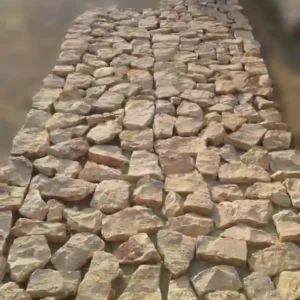
Size selection for white cobbles in Arizona isn’t purely an aesthetic decision — it’s a drainage engineering choice. White cobbles 100mm in Arizona projects represent a mid-range format that balances joint opening width, installation stability, and maintenance requirements across most residential and commercial landscape applications.
Smaller cobbles below 75mm create tighter joints that clog progressively with fine sediment blown in during dry cycles — common across desert sites. Extra large white cobbles in the 150mm to 200mm range maintain wider natural joint channels that resist sediment clogging better, but they require careful placement to avoid rocking under foot traffic. For driveways and high-use pathways, the 100mm to 130mm range delivers the best balance of drainage performance, surface stability, and long-term joint integrity in Arizona conditions.
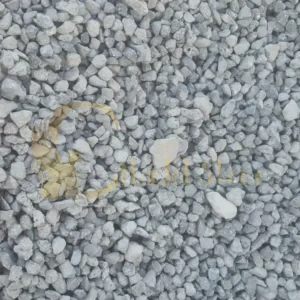
- White cobbles 100mm: joint widths average 15 to 25mm — suitable for pedestrian areas and decorative landscape beds
- 130mm to 150mm formats: improved drainage geometry, more stable under occasional vehicle overhang, better for transition zones between paved and soft landscape areas
- Extra large white cobbles above 150mm: maximum drainage capacity, ideal for dry creek bed designs and detention basin edges
- Mixed grading of two adjacent size ranges creates a natural lock-up effect that resists displacement without mortaring
- Uniform single-size cobble installations settle more predictably, making them easier to maintain level over time
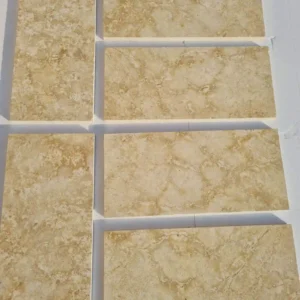
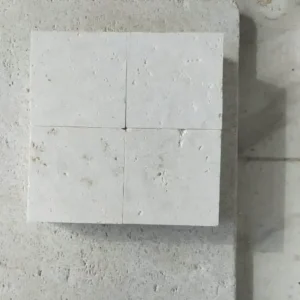
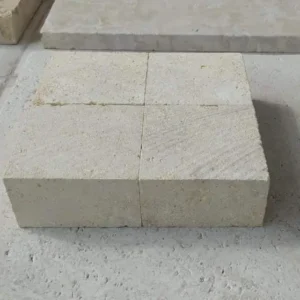
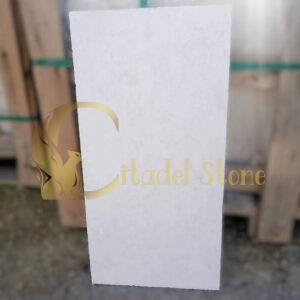
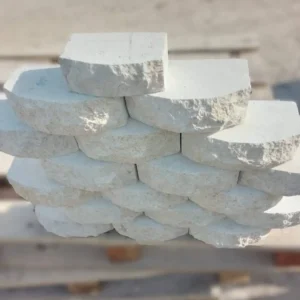
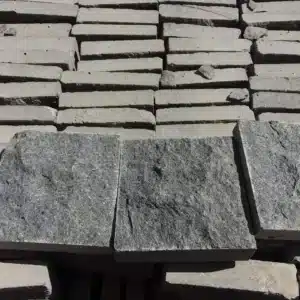
Citadel Stone stocks white large cobbles and extra large white cobbles in standard size ranges, with warehouse inventory available for project quantities. White cobblestones for sale in Arizona ship from warehouse stock within one to two weeks across the state, and sample material is available to confirm shade consistency and surface character before committing to full project tonnage.
Flooding Risk Zones and Cobble Placement Strategy
Arizona’s FEMA-mapped flood zones cover more property than most homeowners and landscape architects realize — and cobble installations in or adjacent to these zones need site-specific drainage engineering, not standard landscape specifications. The distinction between a cobble installation that performs through a 100-year storm event and one that displaces into adjacent structures often comes down to edge anchoring and subbase continuity rather than the stone selection itself.
For properties in proximity to Tucson‘s Santa Cruz River corridor or the Phoenix metro’s Salt River flood plain, white cobble stones in Arizona installed above finished grade create displacement risk during overland flow events. Your specification should include mechanical restraint at installation boundaries — either mortared perimeter courses or concrete-embedded edge beams — combined with a subbase graded to discharge toward designated drainage paths, not toward structures.
White cobble stones used in flood-adjacent landscape zones often perform better than solid-surface paving because their permeability reduces hydrostatic uplift pressure. However, individual stones above 100mm can become projectile hazards in overland flow velocities above 2 feet per second. In high-risk zones, specifying cobbles set in a permeable concrete matrix gives you infiltration performance with the displacement resistance that flood-adjacent applications require.
- Check FEMA Flood Insurance Rate Maps (FIRM) before finalizing cobble placement within 200 feet of natural drainage channels
- Grade cobble fields toward swales or collection points at a minimum 1% slope — flat installations pond and create hydrostatic pressure at subbase
- Mortar perimeter courses on installations adjacent to flood risk areas — loose cobble perimeters displace under modest flow velocities
- For Tucson projects in Zone AE flood areas, engineering review of cobble installation drainage is typically required for permit approval
- Dry creek bed designs using white cobblestones in Arizona should maintain a continuous downhill grade — meandering level sections trap water and create sedimentation zones
Maintaining White Cobbles Through Arizona’s Wet-Dry Cycles
The maintenance schedule for white cobblestones in Arizona follows the state’s hydrological calendar more than a fixed annual routine. Post-monsoon season inspection — September through October — is the highest-value maintenance window, when you can assess joint condition, sediment accumulation, and any displacement that occurred during summer storm events before the dry season sets in and masks developing issues.
Joint material replenishment is the maintenance task most installations skip too long. As joint aggregate migrates and compacts over successive wet-dry cycles, joint depth reduces and capillary drainage through the cobble field diminishes. Joints should be topped up annually with matching permeable aggregate, keeping them within 15mm of the cobble surface across the full installation. Letting joints fall more than 25mm below stone surface creates both drainage and tripping hazards, and accelerates lateral stone migration during saturation events.
For long-term maintenance planning, consider how installation details for white cobble stones connect to complementary stone elements across your project. Citadel Stone’s guidance on White Cobbles from Citadel Stone covers heat-specific maintenance protocols that apply directly to Arizona’s low-desert conditions and are worth reviewing alongside your drainage maintenance schedule — particularly for large white cobbles in Arizona exposed to sustained summer temperatures above 110°F.
- Inspect all drainage outlets and weep gaps after each significant monsoon event — sediment clogs form within hours of a heavy rain event
- White stone surfaces show efflorescence more visibly than darker materials — treat with diluted muriatic acid solution (1:10 ratio) during dry season maintenance
- Re-check perimeter edging integrity annually — edging fasteners corrode in alkaline Arizona soils, releasing cobble boundaries over time
- Surface cleaning with low-pressure water during dry months removes dust and salt deposits without displacing jointing aggregate
- Avoid chemical weed treatments within cobble fields — herbicide runoff carries into the subbase and can affect soil permeability around root zones
Order White Cobbles in Arizona — Direct from Citadel Stone
Citadel Stone supplies white cobbles in Arizona in a full range of formats — from white cobbles 100mm through extra large white cobbles above 150mm — with warehouse stock maintained for both residential project quantities and commercial supply volumes. Sourced from established quarry partners and inspected for shade consistency and dimensional tolerance before dispatch, each batch leaving our warehouse meets the specification standards Arizona landscape projects require.
Requesting sample material before committing to full order quantities is straightforward — shade matching on white stone is particularly important across large installations where batch variation becomes visually apparent. For trade accounts and wholesale enquiry, Citadel Stone’s team can advise on volume pricing, available formats, and lead times based on current warehouse stock levels. Truck delivery across Arizona typically covers Phoenix, Scottsdale, and surrounding metro areas within the standard lead time, with project sites outside core metro areas scheduled on route-based delivery planning. A second truck delivery run is coordinated for phased commercial projects requiring staged material arrival across multiple milestones.
For custom-sized formats, non-standard grading, or large-scale commercial project supply requiring guaranteed batch consistency, a pre-order consultation with Citadel Stone’s specification team allows you to lock in material ahead of project milestones. Contact Citadel Stone to request a quote, review available white cobblestone formats, or schedule a specification consultation tailored to your Arizona drainage and landscape requirements. As you plan complementary hardscape features for your Arizona project, Cobble Setts for Sale in Arizona explores a related stone format from Citadel Stone that pairs well with white cobble installations in both residential and commercial contexts. Stone selections for Arizona projects in Flagstaff, Sedona, and Yuma include White Cobbles supplied direct from Citadel Stone.