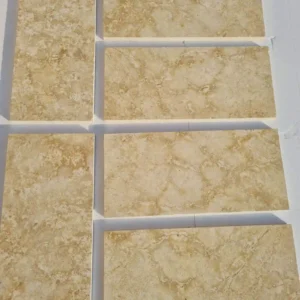
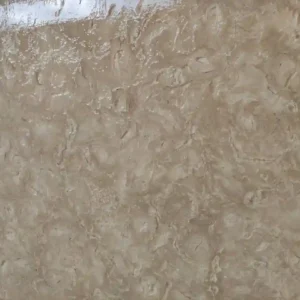
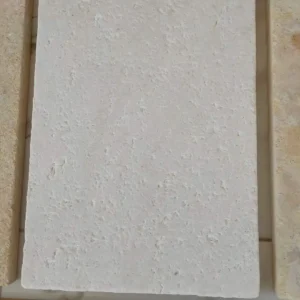
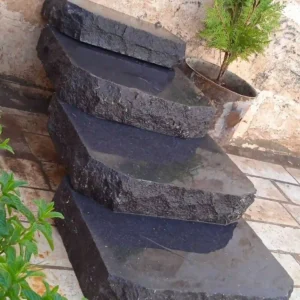
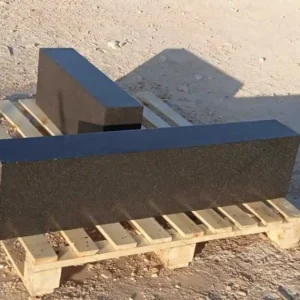
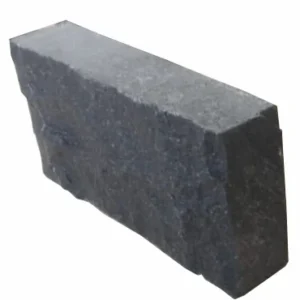
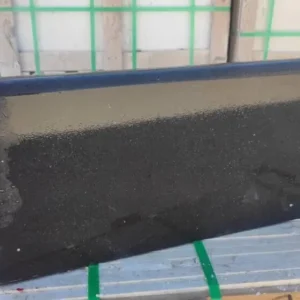
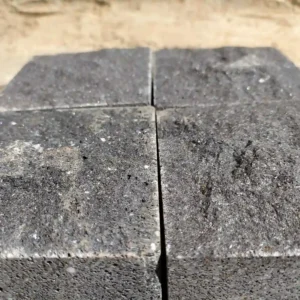

Budgeting for granite setts in Arizona starts with a number most project managers underestimate — freight. Because Arizona sits far from the primary domestic quarry corridors and the major East Coast import terminals, the landed cost of granite setts in Arizona runs meaningfully higher than in coastal states. Understanding that gap before you finalize your square footage will prevent the kind of mid-project scope cuts that compromise both aesthetics and structural integrity.
Understanding Regional Cost Drivers for Granite Setts in Arizona
The price differential for natural granite setts in Arizona compared to, say, Georgia or New Jersey typically ranges from $0.35 to $0.65 per square foot — and on a 2,000-square-foot driveway project, that adds up fast. Freight from the Gulf ports or East Coast distribution hubs to Phoenix, Tucson, or Flagstaff involves either a full truckload commitment or the higher per-unit cost of LTL (less-than-truckload) consolidation. Your sourcing strategy should factor this in from day one, not as an afterthought once material costs are already locked.
Local material availability also shapes what you can realistically specify. Arizona’s quarry output skews heavily toward sandstone and flagstone varieties — genuine granite setts sourced domestically require transport from out-of-state quarries, while imported product from Brazil, China, or Portugal arrives at coastal ports before making the inland journey. Citadel Stone maintains warehouse inventory in the region, which typically compresses lead times to one to two weeks versus the six-to-eight-week cycle you’d face ordering direct from an import broker without established regional stock.
- Freight consolidation from regional warehouse stock reduces per-unit shipping cost by 20–35% compared to direct import orders
- Full truckload orders (typically 20–25 tons minimum) unlock the most competitive pricing for large commercial projects
- LTL shipments for smaller residential jobs carry a freight premium that can add $0.80–$1.20 per square foot to landed cost
- Lead times directly affect project scheduling — warehouse-stocked material ships within days, while back-ordered or custom-dimension setts may delay installation by four to eight weeks
- Regional price benchmarking should compare landed cost, not just product price — a cheaper sett with $400 in additional freight is rarely the better deal
Granite Sett Dimensions and What They Mean for Your Project
Dimension selection is where a lot of Arizona projects go sideways — not because the wrong size was chosen aesthetically, but because the thickness wasn’t matched to the structural demand. The two dominant thickness categories you’ll encounter are 50mm and 100mm, and they serve fundamentally different load applications.
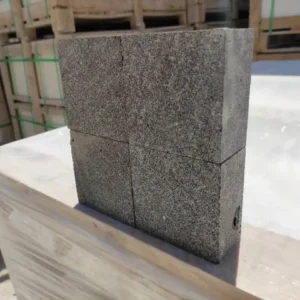
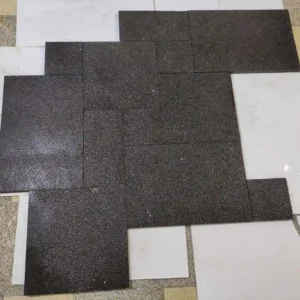
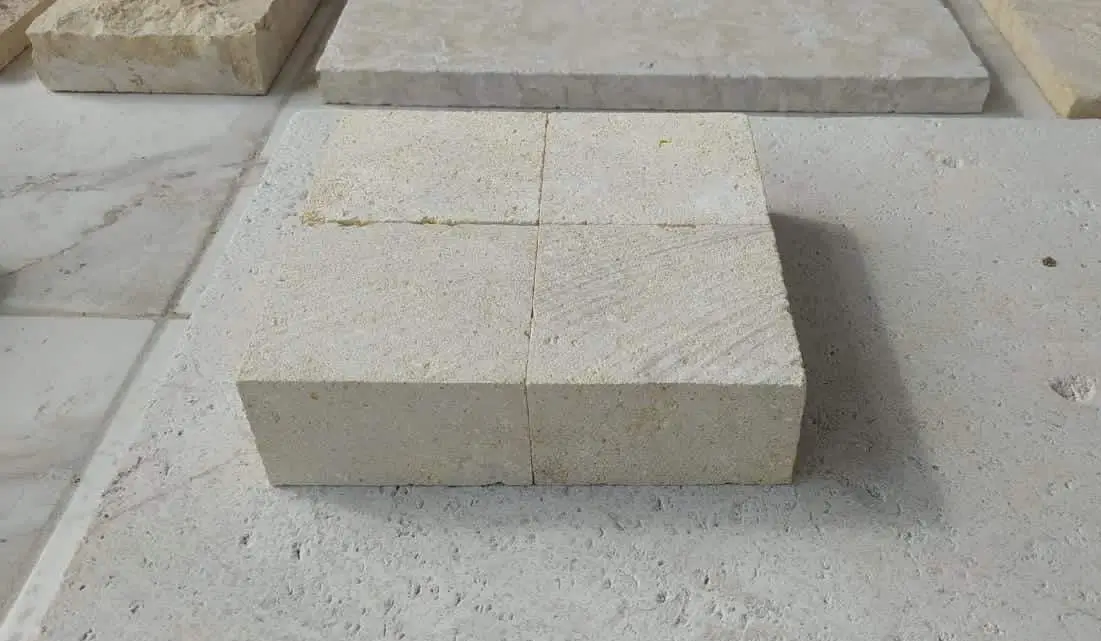
Granite setts 200x100x50 in Arizona handle light-duty residential work well — pedestrian walkways, garden borders, and low-traffic courtyard surfaces where the subbase carries most of the load. The 50mm granite setts in Arizona perform reliably in these contexts provided your compacted aggregate base reaches at least 150mm depth. For anything with vehicular access, though, you need to step up. The granite setts 200x100x100 in Arizona offer the full 100mm body thickness that distributes point loads from vehicle tires across a wider contact area — critical when you’re dealing with Phoenix caliche subsoils that don’t always behave predictably under concentrated stress.
- Granite setts 100x100x50 in Arizona suit pedestrian-only zones, garden edging, and accent banding in mixed-material designs
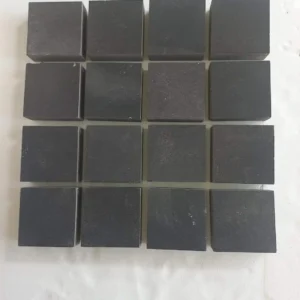
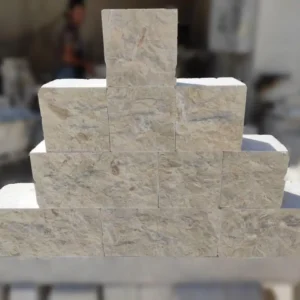
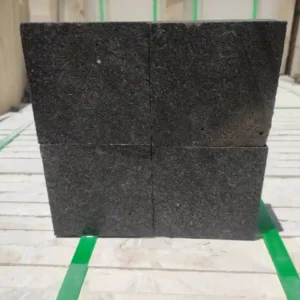
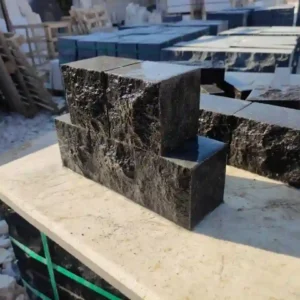
- Granite setts 100x100x100 in Arizona provide the compact square format favored for tight radii, curved paths, and traditional cobbled appearances
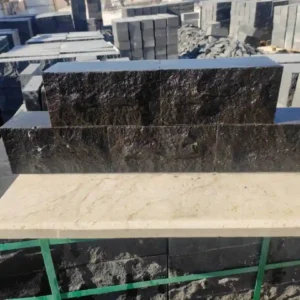
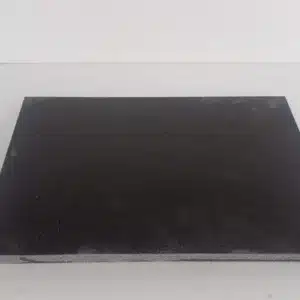
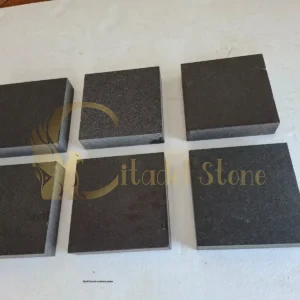
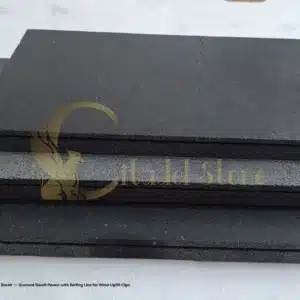
- Sawn granite setts 200x100x50 in Arizona offer machine-cut precision faces for modern, tight-joint installations where dimensional consistency matters
- Sawn granite setts 100x100x50 in Arizona deliver the same precision in the square format — popular in Scottsdale contemporary landscaping projects
- 200mm granite setts in Arizona refer to the length dimension of the rectangular formats — specifying both length and thickness avoids ordering errors
The 100mm granite setts in Arizona are the workhorses for driveway and commercial applications. Their mass-to-surface ratio means they stay seated under thermal cycling far better than thinner alternatives, and the added material depth gives you more tolerance if your subbase settles unevenly over the first few seasons. For residential driveways in Scottsdale, where HOA standards often require premium appearance alongside functional durability, the 100×100 granite setts in Arizona have become a go-to specification precisely because they hold their alignment without constant releveling.
Surface Finish and Performance in Arizona Heat
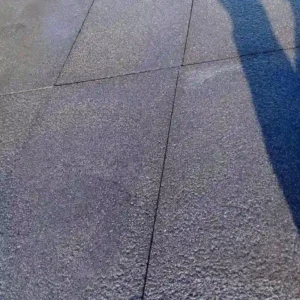
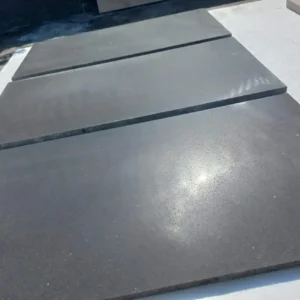
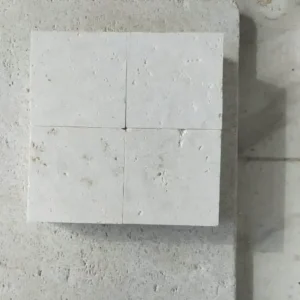
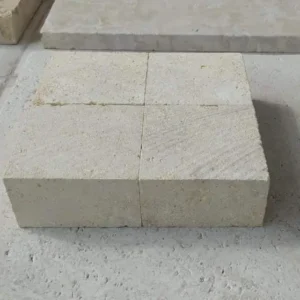
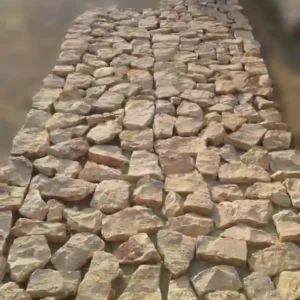
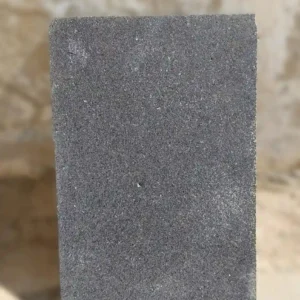
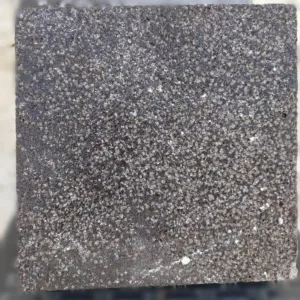
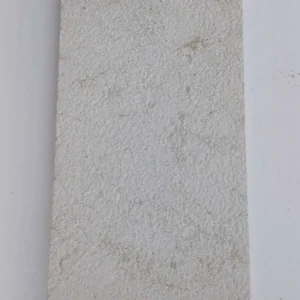
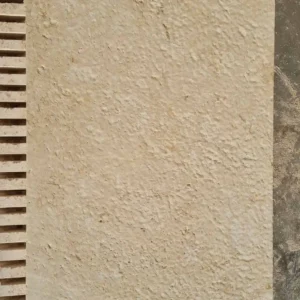
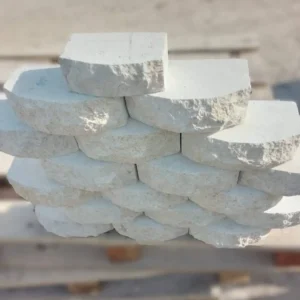
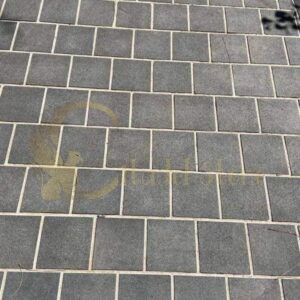
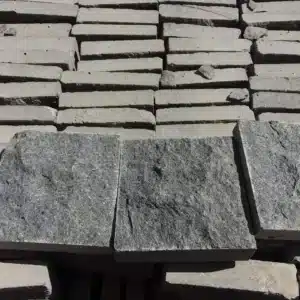
Natural granite setts in Arizona come in two primary surface finish categories — sawn (smooth, machine-cut faces) and natural split (rough, quarried texture). The performance difference between them isn’t just aesthetic; it affects surface temperature, slip resistance, and long-term maintenance requirements in ways that matter specifically in Arizona’s climate.
Sawn granite setts develop a smoother surface that absorbs slightly less solar radiation than rough-split equivalents — the difference is modest but measurable, typically 5–8°F lower peak surface temperature under direct afternoon sun in Phoenix-area conditions. What matters more is that sawn faces provide consistent joint width across the installation, which simplifies sand-set and mortar-bed applications and reduces the patchy appearance that can develop when joint widths vary widely. In Flagstaff, where freeze-thaw cycles run 50–80 events per year at elevation, tight consistent joints also reduce the water infiltration that causes frost heave damage — a failure mode the low desert never has to consider.
- Rough-split natural granite setts provide higher slip resistance values — typically achieving R11–R12 ratings suitable for wet-zone applications near pool areas
- Sawn granite setts in Arizona deliver R10 or better when dry but should be assessed with a DCOF reading specific to your pool deck or wet-zone application if using them near water features
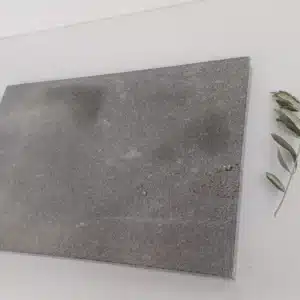
- Granite paving setts with flamed finishes fall between the two — micro-textured surface with more visual depth than sawn, better grip than polished
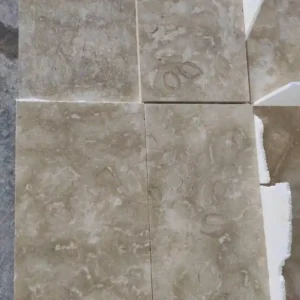
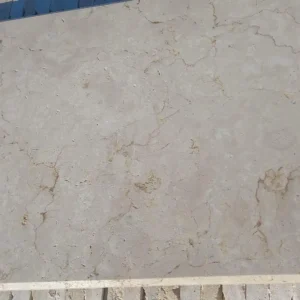
- Color uniformity varies by quarry origin — Brazilian grey granite setts show less variation than some Chinese sources, which can exhibit significant shade banding between production batches
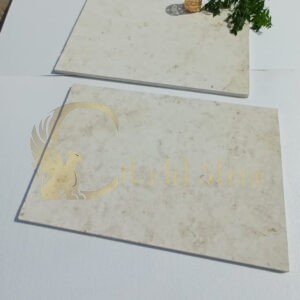
- Requesting a warehouse sample before committing to full volume is standard practice, and Citadel Stone’s team can provide representative samples from current stock to verify shade consistency against your project requirements
Base Preparation and Installation in Arizona Soils
Arizona’s soil variability is the installation variable that most spec sheets and product guides simply don’t address. The Phoenix metro sits on a mix of silty sands, expansive clays, and caliche horizons — and all three behave differently under granite block setts loaded with vehicle traffic over years of thermal cycling. Getting the base right here requires local knowledge, not just the generic 4-inch compacted gravel base that suffices in more temperate regions.
Clay-heavy soils in Tucson’s eastern corridors require a stabilized base or a geotextile separator between native subgrade and aggregate fill. Without that separator, clay migration into your crushed aggregate base reduces its drainage capacity over three to five seasons, creating the slow-developing settlement that shows up as rocking setts and widening joints. For projects in Tucson, specifying a minimum 200mm compacted Class II base over geotextile fabric adds roughly $0.50–$0.75 per square foot to installation cost — but it prevents the kind of wholesale releveling job that costs ten times that after five years of use.
- Caliche encountered at 300–450mm depth can serve as a structural sub-base once broken and recompacted — it’s harder than most imported fill material
- Expansive clay subgrades require a minimum 6-inch over-excavation and replacement with non-expansive fill before placing aggregate base
- Sand-set installations tolerate minor subgrade movement better than mortar-bed systems — for residential driveways with moderate loads, sand-set granite stone setts in Arizona remain the more forgiving specification
- Mortar-bed systems deliver superior load distribution for heavy commercial applications but require proper control joints every 10–12 feet to accommodate Arizona’s thermal expansion ranges
- Your compaction target for the aggregate base should reach 95% Modified Proctor density — below that threshold, long-term settlement under vehicle loads becomes probable rather than possible
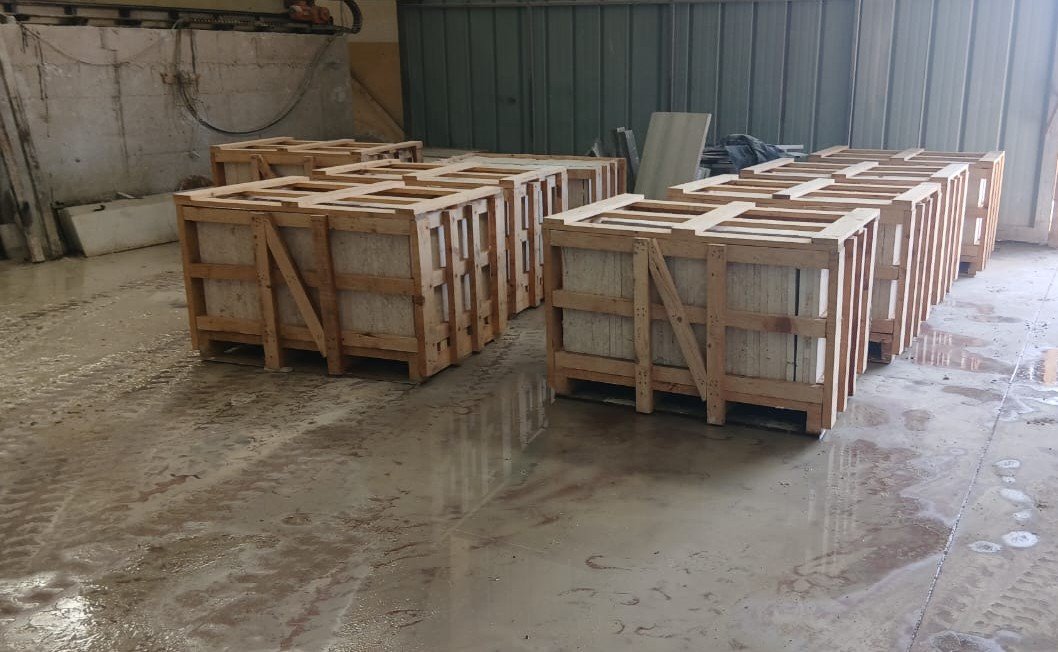
Base preparation costs in Arizona also respond to truck access constraints at your site. If your project location restricts heavy equipment movement — as many Scottsdale infill residential sites do — you may face manual compaction for portions of the work, which slows the schedule and adds labor cost. Confirming truck access to the delivery point before ordering material prevents the logistical complications that arise when a pallet of granite setts arrives at a site that can’t accommodate a standard flatbed.
Granite Setts for Driveways in Arizona — Specification Priorities
A granite setts driveway in Arizona carries a different performance brief than one in a northern climate. Freeze-thaw resilience drops to a secondary concern in the low desert, but thermal mass management, UV resistance, and resistance to tire mark staining move to the top of the priority list. Granite handles all three well compared to concrete pavers — its crystalline structure doesn’t bleach or chalk under sustained UV exposure the way some manufactured paver pigments do, and its density resists the rubber transfer staining that shows up on lighter concrete surfaces after years of vehicle use.
For a granite setts driveway in Arizona, the minimum recommended thickness is 100mm for standard passenger vehicle loads. Specify the 200x100x100 format for main driveway runs and the 100x100x100 format for any curved sections or radial transitions — the square format handles tight geometry without the awkward cuts that rectangular setts require at corners. Jointing sand should be polymeric, not standard sharp sand, for any driveway application. Arizona’s heat accelerates the washout of unset jointing sand during monsoon events, and polymeric products that have cured properly will hold joint integrity through multiple wet seasons. For detailed project pricing by format and square footage, Granite Setts from Citadel Stone covers the cost structure across standard Arizona project types and can help you benchmark your budget against current material pricing.
- Herringbone pattern provides the highest interlock for driveway applications — the interlocking geometry distributes load across adjacent setts rather than concentrating stress at individual units
- Running bond works well for pedestrian zones but offers less resistance to lateral creep under repeated vehicle turning movements
- Edge restraint is non-negotiable for granite setts driveways — aluminum or steel restraints set at the perimeter prevent the lateral spread that eventually opens field joints
- Slope of 1.5–2% away from structures ensures surface drainage without creating the steep grade that makes vehicle parking unstable on smooth-faced setts
- Avoid specifying less than 100mm thickness for any surface that will see regular vehicle traffic regardless of base preparation quality
Maintenance and Long-Term Performance of Granite Paving Setts
The longevity of granite paving setts in Arizona — realistically 30 to 50 years for properly installed work — depends on two maintenance commitments that most homeowners underestimate in the first five years: joint sand replenishment and sealing. Neither is onerous, but skipping either creates the cascading failure sequence that turns a premium installation into an expensive re-do.
Polymeric jointing sand in Arizona’s climate tends to degrade at the surface within three to five years under direct UV exposure and monsoon scouring. You’ll know it’s time to top up when joints show visible erosion depth greater than 5mm or when you notice individual setts developing slight rock underfoot. Replenishing joint sand before that point — typically on a three-year inspection cycle — keeps ant intrusion and weed establishment from compounding the problem. Sealing is a separate consideration: granite’s natural low porosity means it doesn’t demand sealing the way sandstone or limestone does, but a penetrating sealer applied every five to seven years in Phoenix-area conditions does meaningfully reduce the surface oxidation that gradually dulls the stone’s natural color contrast.
- Avoid film-forming topical sealers on granite setts — they trap moisture beneath the surface and accelerate spalling in sun-exposed installations
- Penetrating silane-siloxane sealers preserve the natural texture and provide adequate water repellency without altering slip resistance values
- Pressure washing at 1,200–1,500 PSI effectively removes organic staining without damaging the granite surface — avoid pressures above 2,000 PSI on sawn faces
- Joint sand replenishment is a DIY-accessible maintenance task — polymeric sand kits with proper application instructions are available from Citadel Stone’s supply team along with material specification support
- Document your sett batch number and quarry source at installation — this detail becomes critical if you need to add material five years later and want a shade match
Get Granite Setts Delivered Across Arizona
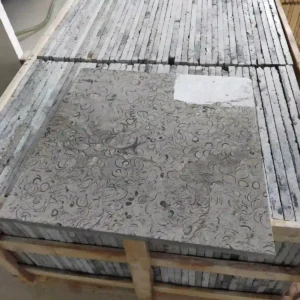
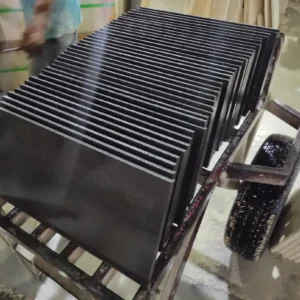
Citadel Stone stocks granite setts in Arizona across multiple standard formats for delivery statewide, including the 200x100x50, 200x100x100, 100x100x50, and 100x100x100 dimensions in both natural split and sawn finishes. Sourced from established quarry partners and inspected for dimensional tolerance and shade consistency before warehouse dispatch, each batch reflects the quality standards that commercial and residential projects in Arizona require.
You can request sample pieces from current warehouse stock before committing to volume — a standard practice for any project where color matching to existing hardscape or architectural elements matters. Trade accounts and wholesale enquiries are handled directly through Citadel Stone’s project team, who can confirm current inventory levels, provide specification sheets, and outline lead times for your delivery location across Arizona. Standard stocked formats typically ship within one to two weeks from warehouse. For custom dimensions or large commercial volumes requiring dedicated truck coordination, contact Citadel Stone early in the project planning phase to confirm availability and schedule. Projects ranging from Phoenix residential driveways to large commercial plazas in Mesa and Chandler have been supplied from regional inventory, keeping freight costs competitive and timelines predictable.
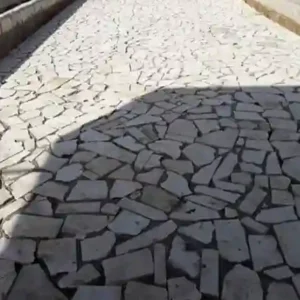
As you finalize your Arizona stone project scope, complementary hardscape elements can round out your specification package. Natural stone formats pair particularly well in mixed-material landscape designs, and Flat Cobblestones in Arizona provides additional technical detail on another Citadel Stone product that complements granite setts across residential and commercial applications throughout the state. Contractors in Flagstaff, Sedona, and Yuma select Citadel Stone Granite Setts for Arizona residential and commercial projects.