















Thermal cycling — not raw heat — is the hidden stress mechanism that determines whether your large stepping stone pavers in Arizona last a decade or outlast the mortgage. Arizona’s desert climate delivers temperature swings of 40°F to 60°F between overnight lows and afternoon peaks, and that daily expansion-contraction cycle places cumulative fatigue on stone joints, mortar lines, and subbase interfaces in ways that pure high-temperature exposure simply doesn’t replicate. Understanding this cycling behavior before you specify materials is the technical foundation that separates functional installations from ones that begin lifting and cracking within three years.
How Thermal Cycling Affects Large Stepping Stone Pavers in Arizona
Arizona’s thermal environment is often mischaracterized as a single extreme — high heat. The real engineering challenge is the range. In Flagstaff, elevations above 6,900 feet produce summer daytime highs near 82°F and overnight lows that can drop to 45°F — a 37°F daily swing. In winter, those same cycles dip below freezing regularly, introducing freeze-thaw mechanics that low-desert projects rarely face. Your material selection and joint design need to account for both ends of that range simultaneously.
Stone with a high linear thermal expansion coefficient will work against you in these conditions. Dense limestone and basalt typically exhibit coefficients in the range of 4.4–5.8 × 10⁻⁶ per °F, which translates to roughly 0.026–0.035 inches of movement per 10-foot run per 50°F temperature change. Across a 30-foot pathway, that’s up to 0.10 inches of cumulative movement — enough to blow out rigid mortar joints if expansion gaps aren’t designed in from the start.
For large format stones specifically, the movement forces multiply because the contact area per unit increases. You’ll need expansion joints every 12 to 15 linear feet rather than the 20-foot intervals some generic specifications recommend. That tighter spacing isn’t conservative overengineering — it’s the correct number for Arizona’s daily cycling reality.
Material Performance: Selecting Large Pathway Pavers in Arizona Climates
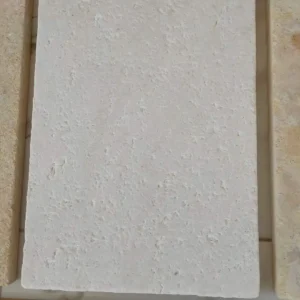
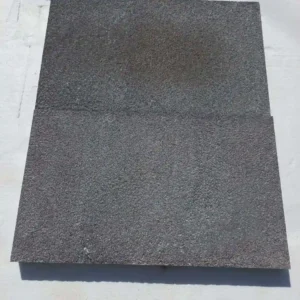
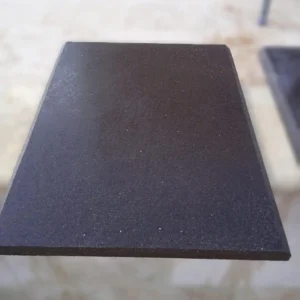
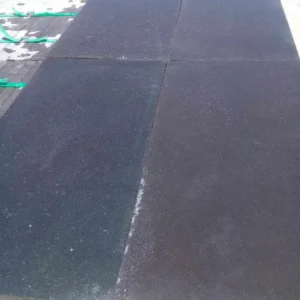
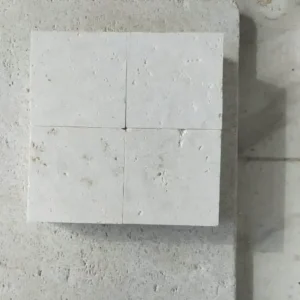
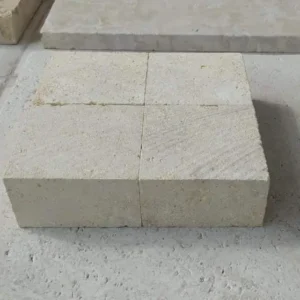
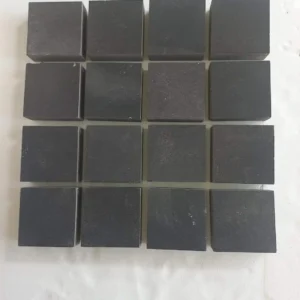
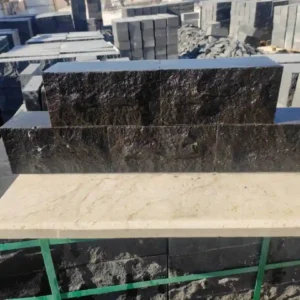
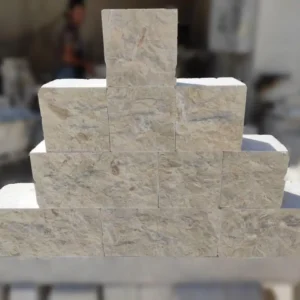
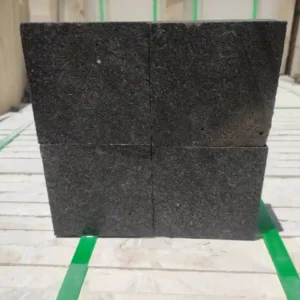
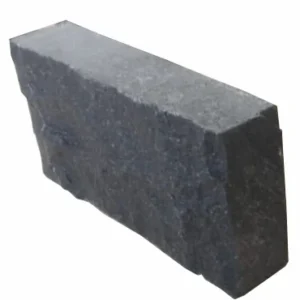
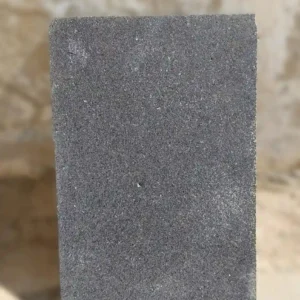
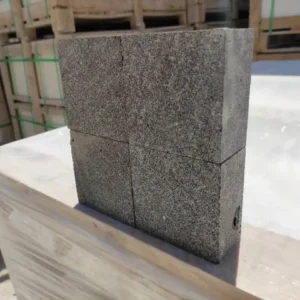
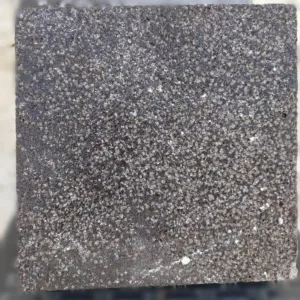
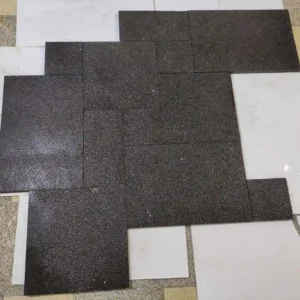
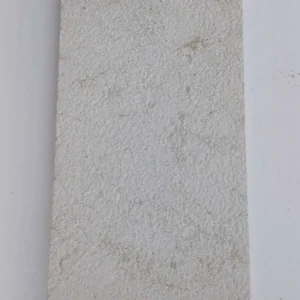
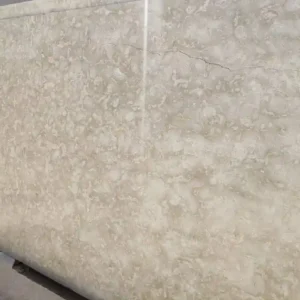
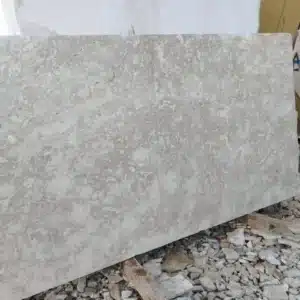
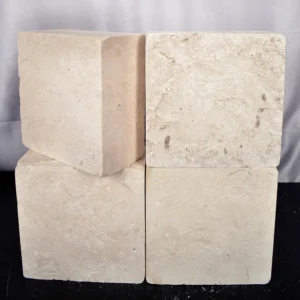
The material category that consistently performs across Arizona’s full temperature range is dense-cut natural limestone and basalt. Both materials deliver compressive strength above 12,000 PSI while maintaining water absorption rates below 3%, which is the threshold that prevents freeze-thaw spalling in higher-elevation installations. For large pathway pavers in Arizona, the combination of low absorption and high mass density gives you a stone that resists both surface scaling in freeze conditions and subsurface moisture expansion that damages thinner, more porous alternatives.
- Dense limestone: compressive strength 12,000–22,000 PSI, absorption typically 1.5–3%, linear expansion 4.6–5.5 × 10⁻⁶ per °F
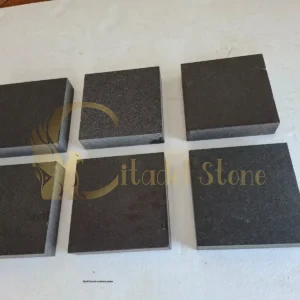
- Basalt: compressive strength 20,000–45,000 PSI, absorption below 1%, superior freeze-thaw cycle resistance
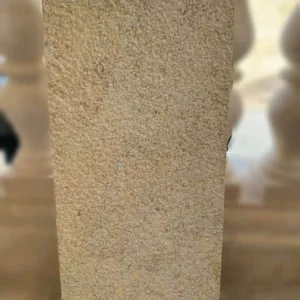
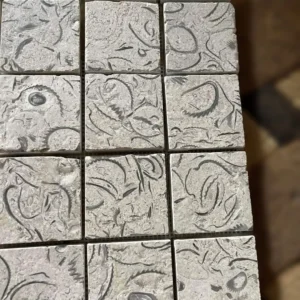
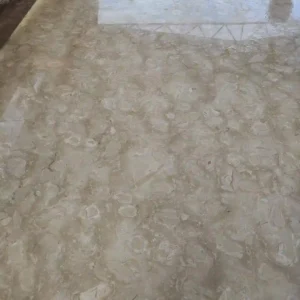
- Travertine: visually appealing but absorption rates of 3–8% require careful sealing in freeze-thaw zones above 4,500 ft elevation
- Concrete pavers: lower unit cost, but thermal expansion coefficient of 6.0 × 10⁻⁶ per °F exceeds most natural stone — wider joint spacing required
Large square paver walkway installations in Arizona’s mid-elevation zones — roughly 3,500 to 5,500 feet — sit in a particularly demanding performance band. You’re above the freeze line for occasional winter events but still subject to the intense UV degradation and thermal cycling of the high desert. A 24×24-inch or 24×36-inch format in 2-inch nominal thickness handles this zone well when set on a properly designed aggregate base.
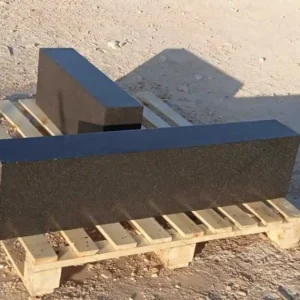
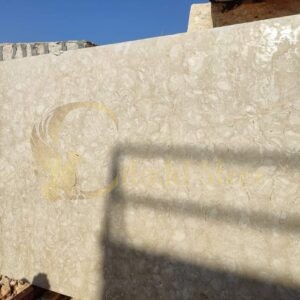
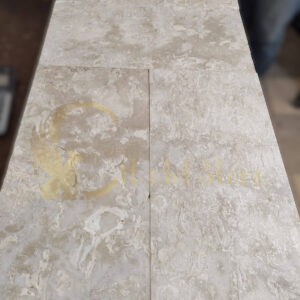
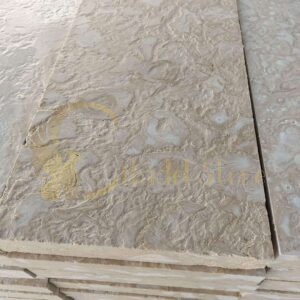
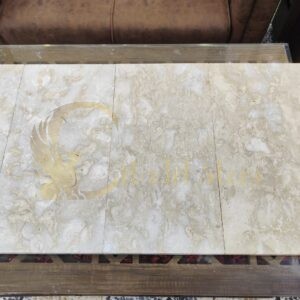
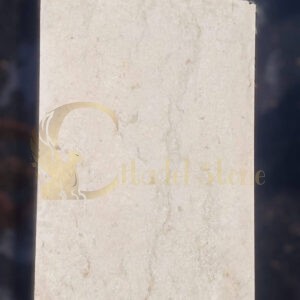
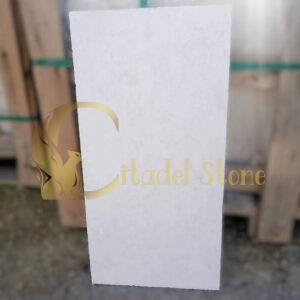
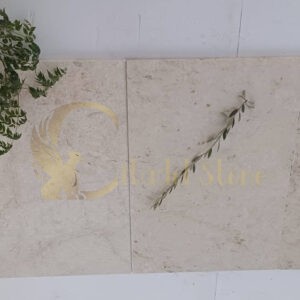
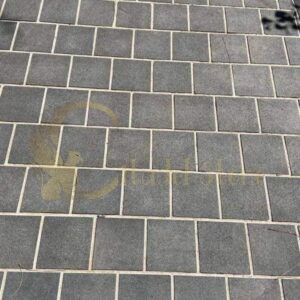
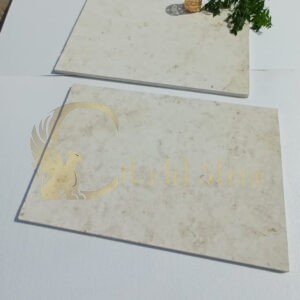
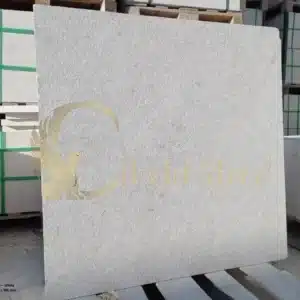
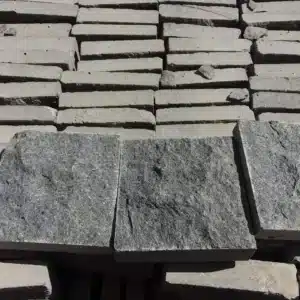
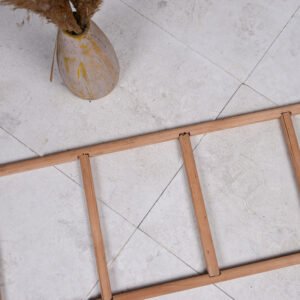
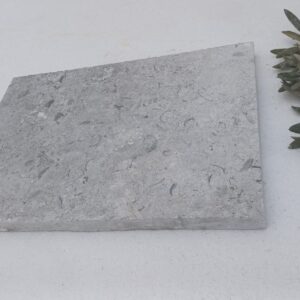
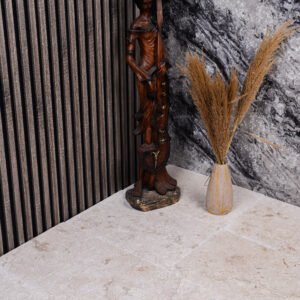
Citadel Stone stocks large stepping stone pavers in standard formats including 18×18, 24×24, 24×36, and irregular flagstone cuts, with thickness options at 1.5-inch and 2-inch nominal to match your structural load and base preparation requirements.
Base Preparation for a Large Stone Paver Walkway
Your base preparation is where thermal cycling performance is either locked in or surrendered. A large stone paver walkway in Arizona requires a compacted aggregate base of at least 4 inches for pedestrian-only applications, but 6 inches is the correct specification when your site has expansive soils — and a significant portion of Phoenix and Tucson metro soils are classified as moderately to highly expansive. Expansive clay underneath a thermal cycling surface creates a double-movement system: the stone expands and contracts from temperature, while the subgrade swells and shrinks from moisture. Those two cycles are rarely in sync.
In Scottsdale, where caliche layers appear frequently at 12–30 inch depths, you’ll sometimes find that the caliche actually helps by providing a stable, incompressible platform once the overlying clay is removed. The risk is assuming the caliche is uniform — it fractures in unpredictable patterns, and a void beneath a large-format stepping stone concentrates point loads in ways that crack the stone rather than the base. Probe your sub-base before finalizing your base aggregate depth.
- Remove organic material and loose fill to a minimum 8-inch depth below finished grade
- Compact native sub-base to 95% Modified Proctor Density before adding aggregate
- Install 4–6 inches of 3/4-inch minus crushed aggregate, compacted in 2-inch lifts
- Use a 1-inch bedding sand layer — screeded level to within 1/8 inch over 10 feet
- Do NOT use decomposed granite as bedding sand — its angular fines lock differently under thermal movement and increase cracking risk at stone edges
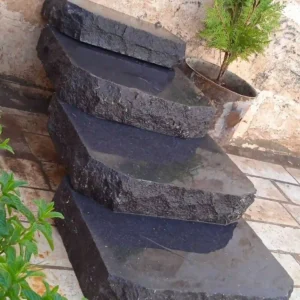
Large paver steps in Arizona — freestanding or integrated into grade transitions — require a higher base specification still. Steps carry concentrated impact loads at the nosing, and thermal cycling at the riser-tread interface can open joints that admit water. Spec a minimum 6-inch compacted aggregate base for steps, and use a full-bed mortar set rather than sand-set for any step with a span exceeding 36 inches.
Joint Design, Expansion Gaps, and Thermal Movement Management
The joint design decision for a large paver path in Arizona is not aesthetic — it’s structural. Your choice between polymeric sand, dry-mortar, and full wet-mortar directly determines how much thermal movement the system can absorb before damage occurs. Polymeric sand with a rated flex modulus accommodates 0.08–0.12 inches of joint movement without cracking, which covers most low-to-mid elevation Arizona applications. Full rigid mortar locks the system but transfers all thermal stress to the stone itself — acceptable only when you’ve correctly calculated your expansion joint spacing and used perimeter isolation gaps at all fixed structures.
A detail that gets overlooked on large square paver walkway installations is the perimeter isolation gap at house foundations and walls. That gap needs to be 3/8 to 1/2 inch, filled with a compressible foam backer rod and topped with a color-matched polyurethane sealant. Most field crews install it at 1/4 inch because it looks cleaner — and then the first winter-to-summer thermal cycle blows out the sealant because there’s no room for the foam to compress. Specify the gap width explicitly in your documentation.
- Polymeric sand: recommended for large paver pathway installations in low desert zones below 3,500 ft
- Dry-pack mortar joints: suitable for mid-elevation zones with moderate freeze-thaw exposure, requires annual inspection
- Full wet mortar: appropriate for large paver steps and fixed installations, requires 3/8-inch expansion joints at 12-15 ft intervals
- All perimeter gaps: minimum 3/8 inch, backed with closed-cell foam rod, sealed with UV-stable polyurethane
For reference on joint compound compatibility, the guidance in Large Stepping Stone Pavers from Citadel Stone addresses specific joint compound compatibility across the limestone and basalt formats stocked for Arizona projects — worth reviewing before finalizing your joint specification to ensure material compatibility across your large paver pathway in Arizona.
Format and Size Selection for Large Pavers for Walkway Applications
Format selection for large pavers for walkway use in Arizona is partly aesthetic, but the dimensional choices carry real installation and performance implications. Larger formats — 24×36 and above — reduce the number of joints in your system, which sounds like a thermal advantage. It is, but only partially. Fewer joints mean each remaining joint must absorb proportionally more movement, and the individual stone is subject to higher bending stress across its unsupported span. Your bedding layer uniformity becomes critical: a void of even 1/4 inch under a 24×36 stone creates a point load scenario that can crack a 1.5-inch stone under normal foot traffic.
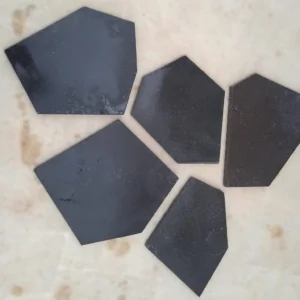
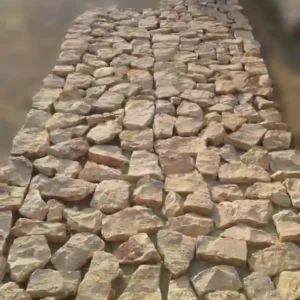
Large stepping pavers in irregular or random formats introduce a different challenge — varied joint widths that create inconsistent thermal movement distribution. In a 3-inch joint zone adjacent to a 1/2-inch joint zone, the wide joint carries the system’s movement while the narrow joint fractures. For irregular large stone pavers for walkway installations, a minimum joint width of 1 inch is worth specifying, even if it looks more rustic than the homeowner’s initial vision.
- 18×18 inch: versatile for large pathway pavers in Arizona — manageable weight per piece, consistent joint spacing easier to maintain
- 24×24 inch: the standard large square paver walkway format — strong visual impact, requires flat bedding to within 1/16 inch
- 24×36 inch: impressive but demands a mechanical assist for installation — each piece at 2-inch thickness runs 85–120 lbs depending on density
- Random irregular: highest visual character, most demanding joint management, best suited to experienced installation crews
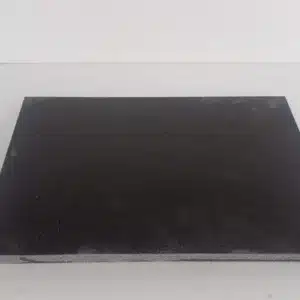
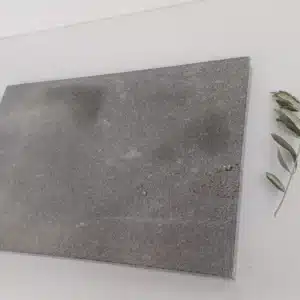
Sample tiles and dimensional specifications are available from Citadel Stone before committing to a format — particularly useful when matching existing site elements or coordinating with landscape architects on a large stone paver walkway project.
Slip Resistance and Surface Finish Considerations
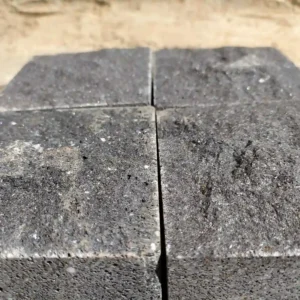
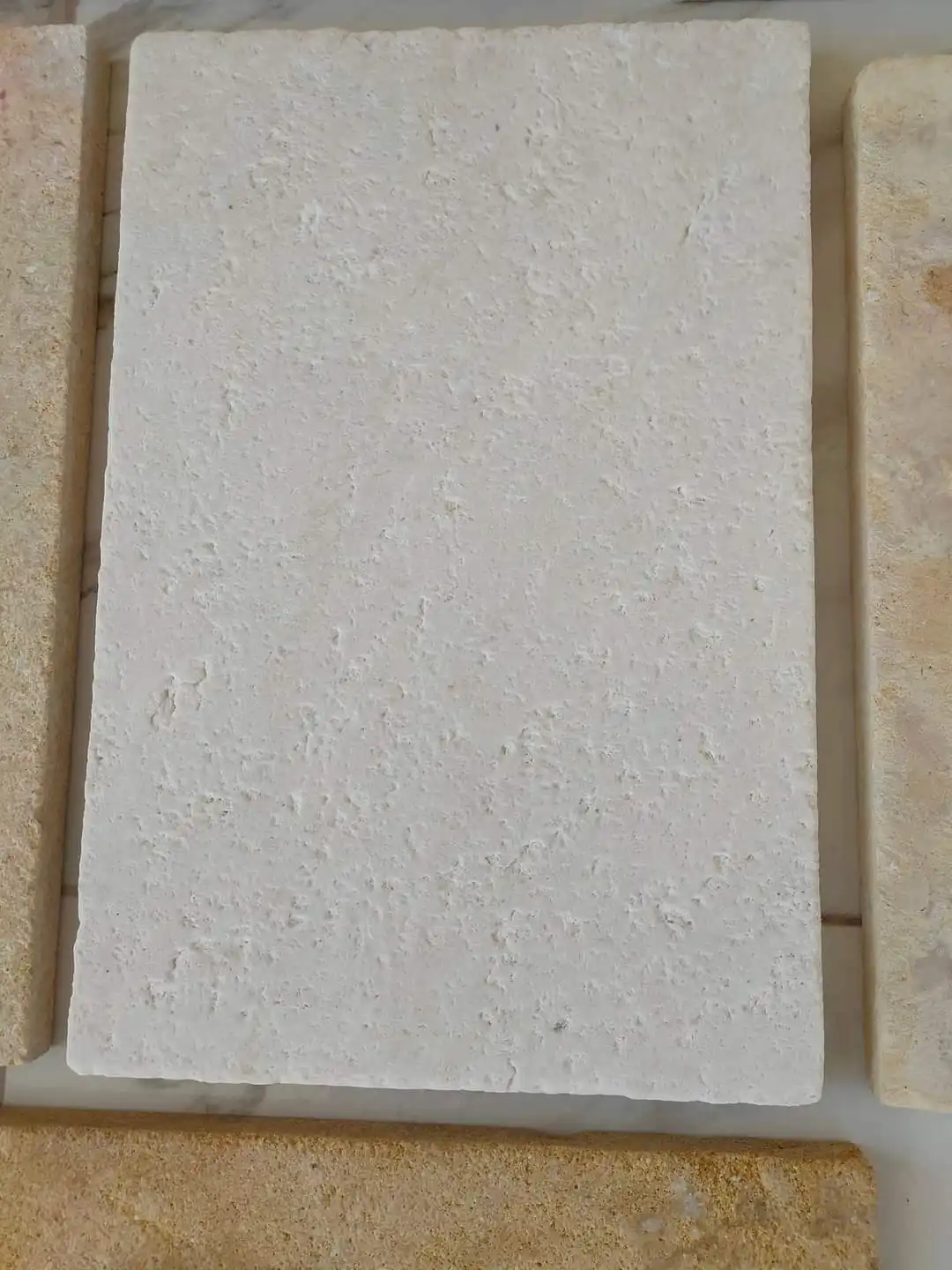
Surface finish selection for large walking pavers in Arizona involves a trade-off between aesthetics, thermal performance, and safety. A honed or polished finish reduces the stone’s DCOF (Dynamic Coefficient of Friction) to values in the 0.40–0.55 range, which meets ANSI A137.1 minimums for dry conditions but can fall below the 0.60 threshold recommended for exterior wet conditions near pools and irrigation zones. A textured or tumbled finish typically delivers DCOF values of 0.65–0.80, which provides the safety margin you need in high-irrigation landscapes.
There’s also a thermal behavior difference worth knowing. A polished limestone surface in full Arizona sun can reach surface temperatures of 145–160°F. The same stone in a sawn-and-sandblasted finish runs 10–15°F cooler because the textured surface breaks up the boundary layer of superheated air at the stone face. For large sidewalk pavers in Arizona used in commercial or high-foot-traffic contexts, that temperature difference matters for comfort and liability.
- Tumbled finish: highest slip resistance, most rustic appearance, best thermal comfort performance
- Sawn and sandblasted: good slip resistance, cleaner aesthetic, preferred for large paver sidewalk installations in commercial settings
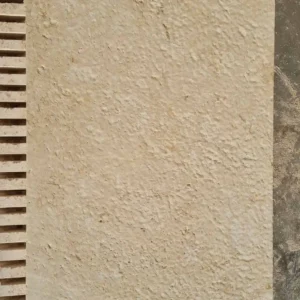
- Bush-hammered: excellent texture, high DCOF, works well for large stone pavers for walkway use near water features
- Honed or polished: reserved for covered outdoor areas where wet exposure is controlled
Sealing and Maintenance Protocols for Arizona Stepping Stone Pavers
Sealing protocols for large stepping stone pavers in Arizona differ from standard exterior stone maintenance because Arizona’s UV index — consistently in the 10–11 range from April through September — degrades surface sealers at roughly twice the rate seen in Pacific Northwest or Midwest climates. A sealer rated for 5-year reapplication intervals in those climates often requires reapplication every 2–3 years in the Phoenix or Tucson low desert. At Citadel Stone, we recommend specifying a UV-stabilized, penetrating impregnator sealer rather than a film-forming sealer for Arizona exterior applications — the film-formers peel and cloud under intense UV cycling, which creates both an aesthetic failure and a slip hazard as the coating delaminates.
Sealing also plays a freeze-thaw protective role in high-elevation installations. A properly applied penetrating sealer reduces water absorption by 85–90%, which directly limits the water volume available to freeze in stone pores. For large stepping pavers in Flagstaff or Sedona installations subject to repeated freeze-thaw events, biennial sealing is a maintenance minimum, not an optional upgrade.
- Apply penetrating impregnator sealer within 30 days of installation completion
- Allow mortar and joint compound to fully cure (minimum 28 days for wet-set applications) before sealing
- Reapply in low-desert zones every 2–3 years; every 1–2 years above 5,000 ft elevation
- Test water beading annually — if water absorbs within 60 seconds, reapplication is overdue
- Clean with pH-neutral stone cleaner before each sealing application — acidic cleaners etch limestone surfaces and remove the crystalline structure that sealers bond to
In Phoenix, the low humidity accelerates efflorescence on newly installed limestone pavers during the first 90 days. This white mineral bloom is temporary and non-structural, but homeowners frequently mistake it for sealer failure or stone defect. Brief this expectation into your client handoff documentation to avoid unnecessary service calls.
Sourcing and Delivery: Large Paver Pathway Stock Across Arizona
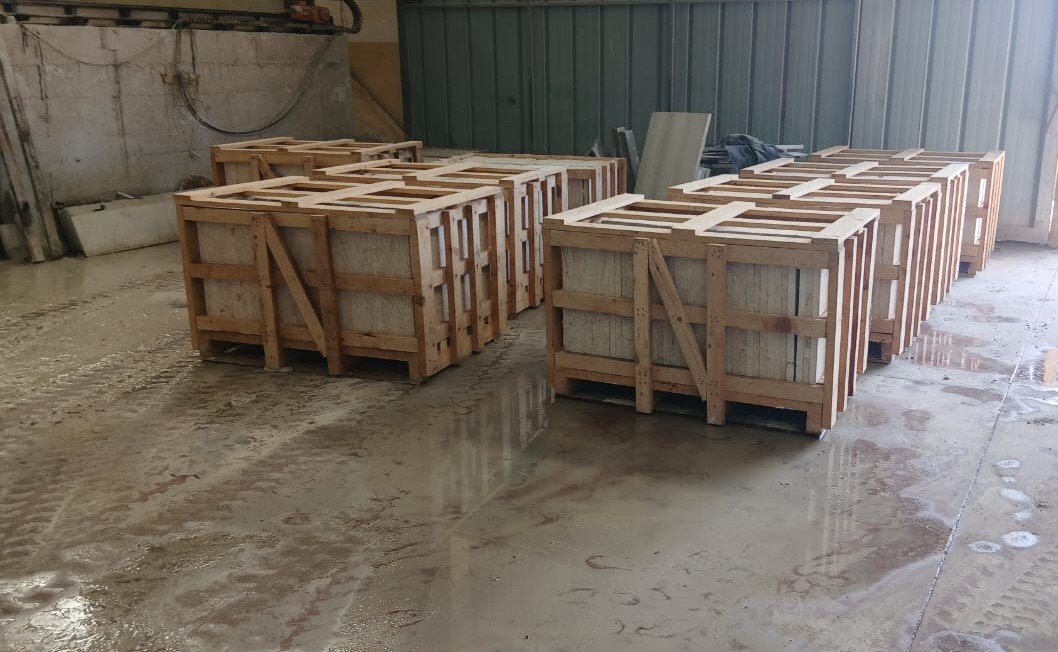
Sourcing large stone pavers for walkway projects requires more lead-time planning than most residential projects budget for. Import-cycle materials — certain European limestones and exotic basalts — run 8–12 weeks from order to site delivery when warehouse stock is depleted. Verifying warehouse inventory levels before you finalize your project timeline is the step most project managers skip, and it’s the one that creates schedule failures. Citadel Stone maintains regional warehouse inventory across Arizona specifically to reduce that risk, with standard format large stepping stone pavers in Arizona typically available on 1–2 week lead times from in-stock inventory.
Truck delivery logistics for large-format stone in Arizona’s residential zones carry practical constraints worth planning around. A standard flatbed truck delivering pallet quantities of 24×36 two-inch stone typically requires a clear 40-foot approach for the boom or forklift offload. Narrow residential access in older Scottsdale or Tempe neighborhoods sometimes requires a shuttle delivery — a smaller truck from the warehouse to a staging area, then manual carry to the installation zone. Factor this into your project cost estimate; a shuttle delivery adds half a day of labor that won’t appear in a standard delivery quote.
- Standard in-stock formats ship within 1–2 weeks from Citadel Stone’s Arizona warehouse
- Custom cuts and non-standard thicknesses require 4–6 week lead times — plan accordingly
- Trade and wholesale accounts can request pricing on full-pallet minimums directly through Citadel Stone’s specification team
- Sample tiles are available on request before committing to a material or finish specification
Sourced from established quarry partners with batch-level quality checks, each shipment of large pathway pavers in Arizona is inspected for dimensional tolerance, surface consistency, and absorption-rate compliance before leaving the warehouse — a process that catches the thickness variation and color batch mismatches that otherwise surface mid-installation.
Request Large Stepping Stone Pavers Pricing — Citadel Stone Arizona
Citadel Stone offers large stepping stone pavers in Arizona across a full range of formats, finishes, and stone types suited to residential walkways, commercial pathways, and mixed-use outdoor installations. Available options include 18×18, 24×24, and 24×36 formats in both 1.5-inch and 2-inch nominal thickness, in limestone, basalt, and tumbled natural stone finishes. You can contact Citadel Stone’s specification team to request sample tiles, confirm current warehouse stock, or discuss custom cutting requirements before placing an order. Trade accounts and wholesale enquiries receive dedicated pricing consultation with access to volume-rate structures. Delivery coverage extends across Arizona including Phoenix, Tucson, Scottsdale, Mesa, Flagstaff, and surrounding regions, with truck scheduling available on request. Lead times on standard in-stock items run 1–2 weeks; non-standard formats and custom specifications require 4–6 weeks from order confirmation. Reach out to schedule a materials consultation or request a formal quote for your large paver stones for walkway in Arizona project.
As you review complementary stone options for your broader Arizona hardscape, Limestone Cobblestone in Arizona explores another Citadel Stone natural stone product that pairs well with large-format walkway installations — a practical reference when coordinating stone selections across a unified outdoor design. Homeowners in Flagstaff, Sedona, and Yuma source Large Stepping Stone Pavers through Citadel Stone for Arizona residential and commercial installations.