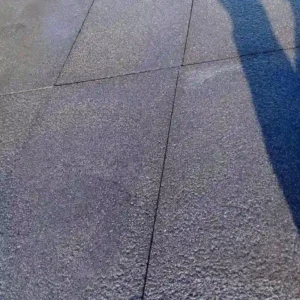
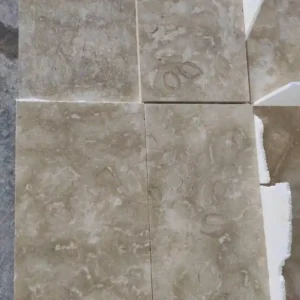



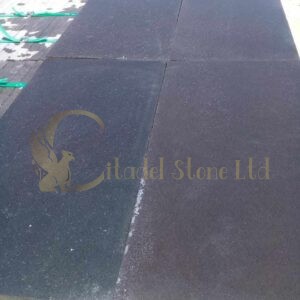


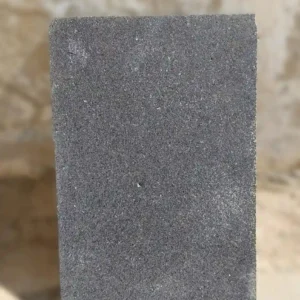
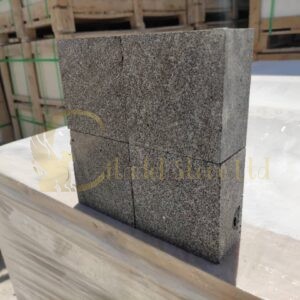
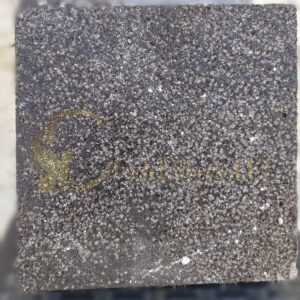
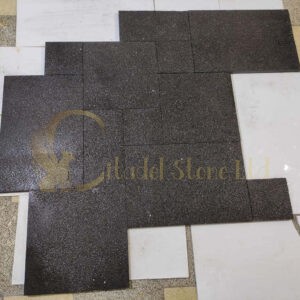


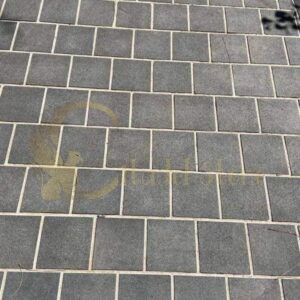

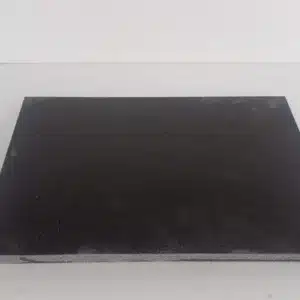
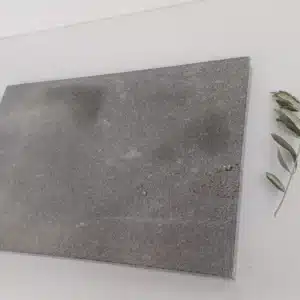



Charcoal paving in Arizona performs best when your installation calendar respects the state’s thermal rhythm — and that rhythm is more nuanced than simply avoiding summer heat. The compressive strength of quality charcoal grey paving slabs typically exceeds 11,000 PSI, but even that structural integrity gets compromised when mortar or setting bed materials cure under extreme ambient temperatures. Your timing decisions at the planning stage will determine whether joints stay tight for two decades or begin failing within three to five years.
Seasonal Installation Windows for Charcoal Paving in Arizona
Arizona’s installation calendar breaks into three distinct windows, and understanding which one matches your project scope is the single most practical scheduling decision you’ll make. The optimal window runs from mid-October through late February — ambient temperatures in Phoenix and similar low-desert cities fall into the 55°F to 75°F range during this period, which is precisely where setting compounds achieve their rated cure strength. Polymeric sand, thin-set mortars, and epoxy grouts all develop stronger long-term bond integrity when they cure slowly at moderate temperatures rather than flash-curing under extreme radiant heat.
The secondary window — early March through mid-April — works well if you schedule pours and bedding work before 10 a.m. Surface temperatures on charcoal garden paving in Arizona can reach 140°F by early afternoon in this period, which is still manageable if your crew starts early and uses retarder additives in the setting bed. You’ll need to shade freshly laid sections with geotextile fabric during peak hours to prevent premature surface drying that causes micro-cracking at the paver edges.
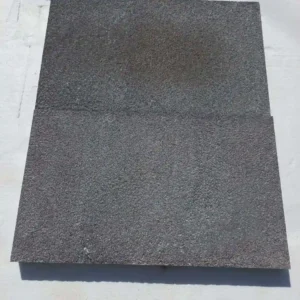
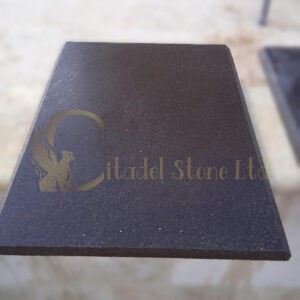
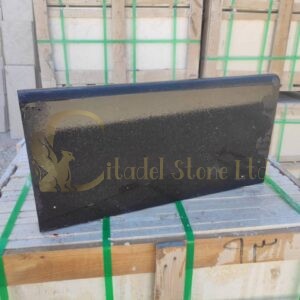
The window to avoid without exception runs from mid-June through mid-September. This isn’t about discomfort for installers — it’s about thermodynamics. Substrate temperatures during this period routinely hit 160°F to 175°F in Phoenix, and that heat migrates upward through the aggregate base and into your setting bed within 90 minutes of morning installation work. Citadel Stone stocks charcoal pavers in standard formats including 16×16, 24×24, and 24×12 inch dimensions, and our technical team consistently advises project managers to lock in their preferred formats during the planning phase so warehouse stock can be reserved for the correct installation window.
How Charcoal Grey Paving Slabs Perform Under Arizona’s Thermal Load
There’s a persistent misconception that darker stone colours overheat to the point of impracticality in desert climates. Charcoal grey paving slabs do absorb more radiant energy than lighter alternatives, but the performance differential is more manageable than most specifiers assume — particularly when you factor in material mass and conductivity. Dense, fine-grained charcoal stone dissipates stored heat quickly once the sun angle drops in late afternoon, unlike concrete pavers which retain surface warmth well into evening hours.
The thermal mass trade-off actually works in your favor for certain applications. In Scottsdale, where projects often include covered pergola structures and deep shade canopies, charcoal paving under shaded areas stays 15°F to 20°F cooler than exposed concrete throughout the day — the mass absorbs ambient cool air during shaded periods and releases it gradually. You’ll want to factor this into your specification if your project includes covered outdoor dining or lounge areas adjacent to unshaded sections.
For fully exposed installations, consider these performance benchmarks when specifying charcoal grey paving slabs in Arizona:
- Peak surface temperatures in full exposure average 148°F to 158°F during July — approximately 18°F above comparable beige limestone
- Post-sunset cooling rate drops surface temperature below 100°F within 45 to 60 minutes once direct sun exposure ends
- Thermal expansion coefficient for dense charcoal stone runs approximately 4.8 × 10⁻⁶ per °F — your joint spacing should account for 3/16-inch minimum gaps at installation
- Slip resistance ratings (DCOF above 0.42 wet per ANSI A137.1) are maintained in textured or honed charcoal finishes — verify finish specifications before ordering
- Color stability in UV-intense desert conditions depends heavily on sealer quality — solvent-based penetrating sealers outperform water-based formulations by a significant margin in Arizona’s UV environment
Base Preparation and Soil Conditions Specific to Arizona
Base preparation standards shift considerably depending on where in Arizona your project sits. In Phoenix and the surrounding metro area, expansive clay soils create uplift pressure that can displace even properly locked charcoal block paving if your compacted base doesn’t extend deep enough. The standard 4-inch compacted aggregate base appropriate for stable soils in other states often needs to extend to 6 to 8 inches in Valley clay zones — and that calculation changes again if you’re working over fill material from a recently graded lot.
The good news is that caliche hardpan, common throughout central and southern Arizona, provides an extremely stable sub-base when properly prepared. You’ll need to scarify and recompact it rather than treat it as undisturbed native soil, but once properly conditioned, caliche performs better than most imported sub-base materials. For charcoal garden paving in Arizona — patios, courtyards, and landscape paths — a 4-inch compacted Class II base over prepared caliche is typically sufficient for residential foot traffic.
Drainage geometry deserves more attention than it usually gets in residential specifications. Charcoal paving in Arizona needs a minimum 1.5% cross-slope to shed monsoon rainfall efficiently — the 1% slope common in coastal states is inadequate for the intensity of Arizona’s summer storm events. Getting this slope into the sub-base rather than trying to adjust it at the paver layer is the approach that prevents long-term joint washout and settlement issues.
Charcoal Block Paving: Borders, Steps, and Edging in Arizona
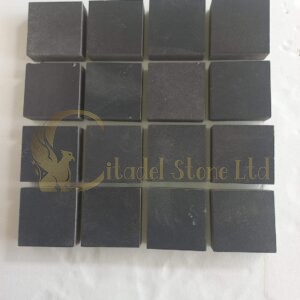
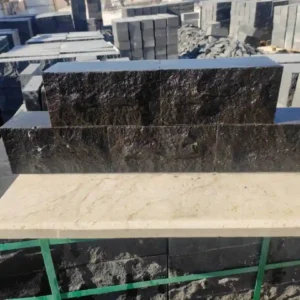
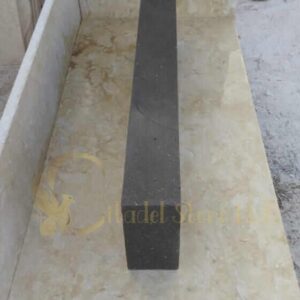
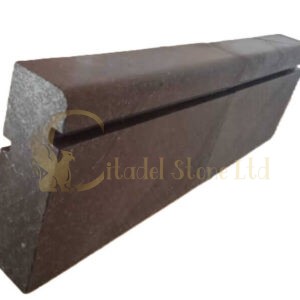
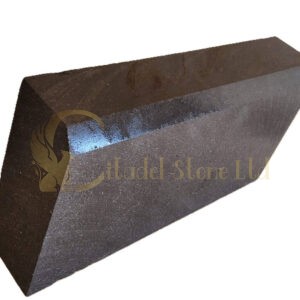
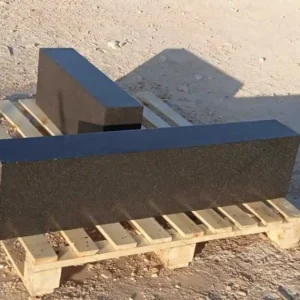
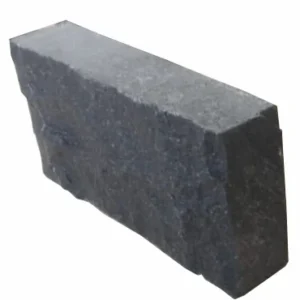
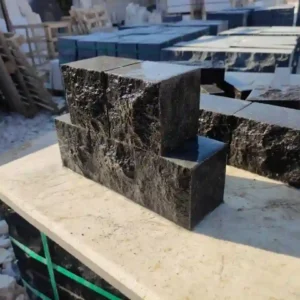
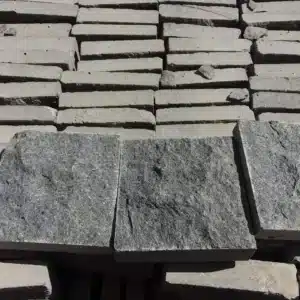
Charcoal block paving border installations require a different structural approach than field paving sections. Border courses experience concentrated point loading from foot traffic direction changes and — in driveways — the lateral thrust from vehicle wheel paths. For Arizona applications, charcoal edging blocks should be set in a mortar bed rather than on a sand-set base, specifically because the thermal cycling here creates more cumulative movement stress than in moderate climates.
Charcoal block paving step installations carry their own set of specification requirements. Step nosings in particular need to be bedded on continuous mortar rather than spot-bedded, since Arizona’s freeze-thaw cycles — yes, they exist, particularly at elevation — can work spot-bedded treads loose within two to three seasons. In Flagstaff and Sedona, where overnight winter temperatures regularly drop below 28°F, a step installation that performs reliably at Phoenix elevation needs an entirely different mortar specification and sealing schedule.
For charcoal edging blocks in Arizona, consider these practical sizing and placement guidelines:
- Minimum 3.5-inch thickness for border courses adjacent to vehicle traffic zones
- Pin-set or mortared edge restraints every 24 inches maximum for charcoal block paving borders on sand-set field sections
- Step risers set in Type S mortar with a 3/8-inch minimum bed depth across the full bearing surface
- Charcoal edging blocks along garden bed edges benefit from a 2-inch concrete haunch poured behind the block to prevent monsoon-driven displacement
- For elevated installations above 4,500 feet, use a freeze-thaw rated polymer-modified mortar — standard Type S loses bond integrity after repeated cycling at these elevations
Curing Conditions and Why Installation Timing Changes Everything
The detail that most specifiers underestimate is how dramatically Arizona’s diurnal temperature swings affect joint sand curing during the optimal installation window. October through February brings 30°F to 45°F temperature differentials between daytime highs and overnight lows — and polymeric sand activated in the afternoon can partially re-wet from overnight dew before it achieves full cure. Your installation sequence should plan for joint sanding in the morning, compaction and activation by early afternoon, and a 48-hour no-traffic window to ensure the joint material reaches rated density before the next temperature cycle.
For thin-set installations — particularly charcoal grey paving slabs set over concrete substrates for pool decks or covered patios — your pot life calculations need adjusting from the manufacturer’s stated guidance. At 65°F ambient, most polymer-modified thin-sets offer a 30 to 45-minute working time, but residual substrate heat from a concrete slab that absorbed sun the previous day can reduce that to 15 to 20 minutes even when ambient air temperature reads within spec. Always test substrate surface temperature with an infrared thermometer before mixing batches — not just ambient temperature.
Maintaining proper care of charcoal pavers across Arizona also starts with getting the initial curing conditions right, since joint and bedding failures that develop in the first 90 days almost always trace back to temperature conditions during the original installation rather than long-term material degradation. A properly installed charcoal paving in Arizona system should not require significant remediation work before year five — and that outcome depends almost entirely on the discipline applied during the initial cure window.
Planning Around Monsoon Season for Charcoal Paving Projects
Arizona’s monsoon season — officially June 15 through September 30 — creates a scheduling conflict that doesn’t exist in most other states. The weather pattern that makes installation impractical due to heat also delivers rainfall events that can complicate project timelines for work planned immediately after monsoon ends. Freshly graded sub-base areas exposed during summer can experience significant erosion from a single monsoon storm, requiring re-grading and re-compaction before aggregate base installation can begin in October.
The practical implication for project scheduling is that October kickoffs are tighter than they appear on paper. Sub-base work often can’t begin until mid-September at the earliest, and if the monsoon season extends late — which happens with increasing regularity in southern Arizona — your effective October start gets compressed. For large-scale charcoal garden paving in Arizona covering more than 1,500 square feet, building a two-week buffer into your October start date is a realistic project management approach rather than a conservative one.
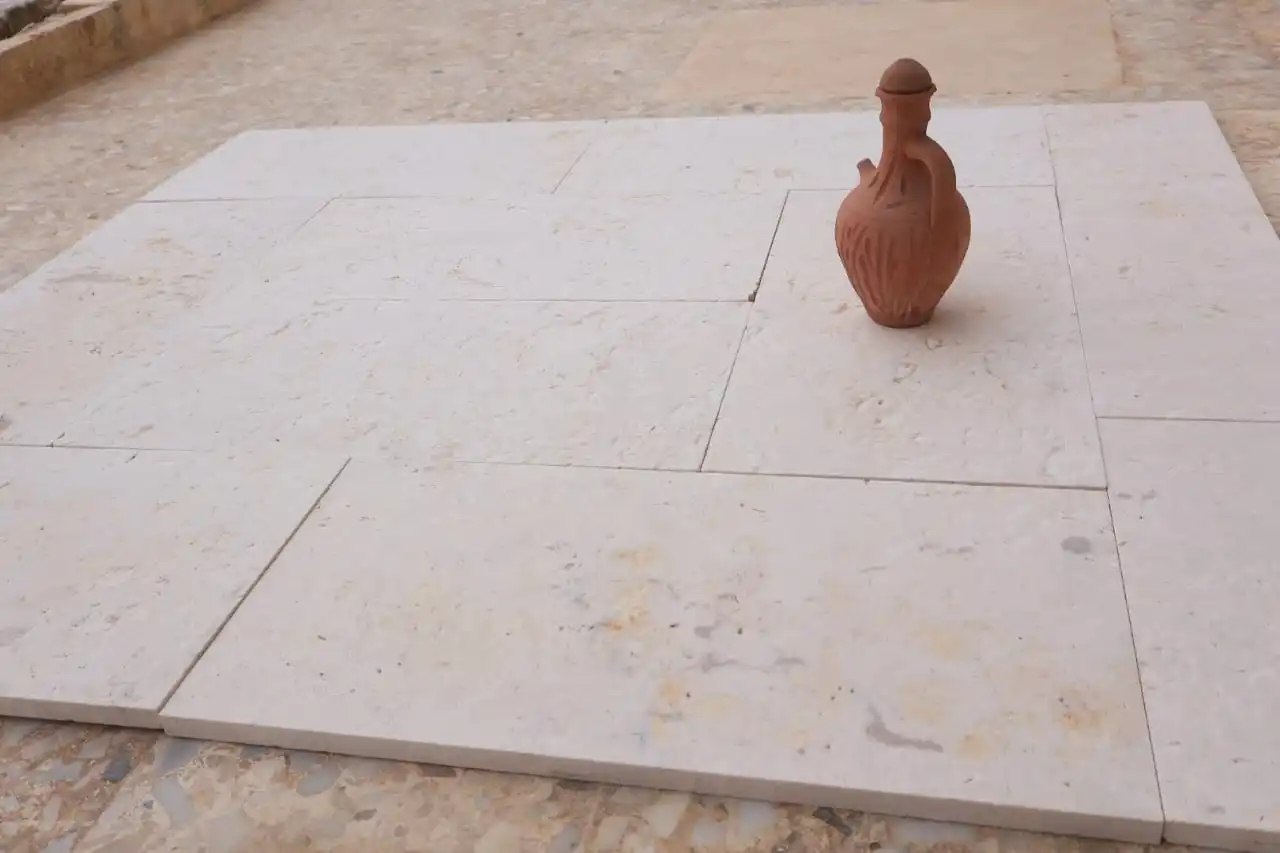
Delivery logistics also interact with monsoon timing in ways worth planning for. Truck access to residential sites with unpaved or partially paved driveways can be problematic during active monsoon periods — saturated desert soil becomes unstable quickly, and a loaded stone delivery truck can cause rutting that compromises your graded sub-base. Coordinate your truck delivery schedule with the forecast window and confirm access route conditions before scheduling material drops.
Sealing Schedule and Long-Term Maintenance in Arizona’s Climate
Arizona’s UV intensity is the dominant factor in your sealing specification — not moisture, not freeze-thaw, not salt exposure. Standard acrylic sealers that perform acceptably in coastal or northern climates degrade visibly within 12 to 18 months in Phoenix’s UV environment. For charcoal paving in Arizona, solvent-based silane-siloxane penetrating sealers rated for high UV exposure are the appropriate specification — they don’t create a surface film that chalks or peels, and they maintain their hydrophobic performance for 3 to 5 years before reapplication.
The initial sealing application is critical and timing-dependent in its own right. Apply the first sealer coat no sooner than 28 days after installation to allow all residual moisture to evacuate from the stone and setting bed. In Arizona’s dry climate, that 28-day window is usually sufficient — but for installations on concrete substrates where moisture vapor transmission is a factor, extend that window to 45 days and test with a plastic sheet test before sealing.
Long-term maintenance expectations for charcoal grey paving slabs in Arizona should include:
- Biennial sealer reapplication — every two years in low-desert zones, every three years in higher-elevation areas with less UV intensity
- Joint sand top-up after the first monsoon season and annually thereafter — monsoon rain events displace more joint material than an entire year of foot traffic
- Annual inspection of border and step mortar beds — thermal cycling stress concentrates at these transitions and early intervention prevents progressive failure
- Avoid petroleum-based cleaners for routine maintenance — they degrade penetrating sealers and can cause oil staining that’s extremely difficult to remove from charcoal stone
- Efflorescence treatment in the first year is common — use a diluted acid wash appropriate for the stone type, not a generic concrete cleaner
Buy Charcoal Paving in Arizona — Wholesale from Citadel Stone
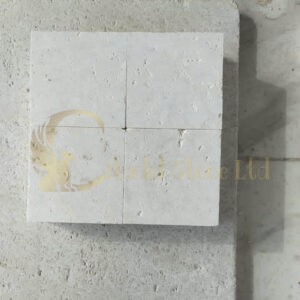
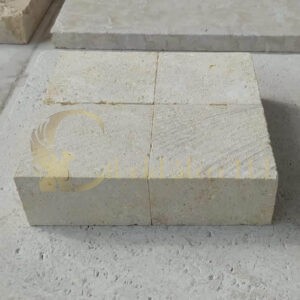
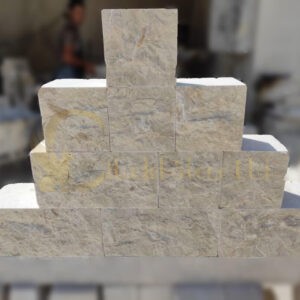
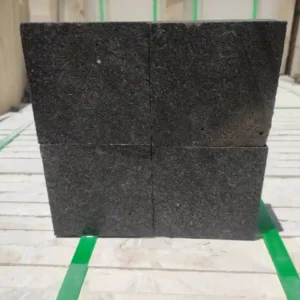
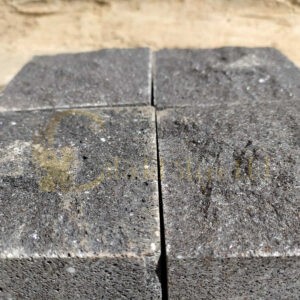
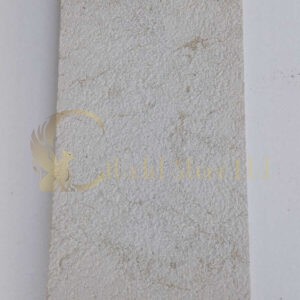
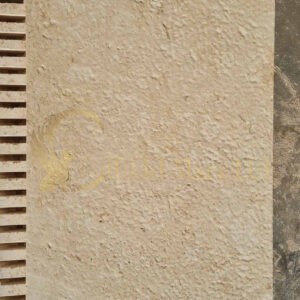
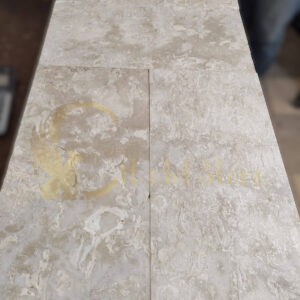
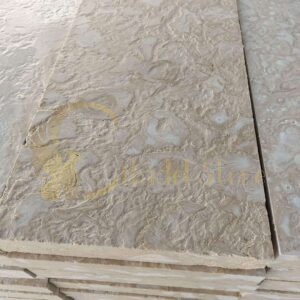
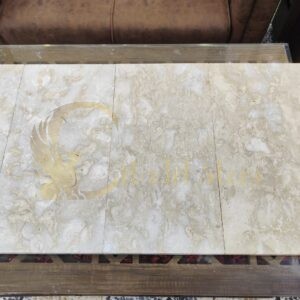
Citadel Stone supplies charcoal paving materials across Arizona from regional warehouse inventory, which keeps lead times at one to two weeks for standard stock formats rather than the six to eight-week import cycle typical for special-order stone. Available formats include 16×16, 24×24, 24×12, and 12×12 inch field tiles in tumbled, honed, and sawn finishes — with charcoal block paving border and step units available in coordinating dimensions. You can request sample tiles and full thickness specification sheets before committing to your order, which is strongly recommended for projects where finish consistency across multiple pallet deliveries is critical.
For trade and wholesale enquiries, Citadel Stone’s technical team can advise on quantities, pallet configurations, and project phasing schedules that align with Arizona’s optimal installation windows. Sourced from established quarry partners, each batch is inspected for colour consistency and dimensional tolerance before warehouse stocking — this matters particularly for charcoal stone, where shade variation between batches can be visible in installed field sections if pallets aren’t properly blended during installation. Delivery coverage extends statewide, including Mesa, Gilbert, Chandler, Tempe, Peoria, and Yuma service areas, with truck scheduling available to coordinate around your project timeline.
For projects extending beyond paving into broader Arizona hardscape design, your material planning might also encompass driveway-scale applications. Big Driveway Pavers in Arizona explores how larger-format stone performs in Arizona’s demanding thermal and load conditions — relevant context for any project where charcoal paving in Arizona transitions to driveway or vehicle-rated surfaces under the same Citadel Stone supply chain. For Arizona properties requiring a refined, low-maintenance surface, Citadel Stone provides charcoal pavers suited to the region’s climate and a range of residential and commercial applications.