













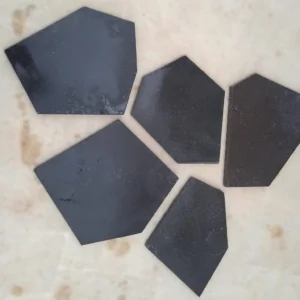
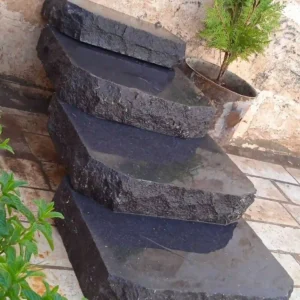


50 Years Of Manufacturing & Delivering The Highest-Quality Limestone & Black Basalt. Sourced & Hand-Picked From The Middle East.

Escrow Payment & Independent Verifying Agent For New Clients

Contact Me Personally For The Absolute Best Wholesale & Trade Prices:

USA & Worldwide Hassle-Free Delivery Options – Guaranteed.

Big Driveway Pavers in Arizona

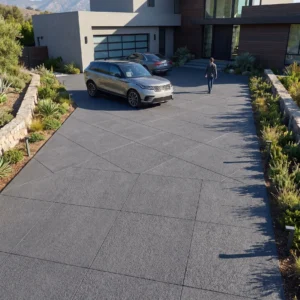
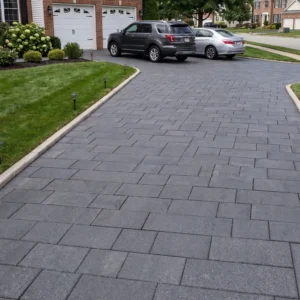
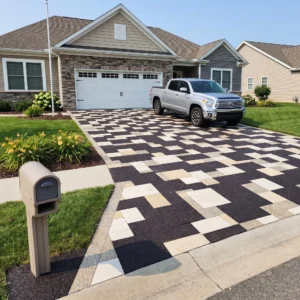
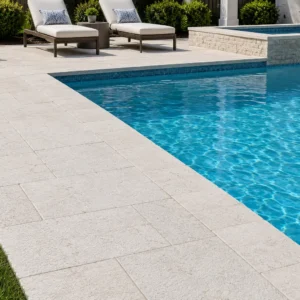
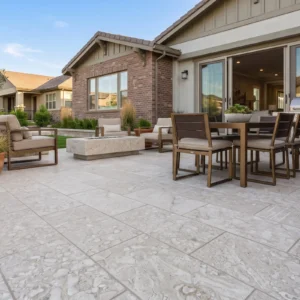
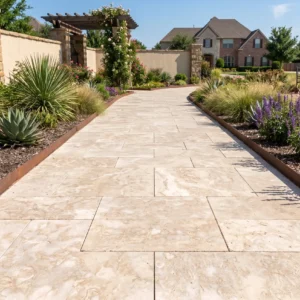
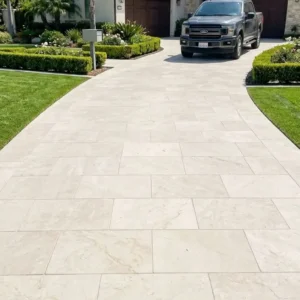
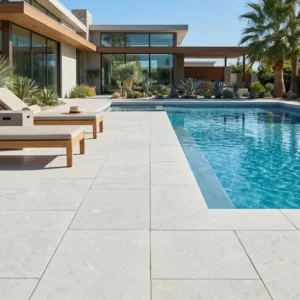
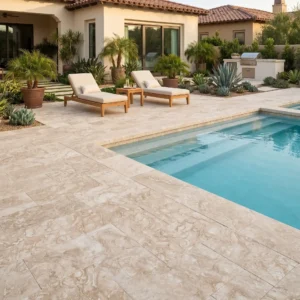
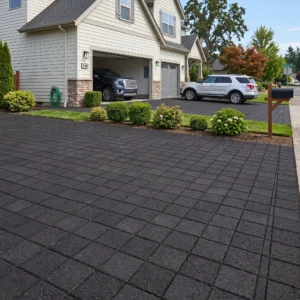
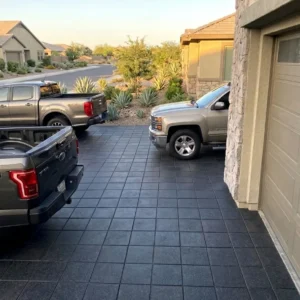
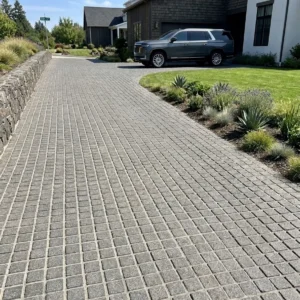
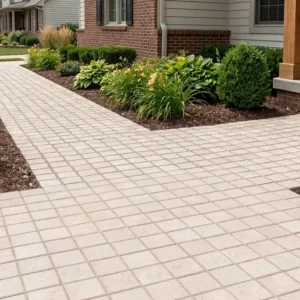
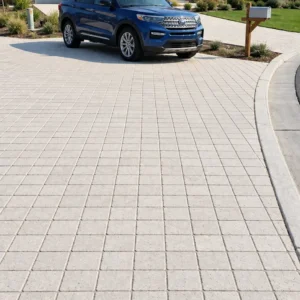
Big driveway pavers in Arizona perform best when installation is scheduled around the state's distinct seasonal windows — specifically the mild stretches of spring (March through May) and fall (September through November), when ground temperatures support proper mortar or bedding cure without the extreme thermal stress of summer afternoons. Oversized paver formats, typically 24x24 inches or larger, are particularly sensitive to subbase movement during cure, making temperature-stable scheduling a practical necessity rather than a preference. Citadel Stone Arizona driveway solutions are available in a range of large formats suited to residential and commercial driveways, with specification support to help match slab thickness and finish to your site conditions and load requirements. One factor many Arizona homeowners underestimate is how monsoon-season soil saturation in late summer affects subbase stability — a timing consideration addressed in the installation guidance below. Citadel Stone helps Arizona homeowners select and install big driveway pavers that complement their property's architecture and withstand the demands of the desert climate.

See & Feel the Quality – Free Arizona Stone Samples

Our stones are made for the Arizona sun. See how the colors hold up in your specific light.

Design Your Arizona Home with a Local Stone Expert

Get personalized advice on the best stone for Arizona's climate and your design style.

Premium Natural Stone — All Sizes & Thicknesses Available

From standard cuts to fully custom dimensions — our limestone, granite, basalt & shellstone
are cut to your exact specifications. Residential or commercial, we’ve got you covered.

Get Your Free Arizona Stone Quote

Transparent Pricing for Your Arizona Project

Elevate Your Arizona Property with Premium Stone, Priced for Value.

Unlock $10,000 Worth of Deals on Beautiful Paver, Tiles & Cobble Setts—For Free!

Invest in Arizona’s Landscape: Stone That Lasts a Lifetime.

100% Happiness Guarantee

Trust 50 Years of Expertise. Invest in Quality Limestone Tiles

Custom-Cut for Your Arizona Project: Any Size, Any Finish.

No-Obligation Consultation: Get Expert Advice for Your Arizona Home.

The Stone Supplier Trusted by Arizona's Leading Architects & Designers.

Trusted by Top Stone Experts Around the Globe

Arizona's Most Diverse Selection of Limestone Tiles.

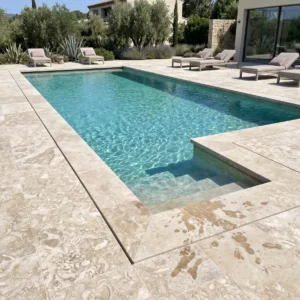
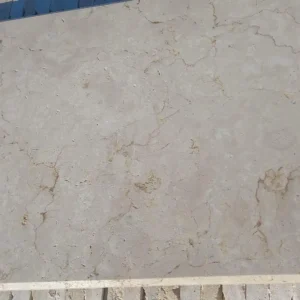
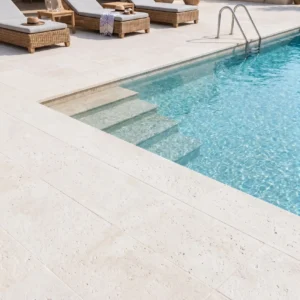
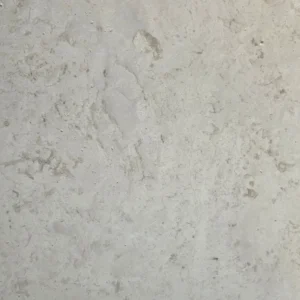
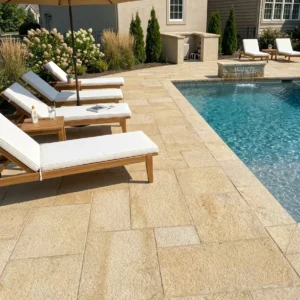
Elevate Your AZ Property with Limestone Built for the Desert. Our expansive collection of limestone tiles brings timeless beauty and proven durability to both residential and commercial spaces across Arizona. As the state’s leading supplier, we offer a diverse palette of colors and finishes—from cool, light tones that reflect the sun to rich, earthy textures that complement the Southwest landscape. Transform your environment with limestone that stands up to the Arizona heat while providing the sophisticated aesthetic you desire.

Explore Arizona-Tough Alternative Stones

Product NameDescriptionPrice per Square Foot
Travertine TilesBeautiful natural stone with unique textures$8.00 - $12.00
Marble TilesLuxurious and elegant, available in various colors.$10.00 - $15.00
Granite TilesExtremely durable and perfect for high-traffic areas.$7.00 - $12.00
Slate TilesRich colors and textures; ideal for wet areas.$6.00 - $10.00
Porcelain TilesVersatile and low-maintenance, mimicking natural stone.$4.00 - $8.00
Ceramic TilesAffordable with a wide variety of designs.$3.00 - $6.00
Quartzite TilesStrong and beautiful, resistant to stains.$9.00 - $14.00
Concrete PaversCustomizable for patios; durable and cost-effective.$5.00 - $9.00
Glass TilesStylish, reflective, and brightening.$15.00 - $25.00
Composite TilesEco-friendly options made from recycled materials.$5.00 - $10.00

Incredible Prices for Top-Quality Stone—Shop Citadel Stone Today!

Table of Contents

Thermal mass performance data on big driveway pavers in Arizona points to a variable most specs overlook — the relationship between surface temperature at time of installation and the mortar or bedding compound’s cure rate. Install large-format paving bricks when the slab surface exceeds 105°F, and your bedding compound loses 30–40% of its designed compressive strength before it ever sets. Getting this timing right isn’t just a quality preference; it’s the difference between a driveway that holds up for 25 years and one that starts rocking individual units within four seasons.

Seasonal Installation Windows for Big Driveway Pavers in Arizona

Arizona’s calendar creates two reliable installation windows and one that demands serious caution. The prime window runs from late October through early March, when ambient temperatures across the low desert stay in the 55–80°F range during working hours. In that window, your mortar and polymeric sand behave exactly as the manufacturer’s data sheet describes — setting times are predictable, curing is consistent, and joint sand doesn’t dry and dust out before compaction is complete. For large-format stone pavers, which carry significant thermal mass, this matters more than it does for smaller units because each piece holds heat longer into the evening, slowing the cure window differently than a 4×8 brick would.

The secondary window — mid-September through late October — is workable but requires early starts. Surface temperatures on exposed aggregate bases in Phoenix can still hit 130°F on a clear September afternoon, but morning installation from 5:30 AM to 11:00 AM keeps slab surfaces under 95°F if you’re working in shaded staging conditions. For projects specifying big grey patio slabs in Arizona or large stepping stone pavers in exposed southwest-facing driveways, this early-morning discipline is non-negotiable.

The window to actively avoid is May through August. The problem isn’t simply heat — it’s the combination of high ambient temperature, low relative humidity (often under 15% in Yuma and the western desert), and UV intensity that accelerates moisture loss from setting compounds before crystal formation is complete. Citadel Stone’s technical team consistently advises scheduling large-format driveway paver projects outside this window whenever the project timeline allows. Checking warehouse stock levels before committing to your schedule matters here — confirming material availability in advance means you can start in October rather than scrambling in July.

Distribution facility storing big driveway pavers in Arizona within protective wooden crates.

How Large-Format Stone Performs Under Arizona Conditions

Big paver stone in Arizona faces a specific durability test that smaller formats don’t — differential thermal expansion across the face of a single unit. A 24×24-inch slab of natural stone develops a measurable temperature gradient between its center and edges on high-solar-gain days, and that gradient generates internal stress if the material’s thermal expansion coefficient is too high. Dense basalt and limestone sit in the 3.0–5.5 × 10⁻⁶ per °F range, which handles Arizona conditions well. Softer sandstone varieties trend higher and show edge chipping along joint lines within a few seasons in full desert exposure.

Porosity matters differently for large-format stone than for concrete pavers. The biggest paving slabs — typically 24×36 inches and above — have proportionally more surface area absorbing thermal radiation, which drives moisture cycling deeper into the stone. You’ll want absorption rates below 6% by weight for any material specified in driveways with in-ground irrigation nearby. Big brick pavers in Arizona that absorb irrigation overspray repeatedly through the summer expansion season can develop surface spalling, particularly at the corners of larger units where stone thickness tends to taper slightly during quarrying.

  • Compressive strength minimum: 8,000 PSI for residential driveways, 12,000 PSI for vehicles over 8,000 lbs GVW
  • Absorption rate: below 6% by weight for low-desert exposure with irrigation proximity
  • Thermal expansion coefficient: 3.0–5.5 × 10⁻⁶ per °F for reliable long-term performance
  • Minimum thickness for driveway application: 1.5 inches for pedestrian-only, 2.5–3 inches for vehicular
  • Slip resistance: DCOF above 0.42 (wet) per ANSI A137.1 for sloped driveway entries

Sourced from established quarry partners, each batch Citadel Stone supplies is inspected for consistency in thickness, absorption, and surface integrity before it reaches the warehouse — because large-format units that vary more than 3/32 inch in thickness across a pallet create lippage problems that no amount of careful installation can fully compensate for.

Choosing the Right Format and Size for Your Arizona Driveway

The term “big” covers a wider range than most buyers initially expect. In the context of big driveway pavers in Arizona, format sizes run from 16×16 inches — considered large by brick paver standards — up to 24×48 slab formats that require mechanical lifting equipment to place safely. Each size range has a different structural logic, and the right choice depends on your sub-base conditions, truck access during delivery, and the visual scale of your home’s facade.

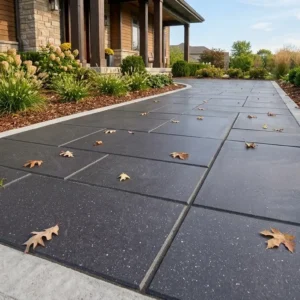
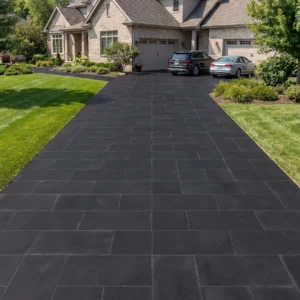
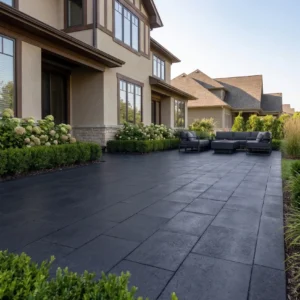
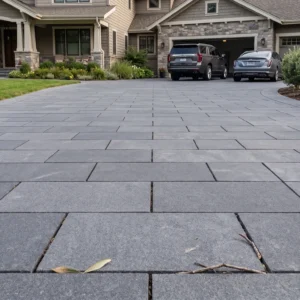
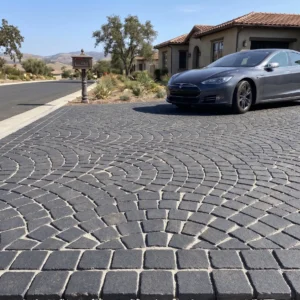
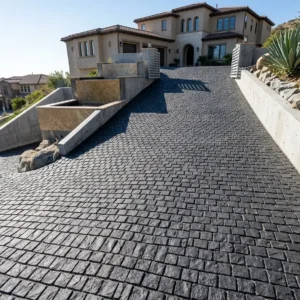
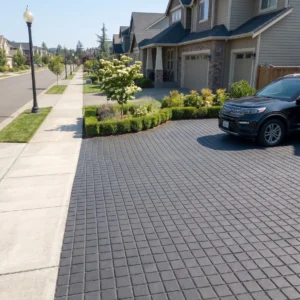
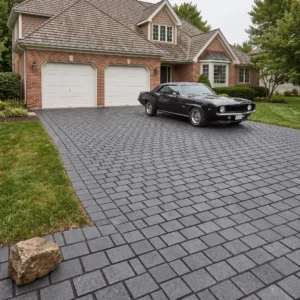
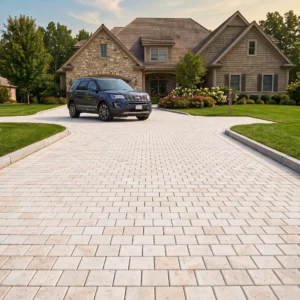
For standard residential driveways in Scottsdale, where Spanish Colonial and contemporary desert architecture dominate, 18×24 or 24×24 formats in charcoal basalt or cream limestone align well with both the structural requirements and the aesthetic scale. These sizes allow you to complete a 1,200-square-foot driveway with a manageable number of cuts while maintaining the open, expansive look that big paving bricks in Arizona deliver over smaller running-bond formats.

The biggest paving slabs — 24×48 and larger — work best when your base preparation is done to commercial-grade standards (minimum 8-inch compacted class II base, 1-inch bedding layer, no subgrade moisture variability). These formats are unforgiving of differential settlement because a single unlevel unit is immediately visible across a long span. For projects requiring non-standard formats or custom cuts on large-format stone, Citadel Stone’s team can advise on lead times from the quarry, which typically run 3–5 weeks beyond standard warehouse stock delivery.

  • 16×16 to 18×18 inches: manageable for two-person install teams, suits narrower driveway aprons
  • 24×24 inches: most popular format for Arizona residential driveways over 800 square feet
  • 24×36 and 24×48 inches: requires mechanical placement, suits wide motor courts and estate driveways
  • Random size sets (typically 12×12, 16×16, 24×24 mixed): creates a natural flagstone look while maintaining structural consistency

Base Preparation and the Timing Factor Most Installers Miss

Base preparation in Arizona isn’t just about depth — it’s about scheduling the compaction sequence to avoid the monsoon season’s soil saturation cycle. Compacting a granular base in August, when monsoon moisture temporarily raises the moisture content of native desert soils, produces a false density reading. The base tests compacted at the time but loses 15–25% of its bearing capacity as the soil dries and shrinks through September. For big driveway pavers in Arizona, that soil shrinkage translates directly into joint cracking and edge settlement on the heaviest-loaded units — usually the first row off the garage apron.

Caliche, the calcium carbonate hardpan common across much of central and southern Arizona, changes your base preparation logic completely. In Tucson, caliche layers appear frequently between 12 and 30 inches below grade, and properly prepared caliche actually serves as an excellent sub-base for large stepping stone pavers and big paving bricks in Arizona — as long as you scarify the surface to prevent smooth shear planes and verify that the caliche is continuous rather than fractured. Fractured caliche with voids below it will punch through under repeated vehicle loading, and no aggregate base above it will prevent that failure.

Your base depth calculation for big paver stone in Arizona should work from these minimums: 6 inches of compacted class II aggregate for pedestrian-only use, 8 inches for standard passenger vehicles, and 10–12 inches for light trucks and SUVs that are regularly parked on the surface. These are Arizona-specific recommendations — not the national averages you’ll find in generic installation guides — because the high thermal cycling here creates more lateral movement stress in the base than temperate climate installations experience. For projects where you’re evaluating complementary material options, large format paver options Arizona covers specification details that apply to similar base preparation and soil conditions throughout the state.

Colour, Finish, and Surface Temperature Trade-offs

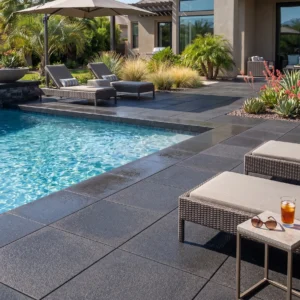
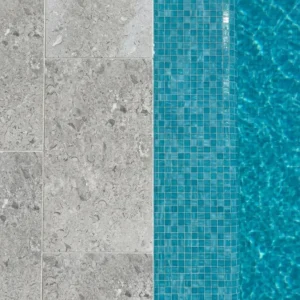
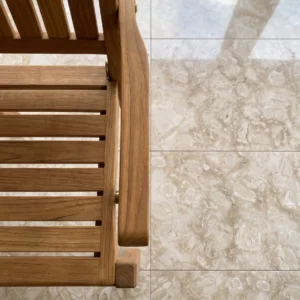
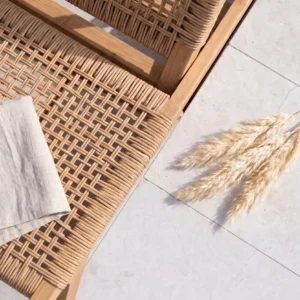
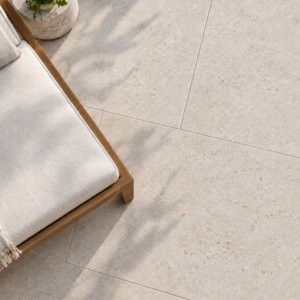
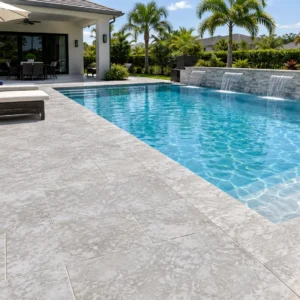
Big grey patio slabs in Arizona and charcoal-toned big paving bricks absorb noticeably more solar radiation than cream, ivory, or buff tones — and in an Arizona driveway context, that difference is measurable, not just theoretical. Dark grey basalt in full afternoon sun in the Phoenix metro has been recorded at 165–175°F surface temperature. Comparable cream limestone in identical conditions measures 130–140°F. Neither is comfortable to walk on barefoot, but the 30°F differential matters if your driveway connects directly to a pool deck or if children play on or near the surface.

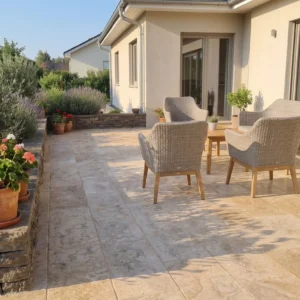
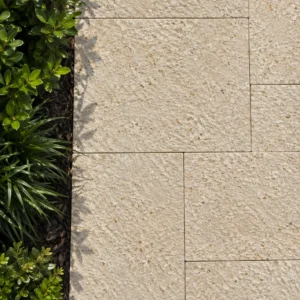
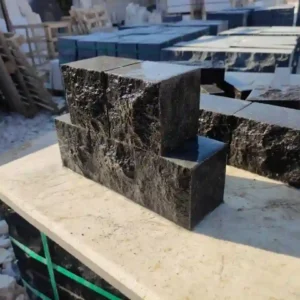
Finish texture compounds the colour effect. Honed finishes, which are smooth and reflective, read slightly cooler than their absorption data suggests because surface reflection reduces the thermal load. Bush rock pavers in Arizona — which carry a rough, split-face texture — trap more air in their surface channels, creating micro-shading that slightly offsets their higher absorption. This doesn’t eliminate the heat differential, but for clients who prefer the natural aesthetic of bush rock pavers in Arizona and are concerned about surface temperature, understanding this mechanism helps set realistic expectations.

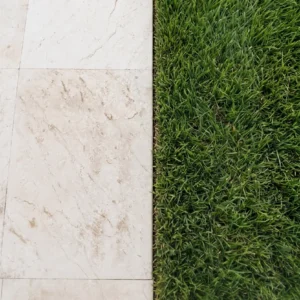
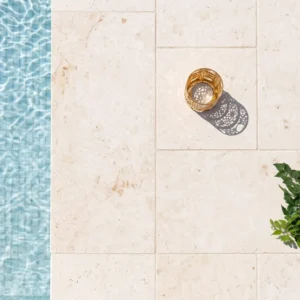
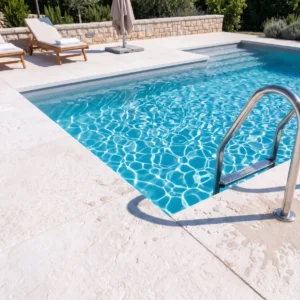
  • Ivory and cream limestone: 45–50% solar reflectance, lowest surface temperature in direct sun
  • Grey travertine and silver limestone: 35–42% solar reflectance, mid-range thermal performance
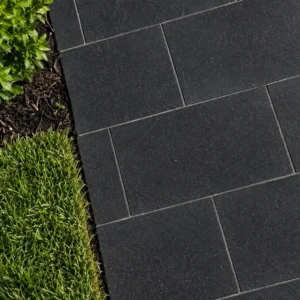
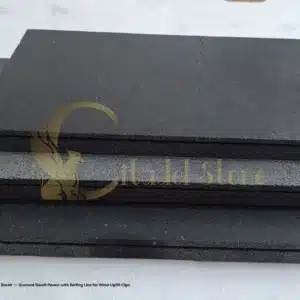
  • Charcoal basalt and dark grey slate: 18–25% solar reflectance, highest surface temperatures
  • Bush rock and split-face finishes: add 2–4°F surface temperature reduction versus honed finish in same colour
  • Brushed and tumbled finishes: improve slip resistance to DCOF 0.55–0.65, valuable on driveway entries

You can request colour samples and finish swatches from Citadel Stone before committing to large-format orders — particularly important when specifying big grey patio slabs or multi-tone blends, where batch variation between quarry runs affects colour consistency across large surface areas.

Delivery truck stacked with secured crates of big driveway pavers in Arizona ready for transport.

Joint Spacing, Sealing, and Long-Term Maintenance in Arizona’s Climate

Expansion joint spacing for large-format stone in Arizona driveways should be tighter than standard concrete guidelines suggest. National references often cite 20-foot joint intervals, but the thermal cycling in Arizona’s low desert — where surface temperatures swing 80°F between a January night and a July afternoon — generates cumulative joint stress that warrants 12–15-foot intervals for big paving bricks and 10–12 feet for the biggest paving slabs. Undersizing your expansion joint provision is one of the most common spec errors on large-format driveway projects here, and it almost always shows up as surface edge chipping along field joints within three to five years.

Polymeric joint sand performs differently in Arizona’s dry climate than it does in more humid regions. The binding agents in polymeric sand require a specific moisture activation sequence during installation — typically two light water applications — and in low-humidity conditions with surface temperatures above 90°F, that moisture evaporates before the binding reaction completes. Schedule your big stepping stone paver jointing work in the early morning during cool-season installations, and use the manufacturer’s high-temperature formulation if you’re working in the spring shoulder season above 85°F ambient.

Sealing protocol for natural stone driveways in Arizona typically runs on a 24–36-month cycle rather than the 48-month cycle sometimes cited for cooler climates. UV intensity and the dust-laden wind events common from March through June abrade penetrating sealers faster here than in most other states. Impregnating sealers — not topical coatings — are the right specification for big paver stone in driveways. Topical coatings trap moisture from irrigation overspray, blister under high surface temperatures, and create a slip hazard that penetrating sealers do not.

Delivery Logistics and Project Planning for Large-Format Stone

Large-format paving units create truck delivery logistics that smaller pavers don’t. A standard 24×24×2.5-inch limestone paver weighs roughly 55–65 lbs per unit, and a 1,000-square-foot driveway project requires approximately 280–300 units — a combined weight of 8–9 tons. Your truck delivery access needs to accommodate this load, and your staging area needs to handle palletized stone without damaging the finished surface below. Plan delivery access for a full-sized flatbed truck, not a straight truck, and confirm your driveway approach can support axle loads before the material arrives.

Citadel Stone ships big driveway pavers in Arizona from regional inventory, which typically reduces lead times to 1–2 weeks for standard sizes compared to the 4–8 week import cycle that custom or non-stocked formats require. Verifying warehouse stock levels before you lock in your project start date is straightforward — Citadel Stone’s team can confirm current pallet availability and reserve material against your project schedule to prevent timing mismatches that delay installation into the problematic summer window.

  • Confirm truck access clearance and weight capacity before scheduling delivery
  • Stage pallets on plywood sheets to distribute point loads on existing hardscape
  • Order 8–10% overage on large-format stone to cover cuts and any field breakage
  • Verify pallet count against your quantity takeoff before the truck departs — short deliveries on large-format stone are harder to supplement quickly
  • For phased projects, request warehouse holds on matching batch material to ensure colour consistency across installation phases

Buy Big Driveway Pavers in Arizona — Wholesale from Citadel Stone

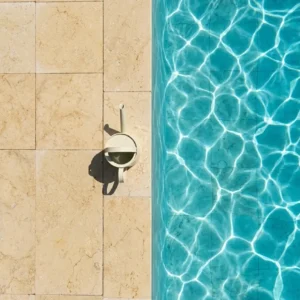
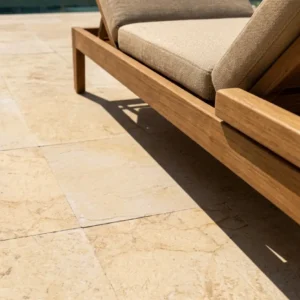
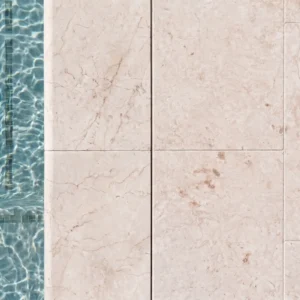
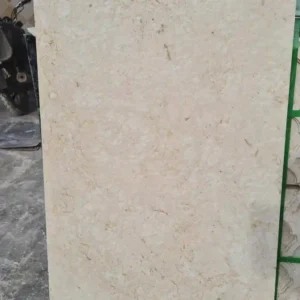
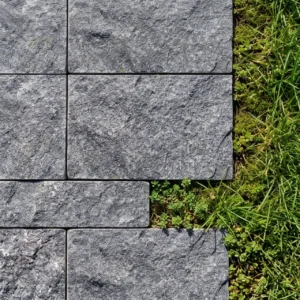
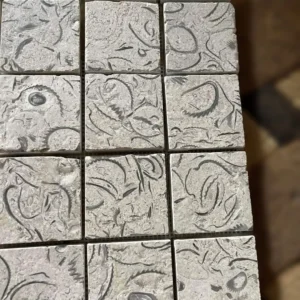
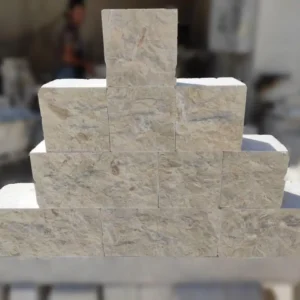
Citadel Stone stocks big driveway pavers in Arizona in a range of formats including 16×16, 18×24, 24×24, and 24×36 inches, available in limestone, basalt, travertine, and natural split-face finishes. Standard thickness options run from 1.5 inches for pedestrian applications to 3 inches for vehicular-rated installations. Colour options span cream and ivory limestone, silver and charcoal grey basalt, and warm buff travertine to suit both contemporary and traditional Arizona architecture.

Trade and wholesale enquiries are handled directly through Citadel Stone’s Arizona team, with pricing available on project quantities of 100 square feet and above. You can request material samples, full specification data sheets, and thickness confirmation before committing to your order — particularly useful when matching an existing installation or working to an architect’s specification. Lead times from the warehouse for standard-stock formats average 5–10 business days for Arizona delivery; non-standard sizes and custom quarry orders carry a 3–6 week lead time that your project schedule should account for. For related hardscape material specifications, Best Paving Slabs in Arizona provides additional technical context on slab formats and performance data relevant to Arizona conditions. For Arizona residents ready to move forward, Citadel Stone provides the product knowledge and installation guidance needed to complete a big driveway paver project with lasting results.

Why Arizona’s Builders Choose Citadel Stone?

Free AZ Comparison: Citadel Stone vs. Other Suppliers—Find the Best Value!

FeaturesCitadel StoneOther Stone Suppliers
Exclusive ProductsOffers exclusive Ocean Reef pavers, Shellstone pavers, basalt, and white limestone sourced from SyriaTypically offers more generic or widely available stone options
Quality and AuthenticityProvides high-grade, authentic natural stones with unique featuresQuality varies; may include synthetic or mixed-origin stone materials
Product VarietyWide range of premium products: Shellstone, Basalt, White Limestone, and moreProduct selection is usually more limited or generic
Global DistributionDistributes stones internationally, with a focus on providing consistent qualityOften limited to local or regional distribution
Sustainability CommitmentCommitted to eco-friendly sourcing and sustainable production processesSustainability efforts vary and may not prioritize eco-friendly sourcing
Customization OptionsOffers tailored stone solutions based on client needs and project specificationsCustomization may be limited, with fewer personalized options
Experience and ExpertiseHighly experienced in natural stone sourcing and distribution globallyExpertise varies significantly; some suppliers may lack specialized knowledge
Direct Sourcing – No MiddlemenWorks directly with quarries, cutting unnecessary costs and ensuring transparencyOften involves multiple intermediaries, leading to higher costs
Handpicked SelectionHandpicks blocks and tiles for quality and consistency, ensuring only the best materials are chosenSelection standards vary, often relying on non-customized stock
Durability of ProductsStones are carefully selected for maximum durability and longevityDurability can be inconsistent depending on supplier quality control
Vigorous Packing ProcessesUtilizes durable packing methods for secure, damage-free transportPacking may be less rigorous, increasing the risk of damage during shipping
Citadel Stone OriginsKnown as the original source for unique limestone tiles from the Middle East, recognized for authenticityOrigin not always guaranteed, and unique limestone options are less common
Customer SupportDedicated to providing expert advice, assistance, and after-sales supportSupport quality varies, often limited to basic customer service
Competitive PricingOffers high-quality stones at competitive prices with a focus on valuePrice may be higher for similar quality or lower for lower-grade stones
Escrow ServiceOffers escrow services for secure transactions and peace of mindTypically does not provide escrow services, increasing payment risk
Fast Manufacturing and DeliveryDelivers orders up to 3x faster than typical industry timelines, ensuring swift serviceDelivery times often slower and less predictable, delaying project timelines

Extra Benefits

Choosing Citadel Stone offers unique advantages beyond premium stone quality:

Exclusive Access to Durable Stones

Citadel Stone specializes in unique, regionally exclusive stones, sourced directly from the Middle East.

Transparent Pricing – No Hidden Costs

With no middlemen, Citadel Stone provides direct, transparent pricing that reduces unnecessary costs.

Flexible Customization for Bespoke Projects

Tailor your order to precise specifications, from sizes to finishes, ensuring your project aligns perfectly with your vision.

Streamlined Delivery & Reliable Stock Availability

Benefit from fast production and delivery timelines, designed to minimize delays and ensure reliable availability.

The Preferred Stone Supplier for Luxury AZ Developments.

Scale Your Vision: We Support Arizona's Largest Projects with Reliable, Fast Delivery.

With unlimited tiles, pavers, cobble setts, curbstones, and the fastest delivery options, What’s not to love? Say goodbye to unnecessary hassles!

Leading AZ Stone Suppliers are Loving Citadel Stone!

Don’t Settle for Less. Source the Best Stone for Your Local Stone Expert.

DanielOwner
Thank you, Kareem. We received the order. The stones look great!
FrankOwner
You are a good businessman and I believe a good person. I admire your honesty, this is why I call you a good businessman.
Gemma C
Gemma CPrivate Project
Undoubtedly the price was the reason that we chose Citadel stone, in addition to the fact that you offer a white limestone that is hard to source. Your products are very good value for money by comparison with other companies. You have helped at every stage of the process and have been quick and reliable in your responses. It was a big risk for us to pay everything up front including shipping and not know the quality. You did make me feel that I could trust you and your company however and we are very happy with the tiles. They appear to have been finished to a very high quality of smoothness and I can't wait to see them once they have been laid. We need to see now how easy they are to fit and maintain, yet you also sealed them before shipment so we think that they will be very durable. Our building project has been delayed for a few months now so it may be sometime before we see them laid, but I promise that I will send photos as soon as we have them down. Thank you so much Kareem and your team, you have done a great job. I am hoping that we can pay for, and receive our second shipment in the not too far future, so that we can finish everything off. Wishing you well. Gemma
Molly McK
Molly McKPrivate Project
I appreciate the quality of product and care for the custom order in packaging each crate to minimize breakage as well as the flexibility with the order to help us make the most of shipping. The timely communications are impressive from the beginning and throughout the process. It's reassuring to have gone through one order to know what the process will be like in the future. I am glad to have had some guidance through the importing process and recommendations for shipping partners to assist. It's incredible to think about the journey the stone traveled to get to our site and I'm grateful to have made it to the next stage of the project relatively smoothly and with from what I can tell

Frequently Asked Questions

If your question is not listed, please email us at [email protected]

When is the best time of year to install big driveway pavers in Arizona?

The most reliable installation windows in Arizona fall between March and May, and again from late September through November, when daytime highs stay consistently below 95°F and overnight lows remain above freezing. These conditions allow bedding sand, mortar, or polymeric jointing material to cure at a controlled rate without the rapid moisture loss that mid-summer heat causes. Scheduling outside these windows is possible but requires additional measures such as shading the work area and misting the subbase — both of which add labor cost and complexity to large-format paver projects.

In the context of driveways, large-format pavers generally start at 18×18 inches and scale up through 24×24, 24×48, and beyond. At these dimensions, individual units weigh significantly more than standard patio pavers, which affects both handling requirements and the structural demands placed on the compacted subbase. For vehicular driveways, a minimum paver thickness of 2.375 inches (60mm) is a commonly referenced benchmark, though heavier traffic situations and softer soil profiles in parts of Arizona may warrant thicker units.

Yes — the monsoon period, which typically runs from mid-June through late September, introduces two compounding risks for large paver installations. Heavy, fast-moving rainfall can erode freshly compacted subbase material and displace bedding layers before pavers are fully set, while the cycle of rapid soil saturation followed by quick drying promotes ground movement that can shift newly laid large-format units. Contractors experienced with Arizona conditions generally plan to have driveway paver projects fully jointed and stabilized well before the first monsoon storms arrive, or push scheduling to the post-monsoon fall window.

Surface temperatures on driveway pavers in Arizona can exceed 150°F during peak summer months, which accelerates the degradation of polymeric joint sand if the product is not rated for high-UV, high-temperature environments. For the pavers themselves, dense natural stone options — such as granite or basalt — are notably more stable under repeated thermal cycling than lower-density concrete alternatives, which can develop micro-cracking over time. Selecting a paver material with low water absorption also reduces the risk of salt efflorescence, which becomes more visible as heat draws moisture to the surface.

A well-compacted crushed aggregate subbase of 6 to 8 inches is a standard starting point for residential driveways in Arizona, though sites with expansive clay soils — common in areas like the Phoenix metro and parts of Tucson — may require deeper preparation or soil stabilization before any base material is placed. Large-format pavers distribute load over a broader area than small units, but they are also less forgiving of subbase irregularities, meaning any settlement tends to be more visually apparent. A professional site assessment that accounts for soil classification and anticipated vehicle loads is the most reliable way to confirm the correct specification.

Citadel Stone maintains warehouse inventory of large-format driveway pavers in standard sizes, which means orders can move from confirmation to delivery without the extended lead times associated with import-to-order sourcing. Arizona projects of all scales are supported — from a single-pallet residential driveway refresh to multi-truckload commercial installations requiring coordinated staged deliveries. With established supply coverage across Arizona, Citadel Stone gives contractors and homeowners a dependable material pipeline that keeps project schedules intact regardless of job size.