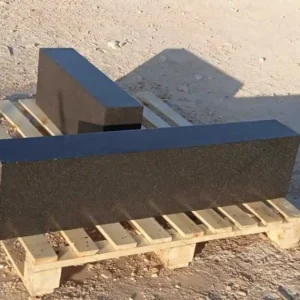
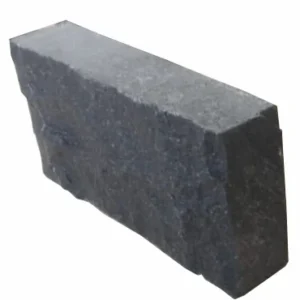
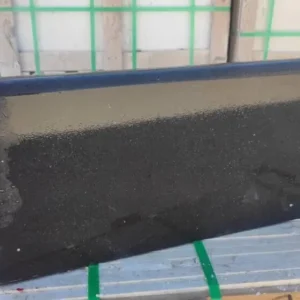
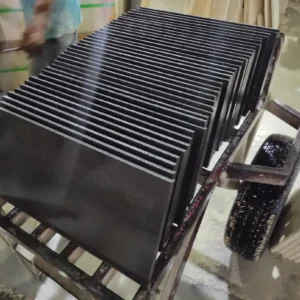
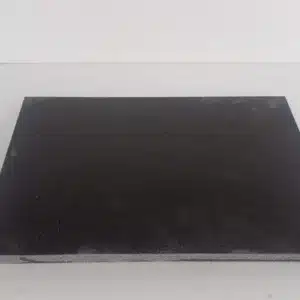
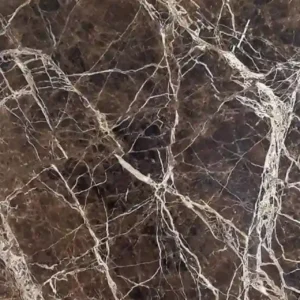
Thickness is the single variable that separates a driveway that stays level through a Phoenix summer from one that shifts and settles within three seasons. Specifying 50mm pavers for driveway in Arizona means working with a nominal 2-inch profile that distributes axle loads across a wider footprint than thinner residential formats — and that structural geometry matters enormously when soil movement is part of your site’s annual cycle. The right thickness is just the starting point; what you do beneath it and beside it determines whether you’re looking at a 25-year installation or a 12-year replacement.
Design and Aesthetic Identity: Why Thickness Shapes More Than Structure
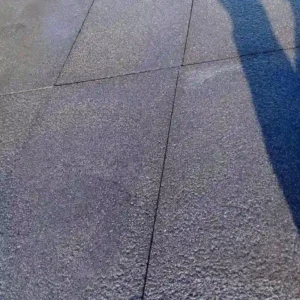
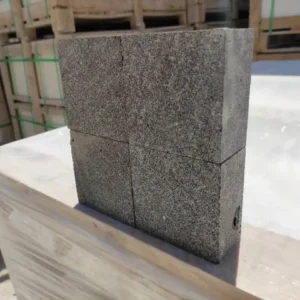
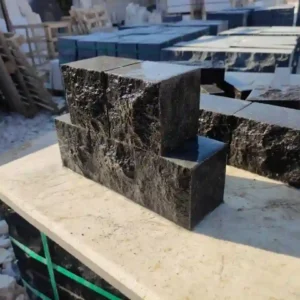
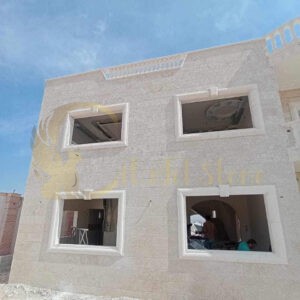
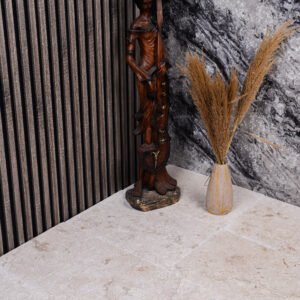
Arizona’s architectural vocabulary is one of the most distinctive in North America. From the warm ochre tones of Scottsdale’s desert contemporary homes to the Spanish Colonial revival corridors of Tucson’s historic districts, the visual language of the built environment here rewards stone materials that carry weight — literally and aesthetically. The 50mm profile gives pavers a presence that thinner formats simply can’t match. The shadow line cast by a deeper edge reveals itself at low morning and late afternoon light, adding dimensionality to driveway surfaces that flat-laid 30mm or 40mm options can’t deliver.
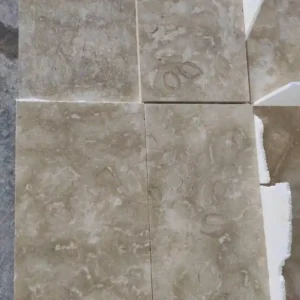
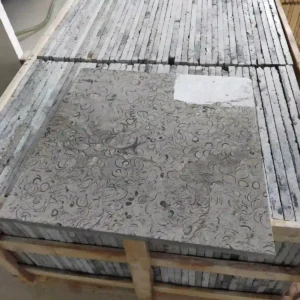
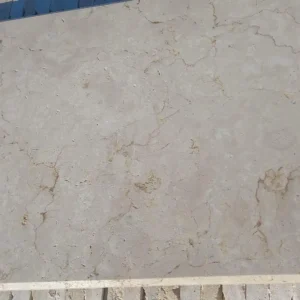
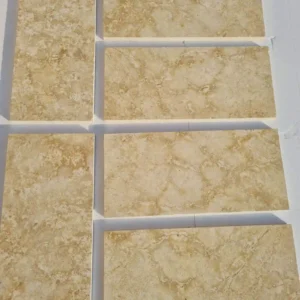
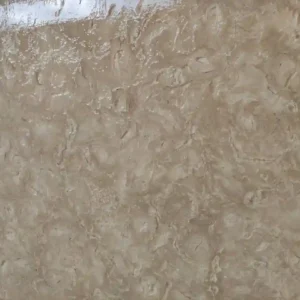
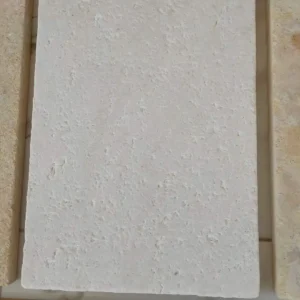
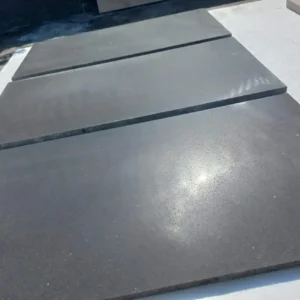
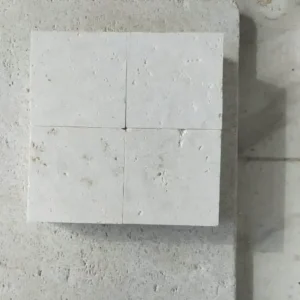
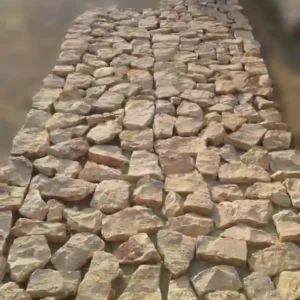
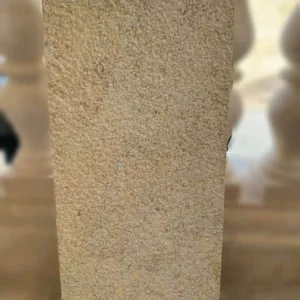
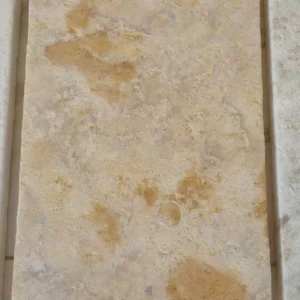
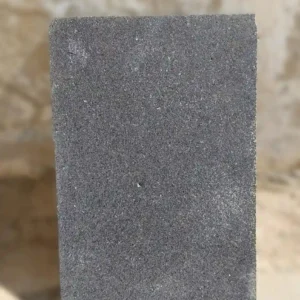
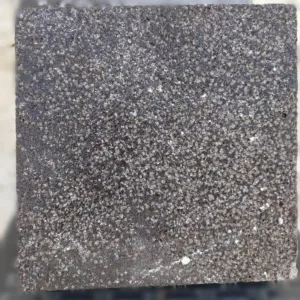
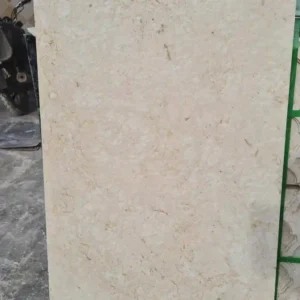
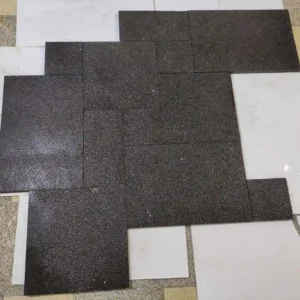
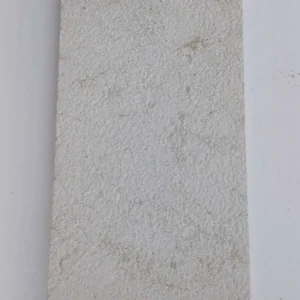
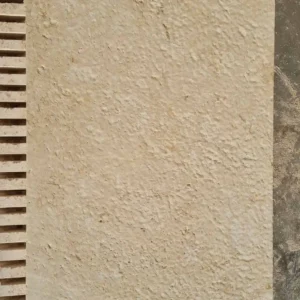
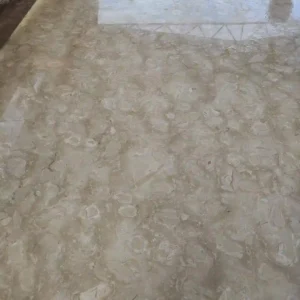
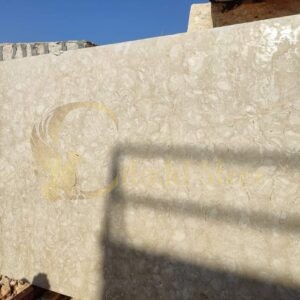
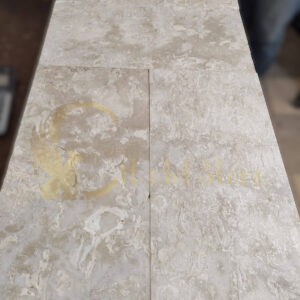
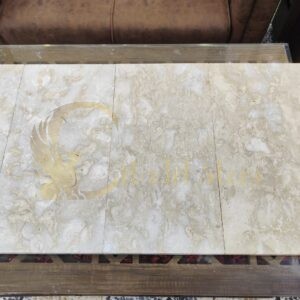
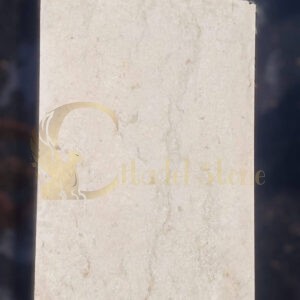
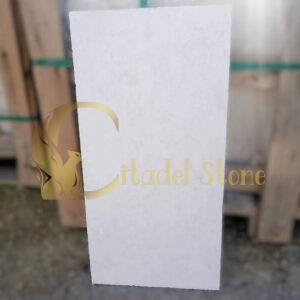
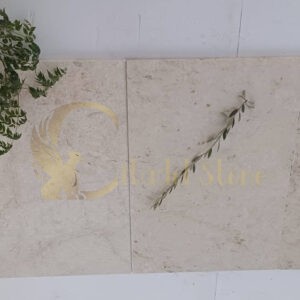
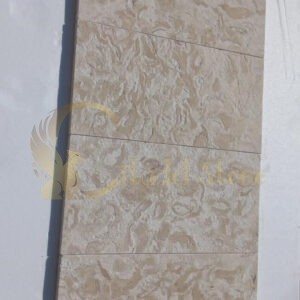
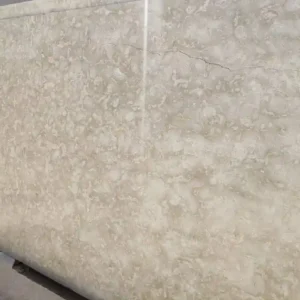
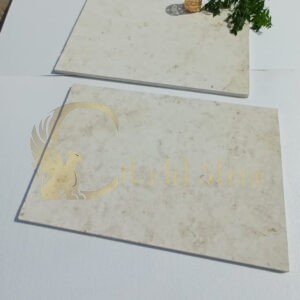
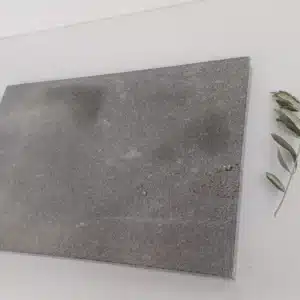
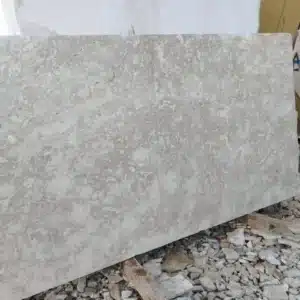
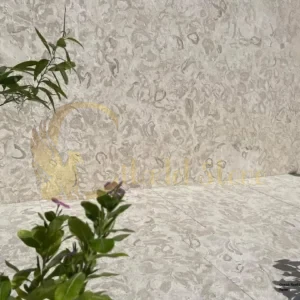
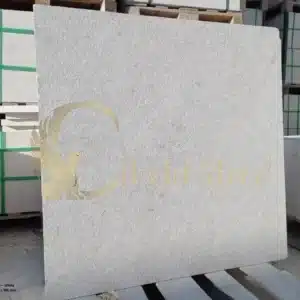
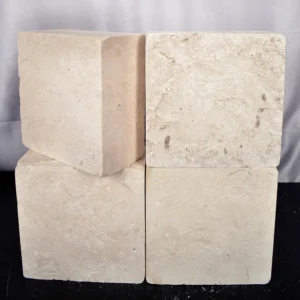
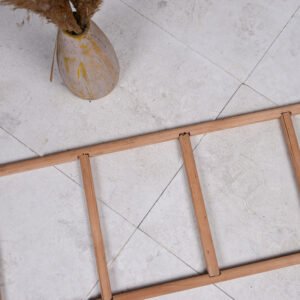
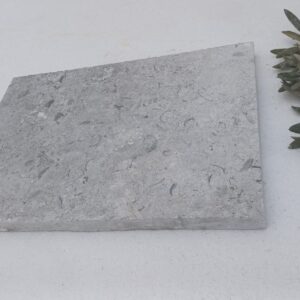
Your material palette choices should pull from the regional color story. Warm buff limestone, sandy travertine, and terracotta-adjacent sandstone shades all perform well against Arizona’s desert landscape. Cooler gray tones work effectively in contemporary builds where crisp contrast against pale stucco is the design intent. The 50mm block thickness gives you the visual mass to anchor these colors within the broader hardscape composition — a detail that matters when your driveway functions as the primary approach to an architecturally considered home.
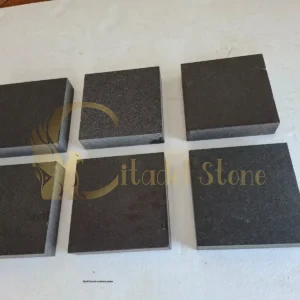
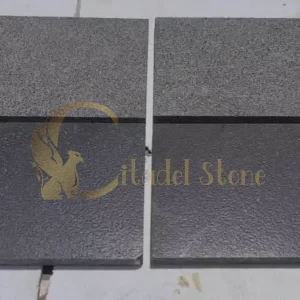
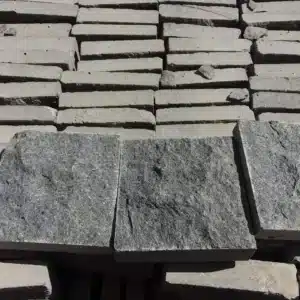
Citadel Stone maintains warehouse inventory of 50mm pavers across core Arizona formats, which means you can request physical samples before committing to a full driveway specification. Evaluating color and texture in actual site light — not showroom fluorescence — is one of the most practical steps you can take before placing a truck order.
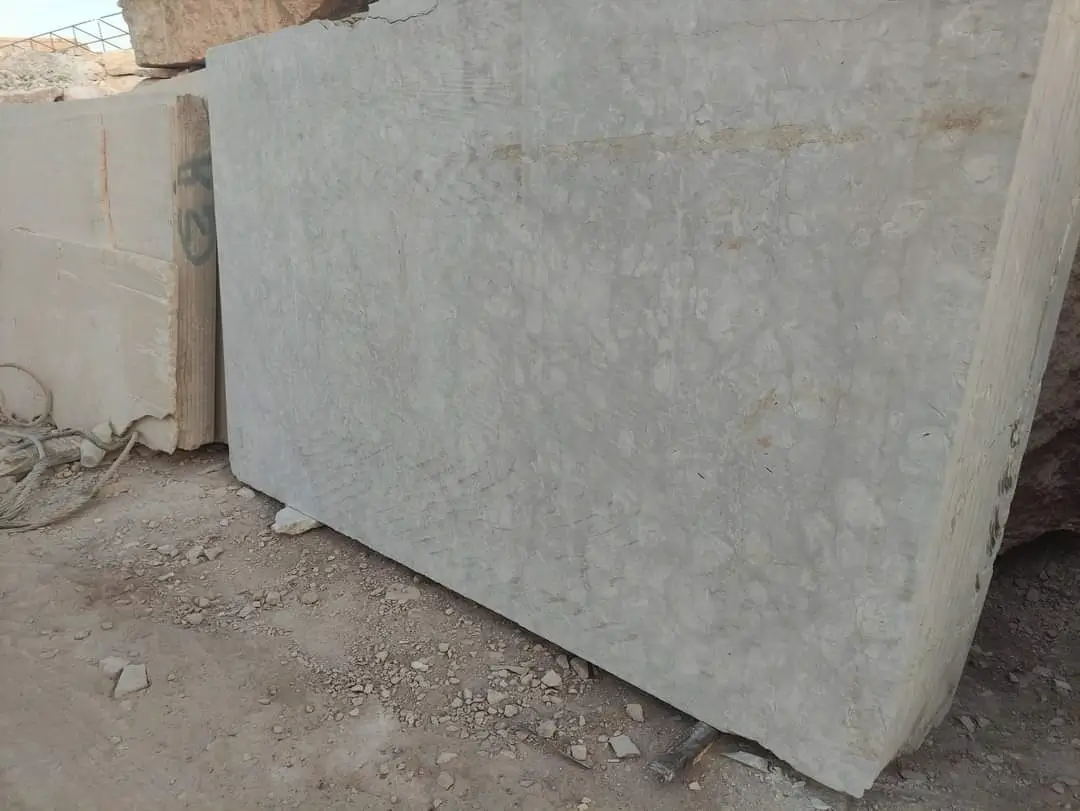
50mm Pavers for Driveway in Arizona: Understanding Your Format Options
The format you choose affects not just the finished look but the installation complexity, joint pattern behavior, and long-term serviceability. Beautiful driveway pavers in Arizona aren’t a single product — they span a range of block types, each with distinct performance characteristics that become relevant depending on your driveway’s geometry and load profile.
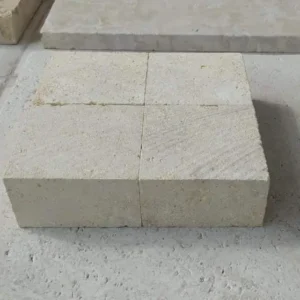
- Standard 50mm rectangular blocks (typically 200×100mm or 200×150mm) are the workhorses of residential driveway paving — proven in thousands of Arizona installations across clay and caliche subgrades
- 60mm pavers for driveway in Arizona provide an additional layer of structural reserve where heavier vehicles — trucks, SUVs with towing capacity, or recreational vehicles — are part of the regular traffic pattern
- 80mm paving bricks in Arizona move the specification into light commercial territory and are appropriate where delivery vehicles, skip trucks, or regular heavy loads will cross the surface
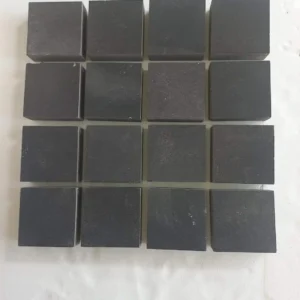
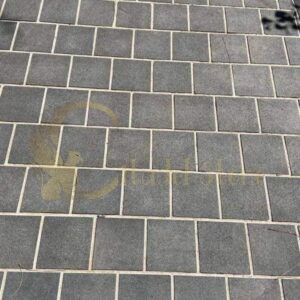
- Square formats (200×200mm, 300×300mm) offer a cleaner contemporary aesthetic but require more precise base preparation to avoid rocking under point loads at corners
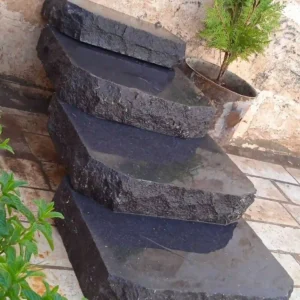
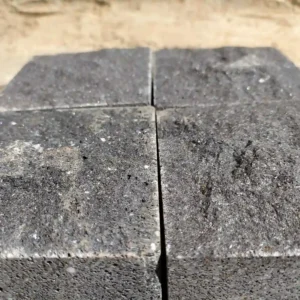
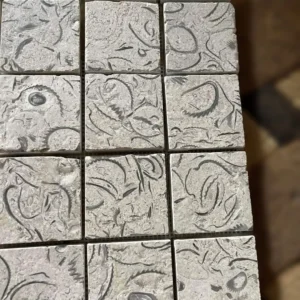
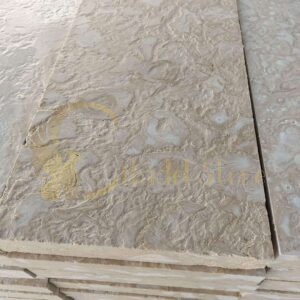
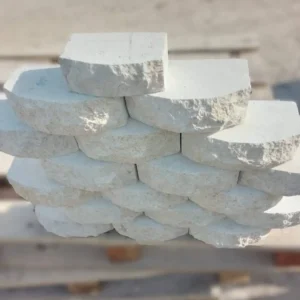
- Tumbled or antiqued finishes add textural depth that aligns with rustic Territorial and Craftsman styles common across Phoenix’s older residential neighborhoods
- Sawn-face finishes suit modern desert contemporary architecture where sharp geometry and consistent texture reinforce the design language
The 90 herringbone block paving pattern remains the industry standard for driveways subject to vehicular traffic — and for good reason. Herringbone locking engages each paver against its four neighbors simultaneously, distributing point loads laterally rather than allowing individual units to pivot or sink. In Arizona’s expansive soils, that interlock behavior becomes a structural asset, not just an aesthetic choice. For projects in Scottsdale where architectural review boards often specify cohesive paving patterns across streetscapes, 90-degree herringbone also satisfies most HOA aesthetic requirements while delivering the structural performance your driveway demands.
Base Preparation for Arizona Soils: Where Most Driveway Projects Go Wrong
Here’s what most specifiers miss when they move from selecting beautiful driveway pavers in Arizona to actually installing them: the subgrade is doing most of the structural work, and Arizona’s soil profile is unusually variable. Caliche — the calcium carbonate hardpan layer that sits anywhere from 6 inches to 3 feet below grade depending on your site — creates a natural bearing layer in some locations and a drainage obstruction in others.
Your base preparation protocol needs to address both scenarios. Where caliche is intact and at adequate depth, it can substitute for part of your compacted aggregate layer, reducing material costs. Where it’s absent or fractured, you’re building the entire bearing system from scratch. Getting this stage right is what separates 50mm pavers for driveway in Arizona installations that perform for decades from those that require remedial work within a few seasons.
- Minimum compacted aggregate base for 50mm pavers under residential passenger car traffic: 6 inches of well-graded crushed aggregate compacted to 95% Modified Proctor density
- Upgrade to 8–10 inches where pickup trucks, SUVs over 6,500 lbs GVWR, or regular delivery vehicles are expected
- Bedding sand layer: 40mm of coarse washed concrete sand, screeded to ±3mm tolerance — this is non-negotiable for getting a flat surface that stays flat
- Geotextile fabric between native subgrade and aggregate base is worth including on any site with clay content above 20% — it prevents fines migration that gradually undermines your base
- Edge restraints must be mechanically anchored at minimum 600mm centers; unrestrained edges are the most common cause of paver creep in Arizona’s high-heat conditions
- Drainage fall: maintain a minimum 1:60 cross-fall across the driveway surface — 1:40 is preferable in areas where monsoon rainfall intensity can exceed 2 inches per hour
Projects in Mesa frequently encounter caliche hardpan at 18–24 inches below grade, which provides an excellent natural sub-base when it’s intact. The practical implication is that your excavation depth can often be reduced, but you’ll need a site-specific assessment before adjusting your base specification.
60mm and 80mm Options: When to Upgrade Your Thickness Specification
The decision to move from 50mm to 60mm pavers for driveway in Arizona, or further to 80mm paving bricks in Arizona, follows a clear load-based logic. The 50mm profile handles standard residential passenger vehicle traffic comfortably within a correctly prepared base system. The structural uplift from moving to 60mm or 80mm comes into play under specific conditions that are worth understanding before you finalize your specification.
- 60mm pavers: appropriate where vehicles exceeding 3.5 tonnes regularly use the driveway, or where the base aggregate depth cannot be guaranteed due to site constraints
- 80mm paving bricks: the minimum recommended thickness for shared driveways serving multiple units, or any surface that functions as a de facto service road
- A thicker paver doesn’t compensate for an inadequate base — you’ll achieve better performance from a 50mm paver on an 8-inch base than from 80mm paving bricks on a 4-inch base
- Material cost per square foot increases approximately 15–25% moving from 50mm to 60mm, and a further 20–30% moving to 80mm — the base preparation cost remains constant regardless of paver thickness
- 60mm block paving for sale in Arizona from Citadel Stone ships in the same palletized truck format as 50mm orders, so lead times are comparable across thickness ranges
For projects requiring clarification on which thickness is appropriate for your specific load scenario, Citadel Stone’s technical team can review your traffic assumptions and base design before you commit to material quantities. Getting this right at the specification stage avoids the expensive alternative of discovering a thickness mismatch after installation. Base preparation standards vary depending on soil composition and expected traffic loads, and for projects requiring detailed comparative analysis, 50mm paver installation options covers specification details that apply directly to Arizona site conditions and concrete alternative scenarios — understanding those trade-offs at this stage informs better decisions about both thickness and material type.
Heat Performance and Surface Temperature in Arizona’s Climate
Arizona’s solar irradiance figures are among the highest in the continental United States — Phoenix averages over 300 sunny days annually, and surface temperatures on poorly specified driveways can reach 160°F or higher in peak summer. That thermal reality shapes material performance in ways that go beyond simple durability.
Natural stone pavers, including the dense formats used for 50mm pavers for driveway in Arizona applications, exhibit meaningfully different surface temperature behavior compared to asphalt and even standard concrete. The thermal mass of a well-specified stone driveway absorbs heat during peak hours but releases it more gradually, moderating the immediate contact temperature you experience on foot traffic areas adjacent to the driveway. Lighter-colored limestone and buff sandstone pavers reflect a significantly higher proportion of solar radiation than darker materials — a consideration that directly affects the thermal comfort of adjacent outdoor living areas.
- Light-colored natural stone in the 50mm thickness range typically reflects 40–55% of solar radiation, compared to 5–15% for dark asphalt
- Thermal expansion coefficients for dense limestone and sandstone pavers run approximately 4–6 × 10⁻⁶ per °F — lower than concrete, which reduces cumulative joint stress over seasonal cycles
- Joint spacing for 50mm pavers in Arizona should be maintained at 3–5mm with kiln-dried jointing sand; narrower joints allow thermal stress to concentrate at paver edges and cause micro-spalling over time
- Surface finish affects heat retention — honed or polished finishes retain more heat than textured or tumbled surfaces that scatter radiation at a micro-level
The elevation factor matters more than most specifications acknowledge. At higher elevations, UV intensity increases and diurnal temperature swings become more dramatic. Flagstaff sits above 6,900 feet, where freeze-thaw cycling introduces a structural demand that low-desert Arizona installations never face — and where your jointing sand selection and sealing schedule need to be adjusted accordingly. Sourced from established quarry partners, each batch of Citadel Stone’s 50mm pavers is inspected for freeze-thaw durability ratings before being allocated to high-elevation project orders.
Pattern Selection: How Layout Choices Affect Both Aesthetics and Structural Performance
The 90 herringbone block paving pattern is technically superior for vehicular driveways — that’s not a stylistic preference, it’s a structural reality supported by decades of field performance data. The interlocking geometry of herringbone distributes braking and turning forces laterally across the paver field, preventing the gradual migration that basket weave and running bond patterns are susceptible to under repeated vehicle stress.
That said, your design intent may call for a different visual outcome, and there are legitimate alternatives that achieve adequate structural performance while serving a specific aesthetic:
- 90-degree herringbone: maximum structural interlock, suits rectangular blocks in any size, works with both traditional and contemporary design language
- 45-degree herringbone: identical structural performance to 90-degree, produces a diamond orientation that reads as more dynamic from the street — a popular choice in Scottsdale’s contemporary residential market
- Stretcher bond (running bond): acceptable for pedestrian areas and light occasional vehicle use, not recommended as the primary pattern for regular driveway traffic
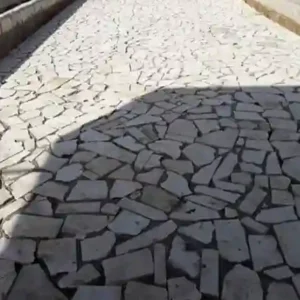
- Ashlar or random coursed patterns with larger format slabs: appropriate where the driveway receives light or occasional vehicle use and aesthetic continuity with garden terraces is the priority
- Soldier course borders in a contrasting color or material define the driveway edge and provide a visual framework that elevates the overall composition
Color banding — alternating courses of complementary tones within the same paver family — is a detail that experienced Arizona landscape designers use to create visual interest within the constraints of a single material. Warm buff paired with a slightly deeper terracotta shade creates a surface that reads as richer and more intentional than a single-color field, without introducing the maintenance complexity of mixing material types. The 90 herringbone block paving geometry accommodates this banding technique particularly well, as the diagonal orientation of alternating color bands produces a dynamic visual rhythm that reads clearly from street level.
Sealing, Jointing, and Long-Term Maintenance of Driveway Pavers in Arizona
The maintenance reality of natural stone driveway pavers in Arizona is straightforward once you understand what you’re actually protecting against. UV degradation, efflorescence from mineral migration, and jointing sand loss from monsoon rainfall are the three primary maintenance triggers — and all three are manageable with a consistent biennial protocol.
Your sealing schedule should align with Arizona’s seasonal calendar. Applying sealer during cooler months — October through March in the low desert — gives the product adequate cure time before peak UV exposure. Applying sealer during July or August, when surface temperatures regularly exceed 140°F, risks blushing, uneven penetration, and accelerated breakdown of the sealer itself.
- Penetrating impregnator sealers outperform topical film-forming sealers for exterior driveway applications — they don’t alter surface texture, don’t peel or flake, and don’t trap moisture that leads to spalling under freeze-thaw conditions at elevation
- Reapply jointing sand after every significant monsoon season — the combination of high-velocity rainfall and wind erosion gradually depletes the sand fill that keeps your herringbone pattern locked
- Efflorescence typically appears in the first 12–18 months after installation as calcium carbonate migrates to the surface; it’s cosmetic, not structural, and responds well to diluted phosphoric acid treatment followed by thorough rinsing
- Avoid pressure washing above 1,500 PSI — higher pressures displace jointing sand and can erode the surface finish on softer stone types over repeated applications
- Inspect edge restraint anchorage annually — Arizona’s heat cycling causes minor ground movement that can work anchor pins loose over two to three seasons, allowing edge creep to begin
At Citadel Stone, we recommend requesting your sealer specification at the same time as your paver order — matching the sealer chemistry to the specific stone type you’re installing avoids the incompatibility issues that void stone manufacturer performance guidance.
Buy 50mm Pavers for Your Arizona Driveway Project
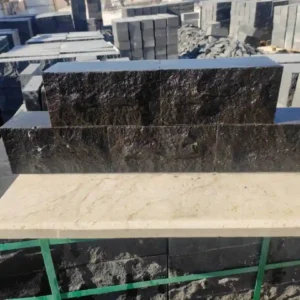
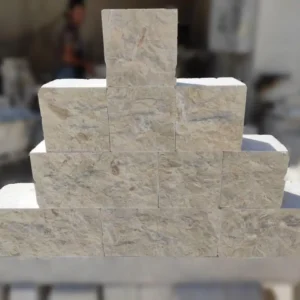
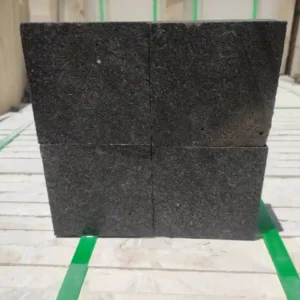
Citadel Stone stocks 50mm pavers for driveway applications across multiple formats, including standard rectangular blocks in both smooth and textured finishes, tumbled profiles for traditional aesthetics, and sawn-face options for contemporary projects. Available sizes include 200×100mm, 200×150mm, and select 200×200mm formats, with 60mm block paving for sale in Arizona stocked in parallel for projects requiring the additional thickness specification. You can request sample sets or full material data sheets — including compressive strength, water absorption, and slip resistance ratings — before committing to your full order quantity.
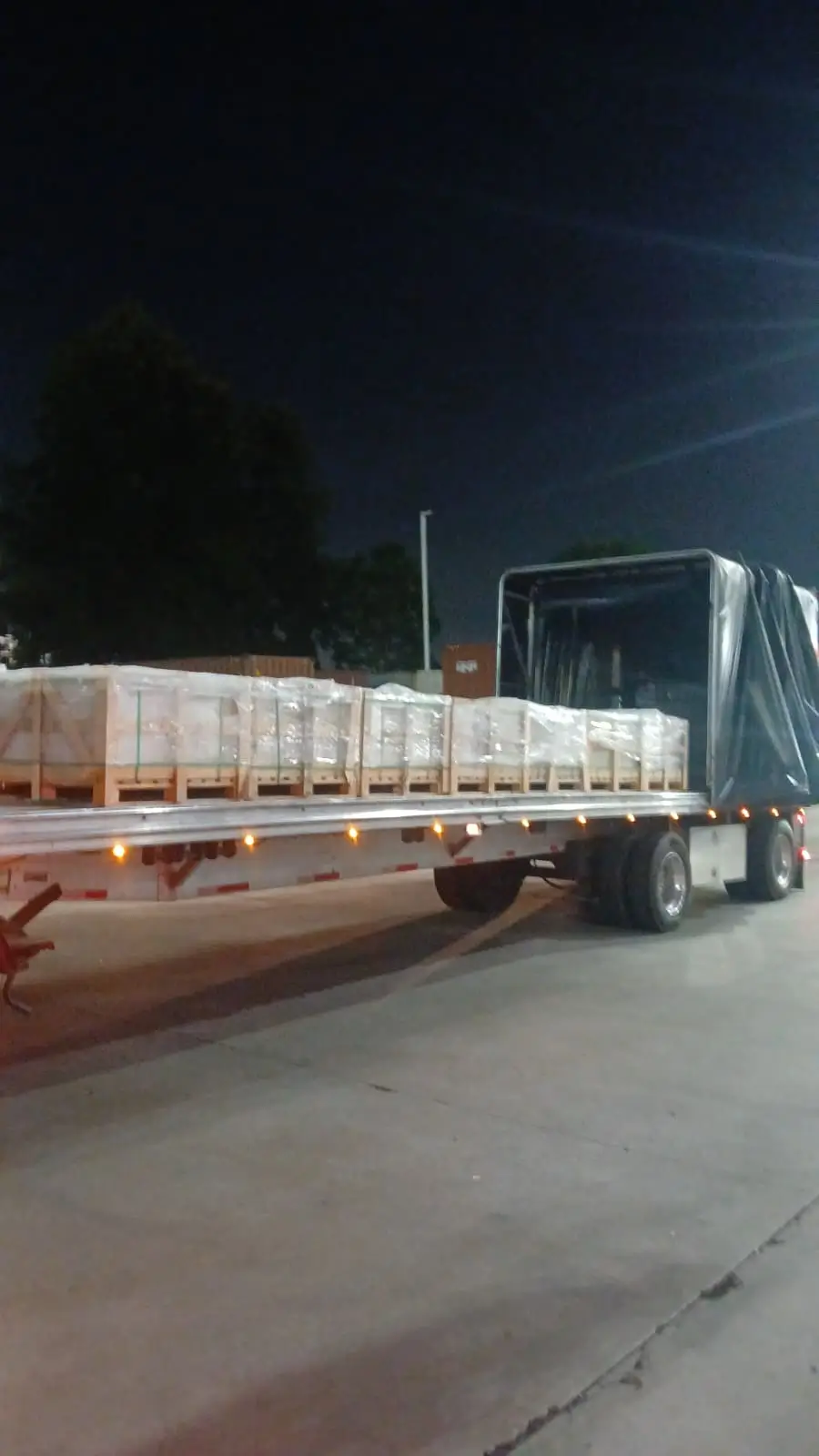
Trade accounts and wholesale enquiries are handled directly through Citadel Stone’s Arizona supply desk. Lead times from warehouse stock typically run 1–2 weeks for standard pallet quantities, with truck delivery coordinated across Phoenix, Tucson, Scottsdale, and surrounding metro areas. Custom cut orders and non-standard formats carry longer lead times — confirm these at the specification stage rather than post-order to keep your project schedule intact. Contact the team to discuss current pricing, available stock levels, and delivery scheduling for your specific project timeline. As your project expands to other stone elements across your property, 600×600 Paving Slabs in Arizona covers a complementary large-format option worth considering for adjacent terrace and courtyard areas where Citadel Stone’s same supply network and regional delivery coverage apply. For driveways built to last in Arizona’s conditions, Citadel Stone offers guidance and materials that meet both structural and design requirements.