
Why UV Exposure Defines Your 50mm Paver Specification
Arizona’s UV index regularly exceeds 11 — the “extreme” threshold — for six or more months each year, and that number does more damage to natural stone surfaces than most homeowners or even contractors anticipate when installing 50mm driveway pavers in Arizona. The photochemical stress that breaks down mineral binders and oxidizes iron compounds in natural stone begins within the first season, not the first decade. Your specification decisions made before the first paver is set will determine whether the driveway looks exactly as installed at year five or begins showing uneven color variation within 18 months.
Understanding what UV actually does to stone at a mineralogical level changes how you approach finish selection, sealer chemistry, and even joint sand color. Iron-bearing minerals — present in varying concentrations in limestone, travertine, and basalt — oxidize when exposed to sustained UV and oxygen, producing reddish-brown surface staining that’s often misread as efflorescence. You’ll see this most aggressively on cut faces that haven’t been sealed within 90 days of installation. The surface color shift is permanent without mechanical intervention, so prevention is always the better path.
Sub-Base Preparation for Arizona Desert Soils
Desert soil compaction for pavers across Arizona requires you to recognize that native soils here behave differently than the textbook silty loam used in most compaction guides. Caliche — the calcium carbonate hardpan layer common throughout low-desert Arizona — presents as a genuine structural ally when you encounter it at 18 to 24 inches, but it becomes a drainage liability if it forms a continuous horizontal barrier that traps water above it. Your excavation plan needs to account for this: probe the native grade before finalizing your excavation depth, and if you hit continuous caliche, plan for a French drain lateral running to daylight at the perimeter.
Sub-base preparation for driveway pavers in Arizona follows a specific sequence that separates durable installations from ones that require remediation at year three. For a standard residential driveway with passenger vehicle loads, your compacted sub-base should follow this order:
- Excavate to 12 inches below finished paver surface for desert soils with low plasticity index
- Compact native soil to 95% modified Proctor density using a plate compactor with a minimum 5,000 lb/ft² force rating
- Install 6 inches of crushed aggregate base — 3/4-inch minus decomposed granite or crushed limestone works well in Arizona’s dry climate
- Compact aggregate base in two 3-inch lifts, not one pass, achieving a minimum 98% relative compaction
- Finish with a 1-inch bedding sand layer screeded to grade, avoiding disturbance until pavers are placed
In Scottsdale, the sandy loam soils common in newer subdivisions west of the 101 corridor compact predictably but require moisture conditioning before plate compaction — dry desert sand at 2% moisture won’t achieve target density no matter how many passes you make. Bring soil moisture to 8–10% before compacting, verify with a simple ball test, and you’ll hit your density numbers on the second lift without extra equipment mobilization.
50mm Thickness and Driveway Load Performance
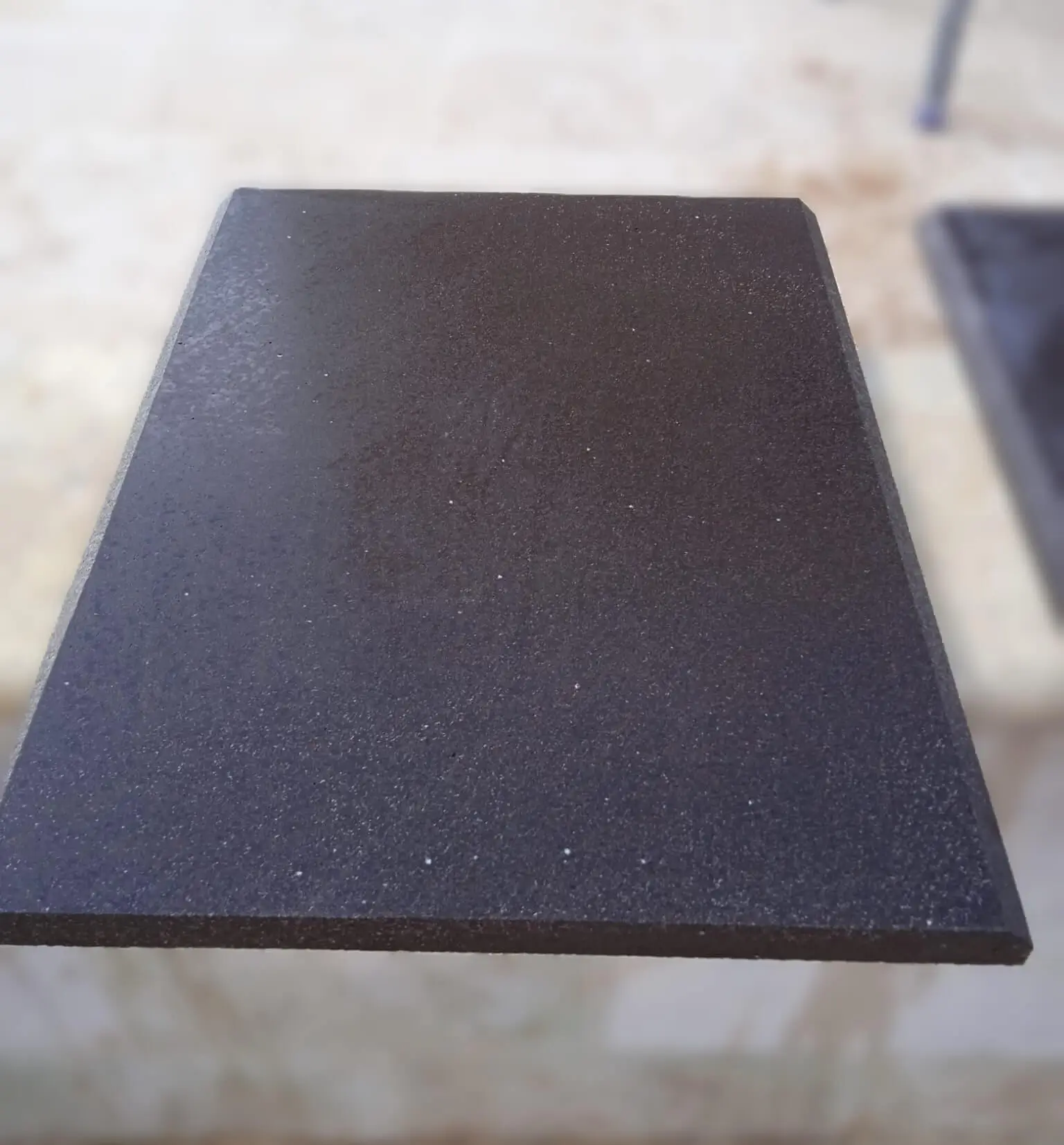
The 50mm nominal thickness — approximately 2 inches — sits at the structural threshold where natural stone transitions from a decorative surface material into a load-bearing pavement element. For passenger vehicles up to 6,000 lbs gross vehicle weight, 50mm pavers for driveways in Arizona provide adequate flexural strength when properly supported, but the stone species matters significantly. Dense basalt and hard limestone handle point loads differently than softer travertine or sandstone, and your specification should name the stone type, not just the thickness.
Compressive strength minimums worth specifying for Arizona driveway conditions:
- Minimum 8,000 PSI compressive strength for limestone and travertine products
- Minimum 12,000 PSI for basalt, which handles thermal cycling more predictably in extreme heat zones
- Minimum 0.73 g/cm³ apparent density to resist surface spalling under UV-accelerated moisture cycling
- Maximum water absorption of 12% per ASTM C97 to limit freeze-thaw vulnerability in higher elevations
- Flexural strength exceeding 1,200 PSI for installations subject to vehicle overhangs or tire scrubbing
The 50mm stone paver installation steps Arizona homeowners follow most successfully start with verifying that the actual delivered thickness matches specification. Thickness tolerances at the quarry level can run ±3mm, which sounds minor but creates a cumulative problem when you’re setting 200 square feet of material and the last course is sitting 6mm above the first. Verify warehouse stock dimensions before your truck delivers — a quick caliper check on five random pieces from a pallet tells you everything about the batch tolerance.
UV Finish Selection for Long-Term Color Retention
The finish you specify on a driveway paver does more than affect slip resistance — it directly determines how aggressively UV radiation degrades the surface over a 10-year horizon. Polished finishes on calcium carbonate stones like limestone and travertine are essentially glass-smooth, which means they reflect more UV than they absorb, but they also offer the lowest surface area for oxidation to take hold. The trade-off is that polished finishes show traffic scratching within two to three seasons on a driveway, which most homeowners find more objectionable than color fading.
Honed, brushed, and sawn finishes each interact with UV differently:
- Honed finish — smooth but matte, moderate UV reflection, slower color shift than sawn, retains appearance well with annual sealing
- Brushed or antiqued finish — textured surface increases UV exposure per square inch, accelerates initial color development, then stabilizes more predictably after the first two years
- Sawn or split finish — rough texture traps airborne particulates that contribute to surface staining independent of UV, requiring more frequent cleaning in high-dust desert environments
- Tumbled finish — edge rounding reduces stress concentration at corners, which is particularly valuable in Arizona’s thermal cycling range of 40–115°F
For Sedona projects where visual harmony with the red rock landscape is a design priority, a brushed or antiqued finish on buff or cream limestone develops a warm patina under UV exposure that actually improves the aesthetic integration over time. The initial color shift toward amber-gold tones that UV drives in iron-bearing limestones works with the local palette rather than against it — but you need to set client expectations about that first-year color development before installation begins.
Sealing Schedules Under Arizona UV Conditions
The Arizona driveway paver base layer thickness discussion gets most of the attention in installation guides, but the sealing schedule is where long-term UV performance is actually won or lost. Arizona’s UV index and low humidity create conditions where penetrating sealers cure faster than in humid climates — which sounds like a benefit but actually compresses your application window and reduces penetration depth if you’re not managing surface temperature during application. Never apply sealer to a surface above 85°F — in Phoenix-area summers, that means early morning work only, before 8 AM.
A realistic sealing schedule for Arizona driveway pavers based on UV exposure levels:
- Initial seal: within 30 days of installation, after allowing joint sand to fully set and any efflorescence to clear
- Year one re-seal: 10 to 12 months after initial application — UV degrades the carrier system faster in the first year while the stone’s surface is still mineralogically active
- Ongoing cycle: every 18 to 24 months for penetrating silane-siloxane formulations; every 24 to 36 months for premium fluoropolymer-enhanced products
- Spot treatment: any area showing surface whitening or color shift should be addressed at the annual inspection rather than waiting for the full cycle
- High-traffic zones: wheel tracks on a driveway see mechanical abrasion that removes sealer faster — budget for spot resealing in those zones every 12 months regardless of the full-surface schedule
At Citadel Stone, we recommend solvent-based penetrating sealers over water-based products for Arizona driveway installations specifically because the lower humidity and high UV intensity during application cause water-based sealers to skin over before full penetration occurs. The solvent carrier maintains workability long enough to achieve the 3–5mm penetration depth you need for meaningful UV and moisture protection. For those sourcing their materials and sealers together, our technical team can advise on product compatibility before anything ships from the warehouse.
Installing 50mm Driveway Pavers in Arizona: The Critical Steps
The Arizona driveway paver base layer thickness discussion tends to dominate pre-installation planning, but the steps between base completion and first paver placement are where most field errors occur. Your screeded bedding sand layer must be set to a consistent 1-inch depth — not 1.5 inches as some installers use for concrete pavers — because natural stone at 50mm thickness is heavier and will displace a thicker sand bed unevenly under foot traffic during installation. Keep the bedding course covered with burlap if you’re working in direct sun to prevent surface drying that creates differential settlement later.
Key installation checkpoints when installing 50mm driveway pavers in Arizona’s climate:
- Check thermal expansion joints every 10 linear feet — Arizona’s 75°F daily temperature swing demands joints at 10–12 feet, not the 15–20 feet common in moderate climates
- Maintain a consistent 3mm joint width using spacers — joint sand performance depends on uniform width, and wider joints in desert climates allow more wind-blown silt infiltration that compromises polymeric sand integrity
- Compact completed sections with a plate compactor fitted with a rubber pad — minimum two passes in perpendicular directions before joint sanding
- Apply polymeric joint sand in two passes for 50mm pavers — the increased stone thickness creates deeper joints that require fuller sand packing than thinner paver formats
- Activate polymeric sand with a fine mist only — Arizona’s low humidity means water evaporates faster than in other regions, so use multiple light passes rather than one heavy application
For projects in Flagstaff, the elevation introduces a freeze-thaw variable that low-desert installations don’t face. Your joint sand specification should explicitly require a polymeric product rated for freeze-thaw cycling, and your sealer selection should prioritize breathability — a vapor-impermeable sealer in Flagstaff’s climate will trap moisture that damages stone from the inside out during freeze events. The installation steps are the same, but the material specs shift meaningfully above 5,000 feet.
For full product details and thickness specifications on the materials best suited to this installation context, Arizona 50mm driveway pavers Citadel Stone provides the current inventory data and technical cut sheets our team keeps updated seasonally.
Thermal Cycling and Joint Sand Integrity in Arizona
Here’s what most specifiers miss when installing 50mm driveway pavers in Arizona: the joint sand failure mode isn’t erosion from rain — it’s degradation from UV and thermal cycling that causes polymeric sand to revert to a powder-like state within 3 to 5 years if an inferior product is used. Arizona sees fewer than 8 inches of annual rainfall in most low-desert areas, so the joint sand never gets the hydraulic stress test that Pacific Northwest installers deal with. Instead, the enemy is the daily expansion-contraction cycle that works the joint faces against the sand binder system until it fatigues.
The material properties that matter for joint sand in Arizona conditions:
- UV-stable binder chemistry — look for products specifically listing UV resistance in their technical data sheet, not just water resistance
- Polymeric sand with a softening point above 150°F — standard products soften and migrate at joint surface temperatures that routinely exceed 140°F on Arizona driveways
- Void ratio compatible with a 3mm joint in 50mm stone — the sand particle grading needs to match your actual joint geometry, which is narrower than most polymeric sand products are optimized for
- Replaceable in sections — joint sand will need partial replacement in high-traffic zones every 5 to 7 years regardless of product quality
Color Fading and Oxidation Prevention in Natural Stone
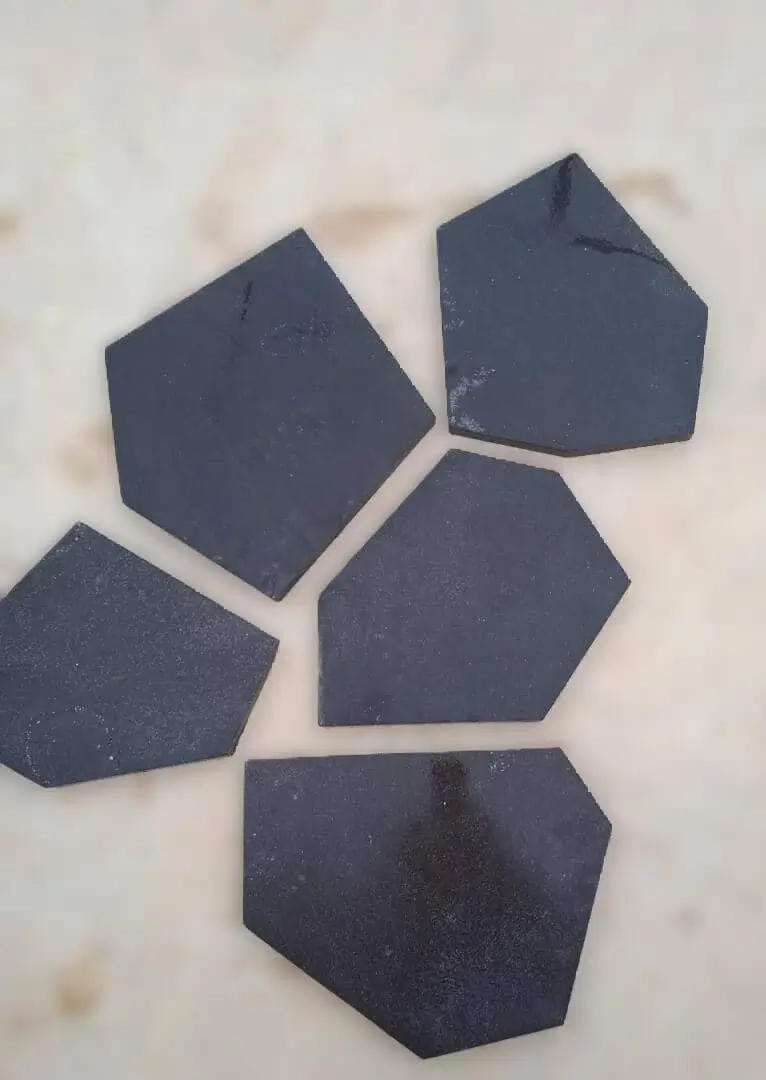
Surface oxidation in natural stone driveways is one of those problems that looks like a sealing failure when it’s actually a specification gap that occurred before the first paver was set. Iron oxide compounds in stone migrate toward the surface when UV drives thermal gradients through the slab — the sun heats the top face faster than the bottom, creating a convective moisture movement that carries dissolved iron toward the surface where it oxidizes on contact with air. You’ll see this as reddish-brown streaking that emerges from within the stone, not from an external source.
Preventing UV-driven oxidation on natural stone driveways requires a layered approach:
- Specify low-iron content stone varieties where appearance stability is the priority — buff and gray limestones typically outperform cream and gold varieties in oxidation resistance
- Use an iron-inhibiting sealer as your base coat — these products create a chemical barrier that slows iron migration toward the surface without blocking the stone’s natural breathability
- Maintain sealer film integrity, because a failed sealer accelerates oxidation by allowing UV and oxygen direct contact with unprotected stone minerals
- Schedule annual cleaning with a pH-neutral stone cleaner that removes iron-bearing particulates deposited from vehicle exhaust and airborne dust before they bond to the surface
- Avoid acid-based cleaning products — muriatic acid and citric acid cleaners commonly used on concrete will etch the calcium carbonate matrix and accelerate surface deterioration of limestone and travertine
Field performance data on 50mm pavers for driveways in Arizona consistently shows that the installations with the best 10-year appearance retention share three characteristics: low-iron stone species, penetrating sealer applied within the first month, and biennial maintenance cleaning. The homeowners who skip the first resealing at year one — because the stone still looks fine — are the ones calling for a restoration quote at year four. The UV damage accumulated in that first unprotected season is disproportionate to any other period in the installation’s lifecycle.
Getting Your 50mm Paver Specification Right in Arizona
Installing 50mm driveway pavers in Arizona is a specification exercise as much as it is an installation exercise, and the UV exposure angle runs through every decision from stone species to sealing chemistry to joint sand product selection. You’re not just choosing a paver — you’re engineering a surface system that has to resist photochemical degradation, thermal cycling, and oxidation simultaneously for two decades or more without compromising structural performance or appearance. The homeowners who treat those as separate considerations end up addressing them separately, usually through expensive remediation, rather than solving them once at the specification stage.
Your base preparation, thickness specification, finish selection, and sealing schedule all interconnect in ways that become clearer once you’ve seen a few installations through their first decade. The projects that hold up aren’t the ones with the highest material budget — they’re the ones where every layer of the system was specified with Arizona’s UV environment as the primary design constraint. As you plan your project scope and timeline, the Best Pavers in Arizona: A Complete Local Guide provides a broader look at how different materials perform across Arizona’s distinct climate zones, which is worth reviewing before finalizing your stone selection. Homeowners in Mesa, Chandler, and Flagstaff rely on Citadel Stone for 50mm pavers known for stable performance over compacted desert sub-bases, with each slab cut to consistent thickness tolerances.