

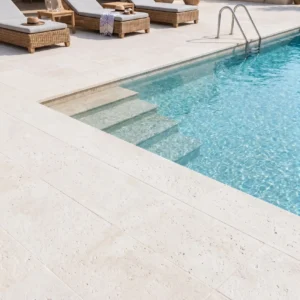
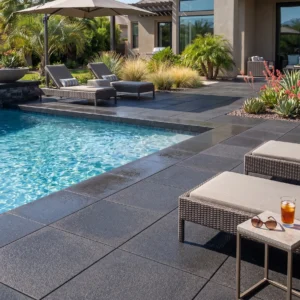







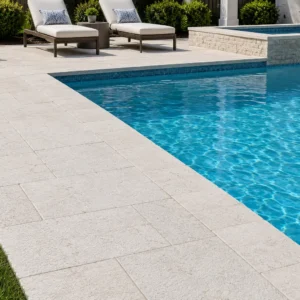
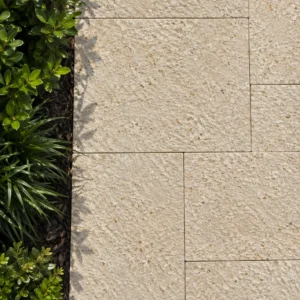
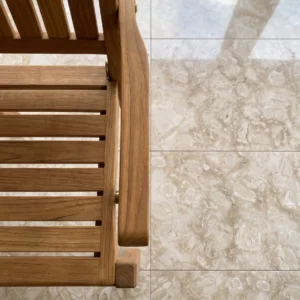
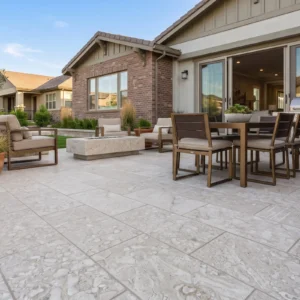
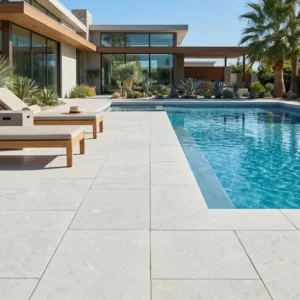


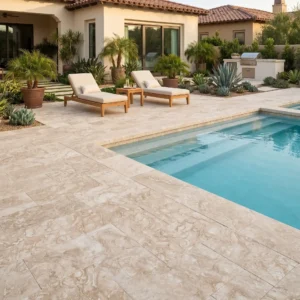




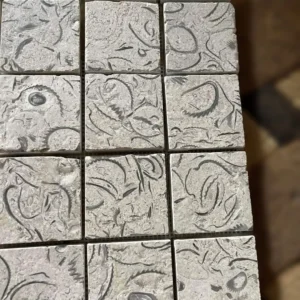
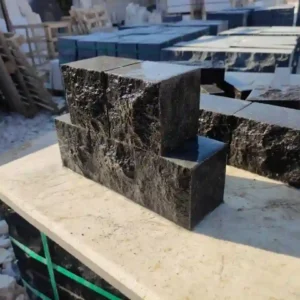
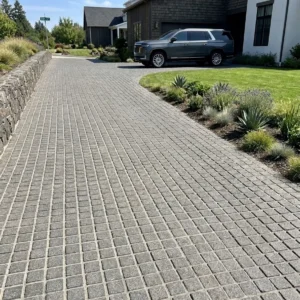
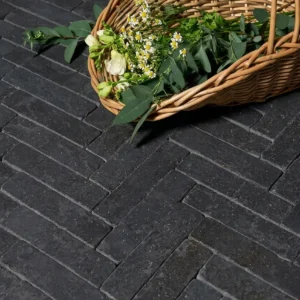




Shellstone pavers in Arizona face a mechanical stress profile that most installation specs simply don’t account for — the combination of monsoon-driven wind loads, hail impact energy, and rapid pressure differentials that sweep across the state from July through September. A 1.25-inch thick shellstone panel behaves very differently under 70 mph gust loading than a 2-inch slab, and that distinction determines whether your pool deck or patio survives five monsoon seasons intact or starts showing delamination by year three. Understanding how this material responds to storm mechanics, not just aesthetics, is where durable Arizona installations begin.
How Shellstone Performs Under Arizona Storm Conditions
Arizona’s haboobs and monsoon fronts generate sustained wind speeds that routinely exceed 60 mph, with gusts measured above 80 mph in open desert corridors around Phoenix. For shellstone in Arizona, that translates to uplift pressure on unseated pavers, abrasive particulate impact, and hydrostatic loading during the flash-flooding that follows storm cells. The material’s natural density — typically 130 to 145 pounds per cubic foot depending on quarry origin — gives it meaningful resistance to wind displacement when properly bedded, but only when your setting bed achieves full contact.
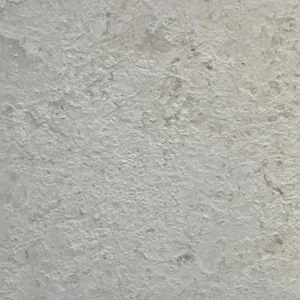
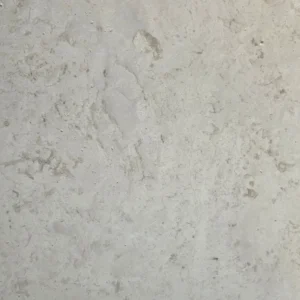
Hail is an underrated threat here. Shellstone’s fossilized shell matrix creates micro-surface texture that can fracture along existing void lines under repeated hail impact above 1-inch diameter. Evaluate hail frequency maps for your specific project zone — Tucson’s eastern corridor sees measurably higher hail frequency than the western Phoenix metro, which changes your specification calculus for exposed horizontal surfaces.
Citadel Stone inspects each incoming pallet of shellstone for void concentration and surface integrity before it enters warehouse inventory, specifically because storm-zone projects in Arizona cannot afford material with pre-existing micro-fractures that hail impact will exploit.
Wind Load and Installation Requirements for Arizona Projects
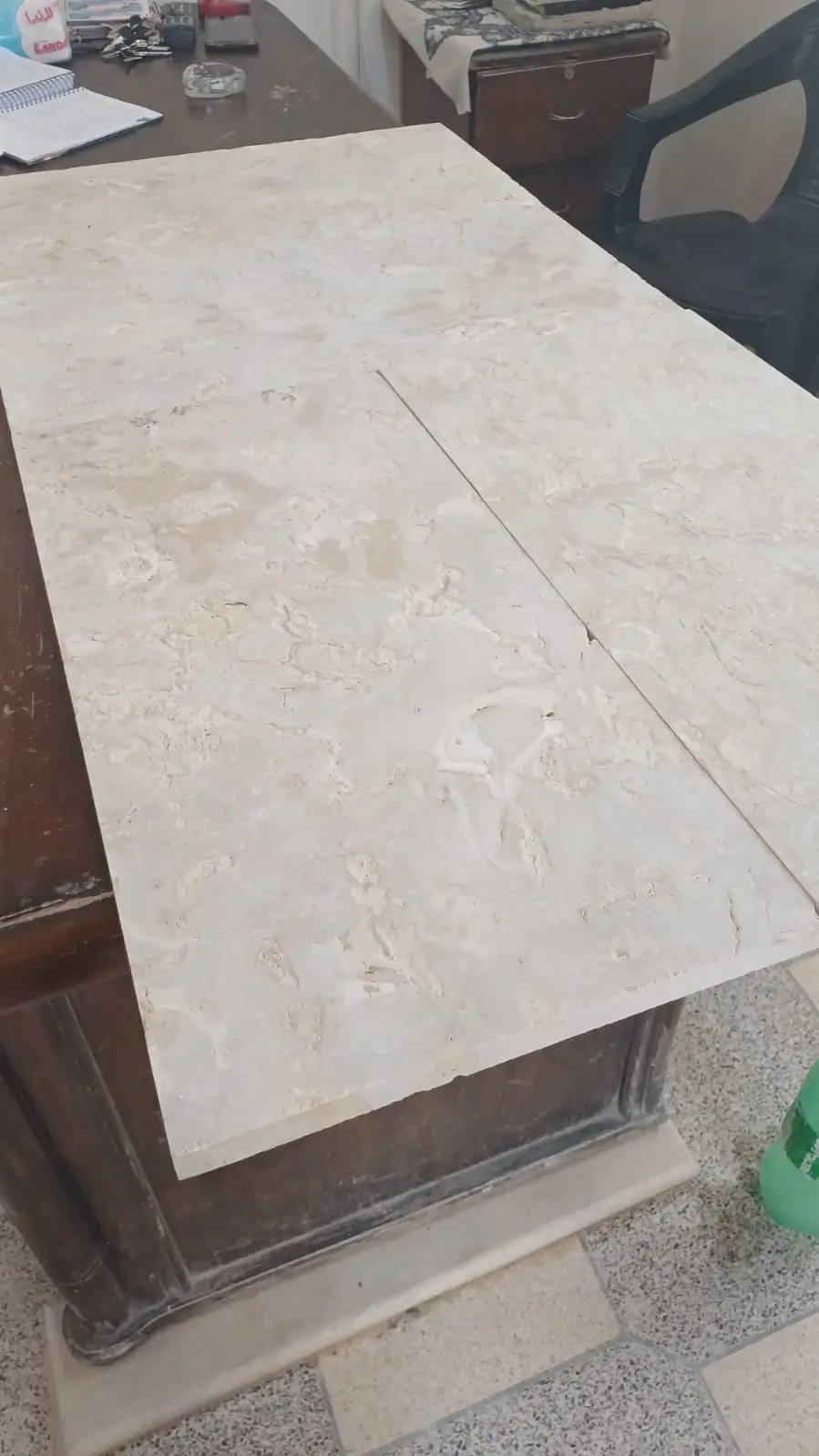
The base preparation standard for shellstone pavers in storm-prone Arizona zones starts at a minimum 6-inch compacted aggregate base — not the 4-inch figure you’ll see in generic paver guidelines. In areas classified under ASCE 7 wind exposure category C or D, which applies to most of the Phoenix metro and large portions of the Yuma region, your bedding layer needs to be a full 1.5-inch screed of coarse sand or decomposed granite, not a dry-pack mix that wind-driven moisture can destabilize.
Joint sand selection matters more than most specs acknowledge. Polymeric sand with a wind-erosion rating performs significantly better than standard jointing sand in exposed Arizona installations. Standard sand loses 30 to 40 percent of joint fill in a single severe monsoon season through wind erosion and wash-out, which undermines lateral interlock and creates the edge-lifting you see on older patio installations across the state.
- Set pavers on a full-mortar bed for any installation within 15 feet of an unobstructed wind corridor or exposed roof deck
- Specify a minimum paver thickness of 1.5 inches for horizontal surfaces in ASCE exposure categories C and D
- Use polymeric jointing sand rated for high-wind environments — standard sand fails in monsoon conditions
- Allow for drainage relief every 10 to 12 linear feet on patio installations to prevent hydrostatic uplift during flash flood events
- In areas with documented hail frequency above 2 events per season, consider 2-inch nominal thickness shellstone rather than 1.25-inch panels
You can request thickness specifications and density data sheets from Citadel Stone before finalizing your project spec — this is particularly useful when your structural engineer needs material weight data for wind load calculations.
Beige and White Shellstone Pavers in Arizona — Color, Shade, and Storm Weathering
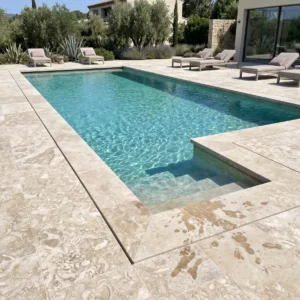
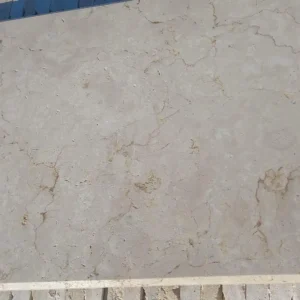
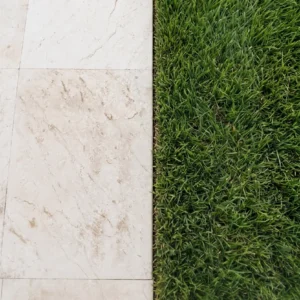
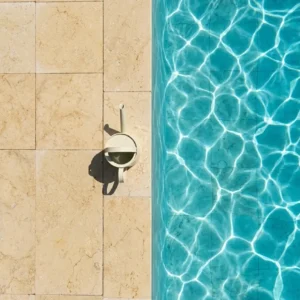
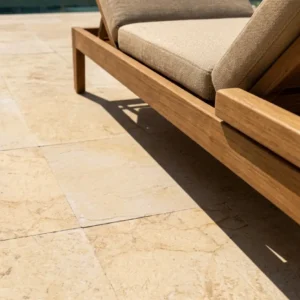
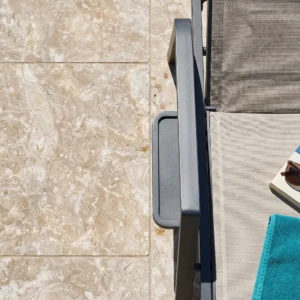
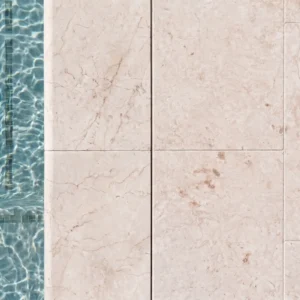
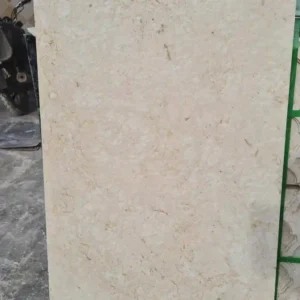
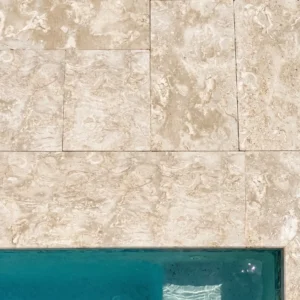
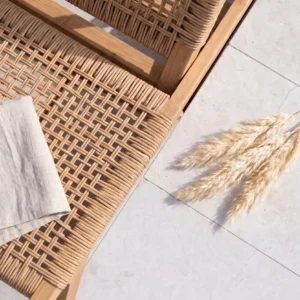
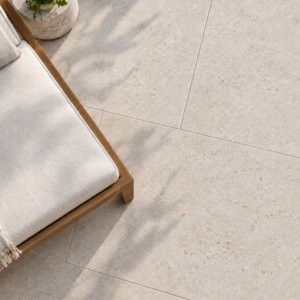
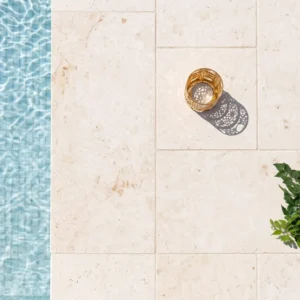
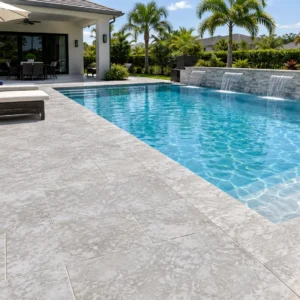
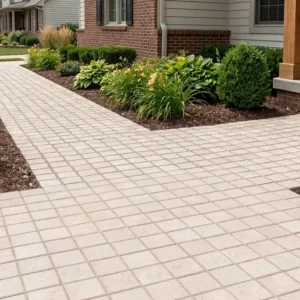
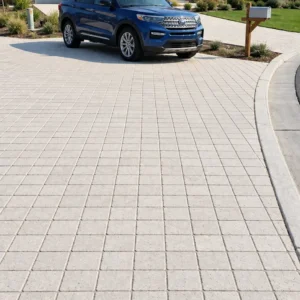
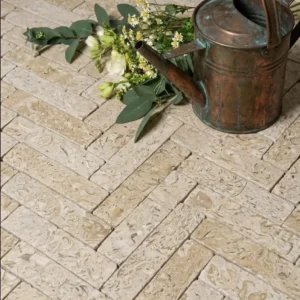
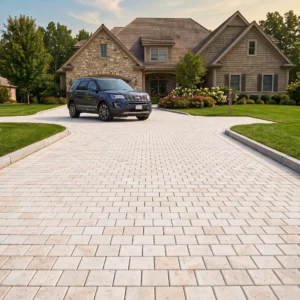
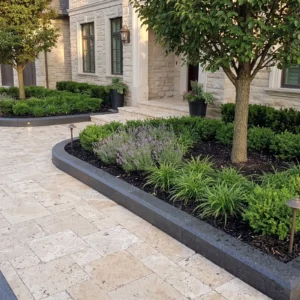
Beige shellstone in Arizona is the dominant choice for residential pool decks and covered patios, and the reasoning goes beyond aesthetics. The warm buff tones of beige shellstone weather more uniformly after storm events — wind-driven dust and mineral deposits show less dramatically on beige than on white shellstone pavers in Arizona, which require more frequent washing after monsoon cycles to maintain their appearance.
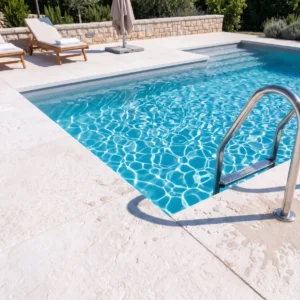
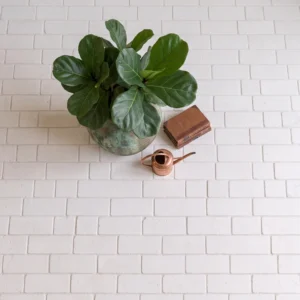
White shellstone pavers in Arizona remain the premium specification for high-end Scottsdale projects and resort-grade pool surrounds where the clean visual contrast justifies the added maintenance commitment. The material’s reflectivity — typically 65 to 72 percent solar reflectance index for white shellstone — does provide a meaningful surface temperature benefit, but the primary specification driver in storm zones should remain structural performance, not thermal aesthetics.
Seashell stone in Arizona that’s been improperly sealed will absorb wind-driven debris and mineral staining at an accelerated rate. A penetrating silane-siloxane sealer applied every 18 to 24 months forms the moisture barrier that prevents stain penetration — skip it once and you’re looking at acid washing, which removes surface material and accelerates future weathering.
Selecting the Right Format and Thickness for Arizona Storm Zones
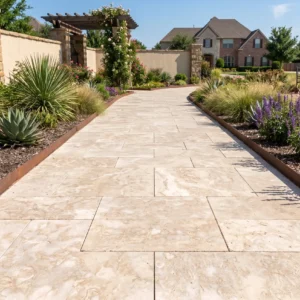
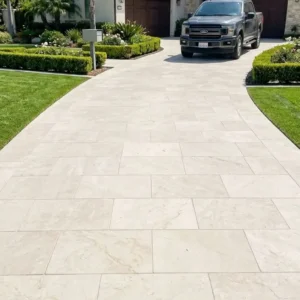
Shell stone imports in Arizona arrive in several standard formats, and the format you choose has direct implications for storm performance. Large-format slabs — 24×24 inches and above — offer fewer joints for wind-driven water to infiltrate, which sounds like an advantage until you realize that large-format shellstone also has a higher sail area under uplift conditions. For exposed installations in open desert settings around Scottsdale, a 16×16 or 12×24 format in a running bond pattern provides superior mechanical interlock compared to large-format grid layouts. For detailed pricing across different thickness and format combinations, shellstone pavers for Arizona projects provides a breakdown that includes the cost differential between standard and heavy-duty thickness options — useful when you’re working within a project budget and need to prioritize where the thicker material matters most.
- 12×12 and 16×16 formats offer the best interlock pattern for wind-exposed horizontal planes
- 24×24 slabs suit covered patios and areas with structural wind breaks — avoid them on open rooftop applications
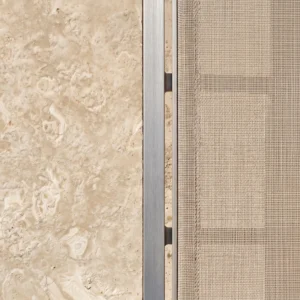
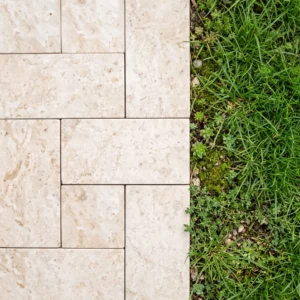
- Tumbled edge shellstone provides slightly better grip in high-wind environments where surface particulate accumulates
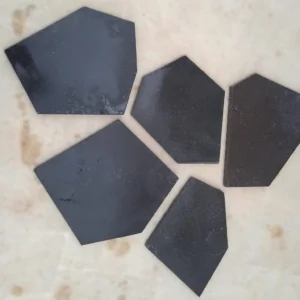
- Irregular cut formats (often called seashell stone in Arizona installations) require wider joints — use polymeric sand rated for gap widths above 0.5 inch
Citadel Stone stocks shellstone in 12×12, 16×16, 18×18, and 24×24 formats with nominal thicknesses of 1.25 inch and 2 inch — both available for truck delivery across Arizona from regional warehouse inventory.
Drainage and Storm Water Management Under Shellstone Installations
Arizona monsoon events deliver rainfall intensities that can reach 3 to 4 inches per hour in localized cells — a rate your base preparation must handle without saturating the bedding layer. The most common post-storm failure in shellstone installations isn’t surface damage; it’s subgrade saturation causing differential settlement that creates lippage across your paving field. In Chandler and similar communities in the southeast Valley where clay-heavy soils have expansion coefficients that increase dramatically with moisture, you need to incorporate a geotextile separation layer between native soil and your aggregate base.
The geotextile serves two functions in this context: it prevents aggregate migration into expanding clay, and it provides a drainage plane that channels storm water laterally rather than allowing it to pond under your setting bed. Without it, a single heavy monsoon event can cause 0.5 to 1 inch of differential settlement across a 20-foot patio run — enough to create trip hazards and the appearance of failed installation even though the shellstone itself is undamaged.
- Specify a minimum 2% cross-slope on all horizontal shellstone surfaces to direct storm water away from structures
- Install geotextile separation fabric over native clay or expansive soil before placing aggregate base
- Include perimeter drainage channels on patio installations larger than 400 square feet
- Verify that existing landscape drainage does not direct runoff beneath shellstone fields — redirected drainage causes more failures than improper base depth
Sealing Protocols That Extend Storm Durability
The sealing schedule for shellstone in Arizona needs to account for UV degradation of the sealer film as much as moisture protection. Most penetrating sealers lose effectiveness after 18 months of Arizona sun exposure — not 36 months as the product label suggests, because those ratings assume temperate climate UV indexes, not the 10-plus UV index that Phoenix records for six months of the year.
Apply your first sealer coat within 30 days of installation, before the material has had a full monsoon season to absorb wind-driven particulate into its open pore structure. A second application 90 days after the first fills residual porosity that the initial coat missed. After that, a biennial schedule aligned with the pre-monsoon window — April or May — ensures peak protection heading into storm season.
- Use penetrating silane-siloxane sealers, not topical film-forming products that peel under Arizona UV
- First application within 30 days of installation; second application at 90 days
- Biennial reapplication in April or May, before monsoon season begins
- Clean with pH-neutral solution before each sealer application — acid washing removes surface material and is only appropriate for heavy staining situations
- White shellstone pavers in Arizona require more frequent inspection — once per season — to catch micro-fracture development before storm impact widens existing voids
Comparing Shellstone Against Other Natural Stone in Arizona Storm Zones
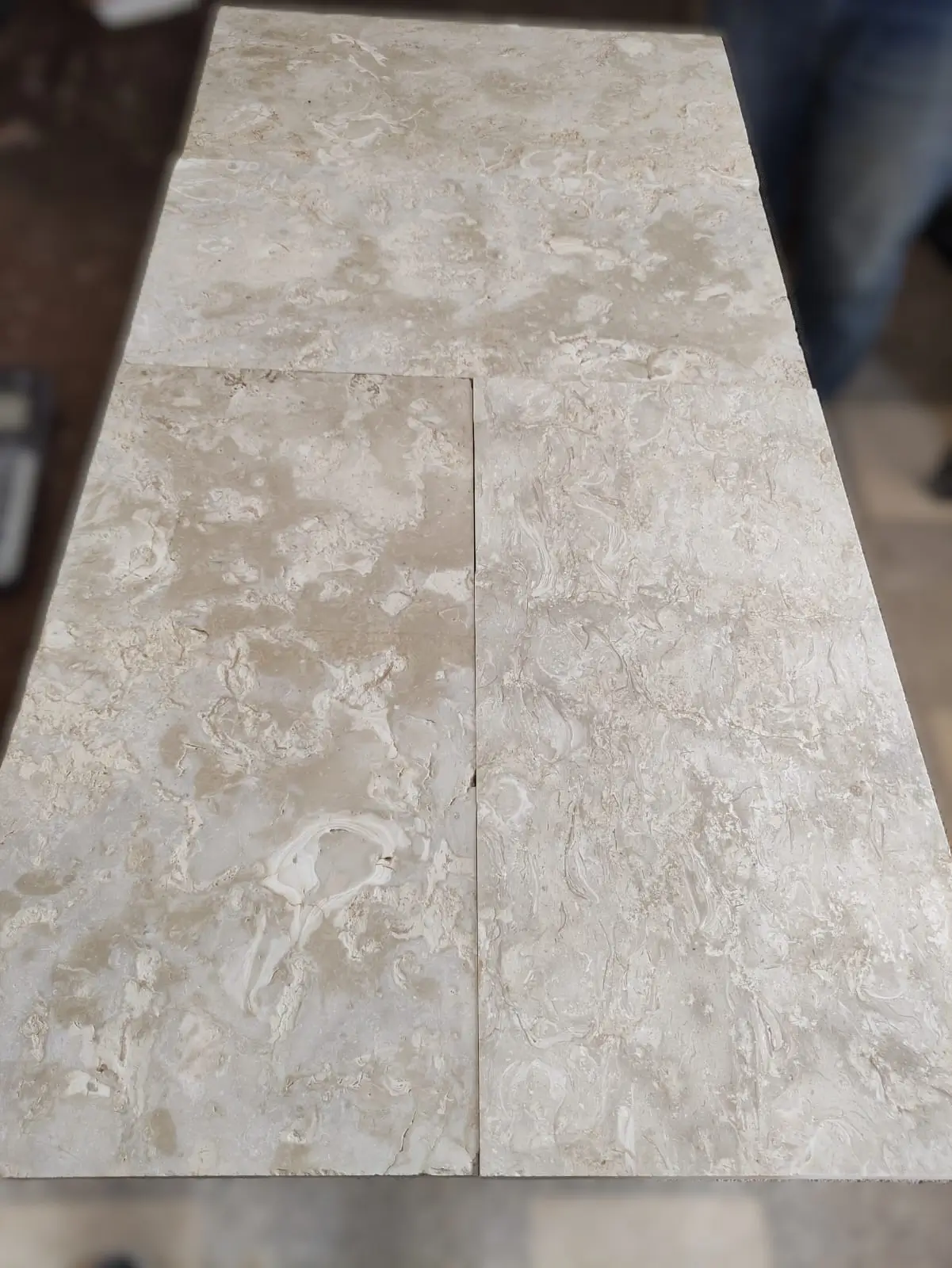
Travertine is the most direct comparison point for shellstone in Arizona, and in strictly mechanical terms, travertine’s higher density (150 to 160 pcf) gives it a marginal edge in hail resistance. However, travertine’s characteristic voids create water ingress pathways that pose a different storm risk — void-fill grout absorbs storm moisture and cycles through expansion contraction stress that shellstone, with its more homogeneous fossil matrix, handles more gracefully over time.
Limestone alternatives in the same thickness and format profile perform comparably to shellstone under wind load, but shellstone’s natural texture provides better storm drainage characteristics on horizontal surfaces. The interconnected micro-texture channels water away from the surface faster than honed limestone, reducing the window during which standing storm water can exploit joint gaps.
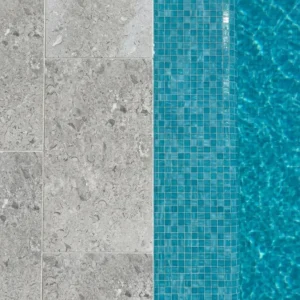
For projects where the spec requires both pool coping and field paving to match, shellstone’s dimensional consistency from shell stone imports in Arizona makes it easier to achieve tight coping-to-field transitions than travertine, which exhibits more dimensional variance between batches. At Citadel Stone, we verify batch-to-batch dimensional tolerances at the warehouse before material ships to project sites — a detail that matters significantly when you’re matching existing installations or specifying across multiple truck deliveries on phased projects.
Buy Shellstone Pavers in Arizona — Wholesale from Citadel Stone
Citadel Stone supplies shellstone pavers across Arizona in standard formats including 12×12, 16×16, 18×18, and 24×24 in both 1.25-inch and 2-inch nominal thicknesses. Beige shellstone in Arizona and white shellstone pavers are both held in warehouse stock for most standard formats, with typical lead times of 5 to 10 business days for in-state truck delivery. For projects requiring custom cuts, non-standard thicknesses, or volume commitments above 2,000 square feet, contact the Citadel Stone team directly to discuss lead times and pricing — sourced from our selected premium quarries, each batch undergoes dimensional and density checks before it reaches your project site.
Material samples and specification sheets are available on request before committing to a product selection — particularly useful for projects requiring engineer-stamped documentation on material density and compressive strength. Trade accounts and wholesale pricing are available for contractors and landscape architects working on recurring Arizona projects. Reach out to Citadel Stone to schedule a consultation or request a project quote, and confirm warehouse availability before locking in your installation timeline. Arizona hardscape projects may also benefit from exploring other durable stone formats — Irregular Flagstone Pavers in Arizona covers another natural stone option that performs well in Arizona’s storm and wind conditions and pairs effectively with shellstone pavers in Arizona mixed-format designs. For Arizona projects requiring durable, natural shellstone pavers, Citadel Stone provides reliable sourcing and consistent product quality throughout the state.