
Ground preparation is the variable that separates shellstone installations lasting a decade from those still performing at thirty years — and in Arizona, that preparation story starts below the surface, not above it. Installing shellstone pavers in Arizona demands a working knowledge of what’s happening in the soil profile before a single paver is set. Caliche layers, expansive clays, and decomposed granite subgrades each behave differently under load, and shellstone’s relatively open pore structure means any moisture migration from below will directly affect long-term stability. Get the subgrade right, and the rest of the installation follows a logical, manageable sequence.
What Arizona Soil Conditions Mean for Your Shellstone Installation
Arizona isn’t one soil type — it’s several, and they behave in dramatically different ways under paved surfaces. The Sonoran Desert lowlands, where most residential and commercial shellstone projects happen, feature a mix of sandy loam, caliche hardpan, and decomposed granite. Each of these interacts with your shellstone substrate in ways that directly affect joint stability, paver pitch, and drainage geometry. Natural stone paver prep across Arizona has to account for which soil type you’re working with before any other decision gets made.
Caliche is the one that surprises most contractors unfamiliar with desert installations. It’s a calcium carbonate-cemented layer that can appear anywhere from six inches to three feet below finish grade. Its density is actually an asset if you’re building a patio slab — caliche can provide a near-concrete sub-base when properly prepared — but it also blocks vertical drainage almost completely. Projects in Tucson frequently hit caliche at 12 to 24 inches, which means drainage must be redirected laterally rather than vertically, and your base aggregate selection needs to support that redirect.
- Sandy loam: drains well but lacks inherent compaction stability — requires 4 to 6 inches of compacted Class II base aggregate minimum
- Caliche hardpan: blocks vertical drainage, must be scarified or broken at perimeter edges before base installation
- Decomposed granite: excellent bearing capacity but prone to erosion channels under dynamic irrigation — requires geotextile fabric separation layer
- Expansive clay pockets: found in transitional zones between desert floor and elevated terrain — require lime stabilization or full excavation and replacement
Take a probe sample before committing to base depth. Dig a test hole at least 18 inches deep in two or three locations across your installation footprint. What you find at depth determines your entire base build-up — not the published spec sheet for the pavers.
Excavation and Subgrade Preparation for Desert-Rated Shellstone
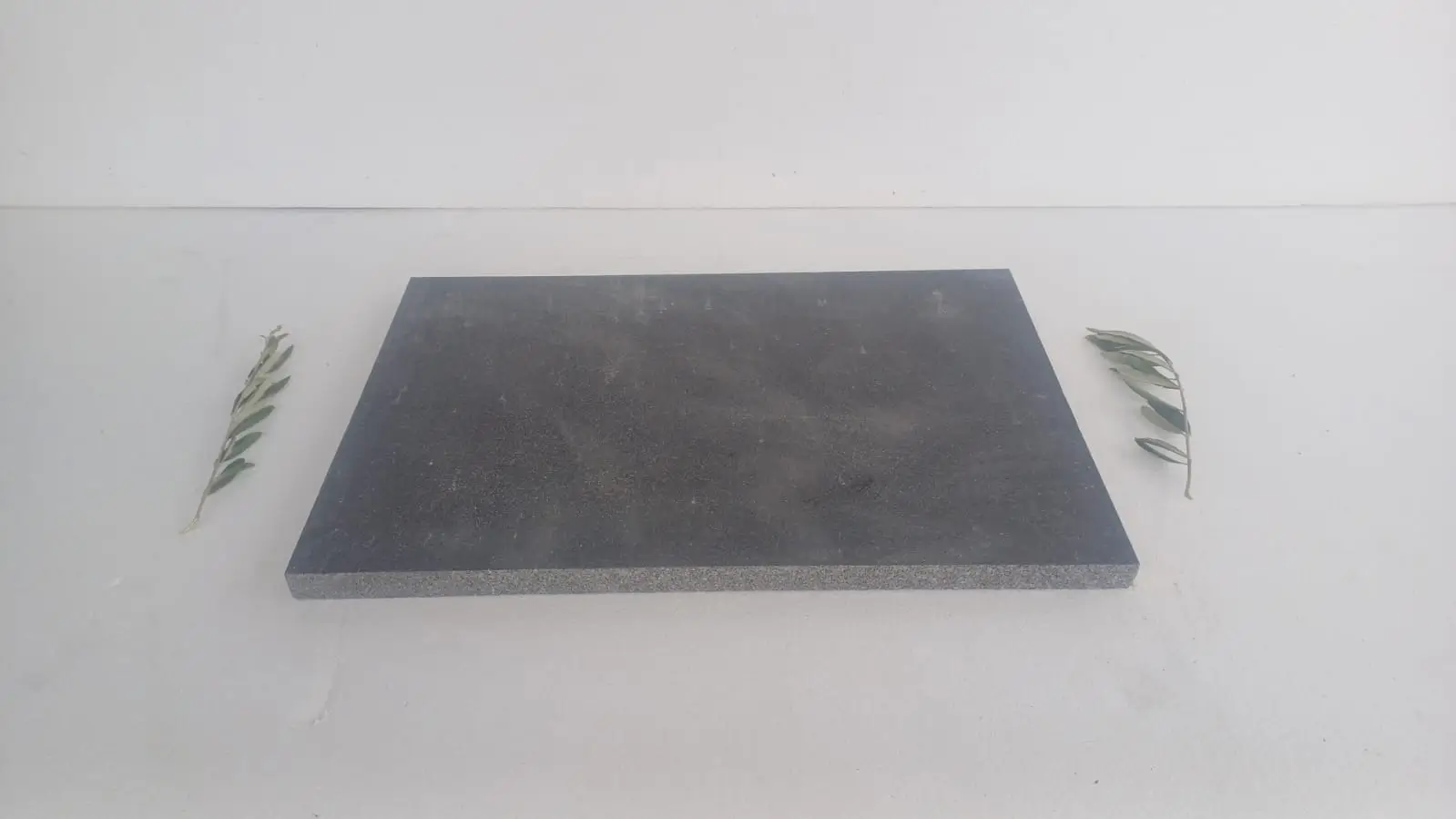
Excavation depth is driven by two numbers: finish grade elevation and total build-up thickness. For a standard residential shellstone patio in Arizona, total excavation typically runs 8 to 10 inches — accounting for 4 to 6 inches of compacted aggregate base, a 1-inch bedding sand layer, and the paver itself at a nominal 2-inch thickness. That math changes if you hit caliche, clay, or unstable fill material.
Subgrade compaction is where most DIY installations fail. The subgrade — the native soil surface after excavation — needs to reach 95% Proctor density before placing a single inch of aggregate base. In Arizona’s sandy soils, that often means adding moisture to the native material before compacting. Too dry and the compactor bounces without achieving density. A plate compactor with a water tank attachment is worth renting specifically for this step. Make multiple passes in perpendicular directions, not just one direction down the length of the project.
- Proof-roll the subgrade with a loaded wheelbarrow — any deflection greater than half an inch signals insufficient compaction
- Scarify caliche surfaces to a depth of 3 to 4 inches at project perimeters to allow lateral water movement
- Install perforated drain pipe at the low point of any area where caliche blocks vertical drainage
- Use a geotextile separation fabric between native decomposed granite subgrade and aggregate base to prevent intermixing over time
Shellstone paver installation steps in AZ consistently show that the time invested in subgrade preparation is recovered — and then some — in reduced callback repairs and joint settlement over the first five years.
Choosing the Right Aggregate Base for Arizona Ground Conditions
Base aggregate selection is one of the more nuanced decisions in the shellstone substrate preparation process in Arizona. The instinct is to grab whatever crushed base material is locally available — and in Arizona, that’s often a decomposed granite blend or road base material. Those can work, but they’re not always the optimal choice for shellstone specifically.
Shellstone is a bioclastic limestone with a relatively high absorption rate — typically 5 to 8% by weight, depending on the specific seam. That open pore structure means the paver itself can wick moisture from the bedding layer if the base holds water. A well-graded particle distribution — a Class II road base or 3/4-inch crushed aggregate compacted to 95% density — drains freely while maintaining structural integrity under point loads.
- 3/4-inch minus crushed aggregate: best general-purpose base for shellstone in Arizona residential applications
- Class II road base (ASTM D1241 compliant): higher fines content aids compaction but requires good drainage slope to function properly
- Recycled concrete aggregate: adequate bearing capacity but variable fines — screen for consistency before use
- Angular particle shape is essential — round particles like river gravel won’t interlock and will shift under load
In Scottsdale, where many high-end outdoor living projects specify desert-rated shellstone patio slabs, the preferred base is a 4-inch compacted 3/4-inch minus layer topped by a 1-inch screeded bedding sand layer. This two-layer approach separates structural bearing from fine surface adjustment — and it gives the ability to correct minor slope inconsistencies at the bedding layer without disturbing the base.
Bedding Sand, Drainage Slope, and Shellstone Stability
The 1-inch bedding sand layer does more work than most people give it credit for. It’s the layer that absorbs minor subgrade irregularities, provides a consistent bearing surface for each individual paver, and allows just enough micro-adjustment during installation to hold elevation tolerances. For shellstone specifically, concrete sand (ASTM C33 gradation) is the right choice — not masonry sand, which has too many fines and will pump under dynamic loading.
Drainage slope is non-negotiable in Arizona’s caliche-heavy soils. A minimum 2% fall away from structures is the baseline; in areas where lateral drainage is the only option due to caliche, increase that to 3% to ensure water clears the paved surface before it can pond. Check slope with a string line and level at every 8 feet across the installation — don’t trust the visual grade alone. What looks flat is almost always flatter than 2%.
- Screed the bedding sand to a consistent 1-inch depth — do not compact it before paver placement
- Run screed pipes parallel to the primary drainage direction so slope is built into the screeding process
- Do not wet the sand before screeding — dry sand holds the screed profile better during paver setting
- Avoid walking on screeded sand sections — use knee boards to distribute weight
Paver Layout, Cutting Tolerances, and Joint Spacing
Shellstone’s dimensional variation is something to plan around, not fight against. Unlike concrete pavers manufactured to tight tolerances, natural shellstone pavers carry inherent dimensional variability — typically plus or minus 3/16 of an inch in any given dimension. Joint spacing needs to accommodate that variability without creating aesthetic inconsistency. A consistent 3/16-inch to 1/4-inch joint width across the field gives enough room to absorb dimensional variation while maintaining a clean pattern.
Start the layout with a dry run before any bedding sand is disturbed. Lay out a 10-by-10-foot section in the intended pattern, check joint consistency, identify any pieces that fall outside tolerance, and set those aside for cut pieces at perimeters. For Flagstaff installations at elevation — where freeze-thaw cycling adds a second stressor beyond Arizona’s typical heat loads — increase joint width to 3/8 inch to allow for the additional thermal movement that seasonal temperature swings produce.
- Use a 10-inch wet saw with a diamond blade rated for natural limestone — standard concrete blades tear rather than cut shellstone’s crystalline matrix
- Keep cut pieces at least 1/3 of a full paver width — smaller cuts create unstable edges that chip under foot traffic
- Offset joints by at least one-third of paver length in running bond or herringbone patterns — avoid four-corner joints
- Pre-sort pavers by thickness before installation — use thicker pieces in field areas and thinner pieces near perimeters where base adjustment is easier
At Citadel Stone, we recommend confirming paver thickness range before your truck delivery arrives — the nominal 2-inch thickness can vary by up to 1/4 inch within a pallet, and knowing your range ahead of time lets you plan bedding sand depth adjustments before installation day.
Setting Shellstone Pavers Correctly on Your Arizona Base
Placing shellstone pavers onto the screeded bedding layer requires a systematic approach that maintains drainage slope while keeping joints consistent. Work from a fixed reference line — typically a string line at finish elevation — and set pavers in sections no larger than 4 feet by 4 feet before checking alignment. Tap each paver with a rubber mallet to fully seat it into the bedding sand, but avoid over-striking, which can fracture the crystalline veining that gives shellstone its signature appearance.
For complete technical guidance on sourcing and installation coordination, Arizona shellstone installation from Citadel Stone covers product specifications, lead times, and delivery logistics for Arizona projects in detail.
Field performance data on installing shellstone pavers in Arizona climates shows that proper full-contact bedding — where each paver has 95% or better sand contact across its underside — is the single strongest predictor of long-term joint stability. Voids beneath a paver create a rocking condition that progressively loosens the bedding and accelerates joint sand loss. Take the extra step of lifting each placed paver after initial setting and checking for full contact before moving on.
Joint Sand Installation and Sealing for Arizona Desert Conditions
Polymeric sand is the right choice for shellstone paver joints in Arizona — with one qualification. Standard polymeric sand formulations are designed for moderate climates, and Arizona’s extreme UV exposure and surface temperatures can accelerate the binder degradation that causes polymeric sand to dust and erode over time. Specify a high-UV-resistance polymeric sand formulated for USDA hardiness zones 9 and 10, and check the manufacturer’s data sheet for a surface temperature rating above 140°F.
Sealing shellstone in Arizona is more critical than in temperate climates because the caliche-rich soils create an alkaline environment that can wick calcium deposits into the paver surface from below over time — a process called efflorescence. A penetrating impregnating sealer applied within 30 days of installation creates a hydrophobic barrier in the pore structure that significantly reduces moisture migration from below. Reapply every two to three years in high-UV desert exposures, and every three to four years in cooler, higher-elevation installations where UV intensity is moderated.
- Sweep polymeric sand dry into joints — moisture in the surface during application causes premature curing and surface hazing
- Compact the field with a plate compactor over a foam pad protector before activating the polymeric sand with water
- Apply sealer in two thin coats, not one heavy coat — heavy single applications trap moisture and create surface whitening
- Test sealer on a sample piece in full sun before full application — surface temperature affects open time significantly
Long-Term Performance and Maintenance for Shellstone in Arizona Soil Conditions
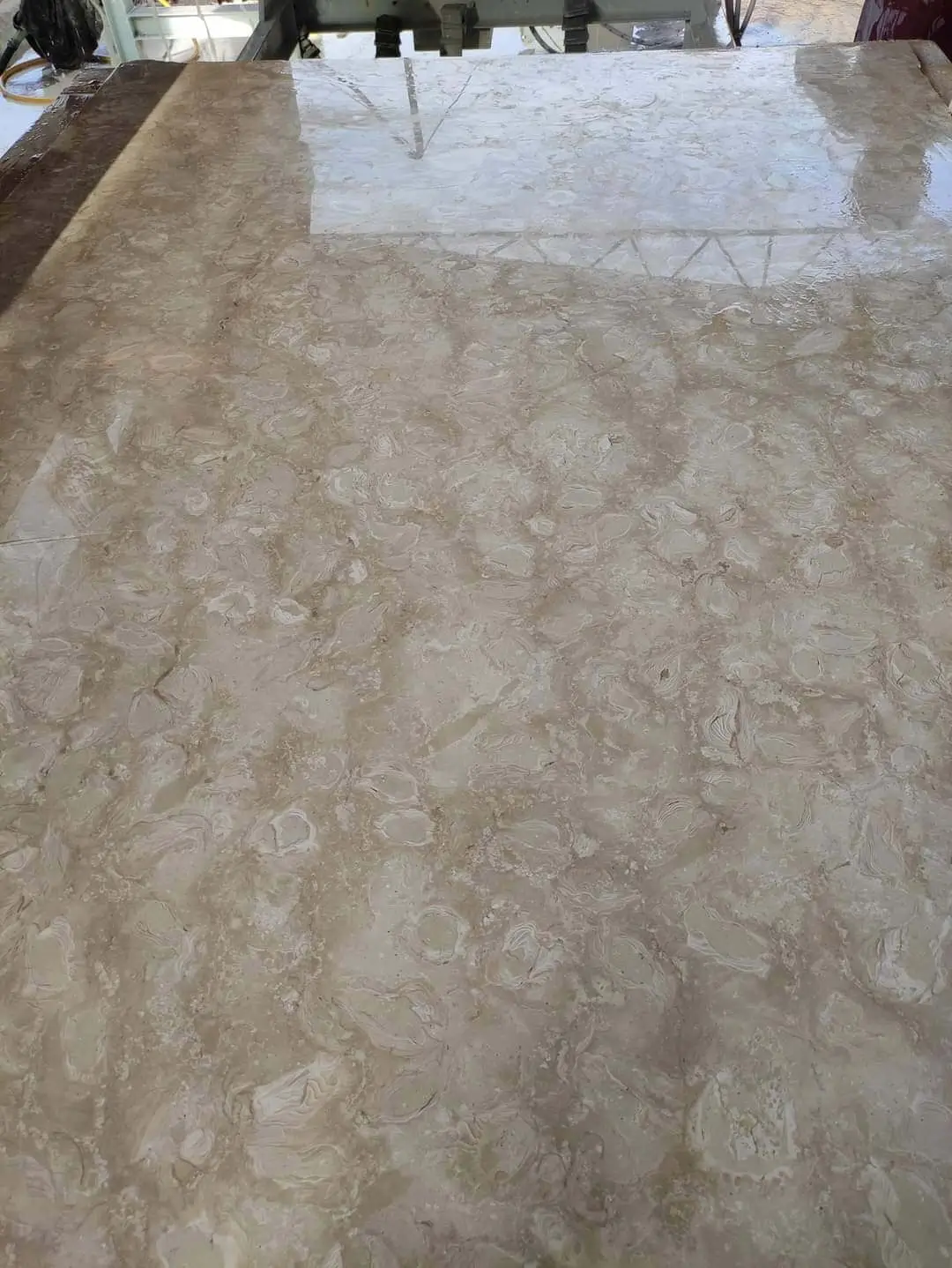
Shellstone pavers in Arizona perform exceptionally well over decades when the substrate work is done correctly from the start — but the maintenance schedule here is different from what you’d follow in a humid climate. Arizona’s dry air desiccates joint sand faster than rainfall-driven erosion does in wetter states. Annual joint sand top-ups are a realistic expectation for the first three to five years as the initial compaction and settlement stabilizes.
The alkaline soil conditions common to Arizona’s desert floor create a slow but consistent efflorescence risk that sealing alone won’t fully eliminate. An annual inspection of the paver surface — looking for white calcium deposits, joint sand loss, and any paver rocking — lets you address issues before they compound. Joint sand loss leads to paver rocking; paver rocking leads to bedding sand displacement; bedding sand displacement leads to settlement — and that sequence is far more expensive to repair than the annual tube of polymeric sand top-up that prevents it.
- Top up joint sand at the first sign of sand loss — do not wait until joints are visibly empty
- Recheck drainage slope every three years — soil settlement in Arizona’s sandy substrates can reduce effective slope over time
- Avoid high-pressure washing on shellstone — the pore structure is vulnerable to water jet damage at pressures above 1,200 PSI
- Use pH-neutral stone cleaner for routine maintenance — acid-based cleaners attack shellstone’s calcium carbonate matrix
- Check perimeter edging restraints annually — loosened edging is the primary cause of field paver spread in sandy Arizona soils
Our technical team at Citadel Stone regularly consults with contractors on maintenance schedules specific to different Arizona soil zones, because the right interval in Tucson’s caliche-heavy lowlands isn’t the same as what works in the sandy wash areas north of Scottsdale. Warehouse stock of compatible joint sand and compatible sealers is something we keep on hand for reorder continuity — so your maintenance materials match your original installation spec.
Expert Summary
Installing shellstone pavers in Arizona is a fundamentally soil-driven process. Every decision made above grade — base depth, aggregate type, drainage slope, joint width — traces back to what the soil profile below grade is doing. Caliche blocks drainage and demands lateral rerouting. Sandy subgrades compact well but need geotextile separation. Expansive clay pockets require stabilization or replacement. Solving those variables first makes everything above grade perform correctly, predictably, and for a long time.
The shellstone paver installation steps in AZ that produce 25-year installations aren’t dramatically different from those that produce 10-year ones — the difference is in the details of subgrade preparation, full-contact bedding, polymeric sand selection, and sealing schedule. None of those details are expensive relative to the material cost, but each one matters. Skipping the proof-roll test on the subgrade, or using standard polymeric sand in Arizona’s UV environment, or applying sealer in a single heavy coat — any one of those shortfalls can undercut an otherwise well-specified project.
As you plan your project, the material selection layer of the decision connects directly to what comes next. Our warehouse stocks matching shellstone product lines specifically to support specification continuity from purchase through long-term maintenance. For a broader look at shellstone travertine options and how to evaluate quality and cost before purchasing, How to Choose Shell Stone Travertine in Arizona: The Complete Buyer’s Guide provides the buying-side detail that complements this installation framework. Homeowners in Tucson, Peoria, and Flagstaff rely on Citadel Stone for shellstone pavers sized to standard 2-inch thickness, supporting stable substrate performance under Arizona’s desert temperature swings.