What Arizona’s Thermal Cycling Actually Does to Basalt
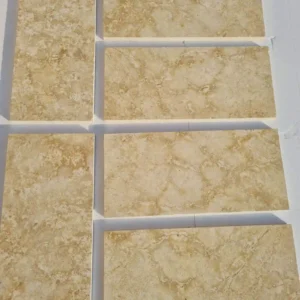
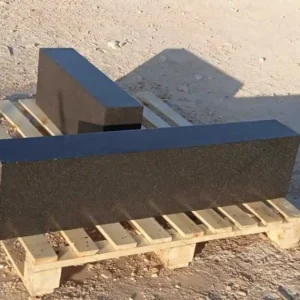
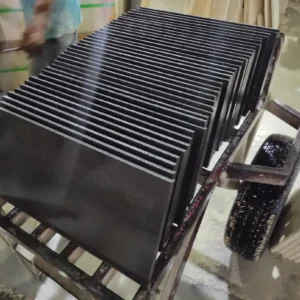
Honed basalt in Arizona performs remarkably well under compression, but the real performance variable isn’t peak heat — it’s the amplitude of the daily temperature swing. Phoenix routinely swings 35–45°F between predawn lows and afternoon highs, and that delta is what loads and unloads the stone and its joints repeatedly, day after day. Basalt’s coefficient of thermal expansion sits around 4.0–5.5 × 10⁻⁶/°F, which is comparatively stable, but that stability only translates into longevity when your joint design and base preparation are engineered for cycling, not static load. Citadel Stone inspects every basalt batch against dimensional tolerances before it ships, precisely because thermal cycling amplifies any inconsistency in thickness across the field.
Freeze-Thaw Risk Doesn’t Stop at the Desert Floor
A lot of specifiers treating Arizona as a single climate zone make a costly assumption. Flagstaff sits above 6,900 feet in elevation and records legitimate freeze-thaw cycles — sometimes 60 or more annually — that demand an entirely different approach to honed basalt stone installation than you’d use in the low desert. Even in the mid-elevation Sedona corridor, nighttime temperatures in January and February drop well below freezing while afternoon readings climb into the 50s, creating moisture-expansion stress in any stone with elevated absorption. Basalt’s water absorption rate typically falls between 0.2% and 1.0% depending on quarry source and finishing process, which makes it one of the more freeze-thaw-resistant natural stones available — but that advantage disappears if the base isn’t draining aggressively or if joint mortar is allowing water ingress at the interface.
Verify that your honed basalt stone in Arizona is sourced from dense, low-porosity quarry stock whenever freeze-thaw exposure is a design factor. Absorption values above 0.5% warrant closer scrutiny in Flagstaff or high-desert elevations. At Citadel Stone, we source from established quarry partners and can provide certified absorption data on request, which takes the guesswork out of specification compliance for elevation-sensitive projects.
How the Honed Finish Behaves Under Thermal Stress
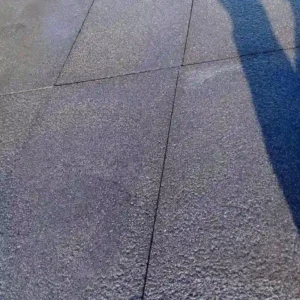
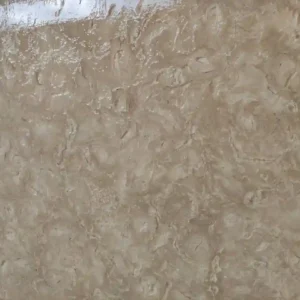
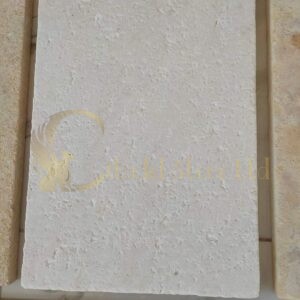
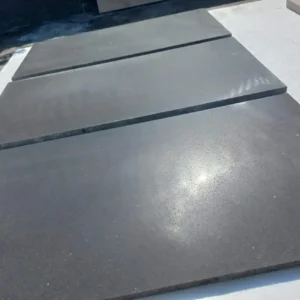
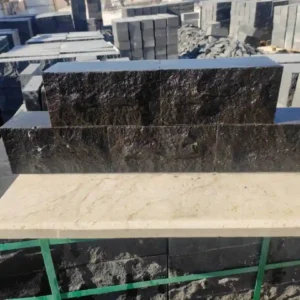
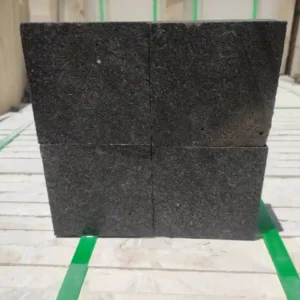
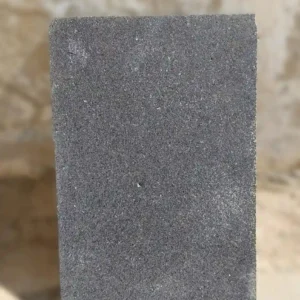
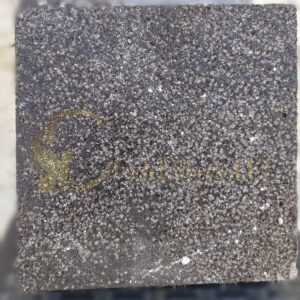
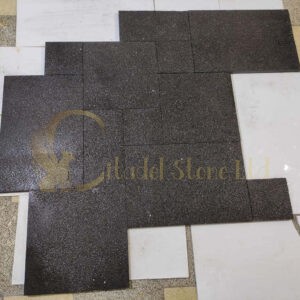
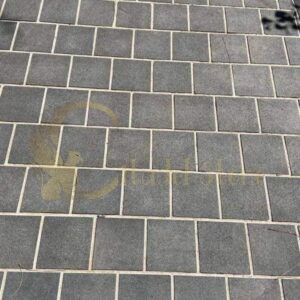
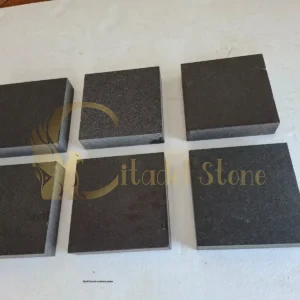
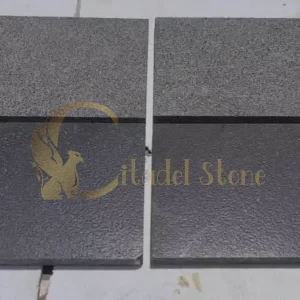
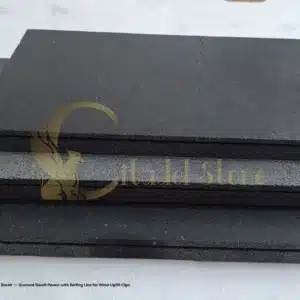
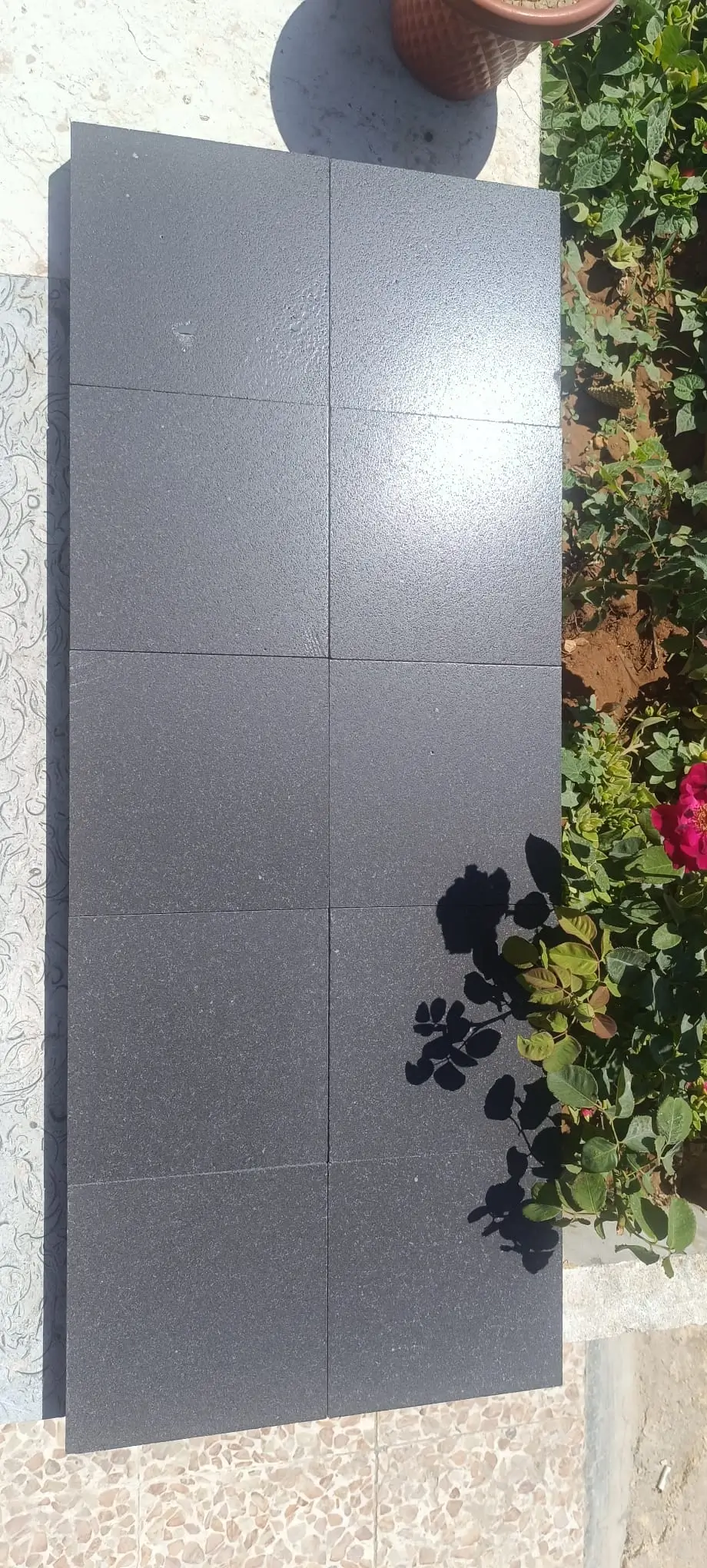
The honed finish — produced by grinding basalt to a smooth, matte surface without the full polish — changes the way the stone interacts with both heat and moisture compared to a flamed or rough surface. Flamed basalt in Arizona is often specified for exterior applications precisely because the thermal texturing opens microfractures that improve grip, but that same surface texture increases effective surface area and marginally elevates absorption. Honed surfaces are denser at the face, which gives you an advantage in freeze-thaw scenarios and makes sealer penetration more predictable.
- Honed basalt maintains a surface absorption rate roughly 15–20% lower than flamed equivalents from the same quarry block
- The matte finish reflects less solar radiation than polished stone, reducing surface glare without the thermal mass increase of a textured profile
- Thermal cycling stress concentrates at joints and edges — not mid-panel — so edge treatment quality matters as much as stone density
- In outdoor applications across Arizona, honed basalt tile should be installed with minimum 3/16-inch joints to accommodate daily thermal movement without spalling
Joint Design for Daily Thermal Movement
This is where most honed basalt tile in Arizona installations either earn their 25-year lifespan or start showing distress within five years. Generic installation guidelines often specify 1/8-inch joints based on interior residential assumptions. For exterior Arizona conditions with 35–45°F daily cycling, you need a minimum 3/16-inch joint filled with a flexible polymer-modified grout or setting material rated for thermal cycling. Standard cement grout cracks under repeated expansion-contraction loads — not immediately, but progressively, and once the joint integrity fails, water gets into the sub-base and the failure accelerates.
For large-format honed basalt floor tiles in Arizona — anything 24×24 inches or larger — expansion joints at 10–12 foot intervals are non-negotiable. The arithmetic is straightforward: a 24-inch tile panel at 5.0 × 10⁻⁶/°F thermal expansion coefficient across a 40°F daily swing moves roughly 0.005 inches per tile. Across a 12-foot run, that’s nearly 0.03 inches of cumulative movement, which exceeds the elastic capacity of rigid grout without relief joints. Request specific technical data sheets from Citadel Stone to verify expansion coefficients for the basalt batch you’re specifying before installation begins.
Base Preparation That Accounts for Soil Behavior
Arizona’s soils introduce a secondary cycling problem that compounds thermal movement: expansive clay soils in the Phoenix metropolitan area swell and contract with moisture availability, adding vertical movement beneath your stone field. Projects in Chandler and surrounding East Valley communities frequently encounter high-plasticity clay layers within the first 24 inches, and that soil movement imposes differential loading on your basalt installation from below while thermal cycling stresses it from above. The solution isn’t to eliminate one variable — it’s to design the base to absorb both simultaneously.
- Minimum 6-inch compacted crushed aggregate base (3/4-inch minus) for residential pedestrian applications in clay-soil zones
- 8–10-inch base depth for vehicular or high-traffic commercial applications where clay soils are present
- Geotextile separation fabric between native soil and aggregate prevents clay migration into the base over time
- Concrete sub-base with control joints becomes preferable to aggregate in high-load applications where soil movement exceeds 1/2 inch seasonally
- Moisture barrier applications should be evaluated site by site — trapping moisture below impermeable basalt in clay-soil areas can actually worsen heave
For projects using Scottsdale‘s caliche-heavy soils as a sub-base, the natural hardpan layer often provides excellent bearing capacity — but surface irregularities in the caliche need to be broken and re-compacted, not just graded over. Leaving voids beneath the aggregate base creates point-load failures when thermal cycling induces micro-movement.
Flamed Basalt vs. Honed: Choosing the Right Finish for Your Arizona Project
The choice between flamed basalt tile in Arizona and the honed finish comes down to application context and traffic profile, not aesthetics alone. Flamed basalt stone in Arizona is the right call for pool decking, sloped walkways, and any surface where wet-foot traction is the primary concern — the flame treatment creates a micro-textured surface that achieves DCOF (Dynamic Coefficient of Friction) values above 0.60 wet, meeting ADA and commercial slip-resistance requirements. Honed basalt delivers a DCOF around 0.42–0.55 wet depending on surface preparation, which is appropriate for covered patios, indoor-outdoor transitions, and low-slope exterior applications where ponding isn’t a concern.
- Flamed finish: DCOF 0.60–0.75 wet — preferred for pool surrounds, sloped driveways, exposed ramp surfaces
- Honed finish: DCOF 0.42–0.55 wet — appropriate for flat patios, interior floors, covered outdoor areas
- Rough basalt and weathered basalt finishes provide the highest slip resistance but require more aggressive sealing schedules to prevent long-term staining in outdoor environments
- Weathered basalt in Arizona projects tends to collect fine dust and organic debris in its surface texture — factor in maintenance frequency before specifying in high-traffic areas
For projects requiring both finishes — a common scenario where a pool deck transitions to a covered outdoor kitchen — confirm that your honed and flamed tiles are cut from the same quarry lot. Color variation between finishing runs can be significant, and a mismatched transition line reads as a specification error even when the materials are technically correct. Citadel Stone maintains warehouse inventory of matched lot basalt in both finishes, which simplifies this coordination for Arizona projects.
Sealing Protocols for Arizona’s Thermal Environment
Sealing honed basalt floor tiles in Arizona isn’t optional — it’s a maintenance commitment that determines long-term appearance and performance. The thermal cycling that characterizes Arizona’s climate accelerates sealer degradation more than UV exposure alone, because sealers expand and contract with the stone and eventually lose adhesion at the molecular level. A penetrating impregnating sealer rated for stone with absorption values under 1.0% is the appropriate choice for honed basalt — surface topical sealers peel and cloud under repeated thermal stress and shouldn’t be used on exterior applications.
Resealing intervals depend on exposure and traffic. For fully exposed exterior applications in low-desert Arizona, plan on biennial resealing minimum. For covered applications or interior floors, a three-year cycle is typically sufficient. The test is simple: drop water on the surface. If it beads and sheets off within 30 seconds, the sealer is active. If it begins absorbing within 10–15 seconds, the schedule is overdue. For projects referencing surface care requirements, honed basalt tile options Arizona covers specific maintenance protocols applicable to Arizona climate zones and installation types — review that guidance alongside your sealing product data sheet before finalizing your maintenance schedule.
Thickness Selection and Load Capacity for Arizona Applications
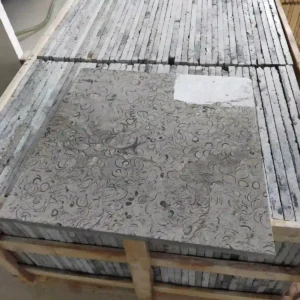
Honed basalt tile comes in standard thicknesses of 3/4 inch (20mm), 1-1/4 inch (30mm), and 1-1/2 inch (40mm) nominal, and the right choice depends on your sub-base type and anticipated loading. For mortar-set applications over a rigid concrete sub-base, 3/4-inch tile is adequate for residential pedestrian traffic. For sand-set or aggregate-base installations, step up to 1-1/4 inch minimum — the additional thickness distributes point loads across a larger bearing area and reduces the risk of edge cracking during thermal cycling when the base isn’t uniformly rigid.
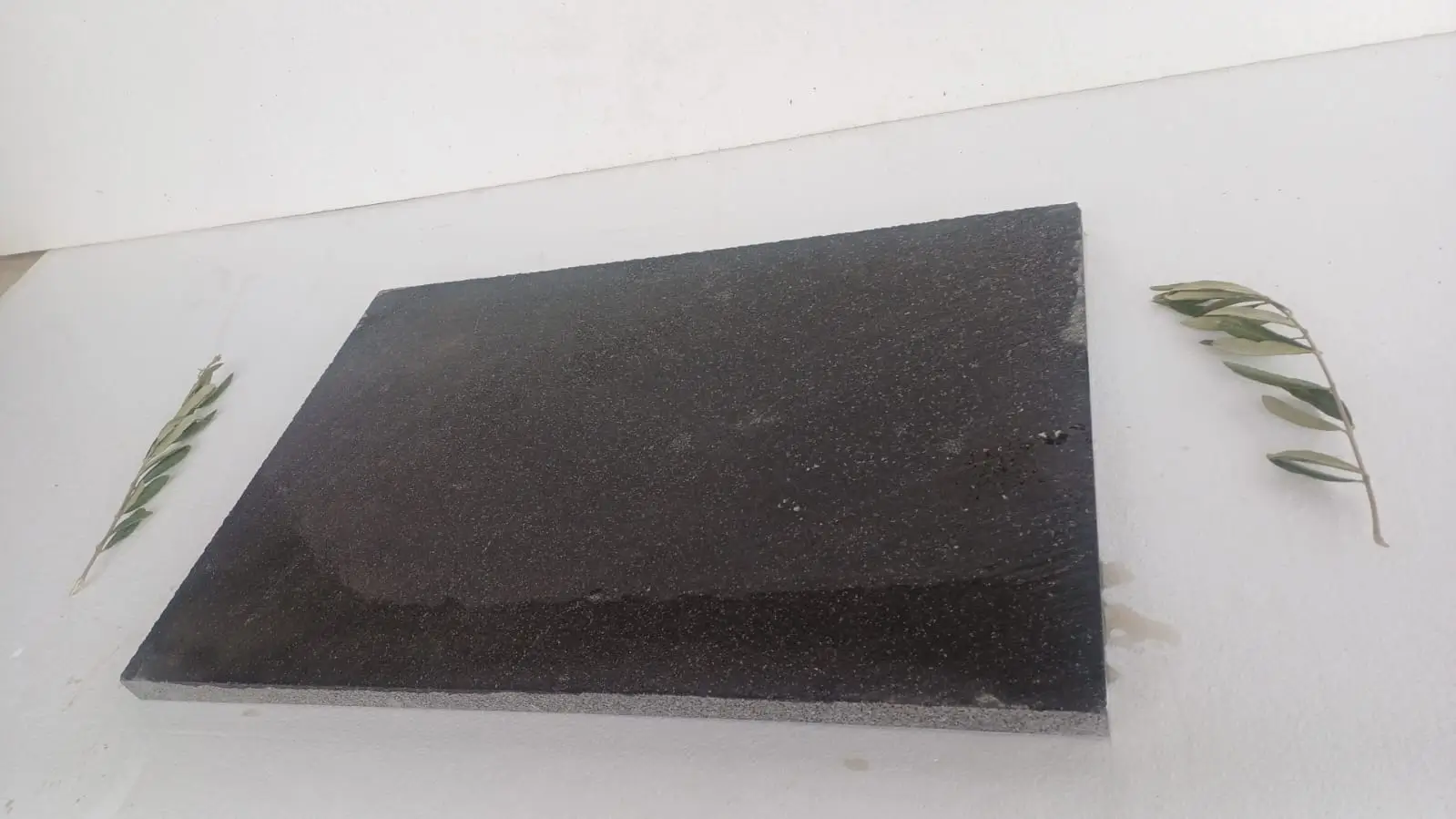
- 3/4-inch (20mm): Mortar-set over concrete sub-base, residential pedestrian, interior floors
- 1-1/4-inch (30mm): Sand-set exterior, light vehicular overhang areas, commercial pedestrian
- 1-1/2-inch (40mm): Heavy pedestrian commercial, vehicular traffic zones, structural steppers
- Basalt’s compressive strength of 25,000–35,000 PSI means thickness decisions are driven by base flexibility and thermal loading, not stone strength itself
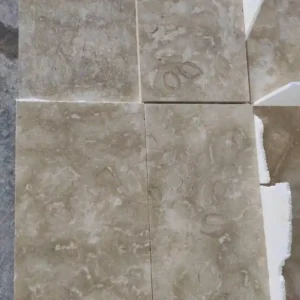
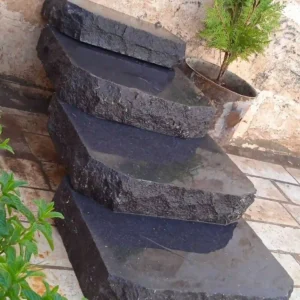
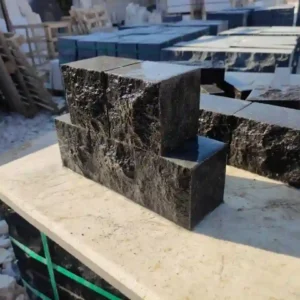
Rough basalt in Arizona applications for stepping stones or decorative bouldering contexts typically spec at 2 inches or greater thickness, partly for structural reasons and partly because the irregular surface profile benefits from mass. For honed tile formats, staying within the standard thickness ranges and adjusting base engineering is the more cost-effective approach than over-specifying material thickness. Citadel Stone maintains warehouse stock across standard thicknesses for in-region fulfillment, which supports phased projects that draw from the same quarry lot across multiple installation windows.
The Specification Decisions That Define Honed Basalt Performance in Arizona
Getting honed basalt right in Arizona comes down to a short list of decisions that separate installations that perform for 25 years from those that need remediation by year eight. Your joint width, base depth, and sealer selection need to be engineered as a system — not selected independently from a generic spec sheet. The thermal cycling regime in Arizona is real and measurable, and the materials that handle it best are the ones installed with that cycling built into every dimension of the design.
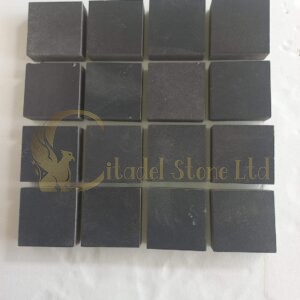
Delivery logistics also affect quality outcomes more than most project managers anticipate. Confirming warehouse stock availability before scheduling your installation crew prevents the field substitutions that compromise color consistency and dimensional matching. Citadel Stone ships honed basalt tile across Arizona from regional warehouse inventory, and lead times to your Phoenix or Tucson jobsite typically run one to two weeks on in-stock formats — a significant advantage over the six-to-eight week import timeline for special orders. Arizona hardscape projects can also draw on related stone applications for complementary design elements — Basalt Cobbles in Arizona covers another dimension of basalt specification that pairs well with honed tile fields in landscape and hardscape contexts. For Arizona projects requiring consistent quality, Citadel Stone provides honed basalt tile selections suited to the region’s climate and design standards.