
















50 Years Of Manufacturing & Delivering The Highest-Quality Limestone & Black Basalt. Sourced & Hand-Picked From The Middle East.

Escrow Payment & Independent Verifying Agent For New Clients

Contact Me Personally For The Absolute Best Wholesale & Trade Prices:

USA & Worldwide Hassle-Free Delivery Options – Guaranteed.

Basalt Cobbles in Arizona

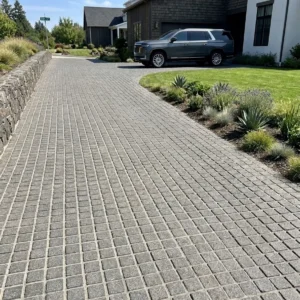
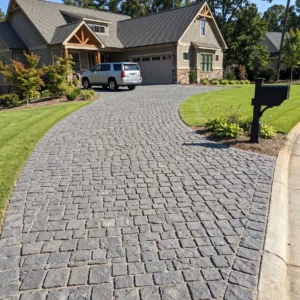
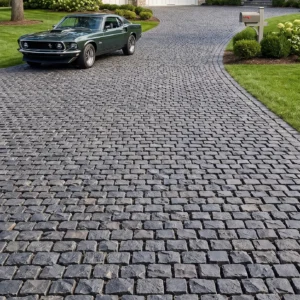
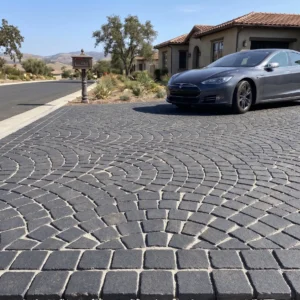
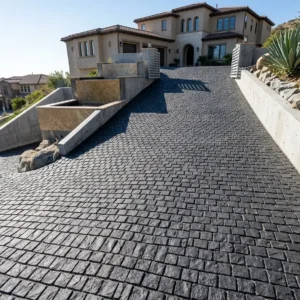
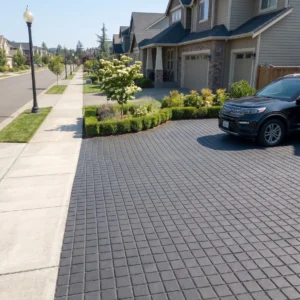
Basalt cobbles in Arizona present a compelling choice for hardscape projects — but ground conditions across the state introduce installation variables that deserve careful attention before a single stone is set. Arizona soils range from expansive clay-heavy profiles in the Valley to loose decomposed granite in higher elevations, and each demands a different approach to subgrade preparation and compaction depth to prevent shifting and settlement over time. A well-engineered base layer, typically a minimum of 4 inches of compacted Class II road base, is the foundation that determines long-term cobble stability regardless of stone quality. Citadel Stone basalt cobbles Arizona are available in multiple size formats to accommodate both residential and commercial applications, with specification support to help contractors select the right cobble dimensions for their subgrade and load requirements. Understanding how your specific soil classification influences joint width, bedding sand depth, and drainage design can be the deciding factor between a surface that holds for decades and one that requires costly remediation. Citadel Stone supplies quality basalt cobbles to contractors and homeowners throughout Arizona, supporting durable and well-crafted hardscape installations across the state.

See & Feel the Quality – Free Arizona Stone Samples

Our stones are made for the Arizona sun. See how the colors hold up in your specific light.

Design Your Arizona Home with a Local Stone Expert

Get personalized advice on the best stone for Arizona's climate and your design style.

Premium Natural Stone — All Sizes & Thicknesses Available

From standard cuts to fully custom dimensions — our limestone, granite, basalt & shellstone
are cut to your exact specifications. Residential or commercial, we’ve got you covered.

Get Your Free Arizona Stone Quote

Transparent Pricing for Your Arizona Project

Elevate Your Arizona Property with Premium Stone, Priced for Value.

Unlock $10,000 Worth of Deals on Beautiful Paver, Tiles & Cobble Setts—For Free!

Invest in Arizona’s Landscape: Stone That Lasts a Lifetime.

100% Happiness Guarantee

Trust 50 Years of Expertise. Invest in Quality Limestone Tiles

Custom-Cut for Your Arizona Project: Any Size, Any Finish.

No-Obligation Consultation: Get Expert Advice for Your Arizona Home.

The Stone Supplier Trusted by Arizona's Leading Architects & Designers.

Trusted by Top Stone Experts Around the Globe

Arizona's Most Diverse Selection of Limestone Tiles.

Elevate Your AZ Property with Limestone Built for the Desert. Our expansive collection of limestone tiles brings timeless beauty and proven durability to both residential and commercial spaces across Arizona. As the state’s leading supplier, we offer a diverse palette of colors and finishes—from cool, light tones that reflect the sun to rich, earthy textures that complement the Southwest landscape. Transform your environment with limestone that stands up to the Arizona heat while providing the sophisticated aesthetic you desire.

Explore Arizona-Tough Alternative Stones

Product NameDescriptionPrice per Square Foot
Travertine TilesBeautiful natural stone with unique textures$8.00 - $12.00
Marble TilesLuxurious and elegant, available in various colors.$10.00 - $15.00
Granite TilesExtremely durable and perfect for high-traffic areas.$7.00 - $12.00
Slate TilesRich colors and textures; ideal for wet areas.$6.00 - $10.00
Porcelain TilesVersatile and low-maintenance, mimicking natural stone.$4.00 - $8.00
Ceramic TilesAffordable with a wide variety of designs.$3.00 - $6.00
Quartzite TilesStrong and beautiful, resistant to stains.$9.00 - $14.00
Concrete PaversCustomizable for patios; durable and cost-effective.$5.00 - $9.00
Glass TilesStylish, reflective, and brightening.$15.00 - $25.00
Composite TilesEco-friendly options made from recycled materials.$5.00 - $10.00

Incredible Prices for Top-Quality Stone—Shop Citadel Stone Today!

Table of Contents

Why Soil Conditions Define Basalt Cobble Performance in Arizona

Basalt cobbles in Arizona perform at their structural peak when the subgrade beneath them is genuinely understood — not assumed. The dense, interlocking grain structure of basalt gives it compressive strength well above 15,000 PSI, but that strength only translates to long-term stability when the base system below compensates for Arizona’s variable soil behavior. What you’re installing on top of matters far less than what you’re installing into.

Citadel Stone sources basalt cobblestone from established quarry partners and inspects each batch for density consistency and dimensional tolerance — two factors that directly affect how the material performs when Arizona’s ground shifts seasonally. You can request material specifications or sample pieces before committing to a full project order, which saves time when you’re aligning stone dimensions to a specific base depth.
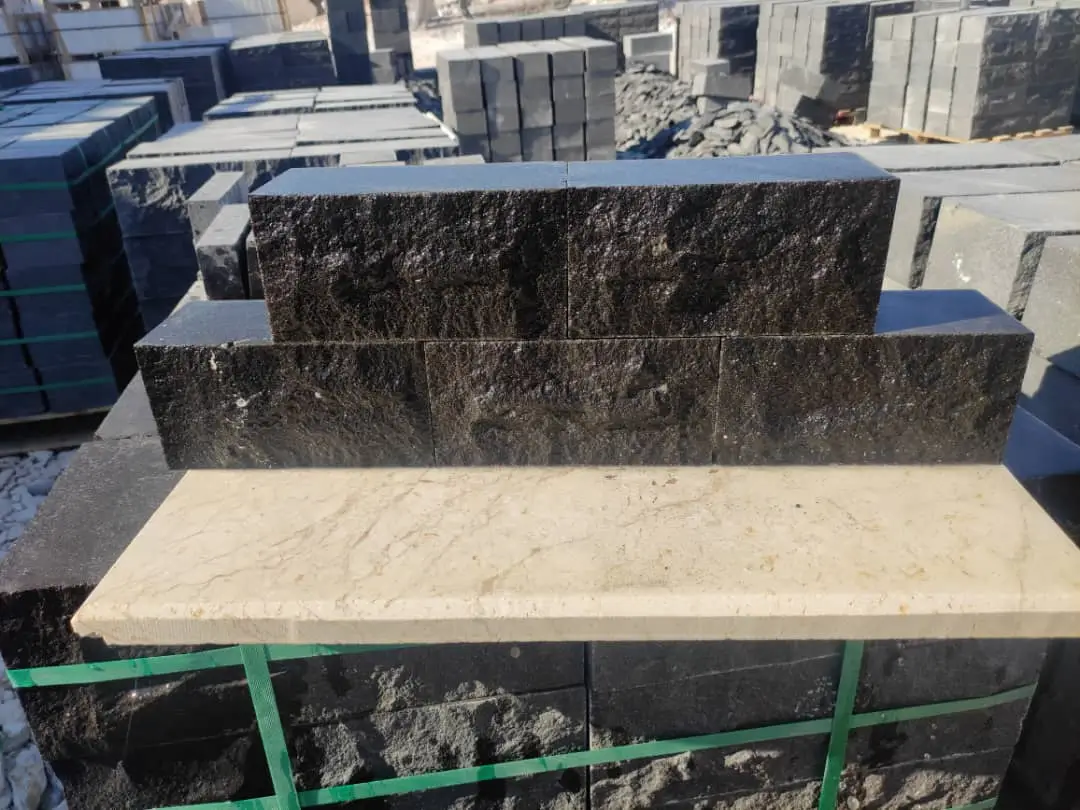
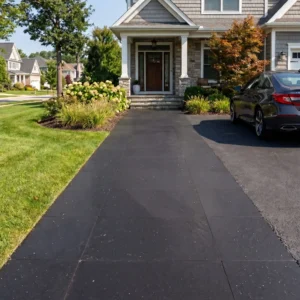
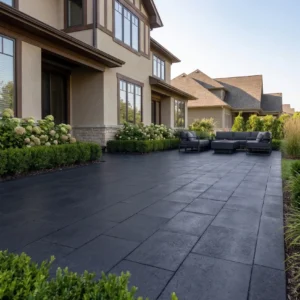
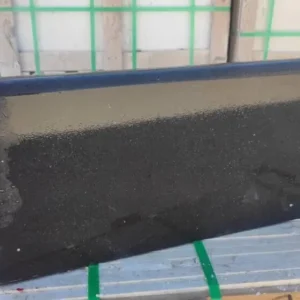
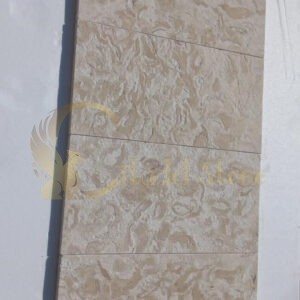
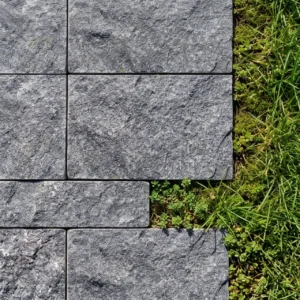
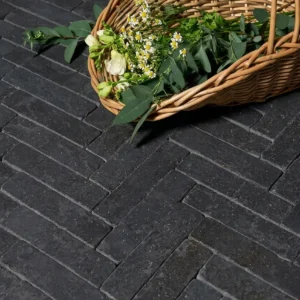
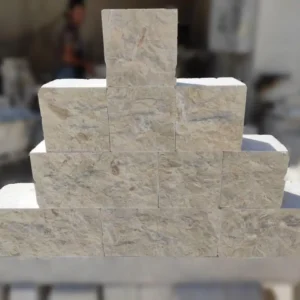
Three rows of dark, rough-textured stone blocks stacked.

Arizona Soil Types That Affect Cobble Installation

Arizona isn’t a single soil profile — it’s three or four completely different installation environments compressed into one state. You’ll encounter expansive clay in the low desert valleys, caliche hardpan at varying depths across the central corridor, and decomposed granite or sandy loam in higher elevations. Each of these demands a different base strategy for basalt cobblestone pavers in Arizona to perform correctly over time.

  • Expansive clay soils in the Phoenix metro area can generate heave pressures exceeding 2,000 psf during wet cycles — cobbles laid directly over compacted clay without a proper drainage layer will shift within two seasons
  • Caliche hardpan, common in areas around Mesa, creates a nearly impermeable layer that traps moisture between itself and the surface paving — you need to either fracture it mechanically or install a drainage channel interceptor at that elevation
  • Decomposed granite subgrades compact well but have low cohesion — without a stabilized aggregate base, they’ll wick under lateral load from foot traffic or wheel loads
  • Sandy loam, typical in lower desert fringe areas, provides excellent drainage but poor bearing capacity without compaction to at least 95% Standard Proctor density

The detail that matters most isn’t which cobble thickness you specify — it’s whether your subgrade assessment happened before the base aggregate was ordered, not after the first section was laid.

Base Preparation Depth and Aggregate Selection

For basalt cobbles in standard residential pedestrian applications, a 4-inch compacted aggregate base over stable, non-expansive subgrade is the minimum. Vehicular access or driveway applications require 6 to 8 inches of crushed aggregate, compacted in two lifts. The aggregate gradation matters — well-graded crushed stone (typically 3/4-inch minus) provides interlock between particles that resists lateral displacement better than pea gravel or single-size aggregate.

Projects in Scottsdale often encounter mixed subgrades where engineered fill from prior development sits above native soil — that layered condition creates differential settlement risk that no surface material can fully absorb on its own. Your base preparation in those scenarios should include a geotextile fabric at the subgrade interface to prevent fines migration upward into your aggregate layer.

  • Set bedding sand at 1 inch nominal depth — screeded, not compacted, before cobble placement
  • Compact bedding sand to 90% relative density after cobble installation using a plate compactor with a rubber pad to protect the stone surface
  • Check for soft spots after initial compaction passes — basalt’s weight will reveal weak subgrade areas faster than lighter pavers would
  • Allow for a minimum 2% cross-slope across the cobble field for positive drainage away from structures

Cobble Thickness and Format Selection for Ground Stability

Basalt cobblestone is typically available in 4×4, 4×8, and irregular formats with thickness ranging from 2 to 4 inches. The 3-inch nominal thickness is the practical standard for most Arizona applications — it provides sufficient mass to resist frost heave in higher elevations while maintaining manageable installation weight in the summer heat.

Thicker cobbles in the 3.5 to 4-inch range are worth specifying when your subgrade assessment reveals borderline bearing capacity. The additional mass increases the stone’s resistance to vertical displacement under point loads. For projects in Flagstaff, where freeze-thaw cycling occurs between November and March, 3.5-inch cobbles over a 6-inch base are a more defensible specification than trying to compensate for marginal subgrade with sealers or joint stabilizers.

Citadel Stone stocks basalt cobblestone in Arizona-ready standard formats including 4×4 and irregular tumbled sizes, with consistent thickness tolerances that simplify bedding sand calibration. Verify warehouse inventory levels early in your planning phase — basalt cobbles move quickly during spring and fall construction seasons in Arizona.

Joint Spacing and Interlock on Unstable Ground

Here’s what most specifiers miss when working over expansive subgrades: tight joints without flexible sand infill are worse than slightly wider joints filled with polymeric sand. The basalt blocks need a small amount of movement tolerance to absorb the micro-differential settlement that happens in clay-dominant soils, even well-prepared ones.

  • Target 3/8-inch to 1/2-inch joints for irregular tumbled cobbles — tight enough for interlock, wide enough for polymeric sand to cure without cracking under soil movement
  • Avoid rigid mortar joints in clay subgrade conditions — they’ll crack within 18 months and funnel water directly to the base aggregate layer
  • For basalt stone block in Arizona, edge restraint systems are non-negotiable — a flexible plastic restraint spiked into a 6-inch stake prevents the perimeter courses from creeping outward as the interior field settles
  • Fill joints in two passes — one initial sweep before compaction, a second fill after the plate compactor has consolidated the bedding layer, then a light water mist to activate polymeric sand binding

Joint sand migration is one of the most common long-term failure modes for cobble installations over loose or sandy subgrades. Geotextile fabric at the aggregate-subgrade interface slows this significantly, but it doesn’t eliminate the need for joint sand replenishment every 3 to 5 years in high-traffic areas.

Drainage Design and Water Management in Arizona Cobble Projects

Arizona’s rainfall pattern creates an installation challenge that flat-grade design doesn’t solve. Monsoon season delivers high-intensity, short-duration rainfall events — sometimes 1 to 2 inches in under 30 minutes — that overwhelm poorly drained base systems regardless of how well the surface stone performs. Your drainage geometry needs to move water off the cobble field fast enough to prevent ponding above the base layer. For projects requiring complementary specification guidance, basalt cobblestone pavers Arizona projects covers maintenance protocols that directly interact with drainage performance and long-term surface stability — getting that geometry right during installation is the variable that makes maintenance manageable rather than reactive.

  • Design cobble field slopes at a minimum 1.5% — 2% is preferable in low-lying areas or where adjacent landscaping directs runoff toward the hardscape
  • Install channel drains at grade transitions between cobble fields and building foundations or pool decks
  • Avoid directing cobble field drainage toward planted areas with clay-dominant soil — saturated clay near cobble edges accelerates lateral soil movement and edge restraint failure

Basalt Surface Performance in Arizona Conditions

Basalt’s thermal expansion coefficient runs approximately 3.0 to 4.5 × 10⁻⁶ per °F — meaningfully lower than concrete at 6.0 × 10⁻⁶ per °F. That reduced expansion rate matters at the joint interface, where differential movement between adjacent cobbles is the mechanical cause of joint sand ejection over time. Basalt cobblestone in Arizona applications holds joint geometry more consistently than concrete alternatives across the desert temperature swing from morning low to afternoon high.

The material’s near-zero water absorption rate — typically below 0.5% — also reduces capillary moisture wicking, which keeps the bedding sand layer drier between rain events. Drier bedding sand means more stable bearing under repeated traffic loading.

  • Basalt’s dark coloration absorbs solar radiation and raises surface temperatures above ambient air temperature — relevant for barefoot-use areas around pools or patios
  • Textured or tumbled finishes reduce surface temperatures 15 to 20°F compared to sawn-smooth basalt faces under equivalent exposure
  • Slip resistance for tumbled basalt cobbles typically exceeds DCOF 0.42 when dry — verify wet DCOF ratings for pool surrounds or areas with regular irrigation overspray
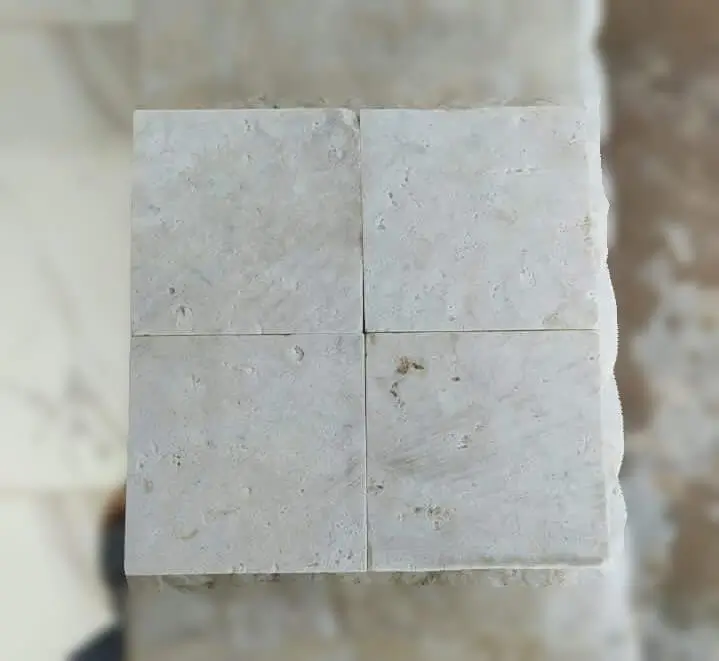
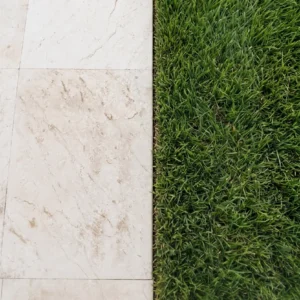
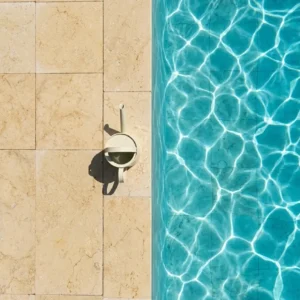
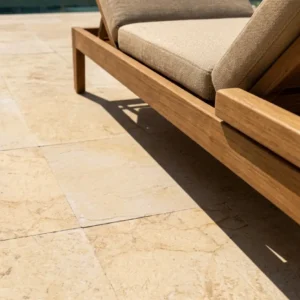
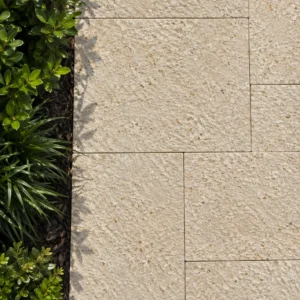
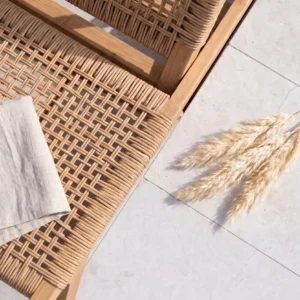
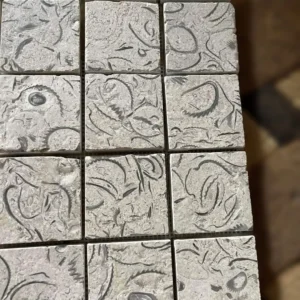
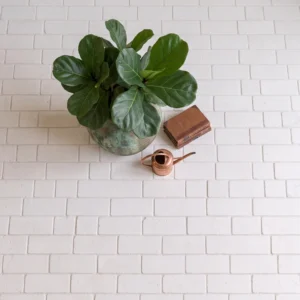
Four light beige square stone tiles laid out in a grid pattern.

Ordering Logistics and Project Planning for Arizona Projects

Basalt cobblestone delivery to Arizona project sites involves real logistics constraints worth planning around. The material is dense — a standard pallet of 3-inch cobbles runs 2,800 to 3,200 lbs depending on format — and truck access to your site determines whether a standard flatbed delivery works or whether you need to arrange off-loading logistics in advance.

Your truck access constraints at the jobsite — narrow gates, soft soil shoulder areas, or overhead obstructions — should be communicated to the supplier before delivery is scheduled. Partial unloading or staged delivery from a street drop adds labor cost that a clear site access assessment prevents. Citadel Stone’s team can advise on delivery formats and lead times based on current warehouse stock, which typically runs 1 to 3 weeks for standard Arizona orders depending on format and quantity.

  • Calculate basalt cobble quantity by multiplying the square footage by the weight factor for your chosen thickness — add 8 to 10% for cuts and breakage at borders
  • Order full pallets where possible — partial pallet pricing typically increases per-unit cost by 15 to 20%
  • Confirm that basalt blocks in Arizona are being delivered to a compacted surface — pallets placed on soft soil or freshly disturbed ground can tip or shift during unloading

Making Basalt Cobbles Work for Your Arizona Project

The installation decisions that separate a 10-year cobble surface from a 25-year one aren’t made at the stone selection stage — they’re made during subgrade assessment, base depth specification, and drainage design. Basalt cobblestone in Arizona is genuinely well-suited to the climate and soil conditions here, but the material’s inherent strengths are only fully realized when the system below is built to the same standard as the stone itself. For projects that involve broader Arizona hardscape decisions, Basalt Pavers in Arizona covers complementary basalt format options that may suit different areas of the same property. For basalt cobblestone pavers in Arizona, Citadel Stone offers consistent material sourcing and knowledgeable support to help your project meet both aesthetic and structural goals.

Why Arizona’s Builders Choose Citadel Stone?

Free AZ Comparison: Citadel Stone vs. Other Suppliers—Find the Best Value!

FeaturesCitadel StoneOther Stone Suppliers
Exclusive ProductsOffers exclusive Ocean Reef pavers, Shellstone pavers, basalt, and white limestone sourced from SyriaTypically offers more generic or widely available stone options
Quality and AuthenticityProvides high-grade, authentic natural stones with unique featuresQuality varies; may include synthetic or mixed-origin stone materials
Product VarietyWide range of premium products: Shellstone, Basalt, White Limestone, and moreProduct selection is usually more limited or generic
Global DistributionDistributes stones internationally, with a focus on providing consistent qualityOften limited to local or regional distribution
Sustainability CommitmentCommitted to eco-friendly sourcing and sustainable production processesSustainability efforts vary and may not prioritize eco-friendly sourcing
Customization OptionsOffers tailored stone solutions based on client needs and project specificationsCustomization may be limited, with fewer personalized options
Experience and ExpertiseHighly experienced in natural stone sourcing and distribution globallyExpertise varies significantly; some suppliers may lack specialized knowledge
Direct Sourcing – No MiddlemenWorks directly with quarries, cutting unnecessary costs and ensuring transparencyOften involves multiple intermediaries, leading to higher costs
Handpicked SelectionHandpicks blocks and tiles for quality and consistency, ensuring only the best materials are chosenSelection standards vary, often relying on non-customized stock
Durability of ProductsStones are carefully selected for maximum durability and longevityDurability can be inconsistent depending on supplier quality control
Vigorous Packing ProcessesUtilizes durable packing methods for secure, damage-free transportPacking may be less rigorous, increasing the risk of damage during shipping
Citadel Stone OriginsKnown as the original source for unique limestone tiles from the Middle East, recognized for authenticityOrigin not always guaranteed, and unique limestone options are less common
Customer SupportDedicated to providing expert advice, assistance, and after-sales supportSupport quality varies, often limited to basic customer service
Competitive PricingOffers high-quality stones at competitive prices with a focus on valuePrice may be higher for similar quality or lower for lower-grade stones
Escrow ServiceOffers escrow services for secure transactions and peace of mindTypically does not provide escrow services, increasing payment risk
Fast Manufacturing and DeliveryDelivers orders up to 3x faster than typical industry timelines, ensuring swift serviceDelivery times often slower and less predictable, delaying project timelines

Extra Benefits

Choosing Citadel Stone offers unique advantages beyond premium stone quality:

Exclusive Access to Durable Stones

Citadel Stone specializes in unique, regionally exclusive stones, sourced directly from the Middle East.

Transparent Pricing – No Hidden Costs

With no middlemen, Citadel Stone provides direct, transparent pricing that reduces unnecessary costs.

Flexible Customization for Bespoke Projects

Tailor your order to precise specifications, from sizes to finishes, ensuring your project aligns perfectly with your vision.

Streamlined Delivery & Reliable Stock Availability

Benefit from fast production and delivery timelines, designed to minimize delays and ensure reliable availability.

The Preferred Stone Supplier for Luxury AZ Developments.

Scale Your Vision: We Support Arizona's Largest Projects with Reliable, Fast Delivery.

With unlimited tiles, pavers, cobble setts, curbstones, and the fastest delivery options, What’s not to love? Say goodbye to unnecessary hassles!

Leading AZ Stone Suppliers are Loving Citadel Stone!

Don’t Settle for Less. Source the Best Stone for Your Local Stone Expert.

DanielOwner
Thank you, Kareem. We received the order. The stones look great!
FrankOwner
You are a good businessman and I believe a good person. I admire your honesty, this is why I call you a good businessman.
Gemma C
Gemma CPrivate Project
Undoubtedly the price was the reason that we chose Citadel stone, in addition to the fact that you offer a white limestone that is hard to source. Your products are very good value for money by comparison with other companies. You have helped at every stage of the process and have been quick and reliable in your responses. It was a big risk for us to pay everything up front including shipping and not know the quality. You did make me feel that I could trust you and your company however and we are very happy with the tiles. They appear to have been finished to a very high quality of smoothness and I can't wait to see them once they have been laid. We need to see now how easy they are to fit and maintain, yet you also sealed them before shipment so we think that they will be very durable. Our building project has been delayed for a few months now so it may be sometime before we see them laid, but I promise that I will send photos as soon as we have them down. Thank you so much Kareem and your team, you have done a great job. I am hoping that we can pay for, and receive our second shipment in the not too far future, so that we can finish everything off. Wishing you well. Gemma
Molly McK
Molly McKPrivate Project
I appreciate the quality of product and care for the custom order in packaging each crate to minimize breakage as well as the flexibility with the order to help us make the most of shipping. The timely communications are impressive from the beginning and throughout the process. It's reassuring to have gone through one order to know what the process will be like in the future. I am glad to have had some guidance through the importing process and recommendations for shipping partners to assist. It's incredible to think about the journey the stone traveled to get to our site and I'm grateful to have made it to the next stage of the project relatively smoothly and with from what I can tell

Frequently Asked Questions

If your question is not listed, please email us at [email protected]

How do Arizona soil conditions affect basalt cobble installation?

Arizona’s soil profiles vary considerably — expansive soils with high clay content can exert upward pressure on a cobble surface during moisture cycling, while coarse sandy or decomposed granite soils may drain well but require careful compaction to achieve stable subgrade density. In practice, a geotextile fabric layer beneath the road base is often worth the added material cost, as it prevents fine soil migration into the base over time. Matching your base design to the actual soil classification on-site, rather than applying a one-size approach, is what separates a long-performing installation from one that settles unevenly within the first few seasons.

Basalt is a dense, igneous stone with low porosity and high compressive strength, making it well-suited to driveway and vehicular-rated applications when installed correctly. The critical variable in high-traffic installations is not the stone itself but the base depth and edge restraint system — both must be engineered to distribute load without allowing lateral movement. For vehicular use, a minimum base thickness of 6 to 8 inches of compacted aggregate is generally recommended, with rigid edge restraints to prevent the cobble field from spreading under repeated loading.

Coarse, angular bedding sand — typically washed concrete sand meeting ASTM C33 gradation — is the standard choice for cobble installations and performs reliably in Arizona’s dry climate. Avoid fine or silty sands, which compact unevenly and can migrate through joint gaps over time, particularly in areas subject to irrigation or monsoon runoff. The bedding layer should be screeded to a consistent 1-inch depth, not used to compensate for subgrade irregularities, which is a common installation mistake that leads to uneven cobble surfaces.

Basalt cobbles offer a natural aesthetic and dimensional character that manufactured concrete products cannot replicate, along with inherent color stability that does not rely on surface pigmentation. Concrete pavers can be cost-competitive at initial install, but basalt’s resistance to fading under intense UV exposure and its thermal mass properties give it a long-term performance advantage in outdoor environments. The trade-off is that natural stone cobbles require more precise base preparation to account for slight dimensional variation between individual stones, which adds time to installation but results in a surface with considerably more visual depth and longevity.

Basalt is one of the lower-maintenance natural stone options available — its dense composition resists staining and moisture absorption without requiring annual sealing in most residential applications. Practical upkeep typically involves re-sanding joints periodically, especially after heavy monsoon seasons where water flow can displace polymeric sand from open-field installations. Inspecting the perimeter edge restraints annually is also worthwhile, as any loosening at the borders is the earliest indicator of potential lateral movement before it propagates into the cobble field itself.

Unlike suppliers who ship whatever inventory is available at the moment, Citadel Stone coordinates delivery around actual project schedules — with flatbed logistics and pallet-level planning that accounts for site access constraints common on Arizona residential and commercial jobs. Arizona professionals rely on Citadel Stone’s consistent supply chain to keep installation timelines intact, avoiding the material delays that stall crews and inflate project costs. Citadel Stone maintains active distribution coverage across Arizona, providing dependable access to quality basalt cobbles when project schedules demand it.