
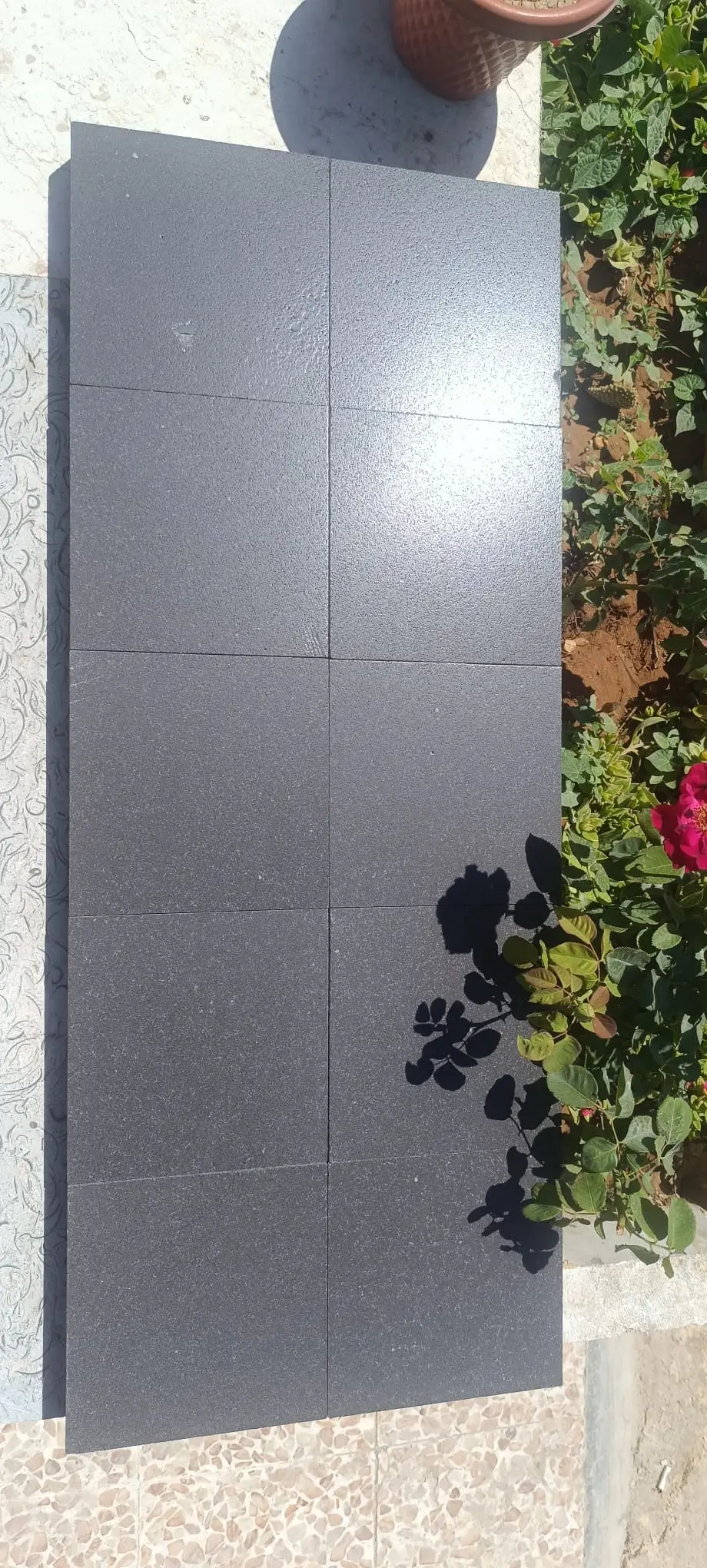
Maintaining honed basalt Arizona surfaces demands a level of discipline that goes well beyond a seasonal rinse and occasional sweep. The honed finish — that flat, matte surface created by stopping short of a full polish — opens the stone’s pore structure just enough to let Arizona’s alkaline dust, hard water minerals, and UV-amplified heat work against you if your care schedule slips. Understanding exactly where those vulnerabilities live is what separates a surface that still looks sharp at year fifteen from one you’re patching at year seven.
Why Honed Basalt Behaves Differently in Desert Heat
Basalt is a fine-grained volcanic stone with relatively low porosity compared to limestone or travertine, but the honing process changes the absorption equation. A polished basalt surface has a closed, dense face that sheds water quickly. Honing removes that glassy layer, and even though the underlying stone stays tight, the micro-texture created by abrasive processing holds mineral-laden water longer than most owners expect.
In Phoenix, surface temperatures on south-facing honed basalt installations routinely hit 155–165°F during peak summer afternoons. At those temperatures, water evaporates fast enough to flash-deposit calcium carbonate and silica compounds directly into the surface texture. You’re not just dealing with water staining — you’re watching a slow mineral bonding process that becomes harder to reverse with each dry season.
- Honed surfaces absorb liquid 30–40% faster than polished basalt under laboratory absorption tests
- Thermal cycling between 70°F mornings and 155°F afternoons creates micro-expansion stress at existing mineral deposits
- Arizona’s average water hardness of 200–400 ppm in municipal supplies accelerates deposit formation on unprotected surfaces
- UV radiation at Arizona’s latitude degrades organic sealers roughly twice as fast as coastal climates at similar humidity
Building Your Honed Basalt Cleaning Schedule for Arid Climates
A honed basalt cleaning schedule arid climates demand looks different from what manufacturers print on generic stone care labels written for temperate zones. You need to account for the compression of seasonal damage cycles — Arizona’s dry season doesn’t give deposits time to loosen naturally, so they compact and crystallize instead.
For residential patios and pool surrounds, a weekly dry sweep followed by a bi-weekly pH-neutral stone cleaner wash is the minimum that keeps the mineral load manageable. Commercial applications in Scottsdale hospitality settings, where foot traffic and irrigation overspray run higher, typically require twice-weekly wet cleaning during the summer months.
- Weekly dry sweep with a soft-bristle broom — never a wire brush on honed surfaces
- Bi-weekly wash using a pH-neutral, stone-safe cleaner diluted per manufacturer specs (pH 6.5–8.0 range)
- Monthly inspection of grout joints and edges for mineral bridging or efflorescence buildup
- Quarterly deep clean with a non-acidic mineral deposit remover specifically formulated for basalt
- Avoid vinegar, bleach, or citrus-based cleaners entirely — the acid etches the honed surface even though basalt is harder than limestone
Sealing Honed Basalt: Arizona Protection Protocols
Sealing honed basalt Arizona protection starts with selecting the right sealer chemistry — and the choice between silane and siloxane penetrating sealers isn’t cosmetic. Silane molecules are smaller and penetrate deeper into basalt’s crystalline structure, making them the preferred option for high-heat environments where a surface-applied film sealer would degrade within a single summer season.
The application window matters enormously in Arizona. You’ll want to apply sealer when surface temperature sits between 50°F and 85°F — early morning in spring or fall gives you the best conditions. Applying sealer to a surface that’s been baking at 140°F for six hours means the product flashes off before it can penetrate, leaving a patchy, ineffective film that creates more maintenance problems than it solves.
- Apply sealer in the morning before surface temperatures exceed 85°F
- Ensure the stone has been dry for at least 48 hours before application
- Two thin coats outperform one heavy coat — allow the first coat to penetrate fully before applying the second
- Test the water bead effect 72 hours post-application — if water absorbs within 5 minutes, reapply
- Resealing frequency in Arizona typically runs every 18–24 months for residential use, 12–18 months for commercial
At Citadel Stone, we’ve tested multiple penetrating sealer formulations across our warehouse inventory and consistently recommend silane-based products with a minimum 40% active ingredient concentration for Arizona’s UV and heat load. Products with lower concentrations simply don’t maintain their protective profile through a full Arizona summer.
Preventing Mineral Deposits on Honed Stone Finishes
Preventing mineral deposits stone finishes AZ require you to address isn’t just about cleaning frequency — it’s about eliminating the conditions that allow deposits to form in the first place. The three primary deposit sources in Arizona are irrigation overspray, pool splash-out, and HVAC condensate drainage, and each leaves a chemically distinct residue.
Irrigation overspray deposits calcium bicarbonate that converts to calcium carbonate as it dries — that chalky white haze on basalt pavers near planted beds. Pool splash-out carries cyanuric acid stabilizers and calcium hypochlorite byproducts that can gradually alter the surface chemistry of honed basalt if left unrinsed. Projects in Tucson face an additional challenge: the combination of desert dust, hard water, and seasonal monsoon rains creates a particulate-rich slurry that dries into a compacted mineral crust on horizontal stone surfaces.
- Redirect irrigation heads so spray doesn’t contact stone surfaces directly
- Install a 6-inch buffer zone of non-irrigated gravel between planted beds and honed basalt areas
- Rinse pool splash zones with fresh water within 30 minutes of heavy use when possible
- Address HVAC condensate lines so they drain away from stone hardscape, not onto it
- After monsoon events, rinse stone surfaces before the mud-laden water dries and bonds to the honed texture
Seasonal Care Guide for Honed Basalt in Arizona
A seasonal care guide natural stone Arizona professionals use acknowledges that Arizona doesn’t follow a four-season rhythm — it operates on a two-phase cycle of extreme dry heat and intense monsoon humidity, with transitional shoulder periods that are actually the best times to do deep maintenance work. Maintaining honed basalt Arizona surfaces through both phases requires a disciplined protocol that accounts for each climate extreme.
Pre-Summer Preparation: March to May
The shoulder period before temperatures climb above 100°F is your primary maintenance window. Deep clean the entire honed basalt surface, address any mineral deposits before heat bakes them in deeper, and apply fresh sealer if the water-bead test shows absorption in under five minutes. Check expansion joints for cracking — Arizona’s thermal cycling opens joint failures faster than most installers plan for.
Summer Maintenance: June to September
Your cleaning frequency goes up, your intervention options go down. You’re managing rather than correcting during peak heat. Stick to morning cleaning when surfaces are coolest, avoid chemical applications when temperatures exceed 95°F, and increase your inspection frequency around irrigation zones and pool edges. This is also when honed basalt stone in Arizona shows the most visible wear differentiation between sealed and unsealed sections.
Post-Monsoon Recovery: October to November
Post-monsoon is your second-best maintenance window. Monsoon season deposits fine particulate matter into the honed surface texture that dry weather alone won’t clear. A thorough wet clean followed by a detailed inspection for efflorescence, joint sand loss, and any micro-spalling at edges should be standard practice. This is also the ideal time for a sealer reapplication if you’re on an 18-month cycle. In Phoenix, where monsoon intensity has increased in recent years, post-storm rinsing within 24 hours has become a practical necessity rather than optional good practice.
Traffic Wear and Surface Protection Strategies
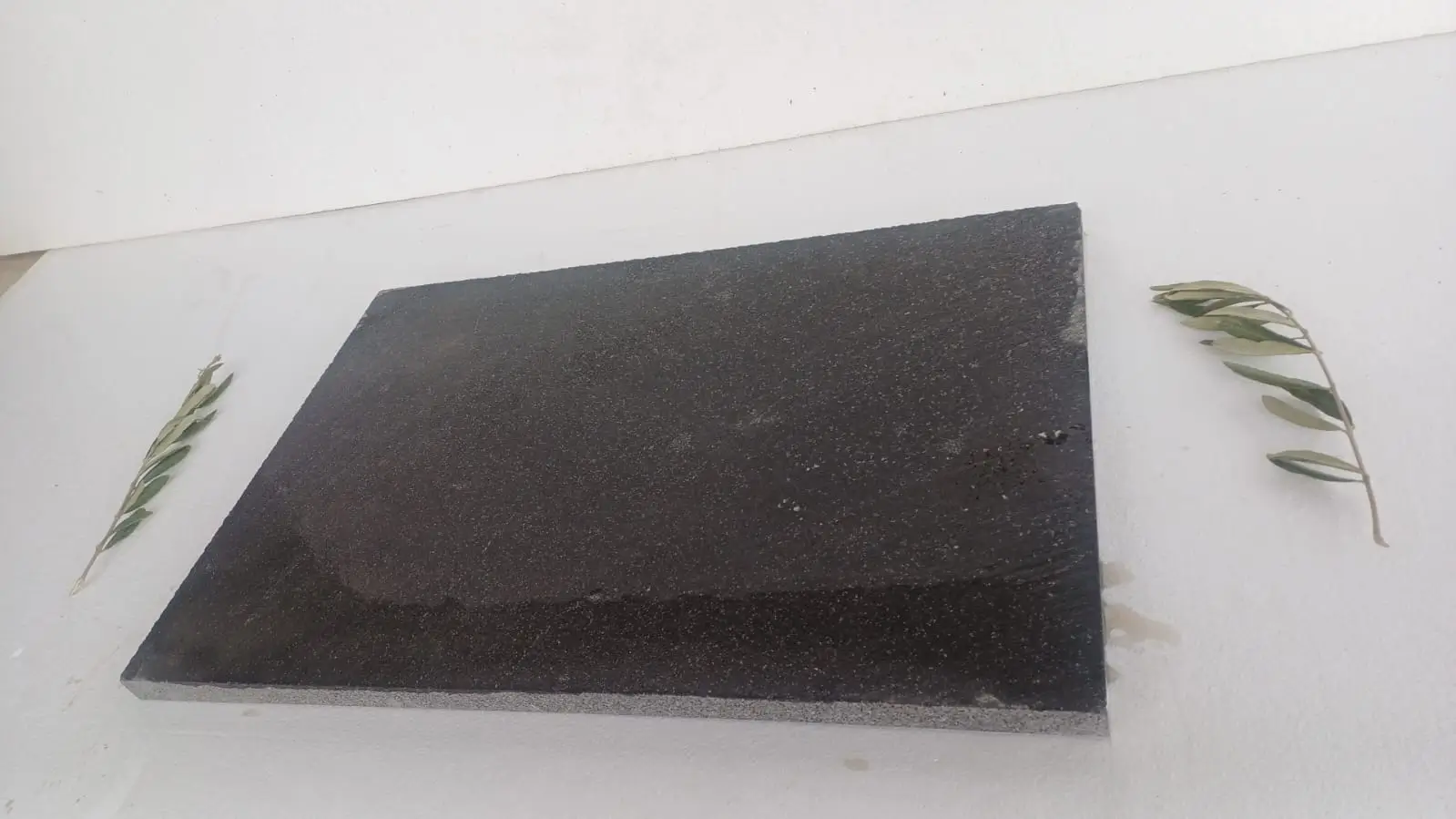
Foot traffic on honed basalt in Arizona carries an abrasion variable that cold-climate stone guides rarely address: grit load. The fine silica and quartz particulate that settles on Arizona surfaces is harder than most cleaning brushes and, when ground underfoot, acts like sandpaper against the honed finish. You’re not just wearing the surface down through foot pressure — you’re introducing a continuous micro-abrasion cycle.
Entry points and transition zones at doorways and gate openings accumulate the highest grit concentration and show the earliest finish changes. Placing non-slip, grit-catching mats at all entry points — not decorative door mats, but functional entrance mats with coarse-fiber capture surfaces — reduces the abrasive load on your honed basalt by a meaningful margin. For projects in Scottsdale resort and hospitality applications, professional surface maintenance teams typically budget for a light mechanical re-honing of high-traffic zones every five to seven years to restore finish consistency without a full replacement.
- Install grit-capture entrance mats at all primary access points to honed basalt areas
- Blow or vacuum loose grit before wet cleaning — wet mopping grit over honed stone accelerates micro-scratching
- Avoid rubber-soled furniture feet directly on honed basalt — use felt or stone-specific furniture pads
- Re-honing of heavily trafficked zones can restore appearance without full replacement at the 7–10 year mark
For comprehensive product and technical guidance on honed basalt options suited to Arizona’s conditions, Citadel Stone honed stone in Arizona provides detailed specification information worth reviewing before your next project or reorder.
Common Maintenance Mistakes on Arizona Basalt Installations
The most expensive maintenance errors on honed basalt installations aren’t the dramatic ones — they’re the accumulated small decisions that compound over two or three seasons until you’re facing a restoration project instead of routine upkeep. Understanding where the damage actually originates helps you prioritize correctly.
Pressure washing is the most commonly misapplied cleaning method on honed natural stone. A pressure washer operating above 1,200 PSI on honed basalt doesn’t just clean the surface — it erodes the honed texture itself, accelerates joint sand loss, and can drive mineral-laden water deeper into the stone body where it evaporates and deposits below the surface. That subsurface mineral buildup is what eventually causes spalling and face delamination. Preventing mineral deposits stone finishes AZ owners struggle with most often starts with correcting this single maintenance habit.
- Never pressure wash honed basalt above 800–1,000 PSI with a wide-fan tip
- Don’t use acid-based concrete cleaners on basalt, even if the label says “stone safe” — verify pH before use
- Avoid letting sealer pool in grout joints — excess sealer in joints creates a vapor barrier that traps moisture and accelerates efflorescence
- Don’t skip the water-bead test as a shortcut — it’s the only reliable field indicator of sealer performance
- Never apply sealer to damp stone, regardless of how dry the surface appears to the eye — use a calcium chloride moisture test on slabs before sealing
Parting Guidance for Maintaining Honed Basalt Arizona Surfaces
Maintaining honed basalt Arizona surfaces over the long haul is a discipline built on consistent, climate-aware practice rather than reactive intervention. The cleaning schedule, sealing protocol, and seasonal care framework covered here work together as a system — skipping one component puts pressure on the others. Your honed basalt stone in Arizona performs reliably for 20 years or more when you treat the sealer cycle as non-negotiable and address mineral deposits before heat locks them into the surface permanently.
Broader Arizona stone projects can benefit from the same climate-informed thinking that applies to honed basalt maintenance. Our warehouse team at Citadel Stone can coordinate truck delivery scheduling to align material arrivals with your maintenance or installation windows, keeping project timelines realistic. How to Install Basalt Hexagon Tiles in Arizona explores another dimension of basalt application that pairs well with honed field stone in both residential and commercial settings. Residents in Tucson, Peoria, and Scottsdale maintain Citadel Stone honed basalt surfaces by applying a penetrating silane sealer every 18 to 24 months depending on sun and foot traffic exposure.