




















Why Drainage Defines Shell Stone Travertine Performance in Arizona
Shell stone travertine in Arizona performs exactly as long as your drainage design allows it to — and that’s not a caveat, it’s the specification starting point. The material’s natural porosity — verify the figure on the test report for the batch you are buying — creates a double-edged dynamic in the desert Southwest: it drains surface water beautifully under normal conditions, but prolonged moisture saturation from poorly managed stormwater can accelerate calcium carbonate migration and surface pitting within three to five seasons. Arizona’s monsoon pattern delivers intense rainfall events — often 1.5 to 2.5 inches per hour across the Phoenix valley floor — that stress even well-designed patio and pool deck installations. Your drainage geometry needs to be engineered before your material order is placed, not after.
Understanding Shell Stone Travertine Material Properties
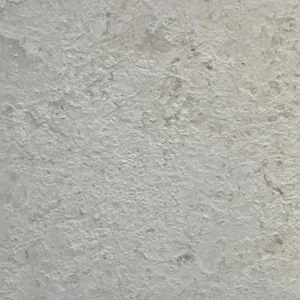
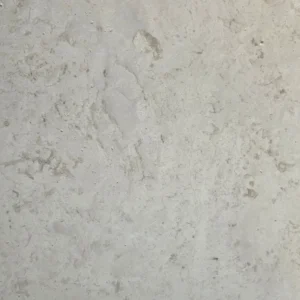
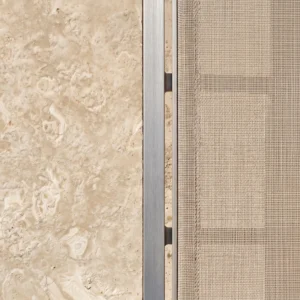
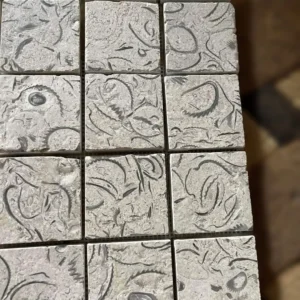
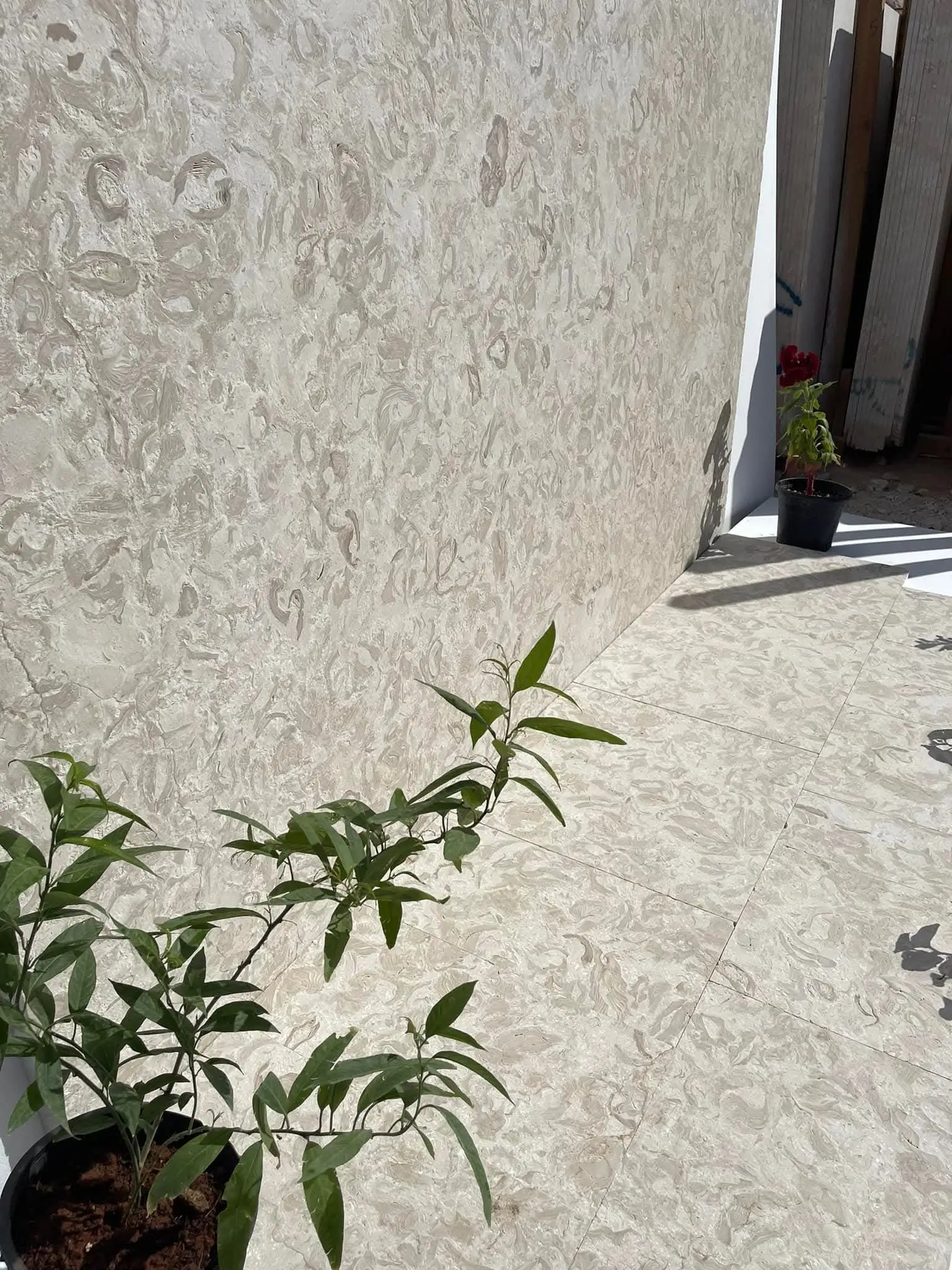
Shell stone travertine is a sedimentary limestone formed from calcium carbonate deposits around ancient springs and lakebeds, and its characteristic shell-like fossilized texture isn’t just aesthetic — it reflects the material’s interconnected pore structure at a macro scale. Compressive strength varies with quarry origin and cut orientation — request the compressive strength test report for the batch you are buying, and confirm the figure against your load case for commercial pool decks with heavy vehicular access. The material’s thermal expansion is modest but not negligible, meaning expansion joint placement every 12 to 15 linear feet is the right call for Arizona installations, not the 20-foot spacing you’ll see in generic guides written for temperate climates.
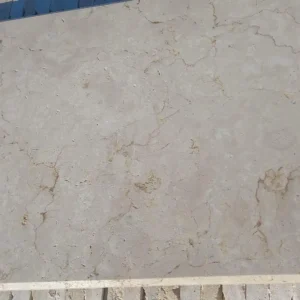
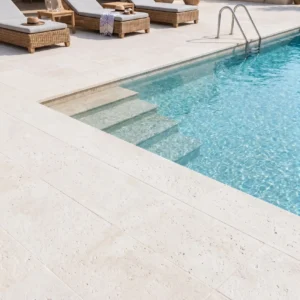
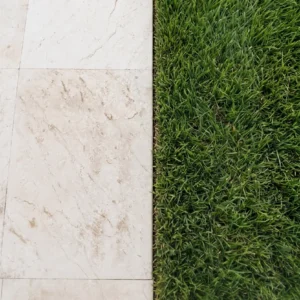
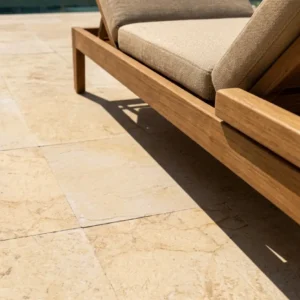
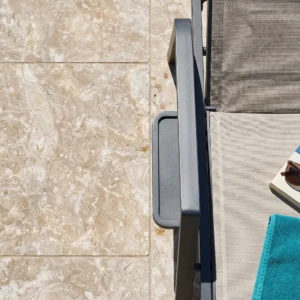
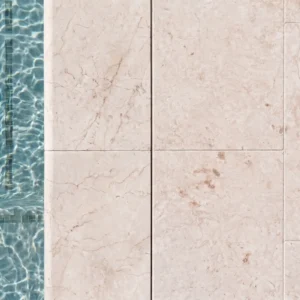
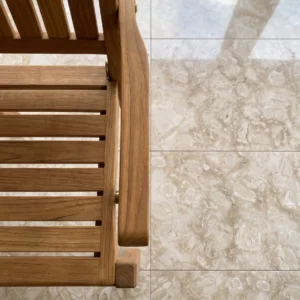
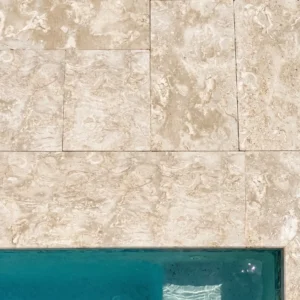
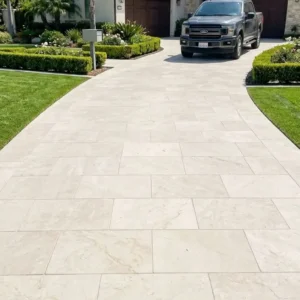
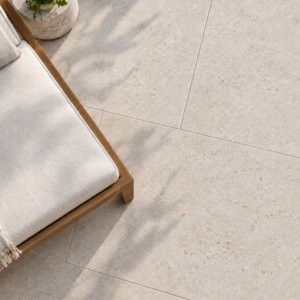
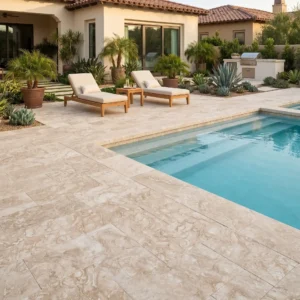
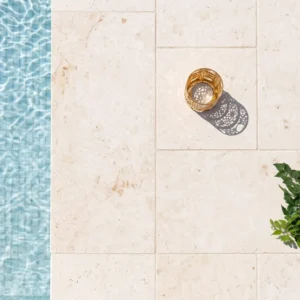
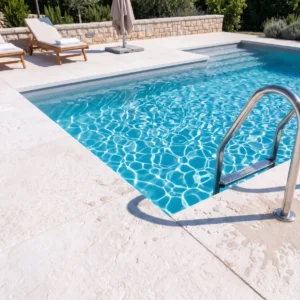
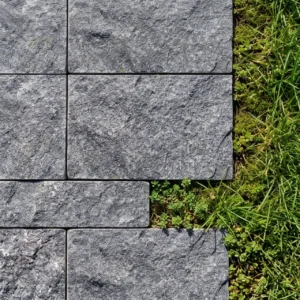
Colour variation across shell stone travertine in Arizona ranges from warm shell beige travertine tones — creamy ivories with light fossil patterning — to the cooler, slightly grayed tones of shell white travertine and oyster shell travertine. These aren’t just aesthetic distinctions; lighter colorways reflect more solar radiation, which directly affects surface temperature comfort on barefoot pool deck surfaces under Arizona’s summer sun. Selecting your finish and colorway together matters, because a honed oyster shell travertine surface will read noticeably warmer underfoot than the same color in a tumbled or brushed finish due to differing surface texture and light scattering behavior.
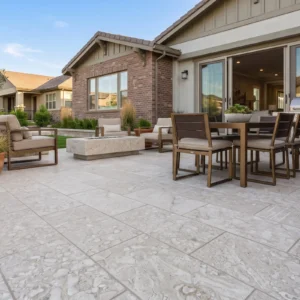
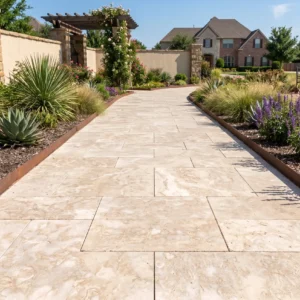
- Shell beige travertine in Arizona delivers warm neutral tones that complement desert landscaping and stucco exteriors common across the Phoenix metro
- Shell white travertine in Arizona offers the highest solar reflectance in the product family, making it the preferred choice for west-facing pool decks with full afternoon exposure
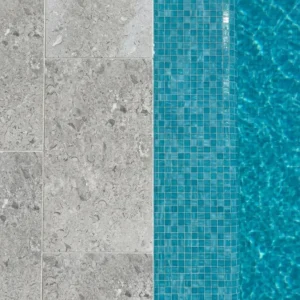
- Oyster shell travertine in Arizona presents subtle gray-cream variation that reads as sophisticated and works well with contemporary architectural styles in Scottsdale
- Shell beach travertine shows more pronounced fossil texture and natural movement, adding visual interest to larger format applications like courtyard paving
Monsoon Drainage Design for Shellstone Pool Decks in Arizona
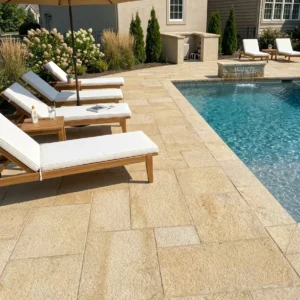
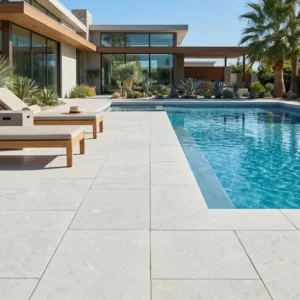
Arizona’s monsoon season runs from mid-June through late September, and the rainfall events it produces are nothing like a steady Pacific Northwest rain. You’re dealing with convective storms that drop significant precipitation in under 30 minutes, and your shellstone pool deck drainage system needs to evacuate that water before it pools against the coping line or backs up toward the structure. The minimum design slope for shell stone travertine pool decks in Arizona is 1.5% away from the water’s edge — most installers default to 1%, which works fine in California coastal conditions but consistently underperforms during monsoon events here.
In Tempe, where urban hardscape density limits natural percolation and street drainage systems regularly surcharge during heavy monsoon events, your site drainage plan should include channel drains or ACO-style linear drains positioned at the outer perimeter of the patio or pool deck. These intercept sheet flow before it can migrate under adjacent wall footings or pond against the travertine field. The travertine itself won’t fail from a single wet event — it’s the repeated wet-dry cycling combined with trapped fine sediment in joints that causes deterioration over time. Keeping your drainage geometry clean is what protects your shellstone travertine pavers in Arizona from accelerated joint erosion.
- Design minimum 1.5% slope away from pool edge and any structure — bump to 2% on larger deck areas exceeding 400 square feet
- Install linear channel drains at perimeter transitions between travertine deck and landscape or hardscape zones
- Avoid directing deck runoff toward planting beds unless the drainage volume has been properly calculated for soil absorption rates
- Check that any downspout discharge points are positioned well outside the travertine field’s drainage catchment area
- Monsoon sediment load in Arizona runoff is high — plan for quarterly joint sand inspection and annual top-dressing to maintain 92–95% joint fill capacity
Base Preparation for Arizona Soil Conditions
Arizona’s soils introduce two variables that override everything else in your base specification: expansive clay content in the central valley floor and caliche hardpan formation across much of the desert floor. Expansive clays — common in many Phoenix and Chandler corridor soils — can generate up to 4% volumetric change between wet-season and dry-season moisture states. That movement will crack any rigid mortar-set travertine installation that doesn’t account for it. The standard solution is a well-compacted 6-inch crushed aggregate base with a clean angular gradation (3/4-inch minus), which provides enough flexibility to accommodate minor subgrade movement without transmitting stress directly into the stone.
Caliche layers, on the other hand, are often an asset rather than a liability. In Peoria and areas north and west of Phoenix, caliche hardpan encountered at 18 to 30 inches depth provides excellent bearing capacity once the surface is scarified to break up any laminar structure that could trap perched water. The critical mistake is assuming intact caliche is impermeable — it often isn’t consistently so, and seasonal moisture can still accumulate in lenses above the caliche layer. Your geotechnical reconnaissance needs to confirm the actual drainage behavior of the specific caliche formation on your site before finalizing base depth. For projects requiring complementary stone sourcing guidance, shell stone travertine pavers Arizona covers cost and specification details relevant to similar base preparation scenarios across the state.
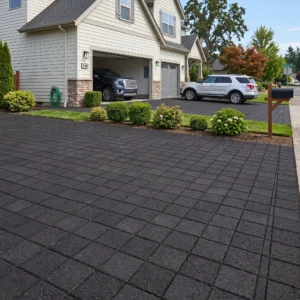
- Minimum 4-inch compacted aggregate base for pedestrian applications; 6 inches minimum where vehicle access is possible
- Compact base in 2-inch lifts to achieve 95% Proctor density — skipping lift compaction is the single most common base failure driver
- Install filter fabric between native soil and aggregate base in expansive clay zones to prevent clay migration into the drainage layer
- Verify that your base aggregate has adequate permeability — a clay-contaminated crushed rock base is worse than no base at all for drainage performance
Shell Stone Travertine Thickness and Format Selection
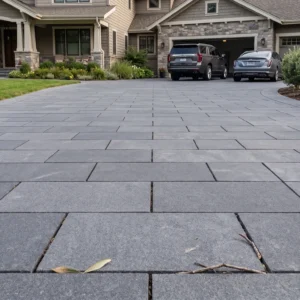
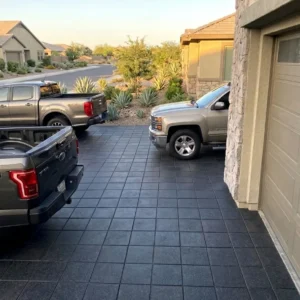
Thickness selection for shellstone travertine pavers in Arizona is driven by two factors that don’t always align with what the product brochure recommends: your subgrade bearing capacity and your specific loading scenario. Standard 1.25-inch (30mm) nominal travertine works for residential patio and pool deck applications with a properly compacted base. Step up to 2-inch (50mm) when you’re dealing with mixed pedestrian and occasional vehicle access, or when the native subgrade is marginal and you’re compensating with stone thickness rather than extensive base work — though the latter is never the preferred approach.
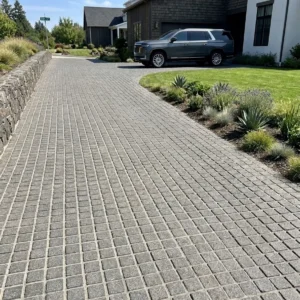
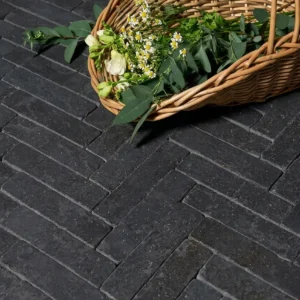
Format size affects both the visual scale of the installation and its drainage behavior. Large-format shell beach travertine slabs in the 24×24-inch and 24×48-inch range create fewer grout joints, which reduces potential moisture infiltration pathways but also demands a more precisely prepared base. Any lippage tolerance error becomes more visually apparent at larger formats. Smaller tumbled formats in the 4×8 or 6×6-inch range are more forgiving of minor subgrade irregularities and create more joint area for drainage — a real advantage in slope-challenged installations. Citadel Stone stocks shell travertine in Arizona in standard formats including 12×12, 16×16, 18×18, 24×24, and 12×24-inch sizes, with 2CM and 3CM thickness options available for most colorways including shell beige, shell white, and oyster shell travertine.
Sealing and Moisture Management for Arizona Climates
Sealing shell stone travertine in Arizona isn’t optional — it’s a maintenance cycle that directly determines whether your installation looks as good at year 15 as it did at installation. The desert climate creates a specific challenge: UV degradation of penetrating sealers is accelerated by Arizona’s solar intensity, and the dry season completely masks sealer degradation until the first monsoon event reveals compromised protection through water spotting, mineral efflorescence, or darkened joint sand. Testing sealer performance annually — not waiting until visible damage signals a problem — is the correct maintenance standard for any shell stone travertine pool deck in Arizona.
The right product for Arizona conditions is a penetrating silane-siloxane sealer with UV stabilizers, applied to a clean, dry surface. Surface temperature at application matters more than most installers acknowledge — applying sealer to travertine above 90°F causes flash evaporation that prevents proper penetration, leaving a surface film that peels within one season. Early morning application during spring or fall, when the stone surface has equilibrated to ambient temperature, is the correct approach. For Flagstaff projects at 6,900-foot elevation, freeze-thaw cycling adds an additional sealing requirement — reseal every 18 months rather than the 24-month interval appropriate for low-desert installations in Phoenix or Yuma.
- Apply sealer only when travertine surface temperature is below 85°F — early morning application windows are reliable from April through October in the Phoenix metro
- Test existing sealer annually with a water drop test — if water absorbs rather than beads within 60 seconds, reapplication is overdue
- Fill travertine voids with grout or matching filler before sealing — unfilled voids collect debris and moisture regardless of sealer quality
- Use separate products for surface and joint sealing where joint sand is polymeric — confirm compatibility with the manufacturer before applying a topical or penetrating sealer over poly-sand joints
Slip Resistance and Finish Selection for Pool Deck Applications
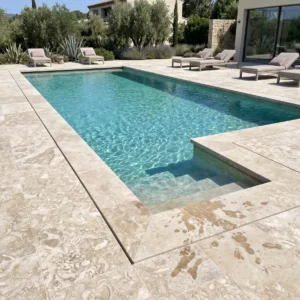
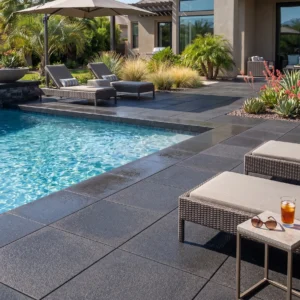
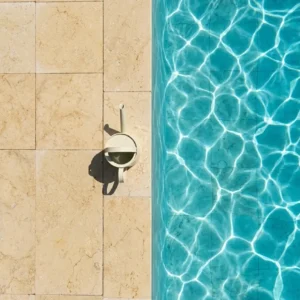
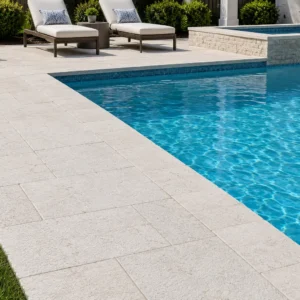
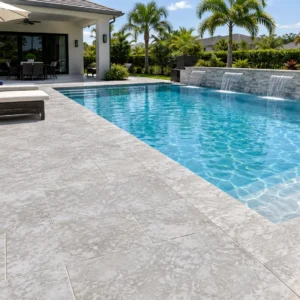
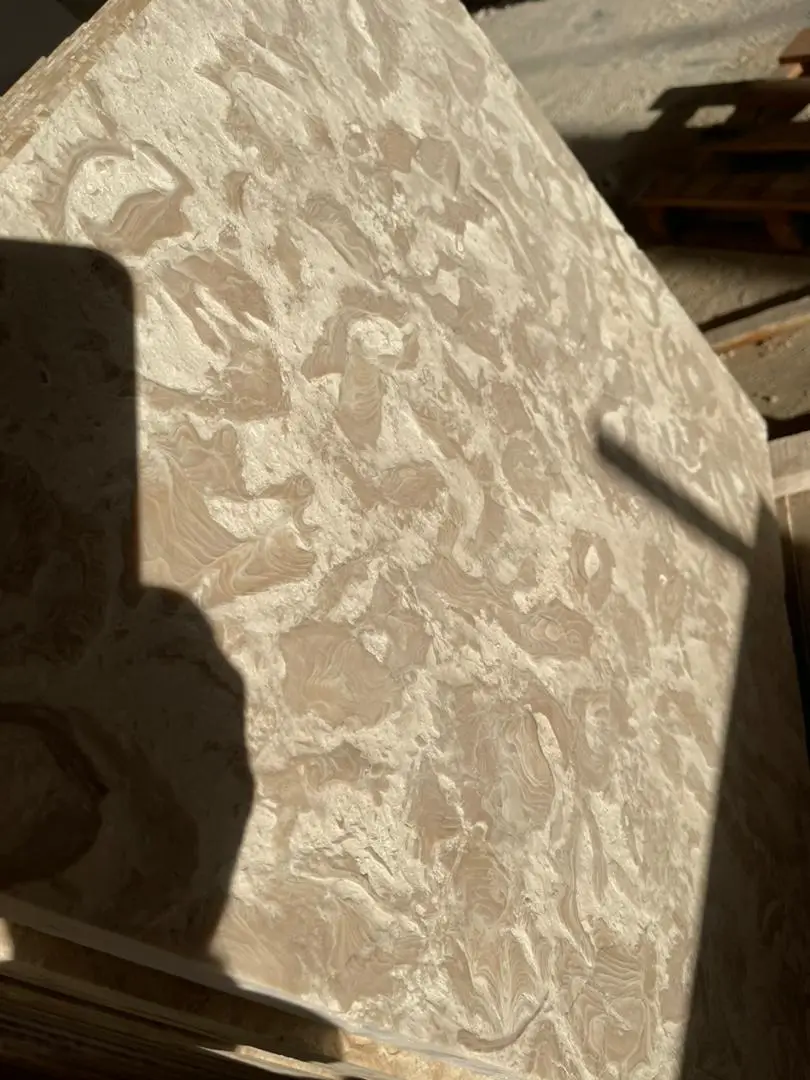
Shell stone travertine pool decks in Arizona need to meet ANSI A326.3 wet DCOF thresholds of 0.42 or higher for horizontal walkway applications — and your finish selection determines whether you hit that target or fall short. A polished shell stone travertine surface will test below 0.42 wet DCOF and is inappropriate for pool deck applications regardless of how premium it looks in a showroom. Tumbled, brushed, or sandblasted finishes consistently deliver wet DCOF values between 0.50 and 0.65 across the shell stone travertine product family, putting them solidly in compliant territory for shellstone pool deck installations in Arizona.
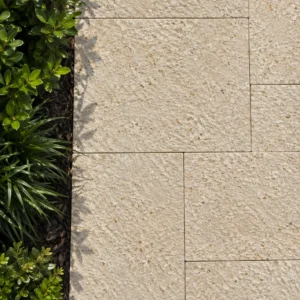
The textural characteristics that create slip resistance in shell stone travertine also create the right thermal behavior for barefoot Arizona use. The micro-relief on a brushed or tumbled surface scatters direct solar radiation rather than absorbing it uniformly, keeping surface temperatures measurably lower than a honed or polished face. Requesting sample tiles from Citadel Stone to test finish options against your specific project conditions before committing to full quantities is particularly valuable for shell beach travertine, where the pronounced fossil texture creates meaningful variation between individual pieces and batches.
- Tumbled finish: highest slip resistance, most forgiving of base irregularities, rustic aesthetic — excellent for informal pool surrounds
- Brushed finish: moderate texture, contemporary appearance, good DCOF compliance — the most specified finish for Scottsdale resort-style pool decks
- Sandblasted finish: uniform texture, highest UV reflectance, clinical appearance — preferred for commercial applications where consistent slip performance across large areas matters
- Honed finish: smooth, low texture, DCOF marginal for wet zones — appropriate only for covered outdoor areas not directly adjacent to water
- Polished finish: not appropriate for any exterior Arizona application — UV degradation and wet slip risk make it unsuitable regardless of aesthetic preference
Delivery Logistics and Material Planning for Arizona Projects
Material planning for shell stone travertine projects in Arizona requires accounting for the geographic spread of the state and what that means for truck delivery access and lead times. Rural sites in the Sedona corridor, Yuma agriculture zones, and high-desert locations north of the Mogollon Rim all present access considerations that affect delivery scheduling and off-loading logistics. Verify with your supplier whether flatbed truck access is feasible at your site, or whether a crane-assisted lift or forklift-unload capability is needed for pallet delivery — shell stone travertine arrives on 40×48-inch pallets at 2,000 to 2,500 pounds per pallet, and sites without grade-level access create real scheduling complications.
Citadel Stone maintains warehouse inventory in formats suitable for both residential and commercial Arizona projects, which typically reduces lead times to one to two weeks from order confirmation. This matters considerably for projects running against monsoon-season installation windows — shellstone travertine pavers in Arizona should be on site and acclimatized before June, not arriving mid-July when installation conditions deteriorate. For projects requiring custom cuts, non-standard formats, or mixed-finish orders, allow three to four additional weeks and confirm warehouse availability before finalizing your project schedule. Sourced from our selected premium quarries, each batch of shell stone travertine is inspected for color consistency and dimensional tolerance before warehouse intake — an important detail when matching new material to an existing installation.
- Order 10–12% overage on shell stone travertine for cuts, breakage during installation, and future repair stock — Arizona’s sun bleaches stored material differently than installed material, so having same-batch stock matters
- Confirm pallet count and truck type with your supplier before scheduling delivery — some rural Arizona sites require specialized equipment that needs advance coordination
- Inspect each pallet for color consistency before signing the delivery receipt — sorting to blend shade variation across the installation area is a field task, not a factory task
- Store material on a flat, dry surface under shade if installation is delayed — direct sun on uninstalled travertine accelerates oxidation of iron-bearing mineral veins that can affect final appearance
Order Shell Stone Travertine — Direct Supply from Citadel Stone
Citadel Stone supplies shell stone travertine across Arizona in the formats, finishes, and thicknesses that professional specifications require. Available formats include 12×12, 16×16, 18×18, 24×24, and 12×24-inch in 2CM and 3CM thicknesses, with shell beige travertine, shell white travertine, oyster shell travertine, and shell beach travertine colorways stocked for most sizes. Sample tiles and material data sheets are available before committing to quantities — this is standard practice for projects where finish selection or color matching requires hands-on review. Trade accounts and wholesale inquiries receive dedicated project support, including material takeoff review and lead time confirmation based on current warehouse availability. Delivery coverage extends across Arizona including Phoenix, Mesa, Gilbert, Chandler, Scottsdale, Tucson, and regional destinations with truck scheduling coordinated around your installation timeline. Contact Citadel Stone for current pricing, custom format availability, and to schedule a material consultation for your project.
As you finalize your Arizona stone selection, related hardscape applications can round out your project scope — Shellstone Pavers in Arizona provides additional product and specification context for shellstone applications across the state. For Arizona projects requiring shell stone travertine pavers, Citadel Stone provides reliable sourcing, material expertise, and support from selection through installation planning.