
UV Damage Starts Before You Notice It
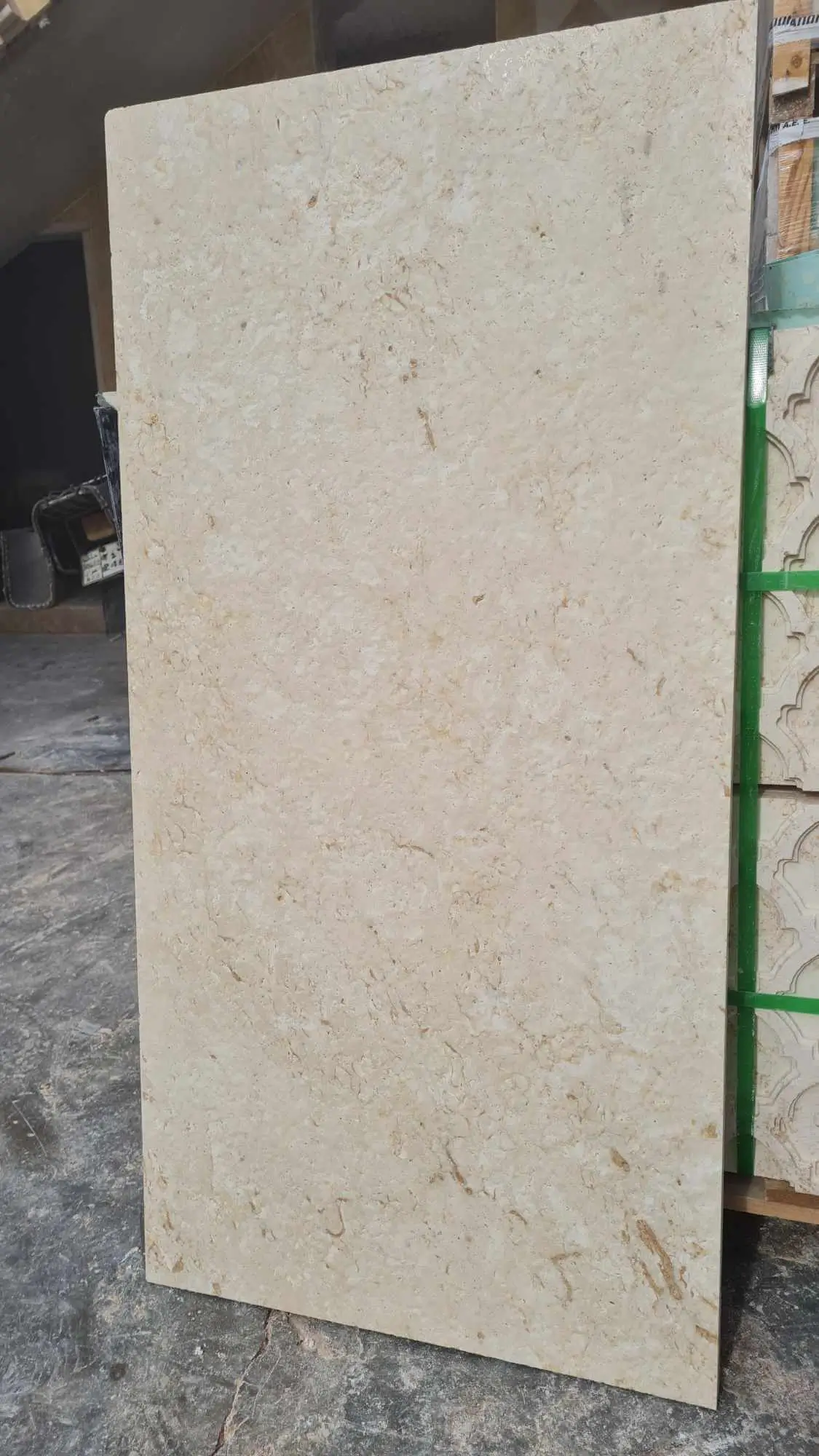
Shell Stone Travertine Care Arizona isn’t just a seasonal checklist — it’s an ongoing discipline that begins the moment your pavers are exposed to the Sonoran sky. Arizona’s UV index regularly hits 11 or higher from May through September, and that radiation doesn’t just bleach fabric left outside; it penetrates the crystalline matrix of travertine, oxidizing iron-bearing minerals and progressively shifting cream and walnut tones toward a washed, chalky appearance. You’ll notice the change gradually across the first two or three years if your stone is left unsealed or under-maintained, but the structural degradation starts much earlier than the visible color shift suggests.
The pore structure of shell stone travertine makes this especially worth understanding. Unlike dense granite, travertine has an interconnected network of natural voids — that’s part of what gives it its character — but those same voids act as UV traps, concentrating photon energy deeper into the surface than you’d see on a closed-face stone. Your sealing strategy needs to account for this from day one. Stone surface maintenance AZ homeowners trust begins with recognizing that UV is the primary threat, not moisture or foot traffic.
How Arizona UV Conditions Differ from Other Climates
It’s tempting to treat Arizona as just a hot climate, but the UV exposure angle here is genuinely distinct. The state sits at elevations ranging from roughly 100 feet at low desert to over 7,000 feet at elevation communities, and at higher altitudes, the atmosphere filters out less UV radiation. For Phoenix homeowners in the low desert, you’re dealing with extreme UV intensity paired with a dry atmosphere that accelerates surface moisture loss and speeds up oxidation cycles. The result is that unprotected shell stone travertine can show measurable surface degradation within 18 months of installation.
What this means practically is that sealing schedules valid in the Southeast or Pacific Northwest simply don’t translate here. A three-to-five-year resealing interval that works in humid climates compresses to one to two years in Arizona’s UV environment. That’s not a conservative estimate — it’s what field performance data consistently shows for maintaining natural travertine surfaces in Arizona and preserving surface integrity under this level of solar load.
Selecting the Right Sealer for UV Resistance
Your sealer selection matters more than most homeowners realize, and it’s worth spending time on this decision rather than defaulting to whatever’s available at the hardware store. For shell stone travertine care in Arizona specifically, you want to look for penetrating silane-siloxane sealers rather than surface-coating acrylics. Here’s the critical difference: acrylic coatings sit on top of the stone and, under intense UV, will yellow, peel, or develop a cloudy haze within a single season. Penetrating sealers work below the surface, impregnating the pore structure without forming a UV-vulnerable film.
- Silane-siloxane penetrating sealers protect against moisture intrusion and UV-catalyzed oxidation without altering surface appearance
- Fluoropolymer-enhanced sealers add an additional layer of UV stability and are worth the premium cost for full-sun installations
- Acrylic topcoats are only appropriate for covered patios or deep-shade installations — avoid them for open Arizona exposures
- Natural-look penetrating sealers preserve the authentic stone appearance better than enhancing formulas, which can shift color tone under prolonged UV
- Water-based formulas have improved significantly and are now competitive with solvent-based products in UV stability
At Citadel Stone, we recommend specifying a sealer with a documented UV stability rating — not just a marketing claim — and cross-referencing with the manufacturer’s technical data sheet for fade resistance under direct solar exposure before committing to a product.
Sealing Schedule for Arizona Sun Exposure
The standard sealer application window in Arizona runs from late September through early November, after the summer UV peak has passed and before winter temperature drops complicate adhesion. Your first application should happen within 30 days of installation — don’t wait for the stone to weather before sealing. That initial sealing locks in the stone’s natural color tone and establishes your UV protection baseline before oxidation has a chance to take hold.
Annual resealing is the defensible standard for maintaining natural travertine surfaces in Arizona under full sun conditions. You can push to 18 months on north-facing or partially shaded installations, but full south and west exposures genuinely need the one-year cycle. A simple water-bead test tells you when protection has degraded — apply a small amount of water to the surface and observe. If it absorbs within 30 seconds rather than beading and holding for several minutes, you’re overdue for resealing.
For detailed step-by-step protocols, our Arizona shell stone care guide covers the full application sequence, including surface preparation and temperature windows specific to Arizona’s calendar.
Finish Selection and Long-Term Appearance Under Arizona Sun
The finish you choose at the start of your project has a direct bearing on how the stone ages under UV. Tumbled and brushed finishes age more gracefully in Arizona because they’re already texture-varied — minor UV weathering reads as character rather than damage. Honed finishes are beautiful initially but show UV bleaching more uniformly across the surface, making inconsistencies more visible as the stone ages.
Polished travertine is essentially not appropriate for Arizona exterior applications. The reflective surface amplifies UV and heat concentration at the stone face, accelerating crystalline breakdown. You’ll also lose the polish within one to two seasons under foot traffic combined with thermal expansion cycling. Shell stone paver sealing across Arizona exterior projects works best when paired with the texture-retention of tumbled or brushed finishes, which genuinely earn their place in the specification.
- Tumbled finish: best long-term UV aging, minimal visible weathering differential across the surface
- Brushed finish: good UV performance, slightly more uniform appearance than tumbled
- Honed finish: acceptable for covered or north-facing installations; shows UV bleaching more clearly over time in open exposures
- Polished finish: not recommended for Arizona exterior applications under any circumstances
Color Fading and Surface Oxidation — What to Watch For
Shell stone travertine in its natural state contains trace iron compounds that, under prolonged UV exposure, oxidize and shift surface color toward orange-tan undertones. This is most pronounced on lighter-toned shells where the contrast between the natural cream and the oxidized areas becomes visible. You’ll typically see this first at the edges of pavers and around open voids where the pore structure exposes more mineral surface area to direct sunlight.
Homeowners in Tucson dealing with full-south exposures on pool decks often ask whether this color shift is reversible. In the early stages — within the first two to three years — a poultice treatment and fresh sealer application can significantly reduce the oxidation appearance. Beyond that threshold, the shift tends to stabilize as a patina rather than continue progressing. It’s not a structural failure, but knowing what to expect manages project expectations accurately.
Surface oxidation differs from calcium carbonate efflorescence, which is a white deposit that migrates to the surface and is entirely manageable. If you’re seeing white salt-like deposits rather than a yellowing or tanning color shift, that’s a moisture migration issue requiring different treatment than UV remediation.
Cleaning Protocols That Protect UV Stability
Maintaining your travertine’s UV resilience requires cleaning products that don’t strip your sealer in the process. Acidic cleaners — including many common household products like vinegar-based sprays — dissolve the calcium carbonate in travertine and degrade silane-siloxane sealer performance. For Arizona desert travertine upkeep, you want pH-neutral stone cleaners specifically formulated for natural calcium-based stones. This distinction matters more in Arizona because UV-degraded stone is already slightly more chemically reactive than freshly sealed surfaces.
- Use pH-neutral, stone-specific cleaners for routine maintenance — avoid anything marketed as a “multi-surface” cleaner
- Rinse cleaning solutions thoroughly; residue left under Arizona UV will concentrate and cause staining
- Pressure washing at less than 1,200 PSI is acceptable for annual deep cleaning — higher pressure disrupts grout and joint material
- Avoid cleaning during peak sun hours; thermal shock from cold water on UV-heated stone can cause micro-fracturing over time
- Wire brushes and metal scrapers will score the surface and accelerate UV penetration into exposed stone — use nylon bristle brushes only
Arizona desert travertine upkeep tips often focus on monsoon season, but the honest maintenance pressure comes from the UV and dry-heat months before the rains arrive, when surface degradation accumulates without the visual cue of water damage to alert you.
Joint Maintenance and UV Effects on Grout and Infill
The joints between your shell stone pavers deserve as much attention as the stone surface itself. Polymeric sand and standard grout both degrade under Arizona UV, losing binder integrity and becoming chalky or crumbly within two to three seasons in full-sun exposures. Once joint material breaks down, water and UV gain direct access to your base layer, and the thermal cycling that stone handles well begins to create movement without proper lateral support from filled joints.
In Scottsdale residential projects, we’ve seen joint re-filling become the highest-frequency maintenance task on improperly specified shell stone installations — far more common than resealing issues. The fix is straightforward: specify a UV-stabilized polymeric sand for the initial installation, plan for joint inspection every 12 months, and budget for partial re-filling every two to three years depending on exposure. Catching joint degradation early prevents the moisture infiltration cycle that leads to base movement and eventual paver displacement.
Ordering and Warehouse Logistics for Arizona Projects
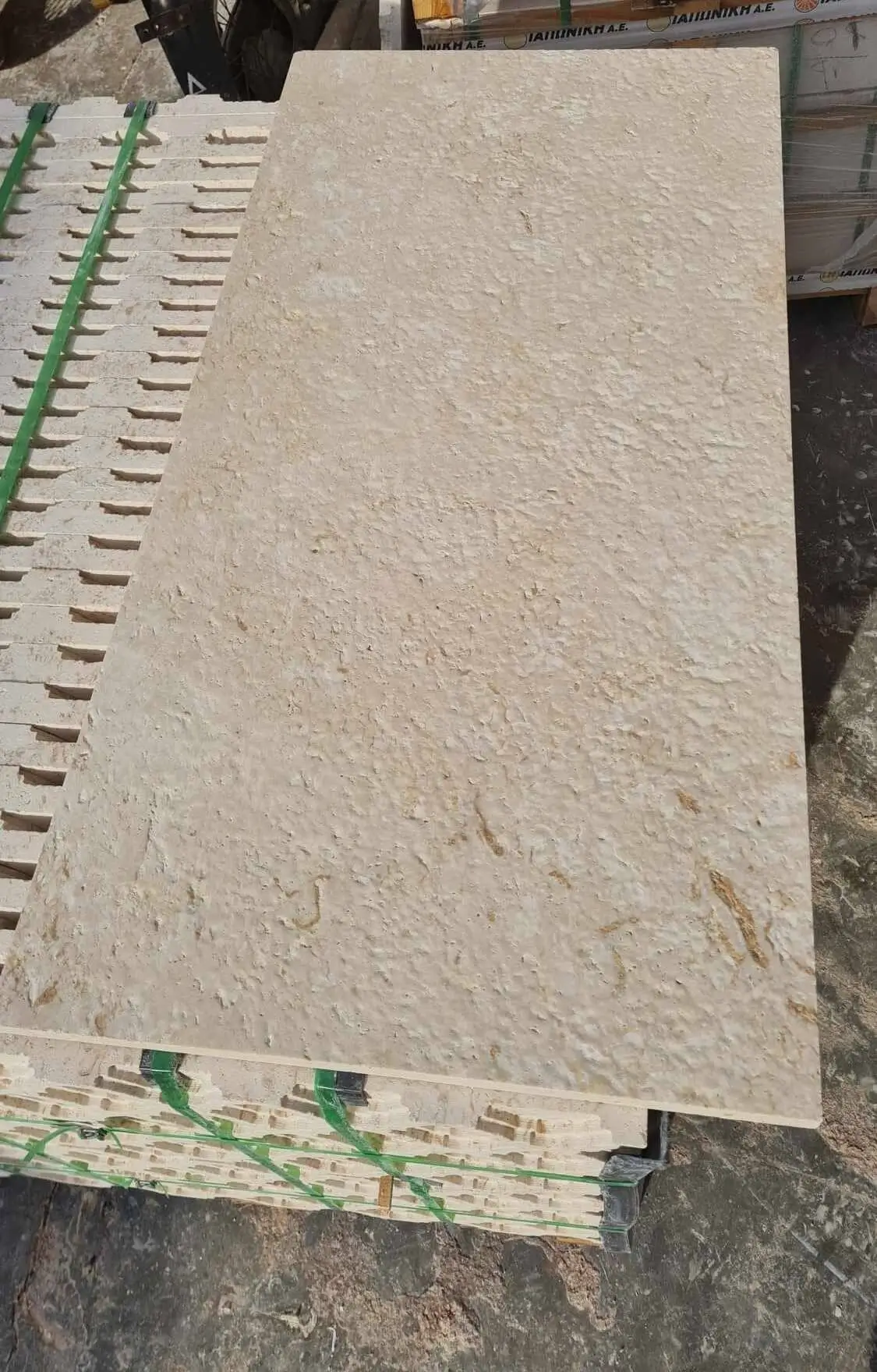
Planning your shell stone travertine maintenance materials — sealers, polymeric sand, replacement pavers for cracked units — benefits from understanding how stone supply in Arizona actually works. Import timelines for natural travertine run six to eight weeks from overseas quarries, which means you cannot wait until you have a broken paver or depleted warehouse inventory to begin sourcing. Citadel Stone maintains regional warehouse stock specifically to address this constraint, typically reducing lead times to one to two weeks for Arizona projects.
Your ordering strategy should include setting aside 5–7% overage of your original paver quantity in warehouse storage for future repairs. UV-related surface variation means replacement pavers need to be from the same production lot to achieve reasonable color matching. Truck delivery scheduling in Arizona summer months also requires coordination — stone arriving on a flatbed truck in July afternoon heat needs to be moved into shade quickly, as pavers that have been baking on a truck bed for several hours can take 24 hours to stabilize to ambient temperature before sealer application is appropriate.
Long-Term Shell Stone Travertine Care Arizona — Maintenance Guidance That Holds Up
Effective shell stone travertine care in Arizona comes down to treating UV exposure as the dominant variable in every decision — from sealer chemistry to finish selection to cleaning timing. The stone itself is durable and genuinely well-suited to the desert environment, but it performs at its best when your maintenance program is calibrated to Arizona’s UV reality rather than generic regional guidelines. Resealing annually, choosing penetrating UV-stable sealers, maintaining joints proactively, and avoiding acid-based cleaners are the pillars of stone surface maintenance AZ homeowners trust to keep installations looking consistent for 20 years or more.
Shell stone paver sealing across Arizona properties is most effective when every element — sealer type, application timing, finish selection, and cleaning protocol — is treated as part of a coordinated system rather than handled in isolation. For related material decisions as you plan or expand your Arizona hardscape, How to Choose Shell Limestone Pavers in Arizona offers useful guidance on a closely related material that shares many of the same UV performance considerations in this climate.
Homeowners in Tucson, Mesa, and Peoria rely on Citadel Stone for shell stone travertine that arrives pre-inspected for surface consistency, making seasonal sealing and monsoon-season maintenance more straightforward across Arizona properties.