Why Tile Color Changes Everything Below the Waterline
Pools with black tile read depth differently than any other water feature — the dark substrate absorbs light rather than scattering it, pushing the water’s color toward a rich blue-green or near-obsidian tone depending on your water chemistry and sky conditions. That optical effect is the single most important variable driving the specification decisions that follow, because every surrounding material — coping, decking, grout — either reinforces or undercuts it. Most designers nail the tile selection and then lose the effect entirely by pairing it with the wrong perimeter stone. Get the contrast logic right from the start and the rest of the design falls into place naturally.
Understanding Black Pool Tile Types
The term pool tile black covers a broader material family than most project briefs acknowledge. You’ll encounter three primary categories on the market, each with distinct performance profiles that affect how you specify the surrounding stonework.
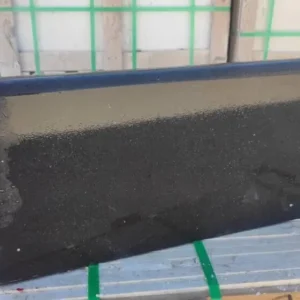
- Black mosaic tile pool applications typically use 1×1 or 2×2 glass or porcelain tesserae in mesh-mounted sheets — the fine joint network creates a shimmering reflective surface that intensifies the dark-water effect most dramatically
- Large-format black porcelain tile (12×24 or 24×24) delivers a more graphic, architectural look with fewer grout lines — it reads closer to polished black granite than mosaic and pairs well with equally bold coping profiles
- Natural black stone tile — basalt, black limestone, and dark slate — introduces organic texture variation that softens the severity of the dark palette and ages more gracefully in high-UV environments
- Blended dark mosaic ranges that mix black with charcoal, deep navy, or iridescent tesserae — these benefit from coping in a mid-tone natural stone that picks up one of the blend’s secondary colors
Your tile category determines the grout color strategy, which in turn determines which coping tones will visually succeed. A black mosaic tile pool with charcoal grout creates a near-seamless dark plane — it demands a coping with enough warmth or texture to prevent the entire perimeter from reading as a single heavy mass.
Coping Material Pairings That Work
The coping is the literal and visual transition between your pool shell and the deck surface, and with pools with black tile, the contrast relationship between coping and water is the design’s defining moment. Field experience across dozens of dark-tile installations points consistently to a handful of natural stone options that perform best — both aesthetically and structurally.
Travertine Coping: The Benchmark Pairing
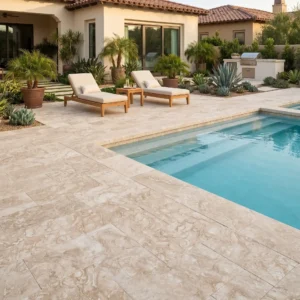
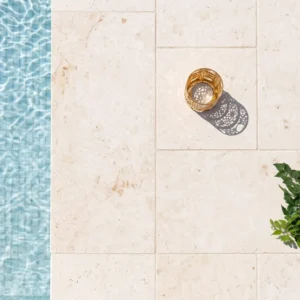
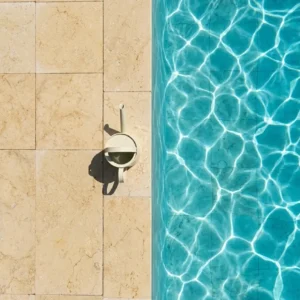
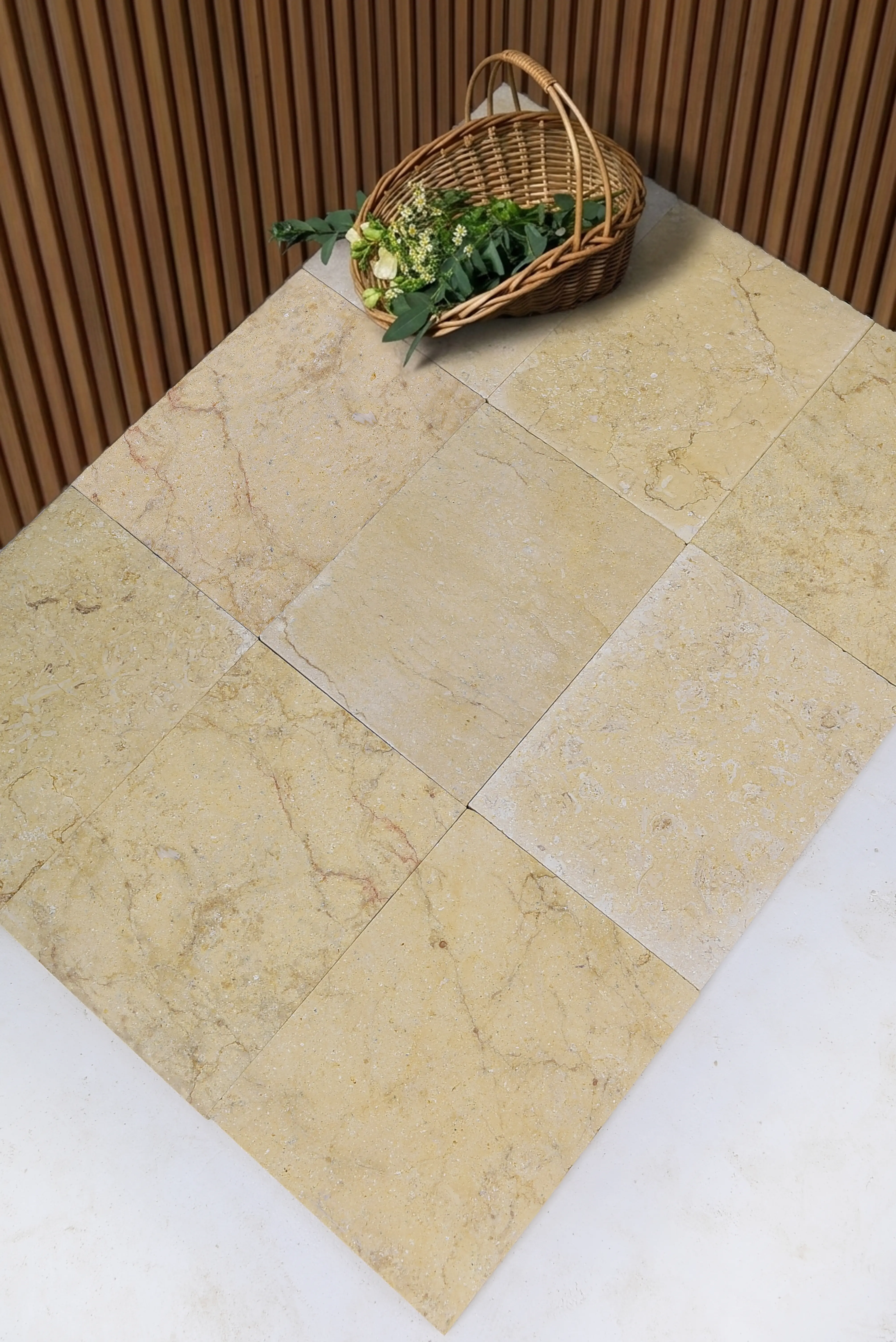
Ivory and walnut travertine remain the most specifier-trusted coping material for pools with black tile, and the performance logic is straightforward. The warm cream-to-honey tones of travertine create maximum luminosity contrast against the dark water surface — the coping appears to float above the pool rather than merge with it. Travertine’s open-pore finish also gives a naturally textured surface, which is what specifiers evaluate for poolside use; confirm the wet DCOF against ANSI A326.3 for the finish you specify. For guidance on our coping for dark pool tile, Citadel Stone’s travertine profiles include both bullnose and drop-face options engineered specifically for this application.
Travertine’s thermal behavior is also worth noting — its calcium carbonate pore structure keeps surface temperatures measurably lower than dense igneous alternatives at poolside. According to Natural Stone Institute travertine and limestone properties, this open-pore absorption characteristic actively moderates surface heat under intense UV exposure, which is a meaningful comfort factor at pool perimeters where barefoot traffic is constant.
Grey Pool Pavers as a Modern Alternative
Grey pool pavers — particularly honed limestone or brushed basalt in the 18×18 or 24×24 range — offer a more contemporary pairing for pools with black tile that suits minimalist and resort-modern design languages. The contrast here is subtler than travertine: the grey tones echo the black tile without competing, creating a tonal gradient from water surface to deck. For this approach to succeed, you need a grey with genuine cool undertones — warm greige reads muddy against pool tile black rather than sophisticated. Specify a honed or bush-hammered finish at 35–45 on the sheen scale to keep the surface reading as distinct from the tile plane below the waterline.
White Limestone: High-Contrast Specification
White or light limestone coping pushes the contrast to maximum — the effect is dramatic and extremely photogenic, which is why it appears in most high-end resort pool photography. The specification challenge is maintenance: white limestone at poolside is exposed to constant splash-back carrying pool chemistry, and without a penetrating sealer applied every 18–24 months, surface staining from calcium deposits and algae accelerates. Your maintenance protocol is part of the specification, not an afterthought. Where the budget supports it, this pairing delivers the most striking version of the dark-water effect that pools with black tile are built around.
Deck Stone Coordination Beyond the Coping
Your coping selection anchors the palette, but the deck material carries the visual weight by sheer surface area. The deck doesn’t need to match the coping — in fact, using the same material for both often collapses the visual layering that makes the design work. The more productive approach is to treat coping and deck as two related but distinct tonal registers.
- Travertine coping + tumbled limestone deck: consistent warm palette with tonal variation from smooth coping face to textured deck surface — a forgiving combination that ages well
- Grey limestone coping + brushed concrete-look porcelain deck: full modern palette, but requires careful grout color selection to avoid the deck reading as a single grey plane
- White coping + pale grey pool pavers as deck: classic resort aesthetic — high maintenance but high reward in terms of visual clarity
- Travertine coping + dark grey basalt deck: reversal of the expected contrast logic — the dark deck makes the travertine coping glow and creates a sophisticated tonal bridge to the black tile
Deck stone thickness matters here beyond aesthetics. Standard pool deck specifications call for a minimum 1.25-inch nominal paver thickness on a compacted aggregate base — but in practice, at Citadel Stone, we recommend stepping to 1.5-inch or 2-inch nominal for any pool deck carrying regular foot traffic, particularly where deck furniture creates concentrated point loads. Thinner pavers in those conditions develop micro-fractures at the corners within 3–5 seasons that become visible as the material weathers.
Grout Color Decisions for Black Tile Pools
Grout color in a black mosaic tile pool installation is underappreciated as a design variable — it can either sharpen the tile’s graphic quality or soften it considerably. Matching grout closely to the tile (near-black or dark charcoal) maximizes the seamless dark-plane effect and creates the deepest apparent water color. Contrasting grout — medium grey or even off-white — breaks the tile surface into a visible grid pattern, which reads as more decorative and less austere. Neither approach is wrong, but they pull the design in opposite directions and your coping choice should follow accordingly.
From a technical standpoint, pool tile black installations in submerged or waterline applications require an epoxy-based grout rather than standard cementitious grout. Epoxy grout is non-porous and resists pool chemistry at a level cementitious products cannot match long-term — you’ll see significantly less staining and deterioration over a 10-year period. The TCNA provides installation standards for natural stone and tile pool applications that detail the appropriate grout system selection based on exposure zone and water contact frequency.
Code Compliance and Structural Base Requirements
Pools with black tile sit within a layered regulatory environment that most design discussions skip entirely. Your local jurisdiction’s building code governs not just the structural shell but also the surrounding deck specification — coping anchorage details, deck drainage slope minimums, and edge restraint requirements all have code implications that vary by region.
- Pool deck drainage slope minimums typically run from 1/8 inch per foot to 1/4 inch per foot under IBC and local amendments — insufficient slope causes water to pond at the coping joint, accelerating efflorescence behind the stone
- Frost line depth requirements in freeze-thaw regions dictate aggregate base depth below the deck pavers — undercutting base depth to save budget is the leading cause of paver movement at pool perimeters in colder climates
- Seismic zones (particularly Zone 3 and 4 designations) require additional consideration for coping bond strength and joint flexibility — rigid mortar-set coping in high-seismic areas without movement joints typically shows cracking within 2–3 years
- Pool barrier and fencing setback requirements can affect where hardscape transitions from deck stone to surrounding grade, which changes the drainage and edge restraint details
The PHTA’s ANSI pool standards address pool deck material safety requirements including slip resistance thresholds for coping and deck surfaces — these are the baseline specifications your material selection needs to meet, independent of aesthetic preferences. Verify your coping finish against these requirements before specifying, especially for commercial pool projects where liability exposure is higher.
Installation Variables That Affect Long-Term Performance
The design pairing is only as good as the installation beneath it. Pools with black tile operate in a uniquely demanding environment — constant moisture cycling, pool chemistry splash, UV exposure, and thermal movement from diurnal temperature swings all act simultaneously on the perimeter materials.
Coping mortar bed thickness and composition deserve more specification attention than they typically receive. A 3/4-inch to 1-inch mortar bed using a polymer-modified Type S mortar provides the bond strength and flexibility that standard Type N doesn’t. You’ll also want to spec expansion joints at coping corners and at intervals no greater than 10–12 feet in the coping run — the thermal expansion of natural stone at poolside in direct sun is not trivial, and missing expansion joints is the primary reason coping lifts at the corners within 5 years.
Citadel Stone maintains national warehouse inventory of travertine coping profiles, which means lead times from confirmed order to truck delivery typically run 1–2 weeks rather than the 6–8 week cycle you’d face with direct import. For time-sensitive projects where pool construction sequencing is tight, that warehouse availability can be the difference between a smooth handover and a delayed finish date.
Sealing Protocols for Dark Tile Pool Perimeters
Natural stone coping and deck pavers at pools with black tile require a sealing protocol that accounts for both chemical exposure and the aesthetic requirement to maintain the stone’s intended finish appearance. The black tile palette makes any surface discoloration at the coping highly visible — a travertine coping that develops uneven calcium staining reads poorly against the crisp dark water surface.
- Apply a penetrating silicone or fluoropolymer-based sealer to all natural stone coping and deck before grouting the tile — this pre-sealing step prevents grout haze from bonding to the stone surface during installation
- Reapply sealer on a biennial schedule at minimum — high-use pools in warm climates may need annual resealing of the coping face due to constant splash and chemical exposure
- Avoid topical sealers (film-forming products) on honed or polished coping — they alter the surface sheen unpredictably and peel in high-UV conditions within 12–18 months
- For travertine coping with open-face pores, specify a pore-filling sealer on the first application to prevent organic debris from lodging in surface voids near the waterline
According to ASTM stone testing and specification standards, absorption rate testing (ASTM C97) for your chosen coping stone should be part of the specification verification process — travertine with absorption rates above 3% by weight needs more frequent resealing at pool perimeters than denser limestone alternatives.
Getting the Black Tile Pool Specification Right
Pools with black tile succeed or fail at the perimeter decision — the tile creates the atmospheric effect, but the coping and deck materials either sustain that effect or dilute it. Travertine remains the strongest performing pairing across the widest range of design contexts, offering the thermal comfort, contrast logic, and structural integrity that demanding pool environments require. Grey pool pavers and white limestone give you legitimate alternatives when the design language calls for a different register, but each comes with tradeoffs worth planning for explicitly. Your base preparation depth, expansion joint placement, and grout system selection are not secondary decisions — they’re the variables that determine whether this installation holds up for 20 years or starts showing stress at 8. As you develop the full specification, complementary natural stone applications around the project may also inform your material palette — travertine tile in interior applications covers how the same material family performs when the project extends from the pool perimeter into adjacent covered spaces. Sourced direct from quarries in Turkey, the Mediterranean, and beyond, Citadel Stone coping frames black-tiled pools with a naturally textured perimeter.
Related reading: travertine bathroom tile · travertine bullnose pool coping · travertine pool coping colors.