Your Finish Choice Defines the Entire Room
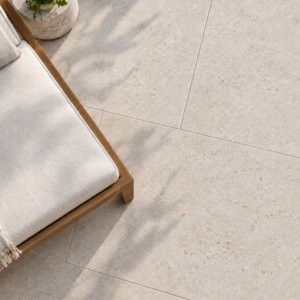
Travertine bathroom tile performs differently depending on finish — and that single decision shapes everything from slip resistance to maintenance frequency. Honed travertine delivers a matte, smooth surface that reads as quiet and refined, while tumbled finishes introduce texture that actively improves wet-surface traction without requiring anti-slip coatings. Polished travertine belongs in powder rooms and feature walls, not shower floors — the surface becomes genuinely dangerous when wet, regardless of sealing. Get the finish matched to the application first, and every other decision follows naturally.
Floor Ideas That Create the Spa Foundation
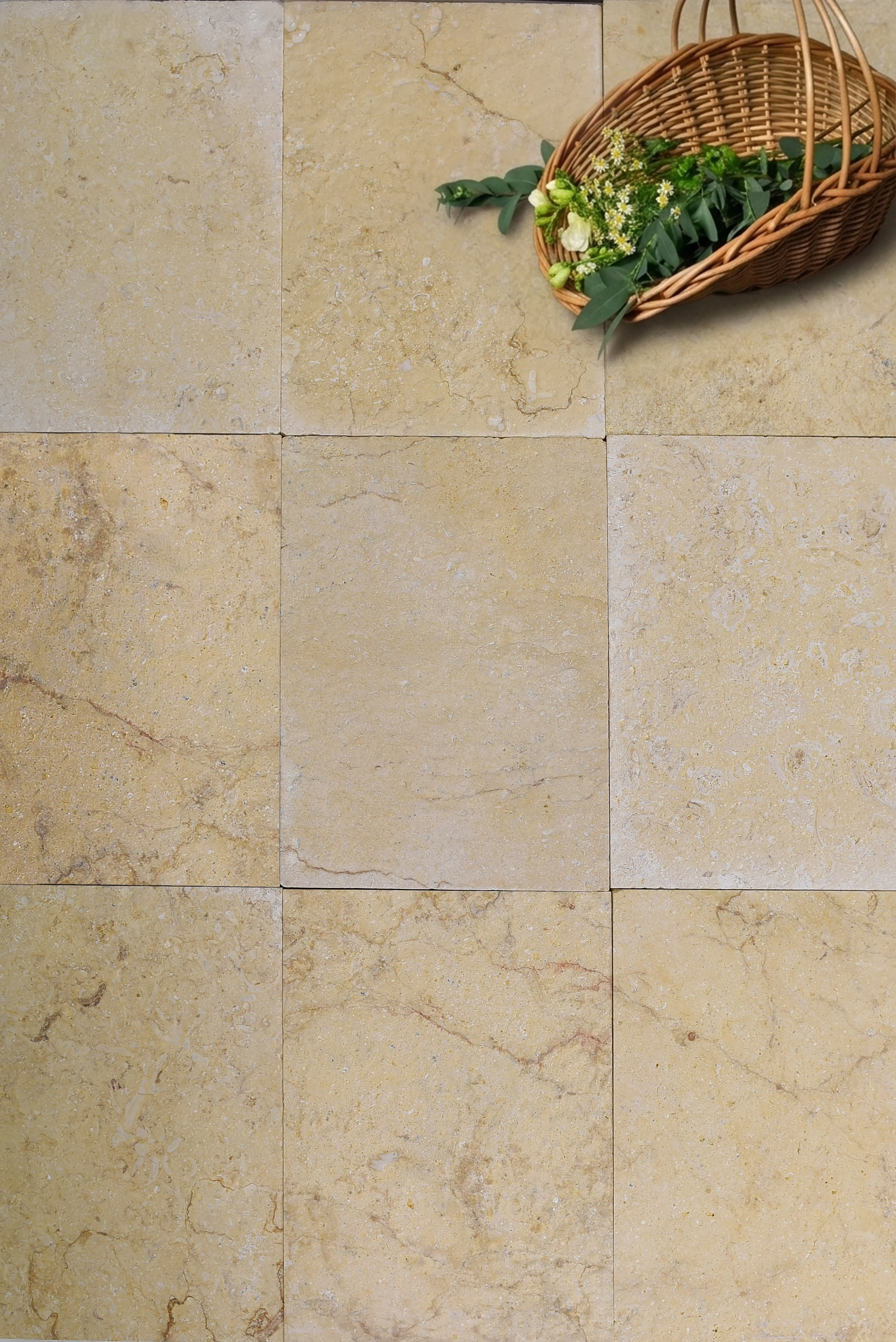
The floor carries the visual weight of any bathroom design, and travertine bathroom tile handles that job with a warmth that porcelain simply cannot replicate. The most successful spa-like floors are built around large-format tiles — 18×18 or 24×24 inches — in ivory or walnut tones that minimize grout lines and let the stone’s natural veining read as continuous movement across the surface. Fewer joints also means fewer maintenance points, which matters in a high-moisture environment where grout degradation is the most common long-term issue.
For bathroom tiles travertine works best when you coordinate floor and wall formats from the same batch. Travertine’s color variation runs wide between quarry pulls, and mismatched batches in the same room create a visual inconsistency that no amount of skilled installation can fix. Verify warehouse stock before finalizing your floor and wall quantities together — sourcing both from a single confirmed inventory pull eliminates the batch-mismatch problem entirely.
- 18×18 honed in ivory for a clean, light-reflecting floor with minimal joint lines
- 12×24 walnut travertine in a running bond for visual length in narrow bathrooms
- Tumbled 4×4 mosaic inserts at the shower floor for texture and traction without a separate anti-slip product
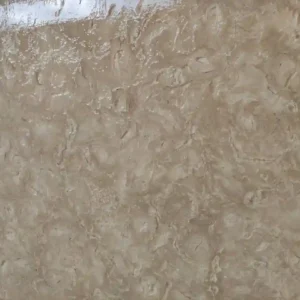
- Unfilled travertine in high-humidity wet areas — the natural voids provide drainage micro-channels that improve wet-foot safety
Wall Treatment Ideas for Depth and Texture
Walls are where travertine’s design range really opens up. A honed travertine feature wall behind a freestanding tub creates the kind of calm, spa-like backdrop that defines high-end bathroom photography — the key is keeping the stone consistent in tone and letting the natural veining provide all the visual movement. Resist the urge to mix multiple finishes on adjacent wall planes; the contrast reads as busy rather than layered.
Travertine tile in bathroom wall applications performs best in 12×24 or 16×24 formats set vertically. Vertical orientation adds ceiling height visually, and the longer format highlights the stone’s linear veining more effectively than square tiles. According to Natural Stone Institute travertine properties and outdoor suitability, travertine’s open crystalline structure responds well to controlled moisture environments when properly sealed — making it appropriate for bathroom walls when installation includes a quality penetrating sealer applied before grouting.
- Polished travertine on a dry accent wall opposite the vanity — the reflectivity adds depth without wet-area risk
- Honed field tile with a pencil liner border in the same material for a subtle frame detail
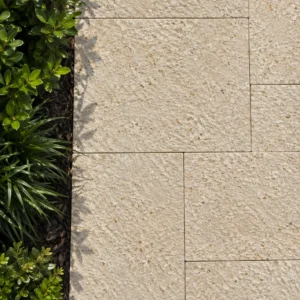
- Split-face travertine panels as a textured feature behind a vessel sink — the dimensional surface catches light differently throughout the day
- Filled and honed ivory travertine on shower walls, grout joints kept to 1/16 inch for a near-seamless look
Shower Design Ideas Worth Specifying
The shower is where bathrooms with travertine tile either succeed or fail long-term, and the specification details here are non-negotiable. A shower floor needs a tumbled or brushed finish — the coefficient of friction for wet tumbled travertine typically exceeds 0.60, which meets and surpasses the threshold referenced in ASTM C1527 travertine dimension stone standards for interior wet applications. Polished finishes in the same location will read below 0.40 when wet — a liability issue, not just a design preference.
Think carefully about fill versus unfilled travertine in the shower. Filled travertine — where the natural voids are grouted flush — is easier to clean and gives a more refined appearance. Unfilled travertine in the shower floor creates drainage-friendly micro-texture but requires more frequent resealing because the open pores absorb moisture and cleaning products more aggressively. For the shower floor specifically, a 2% slope toward the drain and a waterproof membrane beneath the tile bed are baseline requirements regardless of stone choice.
Vanity Surrounds and Niche Details
Travertine bathroom tile transitions beautifully into vanity surrounds and recessed niches — areas where the stone’s natural warmth reads up close. A honed travertine vanity surround with a bullnose edge profile creates a clean, tailored look that complements both contemporary and transitional bathroom styles. The bullnose detail is worth specifying from the same stone batch as your field tile; fabricated bullnose from a different pull introduces the tonal mismatch problem again, and it shows clearly at eye level.
Recessed niches are a high-impact detail that travertine handles exceptionally well. The cleanest result comes from lining the niche with the same tile format as the surrounding wall, mitering the corners rather than using a separate trim piece. Mitered travertine corners require a fabricator with experience on natural stone — the material’s crystalline structure can fracture along vein lines if a blade runs too fast or without adequate water cooling. Verify your installer’s experience with natural stone miters before committing to this detail, particularly on thicker tile formats above 3/4 inch.
Browsing our travertine tile selection gives you a clear view of the formats, finishes, and tones available — useful when you’re coordinating floor, wall, and detail elements across the same project.
How Travertine Fits Different Design Aesthetics
Travertine’s natural palette — ivory, walnut, noce, and gold — positions it as one of the most versatile stones for connecting interior bathrooms to broader design languages. Bathrooms designed around a modern minimalist aesthetic work particularly well with large-format filled and honed travertine in cooler ivory tones, where the stone’s quiet veining provides texture without competing with clean architectural lines. In contrast, a bathroom drawing on Mediterranean or transitional design traditions benefits from warmer walnut and gold tones with tumbled edges that reinforce an aged, layered aesthetic.
Worth noting is how travertine’s natural tonal range connects interior spaces to outdoor design themes. A bathroom that opens to a garden or exterior terrace — especially one featuring naturalistic stone hardscape — benefits from travertine tile in bathroom applications that echoes the exterior palette. The material’s geological origin creates an authentic visual continuity between inside and outside that manufactured materials can approximate but never fully achieve. This is particularly relevant when specifying travertine bathroom tile in projects where the design brief calls for an immersive, nature-connected atmosphere.
- Modern minimalist: filled honed ivory, large format, minimal grout lines, wall-to-floor continuity
- Mediterranean traditional: walnut tumbled field tile, decorative liner borders, warm ambient lighting
- Transitional: noce honed floor with ivory honed walls — tonal contrast without clash
- Nature-connected spa: unfilled tumbled stone, organic edge profiles, matte finish throughout
Sealing and Maintenance — The Honest Picture
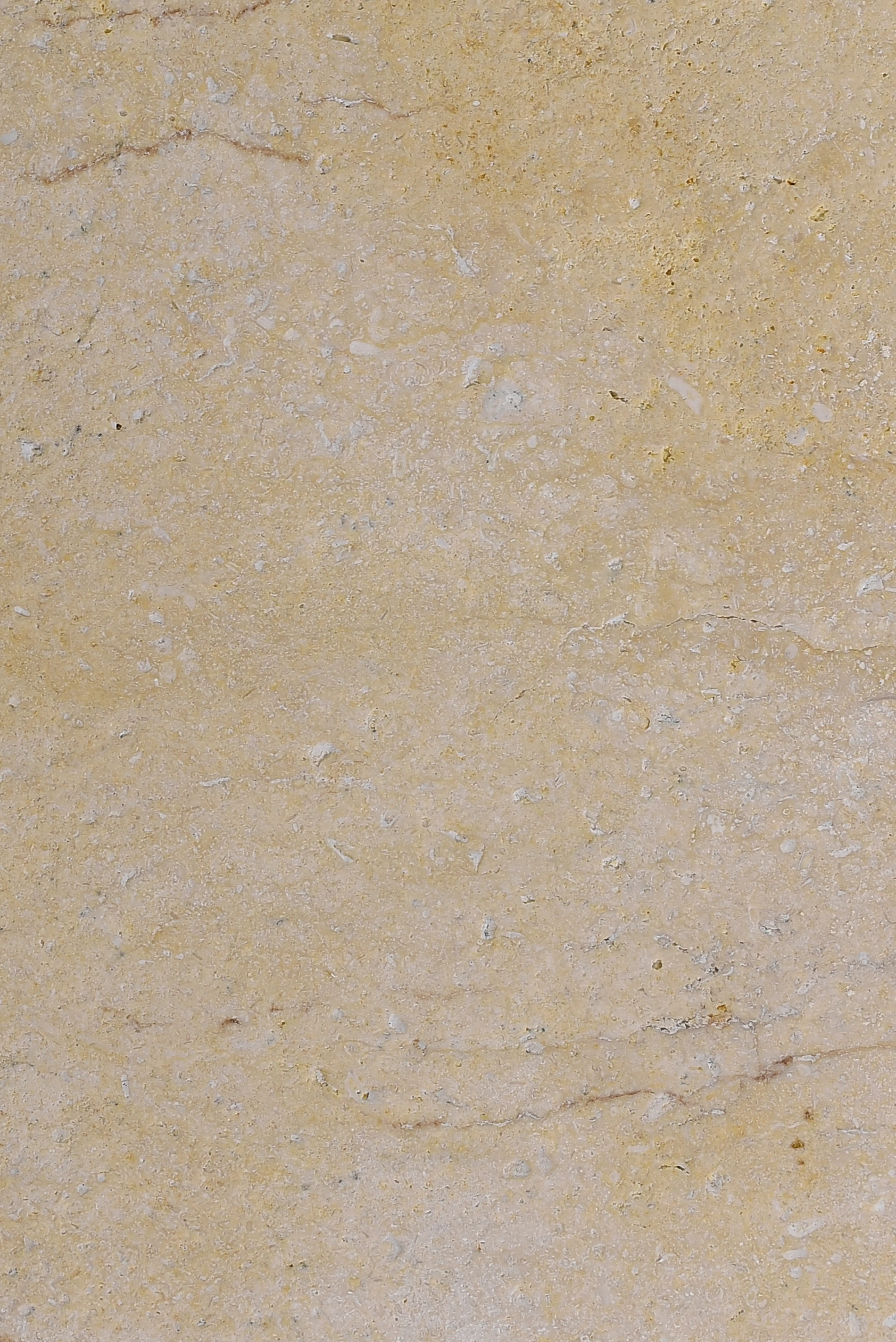
Every travertine bathroom tile installation needs a penetrating impregnating sealer applied before grouting and again within the first 12 months. Beyond that, a realistic maintenance schedule runs to resealing every 18 to 24 months in a bathroom environment — shorter cycles for shower floors, longer for dry vanity areas. The TCNA natural stone tile installation standards reinforce this approach, recommending that penetrating sealers be applied to all porous natural stone before exposure to moisture-heavy service conditions.
The practical indicator for resealing is straightforward: water stops beading on the surface and instead absorbs within 10 to 15 seconds of contact. No test kit required. Use a pH-neutral cleaner for regular maintenance; acidic cleaners etch the calcium carbonate matrix and degrade both the stone surface and the sealer prematurely. This is the single most common maintenance mistake in bathrooms with travertine tile, and it’s entirely avoidable.
- Apply penetrating sealer before grouting — not after, and not after installation is complete
- Use a pH-neutral stone cleaner only — avoid vinegar, bleach, and citrus-based products
- Reseal shower floors every 12 to 18 months; wall tile every 24 months
- Re-grout any cracked or missing joints promptly — exposed substrate in a wet area accelerates damage significantly
Ordering, Quantities, and Project Planning
Accurate quantity calculation for bathroom tiles travertine projects requires adding 10 to 15 percent overage to your net square footage — not the standard 5 to 7 percent typically quoted for porcelain. Natural stone carries more natural variation, and cuts at corners, niches, and drains consume material quickly. Factor niche linings, bullnose pieces, and any decorative liners as separate line items, not part of your field tile count.
Citadel Stone maintains warehouse inventory that supports nationwide project timelines, with lead times that typically run 1 to 2 weeks from confirmed order — considerably faster than the 6 to 8 week cycle associated with import sourcing. Coordinate your truck delivery date with your installation schedule so tile acclimates to the bathroom environment for at least 48 hours before setting begins; temperature and humidity differentials between warehouse storage and an active bathroom affect adhesive open time and should be factored into your project schedule.
What Matters Most for Travertine Bathroom Tile
Travertine bathroom tile rewards deliberate specification. Finish selection, batch consistency, sealing schedule, and installation details collectively determine whether the result feels like a genuine spa retreat or a high-maintenance burden. The ideas and details covered here are not design theory — they’re the practical decisions that separate installations that age beautifully from ones that require intervention within five years. Spend the most time on finish selection for wet areas, confirm your full quantity from a single warehouse pull, and commit to a sealer that’s rated for interior wet environments specifically.
For care and maintenance guidance specific to your finish choice, the resource on honed travertine tile care and cleaning covers the protocols that keep this material performing well over the long term. Stone for nationwide projects from Citadel Stone includes bathroom travertine in coordinating floor and wall formats for seamless design continuity.
Related reading: travertine bullnose pool coping · travertine pool coping colors · gray travertine pool coping.