What Travertine Flooring Tile Actually Is — And Why It Behaves Differently
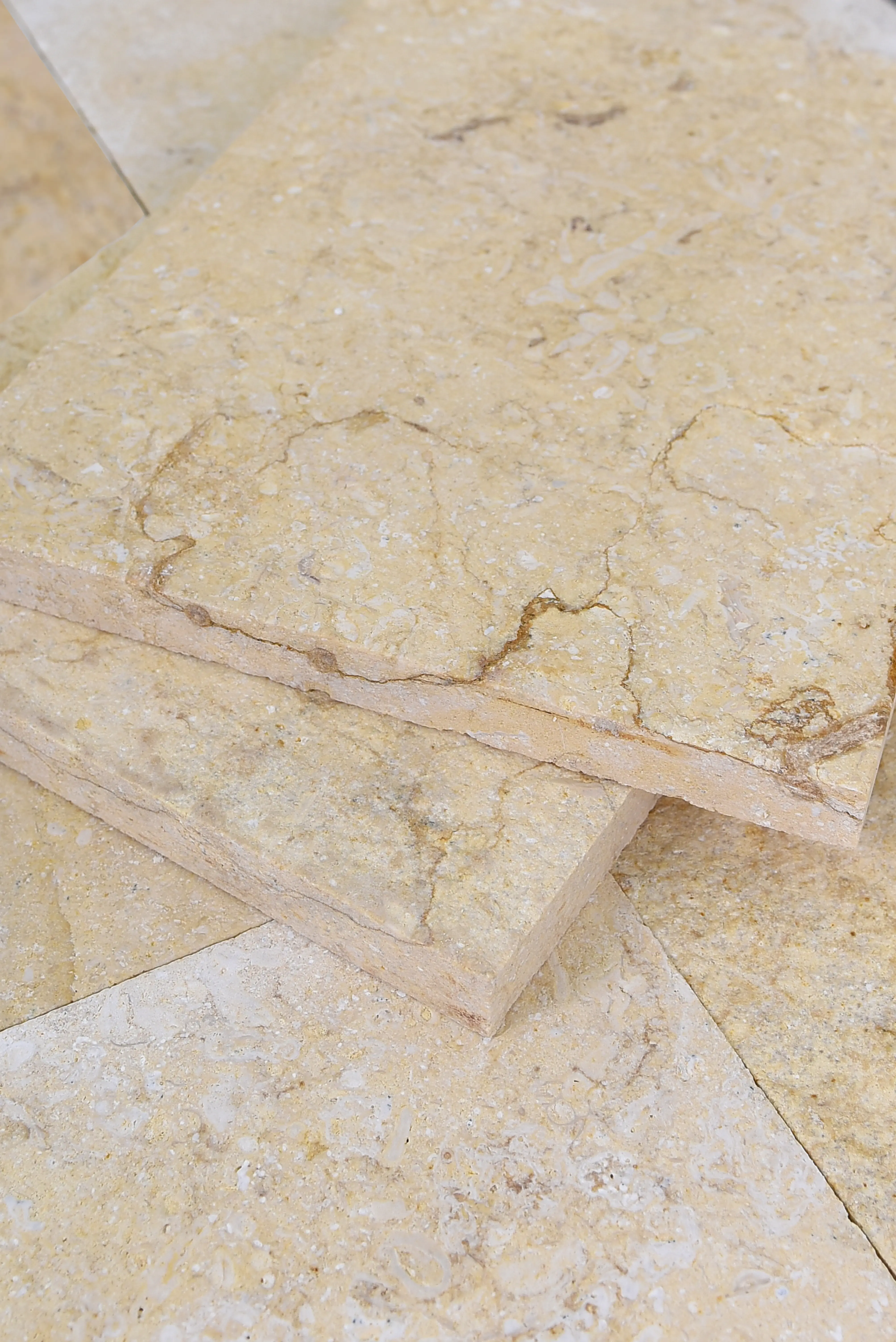
Travertine flooring tile performs unlike any other stone on the market because its formation process creates a genuinely unique internal structure. Formed from calcium carbonate deposited by mineral-rich hot springs, travertine develops a network of voids and channels that run through the slab — pores that are filled, partially filled, or left open depending on how the stone is finished. That distinction matters more than most specifiers realize before they write their first order.
Those internal voids affect everything from how the tile accepts sealer to how it responds to subfloor flex. A filled travertine tile presents a uniform surface and resists liquid infiltration far better than an unfilled version, but the fill material — typically Portland cement or epoxy — behaves differently from the stone matrix itself when temperatures shift. You’ll notice micro-differential movement at the fill lines over time, particularly in radiant-heat applications. Unfilled tiles expose the natural voids and deliver a rawer aesthetic, but demand more aggressive sealing schedules to prevent grout and staining agents from migrating below the surface.
According to ASTM C1527 travertine dimension stone standards, the classification distinguishes travertine from other limestone variants based on its banded structure and characteristic void pattern — a distinction that directly informs installation method selection. Understanding the standard gives you a clearer basis for specifying fill type, finish, and minimum thickness for your application.
Finish Options and What They Actually Mean for Floor Performance
The finish you select on travertine flooring tile determines far more than visual character — it directly sets your traction profile, maintenance cycle, and long-term durability expectations. There are four finishes worth knowing in depth, and each one suits a different application context.
- Polished travertine delivers a mirror-like surface through progressive mechanical grinding. It reads as highly formal and amplifies the stone’s natural veining. The downside: wet coefficient of friction drops significantly, and polished floors in high-traffic or moisture-prone areas can create slip hazards that exceed safe thresholds. Reserve polished finishes for dry interior environments — formal living rooms, low-traffic corridors, and display spaces.
- Honed travertine is ground to a smooth but matte surface without the final polishing stage. It offers better traction than polished while still presenting clean, refined aesthetics. Honed is the workhorse finish — suitable for kitchens, hallways, and commercial lobbies where elegance and practicality need to coexist.
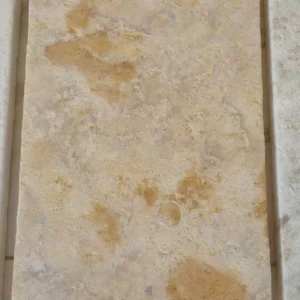
- Brushed or antiqued travertine has been mechanically textured to simulate centuries of wear. The surface relief improves grip considerably, and the aged character integrates naturally with rustic, Mediterranean, and transitional interior styles. This finish also conceals surface scratches more effectively than any other option, making it ideal for high-traffic residential and boutique commercial environments.
- Tumbled travertine presents rounded edges and a heavily textured surface. It’s the most tactile finish and the most slip-resistant, but its irregular profile makes precision installation more challenging and increases the complexity of transitions to other flooring materials.
Your finish selection should be locked before you finalize your tile specification — changing your mind after delivery means re-sourcing material, which can add weeks to your project timeline depending on warehouse stock levels at the time of your order.
Thickness and Format: Getting the Numbers Right Before You Order
Travertine tile for floors is available in a range of thicknesses, and the right spec depends on your subfloor type, your transition requirements, and whether the installation is new construction or a renovation overlay. Getting this wrong at the specification stage creates expensive problems on site that no amount of skilled installation can fully solve.
Standard interior floor tiles travertine run between 10mm and 18mm. The 12mm range suits most residential applications over concrete subfloors with proper membrane preparation. The 18mm thickness is the specification to reach for in commercial environments, over wood subfloor systems, or anywhere you’re dealing with point-load traffic — think rolling carts, heavy furniture, or high-heel concentrations in hospitality settings. Thinner tiles in the 10mm range are tempting for overlay applications where height transitions are constrained, but they demand an exceptionally flat and rigid subfloor — any flex or irregularity telegraphs directly through thin stone as a crack across the tile face.
Format choices carry their own set of trade-offs worth understanding before you commit:
- 12×12 inch tiles are the easiest to handle, align, and replace if damage occurs. Grout line frequency is higher, which can visually break up large spaces but also creates more maintenance surface area over time.
- 16×16 and 18×18 formats strike the balance most designers and specifiers land on — large enough to minimize grout line interruption without requiring the specialized lifting equipment and adhesive open-time management that oversized formats demand.
- 24×24 and large-format tiles (24×48 or larger) deliver the cleanest, most expansive visual effect but require flatness tolerances of no more than 1/8 inch across a 10-foot span, per industry installation standards. Any subfloor deviation beyond that creates lippage that’s both an aesthetic problem and a tripping hazard.
- Plank formats — typically 4×24 or 6×36 — are gaining traction in modern minimalist and transitional interiors where designers want the linear rhythm of wood without sacrificing the thermal mass and acoustic properties of natural stone.
The Natural Stone Institute provides detailed technical guidance through its ASTM tile stone specifications and standards that outline minimum thickness tolerances and flatness requirements for floor tile applications — a reference worth keeping in your specification library.
How Travertine Flooring Tile Integrates with Landscape and Interior Design Styles
One of travertine’s defining strengths is the range of design contexts it can inhabit without looking forced. The stone reads differently depending on format, finish, and the surrounding palette — which is exactly what makes it a versatile anchor for both interior and exterior design continuity.
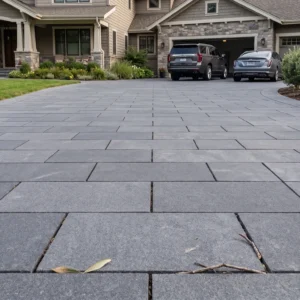
In contemporary minimalist spaces, large-format honed travertine tile for floors in a Silver or Walnut colorway creates clean, low-contrast planes that recede visually and allow furniture and architecture to lead. The key here is specifying a tile with minimal fill variation and consistent background color across the lot — something worth confirming directly with your supplier before the order ships from the warehouse. Color-matching across multiple cartons becomes critical when large uninterrupted floor fields are involved.
For design schemes that draw from Mediterranean, Tuscan, or traditional colonial influences, a smaller-format tumbled or antiqued travertine with visible vein movement and natural fill variation reads as genuinely authentic. The color palette of Classic Ivory and Noce travertine aligns naturally with terracotta, aged timber, wrought iron, and warm plaster tones — the material works with the architectural language rather than against it.
The specification consideration worth noting for projects that include exterior zones: travertine flooring tile that continues from interior living spaces through glass doors onto covered outdoor areas creates a powerful sense of spatial extension. This interior-to-exterior continuity works best when the same tile series — same finish, same color, same format — is sourced from a single lot. Lot consistency matters because travertine exhibits natural color variation between quarrying batches, and a mismatched exterior tile creates a visual seam that undermines the whole design intention.
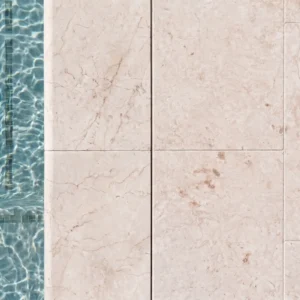
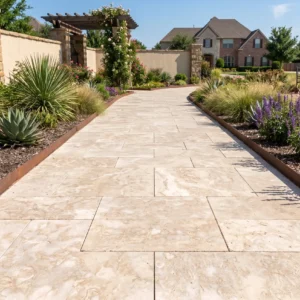
For projects adjacent to desert xeriscaping, naturalistic plantings, or open landscape settings, the warm cream and tan tones of travertine flooring tile integrate with the surrounding palette better than cooler stones. You can browse our travertine floor collection to review the full range of color families and lot availability before committing to a specification.
Subfloor Preparation: The Variable Most Installations Get Wrong
No part of a travertine tile floor installation matters more than what happens before the first tile goes down. The subfloor is where installations fail — not at the surface, not at the grout, and not at the sealer. A subfloor that passes casual inspection can still carry flex, moisture vapor transmission, or surface irregularity that will compromise a travertine installation within two to three years.
Here’s the sequence that prevents the most common field failures:
- Measure moisture vapor emission rate (MVER) before any membrane or adhesive goes down. For natural stone over concrete, the threshold is typically 3 lbs per 1,000 sq ft per 24 hours using the calcium chloride test method. Travertine’s porosity makes it especially vulnerable to moisture-driven delamination — an issue that doesn’t always present immediately but accelerates under radiant heat systems.
- Achieve a floor flatness tolerance of no greater than 3/16 inch across a 10-foot span for standard formats. Tighten that to 1/8 inch for formats larger than 15×15 inches. Use self-leveling underlayment rather than spot-patching to address depressions — spot patches create hard point differentials that show as stress concentrations at tile corners under traffic loading.
- Select the correct adhesive for your application. Large-format travertine flooring tile requires a medium-bed mortar — standard thin-set is insufficient for tiles above 15 inches in any direction. Use a polymer-modified medium-bed mortar with back-buttering on every tile to ensure full coverage of at least 95% of the tile back in interior wet areas, 80% minimum in dry interior applications.
- Plan your expansion joint layout before installation begins. Travertine’s thermal expansion coefficient requires soft joints at all changes of plane, at perimeters, and at maximum 20-foot intervals across open floor fields — tighter than the 25-foot figure that appears in some generic installation guides.
The Tile Council of North America publishes installation standards through its natural stone tile installation guidelines that cover substrate preparation requirements in technical detail — a practical reference point for anyone writing installation specifications or managing installer compliance on site.
Sealing Protocols That Actually Protect Travertine Floors Long-Term
Travertine’s porosity is its most defining performance variable for floor applications. The absorption rate of unfilled travertine can reach 2–4% by weight depending on the quarry source and finish — significantly higher than granite, and materially different from ceramic or porcelain alternatives. That porosity is what gives the stone its character, but it also means that sealing isn’t optional — it’s the decision that separates a 20-year floor from a 10-year one.
Penetrating impregnator sealers are the correct product category for travertine flooring tile. They work by depositing hydrophobic and oleophobic agents within the stone’s pore network without forming a surface film. Surface-coating sealers create a sacrificial layer above the stone that peels, scratches, and traps moisture beneath it over time — a failure mode that’s expensive to remediate because full surface stripping is required before reapplication.
Your sealing schedule should look like this in practice:
- Initial seal: Apply two coats of penetrating impregnator 24–48 hours after grout has fully cured, using a low-sheen solvent-based or water-based formula depending on the finish type. Solvent-based sealers penetrate more aggressively into high-porosity unfilled travertine; water-based products perform adequately on honed or polished filled tiles with lower absorption profiles.
- Water-test interval: Re-test sealer effectiveness every 12–18 months using the water-bead test. Place a tablespoon of water on the surface — if it beads and sits for 4+ minutes without darkening the stone, the sealer is still effective. If the stone darkens within 60 seconds, reseal immediately.
- Full reseal cycle: Plan for a full two-coat penetrating reseal every 2–3 years in residential floor applications, annually in commercial or high-footfall environments. This is the maintenance rhythm that sustains the stone’s original appearance and prevents staining agents from reaching the fill material or pore channels.
- Avoid alkaline cleaners and steam mops: Alkaline cleaning agents attack the calcium carbonate matrix of travertine over time, dulling the surface and accelerating wear at the finish layer. Use pH-neutral stone cleaners exclusively for routine maintenance.
Color Selection, Lot Consistency, and Why Both Matter at the Ordering Stage
Color variation in travertine floor tiles is one of the most underestimated specification risks in natural stone flooring projects. The color families — Classic Ivory, Silver, Walnut/Noce, Gold, and White — each carry their own natural tone range, but variation within those families can be dramatic between quarrying lots. Two pallets labeled “Classic Ivory” sourced from different warehouse batches can present a visible color shift that only becomes apparent once tiles from both pallets are laid side by side on site.
The standard industry protocol for color lot management is straightforward but frequently skipped in the rush to get material ordered:
- Specify the lot number at the time of order and confirm that your full quantity ships from a single lot. For large projects, this may require holding warehouse inventory or staggering delivery of additional material from the same quarry batch.
- Order 10–12% overage on your calculated square footage. Projects using travertine tile for floors that run short mid-installation create a common and frustrating problem — matching a specific lot after the original stock is depleted is rarely possible. The replacement material will visually integrate once the floor ages, but the initial mismatch period is professionally problematic.
- Request full-lot samples — not single tiles. A 4-tile sample grid shows you the natural variation range within the lot, which is the actual range you’ll be working with across your full floor field.
- For exterior continuity applications where indoor travertine flooring tile extends to covered outdoor areas, confirm that the outdoor tiles are sourced from the same lot. Travertine for covered exterior use requires a minimum 18mm thickness and a finish with enhanced traction characteristics — a different specification from the interior tile even if the visual character is matched.
At Citadel Stone, we conduct warehouse quality checks on each travertine shipment before it reaches the floor — reviewing color consistency, fill integrity, and dimensional tolerances so that what arrives on your truck matches what you approved at the sample stage.
How Travertine Flooring Tile Compares to Other Natural Stone Floor Options
Understanding where travertine sits in the performance hierarchy of natural stone flooring helps you advise clients accurately and defend your specification decisions when alternatives are proposed during value-engineering conversations.
Compared to marble, travertine flooring tile is more forgiving in high-traffic applications — its slightly lower hardness (Mohs 3–4 for travertine vs. 3–4 for marble, but travertine’s surface texture typically conceals micro-scratching more effectively) means the patina of wear reads as character rather than damage. Marble’s crystalline surface highlights surface wear more visibly and requires more aggressive polishing to restore. Both materials are calcium carbonate-based, meaning both are vulnerable to acid etching — citrus, vinegar, and acidic cleaning agents will permanently dull either surface.
Against porcelain tile, travertine trades manufacturing uniformity for material authenticity. Porcelain offers zero porosity and a consistent slip resistance profile across every tile. Travertine requires sealing, carries natural variation, and demands more careful subfloor preparation. The performance gap closes significantly once you account for travertine’s thermal mass — it moderates surface temperature naturally, staying cooler underfoot in warm environments than ceramic or dense porcelain alternatives.
The USGS documents natural stone material properties and production data in its limestone and travertine mineral formation reference — a useful technical grounding document when clients ask about the material’s geological classification and inherent durability basis.
- Travertine vs. limestone flooring: Limestone is denser, less porous, and more dimensionally consistent. For high-traffic commercial floors where uniformity and maintenance simplicity are the priority, filled and honed limestone often outperforms travertine. Travertine wins on aesthetic character and the visual warmth it brings to residential and hospitality environments.
- Travertine vs. slate: Slate is harder (Mohs 5–6), non-porous, and textured due to its layered cleavage texture. It’s a better choice for wet utility areas where maintenance simplicity trumps aesthetics. Travertine is warmer in appearance and integrates more naturally with interior design palettes that prioritize warmth and organic character.
- Travertine vs. engineered stone: Engineered quartz delivers consistent color and near-zero porosity but lacks the thermal mass, acoustic density, and material authenticity of natural travertine. In projects where the stone itself is part of the design story, engineered alternatives rarely satisfy the design intent.
Ordering Logistics and Project Planning Timelines
Getting your travertine floor tile order sequenced correctly protects both your project schedule and your specification integrity. Natural stone flooring procurement has specific timing considerations that differ from ceramic or porcelain tile sourcing — understanding them prevents the last-minute substitutions that compromise design intent and inflate budgets.
Confirm warehouse inventory availability before finalizing your project schedule. Citadel Stone maintains consistent stock levels across its travertine range, which typically allows for 1–2 week lead times on in-stock material — significantly shorter than the 6–8 week import cycle that direct-source orders require. For large-format tiles or specialty finishes, lead time verification is essential before you commit to an installation start date.
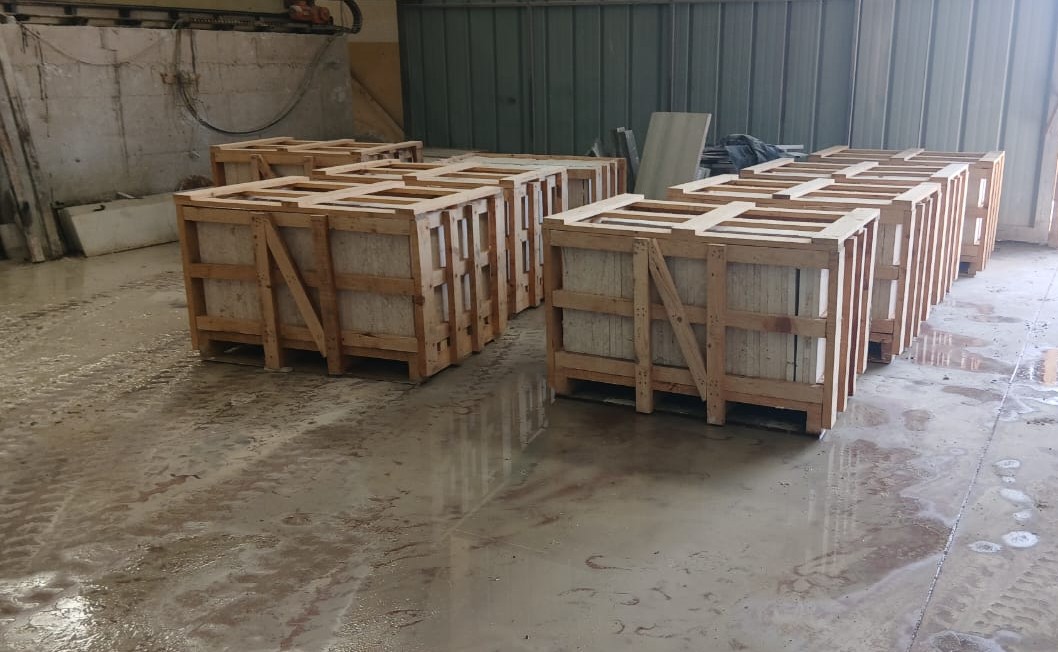
Truck delivery logistics deserve attention early in the planning process. Natural stone flooring material ships on palletized loads, and the delivery access conditions at your project site directly affect whether material arrives intact and on schedule. Confirm site access dimensions, weight restrictions, and offloading equipment requirements with your supplier before the delivery truck is dispatched. Pallet weights for 18mm travertine tile can run 2,200–2,600 lbs per pallet, which affects both truck specification and onsite handling planning.
- Order at least 3 weeks before your installation start date on standard in-stock items — this gives you buffer for inspection, any return of damaged material, and acclimatization time for the stone before installation begins.
- Inspect every pallet on delivery before signing the delivery receipt. Check for corner damage, cracked tiles, and fill delamination before the truck leaves the site. Damage claims submitted after driver departure are substantially more difficult to process.
- Allow travertine flooring tile to acclimatize to the installation environment for 48–72 hours before installation begins, particularly in climate-controlled spaces. Stone that moves from a cold warehouse to a heated interior needs time to reach the ambient temperature and humidity of the space before adhesive is applied.
Specifying Travertine Flooring Tile: What to Get Right Before Installation Begins
Travertine flooring tile rewards careful specification — the decisions you make before a single tile is laid determine whether the finished floor performs at a high level for decades or starts showing stress, staining, and finish degradation within a few years. Nail the subfloor preparation, match your finish selection to your functional requirements, seal properly, and source from a single lot with adequate overage. Those four disciplines account for the majority of long-term installation performance. If your project also incorporates wet rooms or spa-adjacent spaces, the selection logic shifts meaningfully — the finish, fill type, and sealing frequency all change in moisture-heavy environments. For that specific context, travertine tile ideas for wet and spa rooms covers the specification adjustments worth understanding before you finalize a wet-area selection. Travertine tile from Citadel Stone ships in consistent 18mm thicknesses that simplify transitions between rooms during interior installations.
Related reading: outdoor travertine tiles · honed travertine tile · travertine bullnose pool coping.