


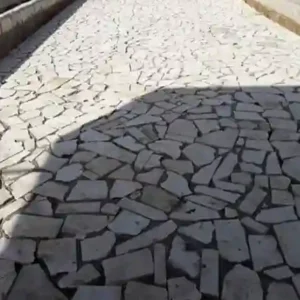
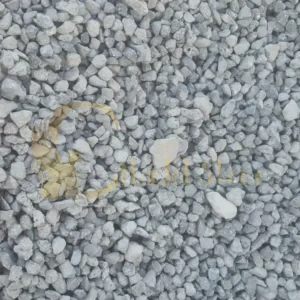
Surface albedo is the specification variable that separates functional pool coping pavers in Arizona from installations that visually deteriorate within three seasons. Arizona’s UV index regularly peaks at 11 or above — a level that drives photochemical degradation in stone surfaces far faster than simple heat alone. You’ll notice the difference first in color saturation loss, then in surface oxidation patterns that no amount of cleaning recovers. Choosing your pool coping with UV weathering as the primary design constraint, rather than an afterthought, is the professional approach this climate demands.
How UV Exposure Affects Pool Coping Pavers in Arizona
The mechanism behind UV damage in natural stone is worth understanding before you specify a material. Ultraviolet radiation doesn’t just fade color — it breaks down the organic compounds in sealers, accelerates iron oxide migration in ferrous minerals, and triggers micro-spalling in porous stone faces that were never saturated to begin with. In Arizona’s low-humidity desert environment, the absence of moisture means UV radiation works on dry, unprotected stone surfaces for extended hours each day without the buffering effect that coastal climates provide.
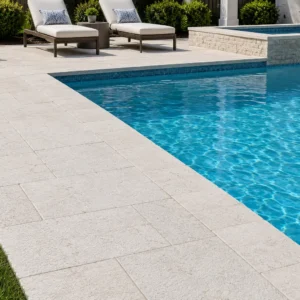
Pool coping sits in a particularly exposed position. It faces the sky at near-horizontal angles for most of the day, receives reflected UV from pool water surfaces below, and rarely benefits from the partial shading that surrounding landscape provides to patio or walkway areas. Your coping material needs to perform under compound UV exposure, not just direct solar load.
- Direct solar UV degrades surface sealers approximately 30–40% faster in Arizona than in mid-latitude states at lower elevation
- Iron-bearing minerals in some limestone and travertine varieties produce rust-tone oxidation streaks under sustained UV and moisture cycling
- Light-colored stone reflects UV rather than absorbing it, which extends surface life and reduces sub-surface thermal stress
- Polished finishes on pool coping lose their sheen faster under UV than honed or brushed surfaces, which weather more uniformly
- Crystalline silica in travertine and limestone acts as a natural UV stabilizer at depth, though surface layers still require periodic sealer renewal
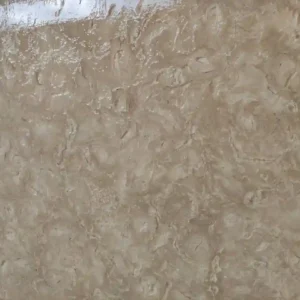
Citadel Stone sources pool coping material from selected quarries with documented consistency in mineral composition, which matters directly for UV performance — stone with uniform density weathers predictably, while material with inconsistent porosity develops patchy oxidation patterns over time. You can request material samples along with specification sheets showing density and absorption rates before committing to a full order.
Selecting the Right Pool Coping Material for Arizona Conditions
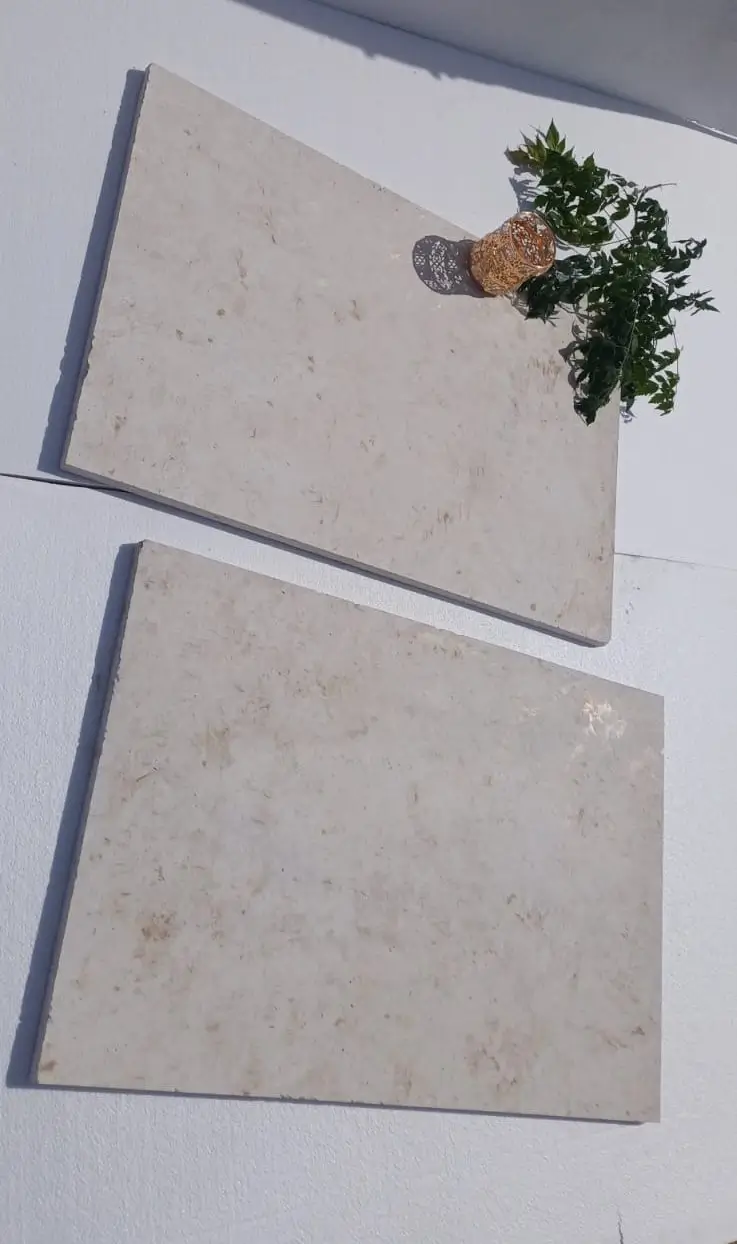
The most proven performers for pool coping pavers in Arizona fall into three natural stone categories: travertine, limestone, and bluestone. Each carries a distinct UV weathering profile, and your choice should reflect both aesthetic goals and maintenance capacity over a 20-year horizon.
Bullnose Travertine Pavers for Arizona Pools
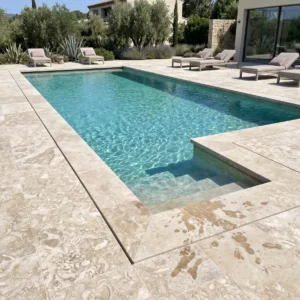
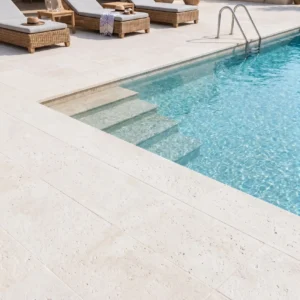
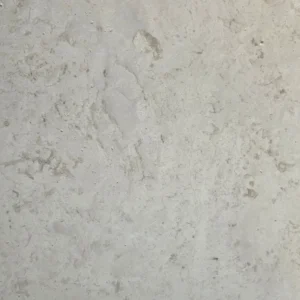
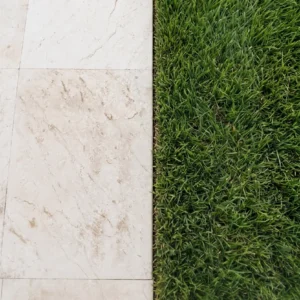
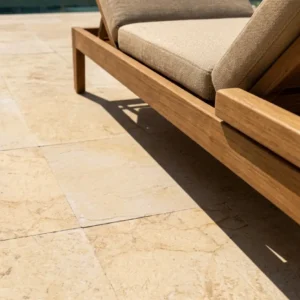
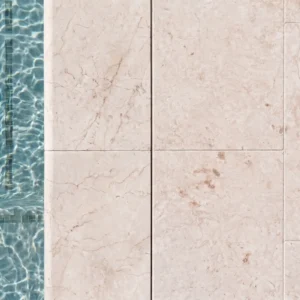
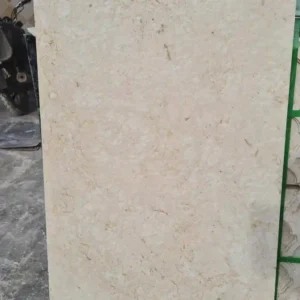
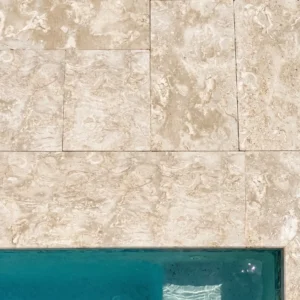
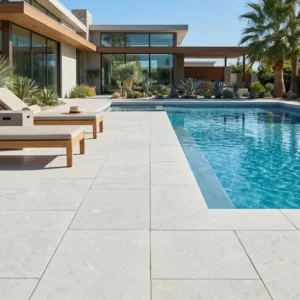
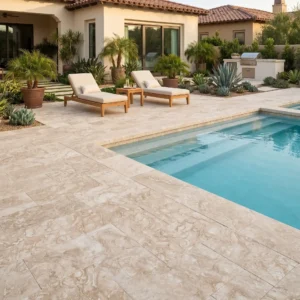
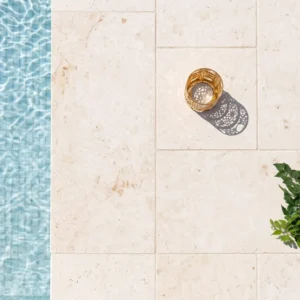
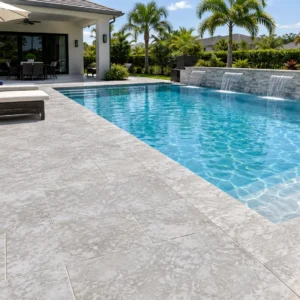
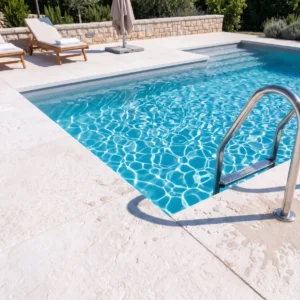
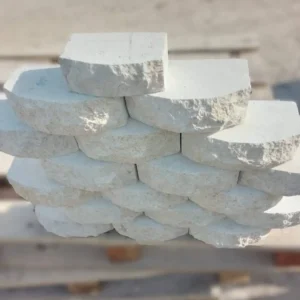
Bullnose travertine pavers in Arizona have earned a strong track record for several interconnected reasons. Travertine’s naturally porous cross-section acts as a thermal buffer — surface temperatures on filled and honed travertine coping run measurably lower than on comparable limestone or concrete, particularly in the 10 a.m. to 3 p.m. UV peak window. The material’s warm ivory and walnut tones also conceal the early stages of UV bleaching better than stark white options, giving you a longer window before a reseal is needed.
Specify filled travertine rather than unfilled for pool coping. Open voids at the coping edge trap water, accelerate freeze-thaw damage in higher-elevation projects, and create maintenance headaches that are entirely avoidable. The bullnose profile on travertine coping adds a rounded safety edge at the pool perimeter — essential for compliance with most Arizona residential pool codes and genuinely appreciated by anyone who’s seen the alternative.
- Specify 2-inch minimum thickness for bullnose travertine coping to maintain structural integrity at the cantilevered pool edge
- Honed finishes perform better than polished under sustained UV — the micro-texture is more UV-stable and maintains slip resistance longer
- Ivory and walnut colorways show the least visual impact from UV bleaching over the first five years
- Filled voids should use a color-matched grout rather than standard gray to maintain aesthetic consistency as UV exposure continues
Pool Coping Limestone in Arizona — What the Spec Sheets Miss
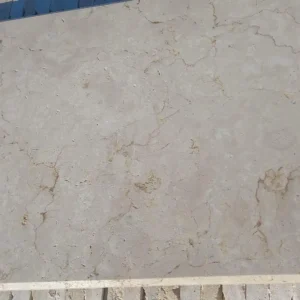
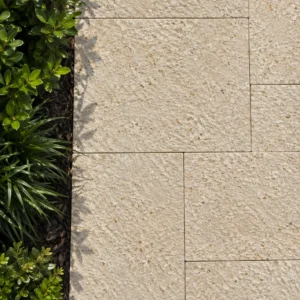
Pool coping limestone in Arizona performs exceptionally well when you select a dense, low-absorption variety. The critical specification is absorption rate: limestone at or below 3% water absorption by weight resists both UV-driven surface scaling and the pool chemical migration that compromises softer stone over time. Limestone in the 3.5–5% absorption range is acceptable for pool decks but should not be used at the coping edge where direct chemical splash and sustained UV combine.
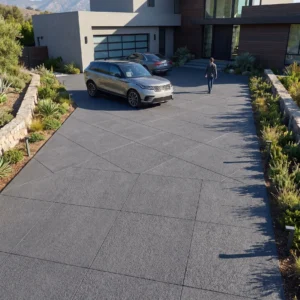
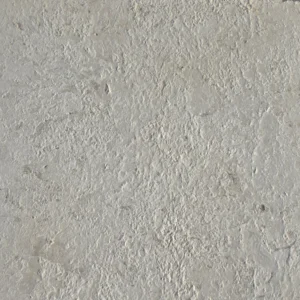
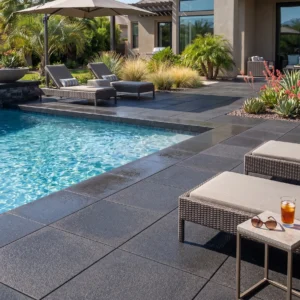
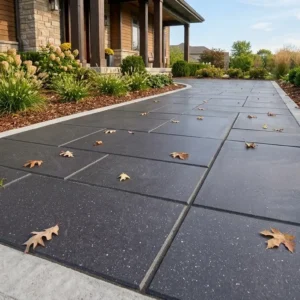
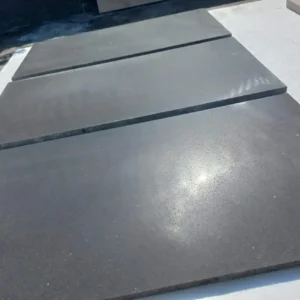
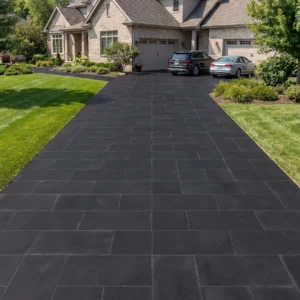
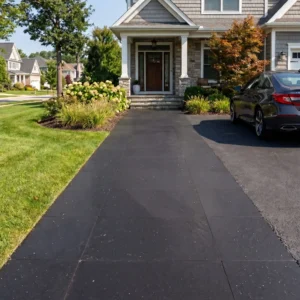
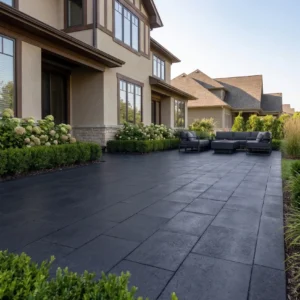
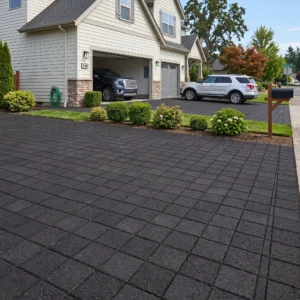
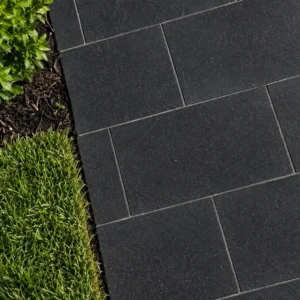
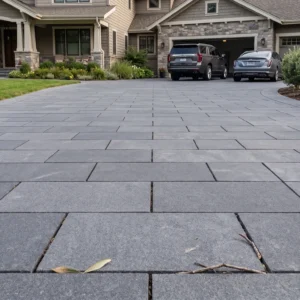
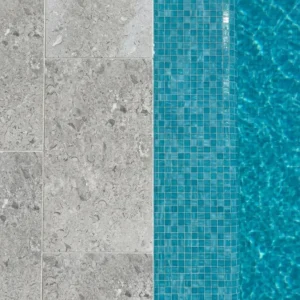
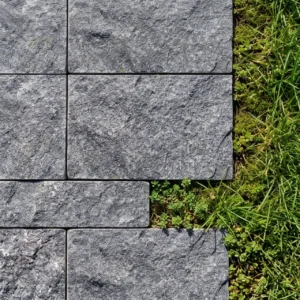
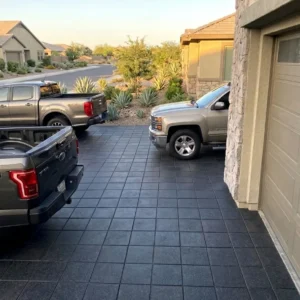
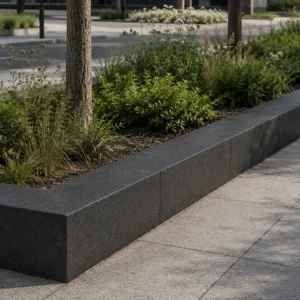
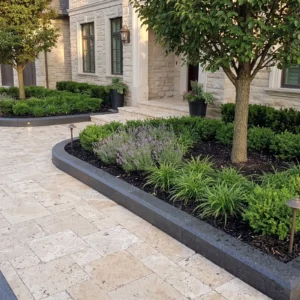
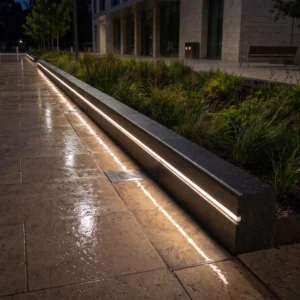
Projects in Scottsdale consistently demonstrate that light gray and silver limestone tones maintain their visual integrity longer than cream-white varieties under Arizona UV. The slight mineral variation in gray limestone diffuses the bleaching effect rather than creating the stark contrast of UV-whitened areas against unaffected material. Dark gray pool coping in Arizona is also gaining traction for contemporary pool designs — it reads as consistently dark even as the surface weathers, and the visual stability reduces maintenance perception even when physical reseal intervals remain identical. Dark grey pool coping in dense stone varieties like hard limestone or bluestone follows the same logic, requiring minimal intervention to look intentional over time.
Pool Coping Bluestone in Arizona — The Less Common Choice Worth Considering
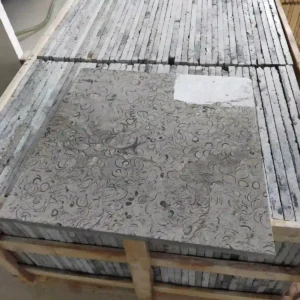
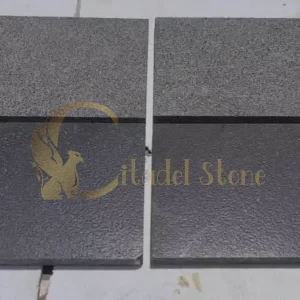
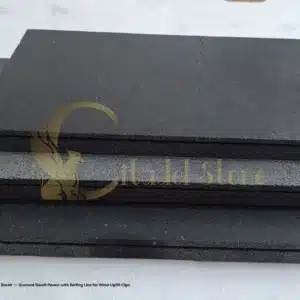
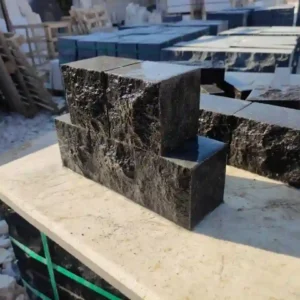
Pool coping bluestone in Arizona occupies a specialist position — it’s harder than travertine, denser than most limestone, and carries a blue-gray tone that performs exceptionally well under UV because the mineral composition doesn’t contain the iron-rich inclusions that drive rust streaking. Thermal expansion rates for bluestone run approximately 4.8 × 10⁻⁶ per °F, which is lower than travertine and limestone, meaning joint spacing can be slightly more conservative and still accommodate Arizona’s temperature swing.
The practical trade-off with bluestone is cost. You’re paying for density and hardness that exceed what most residential pools genuinely need, and the material’s availability varies more than limestone or travertine — warehouse stock levels fluctuate, so verify availability with Citadel Stone before finalizing a bluestone specification for your project timeline. Bullnose limestone coping in Arizona remains the more accessible alternative for projects where bluestone’s density isn’t a hard requirement.
Bullnose Pool Coping in Arizona — Profile Options and Performance Trade-Offs
The bullnose profile is the standard for pool coping in Arizona for good functional reasons, not just aesthetics. A properly formed bullnose edge directs water drip away from the pool bond beam, reduces edge chipping exposure, and eliminates the sharp 90-degree corner that creates both safety hazards and stress concentration points under thermal cycling.
You’ll encounter two primary bullnose configurations: single bullnose and double bullnose. Single bullnose finishes one long edge — the pool-facing side — and is the correct specification for coping that sits flush against a raised bond beam or tile band. Double bullnose finishes both long edges and is appropriate where the coping piece is visible from both sides, such as a freestanding spa wall or raised planter edge adjacent to the pool. Using double bullnose at a standard bond beam wastes material cost and doesn’t improve performance.
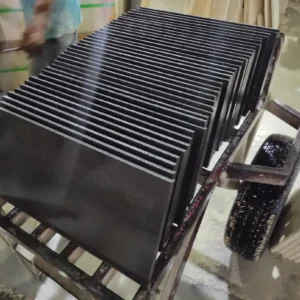
- Standard bullnose coping pavers run 12 inches by 24 inches in the most common format — this proportion handles most pool radius curves without excessive cutting
- For pools with tight curves under a 10-foot radius, specify 12-by-12 bullnose units to minimize joint stepping at the arc
- Bullnose brick pavers in Arizona provide a more affordable coping option for straight-sided contemporary pools where the smaller module suits the design language
- Nominal 1.25-inch bullnose coping is adequate for most residential applications; 2-inch is required at any overhang exceeding 1.5 inches beyond the bond beam
Coping pavers for pools in Arizona perform best when the bullnose profile is specified consistently across all pool-perimeter elements rather than mixed with square-edge alternatives that compromise both drainage detail and visual coherence. For detailed maintenance protocols that extend the performance life of your installation, bullnose pool coping pavers Arizona provides specific guidance on sealer types, application intervals, and cleaning procedures calibrated to Arizona’s UV and chemical environment.
Color Fading, Surface Oxidation, and Sealer Strategy in Arizona
Here’s what most pool coping specifications get wrong in Arizona: they treat sealing as a post-installation task rather than a UV management strategy. In practice, the first sealer application within 30 days of installation sets the baseline for how the stone weathers over the next two decades. Pores that are properly closed at installation don’t provide pathways for UV-accelerated iron migration or pool chemical absorption — both of which are primary drivers of the color shift and oxidation patterns you see on neglected coping.
The sealer type matters as much as the timing. Penetrating silane-siloxane sealers outperform surface-coating acrylics for pool coping in Arizona because they don’t create a film that UV and pool chlorine can delaminate. Surface coatings look better immediately after application but typically fail within 18–24 months in Arizona’s UV environment, leaving you with a peeling surface that looks worse than unsealed stone. Penetrating sealers require reapplication every 3–4 years depending on exposure, and you’ll know it’s time when water stops beading on the surface.
- Apply penetrating sealer when stone surface temperature is between 50°F and 80°F — early morning in summer or midday in winter
- Two thin coats outperform one heavy coat — excess sealer pooling on low-porosity stone creates a surface hazard at the pool edge
- Dark gray pool coping and dark grey pool coping varieties in dense stone like bluestone or hard limestone may require only one coat given their inherently low absorption rate
- UV-stable sealers with HALS (hindered amine light stabilizer) additives are the professional specification for Arizona pool coping — not all penetrating sealers include this chemistry
- Resealing after any chemical shock treatment or acid wash is mandatory — these processes strip sealer chemistry from stone pores
Projects in Tempe and other urban heat island areas experience compounded UV and reflective heat load from surrounding hardscape, which can accelerate sealer degradation by 20–25% compared to lower-density suburban installations. Factor this into your maintenance schedule if your pool is surrounded by extensive concrete or masonry paving.
Base Preparation and Installation Details for Pool Coping Pavers in Arizona
Correct base preparation for pool coping pavers differs from standard paving installation in one critical way: the bond beam is your structural substrate, not a prepared aggregate base. Your coping pieces are set in mortar over the bond beam, and the mortar bed thickness, consistency, and cure time determine whether the installation remains level after Arizona’s thermal cycling drives dimensional changes through the pool shell over time.
Mortar bed thickness for pool coping should run between 3/4 inch and 1 inch — thicker beds introduce too much flex, thinner beds don’t provide enough leveling tolerance for minor bond beam irregularities. Use a Type S mortar mix for Arizona pool coping, not Type N. Type S provides 1,800 PSI minimum compressive strength after cure and better adhesion to the variety of bond beam surfaces you’ll encounter in the field.
- Wet the bond beam surface before setting mortar — Arizona’s low humidity will pull moisture from fresh mortar faster than mix design intends, reducing final strength
- Set expansion joints every 8–10 linear feet, not the 12–15 feet that works in cooler climates — Arizona’s temperature swing demands tighter joint spacing at the pool perimeter
- Use a non-sag polyurethane sealant in expansion joints rather than grout — grout cracks under thermal movement, sealant accommodates it
- Slope coping pieces away from the pool at 1/8 inch per foot minimum to direct splash water away from the bond beam
- Allow 48-hour minimum cure before allowing foot traffic on coping, 72 hours in summer when ambient temperatures exceed 100°F during the cure window
In Phoenix, caliche sub-layers beneath pool decks can create differential settlement that stresses the bond between coping and bond beam over time — if your pool deck is showing signs of movement, investigate the sub-base before attributing joint cracking to thermal expansion alone.
Coping Pavers for Pools, Steps, and Transition Areas in Arizona
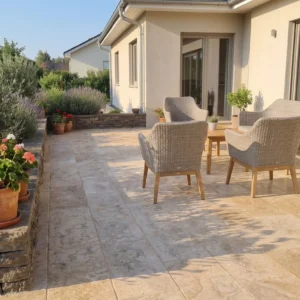
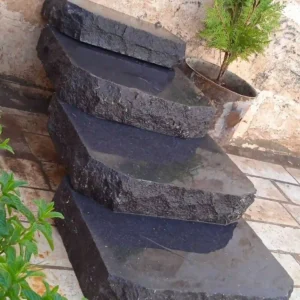
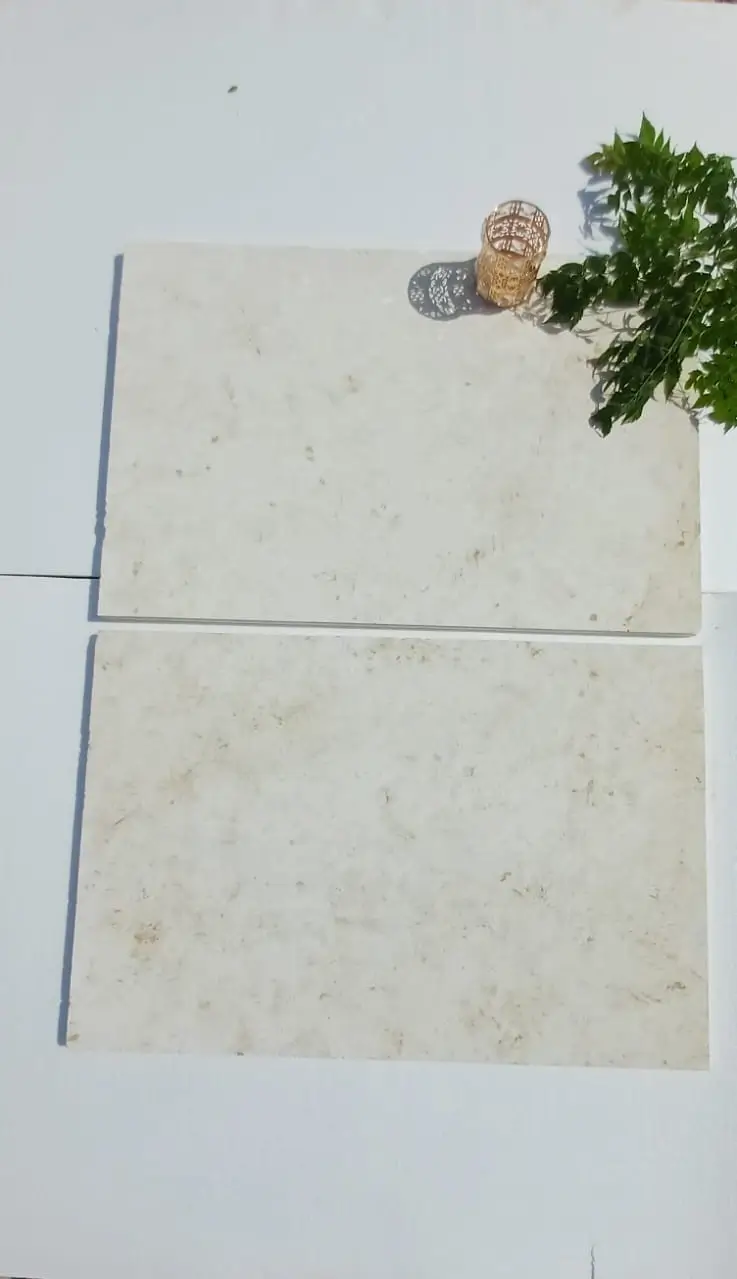
Pool coping doesn’t function in isolation on most Arizona projects — it connects to pool entry steps, sun shelves, raised spa walls, and adjacent deck surfaces. Consistency in material selection across all these elements matters both aesthetically and technically. Using bullnose paving slabs for steps in Arizona as a natural extension of your pool coping material creates visual continuity and ensures the same sealer system applies uniformly across all pool-adjacent surfaces.
Step nosing specifications follow similar logic to pool coping: the bullnose profile on the leading edge of each step tread directs water forward and away from the riser face, which reduces the staining and moisture penetration that creates the dark waterline marks you see on improperly detailed pool steps. For step treads in Arizona, specify a minimum 1.5-inch thickness — steps take direct foot impact loading that pool coping typically doesn’t, and thinner material chips at the bullnose edge under repeated use.
Pool coping tiles in Arizona are a distinct product category from full coping pavers — they’re thinner (typically 3/8 to 1/2 inch) and designed for application over existing bond beam coping as a refresh treatment rather than a primary installation. Pool coping tiles for projects requiring material updates over structurally sound existing coping offer a cost-effective path that avoids bond beam demolition. The limitation is edge profile — pool coping tiles can’t replicate a true bullnose formation without a separately profiled edge piece, so review the aesthetic result with samples before committing. Bullnose pavers for pools in Arizona serve as the more structurally capable alternative wherever a full installation is feasible.
- Coping pavers for pools in Arizona should coordinate in thickness with adjacent deck pavers to avoid trip hazards at the transition — typical tolerance is plus or minus 1/8 inch
- Bullnose paving slabs used at step transitions benefit from a slip-resistant brushed finish on the tread surface, even if the pool coping uses a honed finish
- Pool coping tiles in Arizona work best on straight pool edges — curved sections require precise factory cuts that add lead time and cost to the tile approach
- Matching step material to pool coping isn’t just visual — it simplifies the sealer specification since you’re treating one material type across all surfaces
Understanding Pool Coping Costs, Wholesale Options, and Value in Arizona
Wholesale pool coping in Arizona is accessible through Citadel Stone for trade buyers — contractors, pool builders, and landscape architects working on multiple projects benefit from volume pricing structures that aren’t available through retail tile and stone suppliers. The pricing difference between retail and wholesale pool coping can represent 20–35% on material cost alone for a standard residential pool perimeter, which is significant enough to affect project competitiveness.
The search for cheap pool coping in Arizona often leads buyers toward thinner imported stone tiles that compromise on the dimensional stability and absorption ratings that UV performance demands. There’s a legitimate value tier in the market — affordable bullnose pool coping in Arizona exists without dropping to specification-deficient material — but it requires knowing what performance floor you cannot go below. Absorption rate above 6%, thickness below 1.25 inches, and density below 145 lbs/cubic foot are the three thresholds where cost savings start creating performance liability in Arizona’s UV environment. Bullnose pavers for sale in Arizona at competitive price points are available through wholesale channels, provided you verify specification data rather than purchasing on visual grade alone.
- Best pool coping tiles in Arizona balance absorption rate, density, and UV-stable mineral composition — not simply the highest price point
- Request actual absorption and density test data from suppliers before purchase, not just visual grade classification
- Pool coping for sale through wholesale channels typically ships on pallets with protective corner guards — verify truck access at your delivery site before scheduling, particularly for residential projects with narrow site access
- Lead times from Citadel Stone’s warehouse for standard bullnose limestone and travertine coping profiles typically run 5–10 business days for Arizona deliveries — custom profiles or non-standard dimensions require 3–4 additional weeks
- Sample requests for pool coping tiles are available through Citadel Stone before ordering — reviewing physical samples under Arizona sunlight before committing is the professional approach
Order Pool Coping Pavers in Arizona — Schedule a Consultation with Citadel Stone
Citadel Stone stocks bullnose pool coping in travertine, limestone, and bluestone in standard 12-by-24 and 12-by-12 formats, with single and double bullnose profiles available in nominal 1.25-inch and 2-inch thicknesses. Honed, brushed, and tumbled finish options cover the full range of contemporary and traditional Arizona pool design aesthetics. You can request samples and full technical specification sheets — including absorption rates, density, and freeze-thaw test results — directly through the Citadel Stone team before placing any order.
Trade and wholesale enquiries for pool builders, landscape contractors, and architecture firms receive dedicated account support with volume pricing, project scheduling coordination, and material consistency guarantees across multiple deliveries. Truck delivery covers the full Arizona market including metro Phoenix, Tucson, Scottsdale, Mesa, Chandler, Gilbert, and surrounding areas. For projects with specific lead time constraints, Citadel Stone’s warehouse team can confirm available inventory and schedule delivery windows that align with your installation milestones — contact the team directly for current stock levels and project consultation. Beyond your pool coping selection, your Arizona hardscape project may also benefit from exploring related paving applications — Herringbone Pavers in Arizona covers another dimension of natural stone specification worth reviewing as you plan connecting deck and walkway surfaces. For Arizona properties requiring reliable bullnose pool coping, Citadel Stone provides material guidance and product options built to perform under intense desert conditions.