
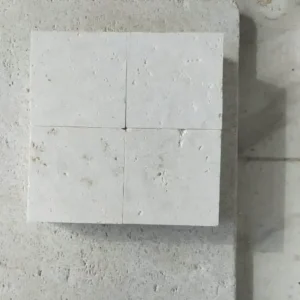
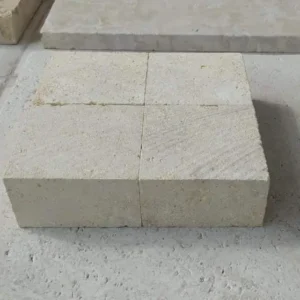
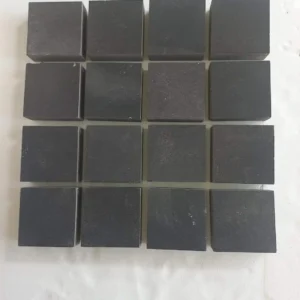
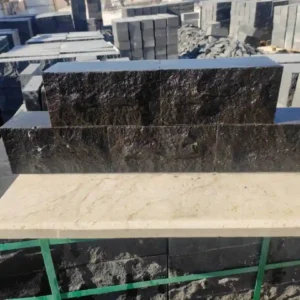





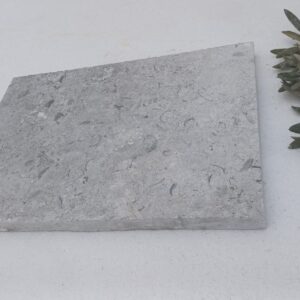
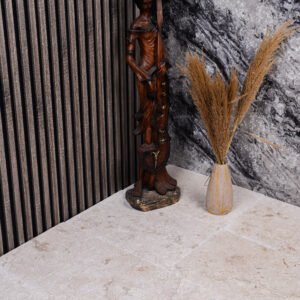
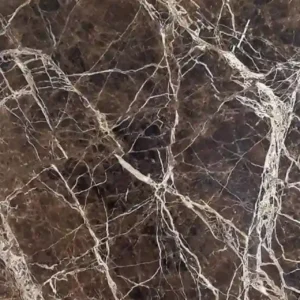
Specification failures on natural stone pavers in Arizona almost always trace back to the same overlooked variable — mechanical stress from wind-driven debris and storm events, not heat. You can over-engineer a base for thermal performance and still watch a patio installation fail in three seasons because the bedding layer wasn’t designed to handle the cyclical shear forces that haboob conditions generate. Natural stone pavers in Arizona need to be selected and installed with storm durability as the primary engineering constraint, and that changes the conversation around material density, edge geometry, and joint stabilization in ways that most generic specification guides completely miss.
How Storm Mechanical Stress Defines Material Selection
Arizona’s severe weather profile is more complex than most outsiders assume. The Sonoran Desert monsoon season — typically July through September — delivers gust fronts with recorded wind speeds exceeding 60 mph in Phoenix and the surrounding Valley. These aren’t gradual wind events. The pressure differential at the leading edge of a haboob wall can generate horizontal shear forces across exposed paver surfaces that dislodge improperly set units within minutes. Your material selection needs to account for this before you get to color, texture, or price.
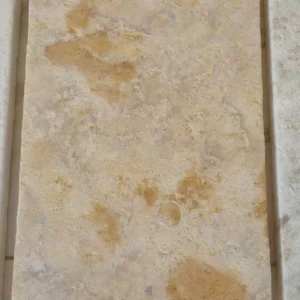
Dense natural stones — basalt, granite, and thick-format travertine — absorb and distribute these shear forces more effectively than softer sedimentary options. Compressive strength above 9,000 PSI is the working threshold for outdoor natural stone pavers in Arizona when storm exposure is factored in. Anything below that range, particularly in thinner profiles, risks fracture along the leading edge when wind-driven gravel or debris impacts at oblique angles during high-intensity storms.
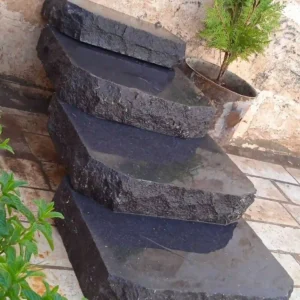
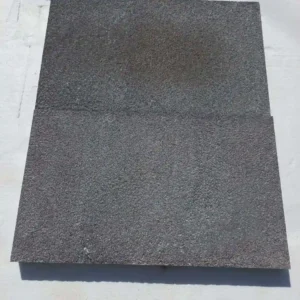
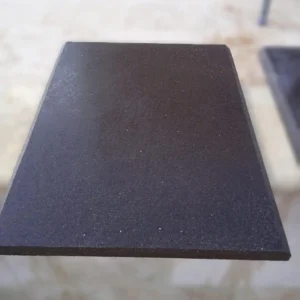
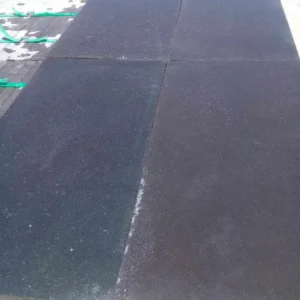
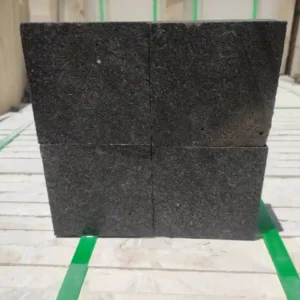
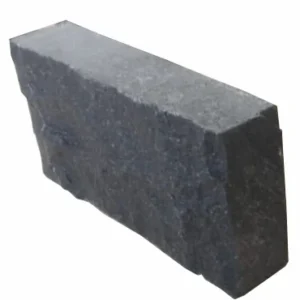
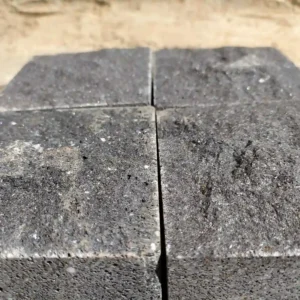
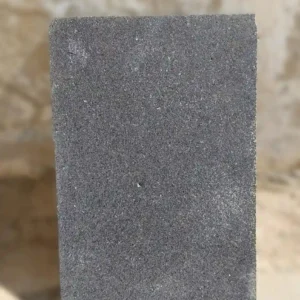
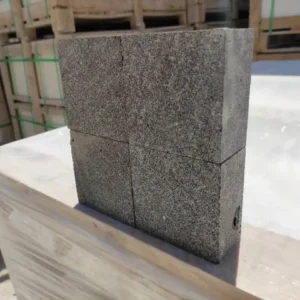
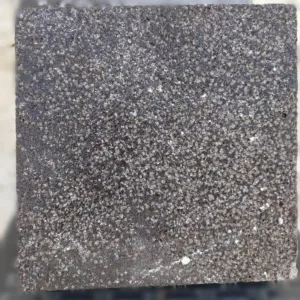
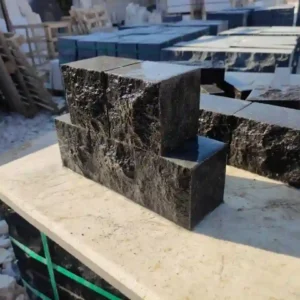
- Basalt delivers compressive strength in the 15,000–25,000 PSI range, making it one of the most impact-resistant options for exposed patio applications
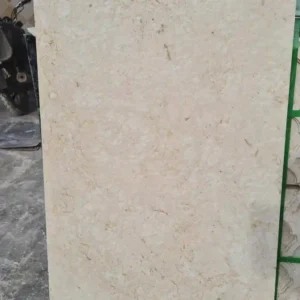
- Honed travertine at 2-inch nominal thickness maintains structural integrity under debris impact far better than 1.25-inch profiles from the same quarry
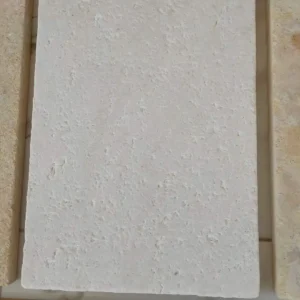
- Limestone density varies significantly by formation — specify a minimum absorption rate below 3% for outdoor use in storm-exposed zones
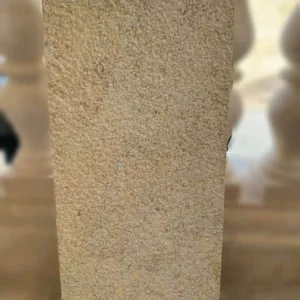
- Sandstone, while visually appealing, rarely achieves the edge hardness needed to resist chipping from wind-driven aggregate during haboob events
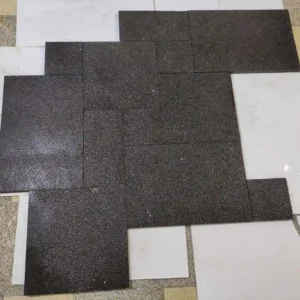
- Granite’s interlocking crystal structure resists surface spalling even when impacted repeatedly by small hail — a genuine advantage over most alternatives
Citadel Stone sources its outdoor natural stone pavers in Arizona from established quarry partners where each batch undergoes density and absorption testing before warehouse acceptance. That quality-gate matters because density specifications on quarried stone can drift between production runs from the same source, and a 10% variation in absorption rate changes the material’s storm performance in ways that show up three years after installation.
Wind Load Engineering and Joint Stabilization
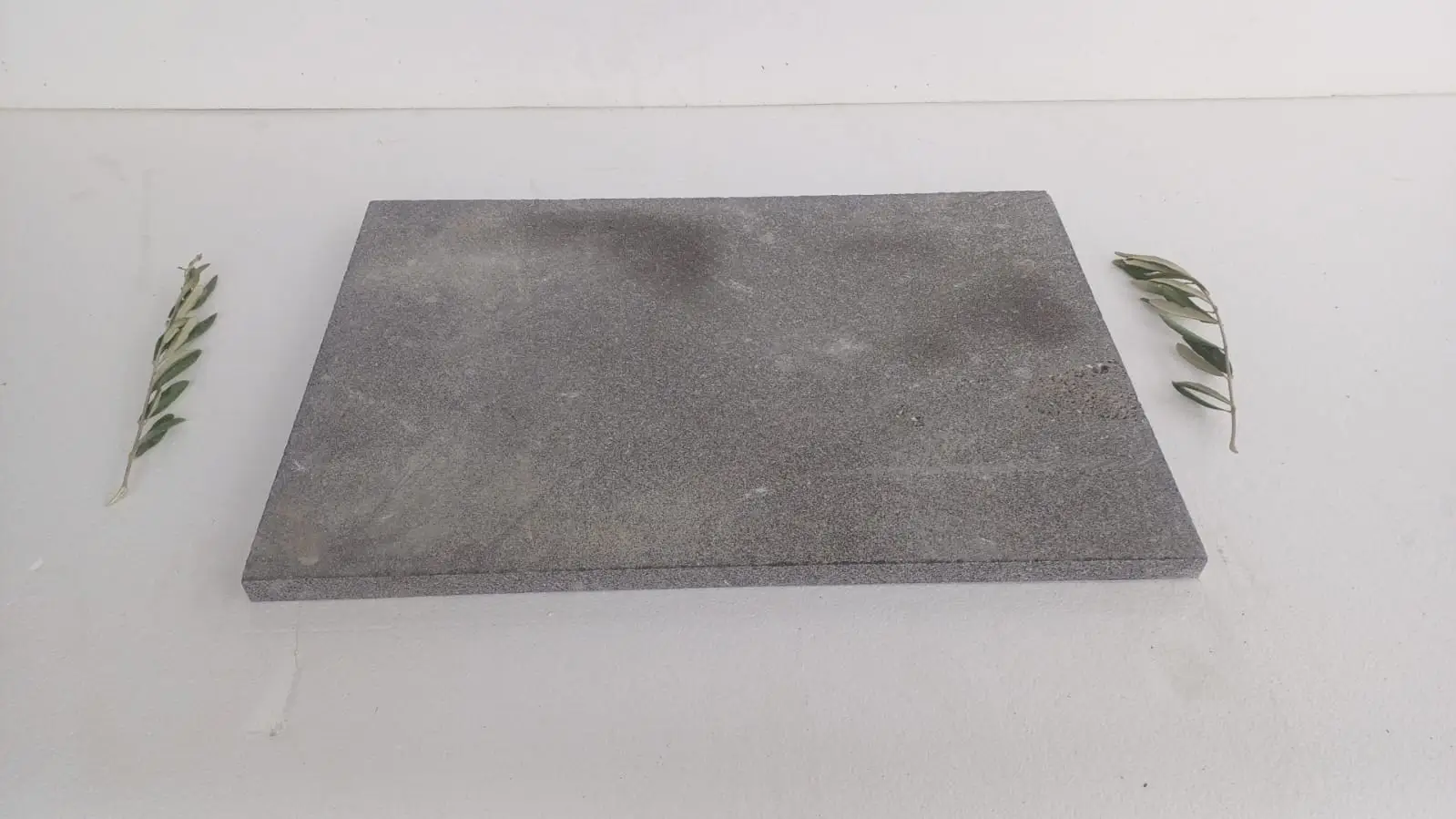
The joint system is where most storm-related installation failures originate. Standard polymeric sand performs adequately under normal use, but the wind vacuum created at the trailing edge of a haboob front can extract joint sand from exposed patio surfaces in a single storm event if installation depth and compaction weren’t correct. Treating joint stabilization as a structural specification — not a finishing step — is essential for any natural paver patio in Arizona.
Polymer-modified joint compounds with a minimum flexural strength rating should be used for any natural paver patio in Arizona that’s exposed to open desert wind corridors. Projects in Scottsdale — particularly in hillside communities with westward exposure — face the most aggressive wind loading conditions in the metro area. The wind acceleration effect through canyon terrain in North Scottsdale regularly amplifies storm gusts by 15–25% above ambient speeds, and that changes how aggressively you need to compact and seal joint material.
- Fill joints to 92–95% of depth after initial compaction — under-filled joints lose sand rapidly in the first high-wind event
- Compact joint material in two passes, not one — single-pass compaction leaves micro-voids that wind turbulence exploits
- Specify epoxy-modified joint compounds for patio areas within 40 feet of open lot lines or low perimeter walls
- Allow 72-hour cure time before foot traffic — rushing this step in hot, dry conditions results in surface-hardened but interior-soft joints that fail under lateral loading
- Recheck joint depth annually after each monsoon season — this is not optional maintenance in Arizona’s storm environment
Natural stone landscape pavers in Arizona also need edge restraint systems rated for the lateral forces that wind pressure generates. A standard aluminum edge restraint with 12-inch spikes at 24-inch spacing is the absolute minimum — in exposed locations, reduce spike spacing to 16 inches and consider stainless steel hardware to avoid corrosion from monsoon moisture cycling.
Flat Profile Selection and Storm Performance
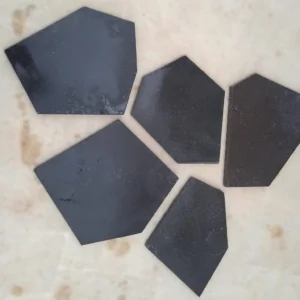
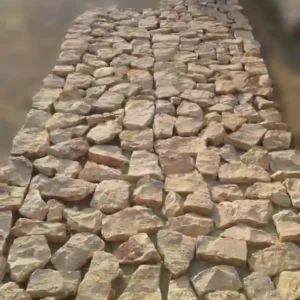
Flat natural stone pavers in Arizona offer a genuine engineering advantage in storm conditions that’s rarely discussed in specification documents. A consistent, low-profile surface reduces the wind pressure coefficient across the paved area — essentially, there’s less geometry for wind to grab. Irregular flagstone with pronounced height variations between units creates micro-turbulence zones at step edges that accelerate joint sand erosion and, in severe haboob conditions, can generate enough uplift force to shift individual units.
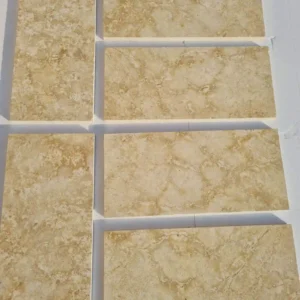
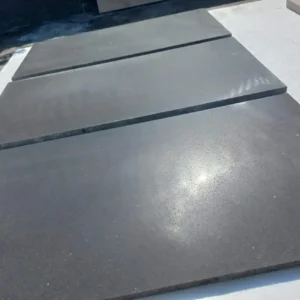
Calibrated flat stone in the 3/4-inch to 1.5-inch range, set with tight joints, consistently outperforms irregular flagging in wind events. The trade-off is that calibrated material requires a more precise screed bed — typically a 1-inch sand layer over compacted aggregate base rather than the 2-inch tolerance bed that accommodates dimensional variation in hand-split flagstone. You’re accepting tighter installation tolerances in exchange for meaningfully better storm resistance.
For natural stone walkway pavers in Arizona, the flat-profile advantage is compounded by the linear geometry of the installation. Walkways act as wind channels in open landscapes, and the joint continuity of a straight walkway run means any joint failure propagates rapidly. Specifying calibrated, flat-format stone with a maximum 1/4-inch tolerance in thickness eliminates the height variation that initiates joint stress under directional wind loading. Natural stone walkway pavers in Arizona benefit most from this approach when runs exceed 20 linear feet in open, unshaded corridors.
Hail Impact Resistance Across Stone Types
Arizona’s monsoon storms deliver hail more frequently than the state’s reputation suggests — particularly in Tucson and the higher-elevation communities of the Mogollon Rim corridor. Hail impact testing isn’t a standard specification parameter for most paving projects, but understanding relative impact resistance across stone types prevents costly surface damage that looks like installation error but is actually a material specification gap.
In Tucson, where late-season monsoon cells frequently produce marble-sized hail, surface finish selection becomes a storm-resistance decision as much as an aesthetic one. Honed and natural cleft finishes maintain their visual integrity after hail impact far better than polished surfaces, which show impact marks as permanent clouding. For natural stone pavers for patio use in Arizona at elevations above 2,500 feet, avoid polished finishes entirely on horizontal surfaces — the storm exposure data simply doesn’t support that surface specification.
- Granite resists hail impact at the surface level better than any other commonly specified paving stone — its interlocked crystal matrix absorbs energy without cracking
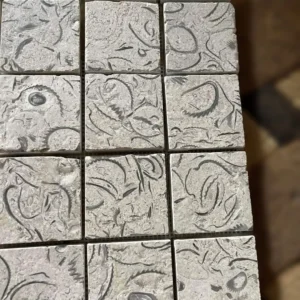
- Dense limestone with low porosity performs well under hail impact, but surface spalling can occur in stones with visible fossil inclusions or bedding planes
- Travertine’s characteristic voids create stress concentration points under hail impact — filled travertine performs significantly better than unfilled in hail-prone areas
- Quartzite delivers excellent impact resistance and handles hail exposure well, though it requires diamond tooling for any field cutting
- Bluestone’s consistent bedding structure makes it predictably resistant to hail, though it’s more commonly specified in the mid-Atlantic region and may carry longer lead times in Arizona
You can request impact resistance data and stone density specifications from Citadel Stone before committing to a material selection — this is exactly the kind of pre-specification support that prevents field problems when the first August storm arrives.
Base Preparation and Storm Drainage Integration
Base preparation for natural stone pavers in Arizona has to reconcile two competing demands simultaneously — structural stability under storm wind loading and rapid drainage capacity for monsoon rainfall intensity. Arizona monsoon events regularly deliver 0.5 to 1.5 inches of rainfall in under 30 minutes. If your base specification optimizes for one without considering the other, you’ll either have a structurally sound installation that floods or a well-draining system that shifts under lateral wind loading.
The working standard for natural stone driveway pavers in Arizona is a compacted aggregate base of 6 to 8 inches for residential applications, 10 to 12 inches for driveways, using 3/4-inch crushed stone with angular fracture faces. The angular fracture geometry is critical — rounded aggregate compacts to a lower interlock density and shifts under the dynamic loading that high-wind conditions create. Verify that your base contractor understands the difference between proctor compaction and field compaction — hitting 95% proctor density is the minimum acceptable standard, not a target to negotiate around.
Projects in Phoenix frequently encounter expansive clay subgrades that complicate base performance during monsoon season. When native soil expands with moisture uptake after heavy storms, it generates upward pressure that distorts even well-compacted aggregate bases. In these conditions, a geotextile separation fabric between native subgrade and aggregate base is not optional — it’s the difference between a 5-year installation and a 20-year one. For projects requiring complementary stone elements and additional technical guidance on base specification, natural stone paving materials Arizona covers specification details that apply to similar site conditions across the region.
Pool Patio Applications and Wind-Driven Moisture Management
Natural stone pool pavers in Arizona face a storm loading condition that most pool deck specifications don’t adequately address — wind-driven water at the pool edge. During high-velocity storm events, water surface movement across a pool generates wave action that deposits chlorinated water onto the surrounding deck repeatedly. Over a monsoon season, this creates a cyclical wetting and drying pattern across pool deck pavers that accelerates salt crystallization damage in porous stones.
The salt crystallization mechanism works like this: chlorinated water penetrates into the surface pores of an unsealed or inadequately sealed paver, then evaporates rapidly in Arizona’s post-storm heat surge. Salt crystals form within the pore structure and exert expansion pressure as they grow. Over multiple cycles, this causes surface spalling that begins as fine powder loss and progresses to visible pitting within two to three seasons. Travertine and limestone are most vulnerable; dense basalt and properly sealed granite are least affected.
- Specify a penetrating silane-siloxane sealer for pool deck natural stone — film-forming sealers trap moisture below the surface and accelerate crystallization damage
- Apply sealer to dry stone — never seal within 48 hours of a storm event or pool splash wetting cycle
- Maintain a 1.5% minimum cross-slope on pool deck pavers to direct storm runoff and splash water away from pool equipment and structure
- Natural cleft finishes on pool deck stone provide inherent slip resistance that matters most during storm events when wet surface conditions coincide with gusty winds
- Reapplication of penetrating sealer every 18–24 months is realistic for Arizona pool environments — annual in the first two years while the stone equilibrates
Natural stone garden paving in Arizona benefits from the same sealer specification logic. Garden installations often receive less maintenance attention than pool decks, but the storm exposure profile is similar — high-velocity wind events deposit fine particulates into joint material and surface pores, and post-storm moisture cycling accelerates deterioration in unsealed stone. Natural stone garden paving in Arizona should also factor in proximity to irrigated planting beds, where repeated moisture cycling compounds the crystallization risk.
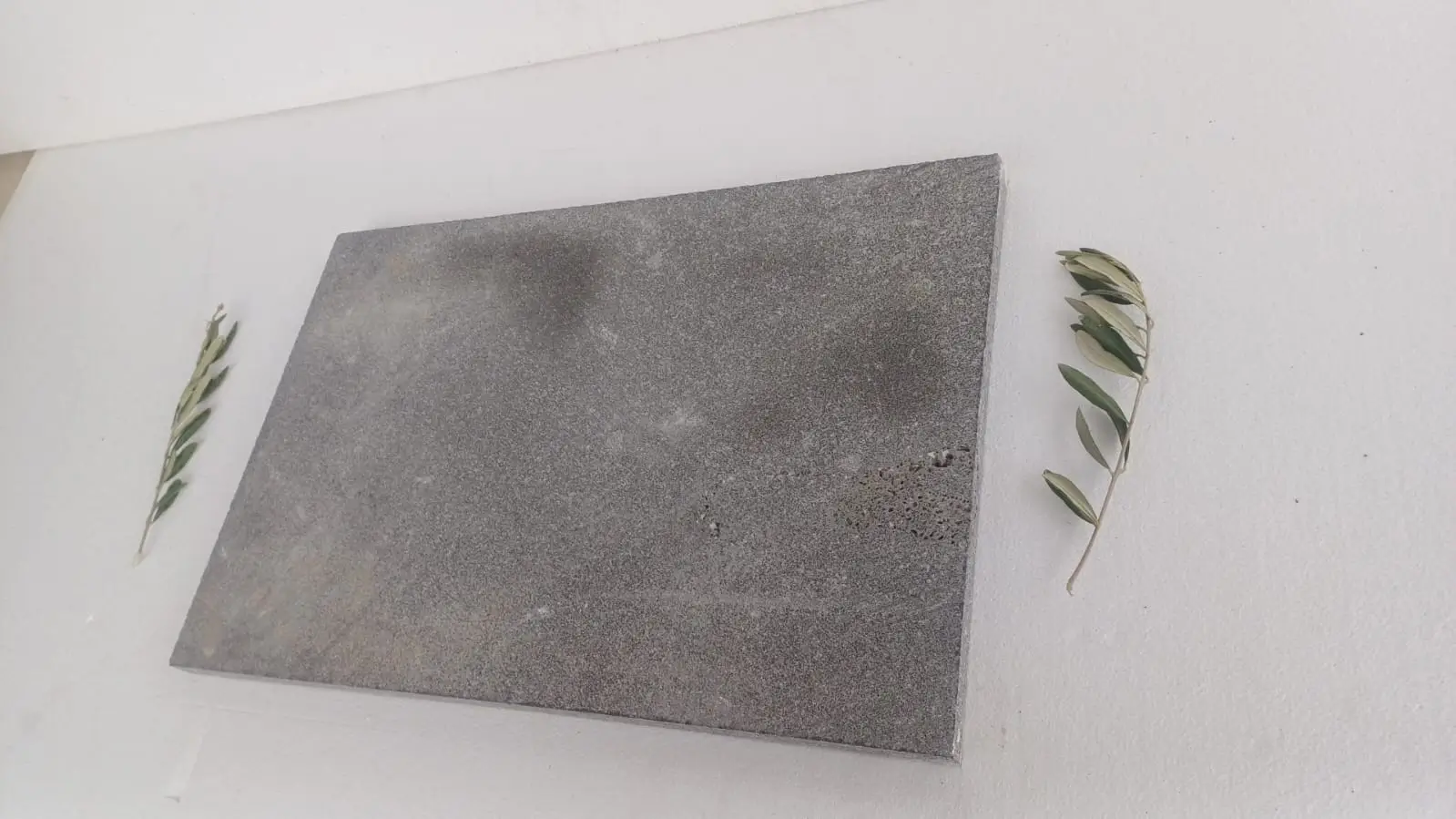
Natural Stone and Paving Format Decisions for Arizona Weather
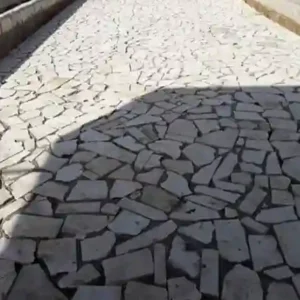
Format decisions for natural stone and paving in Arizona directly influence how an installation responds to storm conditions. Random flagstone formats create more joint linear footage per square foot than modular formats, and more joint footage means more exposure points for wind-driven sand infiltration and moisture ingress. That’s not an argument against flagstone — it’s an argument for understanding the maintenance implications before you specify it.
Modular formats — square and rectangular units in standard sizes like 12×12, 16×16, 18×18, and 24×24 — allow for more controlled joint compaction and create fewer stress concentration points under wind-driven shear loading. For commercial applications in Arizona, modular formats consistently outperform random patterns in post-storm inspection assessments because the geometric regularity distributes lateral loads more predictably across the installation field. Natural stone and paving in Arizona specified in modular format also supports faster remediation after a severe haboob event, since uniform unit sizes simplify replacement logistics.
- Square-format units in 24×24 or larger create the most stable configuration under wind shear — fewer joints mean fewer potential failure points
- Running bond patterns distribute point loading better than stacked joint patterns, which can create lines of weakness parallel to prevailing wind direction
- Herringbone patterns, typically used for natural stone driveway pavers in Arizona, provide excellent interlock resistance against both vertical and lateral loading from vehicle and storm forces
- Thickness matters more than format for storm resistance — 2-inch minimum for patio applications, 2.5-inch for driveways, in any format
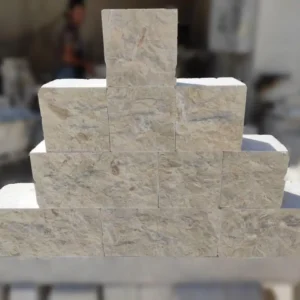
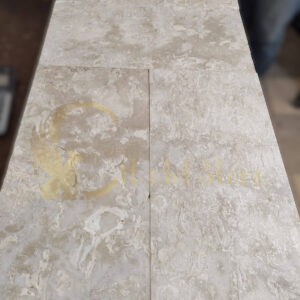
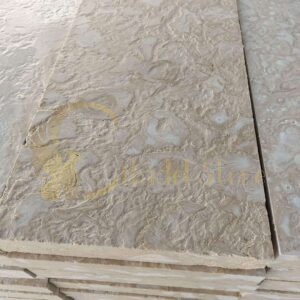
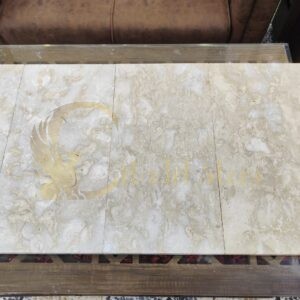
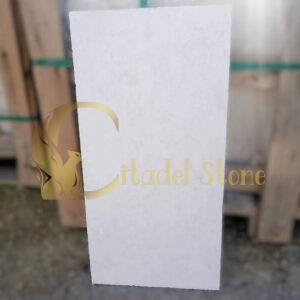
- Citadel Stone stocks natural stone pavers in Arizona in standard modular formats from 12×12 through 24×24, with thickness options starting at 1.25 inches for path applications and 2 inches for primary patio and driveway use
Natural stone and paving in Arizona also demands attention to surface texture selection relative to storm exposure. Tumbled finishes on modular units create a slightly irregular surface that provides excellent grip during wet storm conditions but also traps fine particulates from haboob events more readily than honed surfaces. Factor post-storm cleaning access into your surface finish decision — a beautiful tumbled travertine installation against a wall with no hose access becomes a maintenance problem after every dust storm.
Source Natural Stone Pavers in Arizona — Wholesale Supply for Arizona Projects
Citadel Stone maintains warehouse inventory of natural stone pavers across Arizona, which keeps typical lead times in the 1–2 week range for standard formats — a meaningful advantage compared to the 6–8 week import cycle that affects projects relying on single-origin overseas supply. For trade accounts and wholesale enquiries, the process starts with a material specification request that includes your project dimensions, intended application, and preferred stone type. Samples and full thickness specifications are available before you commit to a project order, which matters most when you’re specifying for a first-time application or a material type you haven’t used in Arizona’s specific climate conditions.
Available formats include modular square and rectangular units in limestone, travertine, basalt, and granite, with thickness options suited to patio, walkway, pool deck, and driveway applications. Delivery coverage extends across Arizona, and truck scheduling for large orders can be coordinated with your installation timeline to minimize on-site staging requirements. For projects requiring custom cuts or non-standard formats, lead times extend to 3–4 weeks depending on fabrication complexity — plan this into your project schedule early rather than treating it as a contingency. As you evaluate natural stone pavers in Arizona for your project, related hardscape elements can also inform the overall specification — Marbella Shellstone Pavers in Arizona covers a complementary Arizona stone option worth reviewing alongside your primary selection. For natural patio pavers in Arizona, Citadel Stone offers knowledgeable guidance and quality materials that align with local building standards and long-term performance expectations.