
Why Drainage Drives Everything in Arizona Patio Design
Choosing natural patio pavers in Arizona demands a fundamentally different starting point than most buyers expect — and that starting point is water, not heat. Arizona’s monsoon season delivers between 2.5 and 5 inches of rain in concentrated bursts between July and September, hitting ground that’s been baked to near-zero absorption capacity for months. What that means practically is that your paver system isn’t just a surface material — it’s a water management assembly from the base aggregate up to the joint filler.
The thermal performance of limestone or travertine matters, but a patio that handles 120°F surface temperatures perfectly will still fail in three years if the base saturates and shifts during monsoon events. Your material selection, your base depth, your joint spacing, and your surface slope all interact to determine whether water moves away from your structure or migrates beneath it. Getting that sequencing right is the real buyer’s decision in this state.
Understanding Arizona’s Precipitation Patterns Before You Specify
Most buyers focus on summer heat when researching natural patio pavers in Arizona, which is understandable — but the precipitation cycle is the more destructive force on paver systems over time. Arizona operates on a dual precipitation pattern: the North American Monsoon runs July through mid-September, and a secondary winter storm season brings moisture from the Pacific between December and March. Neither season delivers consistent, gentle rain. Both deliver intense, short-duration events that overwhelm poorly designed drainage.
The monsoon is the bigger concern for patio drainage engineering. Chandler and the surrounding East Valley can receive 1.5 inches of rain in under 45 minutes during peak monsoon events — that’s a hydraulic load your base system wasn’t designed for if you used standard residential base specifications from a cooler, more evenly distributed climate. The critical number you need is surface runoff coefficient: for a dense natural stone patio, you’re looking at a runoff coefficient of 0.85 to 0.95, meaning nearly all precipitation becomes immediate surface flow.
- Design your patio surface with a minimum 1.5% slope away from the structure — 2% is more reliable for monsoon conditions
- Account for roof runoff channeling onto patio areas from adjacent overhangs and gutterless fascia
- Identify the natural drainage path before setting any base material — fighting gravity with paver geometry is a losing approach
- Verify that adjacent landscaping drainage won’t reverse-flow onto the patio during saturation events
- Consider permeable joint options where the base system supports them — they reduce peak surface flow velocity significantly
In Peoria, the topography along the New River corridor creates additional complexity — some parcels have very limited natural fall, which means drainage engineering becomes a structural conversation before it becomes a material one. You’ll need to know your finished slab elevation relative to adjacent hardscape before you commit to any paver system thickness.
Best Stone Types for Patio Pavers in Arizona
The best stone types for patio pavers in Arizona share a specific set of physical characteristics — not just aesthetic ones. You’re looking for materials that tolerate repeated wetting and rapid drying without spalling at the surface, maintain structural integrity through the thermal cycling that accompanies monsoon temperature drops, and resist efflorescence when salts are drawn to the surface through repeated moisture movement.
Travertine: Performance Profile for Arizona Conditions
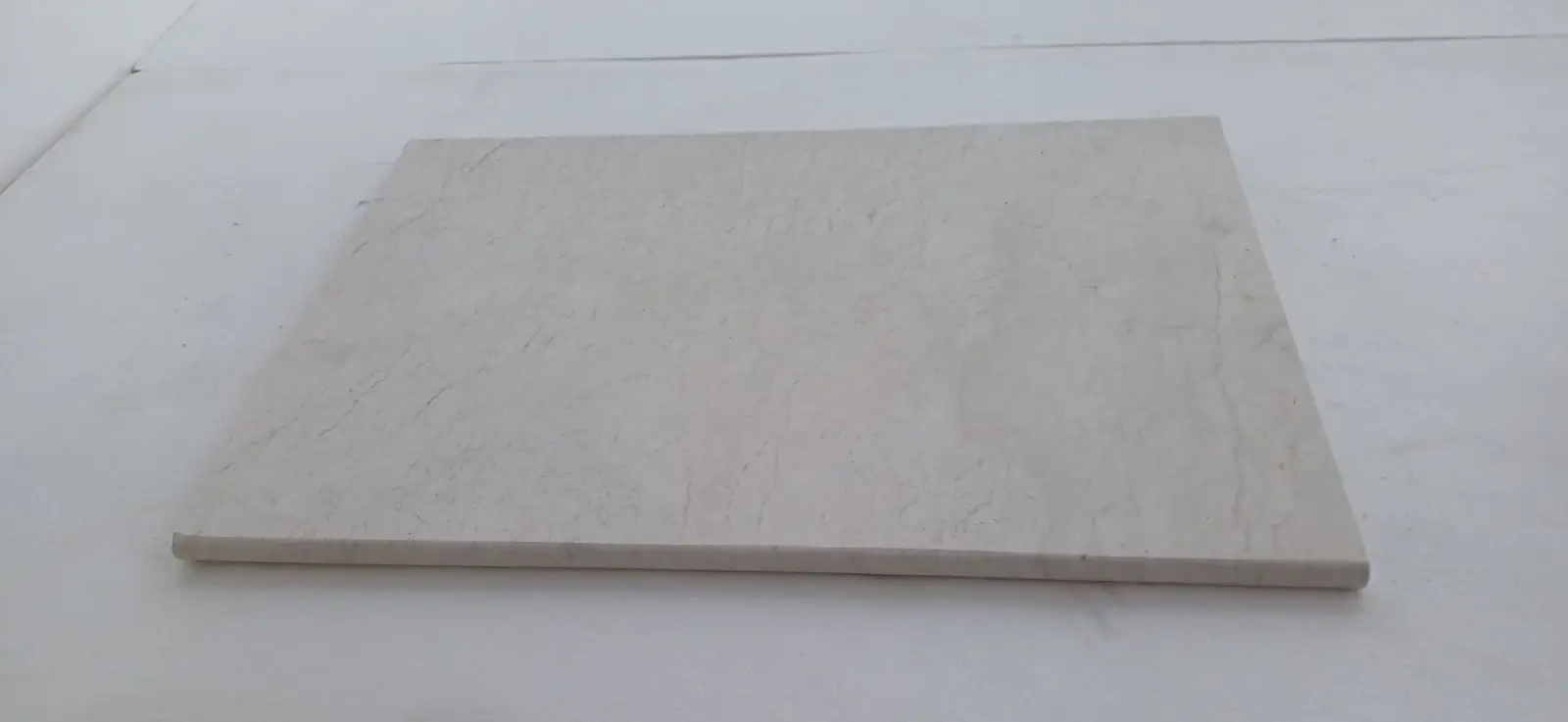
Travertine consistently outperforms most alternatives for Arizona residential patios, and the reason isn’t just aesthetics — it’s the material’s interconnected pore structure. Natural travertine has a thermal expansion coefficient of approximately 4.7 × 10⁻⁶ per °F, which is low enough that you can run joint spacing to 1/8 inch on most installations without cracking risk from the diurnal temperature swings typical of desert summers. The filled travertine variants handle drainage better than the unfilled open-pore versions because surface water doesn’t pool in voids before it can slope off.
- Honed travertine provides DCOF (Dynamic Coefficient of Friction) values above 0.42 when tested to ANSI A137.1 — adequate for most residential applications
- Brushed or tumbled finishes achieve DCOF above 0.60, which is the threshold you should target for pool-adjacent areas
- Select 18mm minimum thickness for ground-level patios; 30mm for areas with vehicle overhang or heavy outdoor furniture
- Vein-cut orientation sheds water more efficiently than cross-cut at equivalent slope percentages
Limestone: Selection Criteria and Performance Limits
Limestone is the other dominant choice for outdoor patio stone selection across Arizona, and it performs well when you specify the right density class. Not all limestone behaves the same — the difference between a limestone with 12,000 PSI compressive strength and one at 6,000 PSI is the difference between a 20-year patio and a resurfacing project in year eight. For Arizona outdoor applications, you want dense limestone with water absorption below 3% by weight, tested per ASTM C97.
The surface finish matters more for limestone than for travertine because limestone’s tighter grain structure is more sensitive to surface moisture behavior. A polished limestone in a monsoon splash zone will develop a slip hazard in wet conditions that a brushed finish wouldn’t. For the slip-resistant natural patio pavers AZ projects demand, specify a flamed or brushed finish on limestone wherever the surface will see direct rain exposure or irrigation overspray.
Basalt: Where It Earns Its Place
Basalt doesn’t get discussed enough in Arizona patio specifications, which is a missed opportunity. Basalt’s density — typically 2.8 to 3.0 g/cm³ — gives it the lowest water absorption rate of the common natural paver materials, often below 0.5% per ASTM C97. In monsoon-heavy drainage zones where water management is the primary concern and you need a material that won’t wick moisture into the base through capillary action, basalt outperforms both travertine and limestone on that single metric.
- Basalt’s thermal mass is higher than travertine, which means surface temperatures run hotter midday — position it in shaded zones or under pergola cover
- Natural basalt cleft faces provide excellent slip resistance without additional surface treatment
- Basalt pairs well with linear drainage channels because its edge stability allows tight tolerances at drain interfaces
- Color consistency is better than most natural materials — batch variation is minimal compared to sedimentary options
Base Preparation Designed for Monsoon Drainage
Your base preparation strategy is where choosing natural patio pavers in Arizona diverges most sharply from standard national guidelines. The Interlocking Concrete Pavement Institute (ICPI) base specifications assume distributed rainfall — Arizona monsoon events are the opposite of that. You need a base system that handles both extremes: extended dry periods that cause subgrade shrinkage and rapid saturation events that put hydrostatic pressure on the bottom of your aggregate layer.
The standard 4-inch compacted aggregate base that works in moderate climates is marginal at best in Arizona. For most residential Arizona backyard patio paver installations on native soil, you’re looking at 6 to 8 inches of compacted Class II base aggregate below a 1-inch bedding sand layer. If your native soil is expansive clay — common in parts of the Phoenix basin — you need a geotextile separation layer between the native soil and the aggregate, and you should consider stepping up to 8 to 10 inches of base to buffer the seasonal swell-shrink cycle.
- Test native soil before specifying base depth — expansive soil classifications require different engineering than decomposed granite subgrades
- Compact base aggregate in 3-inch lifts to 95% Standard Proctor density, not the 90% that some residential specs allow
- Install perimeter edge restraints that extend below the bedding sand layer — surface-only restraints migrate under monsoon saturation
- Slope the top of the compacted aggregate base to match the finished paver surface slope — don’t rely on bedding sand to create drainage geometry
- In areas with known high water tables or poor native drainage, install a perforated pipe underdrain at the base of the aggregate layer
For a deeper look at how material selection intersects with base and installation variables, our Arizona patio paver selection guide covers the full specification sequence from soil assessment to surface sealing across Arizona conditions.
Surface Slope and Drainage Geometry for Natural Patio Pavers
The slope conversation is where most buyers get vague specifications and later get wet patios. “Pitch it away from the house” is not a drainage specification — it’s a direction. Your paver contractor needs numerical targets, and those targets are higher in Arizona than most published guides recommend because of the intensity of monsoon rainfall.
Minimum surface slope for a natural stone patio in Arizona: 1.5% toward a defined drainage path. Recommended slope for open-area patios without defined linear drains: 2%. In zones where monsoon channeling from roof structures concentrates flow — common in subdivisions throughout the East Valley where second-story overhangs funnel water directly onto rear patios — you should target 2.5% and include a linear channel drain at the low end of the patio field.
- Verify slope with a 4-foot level and tape measure at multiple points during base compaction — don’t assume the contractor’s eye is calibrated
- Design drainage paths to exit at corners, not at mid-span — corner exits reduce ponding risk during high-flow events
- Account for 1/8 inch per foot of joint movement over time on patios longer than 20 feet — this flattens effective slope over years if not designed in
- Linear channel drains should connect to a drywell or subsurface dispersal system sized for the 10-year storm event for your specific county
Thermal Performance: Supporting Considerations After Drainage
Once your drainage system is properly engineered, thermal performance becomes your next specification priority. Natural patio pavers in Arizona face surface temperatures that regularly exceed 150°F on dark materials in direct sun — a figure that surprises most buyers when they first encounter it. Lighter materials in the buff, cream, and ivory color ranges reflect 40 to 60% more solar radiation than darker grays and charcoals, which directly translates to barefoot usability and lower radiant heat loading on adjacent seating areas.
The thermal expansion behavior of your chosen material also affects long-term joint integrity. Travertine and limestone expand and contract at rates between 4.5 × 10⁻⁶ and 5.5 × 10⁻⁶ per °F. Over a 70°F diurnal temperature swing — common in Arizona fall and spring — a 20-foot patio run experiences approximately 0.07 to 0.09 inches of expansion per day. That’s why polymeric sand or a flexible joint filler is non-negotiable in Arizona; rigid portland-based grout cracks under this movement regardless of how well the base is prepared.
- Specify polymeric sand with a minimum elongation rating of 25% for all residential patio joints
- White and cream limestone and travertine hold surface temperatures 20 to 35°F lower than mid-gray equivalents under identical solar exposure
- Thermal cycling is most damaging at night in winter when rapid cooling can exceed 40°F within two hours — this is when poorly filled joints begin to fail
- For covered patio sections, thermal performance differences between material colors narrow significantly — drainage and texture become the dominant selection criteria
Slip Resistance Specifications for Arizona Patios
Slip resistance deserves its own section because the Arizona patio environment creates a specific combination of hazards that generic slip ratings don’t fully address. Your patio is dry 90% of the time, which tempts buyers toward polished or honed finishes for aesthetics. Then monsoon season arrives and turns that gorgeous polished travertine into a wet-tile hazard for the three months when outdoor entertaining is most appealing.
The DCOF Acuity test (replacing the older BOT 3000 methodology) is the standard you should reference when evaluating natural paver finish options. ANSI A137.1 specifies a minimum 0.42 DCOF for level residential surfaces. That’s a minimum, not a target. For slip-resistant natural patio pavers AZ conditions demand — patios that will see monsoon rainfall, pool splash zones, or irrigation overspray — you should specify 0.60 DCOF or higher, which means brushed, flamed, or tumbled surface treatments rather than honed or polished finishes.
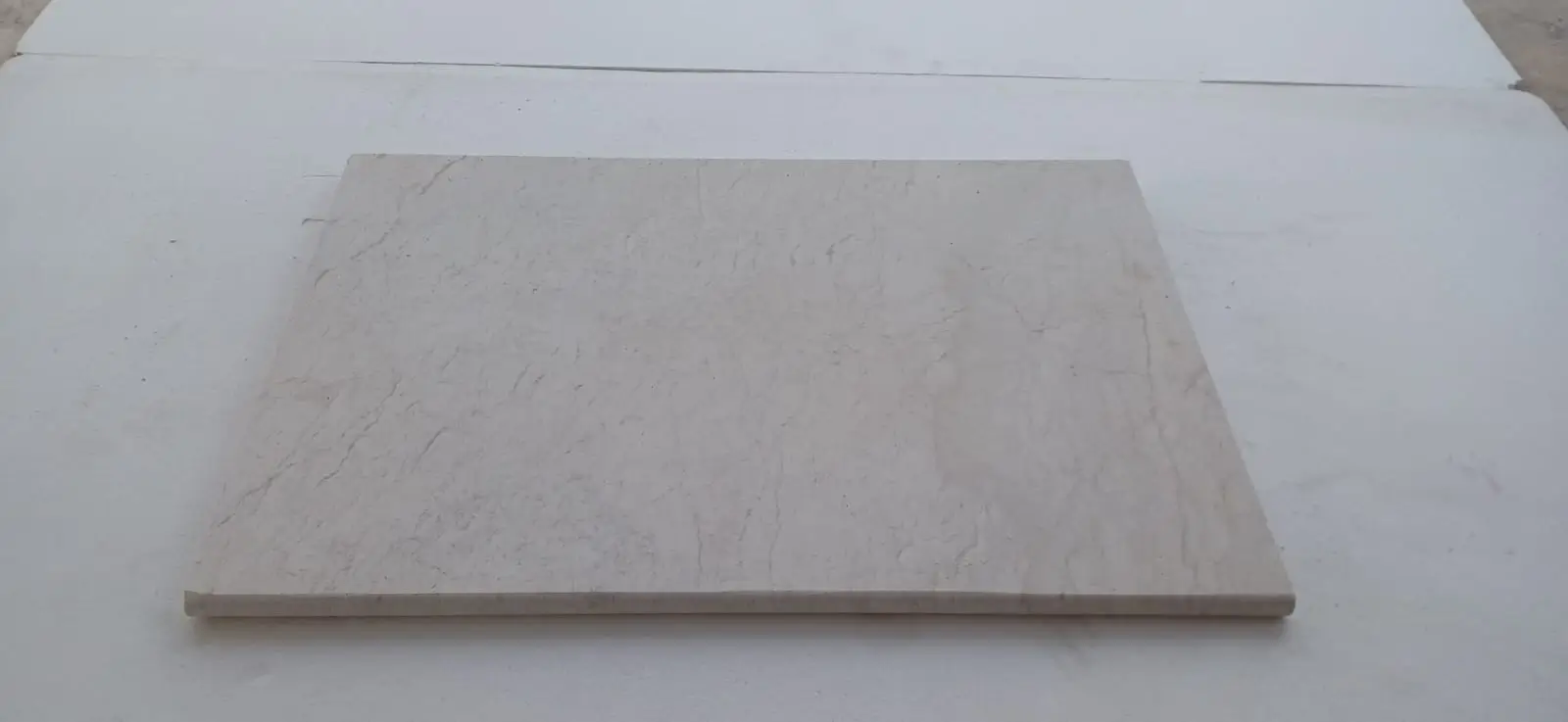
- Tumbled travertine achieves DCOF values of 0.65 to 0.75 — excellent for mixed wet-dry Arizona patio conditions
- Flamed limestone typically tests at 0.62 to 0.70 DCOF and maintains those values with minimal sealer maintenance
- Honed finishes drop to 0.38 to 0.45 DCOF when wet — marginal for areas with regular moisture exposure
- Polished finishes test at 0.25 to 0.35 DCOF when wet — not suitable for uncovered Arizona patio surfaces
- Retest DCOF values after applying penetrating sealer — some sealers reduce friction coefficients by 0.08 to 0.12 depending on formulation
In Gilbert, homeowners with east-facing patios face an additional variable — morning dew condensation on paver surfaces during high-humidity monsoon evenings can create slippery conditions on stone that appears dry at a glance. Brushed finishes with open microtexture handle this better than any sealed smooth surface, regardless of the sealer’s marketed slip-resistance claims.
Ordering Logistics and Project Planning for Natural Stone
Understanding lead times and warehouse availability is part of the Arizona backyard patio paver buying guide process — you don’t want to select a material and then discover a 10-week import delay that pushes your installation past monsoon season. Natural stone paver lead times vary significantly depending on whether the material is in regional warehouse stock or requires a direct import order.
At Citadel Stone, we maintain stocked inventory of travertine, limestone, and basalt pavers in our Arizona distribution network, which typically brings lead times down to one to two weeks for standard sizes and finishes. Custom sizes, specialty finishes, or large-volume orders for estates and commercial patios may require four to six weeks depending on current stock levels and truck delivery scheduling to your project site. Verifying warehouse availability before finalizing your project timeline prevents the most common delay pattern in Arizona paver projects — late material arrival that forces installation during peak summer heat rather than the more forgiving October-November window.
- Order 10% overage on all natural stone paver quantities to account for cutting waste, breakage, and future repair needs
- Confirm truck access dimensions for your delivery site — standard flatbed delivery requires 14-foot clearance height and a turning radius suitable for a 48-foot trailer
- Schedule delivery for morning hours during summer months — afternoon deliveries onto hot concrete driveways accelerate thermal stress on stacked stone
- Request a sample before committing to full order quantities — warehouse stock color ranges can vary between shipment batches
Sealing and Long-Term Maintenance in Arizona’s Dry-Wet Cycle
The Arizona sealing schedule is different from what product manufacturers print on their labels, and understanding why matters for your long-term maintenance budget. Most penetrating sealer manufacturers specify reapplication every 3 to 5 years. In Arizona, the combination of intense UV exposure, high summer temperatures that accelerate sealer degradation, and the wetting-drying shock of monsoon events compresses that cycle. Expect to reseal every 18 to 24 months on unshaded Arizona patio surfaces to maintain full protection.
The sealer type matters as much as the schedule. Solvent-based penetrating sealers penetrate more deeply into dense limestone and travertine than water-based alternatives because the lower surface tension of solvent carriers allows better capillary migration in tight-pored stone. The tradeoff is that solvent-based products require better ventilation during application and have a longer off-gas period before the surface is safe for foot traffic. For covered patio areas with limited airflow, water-based penetrating sealers are the practical choice despite slightly lower initial penetration depth.
- Apply sealer when stone surface temperature is between 50°F and 85°F — Arizona summer midday temperatures cause solvent-based sealers to flash before full penetration
- Avoid sealing within 48 hours of expected rain — even trace moisture contamination at the surface prevents proper bonding
- Test sealer absorption annually by placing a few drops of water on the surface — if water beads for 10 seconds or longer, sealer protection is still active
- Clean paver surfaces with a pH-neutral cleaner before resealing — acid-based cleaners etch limestone and travertine surfaces, increasing porosity and reducing sealer performance
- Joints require separate maintenance — polymeric sand loses binding capacity over 5 to 7 years and should be refreshed before it becomes a drainage infiltration pathway
Getting Your Natural Patio Paver Specifications Right
The buying decision for natural patio pavers in Arizona comes down to whether you’ve engineered for the water before you’ve selected for the aesthetics. The materials that succeed in Arizona — travertine, dense limestone, basalt — all have the physical properties to handle the thermal and moisture demands of this climate. What separates installations that look as good in year fifteen as they did on day one from those that need remediation in year five is the drainage geometry, the base depth, and the joint system working together from the start. Your material choice is the last decision in that sequence, not the first.
For broader context on how outdoor patio stone selection across Arizona applies to different project types and material families, How to Choose Natural Stone Pavers in Arizona: The Complete Buyer’s Guide provides an extended framework worth working through before you finalize specifications. Our technical team is available to review your drainage plan and confirm material selections before your order goes to the warehouse. Property owners in Scottsdale, Chandler, and Tempe work with Citadel Stone to match natural patio pavers — sourced from premium quarries in Turkey and the broader Middle East region — to specific backyard layout and aesthetic requirements across Arizona.