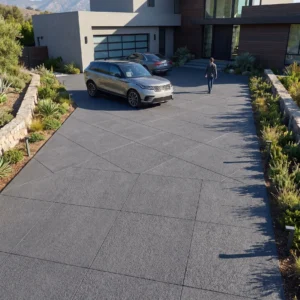
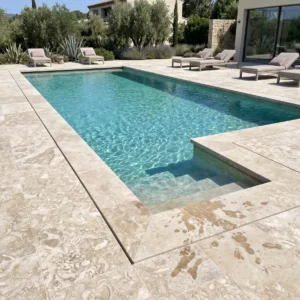
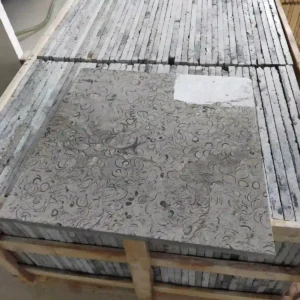
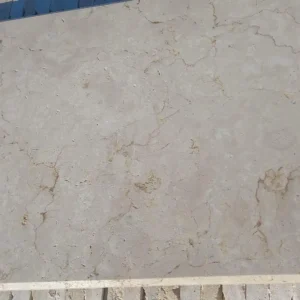

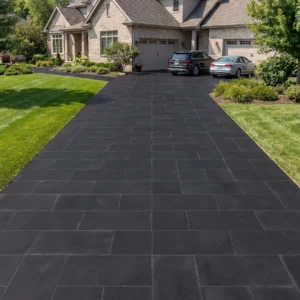
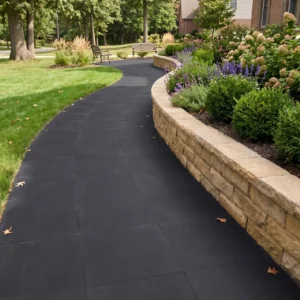
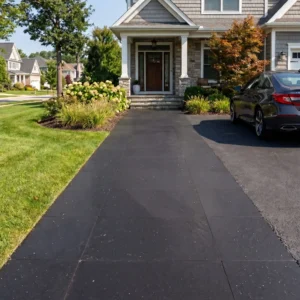
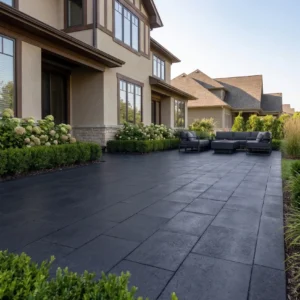



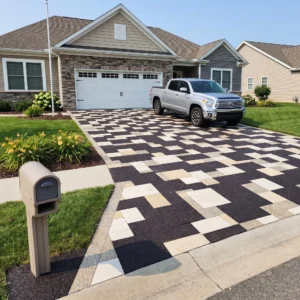
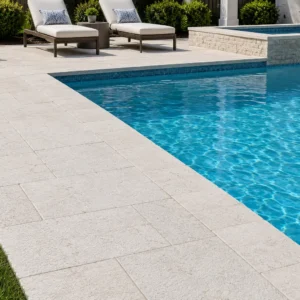
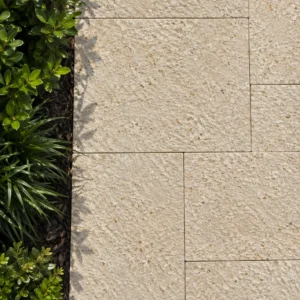
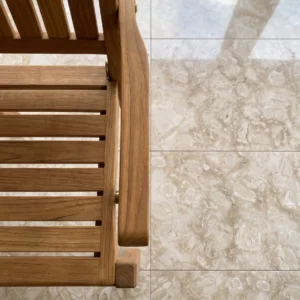
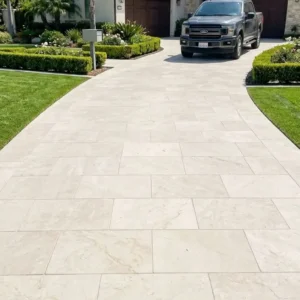
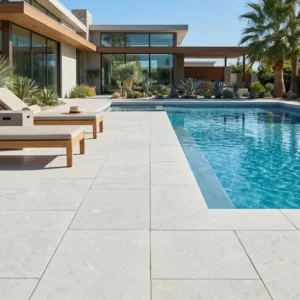
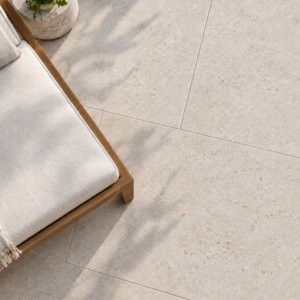


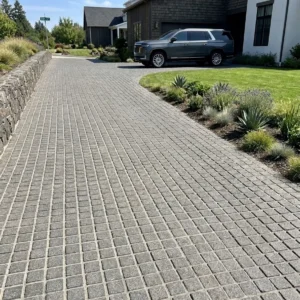

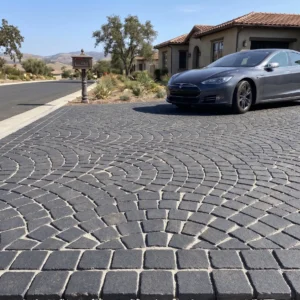

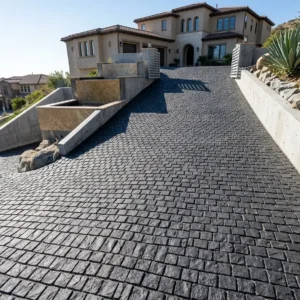
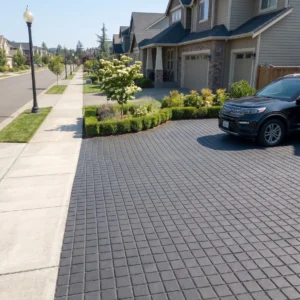

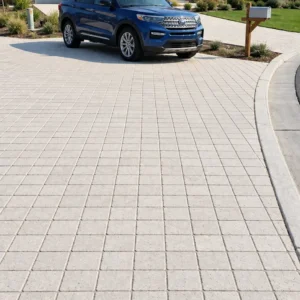
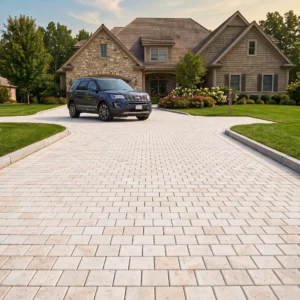
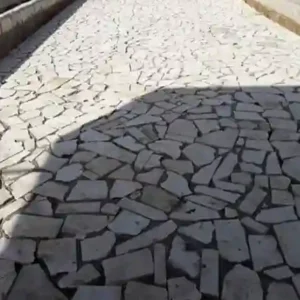
Flagstone driveway pavers in Arizona aren’t just a material decision — they’re a code compliance decision first. Before you select a finish or a color tone, your local jurisdiction’s structural requirements will define minimum thickness, base depth, and load-bearing specifications that the material must meet. Phoenix, Tucson, and Scottsdale each operate under adopted versions of the International Building Code with local amendments, and those amendments directly affect how flagstone driveway installations must be engineered at the subgrade level.
Arizona Building Codes and Flagstone Driveway Pavers
Most Arizona municipalities classify residential driveways as vehicular hardscape subject to minimum 6-inch compacted aggregate base requirements, with some jurisdictions requiring engineered fill certifications on sites with expansive soils. Your flagstone paver driveway in Arizona needs to account for more than surface aesthetics — the structural assembly beneath the stone determines whether your installation holds its profile over a decade or develops rocking and settlement within three years. Caliche, which underlies much of the Phoenix metropolitan area, behaves predictably under load when compacted correctly but becomes a cracking hazard if improperly saturated during installation. Citadel Stone’s technical team can advise on slab thickness and base specifications that meet local code while matching your design intent — a consultation step worth taking before finalizing your order.
Load-bearing requirements for flagstone driveway pavers typically reference ASTM C1528 or equivalent performance thresholds. For residential driveways subject to standard passenger vehicle loads, you’ll want flagstone with a minimum compressive strength of 8,000 PSI — request the compressive strength test report for the batch you are buying. Flagstone in the 2-inch nominal thickness range handles the point loads typical of vehicle tire contact patches without edge-fracture risk, provided your bed preparation maintains full bearing contact across the slab face.
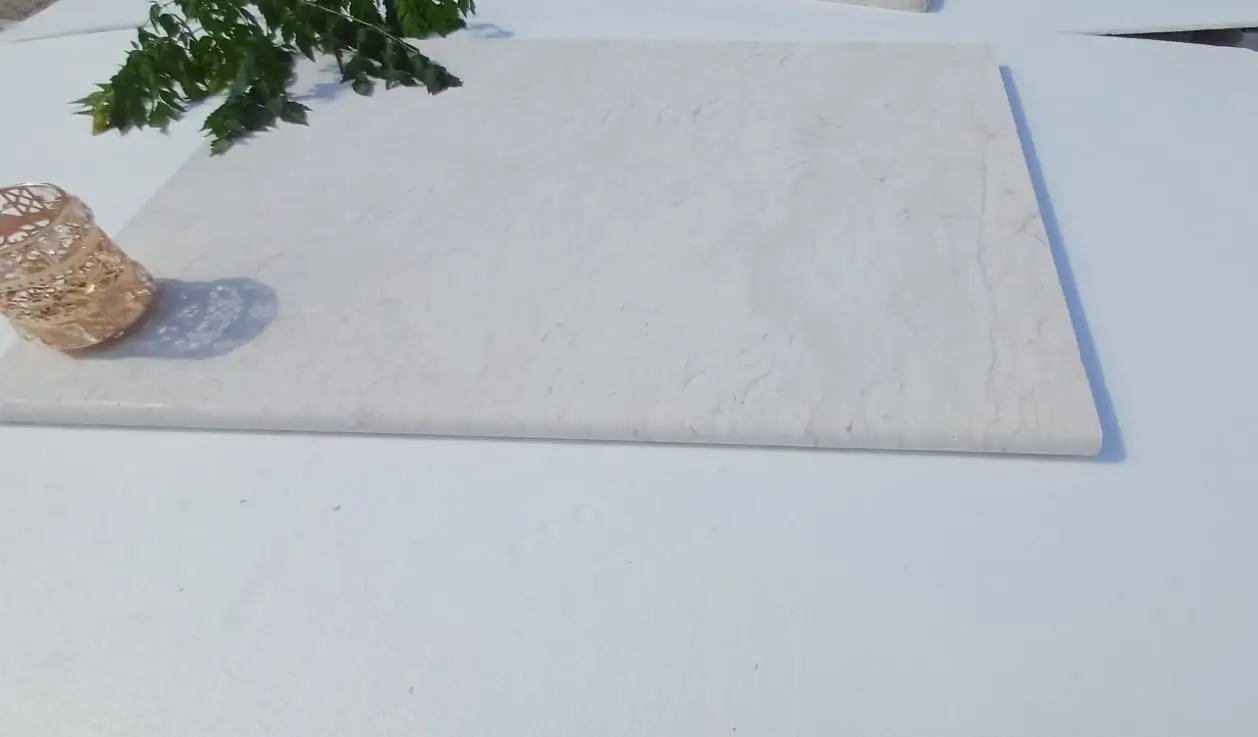
Structural Base Preparation for Your Flagstone Driveway
The base preparation stage is where most flagstone driveway installations succeed or fail — and this truth holds across every climate zone in Arizona, from the low desert floors to the high country around Flagstaff. A compacted aggregate base of 6–8 inches is the minimum for residential passenger vehicle traffic, but if you’re in an area with documented expansive clay soils, that base depth should increase to 10–12 inches with a geotextile fabric separator between native soil and aggregate. Skipping the fabric is a common field shortcut that costs homeowners significantly in three to five years when subgrade fines migrate upward and destabilize the bedding layer.
For your flagstone paver driveway in Arizona, the bedding sand layer above the aggregate base should be no more than 1 inch after compaction. Thicker sand beds don’t add cushion — they add instability. In projects around Mesa, caliche hardpan frequently appears at 18–24 inches below grade, and when it’s intact and properly prepared, it actually provides a superior sub-base that reduces the required aggregate depth. Your geotechnical report or a simple hand-excavation test can confirm whether caliche is present and at what depth, which affects your overall material and labor budget considerably.
- Minimum 6-inch compacted aggregate base for standard residential driveway loads
- Increase to 10–12 inches on expansive clay or poorly compacted native fill
- Geotextile fabric separator between native soil and aggregate is non-negotiable on clay-heavy sites
- Bedding sand: 1 inch maximum after compaction — never thicker
- Caliche hardpan, where intact, reduces required base depth and improves long-term stability
- Compaction testing to 95% modified Proctor density before laying any flagstone
Flagstone Thickness and Load-Bearing Requirements
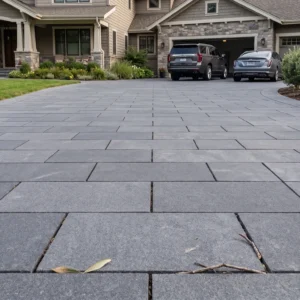
Thickness selection for flagstone driveway pavers in Arizona isn’t a style preference — it’s a structural variable. The 1.5-inch nominal thickness works adequately for pedestrian applications, but you need 2 inches minimum for vehicle traffic, and 2.5 inches for anything heavier than a standard passenger car. Delivery trucks, service vehicles, or any regular heavy vehicle access pushes you to 3-inch flagstone with a correspondingly deeper aggregate base. Here’s what most specifiers miss: flagstone slab dimensions also matter for load distribution. Smaller irregular flagstone pieces concentrate stress at edges and joints, while larger format pieces distribute vehicle loads across a wider bearing area.
Flagstone pavers sourced from quality selected quarries and inspected for consistent thickness tolerances perform more predictably in service than random-thickness material. At Citadel Stone, we inspect each delivery for thickness consistency within ±1/4 inch of the nominal dimension, because irregular thickness variation creates uneven bedding contact and accelerates edge chipping under cyclic vehicle loads. You can request thickness specifications and sample pieces before committing to a full driveway order — verifying the actual material against your spec is a step that protects your installation warranty assumptions.
- 1.5-inch nominal: pedestrian and light garden path use only
- 2-inch nominal: standard residential passenger vehicle driveway
- 2.5-inch nominal: occasional light truck or SUV access
- 3-inch nominal: regular service vehicle or delivery truck access
- Larger format slabs (18×24 inches and above) distribute vehicle loads more effectively than irregular small pieces
- Thickness tolerance: specify ±1/4 inch maximum variation from your supplier
Seismic and Drainage Considerations for Arizona Flagstone Driveways
Arizona sits within a seismically active corridor, particularly in the southern portions of the state, and while flagstone driveways aren’t subject to the same seismic design requirements as structural building elements, joint spacing and flexible installation methods matter for long-term performance. Rigid mortar-set flagstone driveway installations in seismically active areas accumulate stress at mortar joints and can develop cracking patterns that propagate through the stone face rather than releasing at flexible joints. Dry-set or sand-set flagstone driveway installations, with properly sized joint gaps of 3/8 to 1/2 inch, accommodate minor ground movement without propagating fractures.
Drainage geometry is the other structural consideration that Arizona’s monsoon season makes non-negotiable. Your driveway surface must maintain a minimum 1.5% cross-slope to prevent ponding, and flagstone joint patterns should align with drainage flow paths rather than perpendicular to them. In Scottsdale, HOA design standards frequently specify minimum drainage grades for hardscape surfaces, and your flagstone driveway layout will need to demonstrate compliance with those grades before permit approval. Retaining wall flagstone pavers at driveway edges must be designed to handle both lateral earth pressure and hydrostatic pressure from monsoon saturation — a combination that undersized retaining installations routinely fail to address. For a more detailed look at how flagstone performs across different driveway applications, flagstone paver driveway options covers the comparative specification details that inform material selection for Arizona conditions.
- Dry-set or sand-set installation recommended in seismically active southern Arizona zones
- Joint spacing of 3/8 to 1/2 inch provides movement accommodation without compromising stability
- Minimum 1.5% cross-slope for effective surface drainage across the driveway width
- Align joint patterns with drainage flow direction, not perpendicular to it
- Retaining wall flagstone pavers at driveway edges must account for combined lateral and hydrostatic loads
- Verify HOA and municipal drainage grade requirements before finalizing your layout
Flagstone Paver Edging and Retaining Wall Applications in Arizona
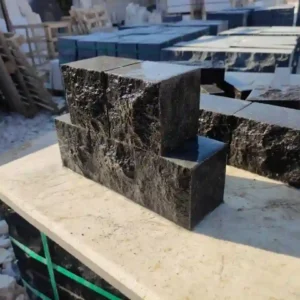
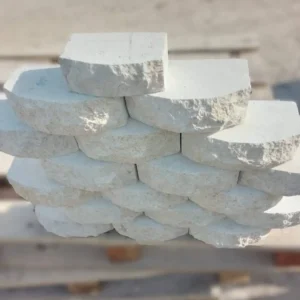
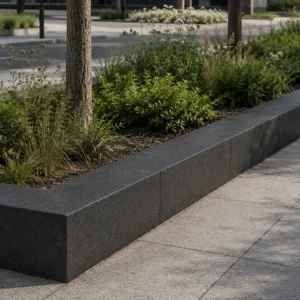
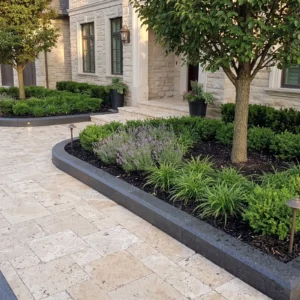
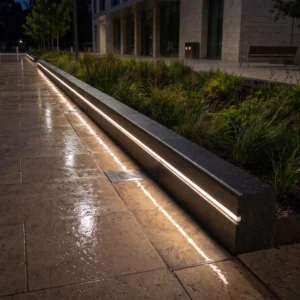
Flagstone paver edging in Arizona driveways serves two functions that must be engineered simultaneously: lateral containment of the driveway field and aesthetic definition of the boundary. Edging that handles only one of these functions — whether it’s ornamental flagstone too shallow to restrain the aggregate base, or utilitarian concrete curb that ignores the visual context — creates a system that either fails structurally or fails aesthetically. The right flagstone paver edging specification uses material at least 3 inches thick, set into a concrete haunching footing that extends 6 inches below the finished aggregate base, with the haunching keyed into undisturbed native soil or caliche.
Retaining wall flagstone pavers in Arizona face a specific combination of challenges: high thermal cycling, episodic hydrostatic pressure from monsoon saturation, and the compressive loads from vehicles navigating close to the wall face. For retaining walls adjacent to driveways, your wall design needs a drainage aggregate backfill layer of at least 12 inches width, separated from native soil by geotextile fabric, with weep holes at the base course spaced no more than 8 feet apart. Walls taller than 4 feet typically require engineered design in most Arizona jurisdictions, so check your permit requirements early.
- Edging flagstone minimum 3-inch thickness with concrete haunching footing
- Haunching footing depth: 6 inches below finished aggregate base, keyed into undisturbed soil
- Retaining wall backfill: 12-inch drainage aggregate layer with geotextile fabric separation
- Weep holes at base course, maximum 8-foot spacing
- Walls over 4 feet require engineered design drawings in most Arizona jurisdictions
- Flagstone paver edging should match or complement the driveway field stone for visual continuity
Elite Flagstone Styles and Finishes for Arizona Driveways
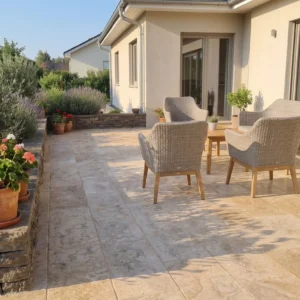
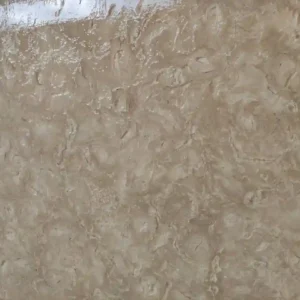
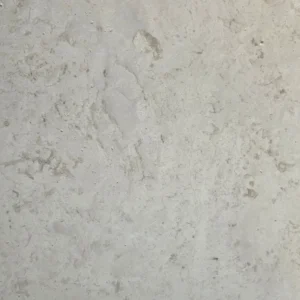
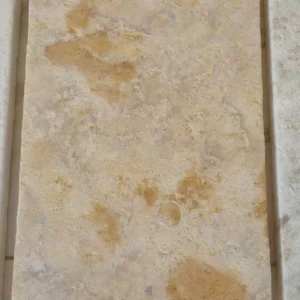
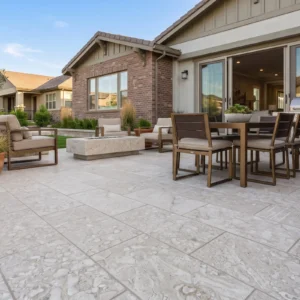
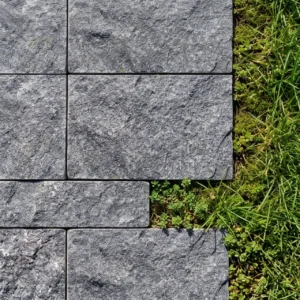
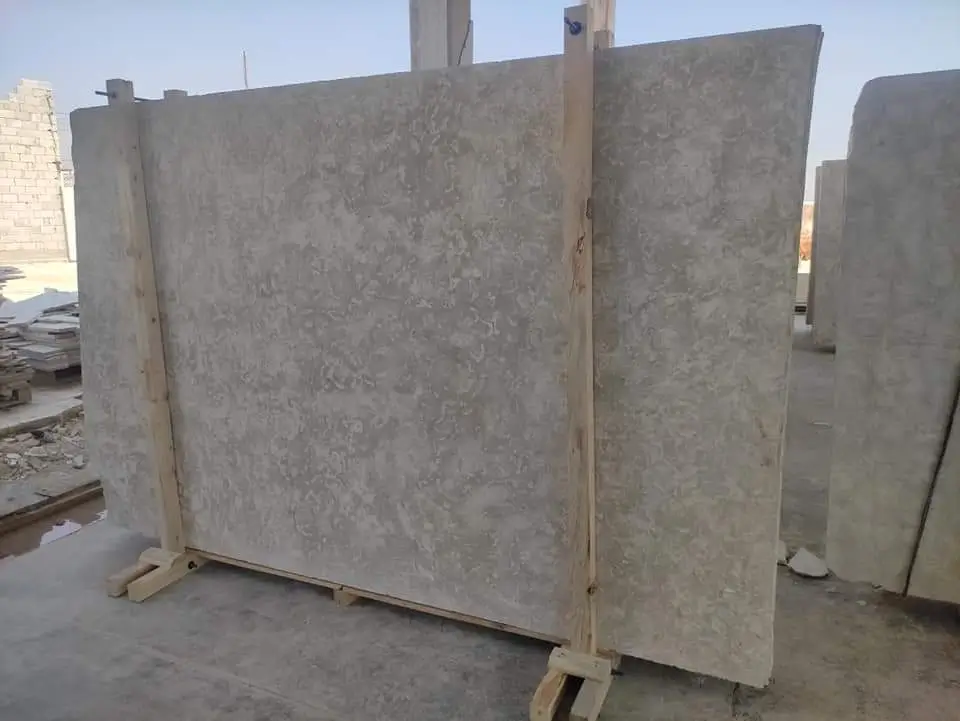
The style selection for your flagstone driveway pavers in Arizona should follow the structural specification — not precede it. Once you’ve confirmed thickness, format, and base requirements, the finish and color become the variables that define the installation’s character. Natural cleft flagstone, which retains the quarry-split texture, provides inherent slip resistance with a coefficient of friction typically above 0.60 wet — meeting ADA accessibility thresholds without additional surface treatment. Sawn-cut flagstone delivers tighter dimensional tolerances and a cleaner joint profile, which many Scottsdale and Phoenix contemporary designs favor, but the smoother surface requires a brushed or sandblasted finish to achieve equivalent slip resistance.
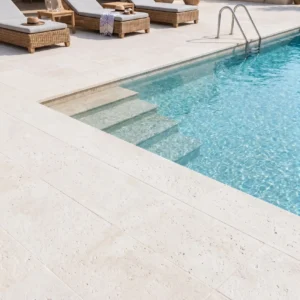
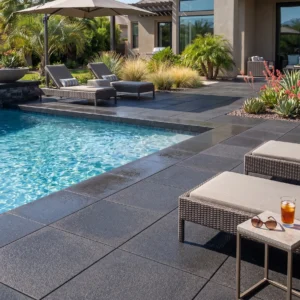
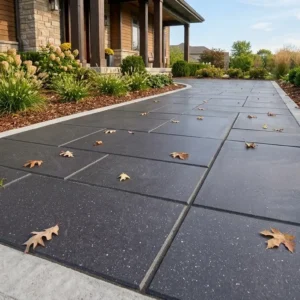
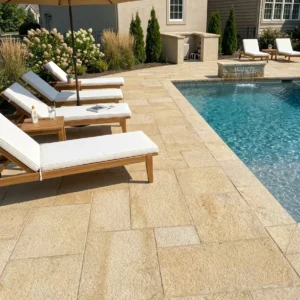
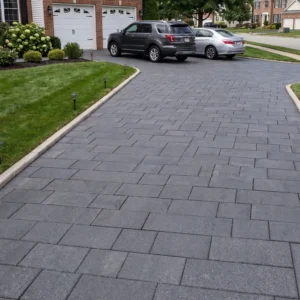
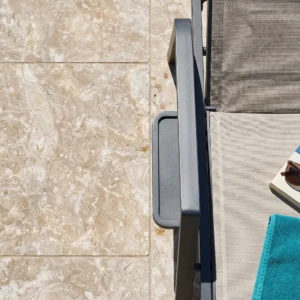
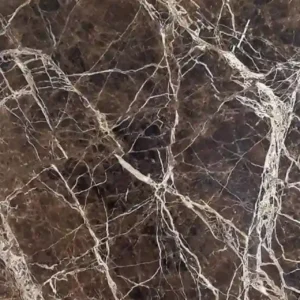
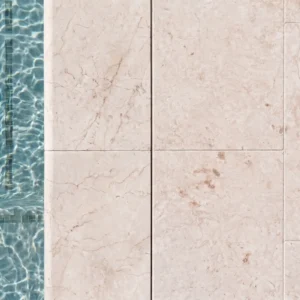
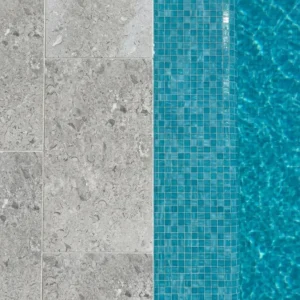
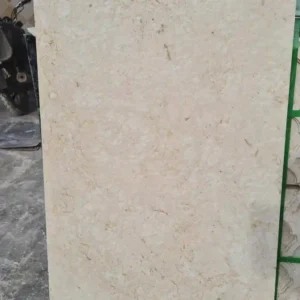
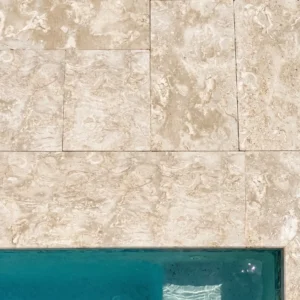
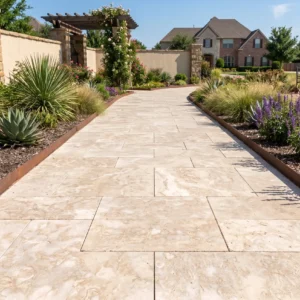
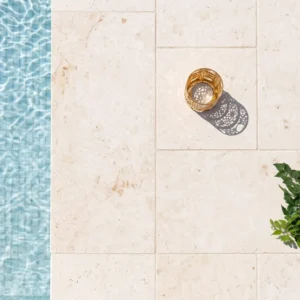
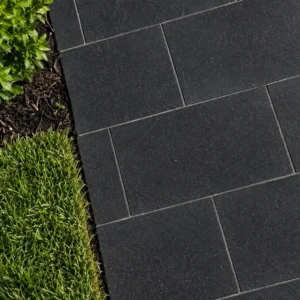
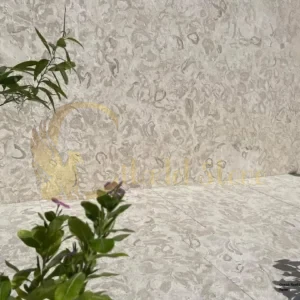
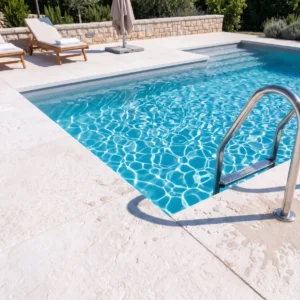
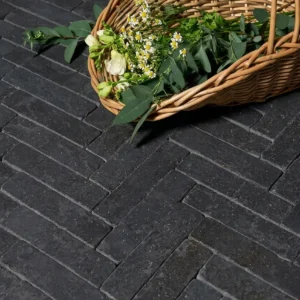
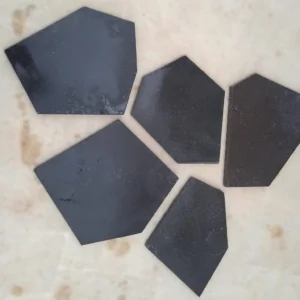
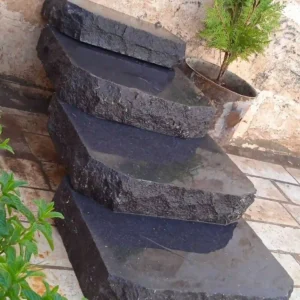
Color ranges in Arizona flagstone driveways typically follow regional architectural traditions. Warm buff limestone and golden sandstone flagstone complement Spanish colonial and Pueblo Revival styles prevalent across the Phoenix metropolitan area. Blue-grey slate and charcoal basalt flagstone pavers suit contemporary desert modern designs. Reddish-brown iron-oxide flagstone varieties echo the regional geology of Sedona’s landscape and integrate naturally into properties where the desert setting is part of the design language. Your finish selection also affects thermal performance: darker flagstone colors absorb more solar radiation and will reach higher surface temperatures during peak summer months, which is relevant for barefoot-accessible areas but not a code or structural concern for vehicle driveways.
- Natural cleft finish: coefficient of friction above 0.60 wet, no additional surface treatment needed
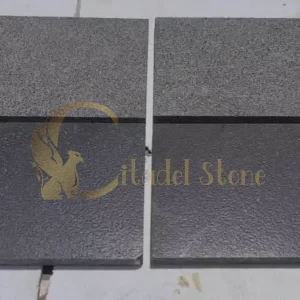
- Sawn-cut finish: tighter joint tolerances, requires brushed or sandblasted surface for slip compliance
- Warm buff and golden tones: complement Spanish colonial and Pueblo Revival architecture
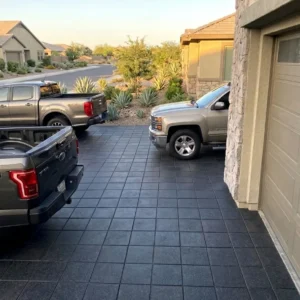
- Blue-grey and charcoal flagstone: suited to contemporary desert modern design language
- Reddish-brown iron-oxide varieties: integrate with regional desert landscape palettes
- Darker colors reach higher peak surface temperatures — factor into pedestrian zone planning
Maintenance and Sealing Requirements for Flagstone Driveways in Arizona
Sealing protocols for flagstone driveway pavers in Arizona differ from standard concrete maintenance because flagstone is a porous natural material that responds differently to penetrating sealers versus film-forming sealers. Penetrating silane-siloxane sealers are the correct specification for most Arizona flagstone driveway applications — they don’t alter surface texture or sheen, they allow the stone to breathe under thermal cycling, and they maintain slip resistance that film-forming sealers can compromise. Apply an initial sealer within 30 days of installation and then schedule reapplication every 2–3 years depending on traffic intensity and UV exposure levels.
In Flagstaff, the higher elevation introduces genuine freeze-thaw cycling that low desert Arizona doesn’t experience, and flagstone driveway installations there require a sealer with demonstrated freeze-thaw resistance ratings, not just UV and stain protection. Checking that your sealer product has been tested to ASTM C672 (freeze-thaw surface scaling) is worth the research time if your project is above 5,000 feet elevation. For low desert installations in Phoenix or Tucson, the dominant maintenance concern shifts to UV degradation and caliche dust infiltration into joints — both manageable with appropriate joint sand maintenance and annual cleaning cycles.
- Penetrating silane-siloxane sealers preferred over film-forming products for Arizona flagstone driveways
- Initial sealer application within 30 days of installation completion
- Resealing interval: every 2–3 years under standard residential driveway traffic
- Flagstaff and high-elevation sites: specify sealers with ASTM C672 freeze-thaw performance ratings
- Low desert sites: focus on UV stability and joint sand retention
- Annual cleaning with pH-neutral stone cleaner extends sealer life and maintains surface clarity
Order Flagstone Driveway Pavers in Arizona — Direct Supply from Citadel Stone
Citadel Stone stocks flagstone driveway pavers in standard formats including 2-inch and 2.5-inch nominal thicknesses, with slab sizes ranging from 12×12 inches through irregular natural-cleft formats up to 24×36 inches. Material is sourced from our selected premium quarries, and each delivery batch is inspected for thickness consistency, surface integrity, and color uniformity before it reaches warehouse inventory. This inspection process means you’re specifying material that performs as expected in the field rather than discovering thickness variation after your crew has started cutting and laying.
You can request sample pieces and full product specification sheets before committing to your full driveway material order — a step that’s particularly valuable when you’re matching flagstone to existing site stonework or coordinating with an architect’s finish schedule. Citadel Stone ships flagstone driveway pavers across Arizona from regional warehouse inventory, with lead times typically running 1–2 weeks for in-stock material compared to the 6–8 week import cycle that custom-sourced stone requires. Truck delivery scheduling can be coordinated to align with your base preparation completion date, so material arrives on site when your crew is ready to lay, not sitting exposed to weather while subgrade work continues. For trade accounts, wholesale pricing, and commercial project consultation, contact Citadel Stone directly to discuss project-specific quantities, format requirements, and delivery logistics. Beyond your driveway project, if your property includes walkway or pedestrian path areas requiring complementary stonework, Flagstone Walkway Pavers in Arizona provides additional specification detail for those adjacent applications. For durable, well-sourced flagstone paver driveway materials in Arizona, Citadel Stone offers knowledgeable guidance and consistent product quality to support your project from start to finish.