Custom stone works ideas separate functional installations from failed ones at the specification stage — not the installation stage. Whether you’re planning custom stone countertops for a kitchen renovation, an outdoor living feature, or an interior accent wall, the details that determine long-term performance aren’t visible in finished project photos. Your material choices, joint tolerances, and substrate compatibility all interact in ways that compound over time — and getting them right from the start is what separates a ten-year installation from a twenty-five-year one.
Matching Materials to Your Custom Stone Works Vision
The widest range of design outcomes comes from understanding what each stone family actually does under real-world conditions. Granite delivers compressive strength exceeding 19,000 PSI and suits high-traffic horizontal surfaces where abrasion resistance matters. Marble brings veining depth and tonal variation that no manufactured material replicates, but its calcium carbonate base makes it reactive to acidic substances — a genuine limitation you need to weigh honestly for kitchen environments. Quartzite sits in the middle: harder than marble, more visually dynamic than most granites, and increasingly available in large-format slabs that minimize seam lines across wide countertop runs.
According to NSI fabrication and certification standards, the dimensional tolerances and finish consistency of custom stone works depend heavily on the fabrication process — not just the raw material. Slab thickness variation across a quarry lot can run ±3mm even in premium material, and your fabricator needs to account for that before setting. Request thickness caliper measurements at multiple points on any slab before committing it to a countertop run, particularly on islands where an uneven underside will telegraph through the substrate.
Custom Stone Countertops: Design Directions Worth Considering
Custom countertops for kitchen applications carry more functional demands than almost any other stone surface in a home. Heat from cookware, moisture from daily use, impact from dropped utensils, and the acidic chemistry of common ingredients all test the material continuously. Here’s how different stone families hold up against that combined load:
- Granite handles dry heat from pots and pans without thermal shock risk at standard residential thicknesses — its crystalline structure dissipates heat efficiently
- Quartzite resists acid etching better than marble and holds a honed or polished finish longer in active kitchen conditions
- Marble’s etch sensitivity is real but manageable — honed finishes mask etch marks better than polished, and many homeowners accept the patina as part of marble’s character
- Soapstone offers natural stain resistance and a distinctive matte finish, though it scratches more easily than granite and requires periodic oiling to maintain uniform color
- Leathered and brushed finishes add tactile texture and hide fingerprints better than mirror-polished surfaces — a practical consideration for high-use kitchen islands
Edge profile selection affects both aesthetics and durability. Eased and beveled edges resist chipping better than sharp-arris profiles, which tend to fracture under impact loading. For stone thicknesses below 1.25 inches, a mitered edge build-up creates the visual presence of a thick slab without the weight penalty — worth discussing with your fabricator if your cabinet substrate has load limits.
Outdoor Custom Stone Works: Surfaces Built to Last
Outdoor stone applications demand a different performance framework than interior work. The material faces UV exposure, moisture cycling, biological growth, and in many installations, the mechanical stress of foot traffic or vehicle loads. Stone selection needs to address all of these simultaneously — not just the visual outcome.
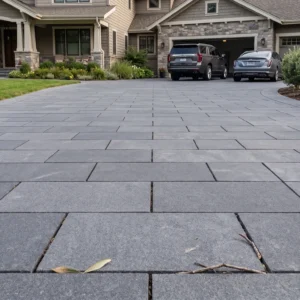
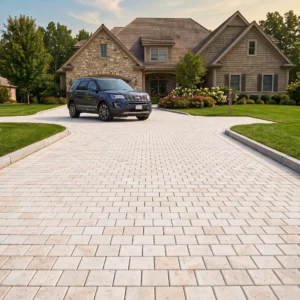
For patios, terraces, and outdoor kitchen counters, custom stone works ideas that perform over decades typically involve dense, low-porosity materials. Basalt and granite top the durability hierarchy for exterior horizontal surfaces. Limestone and travertine work well where texture and warmth matter more than maximum hardness, but they require sealing protocols you need to maintain consistently. The Natural Stone Institute’s fabrication guidance identifies surface absorption rates as a key specification metric — lower absorption means less water infiltration, which directly affects performance in freeze-thaw regions with seasonal temperature cycling.
Thermal cycling deserves specific attention in outdoor custom stone works. Day-to-night temperature swings of 30°F to 50°F are common across many climates, and the cumulative effect on stone joints and mortar beds compounds over years. Natural stone expands and contracts with temperature change — granite’s linear thermal expansion coefficient runs approximately 4.4 × 10⁻⁶ per °F, while limestone sits closer to 5.0 × 10⁻⁶ per °F. These differences matter when you’re specifying joint widths and movement accommodations for large outdoor installations. Undersized expansion joints are the leading cause of surface cracking in exterior stone projects — plan for joints every 10 to 12 linear feet in continuous outdoor runs, and use a flexible sealant rather than rigid grout at those locations.
Feature Walls and Vertical Stone Applications
Vertical stone installations — interior accent walls, exterior cladding, fireplace surrounds — operate under entirely different structural logic than horizontal surfaces. Weight management and anchoring method become the dominant technical considerations, and the visual scale of the wall plane changes how stone pattern and veining read at distance.
- Thin-veneer stone in the 3/4-inch to 1.25-inch range keeps wall loads manageable and allows direct bonding to substrates without structural backup systems
- Book-matched slab panels create mirror-image veining continuity across wide wall spans — effective on fireplace walls and entry features where the stone is the focal point
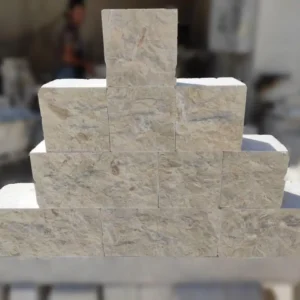
- Dry-stack natural stone walls use no mortar at face joints — the textural depth is distinctive, but proper drainage planning behind the wall is essential to prevent hydrostatic pressure buildup
- Ledge stone and stacked panel formats allow faster installation than full-slab work and suit DIY-accessible applications — but verify that the material has genuine through-body color, not a surface treatment
- Honed finishes on vertical surfaces resist dust adhesion better than polished and reduce the mirror-glare effect that can overpower smaller rooms
Browse our custom stone works gallery for fabricated examples that show edge profiles, finish options, and material combinations across a range of applications — a useful reference point before finalizing your own specifications.
Bathroom Stone Design: Where Precision Pays Off
Bathroom environments combine moisture, temperature change, and chemical exposure in ways that stress stone continuously. Custom stone works in bathroom settings — shower walls, vanity tops, floor tile, soaking tub surrounds — need to be specified with water management as the primary design driver, not an afterthought.
Shower wall stone should have an absorption rate below 0.5% by weight — this is the threshold where moisture infiltration into the substrate becomes negligible under normal residential use. Marble, polished granite, and dense quartzite typically meet this threshold. Travertine and tumbled limestone do not — their open pore structure absorbs moisture aggressively unless filled and sealed, and even then, the maintenance schedule becomes demanding in high-use showers.
Floor stone in wet areas should meet the ANSI A326.3 wet DCOF threshold (0.42). Honed and brushed finishes achieve this more reliably than polished. Mosaic formats — tiles 2 inches square or smaller — create more grout joint surface area, which increases traction and helps with the drainage slope management needed across shower floors.
Thermal Cycling and Stone Performance in Exterior Projects
For any outdoor custom stone works installation, the freeze-thaw cycle represents the most demanding long-term performance test the material will face. Water expands approximately 9% when it freezes — and if that water has penetrated stone pores or joint gaps before the temperature drops below freezing, the expansion force can fracture stone surfaces, displace set pieces, and crack mortar beds. This isn’t a theoretical risk; it’s the most common cause of premature failure in exterior stone installations across the country.
Absorption rate is the primary variable you control at specification. The ASTM dimensional stone quality standards provide absorption benchmarks by stone type — granite typically absorbs less than 0.4% by weight, while some limestones reach 3–5%. In freeze-thaw climates, specify stone with the lowest absorption rate your budget and design intent allow. For joint material, use a flexible polymer-modified mortar rather than standard cement grout in exterior applications — it accommodates the thermal movement cycles that rigid grout cannot without cracking.
Stone thickness matters in freeze-thaw contexts too. Thicker stone — 2 inches and above for exterior horizontal applications — provides more thermal mass, which buffers the rate of temperature change through the material and reduces the stress of rapid thermal cycling. Thin-veneer formats are better reserved for sheltered exterior applications where direct precipitation exposure is limited.
Sourcing Custom Stone Works Materials: What to Know Before You Order
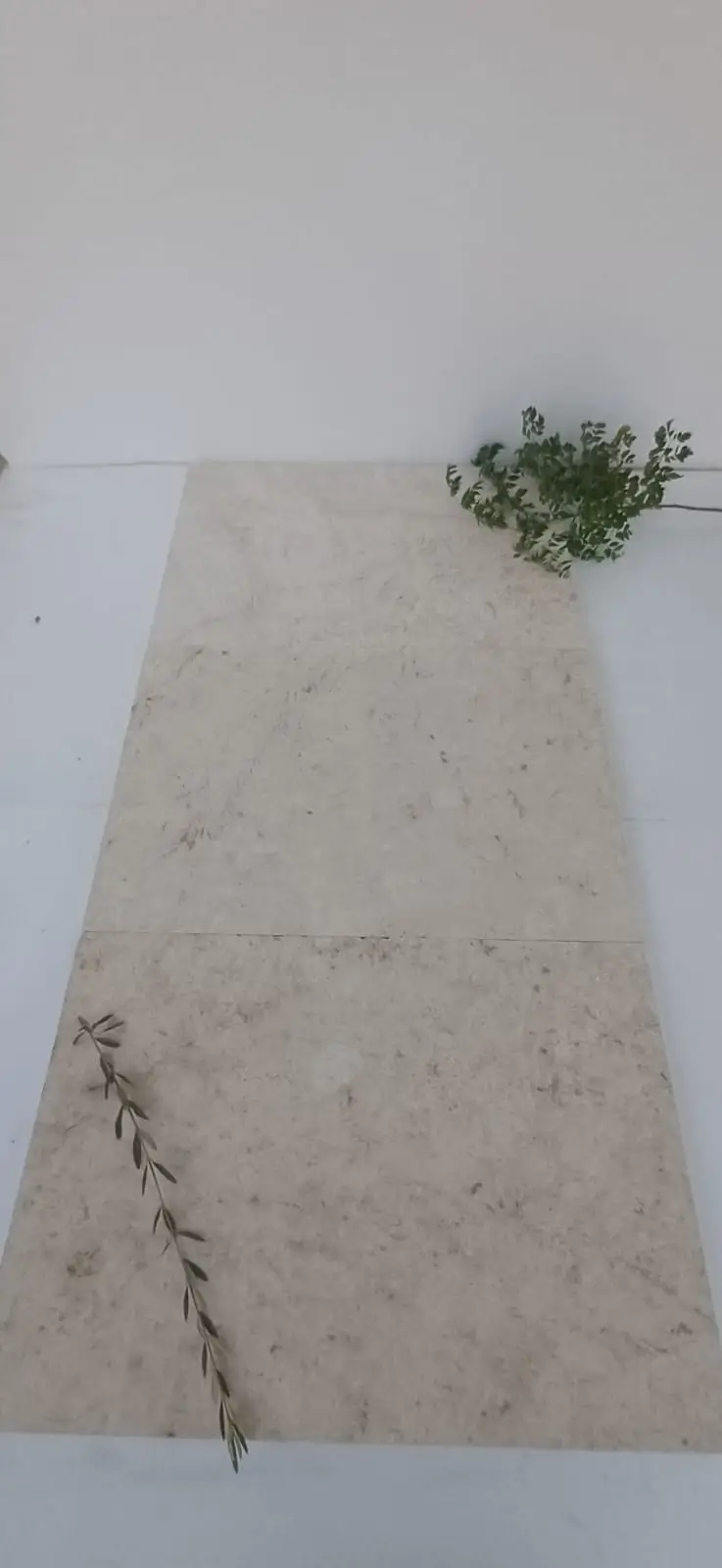
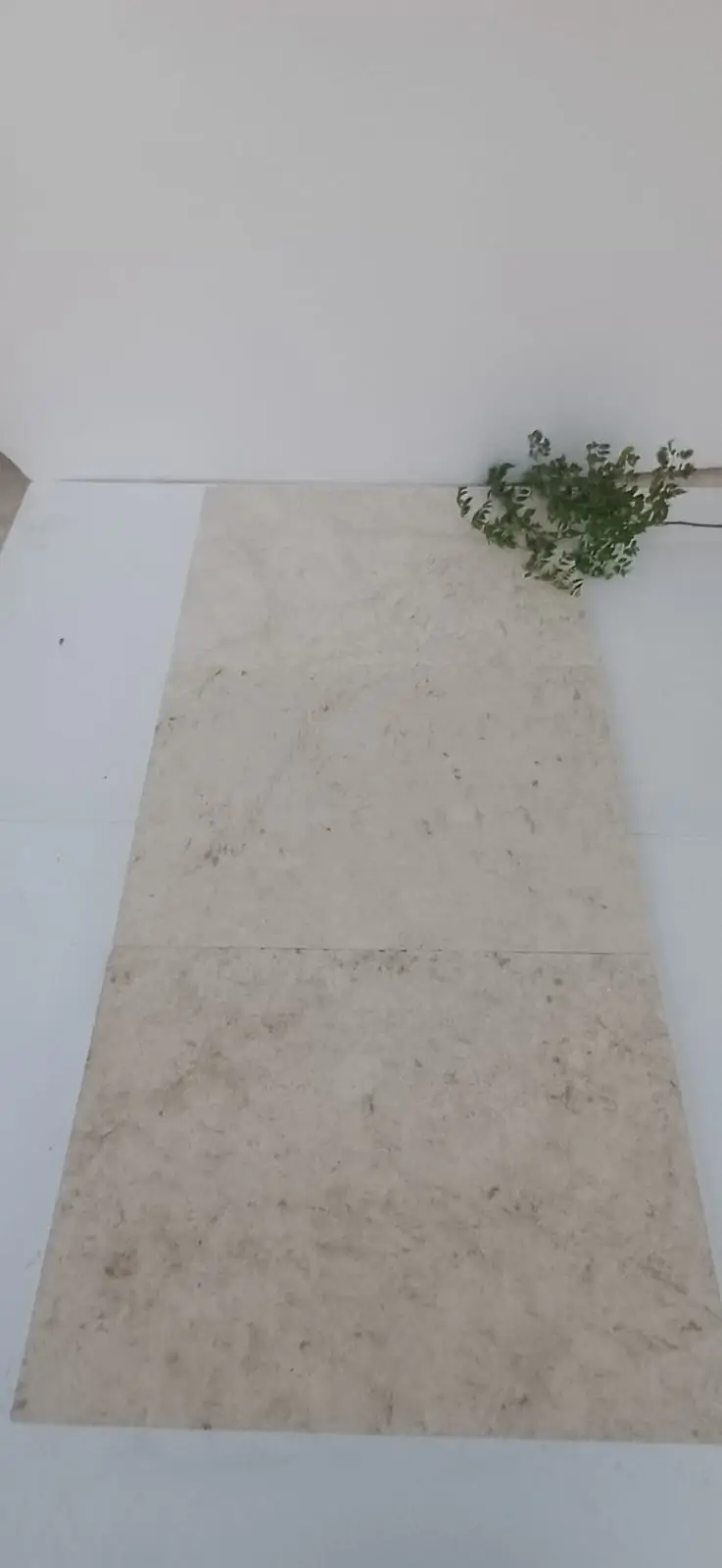
Material sourcing decisions affect your project timeline and final outcome more than most clients anticipate. Custom stone countertops require slab selection — not just species selection. Two slabs of the same marble from the same quarry lot can differ meaningfully in veining density, background tone, and movement pattern. View and approve the actual slabs your project will use, not a sample chip or a catalog image.
At Citadel Stone, we maintain warehouse inventory of fabrication-ready slabs that allows you to view material in person before committing to a specification. Warehouse stock typically ships within one to two weeks — a significant advantage over direct import timelines, which can run eight to twelve weeks from quarry origin to job site. For time-sensitive projects, confirm available stock early and factor in your fabricator’s lead time before the installation window opens.
Truck delivery logistics for large custom stone works material require advance planning. Full slab material — particularly pieces exceeding 10 feet in length or 400 pounds — needs equipment access that not every residential site can accommodate without prior coordination. Confirm your truck access constraints, unloading equipment availability, and staging area with your delivery team before the shipment is scheduled. A last-minute access issue at delivery costs more in rescheduling and handling fees than the planning conversation takes.
Finish Selection and Sealing: Protecting Your Investment
The finish you select determines both the visual character of your stone and its maintenance requirements. Polished finishes maximize color depth and veining clarity but show scratches, watermarks, and etch damage more readily. Honed finishes deliver a matte sophistication that masks daily wear better and suits high-use surfaces where polished would require constant maintenance attention. Leathered and brushed finishes add texture, hide fingerprints, and suit casual-contemporary design directions effectively.
- Polished granite: sealing every 2–3 years is typical for kitchen countertops with moderate use
- Honed marble: annual sealing recommended — its micro-open surface structure allows more rapid moisture penetration than polished marble
- Travertine (filled and honed): seal on installation, then annually — unfilled travertine requires more frequent attention
- Quartzite: sealing frequency varies by formation density — do a water bead test annually; if water absorbs within 4 minutes, it’s time to reseal
- Outdoor granite and basalt: penetrating silane/siloxane sealers provide better long-term protection than topical coatings, which can delaminate under UV exposure
Never use acidic cleaners — including many commercial “stone cleaners” — on calcium carbonate stones like marble, limestone, or travertine. pH-neutral stone soap is the correct daily cleaner for all natural stone surfaces, and it’s the single most effective maintenance decision you can make after the installation is complete.
Your Custom Stone Works Action Plan
The most effective custom stone works projects start with a clear specification framework before material shopping begins. Define your performance requirements first — traffic levels, moisture exposure, freeze-thaw risk, and maintenance commitment — then let those parameters guide your material and finish selection rather than working backwards from aesthetics alone. Better decisions follow naturally, specification mismatches are avoided, and your fabricator gets the information needed to deliver consistent results.
As you finalize your stone plans, complementary fabrication applications may also inform your material decisions. granite fabrication and countertop processing covers how raw slab material moves through the cutting, edging, and finishing stages — useful context if you’re specifying custom stone countertops and want to understand what drives lead times and cost variables at the fabrication level. Lock in your slab selection early, confirm warehouse availability with your supplier, and give your installation team the substrate preparation details they need before the delivery truck arrives. Marble and travertine from Citadel Stone arrive from quarries across the Mediterranean and Middle East for varied custom stone works.
Related reading: custom stone carving guide · Stone Fabrication Industry: From Quarry to Finished Piece · custom stone fabrication cost factors.