What Actually Drives Custom Stone Fabrication Cost
Custom stone fabrication cost factors aren’t evenly weighted — and that’s the detail most project budgets get wrong from the start. The material cost per square foot often gets all the attention, but the fabrication labor, edge profiles, cutout complexity, and slab yield calculations can collectively move your final invoice further than the stone grade itself. Understanding where each cost driver sits in the overall budget equation lets you make trade-offs deliberately rather than discovering them after contracts are signed.
Slab Material Grade and How It Moves the Budget
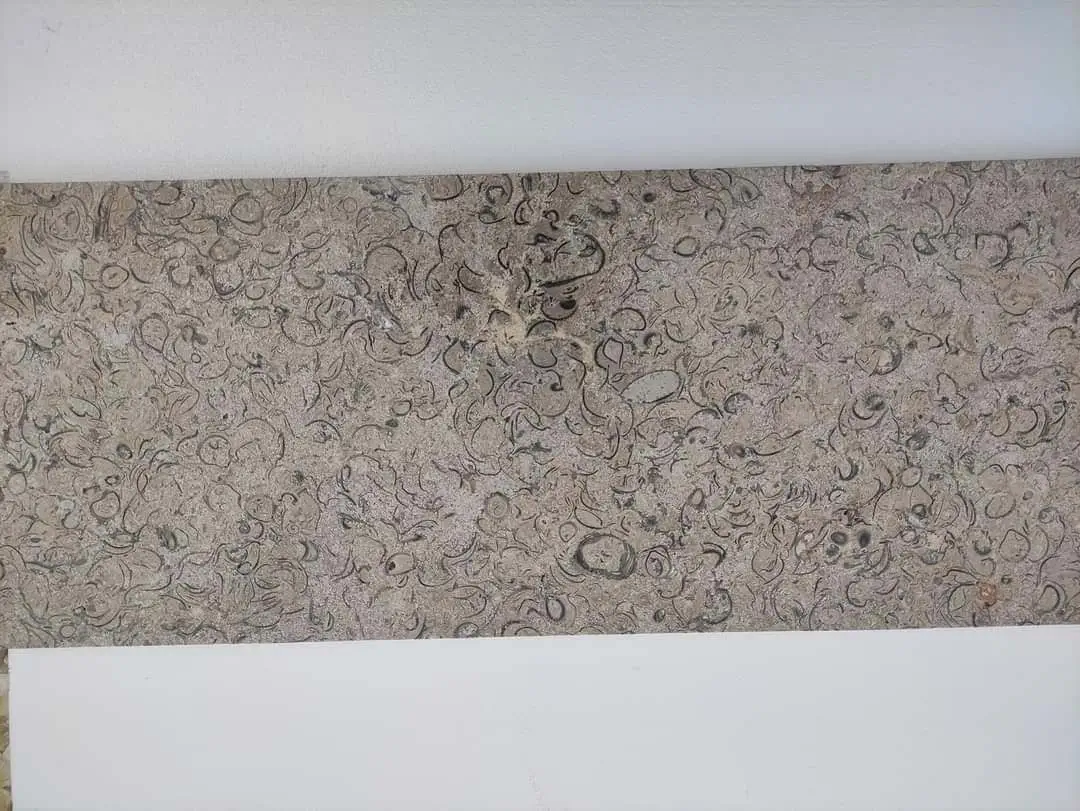
Stone slabs are classified in tiers — typically Grade A (or Premium), Grade B (Commercial), and Grade C (Builder) — and those tiers reflect a lot more than aesthetics. A Grade A slab carries consistent veining, tight tolerances on thickness, and fewer natural fissures that require reinforcement during fabrication. Grade B and C material may look similar in a warehouse photo but can introduce hidden labor costs when the fabricator needs to fill voids, stabilize fracture lines with epoxy, or route around soft inclusions. That added handling time shows up as a line item you didn’t budget for.
For countertop projects, granite slab prices also vary by quarry origin and block quality, not just surface finish. Brazilian granites from certain quarries run denser and more uniform than equivalents from other regions, which translates directly into faster machining times, less blade wear, and tighter waste factors. Your specification sheet should call out slab classification explicitly — not just material type — or you’ll leave the grade decision to whoever is purchasing stock at the time of order.
- Grade A slabs typically yield 85–92% usable material after layout, reducing overall waste cost per finished piece
- Lower-grade slabs with pronounced fissures require mesh backing or epoxy stabilization, adding $8–$15 per square foot in some cases
- Thickness tolerance variance above ±2mm triggers additional surface grinding, which adds machine time and delays delivery
- Exotic quarry origins can double raw material cost while keeping fabrication cost identical — know where the premium is actually sitting
Edge Profiles, Cutouts, and What They Cost in Real Labor Time
Edge profile selection is where countertop fabrication cost diverges fastest between comparable projects. A straight eased edge on a 30-linear-foot countertop run takes a skilled operator roughly 45 minutes. A full bullnose on the same run takes two to three times longer because the machine passes require progressive grinding stages, and any hard transitions — like an inside corner meeting an apron front — require hand-finishing. Waterfall edges that wrap vertically to the floor are essentially four separate fabrication operations, not one.
Cutouts follow the same logic. A standard sink cutout is a routine CNC operation — quick, predictable, and priced accordingly. An integrated drainboard with compound curves, a farmhouse apron with a front reveal, or cooktop cutouts with tight corner radii all require template work, multiple setups, and often hand-grinding to hit the fit tolerances that installers need. Fabricators price these individually for good reason — the time variance between a basic cutout and a complex one can be three hours or more.
- Eased or beveled edges: lowest labor cost, suitable for high-volume or builder-grade projects
- Ogee, dupont, and triple waterfall profiles: premium hand-finishing required, expect 30–50% labor premium over straight profiles
- Each cooktop or undermount sink cutout: typically $150–$350 depending on complexity and material hardness
- Mitered joints for thick-profile illusion: require precise 45-degree cuts and perfect seam alignment — high skill, higher cost
Material Hardness, Tooling Wear, and Why Some Stones Cost More to Cut
The Mohs hardness of your chosen material is a direct fabrication cost variable that rarely appears on supplier spec sheets but matters enormously in the shop. Granite typically runs 6–7 on the Mohs scale. Quartzite — frequently mislabeled as marble in the trade — can reach 7–8, which accelerates diamond blade wear by 30–40% compared to granite of similar thickness. That blade wear gets priced into your granite countertops fabrication cost as a materials surcharge, sometimes explicitly and sometimes folded into the per-square-foot labor rate.
According to Natural Stone Institute fabrication standards, certified stone fabricators are expected to select tooling and speed settings appropriate to the specific material being worked — not a one-size-fits-all CNC program. That matters because cutting a quartzite slab at granite feed rates produces micro-fractures along the edge profile that don’t show up until sealing or in-service stress reveals them. Your fabrication specification should require the shop to document material-specific tooling parameters, particularly for harder exotics.
Slab Yield, Layout Waste, and the Numbers Most Budgets Ignore
Slab yield is the ratio of finished square footage produced to raw slab square footage consumed — and it’s one of the most underappreciated custom stone fabrication cost factors in project budgeting. A standard kitchen with irregular island shapes, appliance cutouts, and bookmatched veining requirements might yield only 65–70% of the slab’s gross area as finished countertop. The remaining 30–35% is paid for and discarded. Your per-square-foot budget needs to account for this or you’ll be short material mid-project.
Bookmatch requirements — where two adjacent slabs are opened like a book to mirror the veining across a seam — effectively mandate purchasing in matched pairs. The fabricator can’t optimize layout freely when pattern continuity is a requirement, so waste factors climb to 40% or higher on complex kitchen runs. For custom stone fabrication pricing drivers like these, the honest conversation happens before layout, not after the slabs are already cut.
- Standard straight-cut countertops: expect 75–85% yield on rectangular slabs
- Bookmatched applications: yield can drop to 55–65%, with matched-pair slab costs factored in
- Remnant use policies vary by shop — ask whether offcuts from your project are available for future repairs
- Island overhangs exceeding 12 inches typically require corbels or internal rod reinforcement, adding structural fabrication cost
Surface Finish Selection and Its Real Impact on Fabrication Price
The surface finish you specify doesn’t just affect aesthetics — it directly affects fabrication time, equipment requirements, and consumable costs. A honed finish on granite requires progressive grit grinding through six to eight stages before reaching the target matte result. Polished finishes require the same progressive sequence plus a final buffing cycle with polishing compounds. Both take significantly longer than a raw sawn finish, which is why finish upgrades carry explicit line items on professional fabrication quotes.
Leathered and brushed finishes — popular for their tactile quality and fingerprint resistance — require additional hand work after machine processing. The wire-brush or diamond-brush tooling that creates the texture wears quickly on dense igneous materials like granite, so expect a tooling surcharge on larger projects. At Citadel Stone, we see clients frequently underestimate finish costs when they upgrade from honed to leathered mid-project — the incremental cost is real and should be locked in during specification rather than treated as a minor variable.
Impact Resistance and How Weather Performance Affects Material Selection
For exterior stone applications — outdoor kitchen countertops, bar tops, feature walls — the fabrication specification needs to account for mechanical stress from severe weather events, not just aesthetic wear. Wind-driven rain forces water into joint interfaces under pressure that static exposure never produces, and materials with open crystalline structures or micro-fissures along polished edges can absorb that water and cycle through freeze-thaw stress in ways that destroy the finish or compromise structural integrity over time.
Granite’s density and low absorption rate — typically 0.1–0.4% by weight — make it one of the stronger candidates for exterior fabricated elements in regions prone to hail or high-wind events. Hail impact on a properly sealed, edge-reinforced granite panel causes surface abrasion but rarely structural failure. Softer stones with higher absorption, like certain marbles and limestones, are more vulnerable to impact-induced micro-cracking, particularly along machined edges where the crystal matrix is already disrupted by the cutting process. Specifying a minimum 1.25-inch thickness and chamfered or eased edges — rather than sharp knife edges — significantly improves impact resilience on exterior fabricated pieces.
According to ASTM natural stone fabrication and quality testing standards, flexural strength and absorption testing protocols exist specifically to evaluate these performance parameters — and your fabrication specification for exterior applications should reference the appropriate test values, not just aesthetic grade.
Installation Complexity and How It Feeds Back Into Fabrication Cost
Fabrication cost doesn’t end at the shop door. Complex installations require the fabricator to produce tighter tolerances — because field adjustments to natural stone are expensive and limited. A countertop running along a wall that’s out of square by 3/8 inch over 10 feet can either be scribed at installation (time-consuming, risky on polished edges) or templated precisely before fabrication so the stone lands correctly on first placement. Precision templating, whether by hand or digital laser, adds cost at the front end but reduces far more expensive rework at the back end.
For projects where custom stone fabrication at Citadel Stone is part of a larger scope — think integrated stone flooring meeting fabricated vanity tops or shower panels — the dimensional coordination between fabricated pieces and field-set tile creates a tolerance stack-up challenge that experienced fabricators resolve during shop drawing review, not on installation day. Flagging these interface conditions early in the process is the difference between seamless stone transitions and visible grout-line mismatches that no amount of finishing can correct.
- Digital templating adds $150–$400 per project but reduces rework risk dramatically on complex layouts
- Scribe-fit walls require 3–5mm of extra material on scribing edges — communicate this to your fabricator before slabs are cut
- Multi-piece countertops with seams should have seam placement agreed upon in the shop drawing stage, not improvised at delivery
- Elevator access, stairwell delivery constraints, and narrow doorways affect slab sizing — oversized pieces that can’t be trucked in must be split and seamed, adding both fabrication and installation cost
Lead Times, Warehouse Stock, and Project Scheduling Reality
Fabrication lead times depend on three converging variables: shop queue depth, slab availability from the warehouse, and finish complexity. A straightforward eased-edge countertop in a stocked material can move from template to delivery in 7–10 business days at most shops. Add a specialty finish, an imported slab on order, or a peak-season queue, and that same scope stretches to 4–6 weeks — or longer if the material requires international sourcing. Your project schedule should treat fabrication lead time as a hard constraint, not an estimate.
Citadel Stone maintains nationwide warehouse inventory across a broad slab selection, which lets clients confirm material availability before committing to a fabrication timeline. That verification step — checking actual warehouse stock rather than assuming catalog availability — prevents the most common scheduling failure in stone projects: the fabricator discovering the selected material is on back-order after the job is already scoped and contracted.
Truck delivery constraints also factor into fabrication decisions. Large-format slabs — those exceeding 120 inches in length — require specialized flatbed transport and may be subject to access restrictions at the project site. A fabricator who doesn’t account for truck clearance at delivery will either arrive with pieces that can’t be carried in or will need to re-cut on-site, which is both expensive and imprecise on polished material. Confirm site access dimensions as part of the pre-fabrication planning process, every time.
Finalizing Your Custom Stone Fabrication Cost Strategy
The clearest path to controlling your custom stone fabrication cost factors is locking in specifications before slab selection — not after. Edge profiles, finish types, cutout complexity, yield expectations, and installation tolerances all need to be defined at the scope stage so every fabrication quote is responding to the same set of requirements. When you let these variables drift into the shop conversation, you lose pricing consistency and create the conditions for scope creep that erodes your contingency before the stone is even cut.
For a broader perspective on how raw stone moves from the quarry through processing to your finished project, the quarry-to-finished-piece process covers the full supply chain in detail worth reviewing as you finalize your procurement strategy. Understanding where value is added — and where cost accumulates — across that chain informs smarter specification decisions at every stage. According to USGS dimension stone fabrication and industry data, domestic stone fabrication output has grown consistently, reflecting increasing demand for precisely specified finished stone across both residential and commercial applications. Material grade selection alone can shift a fabrication budget considerably, and Citadel Stone advises clients to compare slab classification levels before finalizing their scope.
Related reading: granite countertop care problems · cost of granite slab · sink from stone.