What Fabrication Reveals About Marble
A custom marble sink project tests your material knowledge in ways that a countertop installation simply doesn’t. The geometry shifts from flat to three-dimensional, the stress points multiply, and the margin for error at the basin edge compresses to a few millimeters. You’re no longer specifying a slab — you’re engineering a vessel, and the decisions made before a single cut happens determine whether the finished piece performs for thirty years or develops hairline fractures within eighteen months.
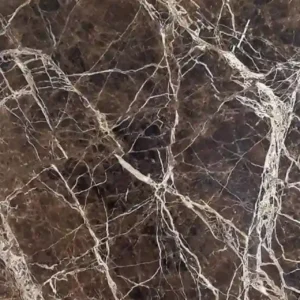
Marble’s crystalline calcium carbonate structure gives it exceptional workability under diamond tooling, but that same structure introduces directional cleavage planes that a fabricator has to respect during every stage of shaping. Selecting material with consistent veining orientation relative to the basin opening isn’t an aesthetic preference — it’s a structural one. A vein running parallel to the basin rim on a thin-profile sink can act as a fracture initiation site under thermal cycling or point loading.
Material Selection for Your Custom Marble Sink
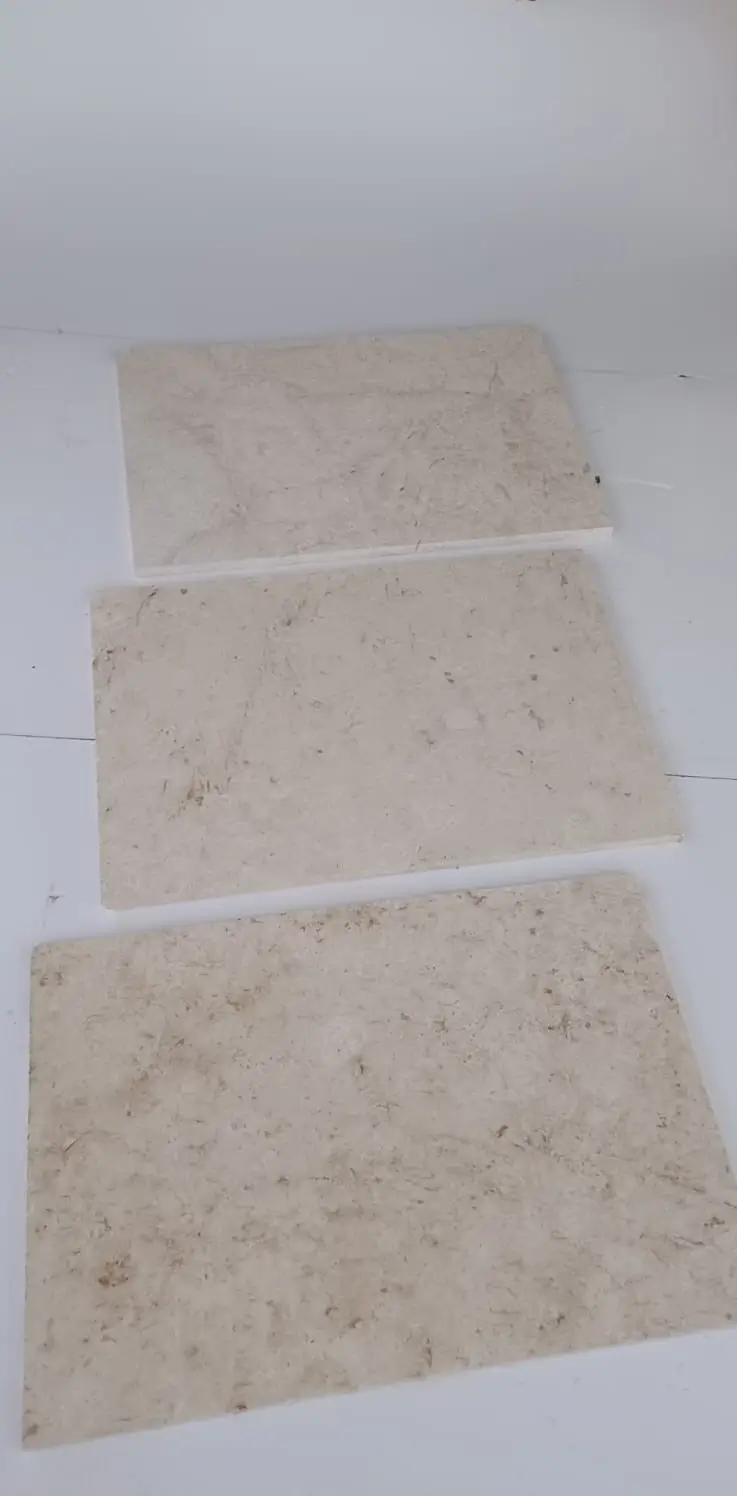
Your slab selection for a custom marble sink project carries more technical weight than most clients anticipate. The two variables that matter most at this stage are block density and vein geometry — both of which determine where the fabricator can safely introduce a drain aperture and how thin the basin walls can run without compromising structural integrity.
Dense, low-porosity marble in the 0.4–0.6% absorption range performs better in wet environments than more porous varieties with absorption rates above 1.0%. According to NSI marble grades and specifications, absorption rate directly correlates to long-term staining resistance and surface durability in high-moisture applications — which a sink basin absolutely qualifies as. You’ll want your slab tested to ASTM C503 before committing to the cut schedule.
- Choose slabs with consistent grain structure — avoid material with pronounced directional veining that crosses the planned basin opening
- Specify a minimum finished thickness of 1.5 inches for vessel-style sinks; undermount configurations require at least 1.25 inches at the deck surface
- Confirm absorption rate testing per ASTM C97 before finalising your material order
- Request bookmatched slabs from the same block run if you’re fabricating a double-sink vanity — colour and vein matching matters at this scale
Templating and Layout Planning
Templating is where a custom marble sink project either gets locked in correctly or accumulates errors that compound through every subsequent stage. Your template should capture not just the countertop perimeter but the precise drain centre, basin depth gradient, overflow position if applicable, and the relationship between the basin wall and any integrated backsplash return.
Digital templating using laser measurement closes the tolerance window considerably versus hand-cut cardboard templates. For undermount installations, the reveal dimension — the gap between the basin rim and the countertop edge — should be consistent to within 1/16 inch around the full perimeter. Inconsistency here reads as fabrication error, but it’s almost always a templating error that got transferred forward into the cut file.
Field conditions also affect your template approach. Many jurisdictions require permit review for plumbing rough-in modifications when a sink project involves moving drain locations, and some apply load-bearing wall codes that affect countertop support substrate requirements. Verify building permit requirements before finalising rough-in dimensions, particularly in multi-story installations where dead load calculations may affect substrate specification.
Cutting and Shaping the Basin
The basin shaping stage in a custom marble sink project involves four distinct operations: the perimeter profile cut, the basin bowl excavation, the drain bore, and the edge detailing. Each one demands different tooling and feed rates, and rushing the sequence is the fastest way to introduce micro-fractures that won’t show up until the piece has been in service for six months.
CNC waterjet or bridge saw with diamond tooling handles the perimeter and drain bore efficiently. Basin bowl excavation typically uses ball-nose diamond router bits working in progressive passes — removing no more than 3mm per pass in dense marble to prevent thermal shock to the crystal lattice. The critical detail most fabricators get right in granite but occasionally underestimate in marble is coolant flow rate; marble’s lower thermal conductivity means heat from the cutting tool dissipates more slowly into the slab, and insufficient coolant accelerates micro-cracking at the cut face.
- Run basin excavation passes at no more than 3mm depth per pass in marble harder than Mohs 4
- Maintain consistent coolant flow throughout all routing operations — intermittent flow is worse than none
- Allow the slab to reach ambient temperature between major cutting phases, especially before edge profiling
- Inspect the basin interior under raking light after each major pass to detect stress lines before they propagate
Edge Profiles and Surface Finishing
Edge profile selection on a custom marble sink project affects both aesthetics and long-term durability. A sharp eased edge on a sink rim sees more impact from everyday use than the same profile on a countertop, because users lean into and grip the basin edge. Bullnose and demi-bullnose profiles distribute impact forces more broadly and reduce chipping risk at the most vulnerable point of the piece.
Surface finish inside the basin deserves separate specification from the deck surface. A honed finish at 400–600 grit inside the basin provides enough micro-texture to reduce slip risk when wet while remaining easy to clean — a polished basin interior looks impressive initially but shows water spots and calcium build-up within weeks of daily use. Your deck surface finish should align with the overall vanity aesthetic, but the interior finish is a functional decision.
Sealing protocol varies by finish. Honed marble is significantly more porous at the surface layer than polished marble because the polishing process closes micro-pores. For a sink from stone installed in a wet environment, you’ll need a penetrating impregnator sealer with a water and oil repellency rating appropriate for continuous moisture exposure — not a topical coating, which will peel under thermal cycling and cleaning chemistry.
How to Clean a Stone Sink Without Compromising the Surface
Knowing how to clean a stone sink properly is as important as the fabrication quality itself. The two most common mistakes are using acidic cleaners and allowing standing water to sit in the basin for extended periods. Marble’s calcite composition reacts with acids — including citric acid in many common bathroom cleaners — producing surface etching that appears as dull patches and progressively degrades the finish.
Your cleaning protocol for a marble sink should use pH-neutral stone-specific cleaner applied with a soft cloth. Avoid abrasive pads entirely, even on honed surfaces. After each use, a quick wipe-down to remove water prevents calcium carbonate deposits from bonding to the surface during evaporation. Resealing on a twelve-month cycle maintains the impregnator’s protective layer, and you can test seal effectiveness with the water bead test — if water absorbs rather than beads within three minutes, reseal immediately. Understanding how to clean a stone sink correctly extends the service life of the finish significantly beyond what periodic resealing alone can achieve.
- Use only pH-neutral stone cleaners — never vinegar, bleach-based products, or citrus-formula bathroom sprays
- Wipe the basin dry after each use to prevent calcium spotting and mineral deposit build-up
- Reseal annually using a penetrating impregnator rated for wet environments
- For calcium deposits that have already bonded, use a non-acidic calcium remover formulated specifically for natural stone — not the hardware-store descalers designed for ceramic
Structural and Code Considerations for Stone Vanities
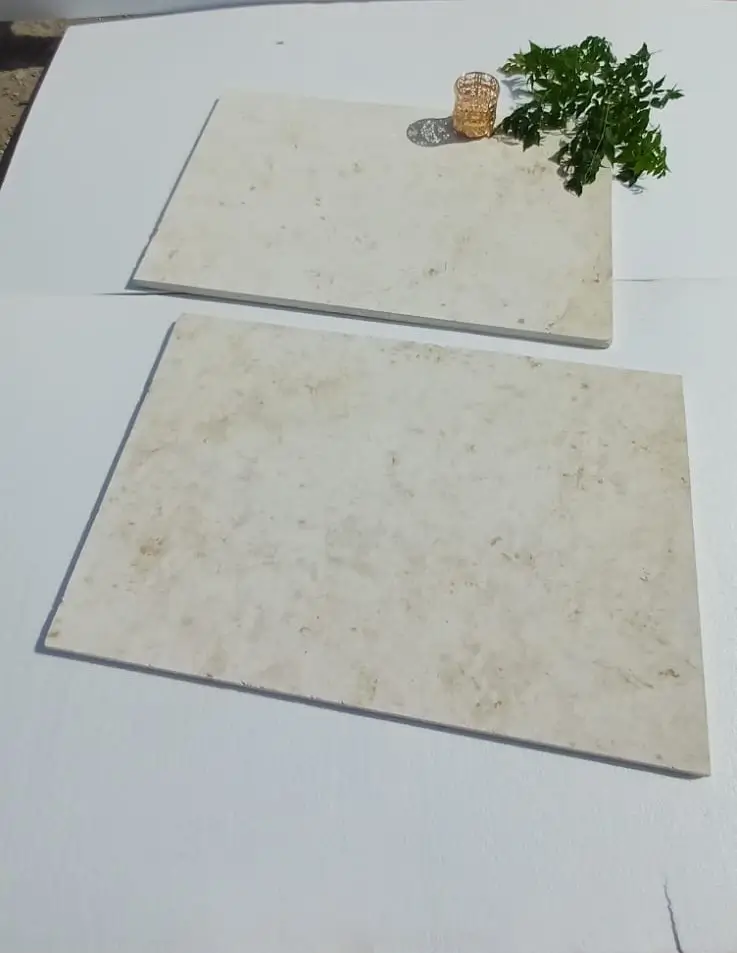
A custom marble sink isn’t just a fabrication challenge — it’s an engineering problem once it’s installed. A fully fabricated marble vanity top with an integrated basin can weigh 180–250 lbs depending on slab thickness and basin depth. That load sits on a vanity cabinet that may or may not have been engineered to carry it. Verify that your cabinet substrate — typically 3/4-inch plywood minimum — can handle the combined dead load without flex, because any flex in the substrate transmits as stress at the drain bore and basin corners.
Building codes in many jurisdictions require structural assessment for heavy stone installations in multi-story residential or commercial applications. The International Building Code Chapter 21 addresses masonry and stone installation requirements, and your permit office may apply these standards to countertop stone work above a defined weight threshold. For vanity installations in seismic design categories D through F, lateral restraint at the countertop support interface becomes a code requirement, not just a best practice. The ASTM stone fabrication and quality testing standards provide relevant benchmarks for material strength under the loading conditions these code requirements are designed to address.
For a detailed walk-through of a comparable project, our marble sink case study covers the full specification and installation sequence from slab selection through final sealing, including the substrate engineering that most online guides skip entirely.
Ordering a Sink From Stone: Lead Times and Logistics
The logistics of a custom marble sink project differ significantly from standard slab supply. You’re not purchasing material and having it cut on-site — you’re commissioning a fabricated piece that has to be transported as a finished object. That changes your lead time calculus, your packaging requirements, and your delivery planning considerably.
Fabrication lead times for a sink from stone run four to eight weeks from confirmed template to delivery, depending on the complexity of the basin profile and the queue at the fabrication shop. Citadel Stone maintains warehouse inventory of select slab stock nationally, which reduces the material sourcing phase of that timeline to days rather than weeks — a meaningful difference when your project schedule has a fixed installation window. Once the piece is ready, truck delivery logistics require advance coordination: a fabricated marble sink top is not a pallet-stackable item, and it needs padded crating with direct-to-site delivery rather than standard freight handling.
Confirm truck access at the delivery address before scheduling — particularly for urban residential projects where loading dock access or elevator dimensions may constrain how the piece moves from the truck to the installation point. A piece that was fabricated to exact specification and then damaged in the last fifty feet of its journey is a problem that the best fabrication work can’t recover from.
- Confirm vanity cabinet installation and substrate preparation is complete before scheduling sink delivery — fabricated marble tops shouldn’t be stored on-site in uncontrolled conditions
- Verify truck access, elevator clearances, and stairwell widths before delivery scheduling for multi-story installations
- Request padded crating as standard — not optional wrap — for any piece with an integrated basin
- Plan your warehouse to installation sequence so the piece doesn’t need to be repositioned multiple times once on-site
Custom Bathroom Countertops With Sink: Design Integration Points
Custom bathroom countertops with sink integration present specific design coordination challenges that go beyond the sink itself. The relationship between the countertop deck surface, the backsplash return height, and the mirror or medicine cabinet above has to be resolved before fabrication begins — not after. Any change to countertop thickness or height after the template is locked cascades into faucet rough-in height, backsplash tile layout, and mirror mounting position.
Specify your faucet deck thickness requirements before the slab is profiled. Many designer faucets require a maximum deck thickness of 1.5 inches at the faucet bore location, while some vessel-style faucets need even thinner deck profiles. Fabricating to 2-inch thickness for structural benefit and then discovering your specified faucet doesn’t clear the deck is an expensive correction. The same coordination logic applies to drain assemblies — confirm the drain’s maximum installation depth against your finished basin floor thickness before committing to the basin excavation depth in your cut file.
According to NSI fabrication standards and certification, proper pre-installation coordination between the stone fabricator, plumber, and general contractor is one of the most consistent factors separating successful custom bathroom countertops with sink integration from those requiring remediation. That coordination isn’t a soft recommendation — it’s the difference between a project that installs cleanly in a single day and one that requires three site visits to resolve conflicts that should have been caught at the design stage.
What Matters Most in a Custom Marble Sink Project
A custom marble sink project rewards precision at every stage, and the decisions that matter most happen well before the diamond tooling touches the slab. Your material selection, template accuracy, fabrication sequencing, and substrate engineering collectively determine the performance life of the finished piece — and none of them can be fully compensated for by exceptional work in a later stage. Get the slab specification right, get the template locked with correct tolerances, and coordinate your structural and plumbing constraints before the cut file is confirmed. The finishing and sealing work builds on that foundation, but it can’t replace it. As you plan your next natural stone installation, our fabrication slab selection guide walks through the material choice criteria that inform projects like this one from the very first decision. At Citadel Stone, we’ve worked through the full range of challenges these projects present — from sourcing consistent block runs to coordinating final truck delivery of finished pieces to job sites nationwide. The block for this project came from select natural stone quarries worldwide, milled to spec by Citadel Stone fabricators.
Related reading: stone fabrication services · Granite Fabrication Services: What to Expect · custom stone works ideas.