What Custom Stone Carving Actually Demands
The custom stone carving guide most specifiers need isn’t about aesthetics — it’s about understanding the mechanical and material variables that determine whether a carved piece survives decades or begins failing within the first few winters. Carving removes material selectively, which means the structural integrity of the finished piece depends entirely on what you leave behind, not what you take away. Thin sections, undercuts, and deeply carved relief work all create stress concentration points that the original slab never had — and that’s where specification decisions either protect your project or expose it.
Stone selection for carving isn’t interchangeable with stone selection for paving or cladding. A material that performs flawlessly as a paver may fracture unpredictably under a router bit or chisel because its crystal structure doesn’t tolerate directional stress. Your first decision — before tools, before design files, before anything else — is whether the stone you’re specifying can physically accept the carving depth your design requires.
Stone Types Best Suited to Carving Work
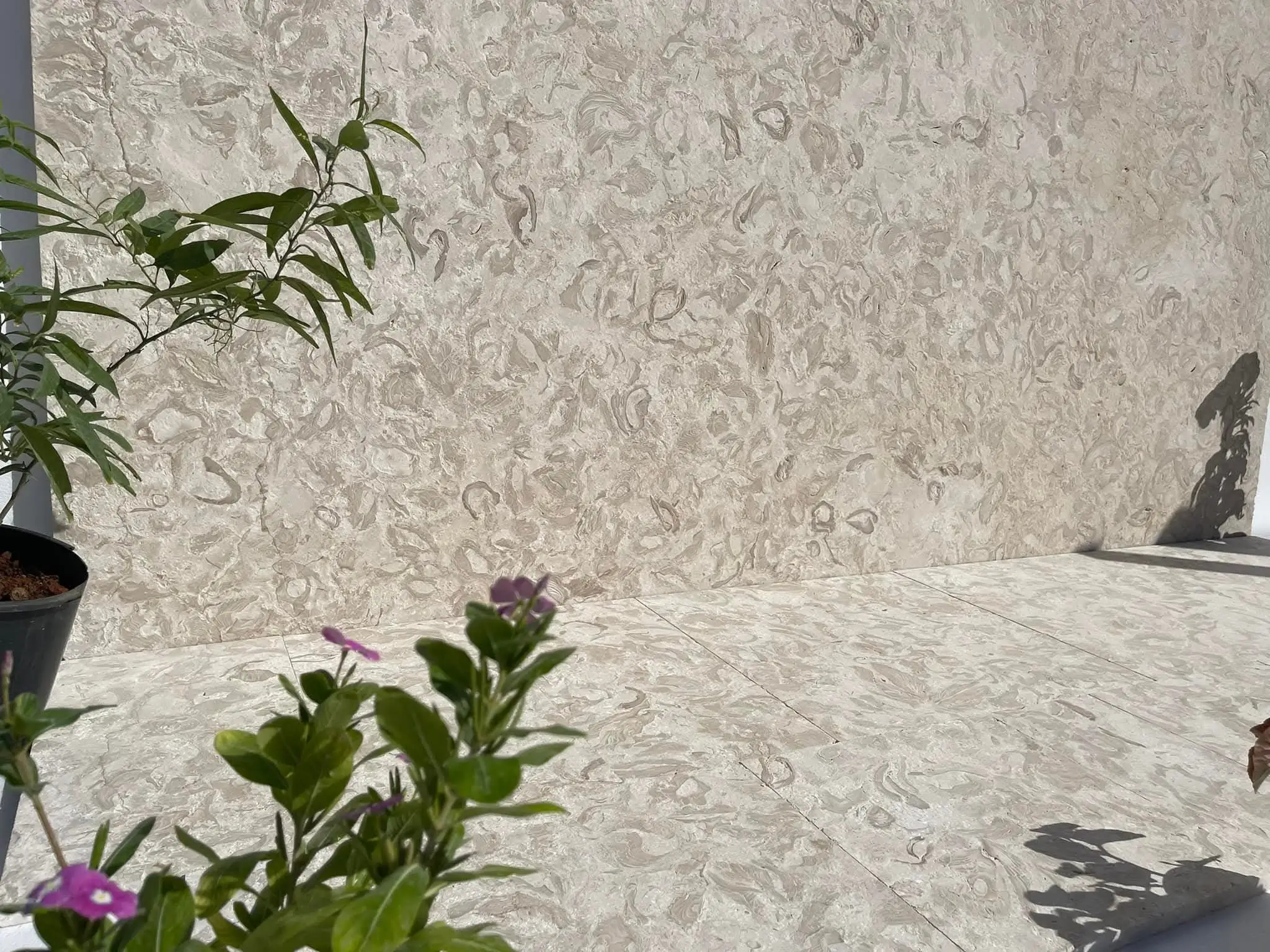
Not every natural stone carves with the same reliability. The material’s grain structure, hardness, and internal porosity all influence how cleanly a tool moves through it and how the finished surface holds detail over time. Understanding these differences isn’t optional — it’s the foundation of any credible custom stone carving guide.
- Limestone carves exceptionally well due to its relatively uniform grain structure and moderate Mohs hardness of 3–4; fine-grained varieties hold sharp relief edges without chipping
- Travertine is workable for shallower carving and decorative profiles, though its natural voids require filling before detailed relief work or the voids telegraph through finished surfaces
- Marble accepts intricate carving and takes a high polish, but its calcite grain means directional fracture risk is real — always carve with the grain orientation, not against it
- Granite resists carving compared to sedimentary stones; its interlocking crystal structure requires diamond tooling and CNC processing, making freehand detail work impractical at fine scales
- Sandstone is soft enough for hand tools but its layered bedding planes make deep undercutting risky — delamination along bedding planes is the most common failure mode
- Soapstone (steatite) is the most forgiving hand-carving medium at Mohs 1–2, but its softness limits outdoor durability in high-traffic applications
For architectural applications — mantels, columns, balustrades, and decorative panels — limestone and marble remain the professional defaults. Their workability-to-durability ratio hits the sweet spot that other materials don’t match consistently, and natural stone design fabrication at this scale depends on that consistency.
Tools and Equipment: Hand Carving Through CNC Fabrication
The tools you use define what’s achievable in your design — not just in terms of complexity, but in terms of tolerance and repeatability across multiple pieces. Custom stone carving today spans a wide spectrum from hand tools to fully automated stone fabrication machines, and understanding where each method delivers its best results will save you significant time and money.
Hand Tools for Traditional Stone Carving
Hand carving remains the appropriate method for one-off sculptural work, restoration projects, and situations where the irregularity of handwork is part of the design intent. You’ll rely on a core set of tools that haven’t changed fundamentally in centuries, though the metallurgy behind modern versions is considerably more sophisticated.
- Point chisels for roughing out material and establishing primary forms — used with a mallet, they fracture rather than cut stone, so control comes from strike angle and force management
- Tooth chisels (also called claw chisels) for intermediate surface work — the serrated edge leaves characteristic parallel grooves that you can use as a decorative finish or remove with flat chisels
- Flat chisels for refining surfaces, cleaning profile edges, and final detail work in softer stones
- Rifflers and rasps for curved surfaces that chisels can’t reach cleanly
- Pneumatic hammers with interchangeable tips dramatically increase speed without sacrificing control once you’ve developed feel for the material
Angle Grinders, Die Grinders, and Rotary Tools
Power tools bridge the gap between hand carving and CNC work. Angle grinders fitted with diamond cup wheels remove material quickly and are the standard choice for roughing curved profiles on limestone and marble. Die grinders with carbide burrs give you more precise control for intermediate detail work, and flex-shaft rotary tools handle fine engraving and lettering where a full grinder is too aggressive. The risk with power tools in stone is overheating — particularly in marble, where heat from grinding can cause micro-cracking that doesn’t show immediately but propagates under thermal cycling outdoors.
CNC and Stone Fabrication Machines
Stone fabrication machines using CNC routing have fundamentally changed what’s achievable in architectural stonework at production scale. A 5-axis CNC bridge saw or router can cut complex three-dimensional profiles with tolerances under 0.5mm, reproduce the same carving across dozens of pieces identically, and process harder materials like granite that hand carving can’t address economically. According to NSI fabrication standards and certification, certified CNC fabrication shops follow documented processes for toolpath programming, material fixturing, and quality verification that manual operations rarely match. For production runs of carved balustrades, column capitals, or decorative panels, CNC is not an upgrade — it’s the only rational specification choice.
The practical limitation of CNC is setup cost. Programming a complex 3D carving toolpath, fixturing the slab securely, and running test cuts in scrap material before committing to finished stone represents real time investment. For single pieces or simple profiles, hand and power tool methods are often faster and more cost-effective. Your project’s piece count, complexity, and tolerance requirements determine which method makes sense — and sometimes the answer is a hybrid of both.
Design Files, Templates, and Pre-Carving Preparation
Design preparation is where most carving projects either gain or lose weeks of production time. Whether you’re working with hand tools or CNC, the quality of your design input directly controls the quality of the finished piece — and vague design files are the single most common cause of rework in custom stone carving projects.
For hand carving, traditional methods use paper or card templates transferred to the stone surface with chalk or pencil. For anything with symmetrical profiles — egg-and-dart moldings, acanthus leaf capitals, rope-and-bead borders — half-templates in thin plywood or MDF let you flip and trace both sides accurately. CNC work requires digital design files, typically in DXF, DWG, or STL format depending on the machine and CAM software in use. The jump from a 2D drawing to a 3D toolpath is where design errors surface, so review your files against the physical slab dimensions before the program runs.
- Verify slab thickness against minimum wall sections in your design — the finished carved piece must retain enough material to resist handling and installation stresses
- Mark natural flaws, veining, and any existing cracks on the slab before transferring your design — position the carving to avoid these features or adjust the design to work around them
- For symmetrical pieces, establish a true centerline and datum points before any cutting begins — errors in datum setup compound through every subsequent operation
- On CNC jobs, always confirm that the machine’s zero point matches your drawing’s origin before the spindle moves
Carving Techniques Matched to Specific Applications
The technique you apply should follow from the application, not from personal preference or tool availability. Different architectural and decorative contexts demand fundamentally different carving approaches, and understanding the distinction is what separates competent stone carving from genuinely excellent work.
Relief Carving for Panels and Architectural Facades
Relief carving — where figures or patterns project from a flat background — is the dominant technique in architectural stonework. Low relief (bas-relief) removes material to a uniform background depth of typically 10–25mm, leaving the design raised. High relief works at greater depth and can approach full three-dimensional form. Your background removal technique determines the quality of the finished piece: chisel the background uniformly and at consistent depth, checking with a depth gauge frequently rather than trusting your eye alone. According to ASTM natural stone fabrication and quality testing standards, finished dimension stone elements should meet specified surface planarity tolerances — the same discipline applies to carved backgrounds, which must be flat enough to read as intentional, not as uneven removal.
Profile Carving for Moldings, Edges, and Trim
Molding profiles — ogee, ovolo, cove, bead, and their combinations — are carved repetitively along edges and are the most common custom stone carving task in renovation and restoration contexts. Consistency across a run of moldings is the technical challenge here, since even slight variation in profile depth or curvature reads as error when pieces are installed side by side. Templates checked at every pass are non-negotiable for hand work. CNC routing with a properly dressed profile bit is faster and more consistent for production runs, provided the bit geometry exactly matches the design profile.
Lettering, Engraving, and Incised Work
Incised lettering and decorative engraving require the lightest touch and sharpest tools in stone carving. V-section incision is the most readable form — a clean V-cut with walls meeting at a crisp apex reflects light consistently and remains legible after decades of weathering. Sandblasting through rubber stencils is the production method for lettering on monuments and building signage, offering consistent depth and clean edges that hand work can only match with considerable skill. For Citadel Stone carved stone pieces involving lettering or fine engraving, the slab’s surface finish should be honed rather than polished before cutting — polished surfaces show tool marks from the carving process that honed surfaces don’t.
Finishing, Sealing, and UV Protection for Carved Stone
Carved stone installations in sun-exposed settings face a weathering challenge that flat paving doesn’t — the relief surfaces, undercuts, and molding profiles create shadow geometry that traps UV degradation unevenly across the piece. Areas that catch direct sun bleach faster than shadowed recesses, which over time creates a mottled, uneven appearance that worsens each season without intervention.
Finish selection for outdoor carved pieces should account for this from the start. Honed finishes weather more uniformly than polished surfaces under UV because they don’t rely on a reflective sheen that degrades visibly. Polished marble or limestone carving outdoors will lose its mirror finish within 2–5 years of sun exposure regardless of sealing — plan for either periodic re-polishing or accept the transition to a natural honed patina as part of the design intent.
- Apply a penetrating impregnating sealer to all outdoor carved stone before installation — the carving process opens fresh stone surfaces that are more absorbent than saw-cut faces and require full sealer penetration
- Reapply sealer every 2–3 years for exposed installations, or more frequently in regions with intense UV exposure, since UV degrades the polymeric sealer matrix even when the stone itself shows no visible change
- Avoid topical film-forming sealers on exterior carved work — moisture trapped beneath the film will cause spalling in freeze-thaw regions, and the film itself yellows under prolonged UV exposure
- For limestone and travertine carvings, use a solvent-based fluoropolymer impregnator rather than water-based silicone sealers — fluoropolymers offer superior UV stability and longer resealing intervals
- Check carved profiles for sealer pooling in concave molding sections — excess sealer in cove and ogee profiles leaves a visible residue if not wiped during application
Color stability under sun exposure is a genuine concern for light-colored carved limestone. Natural stone design fabrication using white or cream limestone shows UV-induced surface oxidation as a subtle yellowing or bronzing over time, particularly on horizontal surfaces that receive direct overhead sun. This isn’t structural damage — it’s a surface photochemical reaction — but it affects appearance. Specifying a UV-stable color enhancer sealer rather than a clear impregnator slows this process measurably, particularly in installations that face south or west.
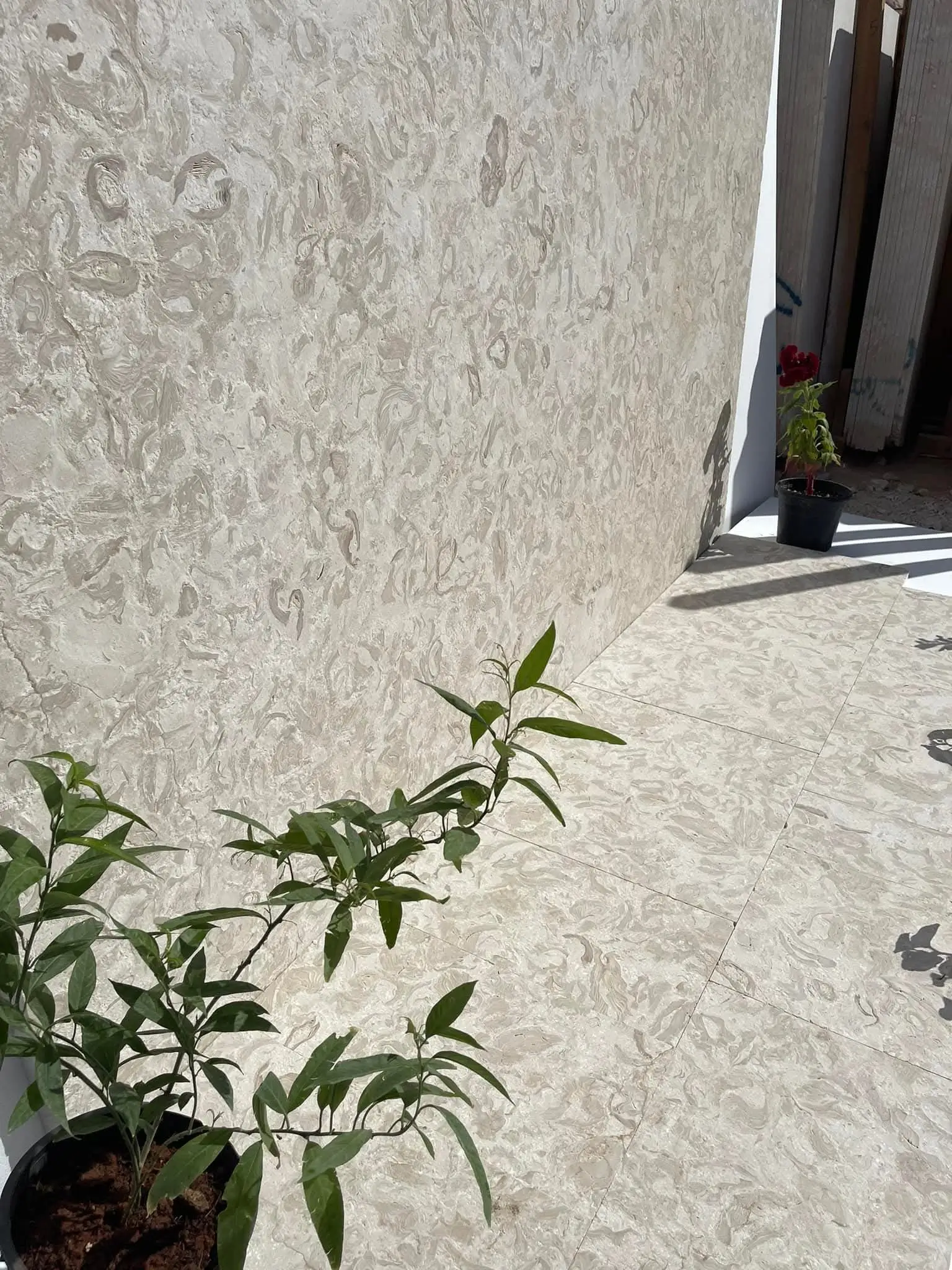
Installation Details and Structural Considerations for Carved Elements
Carved stone elements carry structural risks that flat stone doesn’t. The material removal that creates the design also reduces cross-section, and that reduced section needs to handle lifting, transport, and installation forces without cracking. Pieces that survive the carving process perfectly can fail during handling if the lifting plan doesn’t account for the weakest section of the carved profile.
Transportation from the warehouse to the project site is where many carved pieces sustain damage that doesn’t show until installation. Crated pieces should be padded at contact points, never at the carved faces, and oriented so the crate carries load through the stone’s thickest section. Verify with your supplier that the warehouse packing method accounts for the specific geometry of your carved pieces — a packing method adequate for flat slabs can concentrate point loads on carved relief elements during truck transit.
- Calculate net section at the thinnest point of each carved element and verify it against the piece’s self-weight plus handling loads — for limestone, use a conservative flexural strength of 1,500–2,000 psi for this check
- Install carved panels with mechanical anchors rather than adhesive-only attachment for pieces weighing more than 50 lbs — adhesive creep under sustained load is a real failure mechanism over 10–15 year timeframes
- Allow for thermal expansion in the installation detail — carved stone installed tight against adjacent masonry will develop stress concentrations at its thinnest carved sections as temperature cycles
- On exterior carved columns and balustrades, cap exposed horizontal surfaces with a positive drainage pitch — carved horizontal surfaces that pond water accelerate surface erosion and biological growth in the carved detail
The USGS tracks dimension stone fabrication and wholesale industry data that confirms the continued dominance of limestone and marble in the carved architectural stone segment — material selection patterns in the field reflect exactly the workability and structural characteristics discussed here.
Common Carving Defects and How to Avoid Them
Experience with custom stone carving techniques shows that the same defects appear repeatedly across projects of different scale and complexity. Knowing them in advance is what separates a clean first attempt from costly rework.
- Chipping at arrises and profile edges — caused by taking too-heavy cuts near finished edges; approach final dimensions with light passes and never remove more than 2–3mm per pass near an arris
- Uneven background depth in relief work — the eye reads inconsistent depth as sloppiness; check depth with a gauge at a minimum of every 150mm across the background field
- Grain fracture in marble running diagonally through carved detail — happens when tooling direction crosses the crystal grain at the wrong angle; always establish grain direction before cutting begins and orient your toolpath with it
- Tool burns in CNC routing — caused by insufficient coolant flow or a worn bit; replace diamond bits before they dull, not after, since a dull bit generates heat that micro-cracks the stone surface below the cut
- Moisture staining after installation — carved faces are fresh, absorbent stone; any contact with iron-rich mortar or contaminated water before sealing leaves permanent staining in the open surface
What Matters Most in a Custom Stone Carving Guide
A custom stone carving guide that stops at tool selection misses the decisions that actually determine project outcomes. The material you specify, the design preparation you invest in, and the installation detail you apply collectively determine whether a carved stone element enhances a project for generations or becomes a maintenance liability within the first decade. The technical details in each of those phases are interdependent — a well-carved piece in the wrong material, or a correctly specified stone handled poorly during warehouse storage and truck delivery, still fails. Bringing all those elements together is what professional-grade specification looks like. For projects that extend beyond carving into other natural stone applications, natural stone tile options for interiors covers additional material choices worth reviewing as you round out your specification. Softer stones like limestone and travertine are frequently chosen for carved mantels and columns, and Citadel Stone sources slab grades specifically suited to detailed relief work.
Related reading: natural stone fabrication care · slab fabrication vs prefab · fabrication stone defects.