Choosing large marble tile for open-plan spaces forces a specification decision that most project teams get backwards — they select the format first and engineer the substrate second, when it absolutely has to be the other way around. Large-format marble, particularly anything running 24×48 inches or beyond, amplifies every substrate imperfection by an order of magnitude compared to standard 12×12 work. The deflection tolerances, the mortar bed flatness requirements, the expansion joint frequency — these aren’t details you adjust after tile selection. They determine whether your installation looks flawless at year one and year fifteen, or begins telegraphing hairline cracks through the field by year three.
What Large-Format Marble Actually Demands from Your Substrate
Your substrate must meet an L/720 deflection standard for large marble tile — not the L/360 that satisfies most ceramic or porcelain specifications. That distinction matters more than most contractors realize until they’re staring at a cracked field tile six months post-installation. Marble’s crystalline structure transmits stress differently than engineered tile products; it doesn’t absorb minor flex — it fractures through it.
The flatness tolerance shifts as well. ANSI A108.02 requires no more than 1/8 inch variation in 10 feet for standard tile. For large marble tile in formats above 15 inches on any edge, you’re working to 1/8 inch in 10 feet with no more than 1/16 inch variation in 24 inches — a significantly tighter control window. On existing concrete slabs, you’ll almost always need to skim-coat or self-level before laying marble of this scale.
- Confirm slab deflection rating before specifying any large marble format — L/720 is your minimum threshold
- Self-leveling underlayment adds 3–5 days to your schedule but eliminates the most common large-marble failure point
- Radiant heat systems require marble thickness of at least 3/8 inch to distribute thermal load without point stress
- Uncoupling membrane systems work well with large marble tile but require full mortar coverage — 95% minimum — verified by back-buttering

Format Selection and Vein Matching in Open Spaces
The visual promise of large marble tile in an open plan is continuity — veining that flows across a room the way it would in nature, with minimal interruption from grout joints. Delivering on that promise requires you to understand how marble is bookmatched and gang-sawn at the quarry level, because the tile sequence you receive from the warehouse determines whether that vein movement reads coherently or randomly across your floor plane.
Sequentially numbered tiles from the same block produce the most coherent vein flow. Request sequence numbers when ordering, and verify with your supplier that stock was pulled from a single production run. At Citadel Stone, we specifically source large marble tile formats from quarries that maintain slab sequencing through the cutting process, because random-pull production is the single largest contributor to vein mismatch complaints on open-plan installations.
Book-matching — where adjacent tiles are mirror images of each other — works exceptionally well in large open spaces but demands pre-layout on the warehouse floor before delivery. You’re arranging a puzzle before it goes into the truck, and any tile damaged in transit has to be replaced from the same sequence or the pattern collapses. Factor fragility protection into your logistics plan accordingly.
- Request sequentially numbered tiles from a single quarry block for coherent vein continuity
- Pre-layout on a clean warehouse surface before loading — document the sequence photographically
- Book-matching works best in rooms with clear bilateral symmetry — entry halls, great rooms, lobby spaces
- Random-vein layouts are more forgiving of mixed-batch material but sacrifice the dramatic visual effect large marble delivers at its best
- Oversizing your order by 12–15% accounts for cuts, sequencing losses, and breakage without requiring a second warehouse pull
Mortar System Selection for Large Marble Tile
Your mortar system is doing more structural work with large marble tile than with any other residential or commercial tile product. The combination of mass, rigidity, and thermal sensitivity demands a polymer-modified large-format mortar — specifically one rated for heavy tile and stone by ANSI A118.15. Standard thinset fails under these conditions not because it lacks adhesive strength, but because it can’t accommodate the differential movement that occurs as a large marble slab expands and contracts across its 24- or 48-inch span.
Medium-bed mortars in the 3/16 to 1/2 inch range give you the adjustment depth you need to achieve flatness across a large tile without collapsing under the tile’s weight before it sets. Standard thinset at 3/32 inch compressed coverage doesn’t provide adequate support surface for tiles this size — you’ll get hollow spots, and hollow spots under marble become cracks. According to TCNA installation standards for natural stone tile, full coverage requirements for large-format stone are non-negotiable, with 95% coverage mandatory in wet areas and 80% the absolute minimum in dry interior applications.
Back-buttering is not optional for large marble tile. Apply medium-bed mortar to both the tile back and the substrate, comb in one direction on the substrate and perpendicular on the tile back, then set. This cross-combing technique collapses air pockets and guarantees the coverage percentage your specification requires.
Expansion Joint Planning for Marble in Wide Open Plans
Marble’s coefficient of thermal expansion sits around 3–5 × 10⁻⁶ per °F depending on mineral composition and origin — lower than most engineered stone products but not negligible across a 30-foot open-plan room. Your expansion joint layout needs to appear on the drawing set before a single tile is ordered, because the joint locations determine where your tile cuts fall, and large marble tile cuts are expensive and unforgiving.
Place expansion joints at all changes of plane — wall-to-floor transitions, door thresholds, column bases — and at a maximum of 20 to 25 feet in each direction across open field areas. In areas exposed to significant temperature variation, such as rooms with large south-facing glazing or spaces that transition from heated interior to unheated entryway, tighten that spacing to 15 feet. Sealant joints filled with a color-matched polyurethane or silicone compound can be made nearly invisible in large marble tile layouts when you align them with natural vein breaks or mortar joint positions.
- Maximum 20–25 feet between field expansion joints in climate-controlled interiors
- Tighten to 15 feet in high-thermal-variation zones near glazing or entryways
- All perimeter joints at walls must remain clear of rigid grout — sealant only
- Joint width of 1/4 inch minimum accommodates the movement marble actually produces
- Never allow tile contractors to fill expansion joints with grout — this is the fastest path to field cracking in any large marble tile installation
Finish Selection and Surface Performance in High-Traffic Spaces
The finish you choose when choosing large marble tile in open commercial or residential spaces has more impact on maintenance burden and long-term appearance than the marble variety itself. Polished marble delivers the mirror-like reflectivity that makes large open spaces feel luminous — but it’s also the most demanding finish to maintain in high-traffic environments. Micro-scratching from foot traffic and grit accumulates on polished surfaces faster than on honed alternatives, and restoration polishing is a significant cost that belongs in your client’s maintenance budget from day one.
Honed finishes at 400 to 800 grit provide a matte to soft-satin surface that hides traffic wear significantly better than polished, while preserving the veining and depth that makes marble worth specifying in the first place. For large format tiles in entry zones, corridors, or any area with consistent foot traffic from outdoors, honed is the technically superior choice. According to NSI stone tile specifications and standards, slip resistance values for honed marble consistently outperform polished equivalents in wet-condition testing — an important consideration for entry areas subject to tracked-in moisture.
Leathered or brushed finishes occupy a useful middle ground — more texture than honed, more visual depth than tumbled, and significantly more fingerprint-resistance than polished. They’re underspecified in open-plan projects and worth your consideration when the space demands a tactile quality that pure polish can’t deliver.
Weathering and Mechanical Durability of Large Marble Tile
For exterior applications of large marble tile — covered terraces, protected loggia spaces, or transition zones between interior and exterior — wind-driven rain and storm events introduce a set of mechanical stresses that pure aesthetics-based selection completely misses. Edge restraint integrity becomes critical when large marble tiles are set in exterior conditions, because wind-driven water infiltrating even a hairline joint at the perimeter will migrate under the tile and attack the mortar bond from below.
Marble’s absorption rate varies significantly by variety — Carrara typically runs 0.2–0.4%, while softer marbles from some origins reach 0.8–1.2%. In exterior conditions subject to freeze-thaw cycling or wind-driven rain saturation, absorption rate directly predicts long-term joint integrity and surface stability. Tighter absorption values mean less water ingress, slower deterioration of joint sealant, and better resistance to the hydrostatic pressure that builds behind tile faces during sustained storm events. Our technical team at Citadel Stone evaluates absorption data from each quarry shipment specifically to flag varieties unsuitable for exterior use in demanding weather zones.
Edge restraint systems for exterior large marble tile must be mechanically anchored — adhesive-only perimeter treatment is insufficient when wind loading creates suction forces on the tile field. Mechanical clips at perimeter courses combined with full mortar coverage through the field deliver the combined structural resistance these conditions require.
- Specify marble with absorption rates below 0.5% for any exterior or semi-exposed installation
- Mechanical edge restraints at perimeter courses resist wind-induced suction forces adhesive systems cannot match
- Joint sealant in exterior applications should be inspected annually — storm events accelerate sealant fatigue at exposed edges
- Hail and impact events can cause subsurface fractures in marble that aren’t immediately visible — schedule a tap test after any significant weather event
- Sealed grout joints in exterior field areas reduce wind-driven water infiltration by a measurable margin compared to unsealed joints
Sealing and Maintenance Protocols That Protect Your Investment
Every large marble tile installation should be sealed before grouting — full stop. Pre-grouting sealer prevents grout pigment from bleeding into the open pore structure of marble at the grout line, a staining pattern that’s nearly impossible to reverse without professional restoration work. Apply a penetrating impregnating sealer rated for marble, allow full cure per the manufacturer’s data sheet (typically 24 hours minimum), then grout.
Ongoing maintenance schedules depend on finish, traffic, and exposure. Polished marble in residential open-plan spaces typically needs resealing every 12–18 months. Honed marble in commercial corridors may require treatment every 6–9 months given abrasive traffic. The easiest field test: water droplets should bead on a properly sealed surface. Flat absorption within 60 seconds signals that resealing is overdue. This isn’t a complex test — you can hand any building maintenance team a spray bottle and a 60-second timer and get reliable results every quarter.
Avoid acidic cleaners on any marble installation — citrus-based products, vinegar solutions, and some grout hazes will etch polished and honed surfaces chemically, creating dull spots that require mechanical re-polishing to correct. Neutral pH cleaners diluted in clean water are sufficient for routine maintenance of large marble tile in residential and commercial spaces alike. According to ASTM natural stone tile testing standards, marble’s susceptibility to acid attack is a documented material characteristic that maintenance protocols must account for across the installation’s lifetime.
Logistics and Ordering for Large-Format Marble Projects
The practical logistics of getting large marble tile from the warehouse to your installation site deserve as much planning as the specification itself. Tiles in 24×48 format typically weigh 7–9 pounds per square foot at 3/8 inch thickness — a full pallet runs 700 to 900 pounds. Your site access needs to accommodate a truck with liftgate or forklift capability, and ground-floor staging is strongly preferred. Elevator delivery of marble pallets in commercial renovation projects is possible but requires careful coordination with building management and structural review of the elevator load rating.
Lead times from warehouse to site vary depending on the format and variety you’ve specified. Standard formats in high-demand varieties often ship within 1–2 weeks from Citadel Stone’s national inventory. Custom formats or specialty quarry runs can extend that timeline to 8–12 weeks, so your schedule needs to account for this before committing the project to a fixed installation date. Order confirmation against confirmed warehouse stock — not projected inbound stock — is the only safe approach for schedule-critical projects.
Verify that your large-format marble tile order includes a sequence map if you’ve requested bookmatched or vein-matched material. A sequence map documents tile orientation and position in the layout, so your installer isn’t guessing which edge goes where on a 48-inch slab.
- Confirm truck access and liftgate or forklift availability before scheduling delivery
- Stage tiles flat, not on edge — large marble tile stored vertically on a job site is a breakage and safety risk
- Acclimatize tile to the installation environment for 24–48 hours before setting, particularly in temperature-controlled interiors
- Verify warehouse stock against a confirmed production run, not projected import schedules
- Oversized tile deliveries should be scheduled for mornings — afternoon unloading in hot conditions accelerates mortar open time and reduces your working window
Grout Joint Width and Color Decisions for Large Marble Tile
The grout joint width debate for large marble tile has a technically correct answer: 1/16 to 1/8 inch for rectified tiles, and up to 3/16 inch for calibrated (non-rectified) material. Rectified large marble tile — cut to true dimensional tolerances within ±0.5mm — allows the tightest joints and produces the most seamless visual result in open-plan spaces. Non-rectified material requires wider joints to absorb dimensional variation, and at large formats, that variation compounds across the field in ways that become visually apparent.
Grout color is an aesthetic decision with performance implications. Light grouts on white or grey marble read almost invisibly — the installation looks like continuous stone — but require more diligent maintenance because staining is highly visible. Slightly contrasting grouts at medium grey or warm beige tones on Calacatta or Statuario marble are more forgiving in high-use environments. Epoxy grout provides maximum stain resistance and is worth the additional cost and installation complexity in kitchen applications or any space with regular liquid exposure.
Final Considerations for Choosing Large Marble Tile
Choosing large marble tile is one of the highest-commitment material decisions in any interior project — the format amplifies both the success and the failure of every specification decision upstream of it. Your substrate preparation, mortar system, expansion joint layout, and finish selection all need to be locked in before the first tile ships from the warehouse, not adjusted in the field when problems emerge. The installations that hold up over twenty-plus years are the ones where the specification work was done with the same rigor applied to the marble selection itself.
The large marble tile guide that works in practice is rarely the one that focuses on aesthetics alone. It’s the one that treats substrate flatness, thermal movement, mortar coverage, and sealing cadence as equally important as vein pattern and finish. These aren’t details for the installer to sort out — they’re decisions that belong in your specification documents, reviewed before the project breaks ground. As you build out your material budget and explore related stone investments for your project, it’s worth understanding how marble slab pricing works across different formats and grades — marble slab pricing and grades covers the cost variables that inform smarter procurement decisions across your full stone scope.
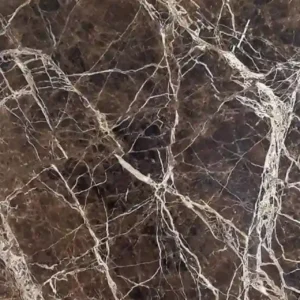
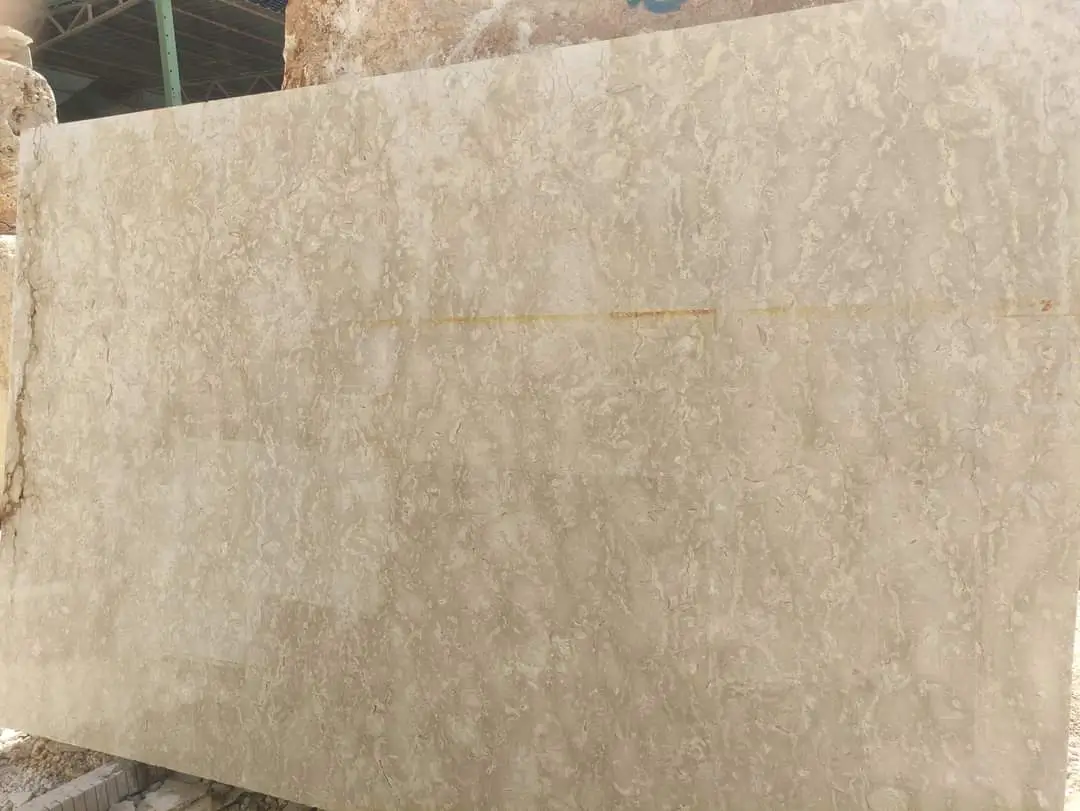
Large marble tiles from Citadel Stone come in formats up to 24 by 48 inches for seamless expanses.
Related reading: marble slab · Calacatta Marble: A Complete Selection Guide · How to Install a Marble Threshold Correctly.