














50 Years Of Manufacturing & Delivering The Highest-Quality Limestone & Black Basalt. Sourced & Hand-Picked From The Middle East.

Escrow Payment & Independent Verifying Agent For New Clients

Contact Me Personally For The Absolute Best Wholesale & Trade Prices:

USA & Worldwide Hassle-Free Delivery Options – Guaranteed.

Bluestone Pavers in Arizona

Bluestone pavers in Arizona face a specific mechanical challenge that often goes underestimated: the state's monsoon season delivers sustained wind gusts exceeding 60 mph alongside hail and debris impact, placing real stress on surface stone that isn't properly bedded or jointed. A paver rated for foot traffic alone may shift, chip, or crack under repeated lateral wind loading — which is why material density and installation method both matter as much as aesthetics. Citadel Stone bluestone options Arizona cover a range of formats — including thermal-finish and natural cleft cuts — suited to both residential patios and commercial hardscape specifications across the region. What many contractors don't anticipate is how base compaction depth requirements shift depending on site exposure classification — a critical detail addressed in the installation guidance below. Citadel Stone supplies quality bluestone pavers to residential and commercial clients throughout Arizona, helping projects meet both aesthetic and performance requirements in the region's demanding climate.

See & Feel the Quality – Free Arizona Stone Samples

Our stones are made for the Arizona sun. See how the colors hold up in your specific light.

Design Your Arizona Home with a Local Stone Expert

Get personalized advice on the best stone for Arizona's climate and your design style.

Premium Natural Stone — All Sizes & Thicknesses Available

From standard cuts to fully custom dimensions — our limestone, granite, basalt & shellstone
are cut to your exact specifications. Residential or commercial, we’ve got you covered.

Get Your Free Arizona Stone Quote

Transparent Pricing for Your Arizona Project

Elevate Your Arizona Property with Premium Stone, Priced for Value.

Unlock $10,000 Worth of Deals on Beautiful Paver, Tiles & Cobble Setts—For Free!

Invest in Arizona’s Landscape: Stone That Lasts a Lifetime.

100% Happiness Guarantee

Trust 50 Years of Expertise. Invest in Quality Limestone Tiles

Custom-Cut for Your Arizona Project: Any Size, Any Finish.

No-Obligation Consultation: Get Expert Advice for Your Arizona Home.

The Stone Supplier Trusted by Arizona's Leading Architects & Designers.

Trusted by Top Stone Experts Around the Globe

Arizona's Most Diverse Selection of Limestone Tiles.

Elevate Your AZ Property with Limestone Built for the Desert. Our expansive collection of limestone tiles brings timeless beauty and proven durability to both residential and commercial spaces across Arizona. As the state’s leading supplier, we offer a diverse palette of colors and finishes—from cool, light tones that reflect the sun to rich, earthy textures that complement the Southwest landscape. Transform your environment with limestone that stands up to the Arizona heat while providing the sophisticated aesthetic you desire.

Explore Arizona-Tough Alternative Stones

Product NameDescriptionPrice per Square Foot
Travertine TilesBeautiful natural stone with unique textures$8.00 - $12.00
Marble TilesLuxurious and elegant, available in various colors.$10.00 - $15.00
Granite TilesExtremely durable and perfect for high-traffic areas.$7.00 - $12.00
Slate TilesRich colors and textures; ideal for wet areas.$6.00 - $10.00
Porcelain TilesVersatile and low-maintenance, mimicking natural stone.$4.00 - $8.00
Ceramic TilesAffordable with a wide variety of designs.$3.00 - $6.00
Quartzite TilesStrong and beautiful, resistant to stains.$9.00 - $14.00
Concrete PaversCustomizable for patios; durable and cost-effective.$5.00 - $9.00
Glass TilesStylish, reflective, and brightening.$15.00 - $25.00
Composite TilesEco-friendly options made from recycled materials.$5.00 - $10.00

Incredible Prices for Top-Quality Stone—Shop Citadel Stone Today!

Table of Contents

Structural failure in bluestone paver installations rarely starts at the surface — it starts in the base, and Arizona’s severe weather events accelerate every weakness hiding underneath. Specifying bluestone pavers in Arizona correctly means you’re designing against mechanical stress first: wind uplift on large-format slabs, hail impact on exposed surfaces, and the cyclic loading that monsoon surge events impose on improperly bedded stone. Get those variables right, and you’ll have an installation that handles the state’s notorious weather patterns without the joint displacement or surface fracturing that sends contractors back to square one.

Wind Loads, Storm Events, and Why They Drive Bluestone Selection

Arizona’s monsoon corridor generates sustained wind gusts exceeding 60 mph across the Phoenix Basin, and haboob events recorded near Phoenix have topped 70 mph with near-zero visibility and significant airborne debris. For exterior bluestone paving, that translates into a specific set of mechanical demands: pavers must resist uplift forces at unrestrained edges, absorb localized impact from wind-driven gravel and debris, and maintain joint integrity after the surface saturation that follows an abrupt storm front. Bluestone’s dense crystalline structure — typically registering compressive strengths between 10,000 and 14,000 PSI depending on origin — gives it a meaningful edge over softer sedimentary options when debris impact is a real design condition.

What most specifiers miss is the edge-retention factor. Hail events above 1-inch diameter, which occur more frequently across northern Arizona corridors, create localized point-load stress at paver corners that can initiate micro-fractures in stone with inconsistent thickness. Specifying natural bluestone pavers with a thickness tolerance of no more than ±3mm across the batch — and confirming that tolerance in writing with your supplier before materials leave the warehouse — is a non-negotiable step. Inconsistent thickness creates high-point contact that concentrates storm impact energy instead of distributing it.

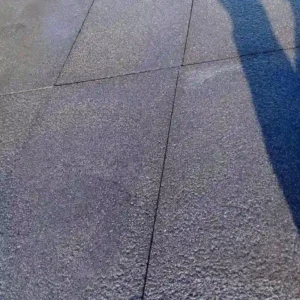
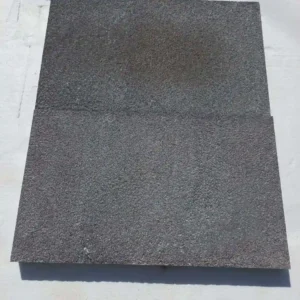
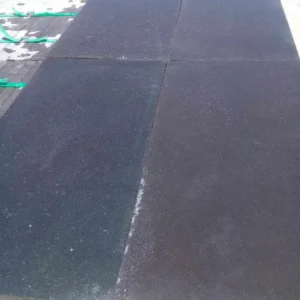
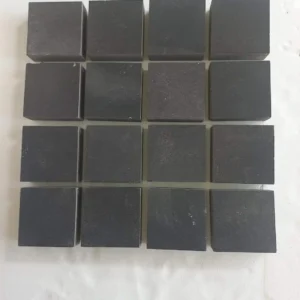
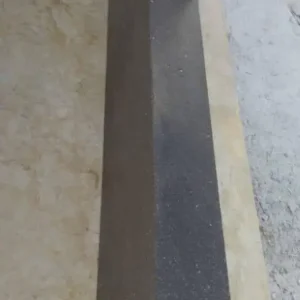
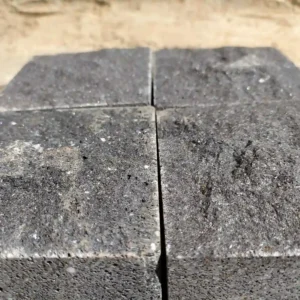
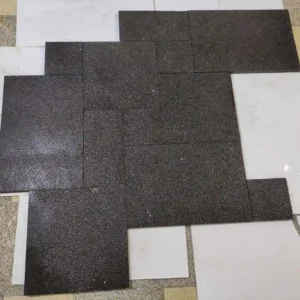
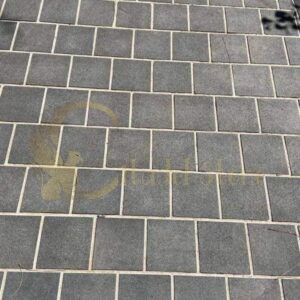
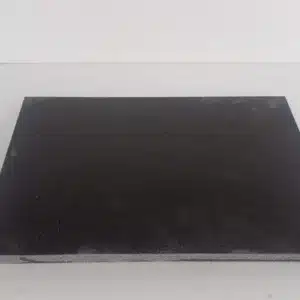
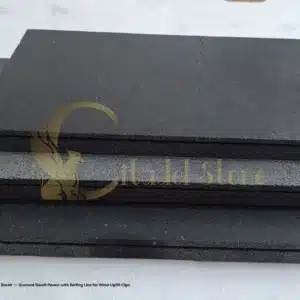
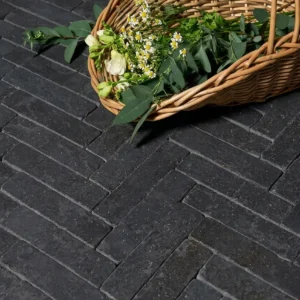
Dark grey stone pavers laid in a grid pattern outdoors.

Format, Size, and Their Effect on Storm Performance

Large format bluestone pavers in Arizona present a specific design challenge that smaller units don’t: surface area. A 24×48-inch slab creates significantly more surface area exposed to uplift pressure compared to a 12×12 unit, and the physics of wind loading scale accordingly. The International Building Code’s wind pressure calculations — which use the formula P = qGCp — show that larger paver formats require either greater mass, perimeter restraint, or both to resist the negative pressure differential that forms during high-wind events on open patio surfaces.

Practically, this means your edge details matter more than the slab itself. For large bluestone slabs set in open patio applications, spec a soldier course border set in a full mortar bed rather than sand-set. This isn’t about aesthetics — it’s mechanical anchoring. The border course locks perimeter slabs against wind-induced displacement and provides the lateral confinement the interior field needs. Large format installations without this edge detail routinely show corner lift after the first significant storm season, even when the base preparation was otherwise solid.

  • Pavers 18×18 inches or larger should be set with a minimum 1.5-inch full-mortar bed in exposed, unsheltered locations
  • Perimeter soldier courses in mortar restraint reduce edge displacement risk by establishing a fixed boundary the field stone can bear against
  • Large bluestone paving stones in wind-exposed zones benefit from a chamfered or cleft edge profile — it reduces the leading-edge surface that wind pressure acts against
  • For rooftop or elevated deck installations, consult a structural engineer before specifying any large-format natural stone — wind uplift coefficients at elevation require engineered dead-load calculations

Base Preparation for Storm Drainage and Mechanical Stability

Arizona receives concentrated rainfall in intense, short-duration events — a 2-inch-per-hour storm surge is common across the Sonoran Desert zone. Your base preparation needs to handle that surge without allowing hydrostatic pressure to build beneath the paver surface. For bluestone outdoor pavers in Arizona’s desert soil profiles, the standard recommendation is a 6-inch compacted crushed aggregate base, but that number needs to be adjusted for local conditions rather than applied uniformly.

In Tucson, expansive Vertisol clays in the lower elevations can heave 1.5 to 2 inches seasonally — a movement range that fractures mortar beds and displaces sand-set pavers within two storm seasons. The fix isn’t more compaction; it’s isolation. A geotextile fabric layer between native soil and aggregate base prevents clay migration into your drainage medium while allowing moisture to pass through. Increase base depth to 8–10 inches in known clay zones and verify that your drainage slope is a minimum of 1.5% away from structures — not the 1% minimum that many specs still carry.

  • Use angular crushed stone (not rounded river gravel) for aggregate base — angular particles interlock under load and resist lateral displacement during saturation events
  • Compact aggregate in 3-inch lifts to achieve 95% Modified Proctor density — compacting the full depth at once creates a false surface that conceals voids
  • Install a perforated drain pipe at the low point of any patio or walkway over 200 square feet — surface slope alone is insufficient when storm surge volume exceeds soil infiltration rate
  • Allow a 72-hour settling period after base compaction before setting stone — storm events during this window can expose weak compaction zones

Citadel Stone maintains regional warehouse inventory in Arizona, which means your base preparation timeline doesn’t need to accommodate the 6–8 week import cycles that can stall projects mid-excavation. Coordinating material delivery from local stock lets you sequence base work and stone arrival without extended exposure of an unprotected excavation to storm events.

Hail Impact and Surface Finish Selection

The surface finish you select for bluestone pavers for sale in Arizona has a direct relationship with hail impact performance that most product descriptions don’t address. A thermally finished (flamed) surface opens the stone’s crystalline structure slightly, which reduces its resistance to point-load impact compared to a sawn and honed surface. For installations in northern Arizona’s hail corridor — particularly at elevations above 4,500 feet — a sawn face or natural cleft finish will perform better under repeated impact than thermally treated surfaces.

Natural cleft bluestone flagstone pavers are actually the most impact-resistant surface option because the cleft plane follows the stone’s natural stratification. There are no weakened zones from thermal treatment and no micro-cracks introduced by aggressive mechanical finishing. The trade-off is surface irregularity — natural cleft stone requires more precise bedding to prevent rocking and requires deliberate attention to ADA compliance where applicable. For pool surrounds or patio areas in locations with documented hail frequency, that trade-off is worth making.

Sample tiles are available from Citadel Stone to compare finish options side-by-side before committing to a specification — seeing the actual surface texture helps evaluate the functional implications alongside the aesthetic ones.

Thickness Specifications and Mechanical Loading in Storm Conditions

Exterior bluestone pavers in Arizona need to be specified at the right thickness for their application — and the default “standard” thickness often falls short of what wind-loaded and storm-trafficked installations actually require. Here’s a working framework based on application type:

  • Pedestrian-only walkways and patios: 1.25-inch nominal minimum, 1.5-inch preferred for large-format slabs
  • Driveway apron or light vehicle traffic zones: 2-inch nominal, full mortar bed required
  • Pool coping or elevated deck edges: 1.5-inch minimum with mechanical edge restraint regardless of format size
  • Exposed rooftop installations: 2-inch minimum with engineered structural review
  • Small bluestone pavers in high-foot-traffic zones: 1.25-inch in a compacted sand-set system is generally adequate, but verify with manufacturer specs for your specific stone origin

Storm loading adds a dynamic component to thickness selection that static load tables don’t capture. Wind-driven rain at high velocity creates pressurized water infiltration at joints, and thin pavers over sand-set systems are vulnerable to the hydrostatic forces that build during sustained events. The spec that performs best in Arizona storm conditions is a slightly thicker slab — 1.5 to 2 inches — in a semi-dry mortar bed rather than a pure sand-set system. That combination delivers the drainage flexibility of a granular bed with the mechanical bond strength that resists uplift and displacement.

Joint Design for Wind and Water Resistance

Joint design is where most bluestone paving installations either succeed or fail in severe weather, and it’s the detail that gets the least attention in standard specifications. For blue stone pavers in Arizona’s storm environments, joint width and filler material directly control how well the installation handles both wind pressure differentials and rapid water infiltration.

Polymeric sand is the standard joint filler for exterior paving, but not all polymeric sand products perform identically in Arizona’s conditions. Look for products rated for high UV exposure and temperature cycling up to 250°F — some standard products soften and lose joint integrity at surface temperatures Arizona stone routinely reaches during summer. For bluestone flagstone pavers with irregular joint widths from natural cleft profiles, use a coarser-grade polymeric sand designed for joints up to 3 inches rather than forcing a fine-grade product into wide joints where it can’t adequately consolidate.

Joint spacing on large-format stone matters too. For slabs exceeding 24 inches in either dimension, maintain a minimum 3/8-inch joint — tighter joints concentrate the stress from thermal movement and storm-induced settlement into fewer points, increasing the risk of edge chipping. For installations spec’d in Scottsdale‘s high-end residential sector, where aesthetics often push toward very tight joints, use a dry-pack mortar joint instead of polymeric sand — it maintains the tight appearance while providing the structural connection that storm loading demands.

  • Never install polymeric sand when rain is forecast within 24 hours — incomplete cure creates a muddy surface that erodes from joints during the first storm event
  • Compact polymeric sand in two passes with a plate compactor: first pass sets the material, second pass after a light water application activates the binding agents evenly
  • In freeze-thaw zones above 5,000 feet elevation, leave 1/2-inch joints to allow thermal expansion without edge contact pressure — tighter joints in these zones produce chipped corners after two winter cycles

Maintaining Bluestone in Arizona Through Storm Seasons

Post-storm inspection is a maintenance discipline most installation guides skip entirely, but it’s critical for bluestone paving stone installations in Arizona’s active weather zones. After any storm event with wind gusts above 45 mph, walk the installation and check for joint displacement, edge lift at perimeter courses, and any hairline surface fractures near corners — those are the first indicators that your base is moving. Catching displacement early, before a second storm event compounds it, is what separates a maintenance repair from a full section replacement.

Sealing protocols for exterior bluestone pavers differ from standard concrete maintenance because bluestone’s natural porosity creates a substrate that absorbs penetrating sealers very efficiently on the first application. Two coats are typically needed on initial sealing — the first coat primes the surface and gets consumed by the stone, the second coat creates the actual protective film. Resealing intervals in Arizona’s UV-intense environment run approximately every two to three years for high-traffic areas. Seal in the spring before monsoon season, not after — sealed surfaces resist the staining that blowing sediment and red clay mud deposits during storm events.

For a comprehensive look at year-round care schedules and the specific products that perform best in desert conditions, bluestone pavers for Arizona projects covers the maintenance details that protect your investment through seasonal extremes. Keeping up with joint sand replenishment and periodic inspection after significant weather events is far less expensive than addressing the cumulative damage from deferred maintenance.

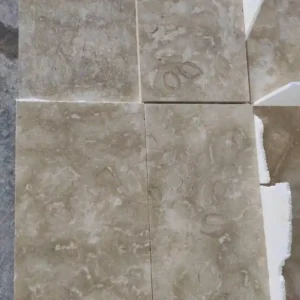
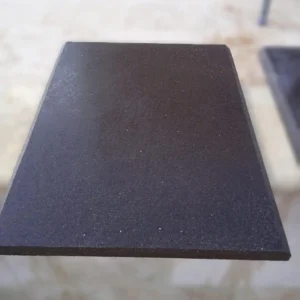
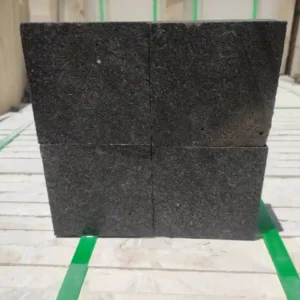
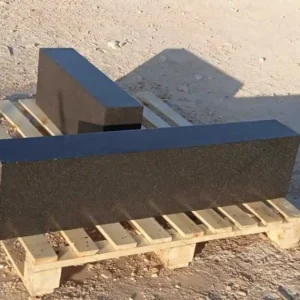
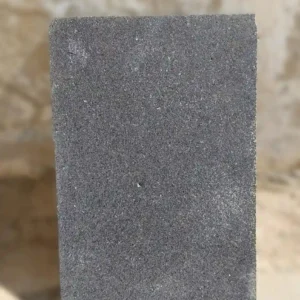
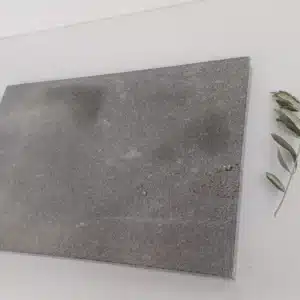
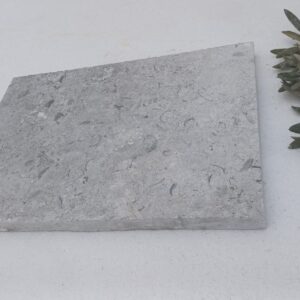
Dark speckled bluestone stone slab with green olive branches on white surface.

Sourcing and Logistics for Arizona Bluestone Projects

Material sourcing decisions affect project performance in ways that go beyond stone quality. Lead time, batch consistency, and delivery coordination all influence whether your installation proceeds on schedule or gets interrupted by Arizona’s narrow installation weather windows. Citadel Stone sources natural blue stone from established quarry partners and conducts batch inspections for thickness consistency, color uniformity, and structural soundness before materials reach regional inventory — because a batch with mixed-origin stone creates color banding issues that no amount of sealing can correct after installation.

For large bluestone slabs and oversized format orders, confirm truck delivery access to your site before finalizing the material order. Many higher-density residential areas in the Phoenix metro have delivery restrictions that affect when a fully loaded flatbed can access the street — knowing this early lets you schedule delivery during permitted windows rather than managing an emergency last-minute re-routing. Warehouse stock for standard formats typically supports a 1–2 week lead time, while custom-cut or non-standard thickness orders may require 3–4 weeks from confirmed specification.

  • Order 10–12% additional material over calculated coverage area to account for cuts, waste, and future repair needs — matching stone from a different batch two years later is difficult and sometimes impossible
  • Verify that the truck delivering your stone has a power-lift gate or that your site has forklift access — full-size bluestone paving slabs on pallets can exceed 2,400 lbs per pallet and cannot be hand-offloaded safely
  • For projects requiring custom cuts or non-standard profiles, consult with Citadel Stone’s team early in the design phase to understand lead times and dimensional tolerances before you commit to a drawing set
  • Bluestone paving slabs stored on-site before installation should be stacked horizontally on wood dunnage in a shaded location — vertical storage allows warping, and sun exposure on light-colored stone creates differential thermal stress that can pre-crack thin slabs before they’re ever set

Dark blue pavers and deeper-toned bluestone selections require particular attention during batch ordering — natural stone color varies quarry-to-quarry and even layer-to-layer within the same quarry. Request a warehouse inspection sample from your specific allocated batch, not a standard showroom display sample, before approving the order for delivery.

Making Bluestone Pavers Work in Arizona’s Demanding Climate

Specifying blue flagstone pavers correctly in Arizona comes down to a few non-negotiable decisions: adequate base depth matched to local soil conditions, thickness appropriate to the application and expected storm loading, proper joint design that balances aesthetics with mechanical performance, and a sealing program that runs ahead of storm season. Each of those decisions compounds — good stone on a poorly prepared base fails, and well-prepared base work gets undermined by inadequate joint design. The installations that perform for 25 years are the ones where every layer of the system was specified with the same rigor.

Raw blue stone selections for natural-look applications and processed bluestone paving slabs for more refined settings both perform well in Arizona conditions when the installation system is engineered correctly. The material itself is proven — what varies is the application discipline. Your project in any corner of the state, from high-desert elevation zones to the low desert floor, will benefit from the same fundamental approach: design against mechanical stress, account for water movement, and verify material consistency before the first slab is set. As you explore complementary hardscape materials for your Arizona project, Basalt Hexagon Tile in Arizona offers insight into another durable natural stone option that pairs well with bluestone in mixed-material outdoor designs. For Arizona property owners and contractors seeking reliable bluestone paver solutions, Citadel Stone offers knowledgeable guidance and consistent material quality across the state.

Why Arizona’s Builders Choose Citadel Stone?

Free AZ Comparison: Citadel Stone vs. Other Suppliers—Find the Best Value!

FeaturesCitadel StoneOther Stone Suppliers
Exclusive ProductsOffers exclusive Ocean Reef pavers, Shellstone pavers, basalt, and white limestone sourced from SyriaTypically offers more generic or widely available stone options
Quality and AuthenticityProvides high-grade, authentic natural stones with unique featuresQuality varies; may include synthetic or mixed-origin stone materials
Product VarietyWide range of premium products: Shellstone, Basalt, White Limestone, and moreProduct selection is usually more limited or generic
Global DistributionDistributes stones internationally, with a focus on providing consistent qualityOften limited to local or regional distribution
Sustainability CommitmentCommitted to eco-friendly sourcing and sustainable production processesSustainability efforts vary and may not prioritize eco-friendly sourcing
Customization OptionsOffers tailored stone solutions based on client needs and project specificationsCustomization may be limited, with fewer personalized options
Experience and ExpertiseHighly experienced in natural stone sourcing and distribution globallyExpertise varies significantly; some suppliers may lack specialized knowledge
Direct Sourcing – No MiddlemenWorks directly with quarries, cutting unnecessary costs and ensuring transparencyOften involves multiple intermediaries, leading to higher costs
Handpicked SelectionHandpicks blocks and tiles for quality and consistency, ensuring only the best materials are chosenSelection standards vary, often relying on non-customized stock
Durability of ProductsStones are carefully selected for maximum durability and longevityDurability can be inconsistent depending on supplier quality control
Vigorous Packing ProcessesUtilizes durable packing methods for secure, damage-free transportPacking may be less rigorous, increasing the risk of damage during shipping
Citadel Stone OriginsKnown as the original source for unique limestone tiles from the Middle East, recognized for authenticityOrigin not always guaranteed, and unique limestone options are less common
Customer SupportDedicated to providing expert advice, assistance, and after-sales supportSupport quality varies, often limited to basic customer service
Competitive PricingOffers high-quality stones at competitive prices with a focus on valuePrice may be higher for similar quality or lower for lower-grade stones
Escrow ServiceOffers escrow services for secure transactions and peace of mindTypically does not provide escrow services, increasing payment risk
Fast Manufacturing and DeliveryDelivers orders up to 3x faster than typical industry timelines, ensuring swift serviceDelivery times often slower and less predictable, delaying project timelines

Extra Benefits

Choosing Citadel Stone offers unique advantages beyond premium stone quality:

Exclusive Access to Durable Stones

Citadel Stone specializes in unique, regionally exclusive stones, sourced directly from the Middle East.

Transparent Pricing – No Hidden Costs

With no middlemen, Citadel Stone provides direct, transparent pricing that reduces unnecessary costs.

Flexible Customization for Bespoke Projects

Tailor your order to precise specifications, from sizes to finishes, ensuring your project aligns perfectly with your vision.

Streamlined Delivery & Reliable Stock Availability

Benefit from fast production and delivery timelines, designed to minimize delays and ensure reliable availability.

The Preferred Stone Supplier for Luxury AZ Developments.

Scale Your Vision: We Support Arizona's Largest Projects with Reliable, Fast Delivery.

With unlimited tiles, pavers, cobble setts, curbstones, and the fastest delivery options, What’s not to love? Say goodbye to unnecessary hassles!

Leading AZ Stone Suppliers are Loving Citadel Stone!

Don’t Settle for Less. Source the Best Stone for Your Local Stone Expert.

DanielOwner
Thank you, Kareem. We received the order. The stones look great!
FrankOwner
You are a good businessman and I believe a good person. I admire your honesty, this is why I call you a good businessman.
Gemma C
Gemma CPrivate Project
Undoubtedly the price was the reason that we chose Citadel stone, in addition to the fact that you offer a white limestone that is hard to source. Your products are very good value for money by comparison with other companies. You have helped at every stage of the process and have been quick and reliable in your responses. It was a big risk for us to pay everything up front including shipping and not know the quality. You did make me feel that I could trust you and your company however and we are very happy with the tiles. They appear to have been finished to a very high quality of smoothness and I can't wait to see them once they have been laid. We need to see now how easy they are to fit and maintain, yet you also sealed them before shipment so we think that they will be very durable. Our building project has been delayed for a few months now so it may be sometime before we see them laid, but I promise that I will send photos as soon as we have them down. Thank you so much Kareem and your team, you have done a great job. I am hoping that we can pay for, and receive our second shipment in the not too far future, so that we can finish everything off. Wishing you well. Gemma
Molly McK
Molly McKPrivate Project
I appreciate the quality of product and care for the custom order in packaging each crate to minimize breakage as well as the flexibility with the order to help us make the most of shipping. The timely communications are impressive from the beginning and throughout the process. It's reassuring to have gone through one order to know what the process will be like in the future. I am glad to have had some guidance through the importing process and recommendations for shipping partners to assist. It's incredible to think about the journey the stone traveled to get to our site and I'm grateful to have made it to the next stage of the project relatively smoothly and with from what I can tell

Frequently Asked Questions

If your question is not listed, please email us at [email protected]

How do Arizona's monsoon storms affect bluestone paver installations?

During Arizona’s monsoon season, wind-driven rain, hail, and debris create impact and lateral stress on exposed hardscape surfaces. Bluestone pavers with sufficient thickness — typically 1.25 inches or greater for exterior applications — resist surface chipping from hail impact better than thinner formats. Proper mortar or compacted aggregate base installation is equally important, as unsecured pavers can shift under sustained wind loading, creating uneven surfaces and trip hazards over time.

Bluestone is a dense, fine-grained sedimentary stone with low porosity, which contributes to its resistance to moisture infiltration and surface erosion from wind-carried particulates. In storm-exposed Arizona applications, the natural cleft finish provides additional grip and surface texture that holds up well under repeated weather stress. Properly installed with a stable base and appropriate joint filler, bluestone patios maintain structural integrity through seasonal storm cycles without significant surface degradation.

Arizona’s caliche-rich soils and expansive clay zones require base preparation that accounts for both drainage and ground movement — not just load-bearing capacity. A minimum 4-inch compacted aggregate base is standard for residential patio applications, but sites in wind-exposed or flood-prone zones may warrant 6 inches or more with edge restraint systems to prevent lateral migration during storm events. Skipping proper compaction is the leading cause of paver displacement in Arizona’s extreme weather conditions.

Bluestone is commonly available in natural cleft, thermal (flamed), and sawn finishes, each with different surface characteristics suited to different applications. For Arizona outdoor installations — particularly those exposed to wind-carried sand and debris — the thermal finish offers a consistent texture that resists abrasion and provides reliable traction even when wet from monsoon rain. Natural cleft is a strong alternative where a more organic aesthetic is preferred, while honed finishes are better reserved for sheltered or interior applications given their smoother surface.

Concrete pavers offer dimensional uniformity and are engineered to interlock, which provides strong resistance to lateral movement — an advantage in high-wind environments. Bluestone, however, offers superior surface density and a natural composition that resists UV-related color fade and surface pitting over long-term exposure in Arizona’s conditions. The trade-off is that bluestone requires more careful installation to achieve even joint spacing and proper drainage slope, making professional installation particularly important for storm-exposed sites.

Citadel Stone’s ordering and fulfillment process is structured to accommodate Arizona projects ranging from single-pallet residential patios to multi-truckload commercial installations without requiring lengthy import lead times. Warehouse inventory of bluestone in standard formats means contractors and specifiers can confirm availability and schedule delivery around project timelines rather than waiting on overseas production cycles. Arizona professionals benefit from Citadel Stone’s established regional supply coverage, which keeps core bluestone sizes in ready stock to support both planned projects and time-sensitive site schedules.