















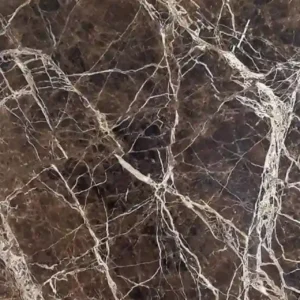
Why Drainage Defines Black Outdoor Paving in Arizona
The compressive strength and thermal mass of black outdoor paving in Arizona are well-documented — but the variable that actually determines long-term performance is how well your drainage system handles Arizona’s monsoon hydrology. You’re designing for two extremes simultaneously: months of near-zero rainfall followed by intense storm events that can dump two inches in under an hour. The paving surface itself needs to shed water fast enough to prevent hydrostatic pressure from building beneath the slab, yet the sub-base needs enough permeability to manage infiltration without saturating the compacted aggregate layer.
Black outdoor slabs in Arizona face a specific failure mode that’s rarely discussed in standard spec sheets — subsurface moisture migration during monsoon season. Evaporation rates in the Sonoran Desert are so high that surface water disappears quickly, masking the fact that water has already penetrated joint lines and begun softening the base. You’ll see this as early edge rocking — individual slabs develop subtle movement within six to eighteen months when drainage geometry wasn’t part of the original design brief.
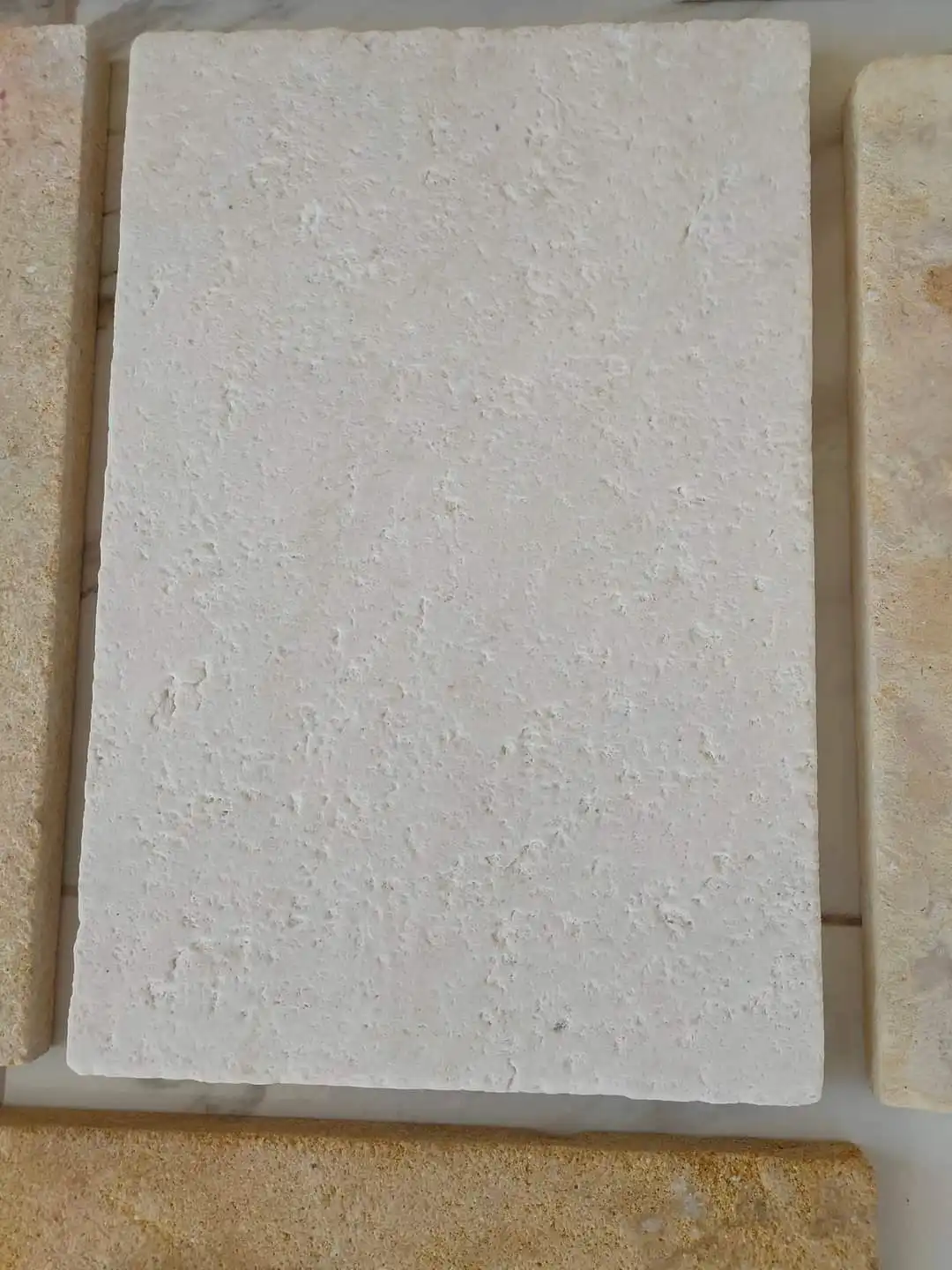
How Arizona Rainfall Patterns Shape Material Selection
Arizona’s bimodal rainfall pattern — winter frontal systems from the Pacific and summer monsoons from the Gulf of Mexico — creates a dual-challenge specification environment. The North American Monsoon delivers roughly 50% of the state’s annual precipitation between July and September, often in high-intensity events that exceed standard drainage design rates. Your black paving stone in Arizona needs to be selected not just for color or aesthetics but for its porosity classification and joint configuration relative to local peak flow rates.
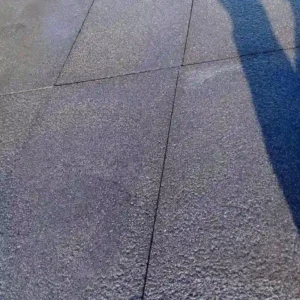
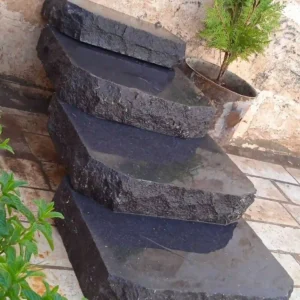
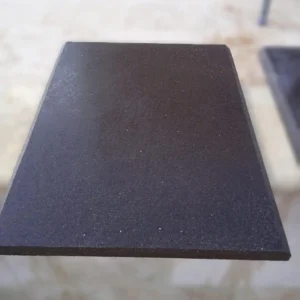
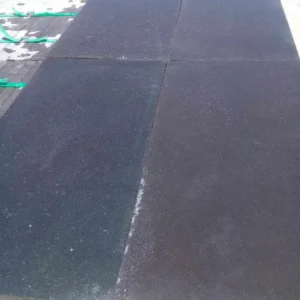
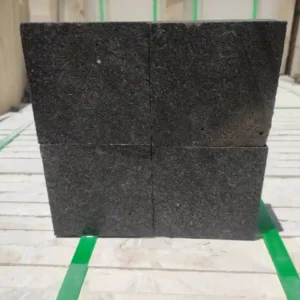
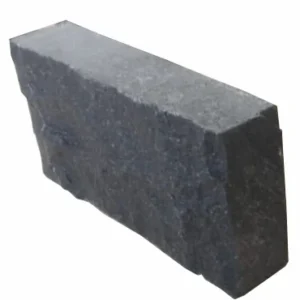
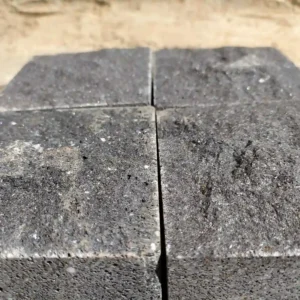
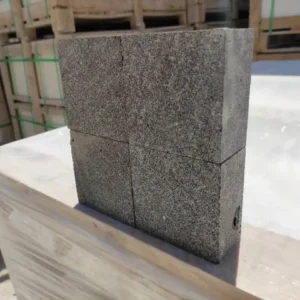
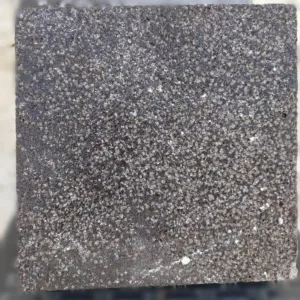
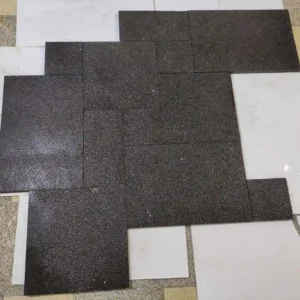
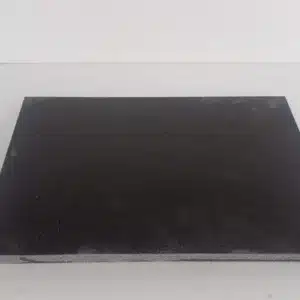
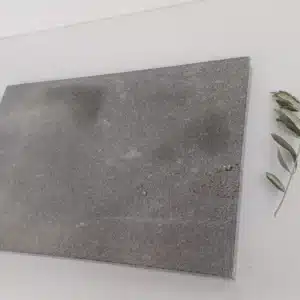
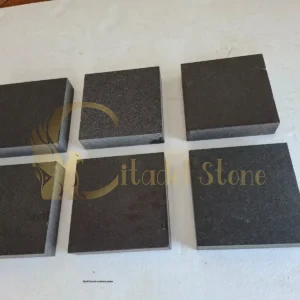
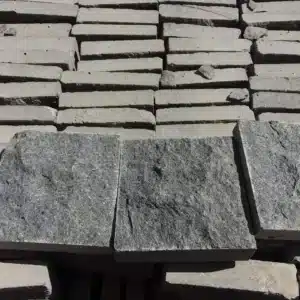
Dense basalt and dark granite pavers sit at the low end of the porosity spectrum — absorption rates below 0.5% — which means surface water management depends entirely on slope geometry and joint width. That’s a different design challenge than working with slightly more porous dark limestone, where some infiltration through the stone body itself contributes to drainage. In Phoenix, where impervious surface coverage in residential areas is already high, the drainage capacity of your joint system becomes a critical factor in whether your project meets local stormwater compliance requirements.
- Basalt and dense black granite: absorption below 0.5%, requiring minimum 1.5% surface slope for effective drainage
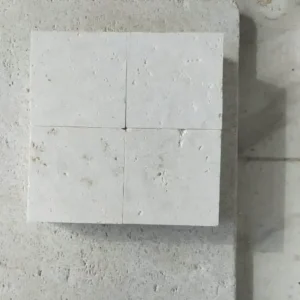
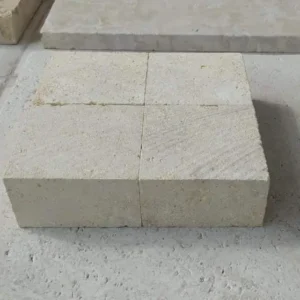
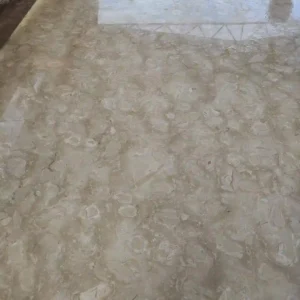
- Dark limestone variants: absorption between 2–4%, allowing some vertical infiltration to supplement surface runoff management
- Black slate: stratified porosity means water can track laterally between lamination planes — avoid this material in horizontal paving exposed to ponding
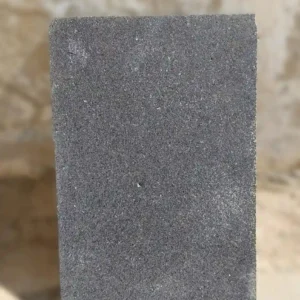
- Honed black pavers: the honing process closes surface pores, which improves stain resistance but eliminates any natural infiltration benefit
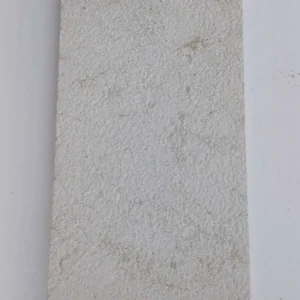
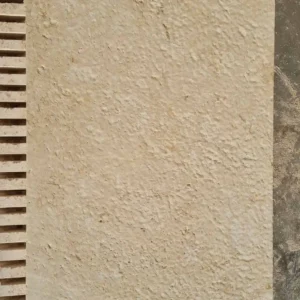
- Brushed or textured finishes: retain some surface micro-porosity and improve slip resistance — both are relevant in wet monsoon conditions
Citadel Stone stocks black outdoor paving in both dense basalt and dark limestone formats, with thickness specifications ranging from 1.25 inches to 2 inches, so you can match material porosity to your drainage design intent from the outset. Requesting a sample set before finalizing your specification is worth the two-day wait — the difference between a honed and a brushed finish isn’t always obvious in catalog photography.
Base Preparation for Black Square Pavers in Monsoon Zones
Your base preparation protocol has to account for Arizona’s expansive soils alongside the drainage demands of monsoon season — and these two factors interact in ways that compound each other. Caliche hardpan, present across much of the Phoenix metro and extending into Tucson Basin areas, creates a near-impermeable layer that can trap monsoon infiltration above it, generating positive pore pressure against your slab underside. Standard 6-inch compacted aggregate base specs don’t address this scenario.
For black square pavers in Arizona on caliche-bearing sites, the practical field fix is a 4-inch layer of open-graded 3/4-inch crushed aggregate placed directly on the caliche surface, with a geotextile separator fabric between native soil and aggregate. This creates a drainage reservoir below the setting bed that gives trapped monsoon water somewhere to go without migrating upward. In Scottsdale, where expansive clay soils frequently underlie the caliche layer, you’ll also want to extend your base excavation 2 inches beyond the paved edge and backfill with free-draining granular material to prevent lateral moisture migration from adjacent soil zones.
- Minimum base depth on caliche: 8 inches total — 4 inches open-graded drainage layer plus 4 inches compacted setting aggregate
- On clay-dominant soils without caliche: deepen to 10–12 inches and consider perforated drain pipe at the base perimeter
- Setting bed: 1-inch compacted coarse bedding sand — do not use fine masonry sand, which pumps through joint lines under hydrostatic pressure
- Geotextile separator: non-woven, minimum 4 oz/sq yd, installed to prevent fines migration from subgrade into drainage layer
- Perimeter edge restraint: rigid, anchored at 24-inch intervals — monsoon events generate lateral hydraulic force that will displace unrestrained edges
Base preparation standards vary depending on soil composition and expected traffic loads. For projects requiring complementary stone elements, black pavers 24×24 Arizona covers specification details that apply to similar site conditions and drainage configurations across the region. Getting the subgrade right at this stage prevents the most common long-term failures you’ll encounter in Arizona installations.
Slope Geometry and Joint Design for Black Outdoor Slabs
Surface slope is the primary drainage mechanism for dense black outdoor slabs in Arizona, and the common 1% slope recommendation is inadequate for monsoon conditions. Field performance across high-rainfall events shows that 1.5% to 2% cross-slope is the practical minimum for black paving stone in Arizona where you’re managing peak flows above 2 inches per hour. That translates to 3/16 inch of fall per linear foot — detectable underfoot but not enough to create a visually uneven surface in most residential applications.
Joint width deserves equal attention. A 3/16-inch joint filled with polymeric sand limits drainage capacity significantly compared to a 3/8-inch joint with coarse-grained joint fill. For black square paving slabs installed in monsoon-exposure zones, specifying a minimum 1/4-inch joint width with a coarse polymeric joint stabilizer — not the fine-grain variety — keeps drainage capacity intact while still preventing ant intrusion and sand loss. The coarse-grain stabilizers maintain permeability of approximately 200 gallons per hour per square foot, which is sufficient for most residential storm events.
- Minimum surface slope: 1.5% for standard monsoon exposure — increase to 2% near roof drip lines or downspout discharge zones
- Joint width: 1/4 inch minimum for drainage function — 3/8 inch preferred in high-intensity rainfall zones
- Joint fill: coarse polymeric stabilizer — avoid fine-grain products that reduce vertical permeability by up to 80%
- Control joint spacing: install permeable drain channels at maximum 15-foot intervals in large paved areas to intercept sheet flow before it concentrates
- Edge transition: where paving meets turf or planted areas, install a linear drain or French drain to capture runoff before it undercuts the base
Black Paving Stone Performance Across Arizona Elevation Zones
Elevation in Arizona creates more variation in paving performance conditions than most specifiers initially account for. The low desert around Yuma and the Phoenix metro sits at 1,000 feet or below, while Flagstaff reaches 6,900 feet — and the two locations present essentially opposite drainage and weathering challenges. At low elevation, the monsoon arrives with intensity but short duration; at high elevation, longer storm events combined with freeze-thaw cycling between November and March create a completely different stress profile for black paving stone in Arizona.
At Flagstaff elevations, water absorption becomes a freeze-thaw durability issue rather than just a drainage concern. Dense black basalt with absorption below 0.5% handles freeze-thaw without meaningful degradation — verified against ASTM C1354 freeze-thaw testing protocols. Dark limestone with absorption above 3% is a riskier specification at elevation and requires an impregnating hydrophobic sealer applied every two to three years to keep absorption low enough to avoid spalling. In the low desert, sealing is primarily about stain resistance, not freeze-thaw protection — a meaningful difference when you’re advising a client on maintenance expectations.
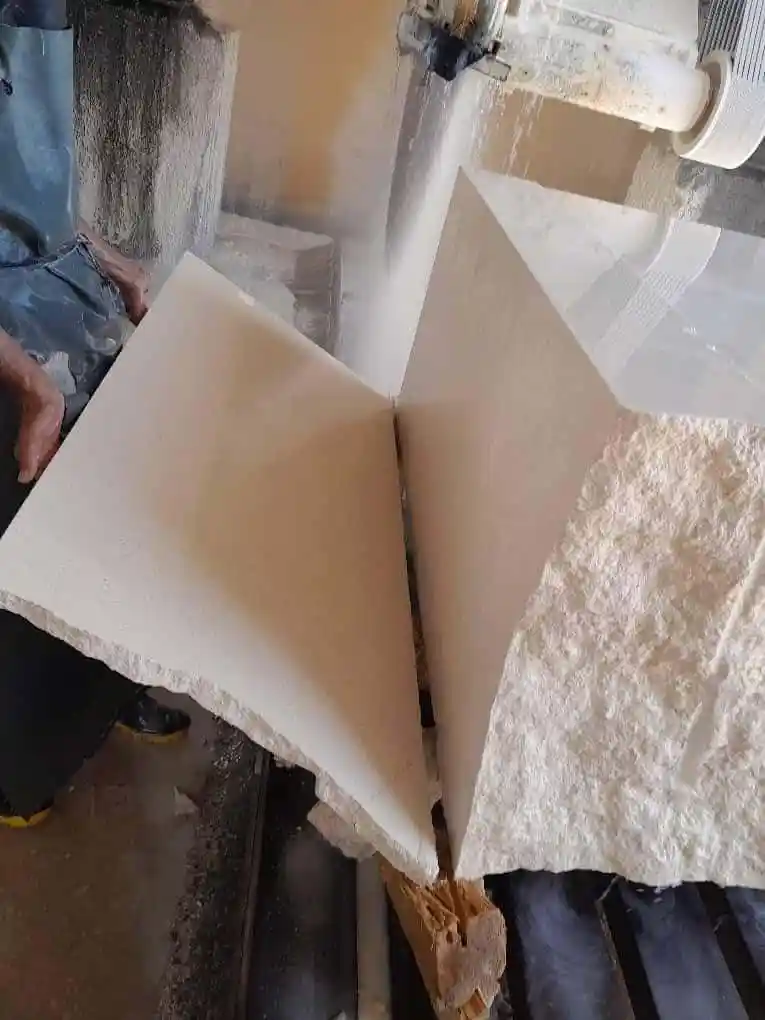
Format Selection: Black Square Paving Slabs vs. Irregular Formats
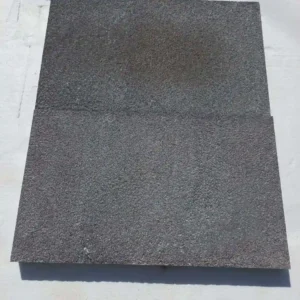
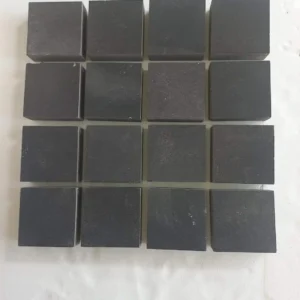
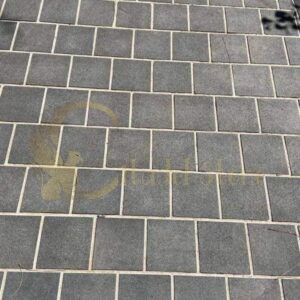
Black square paving slabs in Arizona dominate residential and commercial project specifications for a practical reason — square and rectangular formats allow you to maintain consistent joint widths across the entire installation, which directly supports predictable drainage performance. Irregular or random-format black paving introduces variable joint widths that create preferential flow paths and make polymeric joint stabilizer application inconsistent. In a drainage-sensitive application, format consistency is a functional decision as much as an aesthetic one.
The 24×24 format deserves specific attention for Arizona installations. Larger slab formats reduce the total joint length per square foot — a 24×24 grid has roughly 30% fewer linear feet of joint than a 12×12 grid over the same area. Fewer joints mean less potential for base exposure and less surface area where monsoon infiltration can penetrate. The trade-off is that larger slabs require more precise base leveling — a 24×24 slab on an uneven base will rock, while a 12×12 slab on the same base may self-stabilize. Your setting bed needs to be laser-screeded flat to within 1/8 inch over 10 feet before laying large-format black square paving slabs.
- 24×24 format: lowest joint-to-surface ratio — preferred for monsoon drainage management on level or gently sloped installations
- 12×24 format: allows herringbone and basket-weave patterns — slightly higher joint density but improved interlocking resistance to lateral movement
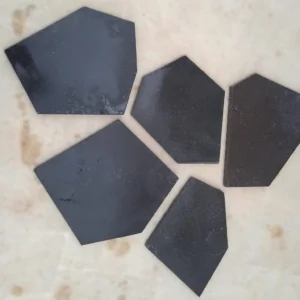
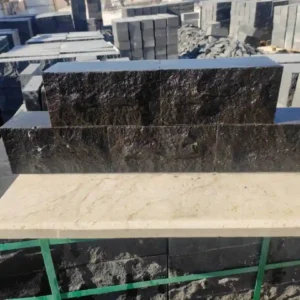
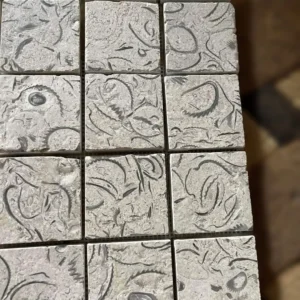
- Irregular formats: acceptable for feature areas and garden paths where drainage geometry is managed by adjacent planted beds
- Thickness: specify 1.5-inch minimum for pedestrian applications and 2-inch minimum where vehicle overhang or maintenance equipment access is expected
- Calibrated vs. natural cleft: calibrated thickness ensures consistent setting bed depth — non-negotiable for large-format black square paving slabs
Citadel Stone’s warehouse carries black square paving slabs in calibrated 24×24 format with standard 1.5-inch and 2-inch thickness options, so your specification doesn’t require a custom order for the most common installation scenarios. Lead times from warehouse stock typically run one to two weeks for Arizona delivery, compared to six to eight weeks for imported custom formats — a timeline difference worth building into your project schedule.
Sealing and Long-Term Maintenance for Black Outdoor Paving
The sealing protocol for black outdoor paving in Arizona serves two separate functions that are often conflated — and treating them as the same task leads to under-performance on at least one dimension. Surface sealers protect against staining from oils, tannins from adjacent plant material, and iron oxide efflorescence that occasionally surfaces from aggregate base minerals. Impregnating or penetrating sealers protect against moisture absorption and, at elevation, freeze-thaw degradation. Dense basalt typically needs surface sealer only; more porous dark limestone benefits from an impregnating sealer applied first, followed by a surface coat.
Monsoon season timing matters for sealing schedules. Applying sealer to black paving stone in Arizona during the high-humidity monsoon window — typically July through September in most of the state — risks trapping moisture beneath the sealer film, which causes whitish hazing and adhesion failure. Schedule initial sealing before the monsoon arrives or wait until October after the season closes. Resealing frequency in the Phoenix metro averages every three years for surface sealers; at Flagstaff elevations, biennial resealing is the practical standard due to UV intensity combined with freeze-thaw stress on the sealer film itself.
- Application window: pre-monsoon (April–June) or post-monsoon (October–November) — avoid July through September
- Surface preparation: pressure wash at 2,000–2,500 PSI, allow 72-hour dry time before sealer application
- Impregnating sealer: apply to porous dark limestone or any black paving stone with absorption above 2% — two coats with 30-minute inter-coat interval
- Surface sealer: solvent-based acrylic or polyurethane for dense basalt — water-based alternatives perform acceptably but require more frequent reapplication in UV-intense climates
- Joint re-sanding: inspect and top up polymeric joint stabilizer annually after monsoon season — joint loss accumulates faster than most maintenance schedules anticipate
Order Black Outdoor Paving in Arizona — Arizona Delivery Available
Citadel Stone supplies black outdoor paving across Arizona in standard formats including 12×12, 12×24, and 24×24 calibrated slabs, with honed and brushed finish options available in both dense basalt and dark limestone. You can request material samples and thickness specification sheets before committing to your order — a step worth taking when finish selection affects both your drainage detail and your slip-resistance compliance. For trade and wholesale enquiries, the Citadel Stone team can confirm current warehouse inventory levels, provide project-specific quantity calculations, and discuss lead times for non-standard formats that require additional processing time.
Delivery coverage extends across Arizona, including the Phoenix metro, Tucson, Scottsdale, Tempe, Mesa, Gilbert, Chandler, Peoria, and regional destinations including Flagstaff and Sedona. Truck delivery scheduling for large-format black square pavers in Arizona requires site access confirmation — your project coordinator should verify gate width, overhead clearance, and unloading zone dimensions before the delivery date is confirmed. Standard pallet deliveries can reach most Arizona metro sites within one to two weeks from warehouse stock. Contact Citadel Stone to request a quote, confirm current pricing, or schedule a technical consultation for projects with site-specific drainage or format requirements.
As you finalize your Arizona stone project scope, related hardscape elements often inform the overall specification — Retaining Wall Blocks in Arizona covers complementary Citadel Stone materials that frequently appear alongside black outdoor slabs in Arizona landscaping and outdoor living projects across the state. For black outdoor paving projects across Arizona, Citadel Stone provides product guidance, material specifications, and sourcing support to help you complete your project with confidence.