
Drainage geometry is the variable that separates a lasting black paver installation from one that’s failing by year three — and in Arizona’s terrain, that geometry is rarely simple. Maintaining black outdoor paving in Arizona demands that you understand your site’s elevation profile before you even think about cleaning products or sealing schedules. The state’s landscape swings from the 7,000-foot pine country of the Mogollon Rim down to low-desert basins, and each elevation band creates different hydraulic pressure on your paved surfaces, different base movement cycles, and different upkeep demands that no generic maintenance guide accounts for.
Terrain, Drainage, and Your Base
Arizona’s terrain isn’t just scenic — it’s structural. Your black paving installation sits on a landscape shaped by freeze-thaw cycles at higher elevations, expansive soils in the mid-desert valleys, and flash-flood sheet flow patterns that can undercut a poorly graded base in a single monsoon event. The way water moves across and beneath your paved surface determines how aggressively you’ll need to perform upkeep, and how long your joint integrity holds between maintenance cycles.
On hillside and sloped installations — common in Sedona, where the red rock terrain creates dramatic grade changes across even modest residential lots — you need to engineer positive drainage away from the paver field at a minimum 2% cross-slope. Anything less and you’re trapping water at the low edge, which forces moisture into the base aggregate and accelerates joint erosion regardless of how well you’ve sealed the surface.
- Cross-slope minimum of 2% prevents water pooling at slab edges and joint lines
- Hillside installations require perimeter drainage channels to capture lateral sheet flow before it reaches the paver field
- Flat desert sites in basin areas need engineered swales — natural grade alone rarely provides adequate runoff velocity
- Base thickness should increase by 1 inch for every 5 feet of vertical drop across the installation footprint on sloped sites
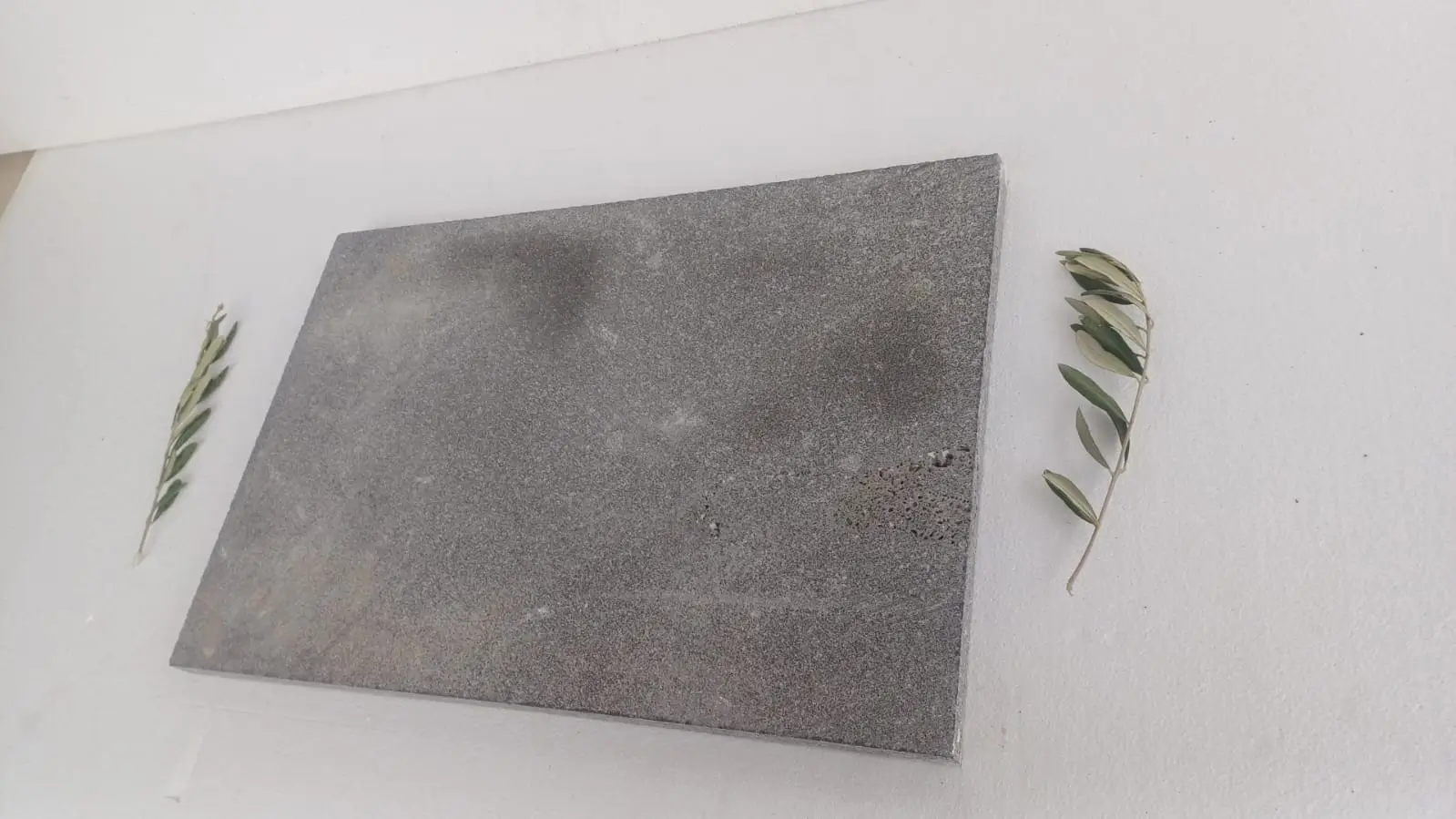
How Elevation Affects Your Black Paving Sealing Schedule in Arizona
The black paving sealing schedule in Arizona desert climate isn’t one-size-fits-all — it shifts meaningfully with elevation, and most homeowners get this wrong because they follow the label on a sealer can rather than the conditions on their site. At elevations above 5,000 feet, you’re introducing genuine freeze-thaw cycling into the equation, typically 50 to 100 freeze events per year depending on the specific microclimate.
At higher elevations like Flagstaff, which sits near 7,000 feet, freeze-thaw pressure works into any microcrack that an aging sealer film leaves exposed, widening joints and lifting slab edges over successive winters. Your sealing cycle at that elevation should run every 18 to 24 months rather than the 3-year interval that works for low-desert installations. You’re not sealing more because the stone is weaker — you’re sealing more because the physical stress cycle is more aggressive.
- Low desert (below 2,000 feet): seal every 2.5 to 3 years with a penetrating silane-siloxane formula
- Mid-elevation (2,000 to 5,000 feet): seal every 2 years, inspect joints annually for sand loss
- High elevation (above 5,000 feet): seal every 18 months, check slab edge lift each spring after freeze season
- After any monsoon season with heavy flow events, inspect the perimeter drainage channels before the next scheduled seal — sediment blockage changes your drainage geometry entirely
Grade Management and Long-Term Performance
Here’s what most outdoor stone care guides for the AZ desert climate skip entirely: grade management isn’t a one-time installation task — it’s an ongoing maintenance activity. Base materials settle differently under thermal cycling and under the hydraulic pressure of monsoon flow, and that settlement changes your surface grade incrementally over time. You won’t notice it happening, but by year five your original 2% drainage slope may have flattened to 0.8%, and that’s when you start seeing efflorescence lines and joint degradation appear on the upslope edge of your paver field.
For black paving slabs specifically, grade drift is particularly important to catch early because the dark surface makes standing water less visually obvious than it would be on a light-colored stone. Run a level check on your paved surface annually — a 6-foot straightedge and a digital level tell you within minutes whether your drainage geometry is still working. Catching a 0.5% grade loss at year three is a minor sand-base adjustment; catching it at year seven often means resetting a significant portion of the field.
Base Preparation for Arizona’s Regional Soil Types
Arizona’s soil variability across its terrain is more dramatic than most states. You’re working with caliche hardpan in the Sonoran basin floors, decomposed granite in the mountain foothills, expansive clay deposits in certain valley corridors, and volcanic basalt rubble in elevated plateau areas. Each of these parent materials behaves differently under a paver installation, and your base preparation protocol needs to address the specific geology you’re working with — not a generic 4-inch compacted base recommendation.
In Scottsdale‘s eastern hillside zones, where decomposed granite is the dominant substrate, you’re actually working with a stable, free-draining parent material that compacts well and doesn’t heave seasonally. The risk there is erosion on slopes — water infiltrates quickly through DG, which is great for drainage but creates undercutting risk on grades above 8%. Your maintenance focus in those terrain conditions should include quarterly inspection of the downslope edge for base washout and void formation.
- Caliche hardpan: scarify to 4 inches minimum, install French drain at base perimeter to prevent hydrostatic pressure buildup
- Decomposed granite substrate: compact to 95% Proctor density, install geotextile fabric on slopes above 6% grade
- Expansive clay: excavate to 8 inches minimum, install 4 inches of crushed aggregate base, inspect for heave each spring
- Volcanic basalt rubble: irregular surface requires hand-compaction verification, not just plate compactor passes
Cleaning Protocols for Black Paving Surfaces
Black outdoor paving in Arizona presents a specific cleaning challenge that lighter stones don’t share: calcium deposits and mineral efflorescence show as white streaking against the dark surface, making even minor water quality issues highly visible. Arizona’s water supply in many areas carries elevated calcium carbonate concentrations — hardness levels of 200 to 400 ppm are common across the Phoenix metro — and that mineral load deposits on your paving surface with every irrigation cycle or pool splash event.
Your cleaning frequency for Arizona black patio surface upkeep should follow a tiered approach. A basic rinse-down monthly during the irrigation season prevents mineral accumulation from bonding to the sealer film. A pH-neutral stone cleaner applied quarterly handles biological growth — algae appears faster on dark surfaces in monsoon season because the thermal mass of black stone creates a warm, moist micro-environment at the surface that supports spore germination. Reserve acid-based mineral deposit removers for annual use only, as overuse strips your sealer film faster than UV exposure does.
- Monthly: fresh water rinse, check drainage channel outlets for sediment blockage
- Quarterly: pH-neutral stone cleaner, brush joint lines to check for sand loss
- Annually: dilute acid wash for mineral deposits (max 5% concentration), followed by full resealing if within schedule
- After monsoon events: clear debris from perimeter channels within 48 hours to restore drainage geometry
Joint Maintenance on Slopes and Variable Grade Sites
Joint sand loss on sloped installations is a maintenance reality that flat-site guides don’t prepare you for. Protecting black paving slabs across Arizona hillside sites means treating your joint sand as a consumable that needs periodic replenishment — not a permanent installation component. On grades above 3%, every significant rainfall event displaces some portion of your polymeric sand, particularly at the low edge of the field where flow velocity concentrates.
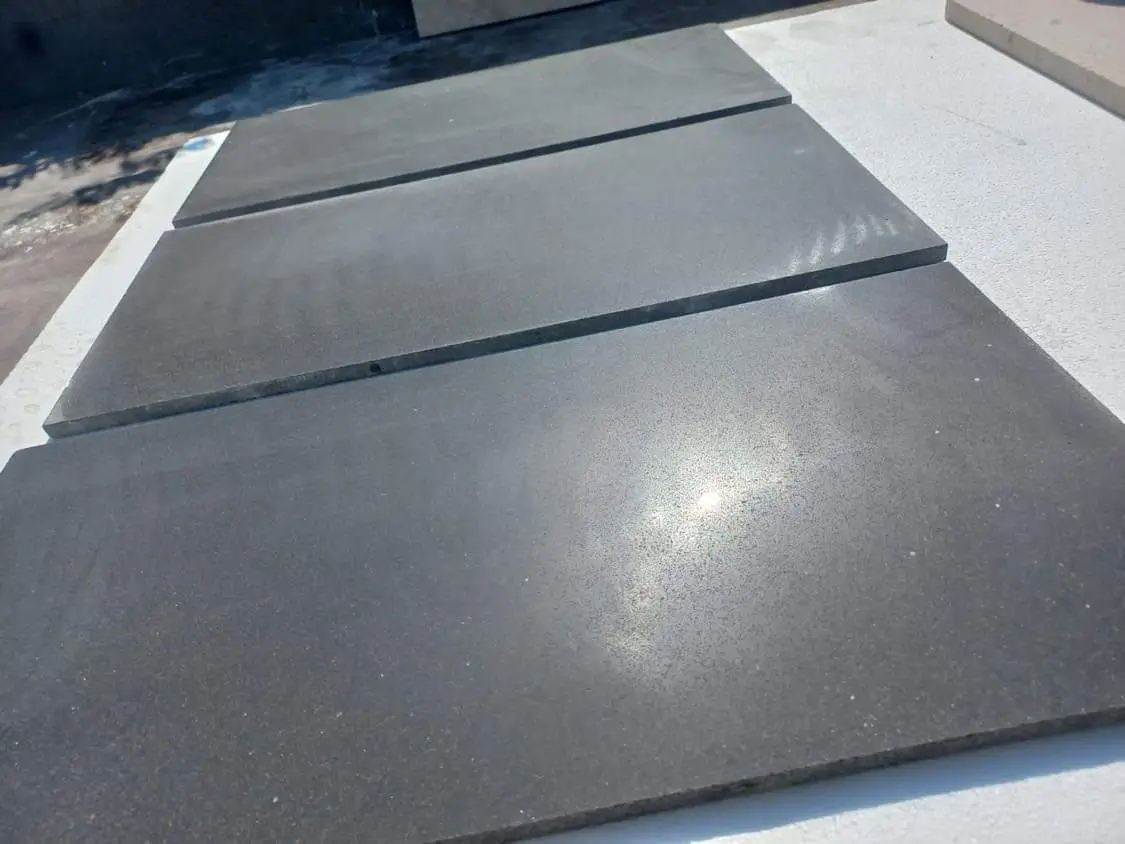
For Citadel Stone Arizona black paving slabs, we recommend inspecting joint depth twice per year on sloped installations — once at the end of monsoon season in October and once in April before the summer UV cycle begins. You’re looking for joint depth loss greater than 3mm from the paver surface, which is your refill threshold. Waiting longer than that allows water infiltration to begin working on the base aggregate, and on a sloped site that’s the beginning of a progressive drainage failure rather than a simple cosmetic issue.
Thermal Mass Management and Its Upkeep Implications
Black stone absorbs and retains heat more aggressively than lighter materials — surface temperatures of 140°F to 160°F are measurable on dark paving under direct Arizona sun. That thermal mass creates an upkeep implication that most outdoor stone care tips for AZ desert climate omit: your sealer degrades faster on black surfaces than on white or beige alternatives, because the film temperature is substantially higher throughout the summer months. Budget for a sealing cycle that’s 20 to 25% shorter than whatever the manufacturer’s label recommends for general outdoor use.
That thermal load also affects when you perform your maintenance. Applying sealer to a surface that’s been baking in 110°F ambient air means your stone surface temperature could be 150°F or higher — and most sealers have a maximum application temperature of 90°F to 95°F. Schedule sealing work for early morning in late spring or fall, when surface temperatures are manageable. Applying sealer to an overheated surface produces bubbling, poor penetration, and a film that flakes within months rather than years.
Planning, Logistics, and Material Supply
Your Arizona black patio surface upkeep program needs a material supply plan, not just a maintenance calendar. Keeping a partial pallet of matching replacement slabs on hand means a cracked or lifted stone gets replaced before the exposed base aggregate starts eroding — rather than sitting on a 6 to 8 week import lead time while your drainage geometry deteriorates. At Citadel Stone, we maintain warehouse inventory across Arizona specifically to reduce that exposure, and typical lead times run 1 to 2 weeks for standard black paving formats.
Truck access requirements for delivery also need to be factored into your planning — particularly on hillside sites in Sedona or elevated Scottsdale neighborhoods where road geometry can limit the size of delivery vehicle that can reach your property. Confirm truck clearance and turning radius before scheduling a delivery, because a load staged at the street rather than the property edge adds significant labor cost to what should be a straightforward maintenance re-supply. Citadel Stone’s team regularly coordinates these logistics challenges and can advise on split-delivery options where full truck access is restricted.
- Maintain a minimum half-pallet of matching slabs on site for immediate replacement needs
- Confirm warehouse stock availability 4 to 6 weeks before your scheduled annual maintenance window
- Verify truck access dimensions for hillside and elevated terrain deliveries before placing orders
- Document your paving batch and finish specification at installation — matching stone gets harder to source as product lines evolve
Maintaining Black Outdoor Paving in Arizona: Moving Forward
Getting maintaining black outdoor paving in Arizona right over the long term comes down to treating your terrain as the primary variable — not just the weather. Your slope, your soil type, your elevation zone, and your drainage geometry define how frequently you’ll need to intervene, what kind of intervention is actually needed, and how long your joint and base integrity will hold between maintenance cycles. The maintenance calendar you build should be site-specific, not copied from a generic guide written for flat suburban lots in mild climates.
The full picture of black paving performance in Arizona also includes getting the installation phase right from the start — because base depth, drainage slope, and joint compound choices made on day one determine whether your upkeep program is routine or constantly reactive. How to Install Black Outdoor Paving in Arizona covers the foundational specification decisions that set up a low-maintenance outcome from the beginning. Homeowners in Peoria, Flagstaff, and Yuma rely on black outdoor paving from Citadel Stone because the material’s low porosity reduces how frequently seasonal sealing is needed in Arizona’s arid climate.