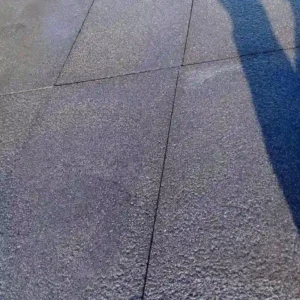
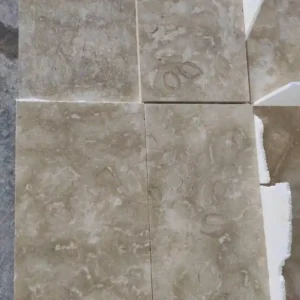
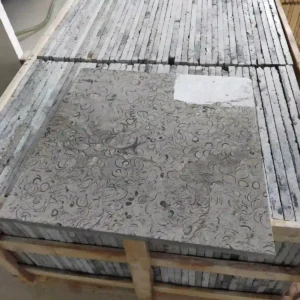
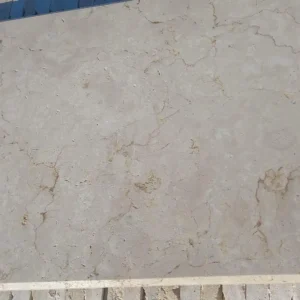

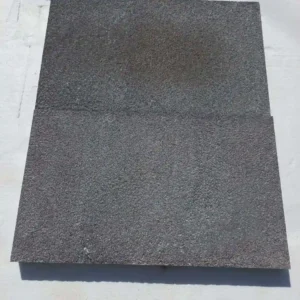
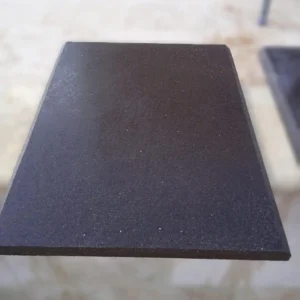
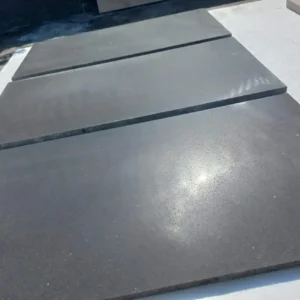


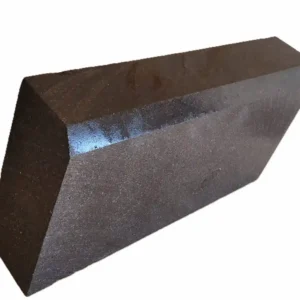
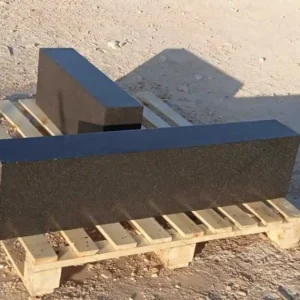

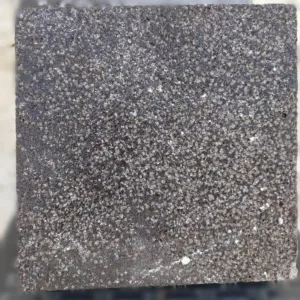
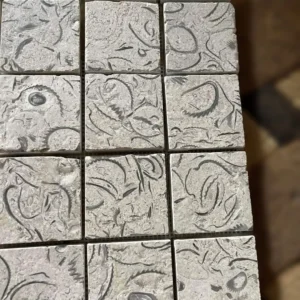

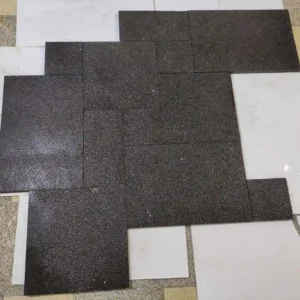




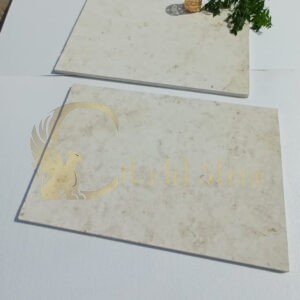
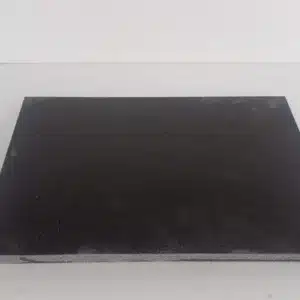
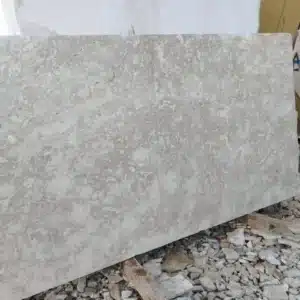

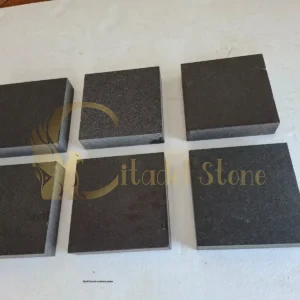

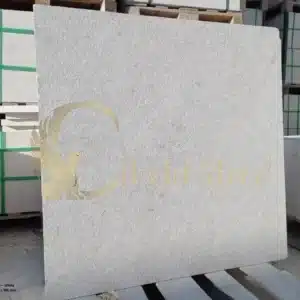


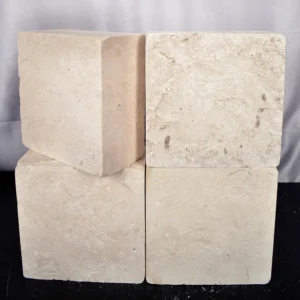
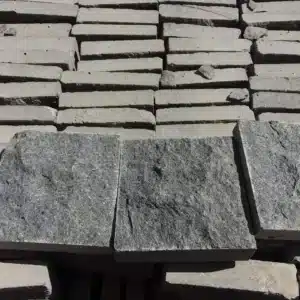
Specifying black granite paving in Arizona requires working through a compliance checklist before you ever select a finish or format — and the structural side of that checklist is where most project delays actually originate. Arizona’s building departments across Maricopa, Pima, and Coconino counties have tightened their paving substrate and load-distribution requirements over the past decade, and those updates directly affect how you prep, set, and joint natural stone installations. Black granite paving in Arizona is exceptionally capable as a material, but your permit package needs to reflect the right base thickness, drainage slope, and load-path documentation to clear plan review without revision cycles.
Building Code Compliance for Black Granite Paving in Arizona
Arizona follows the International Building Code with state and municipal amendments, and those amendments carry real weight when you’re specifying black granite paving for anything beyond a basic residential walkway. Commercial installations in Phoenix frequently require engineer-stamped drawings that confirm the paving assembly can handle both static dead loads and dynamic live loads — the IBC Chapter 16 minimums for pedestrian plazas sit at 100 psf, and pool decks are typically rated at 60 psf minimum, but your local plan reviewer may require higher values depending on occupant classification.
The structural layer requirements you’ll encounter break down like this:
- Minimum 4-inch compacted Class II aggregate base for residential pedestrian paving, increasing to 6 inches for vehicular-rated installations
- Concrete setting bed of 3,500 psi minimum compressive strength for mortar-set black granite paving slabs in Arizona commercial applications
- Sand-set systems require a minimum 1-inch screeded bedding layer over compacted aggregate — not over native soil
- Drainage slope of 1.5% to 2% away from structures is a code requirement in most Arizona jurisdictions, not just a best practice
- Expansion joint spacing must follow TCA (Tile Council of North America) EJ171 guidelines, typically every 8 to 12 feet in both directions for exterior mortar-set stone
Citadel Stone’s technical team can provide specification sheets and thickness documentation for your permit package — you can request those materials before committing to a format or finish, which saves revision time during plan review.
Seismic and Load-Bearing Requirements for Granite Installations
Arizona sits in ASCE 7 Seismic Design Category B across most of the low desert, but the northern counties shift to Category C in places, which adds requirements for how you anchor hardscape elements to adjacent structures. For freestanding paving fields, seismic loading rarely controls the design, but when your black granite paving transitions to steps, retaining walls, or pool coping, the connection detailing gets scrutinized more carefully.
Load-bearing thickness is the variable that separates a durable installation from a structural callback. For black granite paving slabs in Arizona used in vehicular applications, you’ll need a minimum nominal thickness of 2 inches — and for truck traffic or fire lane designations, 3-inch material on a reinforced concrete base is the defensible specification. Residential driveway aprons with regular passenger vehicle traffic typically perform well at 1.5 inches on a 4-inch concrete setting bed, but verify this against your jurisdiction’s paving ordinance, not just the material spec sheet.
- Pedestrian paving: 1.25-inch nominal minimum on compacted aggregate base
- Driveway and light vehicle: 1.5- to 2-inch nominal on concrete setting bed
- Fire lane or heavy vehicle rated: 3-inch nominal on reinforced concrete, minimum 4,000 psi
- Pool coping: 1.25-inch minimum with full back-butter mortar coverage — no back-butter skimping on coping since the cantilever creates a bending stress the thin section has to absorb
Thermal Performance and Joint Specification
Black granite’s thermal expansion coefficient runs approximately 4.4 to 5.2 × 10⁻⁶ per °F, which is actually lower than concrete’s 5.5 to 6.5 × 10⁻⁶ range — that’s one of the technical reasons granite holds up better than poured concrete in environments where temperature swings are extreme. In Arizona’s desert zones, you’re routinely dealing with surface temperature differentials of 80°F or more between pre-dawn lows and peak afternoon readings, especially on dark materials. That delta is what your expansion joint layout has to absorb.
The practical implication is that you should reduce your expansion joint spacing below the printed TCA recommendation when you’re working with black granite cobblestone pavers in Arizona’s lower desert elevations. Instead of the standard 12-foot grid, spec joints at 8 to 10 feet for mortar-set installations in Phoenix-metro microclimates where ground surface temperatures regularly exceed 140°F in July. The polyurethane sealant you use in those joints needs to carry a minimum 50% movement capacity rating — standard caulk products fail within two seasons in those conditions.
- Use ASTM C920 Type S, Grade NS, Class 50 polyurethane sealant in all field joints
- Back expansion joints with a closed-cell backer rod sized at 125% of joint width to control sealant depth
- Avoid epoxy-based joint fillers in exterior applications — thermal cycling causes adhesive failure at the stone interface faster than most specifiers expect
- For raven black granite pavers in Arizona installations exposed to full south-facing solar load, allow a 3-day cure period before trafficking, not the standard 24-hour minimum
Base Preparation and Arizona Soil Conditions
Caliche is the variable that rewrites your base preparation plan in more Arizona projects than any other single factor. This calcium carbonate hardpan layer shows up anywhere from 6 inches to 4 feet below grade depending on your specific site, and it creates a drainage problem that undermines your paving assembly from below if you don’t address it correctly. In Tucson, caliche horizons are common enough that experienced contractors budget for mechanical scarification and crushed caliche recompaction as part of the standard site prep scope — not as a contingency item.
The good news is that properly broken and recompacted caliche actually makes an excellent sub-base material because it’s dense, low-plasticity, and doesn’t exhibit the shrink-swell behavior you get with expansive clays. The preparation sequence that works in caliche country runs like this: scarify 6 to 8 inches, remove oversized fragments, recompact to 95% modified Proctor, then apply your aggregate base layer above. Skipping the recompaction step and treating caliche as if it’s already load-ready is the error that shows up 18 months later as differential settlement.
You should also check geotechnical reports for R-value ratings before finalizing your base thickness. Arizona expansive soils in transition zones can carry R-values as low as 5 to 15, which pushes your aggregate base requirement up considerably compared to what you’d spec on the same project in a non-expansive soil region.
Black Granite Pool Coping: Structural and Waterproofing Requirements
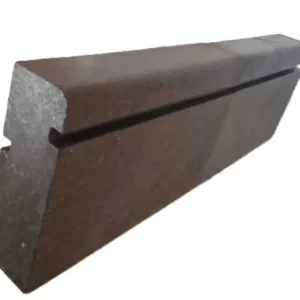
Black granite pool coping in Arizona sits at the intersection of structural, chemical, and thermal performance requirements simultaneously — it’s one of the more demanding applications in the state’s hardscape market. The structural requirement that most coping details underspecify is the bond strength at the cantilever interface. Pool coping typically overhangs the pool bond beam by 1.5 to 2 inches, which creates a lever-arm bending moment that multiplies the effective load on the mortar bed beneath the front edge of the stone.
Your mortar bed mix for pool coping needs to be a latex-modified setting material — polymer-modified mortars like ANSI A118.4-rated products provide the bond strength and flexibility that plain Portland-sand mortars can’t deliver under the thermal and chemical cycling a pool deck environment creates. For raven granite pavers in Arizona pool applications, specify a minimum 3/4-inch mortar bed with 100% back-butter coverage confirmed during installation. Any voids under pool coping collect water, freeze in Flagstaff elevation projects, and produce pop-offs within two winter seasons.
- Use ANSI A118.4 latex-modified mortar for pool coping bond coat
- Seal all stone-to-tile joints at the water line with ASTM C920 sealant, not grout
- Specify a drip edge or anti-drip profile on the pool-side nose to prevent calcium carbonate staining from water runoff
- Black granite pool coping in Arizona should be sealed with a penetrating impregnator rated for wet-area exposure — surface sealers fail quickly under pool chemical exposure
- Allow 28-day mortar cure before filling the pool to avoid hydrostatic pressure compromising the bond during the green-mortar phase
For detailed cost modeling on coping and deck combinations, black granite slabs for Arizona outlines the specification parameters that drive pricing across different project scales and installation methods. Getting those numbers right early prevents scope changes during construction when material substitutions become expensive.
Black Granite Cobblestones and Block Paving Applications
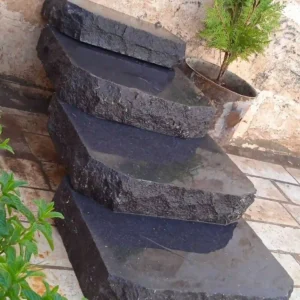
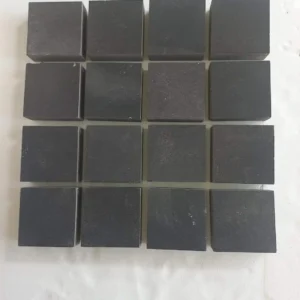
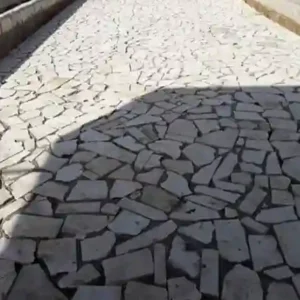
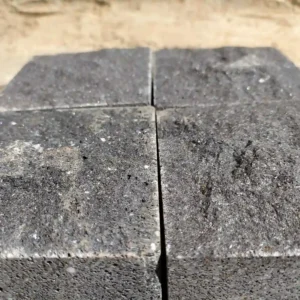
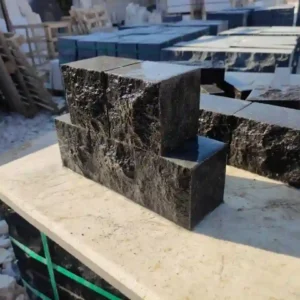
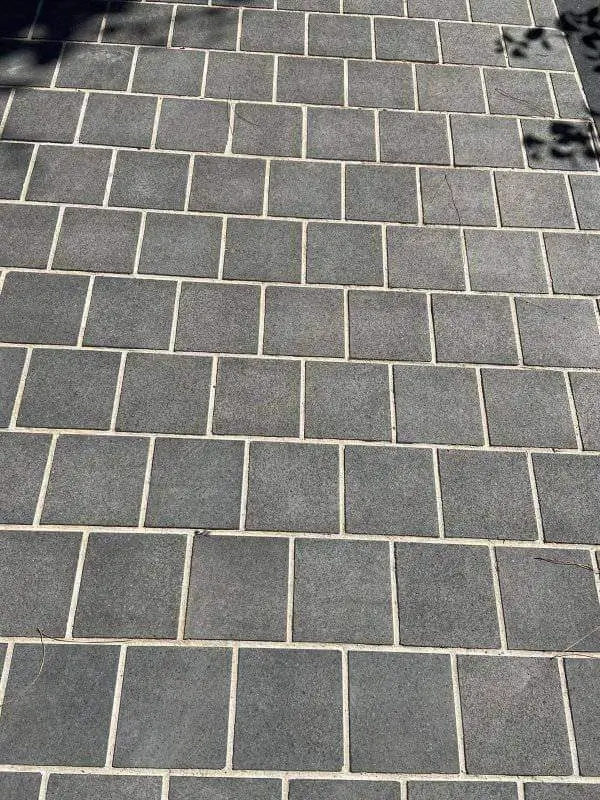
Black granite cobblestone pavers in Arizona occupy a specific niche in both residential and municipal work — they’re the go-to material for driveway apron detailing, courtyard borders, and historically styled streetscape projects where the tumbled or pitched-face texture reads as architectural character rather than industrial finish. The structural performance of black granite cobblestones is significantly better than many landscape architects assume: a properly set cobble field on a 6-inch compacted aggregate base with a 1-inch sand bedding layer will carry vehicular loading without differential settlement for decades when the edge restraint detail is executed correctly.
Edge restraint is the detail that fails most often in cobblestone work in the Southwest. The thermal cycling Arizona delivers will work cobbles toward an unrestrained edge over time regardless of how tight the initial joint pattern is. You need a concrete header course or a steel edge restraint pinned at 12-inch intervals to hold the field perimeter. In projects near Scottsdale‘s historic district, where preservation guidelines sometimes prohibit concrete headers in visible areas, a recessed granite soldier course mortared to a concealed footing provides both code compliance and visual continuity with the field pattern.
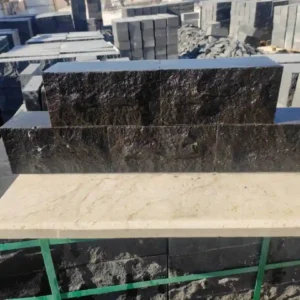
Black granite block paving in Arizona is also worth evaluating for commercial plaza applications where ADA compliance intersects with material selection. The surface texture of a flamed or bush-hammered finish granite meets the ADAAG requirement for stable, firm, and slip-resistant surfaces — and a flamed black granite carries a dynamic coefficient of friction above 0.60, which clears the ADA minimum of 0.60 for accessible routes.
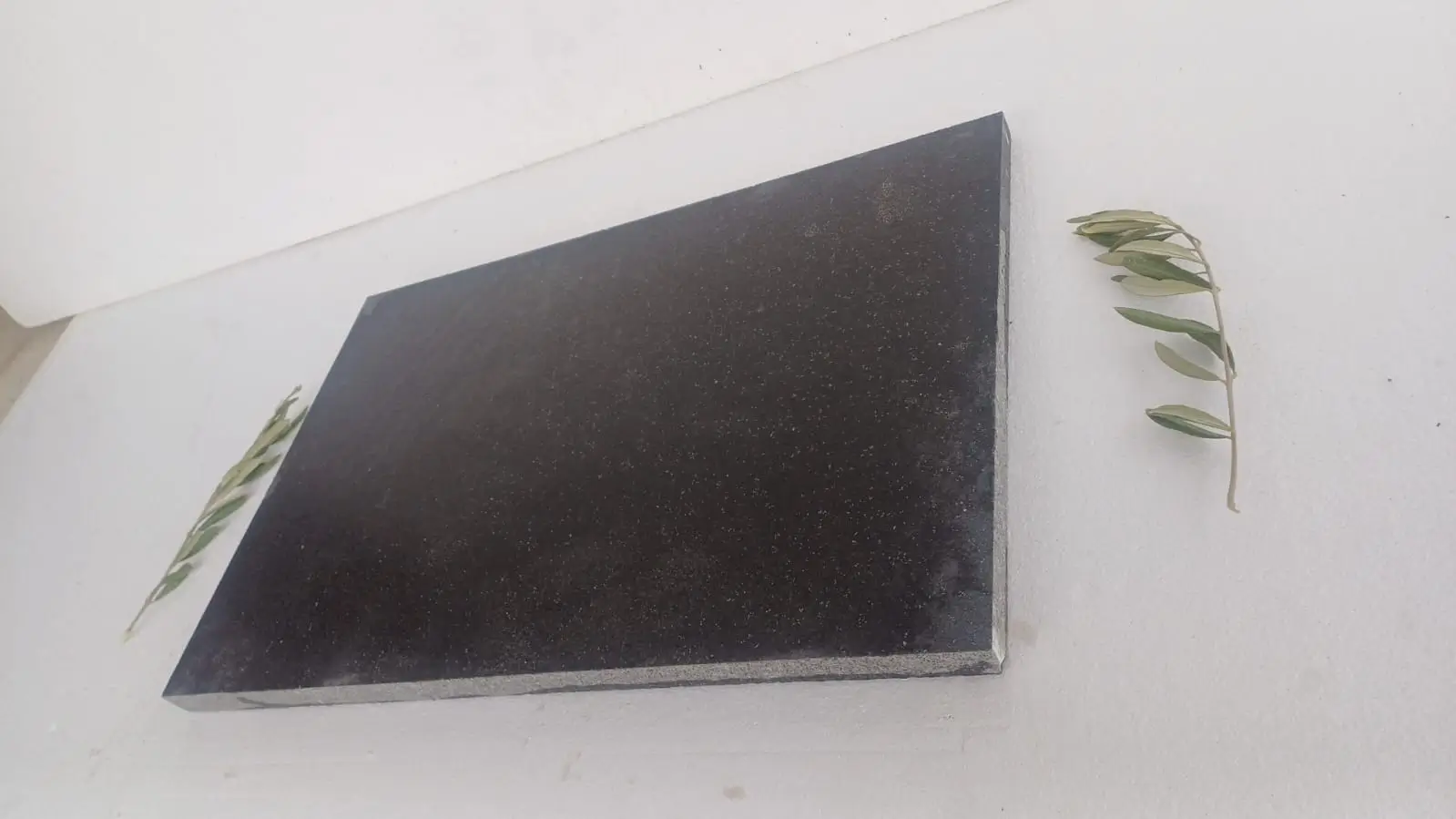
Surface Finish Selection and Slip Resistance Standards
The finish you choose for black granite paving isn’t just an aesthetic decision — it directly determines whether your installation meets Arizona’s slip-resistance requirements for accessible routes, pool decks, and commercial pedestrian areas. There are four finishes that see regular use in Arizona black granite projects, and each carries a different friction profile that you need to match to the application conditions.
- Polished finish: Dynamic COF of 0.35 to 0.45 dry — fails ADA minimums for exterior horizontal surfaces, avoid on any exterior application
- Honed finish: COF of 0.50 to 0.60 dry, dropping to 0.42 to 0.52 wet — marginal for pool deck use, acceptable for covered exterior areas with drainage maintained
- Flamed finish: COF of 0.65 to 0.80 — meets ADA requirements for exterior accessible routes and pool decks, this is the standard exterior finish specification for black granite paving in Arizona
- Bush-hammered or sandblasted: COF of 0.70 to 0.85 — highest friction coefficient, appropriate for steep ramps or high-risk wet areas
Sourced from established quarry partners and inspected for consistent surface texture before shipping, Citadel Stone’s black granite stock allows you to request sample pieces with finish confirmation before finalizing your specification. Finish variation between production batches is one of the underappreciated quality variables in granite supply — a tile that tests at COF 0.72 from one batch may come in at 0.65 from a different quarrying depth, and for ADA-critical applications that margin matters. Verifying warehouse stock from a single production run before placing a full project order is a precaution worth taking on any installation where slip resistance is a code requirement.
Material Availability and Delivery Logistics Across Arizona
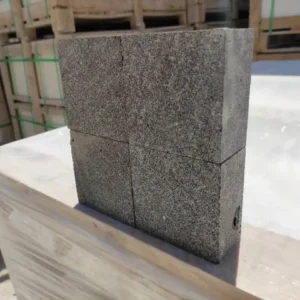
Lead time planning for black granite paving projects in Arizona depends heavily on whether you’re sourcing from domestic warehouse stock or triggering an import cycle. Citadel Stone maintains regional warehouse inventory that typically supports 1- to 2-week delivery timelines for standard formats — a significant advantage over the 6- to 10-week import lead times that affect project scheduling when fabrication is done overseas to order. For projects with fixed completion milestones, knowing the difference between in-stock and special-order material before you commit to a schedule is a critical project management step.
Truck access is a practical constraint that gets overlooked in the planning phase more often than it should. Flatbed truck delivery of pallet-stacked black granite paving slabs in Arizona requires a staging area accessible to a standard 53-foot trailer, which isn’t always available in tight residential sites or historic district infill projects. You should confirm truck access dimensions with your delivery coordinator before scheduling the drop — rescheduling a material delivery in Arizona’s summer construction season can set your timeline back by a week or more when truck availability is tight across the Phoenix metro.
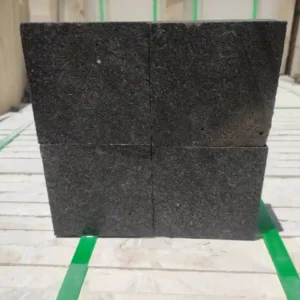
- Standard pallet dimensions: 48 × 48 inches, stacked to approximately 2,000 to 2,500 lbs per pallet depending on slab thickness
- Forklift unload is strongly preferred over manual offload for 2-inch and thicker material — black granite at 170 lbs per cubic foot is unforgiving on crew fatigue
- Order 10% overage on black granite paving slabs in Arizona projects to account for cuts, rejects, and pattern matching — this is a conservative standard figure that most experienced installers use as a floor, not a ceiling
- Verify warehouse stock from a single production batch for large projects requiring color consistency across the entire field
Making Black Granite Paving Work in Arizona
The projects that deliver long-term satisfaction with black granite paving in Arizona share a common characteristic: the structural and code-compliance decisions were made early, before the aesthetic decisions locked in the installation method. Changing from a sand-set to a mortar-set system after permit submission is a plan-review revision cycle nobody wants. Getting your base depth, expansion joint layout, mortar specification, and surface finish confirmed against local code requirements before the material arrives on site is what separates installations that perform for 25 years from those that show distress at year five.
Your specification package should document the complete assembly — subgrade preparation method, aggregate base depth and compaction standard, setting bed type and mix design, stone thickness, joint width and sealant specification, and surface finish with COF test data. That level of documentation isn’t bureaucratic overhead; it’s the record that protects your project when an inspector asks questions or a client raises a warranty concern three years post-installation. For projects that include both paving fields and architectural stone elements, exploring adjacent material options rounds out your specification toolkit — Granite Bricks in Arizona covers another dimension of granite specification that complements black granite paving in mixed-material Arizona hardscape designs. For dependable material sourcing throughout Arizona, Citadel Stone offers black granite paving slabs that meet the practical and aesthetic demands of residential and commercial projects alike.