

Basalt rock types for tiles are not all equivalent in structure, and that structural difference is exactly what drives the performance gap between an installation that holds up for decades and one that deteriorates at the joints within a few seasons. The rock’s volcanic origin produces a range of internal textures — from dense, fine-grained matrices to highly porous, bubble-riddled formations — and each of those textures behaves differently under load, moisture, and thermal cycling. Choosing the right structural variant before you write the specification is the decision that determines everything downstream.
What Type of Rock Is Basalt?
Basalt is an extrusive igneous rock — it forms when low-viscosity lava erupts onto the earth’s surface and cools rapidly. That fast cooling is what keeps the crystal structure small and tight, which is why dense basalt feels almost glassy at the fracture face compared to coarser-grained igneous stones like granite. The rapid solidification also traps gas bubbles in the melt, and depending on how much gas was present and how fast the cooling progressed, you can end up with two structurally different results from the same volcanic event: a near-solid matrix or a sponge-like vesicular form.
According to USGS basalt volcanic rock properties and composition, basalt is the most abundant bedrock on the ocean floor and a common constituent of continental flood plains, which explains why it appears in quarry operations across multiple continents. For tile specification purposes, what matters is not the geological backstory but the structural outcome — specifically, whether the stone you are specifying is dense and continuous or whether it carries voids that will influence absorption, load transfer, and long-term surface integrity.
Citadel Stone works directly with our selected quarries to quality-check stone against agreed structural benchmarks before it is cut, so the grade you specify is the grade that arrives on site.
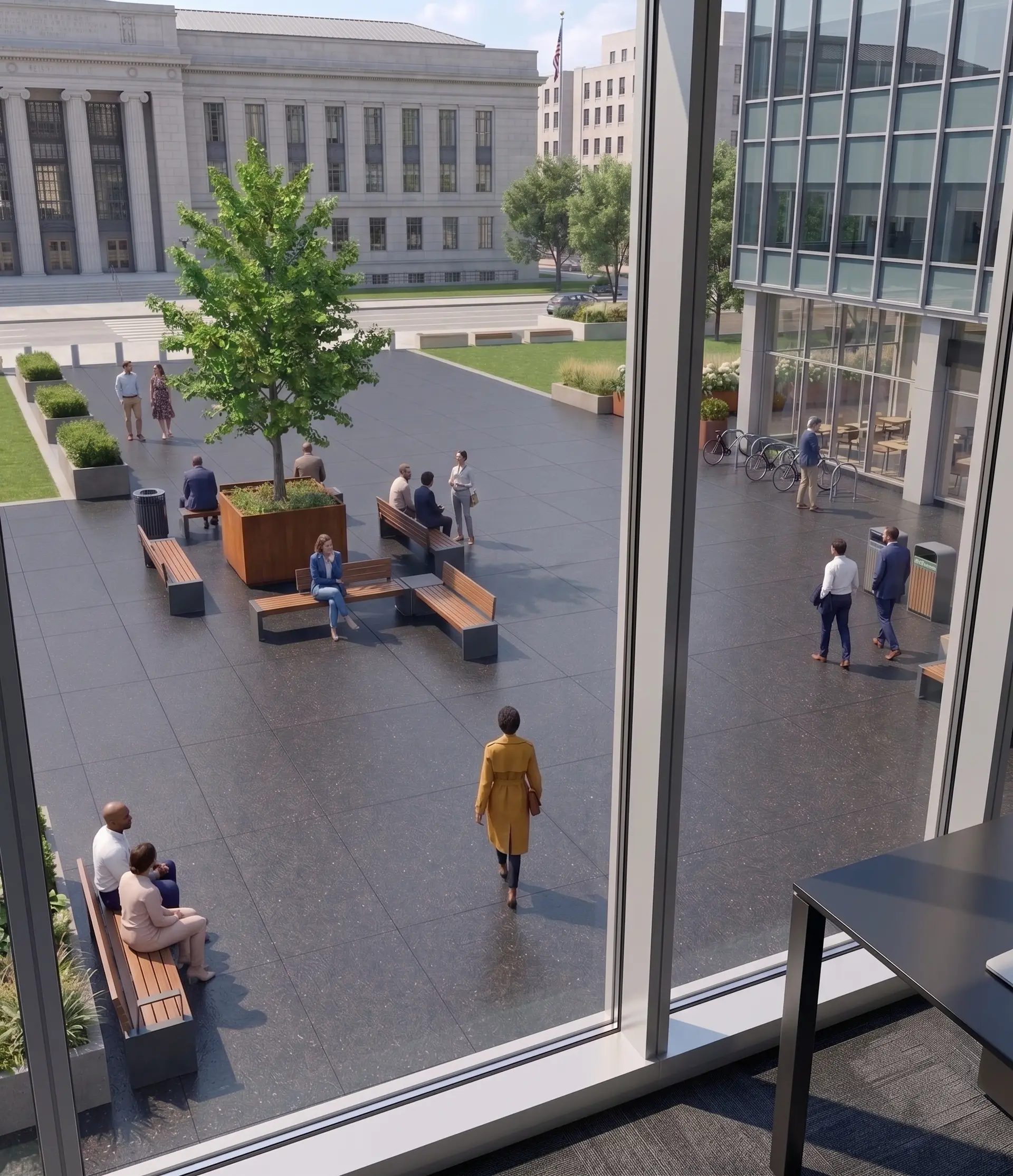
Dense Aphanitic Basalt: The Tile Workhorse
The term aphanitic simply describes a rock whose crystals are too fine to see with the naked eye — and for tile applications, this is the structural category you will most commonly specify. Dense aphanitic basalt has an interlocking crystalline matrix with minimal void space, which translates directly to lower absorption, higher compressive capacity, and a surface that responds predictably to cutting and finishing operations. If you have worked with honed basalt tiles and noticed how cleanly they take a flat finish without the micro-pitting you sometimes see in softer stones, that behaviour comes directly from this structural uniformity.
For indoor tile applications — floor slabs, feature walls, wet-room lining — dense aphanitic basalt is typically your first-choice structural type. The low absorption keeps moisture from migrating behind the tile bond, and the fine grain holds dimensional tolerance through cutting. Your specification should still request absorption data from the supplier’s test report rather than relying on a generic figure, because quarry-to-quarry variation exists even within the aphanitic category.
- Fine, interlocking crystal matrix creates a nearly continuous internal structure
- Lower absorption rate compared to vesicular variants — request the test report for the specific batch
- Takes honed and polished finishes cleanly, with minimal surface pit correction needed
- Performs consistently under point loading in both residential and commercial floor applications
- Appropriate for indoor wet rooms, commercial lobbies, and exterior paving where the base is correctly prepared
Vesicular Basalt: What the Voids Actually Mean
Vesicular basalt gets its name from the vesicles — spherical or elongated voids — left behind when gas bubbles were frozen into the cooling lava. The question of what is basalt rock type in its vesicular form comes up often in specification queries, and the answer that matters for tiling is this: the voids interrupt the continuous matrix, which raises absorption, changes the way the tile receives load at its edges, and creates surface texture that finishing operations cannot fully eliminate.
That is not automatically a negative. A tumbled or brushed vesicular basalt tile leaves an open, matte texture at the surface that reads very differently from the mirror-flat face of a honed dense tile. The visual character of lava-rock tiles comes almost entirely from this vesicular structure. For outdoor terrace applications, a controlled vesicular surface texture can be a deliberate design choice rather than a defect — the key is that you understand what you are specifying and you account for the higher absorption in your sealing and maintenance schedule.
- Voids raise the effective absorption of the tile — request the test report, do not assume a figure
- Surface texture is inherently open and matte; polished finishes are not achievable on heavily vesicular material
- Edge integrity at cuts needs closer inspection — voids at the cut face can compromise grout bond width
- Sealing interval is typically shorter than for dense basalt — follow your sealer manufacturer’s stated schedule
- Outdoor terrace, pool deck perimeter, and water feature coping are common applications where the open texture is a legitimate aesthetic choice
According to basalt volcanic rock formation and construction properties, the vesicularity of a given flow depends on gas content and cooling rate — meaning two tiles from the same quarry region but different flow layers can have meaningfully different void percentages. That is why batch-level testing matters more than a general category assumption.
Columnar and Flow-Banded Variants
Two structural variants come up less often in tile specifications but matter enough to address directly. Columnar basalt — the hexagonal joint pattern you see in geological formations — is occasionally quarried and sawn for tile use, particularly for large-format feature applications. The jointing pattern within the stone can create planes of slightly lower cohesion, and your cutting specification needs to account for that. Slabs sawn perpendicular to the column axis typically give you a denser face than those cut parallel to it.
Flow-banded basalt contains alternating layers of slightly different mineral density, visible as subtle striations across the tile face. Aesthetically it reads as a natural variation in the surface tone — some specifiers find it desirable, others prefer the uniform grey of unfeatured dense basalt. From a performance standpoint, the banding can create minor differential absorption between layers, so your sealing protocol should address the full depth of the surface texture, not just the face.
How Structure Affects Porosity and Moisture Management
Porosity is the single structural property that most directly governs how basalt tile behaves in moisture-rich environments, and it is the property that varies most between rock types within the basalt family. Dense aphanitic tiles have low interconnected porosity — water penetration is slow and largely surface-limited when the stone is properly sealed. Vesicular tiles have higher open porosity at the surface and, depending on the degree of vesicularity, potentially at depth too.
Your drainage design amplifies or moderates whatever porosity the tile carries. On a well-sloped, well-drained substrate, even a moderately absorptive tile will shed bulk water before it has time to drive significant moisture into the stone body. On a flat or back-ponded substrate, the same tile absorbs considerably more. In regions that experience heavy rainfall seasons, monsoon patterns, or concentrated storm events, the substrate drainage geometry matters as much as the tile’s own absorption characteristics. Slope your substrate to drain — a minimum fall toward collection channels is worth specifying explicitly, and the drainage infrastructure beneath the tile bed should be sized for the peak precipitation loads your site experiences.
At Citadel Stone, we recommend requesting the absorption test report for any basalt grade intended for outdoor use in high-rainfall environments, then using that figure to determine sealing frequency and drainage slope requirements together rather than treating them as separate decisions.
Finish Selection by Structural Type
The finish you apply to a basalt tile is constrained by the structural type underneath it, and understanding that constraint early prevents costly specification errors. Dense aphanitic basalt supports the full range of mechanical finishes — sawn, honed, polished, brushed, and flamed — because the continuous matrix holds up to abrasive and thermal processing without exposing subsurface voids. Vesicular basalt is typically limited to sawn, brushed, or tumbled finishes because polishing attempts on heavily voided material produce an uneven result that no amount of filling compound resolves cleanly.
For your Basalt Tiles specification, confirming the structural type before committing to a finish schedule prevents the situation where a sample slab looks fine in a showroom but the production run returns an uneven surface because the quarry batch carried higher vesicularity than the sample.
- Honed finish: achievable on dense aphanitic, limited on vesicular — confirm the structural type first
- Flamed finish: suitable for dense aphanitic outdoor tiles where surface texture is required; vesicular material can spall under the thermal shock of the flaming process
- Brushed finish: works on both structural types and reveals the natural texture of the stone without aggressive abrasion
- Tumbled finish: typically applied to vesicular or moderately dense tiles for a reclaimed, irregular aesthetic
- Polished finish: reserved for the densest aphanitic grades — always request a production sample, not just a showroom piece
Finish, Wet Conditions, and Slip Considerations
Slip resistance is a topic that belongs in every outdoor tile specification, and for basalt the finish is the governing variable — not the rock type label. The current standard for wet-surface measurement is ANSI A326.3, which measures performance wet, replacing the ASTM C1028 static test withdrawn in 2014. Your specification should reference ANSI A326.3 and request the test report from your supplier for the specific finish grade you are specifying — no figure is published here, and the report is available on request.
A tumbled finish leaves an open, matte texture at the surface; a polished finish produces a smooth, light-reflective face. Those are texture descriptions, not safety outcomes, and your wet-condition specification needs to treat them as inputs to an ANSI A326.3 test rather than as substitutes for one. For pool deck perimeter tiles and any surface that will regularly receive water from rainfall or irrigation, specify the finish and then confirm the test result before finalising the order.
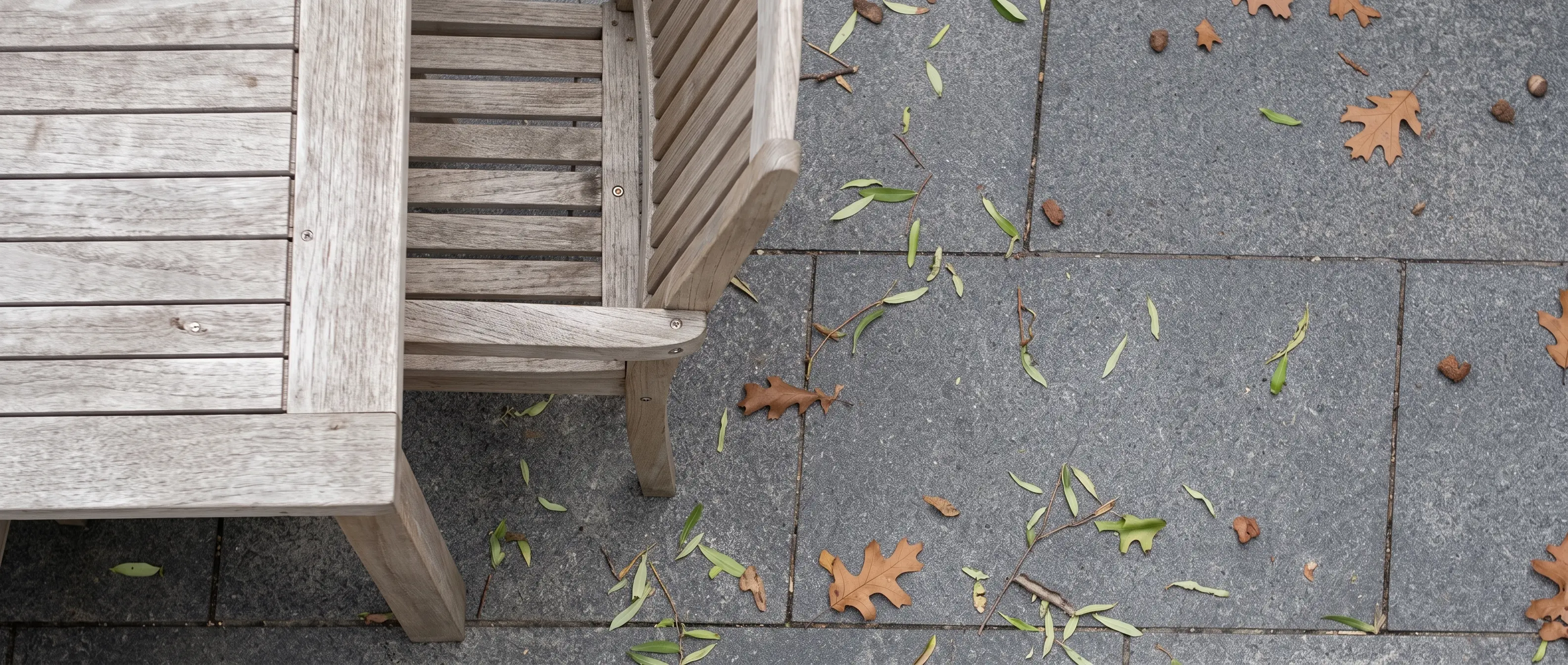
Base Preparation and Structural Type
Your basalt tile’s structural type informs not just the tile specification but the substrate you build beneath it. Dense aphanitic basalt tiles, particularly in large-format sizes, transfer load efficiently through the tile body to the bedding layer — which means any irregularity in the bedding layer shows up quickly as a lippage or cracking issue. Full-bed mortar coverage is non-negotiable for large-format dense basalt; spot-bedding creates unsupported voids beneath the tile that concentrate stress at the unsupported edges under foot traffic.
Vesicular tiles, typically specified in smaller formats because the open structure limits achievable thickness tolerance in large slabs, are somewhat more forgiving on minor substrate variation — but that forgiveness should not be used as an excuse to under-prepare the base. A compacted aggregate layer, correctly graded for your site’s drainage requirements and soil conditions, is the foundation of any tile installation that will deliver decades of service life rather than a few seasons before the first joint failure appears.
- Full-bed mortar contact is mandatory for all large-format dense basalt tiles — do not spot-bed
- Expansion joint spacing should be calculated from the tile’s thermal movement coefficient — request this from the supplier’s technical sheet, not from a generic rule of thumb
- In freeze-thaw regions, the aggregate base must drain freely — water trapped beneath a low-permeability mortar bed will expand and lift the tile installation
- In flood-risk or high-runoff zones, extend the drainage layer laterally beyond the tile footprint so peak-event water does not back up beneath the setting bed
- Delivery scheduling for large basalt tile orders should account for site access constraints — confirm offloading arrangements before the delivery date to avoid damage from impromptu repositioning on site
Basalt Tile Thickness and Application Loading
Thickness selection is driven by the load case, and the structural type of your basalt sets the upper boundary on what a given thickness can carry. Dense aphanitic basalt tiles are typically specified across a wider thickness range than vesicular tiles because the continuous matrix distributes load more evenly through the tile cross-section. Vesicular tiles carry internal planes of weakness at the void boundaries, which limits the span and point-load capacity of a thin section.
For pedestrian-only applications, thinner dense tiles perform well provided the bedding is correct. For vehicular loading — driveways, forecourts, or any surface where loaded deliveries arrive periodically — you need to specify based on actual load data, not on what looks reasonable. Your supplier should be able to direct you to the relevant ASTM test method and provide a test report on request for the compressive and flexural performance of the specific grade. Never substitute a published generic figure for actual material test data on a load-bearing application.
The Natural Stone Institute provides igneous stone paving technical standards that can help frame your thickness and application-load decisions within the broader context of igneous stone specification practice.
Getting Basalt Rock Type Specifications Right
The specification decisions for basalt rock types for tiles reduce to a sequence: identify the structural type first, confirm it with a production sample and test report, then select the finish that the structure can support and the base that your site’s drainage requirements demand. Vesicular basalt and dense aphanitic basalt are not interchangeable even when they come from the same quarry region — treating them as equivalent is the specification shortcut that generates callbacks. Your drainage geometry, sealing schedule, and bedding protocol all flow from the structural type you confirm at the outset, not from a generic category assumption. As you expand your natural stone project scope, snow stone paver ideas for modern patios explores how another distinctive natural stone performs across varied outdoor design contexts. Understanding what type of rock is basalt — and how its volcanic texture affects porosity — helps specifiers match the right Citadel Stone grade to indoor versus outdoor conditions.
Related reading: Choosing Grey Basalt Tile: Shades, Finishes & Pairings · Cast Basalt vs Natural Basalt Tiles: Key Differences.