Density tells a more important story than color when you’re comparing bluestone patio material against limestone — and most buyers only discover this after the mortar has cured. Bluestone, a dense fine-grained sandstone or basalt depending on the quarry source, typically delivers compressive strength in the 15,000–22,000 PSI range, while most limestone grades run 8,000–14,000 PSI. That gap doesn’t make limestone a poor choice — it just means each material earns its place under different loading conditions, exposure levels, and design demands. Understanding where that line falls will save you from a costly material swap two years into a bluestone patio or limestone project.
What Bluestone and Limestone Actually Are
Your specification decisions get sharper when you understand the geology behind each material. Bluestone is a broadly applied commercial term — depending on the source region, it may refer to a dense blue-grey sandstone, a basaltic traprock, or a fine-grained volcanic stone. What all commercial bluestone shares is a tight, low-porosity structure with absorption rates typically below 2%, which directly affects its performance in wet or freeze-thaw conditions. According to bluestone geological classification and properties, the material’s compacted grain structure distinguishes it from softer sedimentary options and contributes to its characteristic surface hardness.
Limestone, by contrast, is a sedimentary carbonate rock formed from compressed marine organisms. Its mineralogy is predominantly calcite, which gives it a softer, more workable character but also means it reacts to acidic environments over time. Porosity varies significantly by grade — honed dense limestone may absorb as little as 3%, while softer oolitic grades can reach 8–12%. The Natural Stone Institute limestone technical specifications document this variation clearly, and it’s exactly why limestone sourcing and grade selection matters as much as material category when you’re writing a patio specification.
Surface Finish and Slip Resistance Compared
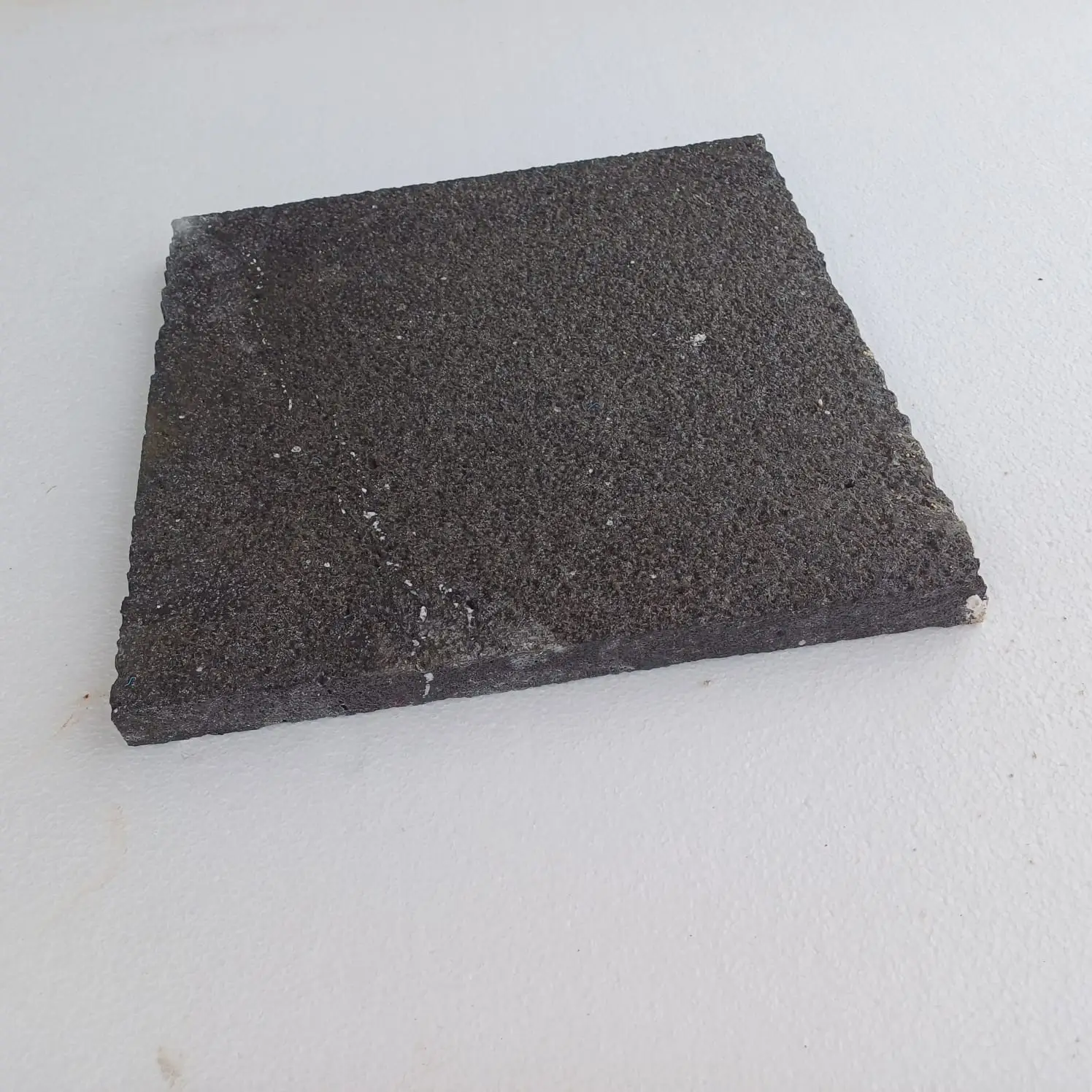
The finish you specify changes the performance profile of both materials significantly — and this is where a lot of outdoor patio decisions go sideways. Bluestone’s natural cleft surface provides pronounced texture straight from the split, which holds up when wet; verify any wet-area selection against the ANSI A326.3 wet DCOF threshold (0.42). That makes natural cleft bluestone a strong candidate for patio surfaces without any additional texturing treatment.
Limestone behaves differently under the same conditions. A honed limestone finish in the 400-grit range reads beautifully in photographs but becomes noticeably slippery when wet, and measurably smoother under the same slip resistance test. You’ll get better traction from tumbled or brushed limestone finishes, which open the surface texture enough to maintain grip in rain or after irrigation runoff. Here’s what most specifiers miss: limestone’s softer surface actually makes anti-slip finishing easier to achieve — the stone accepts mechanical texturing more readily than hard bluestone, giving you more control over the final friction coefficient when the application demands it.
- Natural cleft bluestone: highest natural traction, minimal finishing required for outdoor use
- Honed bluestone: smooth, contemporary finish but requires anti-slip sealer in wet zones
- Tumbled limestone: excellent texture, natural patina that improves grip over time
- Honed limestone: best reserved for covered or sheltered patio areas where wet exposure is limited
- Brushed limestone: strong outdoor performer, balances aesthetics with functional slip resistance
Thermal Performance and Surface Heat
Surface temperature under direct sun is a practical patio concern that doesn’t always make it into the material comparison, but it affects daily usability in ways structural specs don’t capture. Lighter limestone grades — cream, white, and buff tones — reflect solar radiation more efficiently than the blue-grey tones typical of a bluestone patio, keeping surface temperatures noticeably cooler underfoot in hot, dry climates. In high-heat outdoor environments, that difference can reach 15–20°F at peak afternoon sun, which matters significantly if the patio is barefoot territory.
Dense dark bluestone absorbs and holds heat more aggressively, which has a counterintuitive benefit in cooler evening use — the thermal mass releases stored warmth slowly after sunset, extending comfortable outdoor time. The trade-off is that the same thermal mass creates peak surface temperatures that can exceed 140°F on dark-colored slabs under intense direct sun. Your patio’s sun exposure pattern and primary use hours should directly inform which thermal profile you prioritize. Neither material wins outright here — the right answer depends entirely on your site’s orientation and seasonal use.
Thickness, Base Preparation, and Large Stone Slabs
The structural demands of a bluestone patio and a limestone patio diverge most at base preparation — and getting this wrong is the single most common cause of premature failure in natural stone outdoor installations. Bluestone’s higher density (approximately 160–170 lb/ft³) means large stone slabs in this material carry significant self-weight. A 24×24 inch bluestone slab at 1.5 inches thick weighs close to 60 pounds per unit, which demands a compacted aggregate base of at least 4 inches for residential foot-traffic applications and 6–8 inches under vehicular or heavy furniture loads.
Limestone large stone slabs at comparable dimensions run lighter — typically 140–150 lb/ft³ — but limestone’s softer composition means it’s less forgiving of base voids and point-load concentration. A 1-inch deflection across a 24-inch span that bluestone handles without cracking will fracture a softer limestone grade at the same dimensions. You need to compensate for this with a denser, more uniformly compacted setting bed — 1 inch of screeded sand-cement mix over the aggregate base, leveled to within 3mm of flat. The USGS sandstone and bluestone dimension stone classification confirms that bluestone’s higher modulus of rupture makes it more structurally tolerant of minor base inconsistencies, which is a real field advantage in large-format installations.
- Bluestone base minimum: 4 inches compacted aggregate, residential foot traffic
- Limestone base minimum: 4 inches compacted aggregate plus denser, more level setting bed
- Large format slabs (24×24 and above): increase base depth by 2 inches regardless of material
- Sand-set applications: require geotextile fabric layer to prevent aggregate migration under either material
- Mortar-set applications: polymer-modified thin-set recommended for both materials on concrete substrates
Elevation Changes and Drainage on Sloped Sites
Sloped sites introduce variables that flat-plane patio installations never encounter — and the material choice affects how well you can manage them. A bluestone patio on a hillside installation benefits from the material’s dimensional stability under differential settlement: when the base shifts slightly across an elevation transition, bluestone’s higher flexural strength (typically 1,800–2,400 PSI) resists cracking better than softer limestone grades at the same point-load stress. This matters on grades steeper than 5%, where water velocity during rain events creates uneven erosive pressure on the base aggregate.
Limestone on sloped terrain requires more deliberate drainage engineering. The material’s higher porosity means it absorbs more surface water before runoff begins, which sounds beneficial until you account for what happens at the uphill joint face — water infiltrating the joint and saturating the setting bed on a slope creates hydrostatic pressure that can lift pavers over seasonal cycles. The engineering solution is a cross-slope grade of 1–2% across the patio surface combined with a perforated drain line at the downhill edge, regardless of which material you specify. For hillside installations where the entire patio sits on fill material rather than native soil, you’ll also need to account for differential compaction rates when calculating joint widths — typically adding 10–15% to standard joint spacing recommendations to accommodate base movement over the first two to three seasons. Managing grade effectively transforms a challenging sloped site into a long-performing installation for either material.
Exploring the range of natural stone paving available for different site conditions is straightforward through Citadel Stone paving options, where material specifications, available thicknesses, and surface finishes are documented for direct project comparison.
Cutting and Shaping for Curved and Circular Layouts
Pavers for circular patio layouts introduce a fabrication challenge that distinguishes these two materials sharply. Bluestone’s tight grain structure cuts cleanly with a wet diamond blade, holding crisp radiused edges without micro-fracturing along the cut line — an important quality when you’re fitting wedge-cut units around a curved border. The material’s consistency also means predictable cut behavior across an entire pallet, which matters when you’re cutting 30 or 40 units to the same template radius.
Limestone’s softer composition actually makes circular cuts easier for the saw operator, requiring less blade pressure and lower cut speeds. The risk is edge chipping on thin-section cuts — anything under 2 inches of stone remaining at the narrowest point of a wedge cut needs support during handling. Your fabricator should be cutting limestone circular units at 1.25-inch minimum thickness to maintain edge integrity through the installation process. Both materials produce attractive results in radiused and circular patio layouts; the difference is in the fabrication tolerance and the skill level required from the cutting team. Pavers for circular patio applications in either material benefit from a dry-fit layout check before any adhesive or mortar is applied.
Maintenance, Sealing, and Long-Term Performance
Maintenance expectations diverge between these two materials more than most buyers anticipate at the selection stage. A bluestone patio in a well-drained, properly set installation requires relatively minimal intervention — light cleaning with a neutral pH cleaner and a penetrating impregnating sealer applied every 3–4 years is the standard maintenance cycle for most residential applications. The material’s low natural porosity means it doesn’t absorb staining agents quickly, giving you more time to address spills before they penetrate the surface.
Limestone needs a more attentive maintenance approach, particularly in the first two years after installation. The material is alkali by nature and reacts to acidic cleaners — citrus-based products, vinegar, and many commercial patio cleaners will etch the surface permanently. Your cleaning protocol should specify pH-neutral or alkaline stone cleaners only. Sealing limestone annually for the first two years and then every two to three years thereafter is the standard recommendation for outdoor applications. The trade-off is that well-maintained limestone develops a natural patina that many homeowners find more appealing than bluestone’s uniform appearance — the material ages with character rather than simply weathering.
- Bluestone sealing interval: every 3–4 years with penetrating impregnating sealer
- Limestone sealing interval: annually for years 1–2, then every 2–3 years
- Both materials: pH-neutral cleaners only — avoid anything below pH 7
- Joint sand maintenance: inspect and refill polymeric sand annually after freeze-thaw cycles
- Efflorescence on limestone: treat with diluted phosphoric acid solution (5% max) — test on offcut first
Sustainability and the Eco Paving Stone Consideration
The eco paving stone conversation has matured considerably over the past decade, and both bluestone and limestone perform well relative to manufactured alternatives when sourced responsibly. Natural stone requires no firing, no polymers, and no continuous energy input once quarried — its embodied energy profile sits significantly below ceramic tile, concrete pavers, and brick in lifecycle assessments. Stone’s longevity amplifies this advantage: a 30-year natural stone patio installation represents a far lower environmental cost per year of service than a 10-year concrete paver replacement cycle.
Bluestone quarrying tends to produce more waste material per unit of finished stone than limestone because of the way the rock cleaves — the offcuts and irregular pieces that don’t meet dimensional spec for patio use represent embodied energy that doesn’t reach the finished project. Limestone quarrying is generally more material-efficient, particularly for dimension stone operations where the even bedding planes allow high-yield sawing. At Citadel Stone, we source our materials with full traceability to quarry origin, which lets us provide accurate material documentation for LEED and sustainability certification submissions when your project requires it. If sustainability scoring is a factor in your specification, ask for quarry certification and material origin documentation before committing to a source. Specifying a genuine eco paving stone means looking beyond surface aesthetics to full supply-chain transparency.
Ordering, Lead Times, and Delivery Logistics
Your project timeline depends as much on supply chain reality as on installation scheduling — and natural stone sourcing has specific lead time characteristics worth understanding before you commit to a construction calendar. Bluestone availability varies more than limestone availability in the wholesale market, particularly for large stone slabs above 24×36 inches, where quarry yield on consistent-color, consistent-thickness material is genuinely limited. Verify warehouse stock levels for your specified dimensions before locking in a start date — a two-week buffer between stone confirmation and installation start is standard practice for projects using large bluestone slabs.
Citadel Stone maintains national warehouse inventory across both materials, which typically compresses lead times to 1–2 weeks for standard thicknesses compared to the 6–8 week import cycle that direct overseas orders require. Your project’s truck access constraints also affect delivery planning — large stone slab deliveries typically require a flat-bed truck with a liftgate or crane off-load capability, and narrow residential driveways or low overhead clearances need to be communicated to the logistics team before dispatch.
What Matters Most: Bluestone Patio vs. Limestone
Choosing between a bluestone patio and limestone comes down to three intersecting factors: the structural demands of your specific site, the maintenance commitment you’re prepared to sustain, and the aesthetic outcome you’re designing toward. Bluestone earns its place on high-traffic, exposed, or sloped sites where structural resilience and low maintenance take priority. Limestone earns its place where warmer tonal ranges, design flexibility, and a living patina matter more than raw hardness metrics — provided the base engineering and sealing protocol are executed correctly.
Neither material is universally superior. The installations that fail — regardless of material — share one common factor: under-engineered base preparation. Get the drainage geometry right, spec the correct base depth for your site’s slope and soil type, and maintain the joint sand. Those three variables determine whether you’re replacing pavers in year eight or admiring them in year twenty-five. Your hardscape project may also benefit from considering how different natural stone applications complement each other across the property — patio paver layout ideas for smaller spaces explores creative approaches worth reviewing as you develop your full outdoor plan. Limestone paving from Citadel Stone ships in slabs up to 30mm thick, giving patio projects consistent thickness for even setting.
Related reading: limestone kitchen sink · patio paver base · How to Install a Flagstone Patio: Dry-Laid vs Mortar-Set.