Why Your Space Shape Drives Every Backyard Paver Patio Decision
Backyard paver patio ideas that work beautifully in open rectangular yards often fall apart in tight, angular, or oddly proportioned spaces — and the reason is almost always layout geometry rather than material choice. Your surface pattern, joint orientation, and unit size all interact with the boundaries of your space in ways that can visually expand a cramped corner or visually compress a narrow run. Get the geometry wrong and even premium stone looks cluttered.
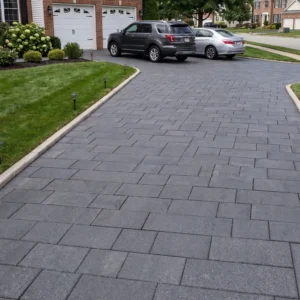
The single most effective adjustment you can make in a small or awkward space is shifting from a running bond to a stacked or diagonal pattern. A 45-degree diagonal layout visually pushes the eye toward corners rather than along the short axis, which adds perceived width to narrow patios. That’s a technique specifiers use on commercial terraces with the same constraints.
Stone Types That Work Hardest in Tight Patio Layouts
Natural stone patio pavers aren’t interchangeable when space is limited. The material’s thickness, edge profile, and color variation all influence how a compact patio reads visually and holds up structurally. Here’s what genuinely matters for small and awkward spaces:
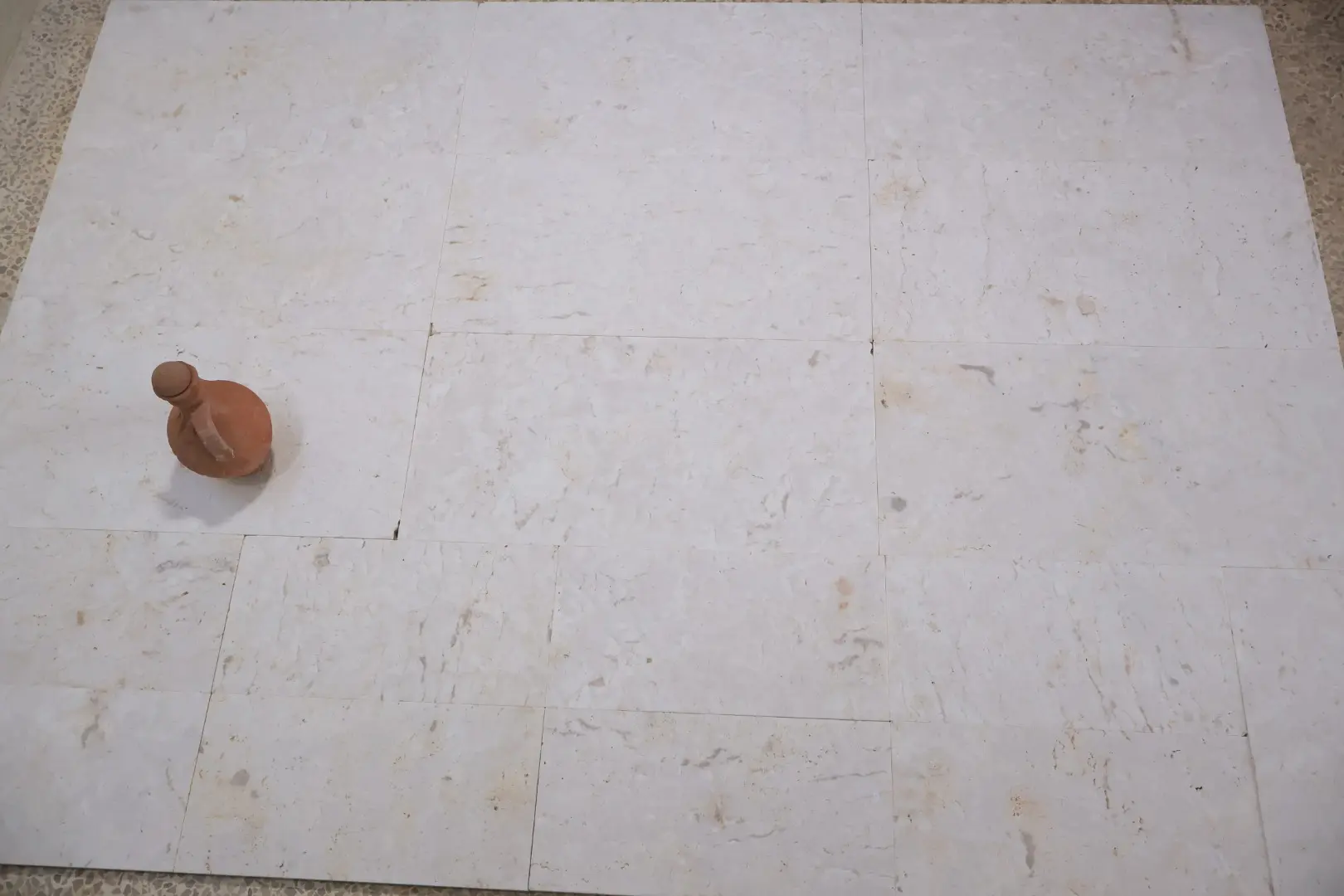
- Limestone pavers in the 12×12 or 16×16 format keep grout lines minimal and reduce visual noise — critical when your patio is under 150 square feet
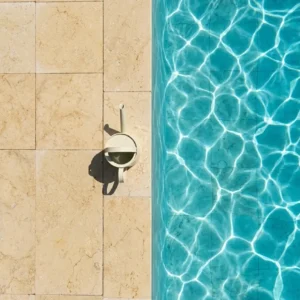
- Travertine’s natural color variation draws the eye across the surface rather than stopping at edges, which softens irregular boundaries
- Flagstone in irregular cuts suits non-rectangular spaces because the organic shape mirrors the perimeter rather than fighting it
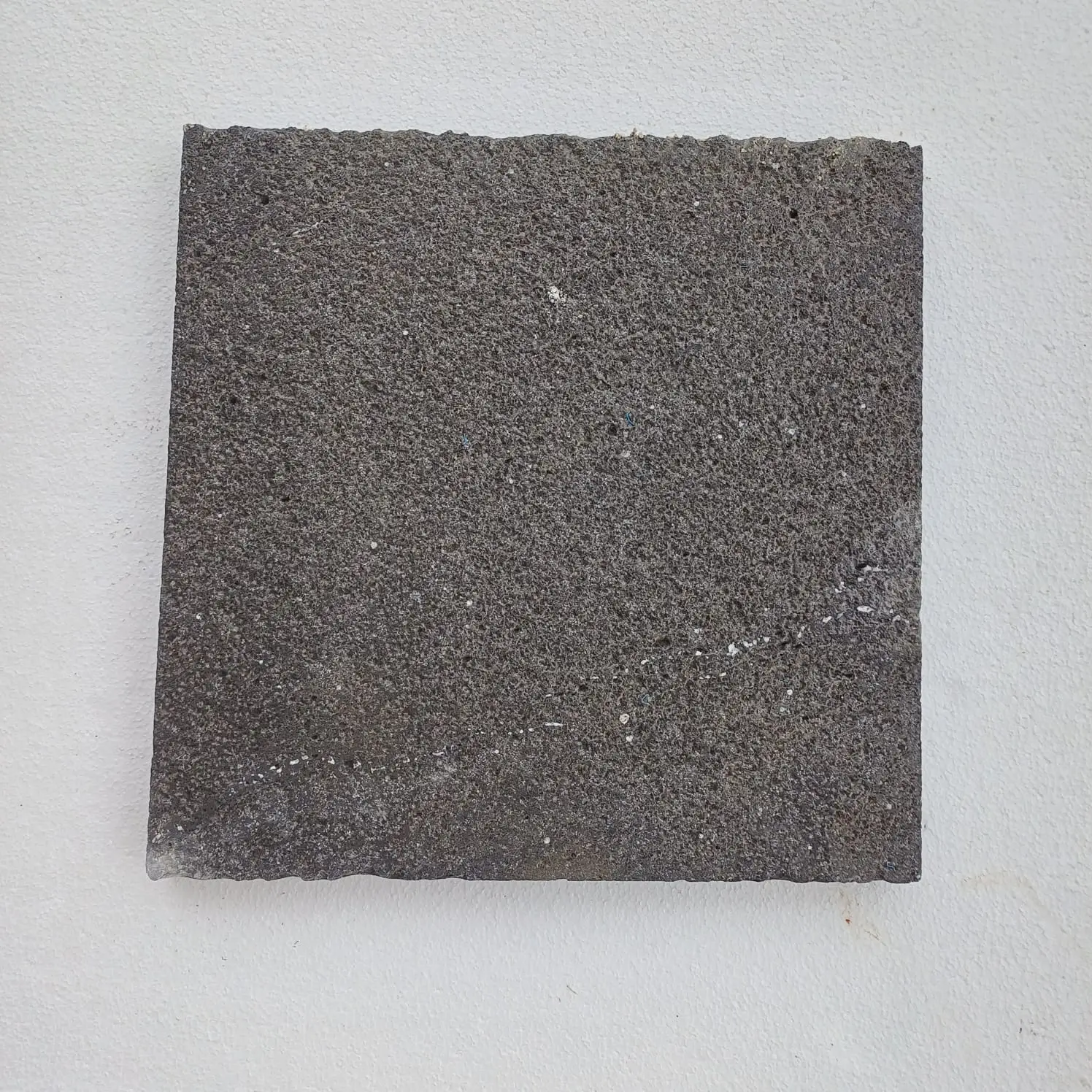
- Basalt in a honed finish reads as a continuous plane, which optically enlarges tight areas the same way large-format flooring does indoors
- Tumbled limestone with a brushed finish reduces glare and provides a coefficient of friction above 0.6 wet — the threshold referenced in ASTM slip resistance testing standards for outdoor pedestrian surfaces
Thickness matters here too. For residential patio applications, a 1.25-inch (30mm) nominal paver handles typical foot traffic loads on a properly prepared base. Drop below that and you risk edge fracture at perimeter cuts — which are far more frequent in irregular layouts than in standard rectangular ones.
Paver Layout Patterns That Actually Work for Small Backyard Paver Ideas
Layout decisions carry more visual weight than any other choice in outdoor pavers ideas. The pattern you select either reinforces the space’s awkwardness or corrects it.
- Diagonal grid (45°): The most reliable pattern for visually widening a narrow patio — run your grid at 45 degrees to the house wall and the space immediately reads wider
- Herringbone: Excellent for irregularly shaped spaces because it has no dominant linear direction — the eye reads it as a field rather than a progression
- Random rectangular (ashlar): Works well for spaces with curved boundaries because no two rows align, reducing the visual tension between the curved edge and the stone
- Large-format stacked bond: Best reserved for spaces with at least one clean, long straight edge — it amplifies any irregularity in a perimeter
- Circular feature with radiating surround: An underused approach for awkward spaces — anchoring a circular pattern at the center of an odd-shaped patio unifies the whole perimeter, since everything radiates from the center
A detail that often gets overlooked: your cut pieces at the perimeter should never be smaller than half a unit. Slivers under six inches create a finished edge that looks forced and also fracture more easily under thermal cycling. Plan your layout starting from the center and work outward so cuts land symmetrically at both ends.
Integrating a Natural Stone Retaining Wall with Your Patio Design
Many small backyards are also sloped backyards, and that changes your design options significantly. A natural stone retaining wall doesn’t just solve the grade problem — it creates a vertical design element that can actually make a compact outdoor space feel intentional rather than cramped.
The structural side of this decision matters as much as the aesthetic. Retaining walls over 24 inches in exposed height typically require engineering review under most residential building codes, and the footing depth is tied to local frost line depth — a variable that ranges from zero in mild climates to over 48 inches in freeze-thaw regions. Your wall’s base course must sit below that frost line or you’ll see lateral movement and cracking within the first two winters. According to IBC Chapter 21 masonry and stone wall requirements, natural stone masonry retaining structures must meet specific height-to-thickness ratios that affect how you specify stone unit sizing.
For patio integration specifically, a dry-stacked limestone natural stone retaining wall at seat-wall height (17–19 inches) serves double duty: it holds grade and provides informal seating, which is exactly the kind of efficiency a small backyard needs. Match the wall stone to your patio paver material family — limestone wall with limestone pavers, basalt coping with basalt field pavers — and the space reads as a single composed design rather than separate elements competing for attention.
Base Preparation and Code Compliance for Patio Pavers
The base system under your natural stone patio pavers determines longevity more than any surface material decision. For small and awkward spaces, this is doubly important because there are more perimeter cuts, more edge restraints, and more transitions — all of which put differential stress on the base at their termination points.
Standard residential patio base depth runs 6–8 inches of compacted aggregate for pedestrian applications. In freeze-thaw regions, that minimum climbs to 10–12 inches to prevent frost heave from migrating upward and rocking individual units. Your edge restraint system — whether plastic, aluminum, or a mortared stone border — needs to be mechanically pinned every 12 inches in areas subject to significant temperature swings, not the standard 18-inch spacing printed in most installation guides.
- Compaction target: 95% standard Proctor density on the aggregate base before any bedding sand goes down
- Bedding sand layer: 1 inch nominal — never more, because excess sand allows paver rotation under load
- Edge restraint pinning: 12-inch centers in freeze-thaw zones, 18-inch centers in stable climates
- Geotextile fabric: mandatory between native soil and aggregate base in clay-heavy or expansive soils
- Drainage slope: minimum 1/8 inch per foot away from structures — in tight spaces, this sometimes means a cross-slope rather than a uniform fall, which requires more precise base grading
Outdoor pavers ideas for awkward spaces that involve multiple levels or grade transitions need a step-down detail at the level change. A single 6-inch rise costs you a landing, but it’s far safer and more code-compliant than a subtle grade change that creates a trip hazard at the patio edge. The Natural Stone Institute outdoor paving selection guidance addresses thickness and base requirements that directly inform these specifications.
Size and Format Choices for Compact Patio Spaces
Natural stone patio paver sizing has a direct relationship to how large or small your outdoor space feels. The rule of thumb used by most experienced specifiers: your largest unit dimension should be no more than one-third of the shortest patio dimension. A 24×24 paver on a 10-foot-wide patio will read as overlapping and forced; a 16×16 or 12×24 will hold proportion.
For awkward L-shaped or triangular layouts, mixed-format patterns work better than any single-size approach. A field of 12×12 with a 12×24 border creates visual structure that can frame an irregular shape rather than fighting it. Browse our backyard paving stone options to see how different limestone formats and profiles pair across mixed-pattern applications.
Nominal thickness is another format variable that affects your finished surface elevation relative to door thresholds, lawn edges, and adjacent hardscape. In tight spaces where every inch of transition detail is visible, specifying consistent 1.25-inch pavers across the entire patio avoids the stepped transitions you’d get mixing 1-inch and 1.5-inch formats from different material families.
Color and Tone Strategy for Small Patio Areas
Color selection influences perceived space as much as layout pattern does. Light-toned natural stone — cream limestone, ivory travertine — reflects more ambient light and visually pushes boundaries outward. This is a measurable optical effect, not just aesthetic preference: lighter surfaces reflect 55–70% of incoming solar radiation compared to 15–25% for dark basalt, which keeps surface temperatures lower and increases the comfort range of the space on warm days.
For awkward spaces with mixed boundary conditions — a fence on one side, open lawn on another — a two-tone strategy works well. Use a lighter field paver and a slightly darker border in the same material family. This frames the patio perimeter, which visually regularizes the shape even when the actual boundaries are irregular. A consistent 12–18 inch border in a complementary tone draws the eye to the frame rather than the odd geometry it contains.
- Light field pavers: maximize perceived space, require more frequent sealing in outdoor environments (every 2–3 years for unsealed limestone)
- Mid-tone options (grey limestone, brushed travertine): the most forgiving choice — hold their appearance longer between seal coats and hide pollen and light dirt better than white or cream tones
- Dark field pavers: best reserved for accent zones, feature areas, or spaces where you want to create an intimate, enclosed feel rather than an expansive one
- Textured vs. smooth finish: honed smooth finishes amplify light reflection and make small spaces feel larger; tumbled or brushed finishes absorb more light and create a cozier, more grounded aesthetic
Ordering, Logistics, and Project Planning Considerations
Small patio projects often underestimate material waste factors. For standard rectangular layouts, a 10% overage is sufficient. For irregular or diagonal-pattern installations, budget 15–18% overage because the perimeter cut frequency increases substantially. Order all material from the same production batch — natural stone has inherent color and texture variation between quarry pulls, and mixing batches in a small, visible patio is immediately noticeable.
Every order is cut to its own specification, so the schedule is quoted with the order rather than promised from a shelf. For tight project timelines, confirm warehouse stock before finalizing your specification and locking subcontractor schedules. Truck delivery access matters too: verify your site can accommodate a standard flatbed truck, especially for backyard installations where access may require a hand-carry distance from the street. Planning your material staging area before delivery day avoids costly delays.
According to USGS dimension stone production and use data, natural stone continues to be the dominant choice for residential outdoor paving where long-term performance and aesthetics are primary drivers — a useful benchmark when justifying material cost to clients comparing natural stone to manufactured concrete alternatives.
Putting Your Backyard Paver Patio Ideas Into Practice
The backyard paver patio ideas that perform best in small and awkward spaces share a common thread: they treat geometry, material, and base system as an integrated decision rather than three separate choices made in sequence. Your layout pattern needs to respond to your boundary conditions, your stone format needs to respect the scale of your space, and your base needs to meet the structural and code requirements for your climate zone. Get those three decisions aligned and the result holds — both visually and structurally — for decades. As you move into installation detailing, understanding how edge containment systems work is critical to long-term performance; patio paver edging installation methods covers the techniques that keep your perimeter locked over time. Zoning a small backyard with Citadel Stone pavers in two complementary tones visually separates dining and lounge areas without requiring structural dividers.
Related reading: crushed limestone patio comparison · how limestone weathers outdoors · choosing limestone for gardens.