What Travertine Paver Pool Deck Cost Really Breaks Down To
Travertine paver pool deck cost isn’t a single number — it’s a stack of interdependent variables that compound quickly when you start pulling at them. Most budget conversations start and end at the material price per square foot, which misses roughly 40–60% of the actual project cost. Your base preparation, drainage engineering, coping integration, and finish selection all carry real dollar figures, and understanding each layer is how you build a budget that doesn’t blow up mid-project.
Material Cost Per Square Foot: The Starting Point
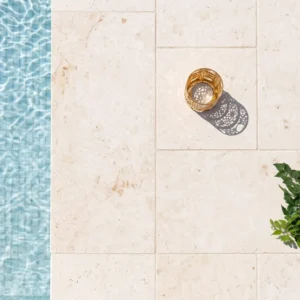
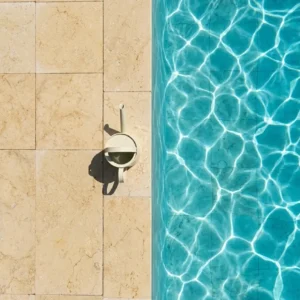
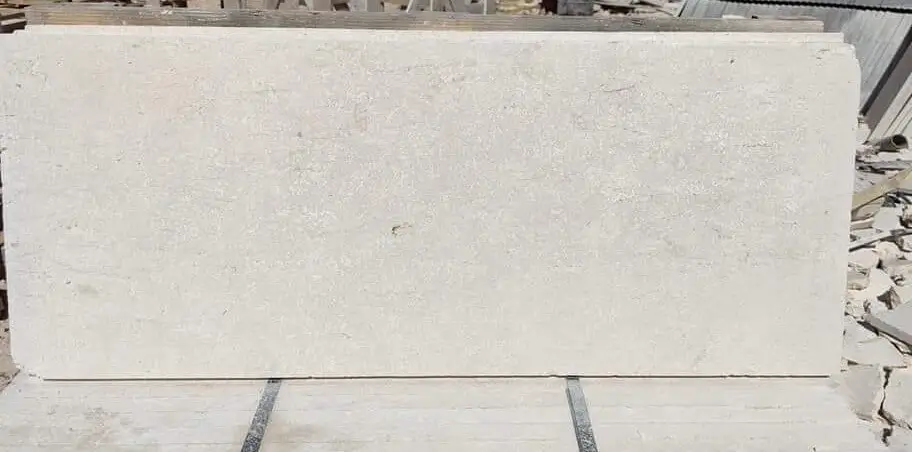
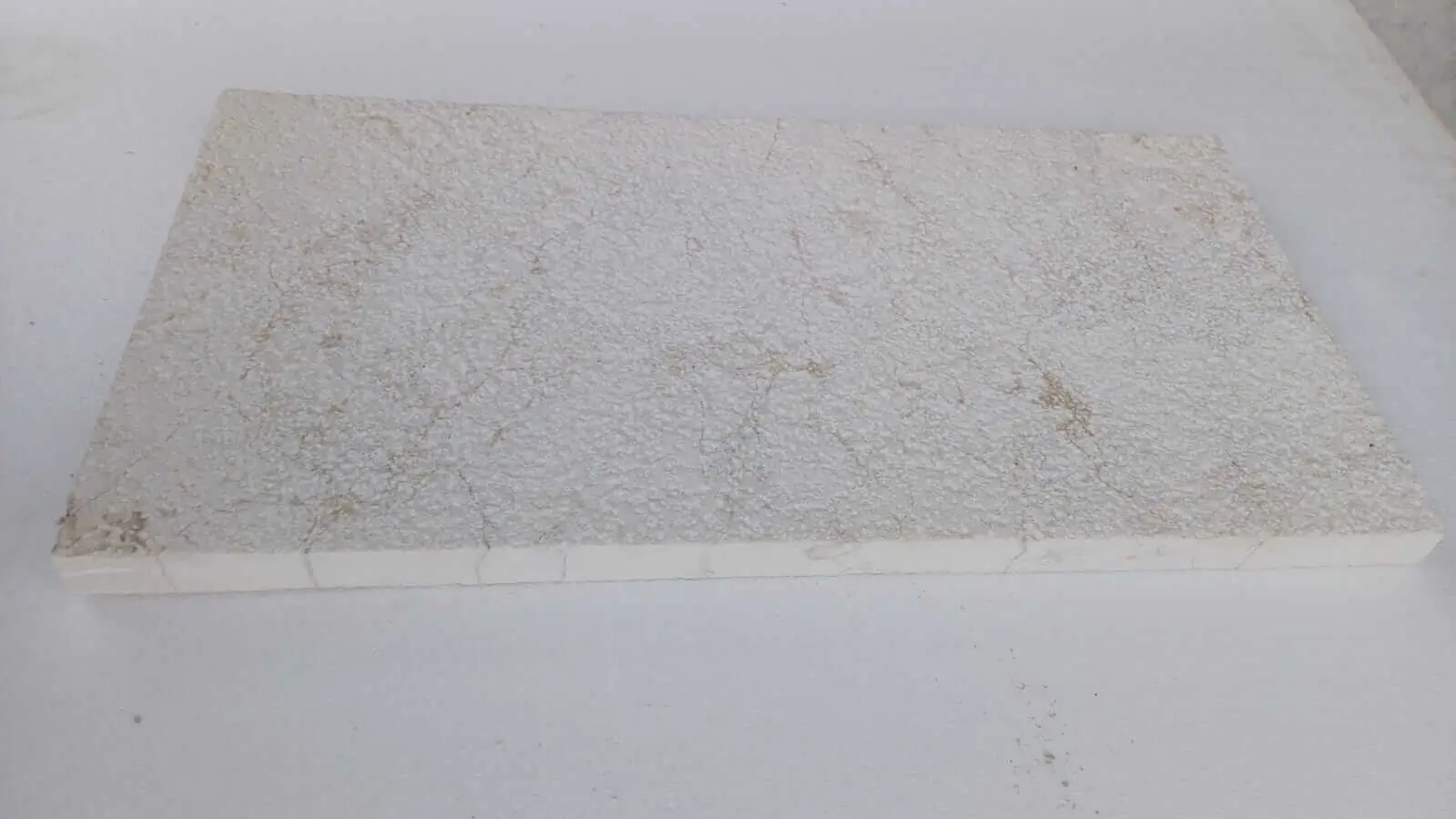
Pool travertine pavers typically run between $3.50 and $12.00 per square foot at the material level, depending on grade, thickness, and finish. Filled-and-honed 12×24 pavers in ivory or walnut coloring sit in the mid-range — usually $5.00–$8.00 per square foot — while premium cross-cut or book-matched slabs push toward the top of that band. Unfilled tumbled pavers come in at the lower end, making them popular for budget-sensitive projects that still want natural stone character.
Thickness is a cost driver that most specifiers underestimate. Your 1.25-inch nominal paver handles residential pool deck loads cleanly, but commercial applications or vehicular crossings require 2-inch material, which typically adds $1.50–$2.50 per square foot to the base material cost. Factor that decision early — retrofitting thicker material after base prep is an expensive mistake. According to Natural Stone Institute travertine properties and outdoor suitability, travertine’s open-pore calcium carbonate structure requires specific thickness minimums for outdoor applications where point-load stress is a factor.
Installation Cost Variables That Move the Number Most
Labor rates for natural stone pool deck installation range from $8.00 to $18.00 per square foot nationally, and this is where terrain and site conditions exert serious budget pressure. A flat, grade-level installation on a well-prepared concrete sub-base is the low end of that range. Raised pool decks, hillside installations, or sites with significant elevation changes from pool equipment pad to deck perimeter all push labor well above the midpoint — and for good reason.
Sloped or terraced sites require engineered drainage paths built into the base system, not just surface drainage assumptions. You’re looking at cut-and-fill earthwork, compacted aggregate subbase at varying depths, and potentially a concrete mud-set or mortar bed to create a level plane across an uneven grade. Each of those steps adds cost per square foot and requires a more experienced installation crew. For sites where the travertine pavers for pool decks transition across multiple elevation levels, plan for step fabrication costs in addition to field installation — natural stone treads and risers add $45–$120 per linear foot depending on complexity.
- Flat, grade-level installs on prepared concrete sub-base: $8–$11 per square foot labor
- Sand-set installations with compacted aggregate base on flat sites: $10–$13 per square foot
- Mortar-set on existing concrete with minor slope correction: $12–$15 per square foot
- Complex terrain, hillside grading, or multi-elevation pool deck layouts: $15–$18 per square foot
- Step fabrication with integrated pool travertine pavers: $45–$120 per linear foot
Base Preparation and Drainage: The Budget Line You Can’t Skip
Base preparation is where pool deck budgets most frequently go sideways. The sub-base for a travertine paver pool deck must achieve two goals simultaneously: structural stability and reliable drainage away from the pool shell and surrounding structure. On flat sites, this usually means a compacted Class II aggregate base at 4–6 inches depth, pitched 1% to 2% away from the pool edge. That’s straightforward work with predictable cost — roughly $1.50–$3.00 per square foot depending on excavation depth and aggregate haul distance.
Where terrain complicates things, drainage engineering becomes a genuine design task. Low-lying sites retain surface water and may require a French drain system or linear channel drains integrated beneath or at the perimeter of the paver field. Hillside sites present the opposite challenge — controlling water that moves across the deck at speed, which means your paver joint design and any supplemental drainage channels need to handle flow without undermining the bedding layer. The ASTM C1527 travertine dimension stone standard addresses dimensional tolerances that directly affect how well paver fields shed water at designed slopes — worth reviewing before finalizing your base pitch spec.
Budget $2.00–$5.00 per square foot specifically for base prep and drainage on a standard residential pool deck. Complex terrain or poor native soil conditions can push that to $6.00–$9.00 per square foot before a single travertine paver touches the site.
Coping and Pool Edge Integration Costs
Pool coping represents a separate cost line that directly affects your travertine paver pool deck cost total. Bullnose coping tiles in matching travertine run $12–$28 per linear foot installed, while drop-face coping (which creates a cleaner visual break between the pool shell and the deck) typically runs $18–$35 per linear foot installed. Most residential pools carry 80–140 linear feet of coping, making this a $1,000–$4,900 budget line on its own before you’ve laid a single field paver.
The material match between coping and field pavers matters both aesthetically and technically. Your coping sees more direct water contact, more thermal cycling at the pool edge, and more chemical exposure from pool water chemistry. Filled travertine coping outperforms unfilled options in chlorinated pool environments because the grout fill reduces water infiltration into voids — a detail that pays off over a 20-year installation life. Explore our pool travertine paver options to see how coordinated coping and field paver selections are specified for consistent long-term performance.
Finish Selection, Slip Resistance, and Cost Impact
Finish choice affects both price per square foot and long-term maintenance cost — two budget considerations that work in opposite directions. Tumbled travertine is the least expensive finish option and delivers a naturally textured, slip-resistant surface without additional processing. Honed travertine costs $0.50–$1.50 more per square foot at the material level but delivers a cleaner, more refined appearance that many pool deck projects require. Brushed finishes split the difference on both dimensions.
Slip resistance is a specification requirement, not just a preference. The PHTA pool deck safety standards — published through PHTA ANSI pool deck stone and coping safety standards — establish wet-surface coefficient of friction targets that travertine consistently meets in tumbled and brushed finishes. Polished travertine fails those targets in wet pool deck conditions, which is why you won’t see it specified on compliant commercial pool decks regardless of aesthetic preference. Your finish selection isn’t just a budget variable — it’s a code compliance decision.
- Tumbled travertine: lowest material cost, most pronounced surface texture, rustic appearance
- Brushed travertine: mid-range cost, lightly brushed surface, softer visual texture
- Honed travertine: higher material cost, requires more maintenance attention to surface cleanliness for slip compliance
- Polished travertine: not appropriate for pool deck applications — wet-surface friction values fall below safety thresholds
Sealing and Long-Term Maintenance Costs
Your travertine paver pool deck cost calculation isn’t complete without factoring sealing into the total picture. An initial penetrating sealer application after installation runs $0.75–$1.50 per square foot for professional-grade products and labor. Resealing every 2–3 years — which is the realistic maintenance interval for a pool deck environment — adds $0.50–$1.25 per square foot per application cycle. Over a 20-year installation life, sealing represents a real cumulative cost that most initial budget conversations ignore.
Sealer type matters as much as the application interval. Impregnating sealers that work below the surface don’t alter the travertine floor appearance but require proper surface preparation to achieve effective penetration depth — particularly important on honed finishes where the surface is more closed. Topical sealers create a surface film that’s more susceptible to peeling and UV degradation in high-exposure pool environments. At Citadel Stone, we consistently recommend penetrating silicone or siloxane-based sealers for pool deck travertine because they allow vapor transmission while blocking liquid water infiltration — a balance that’s critical when the paver field sits over a concrete sub-base that can trap moisture seasonally.
Total Project Cost Ranges by Scope and Complexity
Pulling all the variables together, total installed travertine paver pool deck cost — material, base prep, drainage, coping, and sealing — falls across a predictable range by project type. Understanding where your project sits in these ranges before you start soliciting bids helps you evaluate proposals accurately rather than just defaulting to the lowest number.
- Entry-level residential (simple flat terrain, tumbled travertine, sand-set base): $18–$24 per square foot installed total
- Mid-range residential (filled-and-honed travertine, mortar-set on concrete, integrated coping): $26–$38 per square foot installed total
- Premium residential (book-matched or cross-cut travertine, complex coping detail, engineered drainage): $40–$60 per square foot installed total
- Hillside or multi-elevation pool deck (any material tier, plus terrain grading and engineered drainage): add $8–$15 per square foot to the relevant tier above
- Commercial pool deck specifications: typically $35–$65 per square foot depending on code compliance requirements, material grade, and access constraints
These ranges hold across most project types when all cost components are properly accounted for. Where projects fall outside these ranges on the high end, the cause is usually either extreme terrain challenges, premium imported material selection, or extensive site work that was underestimated at the design stage. On the low end, budget numbers below $18 per square foot usually indicate that coping, sealing, or base prep costs haven’t been included in the contractor’s proposal — worth verifying before signing.
Ordering, Lead Time, and Logistics Planning
Your installation timeline depends heavily on material availability at the point of order. Travertine pavers for pool projects sourced through domestic warehouse stock typically ship within 5–10 business days of order confirmation — a lead time that fits most standard project schedules. Import lead times, by contrast, run 8–14 weeks from order to delivery, which forces a decision: order early with warehouse stock, or build a buffer into your schedule for import material.
Citadel Stone maintains warehouse inventory of pool travertine pavers across multiple grades and sizes, which means your project doesn’t need to absorb import delays if you’re working within available stock profiles. Verify warehouse availability early in your planning process — particularly for larger projects requiring consistent lot matching across a full paver field, where variation between production batches becomes visible in the finished installation. Truck delivery logistics are worth confirming upfront for sites with limited access or weight restrictions on approach roads, as full-pallet travertine shipments typically require a standard flatbed truck with liftgate, and some hillside or estate sites need to pre-arrange site staging areas for unloading.
- Confirm warehouse stock lot consistency before ordering — batch color variation is a real field issue with natural stone
- Order 10–12% overage above net square footage for cuts, waste, and future repairs
- Verify truck access and staging area dimensions before scheduling delivery
- Account for 24–48 hour acclimation on-site before installation in high-heat conditions
Travertine Paver Pool Deck Cost: Spec Wrap-Up
The total travertine paver pool deck cost picture is more nuanced than a single line-item estimate, but it’s also highly predictable once you’ve identified your site conditions, material tier, and installation method. Terrain complexity is the variable that surprises most project budgets — flat sites are forgiving; elevation changes, slopes, and poor drainage geometry add cost at every stage from earthwork through base prep through installation labor. Nail down those site-specific variables before you price the material, not after. For ongoing maintenance planning, understanding your sealing strategy upfront — including product type and application interval — prevents the expensive neglect cycle that shortens pool deck life from 25 years to 12. When you’re ready to review specific material grades and dimensions, pool paver sealing and maintenance guidance is worth reviewing alongside your specification to keep long-term performance and cost in alignment. Sourced direct from quarries in Turkey, the Mediterranean, and beyond, Citadel Stone keeps travertine paver pool deck pricing consistent across bulk orders.
Related reading: travertine coping for pools · How to Install Travertine Pool Deck Pavers Right · travertine pool decks.