

Stone custom fabrication tolerances are tighter than most project managers expect — and that gap between expectation and reality is where budgets get destroyed. A slab that measures within spec at the quarry can still arrive at your site with enough dimensional variance to cascade into three days of remedial work if your fabricator isn’t running consistent CNC calibration checks. Understanding what stone custom fabrication actually involves at each production stage is what separates a smooth project delivery from one that stalls at templating.
What Stone Custom Fabrication Actually Covers
Most buyers think fabrication means cutting stone to size. The reality is considerably more involved. Stone custom fabrication spans material selection and slab grading, templating, CNC or waterjet cutting, edge profiling, surface finishing, and quality inspection before anything leaves the fabrication floor. Each of those stages introduces variables that affect the finished result — and each one requires a different level of precision depending on the application.
Natural stone fabrication and installation projects fall into two broad tracks: dimensional work (countertops, vanities, architectural cladding, custom thresholds) and paving or structural applications (custom-cut pavers, treads, coping, and feature elements). The fabrication standards differ significantly between these tracks. Dimensional interior work typically holds tolerances within ±1/16 inch, while structural paving applications often tolerate ±1/8 inch — but that tolerance window can tighten sharply when you’re working with continuous runs of coping or book-matched wall panels.
Material Types and How They Respond to Fabrication
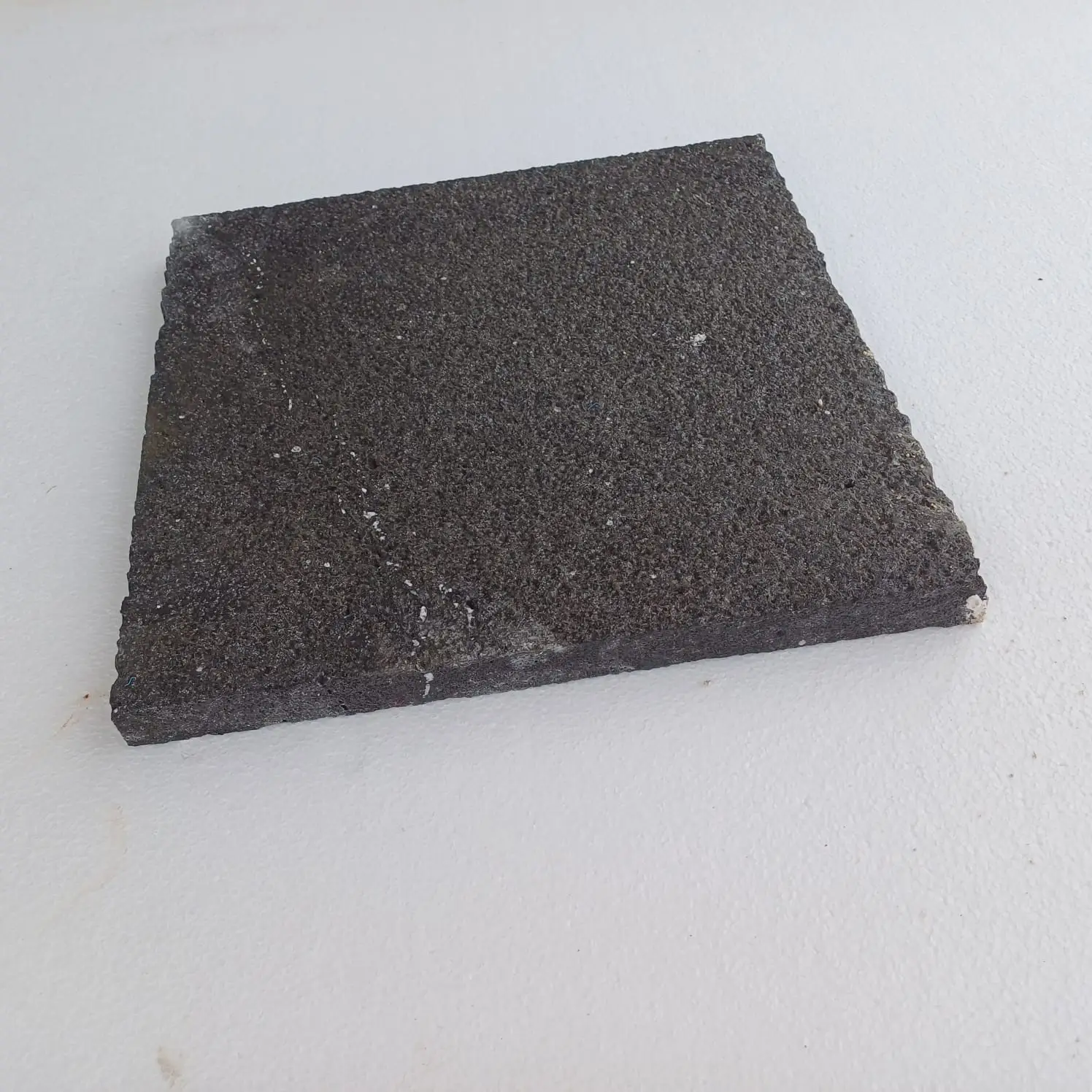
Your material choice drives nearly every downstream fabrication decision. Granite fabrication behaves very differently from working with softer sedimentary stones, and if your fabricator is treating all stone the same way, that’s your first warning sign.
- Granite: Dense, crystalline structure with compressive strength typically ranging from 19,000 to 28,000 PSI — it holds tight tolerances well but demands diamond tooling and slower feed rates to prevent micro-fracturing at edges
- Limestone and travertine: Higher porosity means the cutting path can introduce hairline spalling if water pressure isn’t calibrated correctly for the specific material density
- Marble: Beautiful in fabricated applications but prone to resin filling needs at the slab stage — your fabricator must inspect for veining that will intersect with sink cutouts or structural edges
- Quartzite: Frequently misidentified at the supplier level; true quartzite is extremely hard and can wear down tooling faster than granite, which affects per-linear-foot pricing significantly
- Sandstone and slate: More forgiving on cuts but uneven cleft surfaces require additional calibration passes to achieve consistent thickness across large-format pieces
According to Natural Stone Institute fabrication standards and certification, certified fabricators follow documented procedures for material handling, tooling maintenance, and dimensional verification — and that certification matters when you’re specifying stone for high-value applications where tolerance failures translate directly into cost overruns.
Templating: The Step That Determines Everything Downstream
Templating is where custom stone fabrication either gets locked in correctly or starts accumulating errors. A digital template captured with a laser measuring system will hold accuracy to within 1mm across a 12-foot run. A hand-measured cardboard template on a complex curved island can introduce 3–4mm of cumulative error — which doesn’t sound like much until you’re trying to fit a 96-inch slab against an out-of-square cabinet run.
Push your fabricator on their templating methodology before signing off on a project timeline. Digital templating (Proliner or equivalent systems) is the current standard for any job with non-linear geometry, multiple cutouts, or tight seam placement requirements. The template file feeds directly into the CNC cutting program, which eliminates the translation errors that come from re-entering hand measurements into a digital workflow.
For paving and landscape applications, templating moves into field layout rather than interior measuring — but the principle holds. Your fabricator needs accurate field dimensions before cutting a single piece, and any dimensional assumptions made at the shop level become problems at the installation stage.
Cutting Methods: Waterjet, CNC, and When Manual Work Still Applies
Three primary cutting technologies dominate stone fabrication services today, and each has a specific application profile. Knowing which one your project requires helps you evaluate quotes more accurately — a shop offering manual bridge-saw cuts for curved coping work is either not the right fit or is significantly underquoting the complexity.
- CNC bridge saw: Ideal for straight cuts, standard dimensions, and high-volume production runs — extremely consistent for granite fabrication and large paving projects where repetition matters
- Waterjet cutting: The right choice for complex profiles, curves, mosaics, custom medallions, and inlay work — it cuts without heat, which matters for resin-filled stones and delicate veining patterns
- 5-axis CNC routing: Used for sculpted elements, three-dimensional carving, and complex edge profiles that standard bridge saws can’t execute in a single pass
- Manual wet saw: Still relevant for site-cut adjustments, small-format tile work, and field modifications — but should not be the primary fabrication method for precision custom work
The cutting method also affects your project’s lead time. Waterjet time is expensive and often scheduled in queue at busy fabrication shops — if your timeline is tight, confirm waterjet availability before finalizing a design that depends on it. CNC bridge saw work is faster and more readily available, but it’s the wrong tool for anything with compound geometry.
Edge Profiles and Surface Finishing: Where Aesthetics Meet Engineering
Edge work is often where stone custom fabrication costs escalate beyond initial estimates, and it’s also where the visual and structural character of the finished piece is most clearly expressed. A standard eased edge on a granite countertop takes minutes. A hand-carved ogee profile on a limestone fireplace surround takes hours — and the per-linear-foot cost reflects that difference dramatically.
Surface finishes deserve the same level of attention as edge profiles, particularly for exterior applications where slip resistance is a safety and code consideration. Your finish selection should be driven by application first, aesthetics second:
- Polished: Maximum reflectivity, lowest porosity surface — best for interior vertical applications; not recommended for horizontal surfaces in wet or high-traffic environments
- Honed: Matte or satin surface with moderate slip resistance — appropriate for floor tile, countertops, and exterior paving where a refined appearance is required
- Brushed or antiqued: Textured surface achieved by mechanical wire brushing — improves traction and suits applications where a softer, aged aesthetic is the design intent
- Flamed: Thermal finish produced by intense heat application — creates a highly textured, skid-resistant surface used widely in exterior paving and pool surrounds
- Sandblasted: Uniform matte texture with good traction characteristics — common in commercial exterior paving and feature wall applications
For surface finish consistency across a production run, ASTM natural stone fabrication and quality testing standards measure output against reference samples — ask your fabricator whether they work to a retained reference sample for finish matching across multi-slab or multi-batch projects. Variation between batches is a real problem on large installations, and having a signed-off reference sample is the only reliable way to hold your fabricator accountable.
Natural Stone Fabrication and Installation: Getting the Sequencing Right
Natural stone fabrication and installation are separate disciplines, but the hand-off between them is where most project delays originate. A fabricated piece that arrives on site without confirmed substrate readiness, insufficient crane or truck access, or missing setting materials creates a bottleneck that can cost several times the value of the delay itself.
Coordinate your fabrication schedule against these installation prerequisites before your fabricator starts cutting:
- Substrate preparation: Concrete countertop forms must be cured and confirmed level before templating — even minor substrate movement between template and installation creates fit problems
- Truck access and delivery logistics: Oversized slabs often require specialized delivery vehicles with A-frame racks — confirm that your site can accommodate the vehicle dimensions and turning radius before scheduling delivery
- Setting material compatibility: Epoxy systems, thinset mortar, and mechanical anchor systems each have different requirements; your installer must confirm the system before fabrication is complete, because some edge profiles interfere with certain setting methods
- Seam placement planning: Seam locations should be agreed upon between the fabricator, installer, and client before templating — moving a seam after cutting is expensive and sometimes impossible
Explore our custom stone offerings to see how Citadel Stone coordinates the transition from fabrication spec to delivery — matching material selection to project requirements before a single cut is made. Having material and fabrication guidance from a single technically informed source compresses the coordination timeline considerably on complex projects.
Cost Factors and Budgeting for Custom Fabrication Projects
Project budgets for stone custom fabrication are shaped by more variables than most clients anticipate at the outset. Material cost is only one layer — and depending on the project type, it may not even be the largest one.
The material-to-labor cost ratio shifts considerably based on stone type and fabrication complexity. For a standard granite countertop in a straightforward kitchen layout, material might represent 55–65% of total cost. For a custom limestone fireplace surround with hand-carved profiles, labor and fabrication time can exceed 70% of total project cost even with a premium stone selection.
Freight distance and regional market conditions add another layer of budget complexity that’s easy to underestimate. Material sourced from overseas quarries — limestone from the Mediterranean, granite from Brazil or India, travertine from Turkey — carries import freight costs that vary with shipping rates, port congestion, and fuel surcharges. Regional availability of specific stone types also affects pricing: a material that’s readily stocked at a warehouse will cost meaningfully less to deliver than one that requires a special order with a 10–12 week lead time. Citadel Stone maintains warehouse inventory that reduces lead times to 1–2 weeks for many materials, which directly affects project scheduling and can prevent costly installation delays.
Labor market conditions at the installation end of the project also affect your total cost. In markets with high demand for skilled stone installers, the gap between material cost and all-in project cost can be substantial. Value engineering opportunities exist at several points in the process:
- Selecting a stone with consistent natural patterning reduces the time required for slab layout and minimizes waste from book-matching or pattern alignment
- Standardizing edge profiles across a project reduces machining time and tooling changes — combining a complex profile on a primary visible edge with a simpler eased edge on less visible surfaces delivers the visual impact at a fraction of the full-complex-profile cost
- Consolidating material orders to minimize the number of truck deliveries reduces freight cost and simplifies site logistics
- Scheduling fabrication to align with confirmed substrate readiness eliminates storage and re-handling fees at the fabrication shop
Quality Control and Inspection Before Delivery
The single most effective way to protect your project from a costly remediation is to inspect fabricated pieces at the shop before they’re loaded onto a truck. This is a standard professional practice that surprisingly few project managers actually follow through on — and the ones who skip it are the ones who end up managing callbacks.
A proper pre-delivery inspection covers the following:
- Dimensional verification against the approved template or cutting file — check at least three reference points per piece, not just overall length and width
- Edge profile consistency — run your hand along the full profile length and compare against the signed-off sample; micro-chipping at inside corners of cutouts is a common defect that’s easy to miss on quick visual inspection
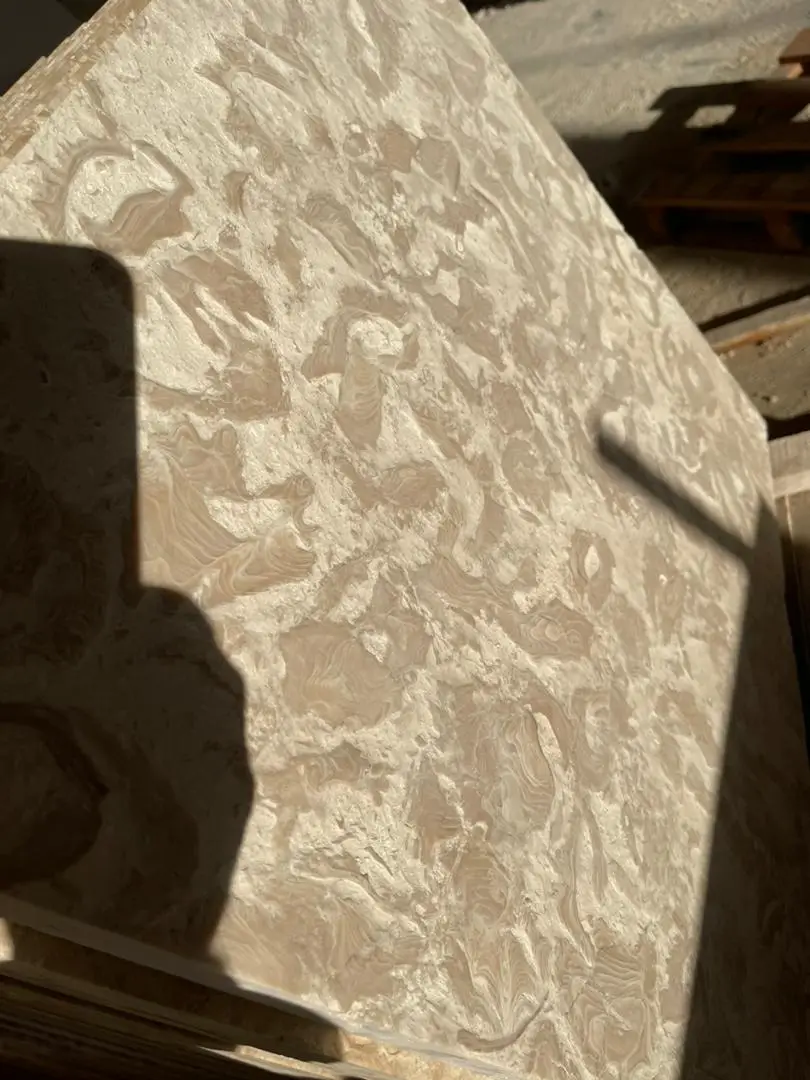
- Surface finish uniformity — look at the slab in raking light to catch finish inconsistencies, resin patches, or machine marks that weren’t fully polished out
- Structural integrity — tap the piece lightly to check for delamination or hidden fractures, particularly on resin-backed slabs or thin-format pieces
- Seam fit verification — if the project involves multiple joined pieces, confirm the seam fit at the shop before delivery; adjusting seams on site is significantly more expensive than adjusting them on the fabrication table
According to USGS dimension stone fabrication and wholesale industry data, dimensional stone quality standards in the US market have evolved significantly over the past two decades, with tolerance specifications tightening as CNC technology has become the production standard. Hold your fabricator to those standards explicitly — and document your inspection findings in writing before pieces leave the facility.
Selecting Stone for Fabrication Performance, Not Just Appearance
The most common mistake in custom stone projects is selecting a material based purely on aesthetics without evaluating how that material will behave through the fabrication process and perform in service. Your material selection needs to account for what the stone will be doing long after installation day.
For granite fabrication specifically, your surface finish choice affects long-term maintenance requirements as much as it affects appearance. A high-polish black granite countertop in a busy kitchen will show water marks, fingerprints, and micro-scratches within weeks of installation — not because the material is failing, but because polished dark stones are simply unforgiving of daily use in that context. A honed finish on the same material delivers similar durability with dramatically lower visible maintenance demands.
For exterior paving applications — custom treads, pool coping, feature steps — freeze-thaw performance is a material property that should appear in your specification, not just your mental checklist. Stones with absorption rates above 0.75% by weight require careful evaluation for freeze-thaw regions, where repeated moisture intrusion and expansion cycling can cause surface spalling within 3–5 seasons. At Citadel Stone, we evaluate absorption data against intended application before recommending a material for exterior stone fabrication services — because a stone that’s stunning in a showroom can be a liability in a demanding outdoor application.
Making Stone Custom Fabrication Work for Your Project
Stone custom fabrication done well is the result of precise coordination across material selection, cutting technology, surface treatment, and installation sequencing — none of those stages operates in isolation, and a weakness in any one of them transfers directly to the finished product. Your best protection is understanding each stage well enough to ask the right questions of your fabricator before the work begins, not after a problem surfaces on site. Confirm tolerances in writing, inspect pieces before they leave the shop, and align your fabrication schedule with confirmed substrate and site readiness. For further guidance on evaluating fabrication providers before committing to a project, choosing the right stone fabricator walks through the criteria that matter most when vetting a shop for complex custom work. Sourced from quarries across the Mediterranean and Middle East, Citadel Stone matches each slab to its intended custom fabrication use.
Related reading: marble vs granite fabrication · granite countertop fabrication process · stone fabrication machines.