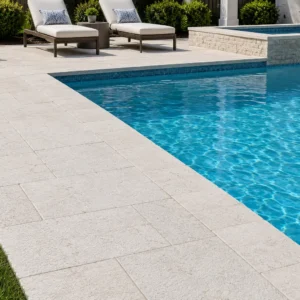
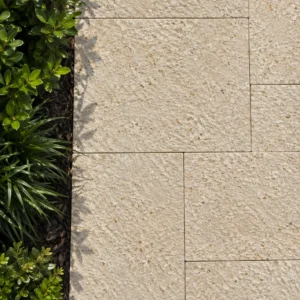
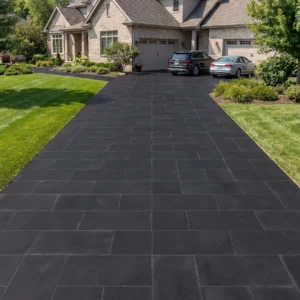
Most fabrication failures don’t start on the shop floor — they start during the selection process, when a project team mistakes a polished showroom for proven technical capability. Choosing a stone fabricator correctly means looking past the surface and evaluating the operational infrastructure behind the quote. The difference between a fabricator who delivers a flawless countertop edge profile and one who ships you a warped slab with inconsistent thickness often comes down to details you can only uncover by asking the right questions before the contract is signed.
What Is a Stone Fabricator and Why the Distinction Matters
A natural stone fabricator is not simply a supplier who cuts slabs to size. A skilled stone fabricator takes raw quarried stone — typically arriving as rough-cut blocks or large-format slabs — and transforms it through a sequence of precision processes: gang-sawing, water-jet cutting, CNC profiling, grinding, honing, and polishing. Each step demands calibrated equipment and experienced operators who understand how different stone types respond to tooling pressure, blade speed, and coolant temperature. Travertine, for example, machines differently from dense black granite because of its open-pore structure and lower compressive resistance at cut edges.
Understanding what a stone fabricator actually does helps you evaluate whether a shop has the machinery and skill set your project genuinely requires. A fabricator handling residential countertops runs a fundamentally different operation than one producing large-format paving slabs or custom coping profiles for commercial pool decks. The equipment overlap between those two worlds is smaller than most buyers assume.
Equipment Capacity: The First Question You Should Ask
Your first site visit to a fabricator should focus on equipment, not samples. A shop’s machinery tells you more about its real capability than any portfolio photograph. Look for bridge saws with digital positioning systems — manual saws introduce cumulative dimensional error across long cuts that shows up as joint gaps or edge misalignment during installation. CNC machining centers matter most when your project involves complex edge profiles, radius coping, or inlaid patterns requiring sub-millimeter repeatability.
- Confirm the bridge saw table size relative to your slab dimensions — oversized slabs hanging off undersized tables flex during cutting and produce tapered edges
- Ask about waterjet cutting capacity if your design includes non-linear cuts, curves, or mosaic inserts
- Verify that the shop runs wet-cutting systems throughout — dry cutting on natural stone generates silica dust and also affects cut quality on porous materials
- Check whether the polishing line is manual or automated — automated polishing heads maintain consistent pressure across the full surface, eliminating the dishing that hand-polishing creates at slab centers
- Confirm the shop’s maximum slab handling weight — if you’re working with 3 cm slabs of dense quartzite, a fabricator whose lifting equipment tops out at lighter loads creates a real breakage risk
Equipment age matters less than equipment calibration. A well-maintained bridge saw from ten years ago outperforms a new machine that hasn’t been leveled and aligned. Ask the operator when the equipment was last professionally calibrated — a shop that can’t answer that question precisely isn’t tracking quality at the level your project demands.
Reading a Fabricator Portfolio Without Being Misled
Portfolio images are marketing material until proven otherwise. A fabricator who shows you twenty stunning countertop installations may have outsourced half of them or photographed them before grout haze and edge chips appeared. The way to extract real value from portfolio review is to focus on scope, not aesthetics. Look for evidence that the fabricator has handled projects at the scale and complexity of yours.
Specifically, you want to see completed work involving the same material you’re specifying. A fabricator skilled in engineered quartz has developed muscle memory for a predictable, homogeneous material. Natural stone — whether limestone, travertine, or granite — has mineral variation, vein movement, and directional cleavage planes that require different handling decisions at every stage. Asking to see our custom stone and tile portfolio gives you a direct sense of the scope, material variety, and complexity a fabricator can genuinely support. Request references on projects that used the same stone type and ask those clients directly about dimensional accuracy, delivery timing, and how punch-list items were handled.
Quality Control Processes That Separate Reliable Fabricators
Quality control in stone fabrication isn’t a final inspection — it’s a sequence of checkpoints woven through the entire production process. A fabricator with genuine quality discipline checks slab flatness before cutting, verifies dimensional tolerances at rough-cut stage, and inspects edge profiles under raking light before packaging. Shops that only inspect at the end catch cosmetic defects but miss dimensional errors that only surface during installation.
- Ask for the fabricator’s written tolerance specifications — industry standard for countertop fabrication is ±1/16 inch on cut dimensions, but complex architectural work often requires tighter tolerances
- Find out who performs quality inspections — a dedicated QC technician is a meaningful signal; inspection by the same operator who ran the cut is a conflict of interest
- Confirm whether the fabricator photographs slabs before and after fabrication — this documentation protects both parties if damage claims arise during delivery
- Ask how natural defects — veining fissures, pitting in travertine, color breaks in granite — are disclosed and handled before fabrication begins, not after
- Verify the shop’s process for matching slab book-matching on large countertop or floor tile runs — this requires keeping slab sequencing intact from the warehouse to the saw table
According to Natural Stone Institute fabrication standards, certified fabricators commit to documented process controls and ongoing skills training — certifications worth checking when you’re evaluating a shop’s credibility beyond their own claims.
Material Sourcing and Warehouse Logistics
Your fabricator’s material sourcing pipeline directly affects your project timeline and the consistency of what arrives on site. A fabricator who sources slabs from a single importer creates single-point-of-failure risk for your schedule — if that importer’s container is delayed or a lot arrives with unacceptable variation, your project stalls. Fabricators who maintain relationships with multiple quarry sources or carry warehouse inventory of core materials are significantly more resilient to supply disruptions.
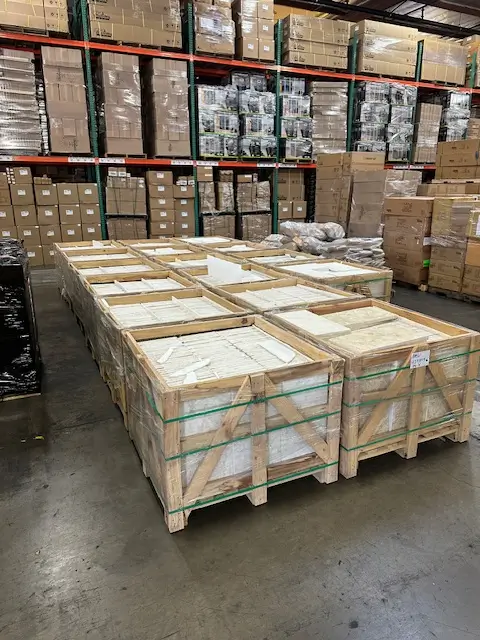
Warehouse conditions matter more than most buyers think. Slabs stored vertically in A-frames on a concrete pad with proper cradle separation maintain flatness and avoid edge chipping. Slabs stored horizontally in stacks, or leaning without adequate support at multiple points, develop stress fractures and surface staining from contact points. Ask to walk the warehouse — you’ll learn more about how a fabricator handles material in fifteen minutes of observation than in an hour of conversation.
Citadel Stone maintains warehouse inventory across its national supply network, which typically allows project teams to verify slab lot availability and match color batches before fabrication begins — a step that eliminates one of the most common sources of on-site variation complaints. Confirming that your fabricator has a direct relationship with their material source — rather than purchasing through multiple intermediaries — gives you traceability when lot consistency questions arise mid-project.
Seasonal Timing and Scheduling: What It Means for Your Fabrication Timeline
Fabrication itself is a controlled indoor process, but the scheduling implications of seasonal installation windows are real and worth building into your fabricator selection conversations. Stone installation has optimal temperature windows — setting mortars and adhesives for natural stone perform best between 50°F and 90°F, and high-humidity periods affect cure rates for penetrating sealers applied immediately after installation. A fabricator who understands downstream installation requirements will help you sequence fabrication delivery to hit those windows.
- Request delivery scheduling that accounts for your installation crew’s optimal morning work window — natural stone laid in the morning on a cool substrate bonds more predictably than afternoon installation when substrate temperatures are elevated
- In freeze-thaw regions, confirm the fabricator can hold finished pieces in a climate-controlled warehouse if your installation window is delayed by weather — stone that has been fabricated and then stored outdoors in repeated freeze-thaw cycles can develop surface micro-fractures
- Discuss curing time requirements with your fabricator before scheduling — certain adhesive systems used for honed surfaces need 72+ hours before grouting, and seasonal temperature swings can extend that window significantly
- For large commercial projects with phased installation schedules, ask the fabricator whether they can hold and release fabricated pieces in batches — this prevents finished stone from sitting on a job site unprotected through weather events between installation phases
- Ask about the fabricator’s lead time from order to delivery in both peak season (spring and early summer) and off-peak periods — a shop that runs 3-week lead times in winter may run 8-week lead times in peak season, which changes your project planning entirely
The practical scheduling implication here is simple: locking in a fabricator early, before peak installation season compresses lead times across the industry, gives you more control over when your material arrives and in what condition. Fabricators who can commit to a delivery date — and who have warehouse capacity to hold finished pieces — are operationally more valuable than those who quote faster but can’t guarantee the schedule.
Evaluating Edge Profile Capability and Finish Consistency
Edge profiles are where fabrication skill becomes visible in the finished installation. A bullnose looks straightforward — until you examine twenty linear feet of it under natural light and see the radius varying by 3 mm across the run because the CNC program wasn’t verified after the last tooling change. Ogee profiles, waterfall edges, and compound bevels require even tighter process control because each additional tool pass introduces another variable.
Request physical samples of every edge profile you’re considering, cut in the actual material you’re specifying. Requesting samples in a different stone type is meaningless — a fabricator who produces clean ogee edges in limestone may struggle with the same profile in dense quartzite because the tooling pressure and feed rate need recalibration. The ASTM natural stone fabrication and quality testing standards provide a baseline framework for dimensional tolerances that credible shops should be able to speak to confidently. A fabricator who isn’t familiar with ASTM fabrication quality standards is operating without a common technical reference — which is a meaningful gap.
Delivery and Installation Coordination
A fabricator’s responsibility doesn’t end when the stone leaves the shop. How finished pieces are packaged, transported, and handed off to your installation crew determines whether the quality of the fabrication work survives to the project site. Stone packaged without adequate foam cradles or timber separation crates arrives with edge chips and surface scratches regardless of how well it was fabricated.
Your project’s truck access constraints may affect delivery scheduling more than you expect — a fabricator who uses full flatbed trucks for all deliveries can’t service job sites with restricted vehicle access, narrow gate clearances, or weight-limited driveways. Confirm early whether the fabricator can accommodate smaller truck deliveries or timed drops that align with your site’s operational hours. This is especially relevant for high-rise residential projects or urban commercial sites where street-level delivery windows are regulated.
- Confirm the fabricator’s standard packaging method for your stone type — crated versus blanket-wrapped versus foam-padded A-frames have meaningfully different damage risk profiles
- Ask whether the fabricator accompanies complex deliveries or sends a technical representative for first-installation pieces — fabricator presence during the first template installation catches fit issues before they become large-scale problems
- Verify insurance coverage for in-transit damage — who bears the loss if a piece arrives cracked, and how quickly can a replacement piece be fabricated?
- Ask about the fabricator’s truck fleet size relative to their order volume — a fabricator who outsources all delivery to third-party carriers has less control over handling and scheduling reliability
Pricing Structures and What They Signal About Capability
Fabrication pricing is a diagnostic tool, not just a cost input. A quote that comes back significantly below competing bids almost always signals one of three things: lower-grade source material, compressed labor time that skips QC steps, or volume-based production methods that treat every job identically regardless of complexity. None of those outcomes serves a project that requires precision and material integrity.
Detailed line-item quotes reveal more than lump-sum totals. A fabricator who breaks out material cost, cut time, edge profiling, finishing, and delivery separately is showing you that they understand their own cost structure — and by extension, that they understand the complexity of your project. A single-number quote with no breakdown makes it impossible to evaluate where cost savings are coming from or what line items may be missing entirely.
According to USGS dimension stone industry data, the US dimension stone fabrication market is fragmented, with a wide range of shop sizes and capability levels operating under similar marketing language. That fragmentation means choosing a stone fabricator requires active due diligence — a shop’s description of its own services is not a reliable substitute for direct evaluation of equipment, process controls, and reference projects.
Choosing a qualified stone fabricator also means understanding the difference between volume production and custom capability. A fabricator running high daily output on residential countertops has optimized for speed and repeatability — which works well for standard dimensions and common materials. A project with unusual slab sizes, rare stone types, or complex profile requirements needs a fabricator who has deliberately built capacity for variability, not one who accommodates it reluctantly between standard runs.
Making the Right Stone Fabricator Decision
Choosing a stone fabricator is one of the decisions that determines whether a well-designed project actually performs as intended over time. The fabricator translates your material specification into a physical installation, and gaps in their process — at any stage from slab intake to delivery — show up as dimensional errors, surface defects, and fit problems that are expensive to correct after the fact. Your evaluation process should be as rigorous as the project itself demands.
Start with equipment, move to process controls, verify material sourcing and warehouse practices, and close with reference checks on projects that genuinely match your scope and material type. Build seasonal scheduling considerations into your timeline from the beginning — fabricators who can sequence delivery around your installation window and hold finished pieces in controlled warehouse conditions are worth paying a modest premium for. Beyond fabrication, if your project involves slab-level issues that surface after installation, understanding the common failure points helps you address them quickly — common slab fabrication failures and fixes covers the diagnostic and remediation steps worth knowing before problems arise. A volume-focused shop and a skilled custom fabricator can appear similar on a quote sheet, and Citadel Stone outlines the portfolio questions that reveal which one you are dealing with.
Related reading: custom bathroom countertops with sink · marble vs granite fabrication · granite countertop fabrication process.