

Hardness ratings, absorption coefficients, and finish compatibility — these are the three variables that separate a well-specified natural stone tile project from one that fails within a decade. Understanding the types of natural stone tile available isn’t just about aesthetics; it’s about matching material physics to real-world performance demands before a single tile is set. The wrong choice at the specification stage costs exponentially more to fix than it does to prevent.
Why Stone Type Determines Long-Term Performance
Natural stone tile isn’t a single material — it’s a family of geological products with fundamentally different mineral structures, porosities, and hardness profiles. Marble behaves nothing like basalt. Limestone responds to moisture differently than granite. You need to treat each stone type as its own engineering specification rather than a stylistic variant of the same category.
The Natural Stone Institute ASTM tile stone specifications classify each stone type against distinct ASTM standards — C503 for marble, C615 for granite, C1527 for travertine — because their performance thresholds differ substantially. A material that earns a Class I slip-resistance rating in one finish may drop to Class II in another, which matters significantly when specifying floors in wet or high-traffic environments.
Your choice of stone type also determines maintenance cycles, compatible adhesive chemistries, and joint sizing requirements. These aren’t decisions you make after installation — they’re baked into the specification from the start.

Granite Tile: The Hardness Benchmark
Granite consistently ranks at the top of natural stone tile flooring for compressive strength, routinely exceeding 19,000 PSI and reaching as high as 28,000 PSI in dense varieties. That density is its primary advantage — granite resists abrasion, acid etching, and moisture infiltration at a level that softer sedimentary stones simply cannot match.
Granite tiles perform particularly well in entry halls, commercial lobbies, and any floor that sees consistent foot traffic with grit and debris. The Mohs hardness of 6–7 means sand and small stones dragged across the surface won’t score it the way they would marble or limestone.
- Thermal expansion coefficient: approximately 4.7–8.5 × 10⁻⁶ per °C — lower than many alternatives, which reduces joint stress accumulation over seasonal cycles
- Water absorption rate typically below 0.4%, making it suitable for wet areas without heavy sealing schedules
- Available in polished, flamed, bush-hammered, and honed finishes — finish selection directly affects slip resistance rating
- Flamed and bush-hammered finishes achieve DCOF above 0.42, meeting ANSI A326.3 wet-area thresholds
The one trade-off with granite tile is visual uniformity. Because granite forms from interlocked crystalline minerals, veining and tonal variation occur between quarry blocks — even within the same production run. Factor that into your layout planning before you order.
Marble Tile: Veining, Elegance, and Real Vulnerability
Marble’s calcium carbonate composition gives it that distinctive translucency and veining that no engineered material has successfully replicated. It also makes marble chemically reactive to acids — citric juice, vinegar, even carbonated water will etch a polished marble surface within minutes of contact.
The types of natural stone tile that draw the strongest design response are almost always marble varieties — Calacatta, Statuario, Emperador — but the specification decision requires honest acknowledgment of where marble belongs and where it doesn’t. Polished marble floors in residential kitchens almost always disappoint clients within two to three years. Marble works best in low-acid, lower-traffic spaces: bathrooms, feature walls, fireplaces, and decorative insets.
- Mohs hardness: 3–4, significantly softer than granite and vulnerable to scratching from grit and sand
- Absorption rates range from 0.1% to 0.5% depending on density — honed finishes absorb sealers more effectively than polished
- Thermal conductivity is moderate — marble floors feel cooler underfoot than granite, which can be a comfort advantage in warmer interior environments
- Requires pH-neutral cleaners exclusively — alkaline or acidic products accelerate surface degradation
Specify a penetrating impregnating sealer at installation and reseal every 12–18 months in active areas. Without consistent sealing, marble’s absorption opens the door to staining that professional cleaning may not fully reverse.
Limestone Tile: Quiet Character With Conditions
Limestone delivers a muted, textured aesthetic that polished stones can’t replicate — and it’s been used in flooring, wall cladding, and fireplace surrounds for centuries. The material’s sedimentary origin means it carries fossil impressions and tonal gradation that age gracefully in the right application.
According to USGS limestone composition data, limestone forms primarily from calcite and aragonite, giving it a hardness in the Mohs 3–4 range — similar to marble — but with a more granular pore structure that makes it more susceptible to staining without proper sealing. Apply a penetrating sealer before grouting, not after, because the grout process introduces moisture that limestone will absorb immediately.
Natural stone tile types in the limestone family vary widely by density. Dense Belgian blues sit near the harder end of the spectrum; softer cream limestones from warmer-climate quarries absorb at rates up to 12%, which disqualifies them from freeze-thaw exposure without thorough sealing and protected detailing. In regions with pronounced day-to-night temperature swings or seasonal cycling, limestone joints require elastic sealant rather than rigid cementitious grout — thermal expansion in the 5–6 × 10⁻⁶ per °C range will crack brittle joints over time.
Travertine Tile: The Open-Pore Advantage and What It Costs You
Travertine’s characteristic voids and veining are a direct result of its formation process — hot spring mineral deposits create the open-pore structure that gives travertine its visual identity. Those voids are also the source of its primary maintenance consideration: they collect dirt, cleaning product residue, and moisture if left unfilled.
Travertine comes in two configurations — filled and unfilled. Filled travertine has its surface voids grouted at the factory; unfilled travertine leaves them open, creating the rustic, textured appearance popular in Mediterranean-style interiors. For flooring applications, filled is almost always the right specification. Unfilled travertine floors in high-traffic areas trap debris in a way that makes cleaning genuinely difficult over time.
- Compressive strength typically ranges from 3,600 to 7,600 PSI — lower than granite but adequate for residential flooring with proper subfloor preparation
- Absorption rates in the 1–3% range for quality filled specimens — confirm test data from your supplier before specifying wet areas
- Honed and brushed finishes outperform polished in wet applications — polished travertine’s low surface friction becomes a liability near shower entries and pool surrounds
- Natural stone hexagon tile formats in travertine have grown in popularity for bathroom floors, where the increased grout line frequency improves traction
At Citadel Stone, we inspect travertine tile batches for void density and fill consistency before warehouse release — a step that matters more than most buyers realize, because factory-filled travertine varies significantly in fill quality between production runs.
Slate Tile: Cleft Surface and the Layered Reality
Slate’s metamorphic foliation is what makes it distinct — the parallel layers that allow it to be split into thin, flat tiles also create a natural cleft surface that provides excellent grip without any mechanical texturing. That foliated structure is also its structural limitation: lateral force or impact at an angle to the cleavage plane can cause delamination in lower-quality specimens.
The types of natural stone tile that perform best in commercial wet areas often include slate, because its natural cleft surface typically achieves DCOF values well above 0.42 wet. Slate floors in entryways, mudrooms, and exterior covered patios hold up to conditions that would quickly compromise softer stones. The ASTM C629 slate dimension stone specification sets minimum modulus of rupture thresholds that distinguish structural-grade slate from decorative-grade — verify which grade your supplier is providing before committing to a floor specification.
Slate’s absorption rate sits in the 0.1–1.7% range depending on quarry origin and density. Brazilian slate and Chinese slate behave differently from each other — the former tends to be denser and more dimensionally consistent, while the latter varies more between lots. Ask for quarry-specific test data, not generic product-type averages.
Basalt Tile: The Volcanic Alternative Worth Specifying
Basalt is one of the most underspecified natural stone tile options in residential construction, largely because it doesn’t have the brand recognition of marble or granite. That’s a gap worth exploiting — basalt’s volcanic origin gives it a density and uniformity that sedimentary stones can’t achieve, and its consistent dark charcoal coloring means batch variation is minimal compared to granite.
Compressive strength in dense basalt specimens regularly exceeds 25,000 PSI. Absorption rates below 0.5% are standard. The material’s fine crystalline structure allows for honing to a near-polished finish without the reflective glare that polished granite produces — a quality that works well in contemporary interior applications where you want sophisticated tone without high sheen.
- Mohs hardness of 5–7 — lower than granite but significantly harder than marble or limestone
- Thermal expansion coefficient of approximately 5–8 × 10⁻⁶ per °C — factor this into joint spacing calculations for installations subject to temperature cycling between heated interiors and cold-exposed substrates
- Performs exceptionally well in freeze-thaw environments because its low absorption rate limits water ingress into the tile body
- Natural stone hexagon tile formats in basalt create geometric floor patterns with strong visual contrast against lighter grout
For fireplace with stone tile applications, honed basalt is a particularly strong specification — it handles radiant heat without the color shift that affects some lighter sedimentary stones, and its dark tone disguises soot and surface discoloration that accumulates around fireplace surrounds over time.
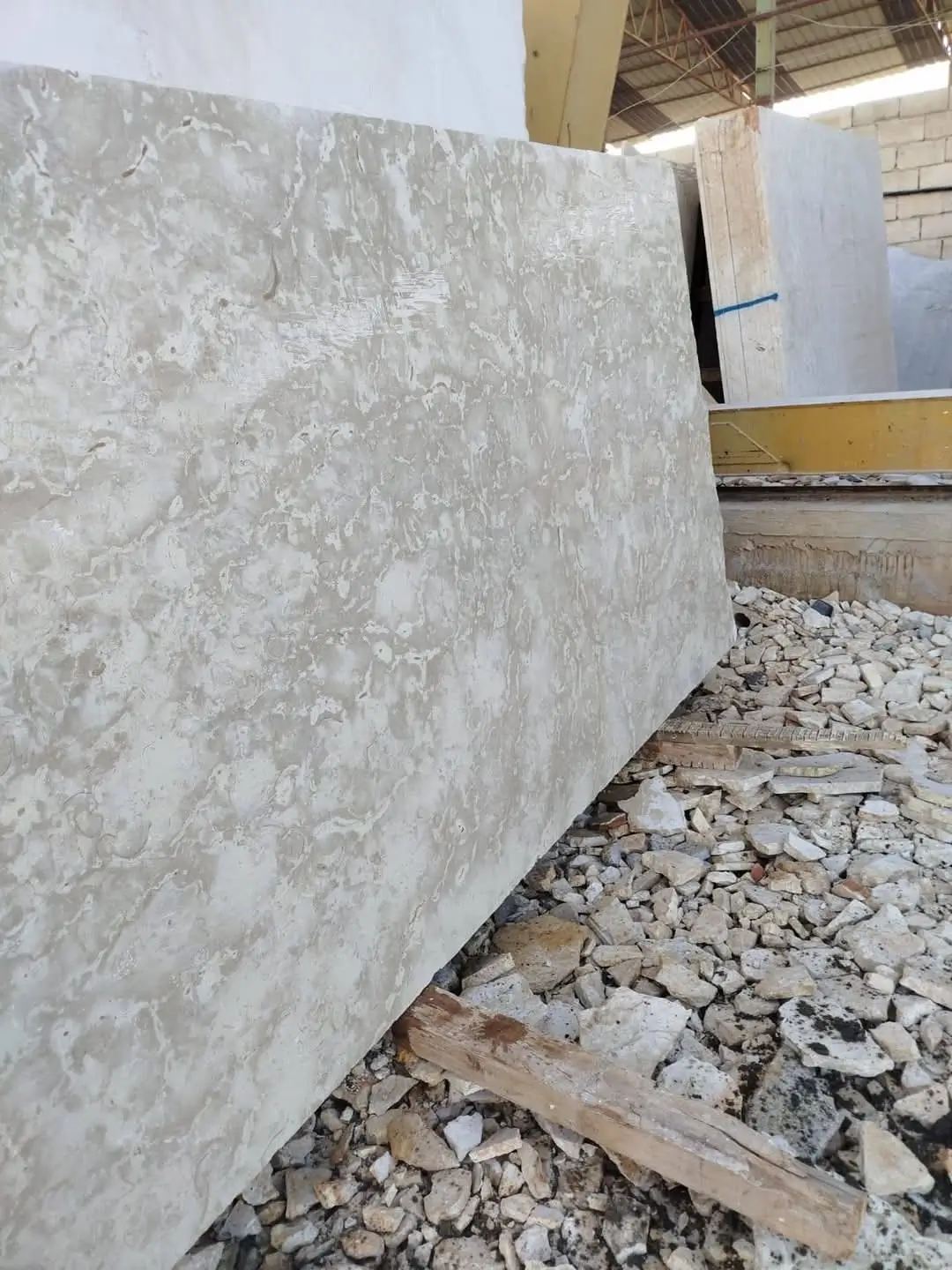
Freeze-Thaw and Thermal Cycling: The Variable That Grades Every Stone Type
Temperature cycling is the performance test that separates a 12-year installation from a 25-year one, and it applies across more climates than most specifiers assume. Regions with significant day-to-night swings — not just areas with hard winters — impose cumulative thermal fatigue on stone tile and the adhesive systems beneath them. A range of 40°F between morning and afternoon temperatures, repeated daily over years, creates expansion and contraction cycles that add up to measurable joint stress.
The engineering impact is straightforward: every stone type expands along its thermal expansion coefficient when heated and contracts when cooled. In an installed tile field, that movement must go somewhere — and if your joint sizing and adhesive selection don’t accommodate it, the movement goes into the tile bond or the tile face. The result is either debonding or surface cracking, both of which accelerate once they start.
- For installations subject to meaningful temperature cycling, specify ANSI A118.12 flexible adhesive mortars rather than standard thin-set — the flexibility modulus difference is significant across temperature ranges
- Joint spacing on exterior or transitional applications (interior-to-exterior thresholds, covered porches, fireplaces) should follow a minimum 3/16-inch grout joint width with an unsanded polymer-modified grout
- Stone with absorption rates above 3% requires thorough sealing before freeze-thaw exposure — water that penetrates the tile body freezes, expands, and fractures the stone from within
- Granite and basalt — with their sub-0.5% absorption — handle freeze-thaw cycles with minimal risk; limestone and travertine above 1.5% absorption require more deliberate protective specification
- Movement joints at perimeter edges and field breaks every 20–25 feet in large exterior tile installations are non-negotiable in environments with temperature ranges exceeding 50°F across the installation’s service period
For types of natural stone tile flooring installed over radiant heat systems, the thermal cycling challenge is amplified. Radiant heat drives regular expansion cycles from below, while ambient cooling contracts the tile field from above. Specify your adhesive mortar system specifically for radiant heat compatibility — standard thin-set bond strength degrades under repeated directional thermal loading faster than most installation guides acknowledge.
Finish Selection and Grade Standards: What the Numbers Actually Mean
Every stone tile type can be supplied in multiple finishes — polished, honed, brushed, tumbled, flamed, or sandblasted — and each finish changes the tile’s slip resistance, absorption behavior, maintenance requirements, and visual character. The finish isn’t a cosmetic afterthought; it’s a performance variable that belongs in the specification alongside stone type and thickness.
For TCNA natural stone tile installation standards, finish compatibility with adhesive systems matters — highly polished back faces can reduce bond strength if the tile back isn’t properly back-buttered. This is a field detail that gets missed routinely when installers treat types of natural stone tile the same as ceramic or porcelain.
- Polished finish: highest reflectivity, lowest surface friction — suitable for low-traffic interior walls and dry floor areas only
- Honed finish: matte to satin sheen, moderate friction, more forgiving of scratches — the most versatile finish across stone types for floor use
- Brushed and tumbled finishes: aged texture, good friction, increases absorption access — requires more sealer penetration cycles but suits rustic and transitional aesthetics
- Flamed finish (granite and basalt only): thermal process creates micro-rough surface texture — the finish specified for exterior and wet-area floors
- Sandblasted: even surface texture with consistent grip, good UV stability — appropriate for exterior applications where flaming isn’t suitable to the stone type
Grade standards matter as much as finish. First-quality natural stone tile meets dimensional tolerances of ±1mm on thickness and ±0.5mm on edge straightness — specifications that affect whether your tile field lays flat. Commercial-grade or second-quality tile carries wider tolerances that compound across a large installation area, creating lippage that’s both a safety concern and an aesthetic failure. Verify grade designation in writing before your warehouse order is placed.
Natural Stone Tile for Fireplaces and Feature Walls
A fireplace with stone tile specification carries unique thermal performance demands that don’t apply to floor or wall tile in standard environments. The stone surrounding a firebox experiences radiant heat on its face and ambient room temperature on its back — a differential that can exceed 150°F in a functioning fireplace. Most natural stones handle this differential without structural failure, but the adhesive system and grout selection are where failures occur.
Standard polymer-modified thin-set begins losing bond strength above approximately 212°F. For firebox surrounds — the tile directly adjacent to the opening — specify a high-temperature refractory mortar rated to at least 1,000°F. For the broader hearth and mantel surround that doesn’t experience direct radiant exposure, a standard flexible adhesive mortar is appropriate. The distinction between these two zones is one that many residential installers don’t draw clearly enough, and bond failures typically occur at the surround-to-firebox transition where the two mortar types should meet.
- Slate, limestone, and basalt are the most commonly specified stones for fireplace surrounds — all handle thermal cycling without surface color shift
- Polished marble can develop micro-surface crazing near high-heat zones over time — specify honed or brushed marble if aesthetics require it
- Natural stone tile types in large format (24×24 inches and above) require back-buttering on 100% of the tile face for fireplace applications — any void in the adhesive bed becomes a point of thermal stress concentration
- Grout joints on fireplace surrounds should be filled with a non-sanded polymer grout or silicone-based joint sealant in the immediate firebox perimeter
Sourcing natural stone tile types for fireplace with stone tile projects through Citadel Stone tile materials ensures you’re working with consistent lot sizes and verified grade standards — important when a feature wall or fireplace surround requires a matched batch that ships complete rather than in partial deliveries.
Ordering, Logistics, and Realistic Lead Times
Your project timeline needs to account for stone tile lead times that differ substantially from manufactured tile. Natural stone tile types sourced from Mediterranean and Turkish quarries carry import cycles of 6–8 weeks from production to warehouse if not stocked domestically. For time-sensitive projects, confirming in-stock warehouse inventory before committing to a project schedule is a non-negotiable step.
Citadel Stone maintains stocked warehouse inventory of core stone tile types, which reduces typical delivery windows to 1–2 weeks for most projects. Truck access at your delivery site should be confirmed before order placement — large-format tile and bulk pallet orders require a straight truck or semi, and sites with narrow driveways or weight-restricted roads create complications that delay final delivery by days when not planned for in advance.
- Order a minimum 10% overage on cut-to-format tiles and 15% on irregular or tumbled formats — natural variation means some tiles won’t pass your on-site quality check
- Confirm that your entire project quantity ships from the same warehouse batch — stone from different production runs can vary in tonal calibration even within the same material type
- Tile delivered by truck should be inspected at the pallet before signing delivery confirmation — concealed damage claims after sign-off are rarely resolved in the buyer’s favor
- Store tiles flat, off the ground, and covered until installation — vertical storage of large-format natural stone tile types risks edge chipping and warping in variable temperature storage conditions
Getting Your Natural Stone Tile Specification Right
The types of natural stone tile you specify determine every downstream decision — adhesive chemistry, joint sizing, finish selection, sealing frequency, and long-term maintenance cost. Granite and basalt anchor the high-hardness, low-absorption end of the spectrum. Marble and limestone deliver superior aesthetics with real vulnerability trade-offs. Travertine and slate occupy distinct performance niches that reward correct application. None of these materials is universally superior — each earns its specification in the right context.
Thermal cycling performance runs as a thread through all stone tile specifications. Whether your project faces winter freeze-thaw cycles or day-to-night temperature swings, the joint system, adhesive flexibility, and absorption rate of your chosen stone type determine whether the installation holds its integrity over decades. Get these variables aligned at the specification stage, and the material itself will perform as geology intended. Rush them, and you’re managing failures instead of enjoying finishes.
As you develop your stone selection further, understanding the geological classification behind your material choices will sharpen your specification decisions — limestone’s geological identity explained offers a useful reference point for one of the most widely used tile stones across residential and commercial projects. Direct from quarries in Turkey, the Mediterranean, and beyond, Citadel Stone supplies tile formats for floors, walls, and wet areas.
Related reading: different types of natural stone · rock vs stone · crushed stone for drainage.