







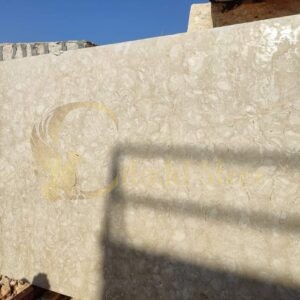
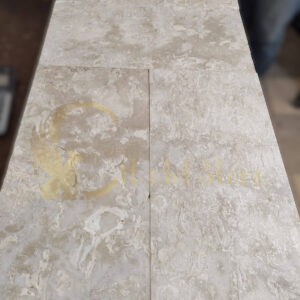
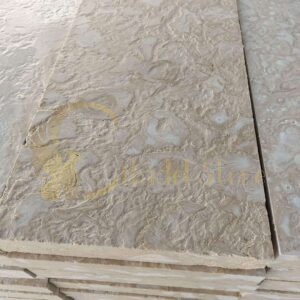
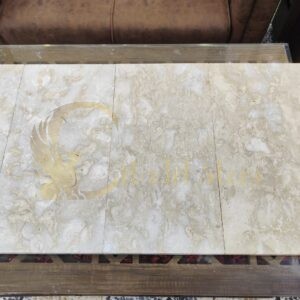



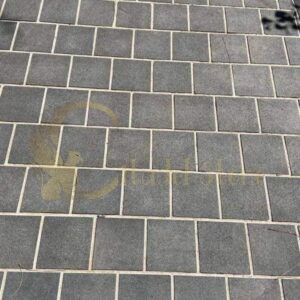

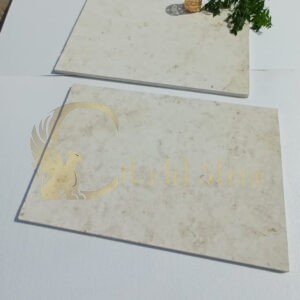
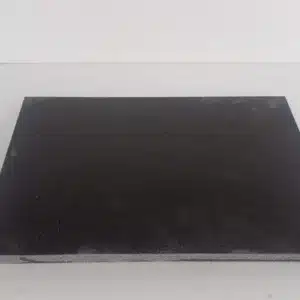
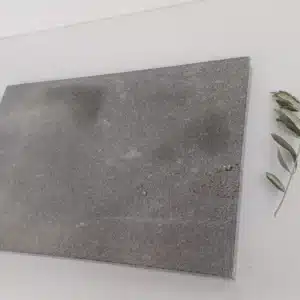




Compliance with Arizona’s structural load requirements — not just heat tolerance — is what separates a 12×24 stone pavers installation that lasts from one that fails at the joint within a few seasons. The 2024 IRC amendments adopted by most Arizona jurisdictions specify minimum base compaction of 95% modified Proctor density for exterior hardscape, and the 12×24 format, with its higher span-to-thickness ratio, is particularly sensitive to subgrade settlement when that number isn’t hit. You need to understand these code requirements before you select your stone, not after.
Arizona Building Codes and Structural Requirements for Stone Pavers
The structural calculus for 12×24 stone pavers in Arizona starts with load classification. Residential pedestrian applications typically require a minimum 1.5-inch nominal thickness, but vehicular-rated applications — driveways, service courts, RV pads — push that to 2.75 inches minimum per most municipal plan-check standards. Phoenix building department interpretations of IBC Chapter 18 consistently flag under-thickness paver specifications during permit review, and the correction cycle can delay your project by three to six weeks. Verify the applied load category before finalizing your specification.
Seismic design category also matters more than most landscape contractors acknowledge. Arizona sits in a moderate seismic zone, and Maricopa and Pima counties require that hardscape adjacent to structures — within 10 feet of a foundation — accounts for lateral displacement in the sub-base design. That means your compacted aggregate base needs to be installed in lifts no deeper than 4 inches, each compacted separately, rather than a single deep pour. The 12×24 format is actually advantageous here because the longer dimension provides better interlocking resistance to lateral movement compared to square formats.
- Minimum base compaction: 95% modified Proctor density per most Arizona municipal codes
- Pedestrian load: 1.5-inch nominal thickness minimum for natural stone
- Vehicular load: 2.75-inch minimum — confirm with local plan-check for your jurisdiction
- Seismic adjacency zone: aggregate base installed in 4-inch compacted lifts within 10 feet of foundations
- Drainage slope: 2% minimum cross-slope required by most AZ municipalities for hardscape
Thickness Selection and Structural Performance Across Arizona
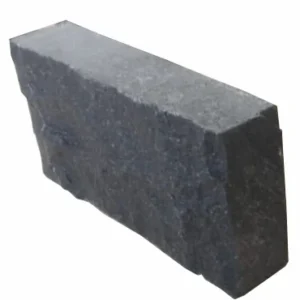
The 3 inch thick pavers specification comes up frequently in Arizona commercial projects — particularly in Scottsdale hospitality and resort applications where ADA compliance intersects with vehicular service access on the same surface. A 3-inch nominal thickness in natural stone delivers compressive strength values that typically exceed 8,000 PSI, which satisfies the load transfer requirements for light commercial service vehicles without requiring reinforced concrete substrates beneath. That’s a significant cost reduction in project economics when you factor in formwork and cure time.
For residential work, the decision between 1.5-inch and 2-inch stock usually comes down to soil type, not just load. Expansive clay soils — common in the Tucson basin and parts of the East Valley — exert upward pressures during monsoon saturation cycles that can crack thinner pavers from below. The 12×24 format’s extended span makes it more vulnerable to midpoint flexure in these conditions. In Tucson, specifiers who’ve worked with expansive desert soil typically default to 2-inch minimum thickness even for pedestrian-only applications, adding a layer of 4-inch crushed aggregate base over a geotextile separation fabric.
- 1.5-inch: suitable for pedestrian-only on stable, non-expansive soils
- 2-inch: recommended default for Arizona residential given monsoon soil movement cycles
- 2.75-inch: minimum for residential vehicular per most plan-check reviews
- 3-inch: commercial service access, resort hardscape, ADA transitional zones with vehicular overlap
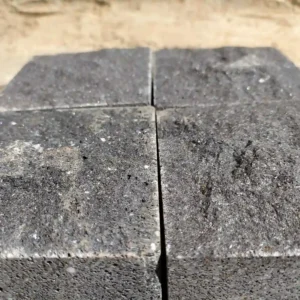
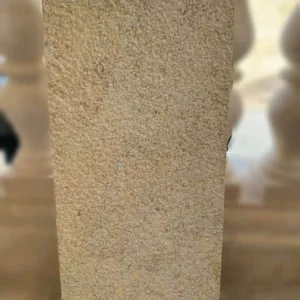
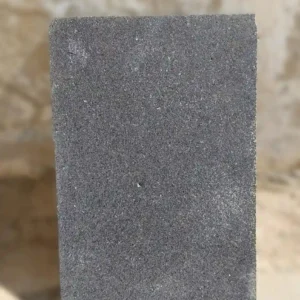
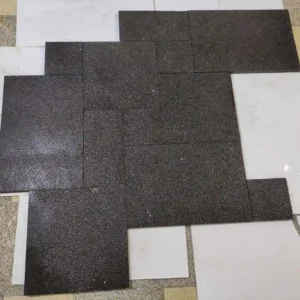
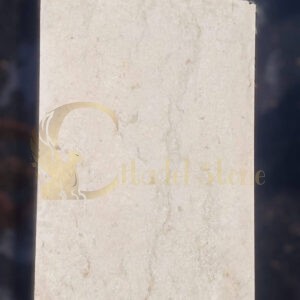
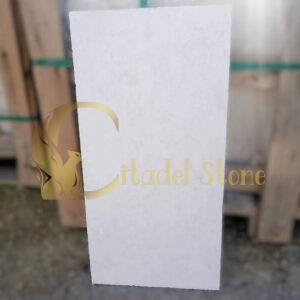
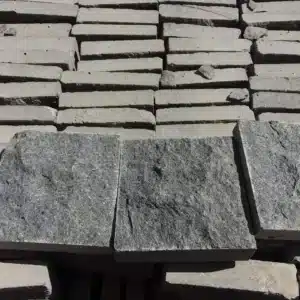
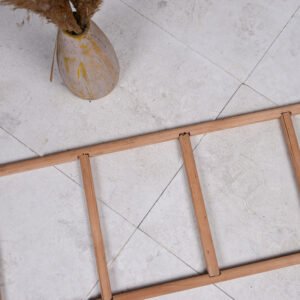
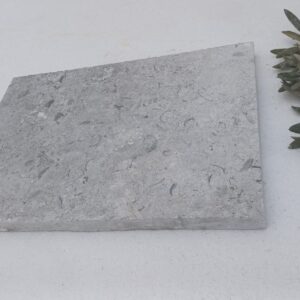
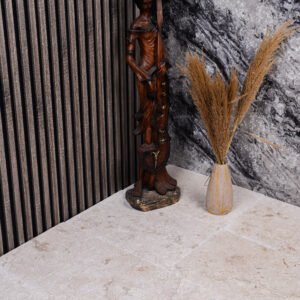
Citadel Stone stocks 12×24 stone pavers in Arizona in 1.5-inch, 2-inch, and 3-inch nominal thicknesses, with warehouse inventory maintained across the state for most standard formats. You can request thickness specifications and sample tiles before committing to a full project quantity — that’s worth doing before your permit application goes in.
Format Sizing and Pattern Engineering for Arizona Projects
The 12×24 dimension is the workhorse of the rectangular paver world, but it doesn’t stand alone on larger-scale Arizona projects. Specifiers frequently combine it with 12 by 12 stone pavers in Arizona installations to create running bond and basket-weave patterns that distribute point loads more evenly than a single-format installation. The 1:2 ratio between the square and rectangular formats means they grid without cuts on standard-width pathways and patios, which keeps labor costs predictable. The 12 by 12 stone pavers in Arizona option also simplifies pattern transitions at curved or irregular site boundaries where full rectangular units would require excessive cutting.
Larger-format options like 24×36 stone pavers in Arizona commercial work and 36×36 stone pavers in Arizona resort applications introduce a different set of structural considerations. The longer span-to-thickness ratio on these formats demands either a 3-inch nominal minimum or a concrete bond coat substrate — dry-set mortar beds alone won’t provide adequate flexural support at those dimensions under Phoenix summer thermal cycling. You’ll also need to increase your expansion joint frequency from the standard 15-foot grid down to 10-foot intervals to account for the larger thermal mass in each unit. Both 24×36 stone pavers in Arizona and 36×36 stone pavers in Arizona formats require early coordination with your structural engineer when elevated deck or rooftop applications are involved.
- 12×24 combined with 12 by 12 stone pavers in Arizona: creates load-distributed multi-format patterns without non-standard cuts
- 24×36 stone pavers in Arizona: requires 3-inch nominal or concrete bond coat on non-reinforced substrates
- 36×36 stone pavers in Arizona: resort and commercial-grade only — verify with structural engineer for elevated deck applications
- Expansion joints: reduce to 10-foot intervals for formats above 24 inches in either dimension
Base Preparation and Drainage Engineering for Code Compliance
Base preparation is where most Arizona paver failures originate, and it’s where local code requirements are most frequently misread. The standard specification calls for 4 to 6 inches of compacted Class II aggregate base, but that measurement assumes stable native soil at subgrade. In Phoenix and the broader Salt River Valley, caliche layers at 18 to 36 inches create a perched water table during monsoon events that can saturate the aggregate base from below, not above. Your drainage design needs to account for lateral egress, not just surface slope. Base preparation for projects using complementary stone elements follows the same compaction principles — for specification details that apply to similar site conditions, 12×24 Stone Pavers from Citadel Stone covers field performance data and common base-layer failure modes worth reviewing before finalizing your subgrade design.
The 2% minimum cross-slope required by most Arizona municipalities is a floor, not a target. For 12×24 stone pavers in Arizona installed adjacent to structures, a 2.5% to 3% slope directs water away from foundations faster and reduces joint saturation time during heavy monsoon events. Saturated joint sand is the single most common precursor to paver migration, and once migration starts in an interlocked field, the repair scope expands rapidly. Getting drainage geometry right at the design phase costs nothing compared to a mid-installation correction.
Material Performance and Selection Criteria for Arizona Conditions
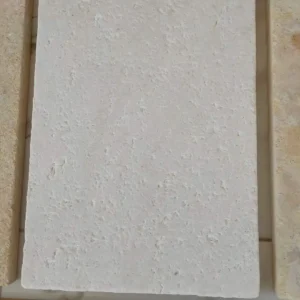
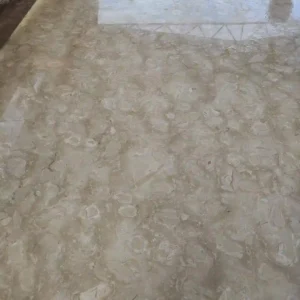
Natural stone performs differently under Arizona’s UV intensity and thermal cycling depending on mineralogy. Limestone and travertine — the most common natural stone paver categories in the Arizona residential market — carry water absorption rates between 3% and 7%, which matters structurally in the context of Flagstaff freeze-thaw cycles and in Tucson’s monsoon saturation events. Granite-family stones absorb less than 0.5% and carry compressive strengths above 15,000 PSI, making them the code-preferred option for load-bearing applications in seismically sensitive zones.
In Flagstaff, the freeze-thaw requirement is real — the city sits above 6,900 feet, and ASTM C1782 freeze-thaw cycling resistance becomes a specification requirement, not a suggestion, for any natural stone paver used in exposed outdoor conditions. Materials that pass 50 cycles without surface spalling are the minimum acceptable threshold, and you should request test data from your supplier before specifying any stone in that elevation zone.
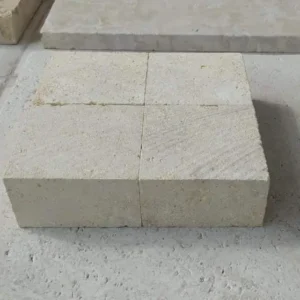
- Limestone: 3–7% absorption — suitable for low desert pedestrian applications with proper sealing
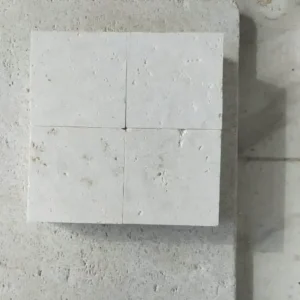
- Travertine: similar absorption range — requires filled-and-honed surface for slip resistance compliance
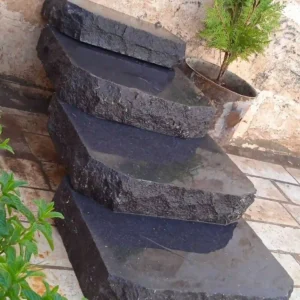
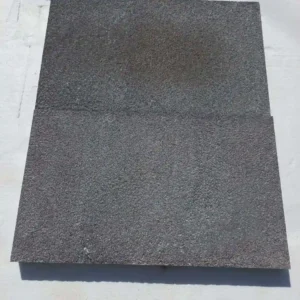
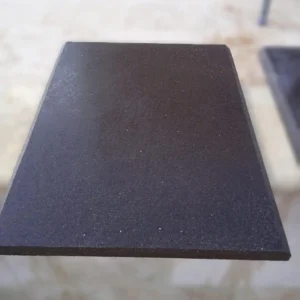
- Granite: below 0.5% absorption, 15,000+ PSI compressive strength — preferred for vehicular and seismic zones
- ASTM C1782 freeze-thaw cycling: mandatory data requirement for Flagstaff and high-elevation Arizona projects
- Slip resistance: DCOF ≥ 0.42 required per ANSI A137.1 for all exterior wet-area applications
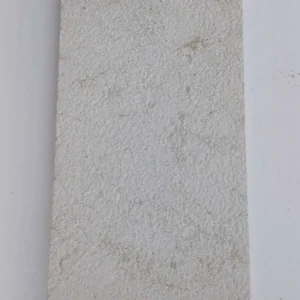
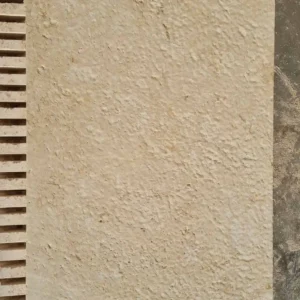
Sourced from established quarry partners, each batch of Citadel Stone’s natural stone pavers is inspected for color consistency, surface integrity, and dimensional tolerance before it reaches the warehouse. That consistency matters when you’re matching existing field stone on a renovation project.
Installation Sequencing and Joint Specification
The installation sequence for 12×24 stone pavers in Arizona diverges from manufacturer printed guidelines in one critical area — temperature-dependent setting time. Ambient temperatures above 95°F, which occur roughly 100 days annually in the Phoenix metro, accelerate moisture evaporation from bedding sand at a rate that forces joint spacing adjustments of 15 to 20% above the printed recommendation. Failing to adjust creates gaps that allow sand loss on the first rain event after installation.
Polymeric joint sand is the standard specification for Arizona exterior paver joints, but the activation process requires water — and water applied to polymeric sand in direct sun above 100°F can cause premature surface skin formation before the compound penetrates to full joint depth. Schedule polymeric sand activation for early morning or use a shade structure over the work area during the cure window. This isn’t a preference — it’s a quality control measure that prevents joint failure within the first monsoon season.
- Joint width standard: 1/8 inch to 3/16 inch for natural stone in rectangular formats
- Polymeric sand activation: below 95°F surface temperature — morning installation required in summer months
- Bedding sand depth: 1-inch nominal compacted — do not vary to accommodate subgrade irregularities
- Edge restraint: mechanical aluminum or heavy-duty plastic — spiked at 12-inch intervals on expansive soils
- Expansion joints: full-depth backer rod and sealant at 15-foot intervals, 10-foot for large-format pavers
Maintenance, Sealing, and Long-Term Code Compliance
A sealed 12×24 stone paver surface in Arizona’s low desert environment needs resealing on a biennial cycle — not the annual schedule often cited in generic maintenance guides. The difference comes down to UV degradation rate: a quality penetrating silane-siloxane sealer applied to properly prepared stone in a dry desert climate degrades at roughly half the rate of the same product in a coastal humid environment. You can extend to 36 months in Phoenix and Mesa with a high-solids formulation, but Flagstaff’s UV intensity at elevation actually accelerates sealer breakdown, keeping that location closer to an 18-month cycle.
Code compliance doesn’t end at installation. Arizona municipalities increasingly include hardscape drainage performance in stormwater management inspections, particularly for properties in FEMA flood zone designations. Your paver field’s permeability rating — measured as infiltration rate in inches per hour — needs to remain within the permitted drainage plan parameters. Sealed natural stone reduces surface permeability, which can create compliance issues if your drainage design specified permeable hardscape as part of its stormwater calculation. Know what your permit documents specify before sealing the entire field.
Source 12×24 Stone Pavers from Citadel Stone
Citadel Stone stocks 12×24 stone pavers in Arizona in multiple natural stone types, surface finishes, and the 1.5-inch, 2-inch, and 3 inch thick pavers range required to satisfy Arizona’s varied municipal load classifications. Available formats include honed, tumbled, and brushed surface treatments across limestone, travertine, and granite product lines — selections that cover both residential patio applications and commercial vehicular-rated specifications. For projects requiring 24×36 stone pavers in Arizona or 36×36 stone pavers in Arizona for resort-scale hardscape, the team can advise on lead times and confirm current warehouse availability before your permit application locks in your specification.
You can request sample tiles and dimensional specification sheets directly from Citadel Stone’s technical team before committing to project quantities. Trade and wholesale inquiries are handled through a dedicated account process with volume pricing available for commercial projects above 500 square feet. Citadel Stone ships 12×24 stone pavers across Arizona from regional warehouse inventory, with typical lead times of one to two weeks for in-stock formats — significantly shorter than the six to eight week import cycle that affects non-stocked specialty sizes. For custom cuts or non-standard thicknesses, reach out early in the design phase so material lead times don’t compress your installation window. Contact Citadel Stone to request a quote, confirm current stock levels, or schedule a technical consultation for your Arizona project. Arizona outdoor hardscape often incorporates multiple surface materials in the same design scope — Cobble Patio in Arizona covers how Citadel Stone materials perform in a related outdoor hardscape context that many Arizona homeowners combine with paver installations. Homeowners in Flagstaff, Sedona, and Yuma source 12×24 Stone Pavers through Citadel Stone for Arizona residential and commercial installations.