





Drainage geometry, not heat tolerance, is the variable that determines whether your granite cobblestones in Arizona perform for two decades or start failing within five years. The state’s monsoon season delivers intense, concentrated rainfall — Phoenix averages around 8 inches annually, but more than half of that falls in compressed storm events between July and September. Your installation must handle that hydraulic load without trapping water beneath the stone layer, because hydrostatic pressure cycles against the base are what fracture bedding layers and destabilize set patterns over time.
Why Drainage Design Drives Granite Cobblestone Performance in Arizona
Granite cobblestones in Arizona sit at the intersection of two competing demands — their mass and density make them structurally exceptional, but that same density means they contribute almost nothing to permeability if your drainage plan relies on the stone itself to pass water. The performance equation shifts depending on your joint system. Open-jointed installations with 8–12mm gaps and angular granite grit rather than polymeric sand allow surface water to migrate downward, reducing runoff velocity during storm peaks. For driveways and high-traffic areas, that permeability at the joint level extends base life considerably.
Caliche formations are the drainage wildcard most specifiers underestimate. Projects in Scottsdale frequently encounter a dense caliche hardpan layer at 14–22 inches, which acts as a near-impermeable barrier. Without deliberate drainage channels or strategic aggregate breaks, water percolating through the joint system pools above the caliche layer and saturates the bedding sand. That saturation softens the bed, and under vehicle loads, you get differential settlement — the kind that produces the rocking cobblestones and uneven surfaces you’ll see in installations that got the stone right but ignored what’s happening underneath it.
- Specify a minimum 6-inch compacted Class II base aggregate layer over prepared subgrade — increase to 8 inches where caliche or clay content exceeds 30%
- Integrate perforated edge drains at low-side perimeters to intercept any water that accumulates above impermeable sub-layers
- Maintain a minimum 1.5% cross-slope across the installed surface to direct storm-event runoff toward designated drainage paths
- Use open-graded bedding material (angular 3/8-inch crushed granite) rather than fine sand in zones with confirmed drainage constraints
Granite Cobble Types Suited to Arizona Conditions
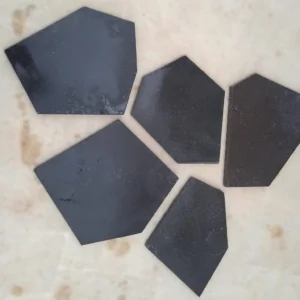
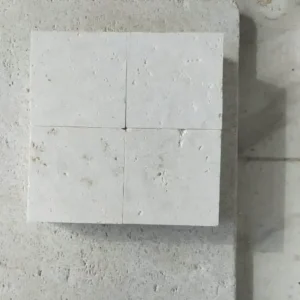
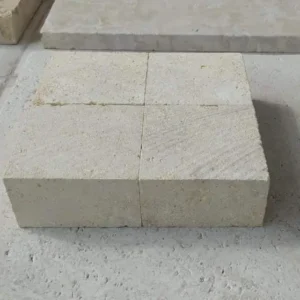
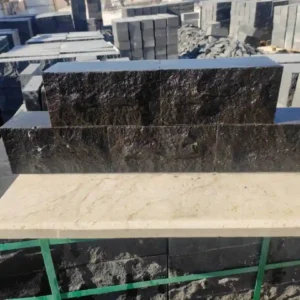
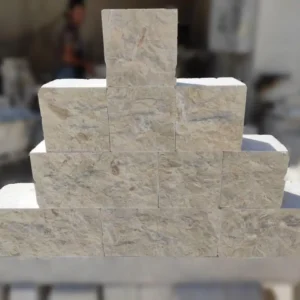
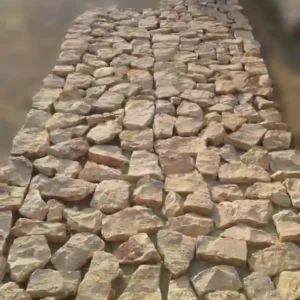
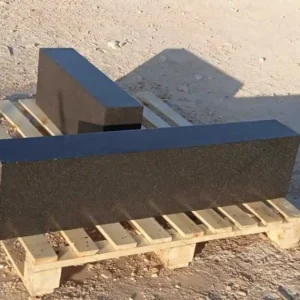
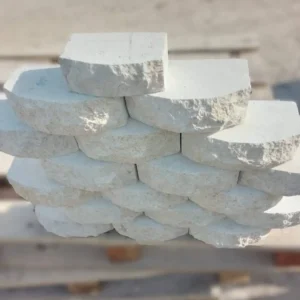
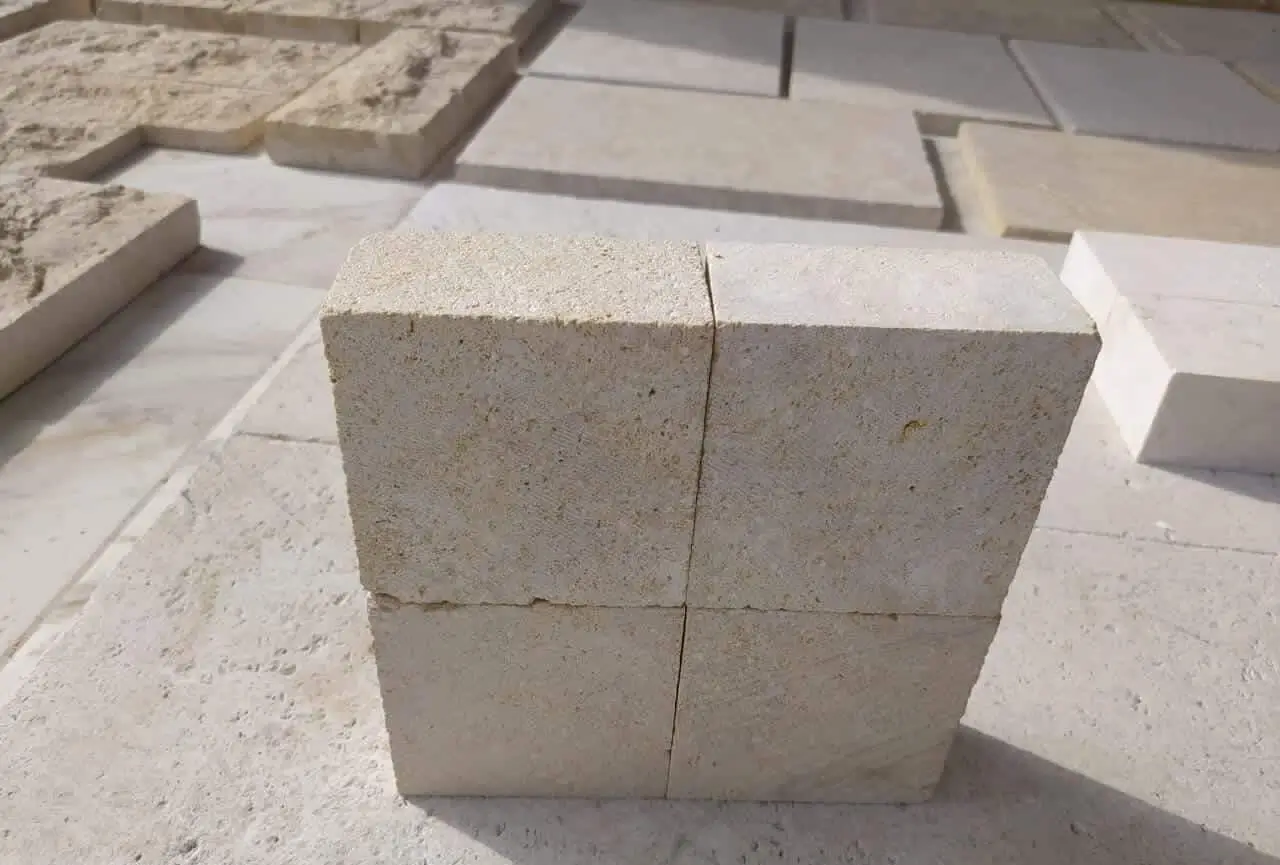
The range of granite cobble stones in Arizona projects spans several distinct material profiles, and the differences matter more than most product listings suggest. The three main categories you’ll encounter are natural-split sett cobbles, tumbled granite cobbles, and sawn-face cobblestones — each with different surface geometry, drainage behavior, and application suitability.
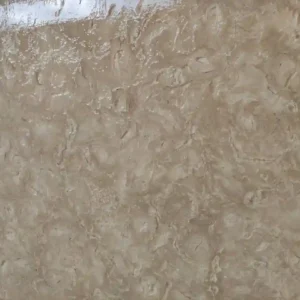
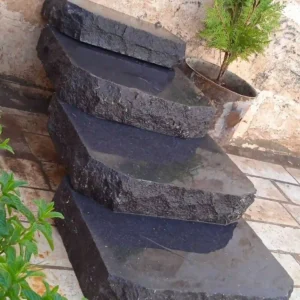
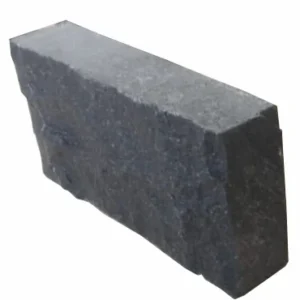
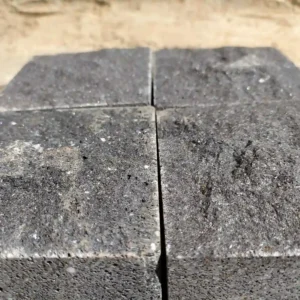
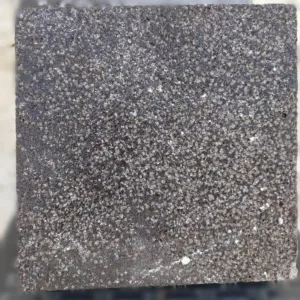
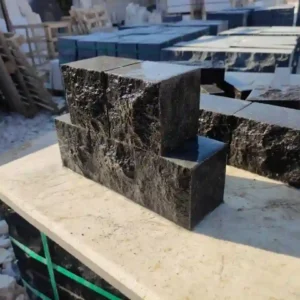
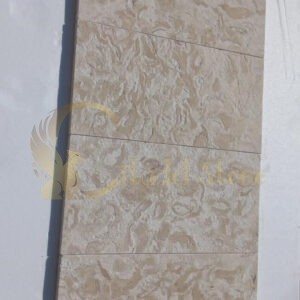
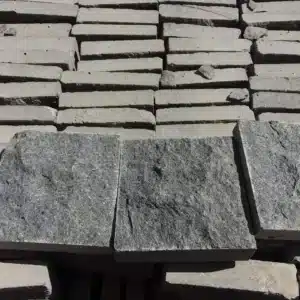
Natural-split cobbles retain their quarry fracture texture. That rough, irregular surface provides excellent slip resistance even when wet — ASTM C1028 wet static coefficient of friction values for natural-split granite typically range from 0.65 to 0.80, well above the 0.60 threshold recommended for pedestrian-accessible surfaces. The irregular geometry also creates slightly wider and more variable joint openings, which benefits drainage distribution across the surface. For entrance courts and landscape pathways in Phoenix and the surrounding Valley, this profile performs consistently well across both wet season and dry conditions.
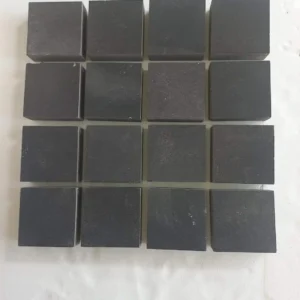
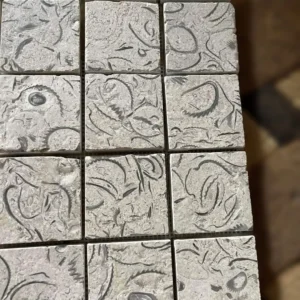
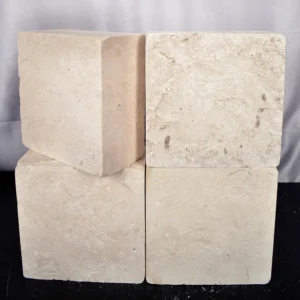
Tumbled granite cobbles in Arizona applications deliver a different performance profile. The tumbling process rounds the edges and creates a worn, aged aesthetic that suits traditional and Mediterranean architectural contexts. From a drainage perspective, the slightly domed top surface of tumbled cobbles sheds water laterally toward joints more efficiently than flat-top sawn stones. The trade-off is slightly reduced surface uniformity for vehicle loading — tumbled profiles seat less evenly under heavy axle loads, so for a granite cobble driveway in Arizona spec’d for regular truck traffic, natural-split or sawn-face cobbles are a more reliable choice than tumbled formats.
- Natural-split cobbles: 4–6 inch face with 3–5 inch depth — optimal for driveways and entry aprons
- Tumbled granite cobbles: typically 4×4 inch nominal, 2.5–3.5 inch depth — well suited to garden paths and decorative edging
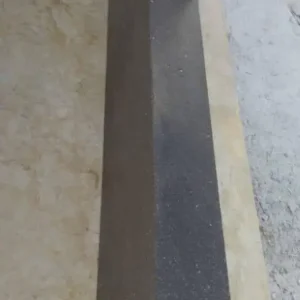
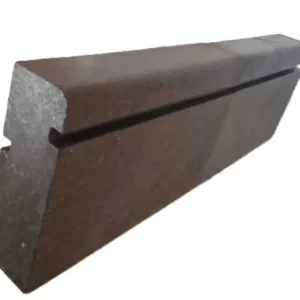
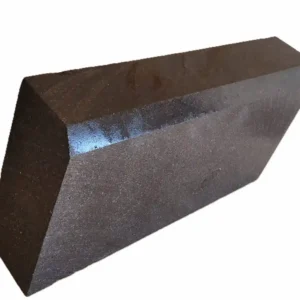
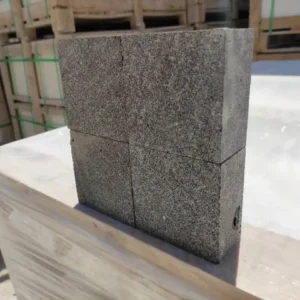
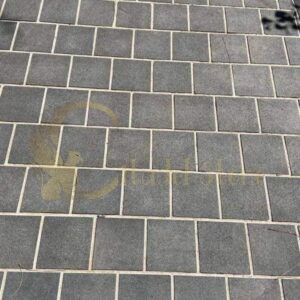
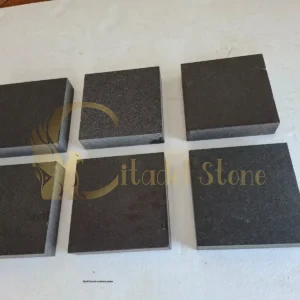
- Sawn-face cobblestones: precise dimensions (100×100mm or 150×150mm face), consistent depth — preferred for commercial plazas and formal settings
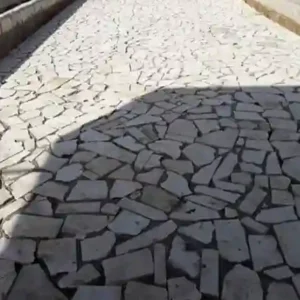
- Irregular fieldstone-style cobbles: variable sizing, 3–8 inch range — used in naturalistic landscape settings where variable joint widths support drainage
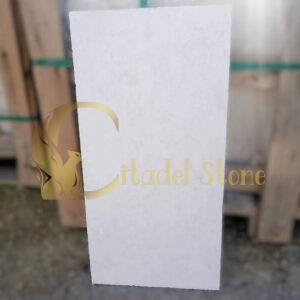
Citadel Stone stocks granite cobbles in Arizona in all three primary formats, with standard warehouse inventory covering natural-split, tumbled, and sawn-face profiles. You can request specification sheets or physical samples before committing to a project order — a step worth taking when you’re matching to an existing material palette or confirming color tone under Arizona light conditions. Granite cobbles for sale in Arizona are available in warehouse stock for fast-turnaround orders, with quarry-direct sourcing available for non-standard formats and volume requirements.
Reading Color Tone and Finish for Arizona Projects
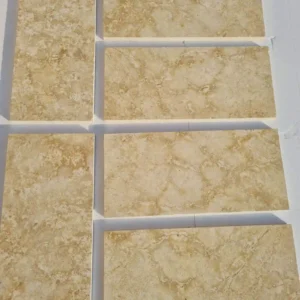
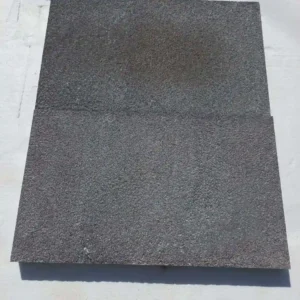
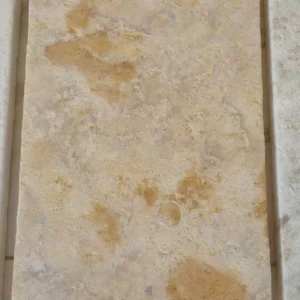
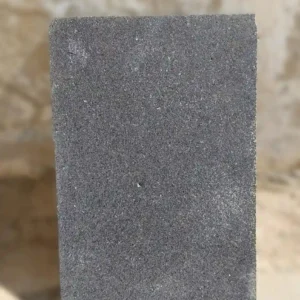
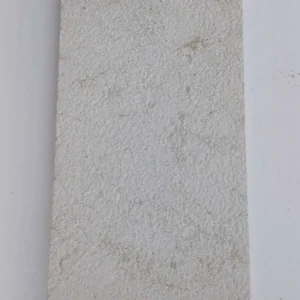
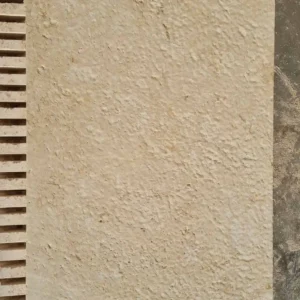
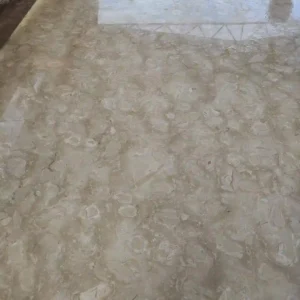
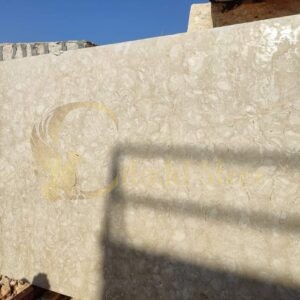
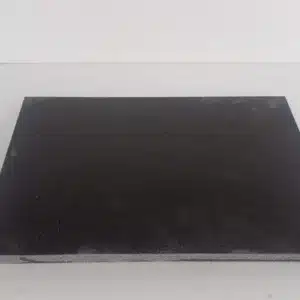
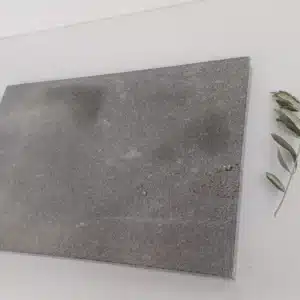
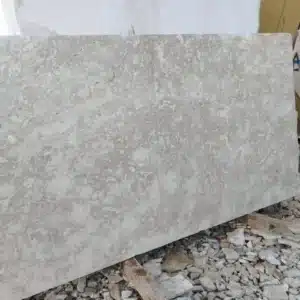
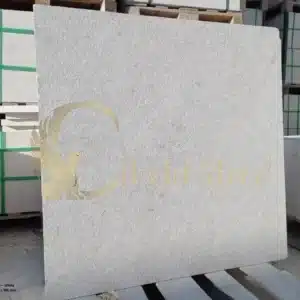
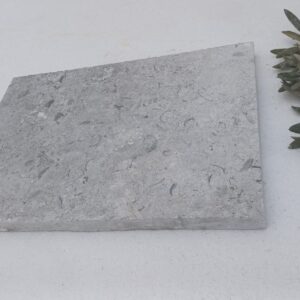
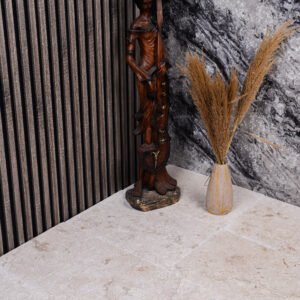
Granite cobbles in Arizona come predominantly from two color families — the warm buff-to-gold tones typical of domestic desert-region quarries, and the cooler grey-to-charcoal tones sourced from higher-elevation and international origins. Color selection isn’t purely aesthetic in this climate — it has a measurable impact on surface temperature behavior and long-term maintenance requirements.
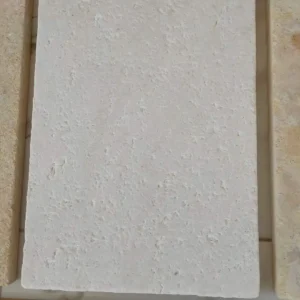
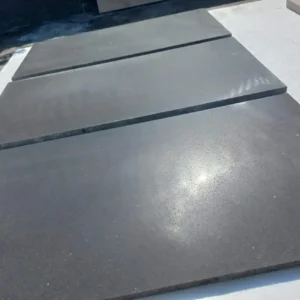
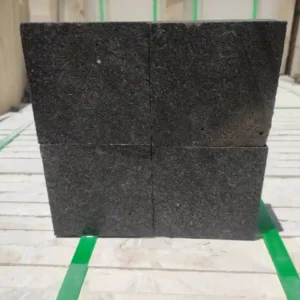
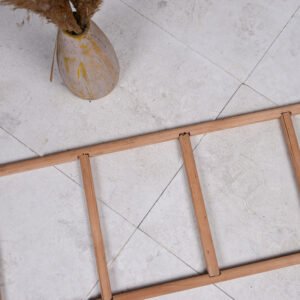
Darker charcoal and graphite tones absorb significantly more solar radiation. Surface temperature differentials between dark grey granite and buff-toned granite under direct Arizona summer sun can reach 25–35°F at peak afternoon hours. For a granite cobble driveway in Arizona where the surface is adjacent to landscaping or near building entrances, that temperature differential matters for heat island contribution and barefoot usability. Lighter buff, silver-grey, and cream-toned cobbles keep surface temperatures more moderate and tend to show less UV-induced color shift over a 10–15 year exposure cycle.
The finish also affects maintenance frequency in dusty desert environments. Polished or honed surfaces on granite setts show fine dust accumulation more visibly than the textured natural-split face. For most outdoor Arizona applications — particularly in high-dust zones like Mesa and the east Valley — natural-split or lightly flamed finishes stay presentable with less frequent cleaning and don’t require the routine re-sealing that polished granite demands.
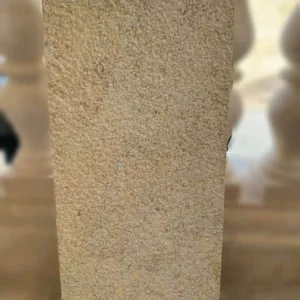
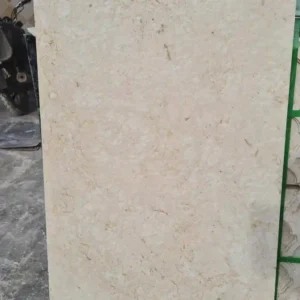
- Buff and gold tones: excellent solar reflectance, minimal heat absorption, suits traditional and desert contemporary styles
- Silver-grey and steel: neutral tone, moderate heat absorption, highly versatile across architectural contexts
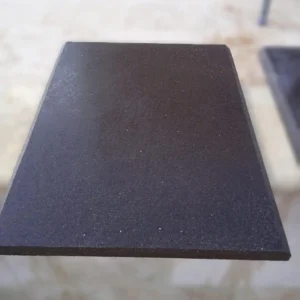
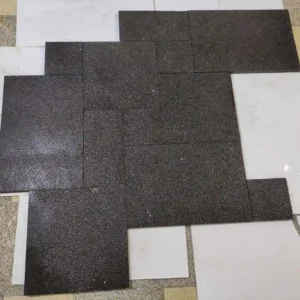
- Charcoal and dark graphite: dramatic visual impact, higher surface temperature under direct sun, best suited to shaded or covered applications
- Rose and terracotta-flecked granite: regional color affinity with Arizona sandstone landscapes, natural-split finish preferred for outdoor use
Base Preparation and Installation Sequence for Arizona Cobble Driveways
Your base preparation is where the project either earns its 20-year lifespan or locks in its first failure point. The approach for granite cobble driveway installations in Arizona differs meaningfully from temperate-region specifications — not because of freeze-thaw cycling in most of the state, but because of the pronounced expansion and contraction cycles driven by the 40–60°F daily temperature swings common during spring and fall transition periods.
Subgrade compaction targets should reach 95% Proctor density for residential driveways and 98% for commercial or mixed-use surfaces. Arizona’s sandy and silty native soils compact well but can lose density rapidly when moistened — exactly what happens during monsoon events. This makes the bedding layer specification critical. A 1-inch screeded layer of angular crushed granite (3/8-inch minus) performs better than concrete sand in desert subgrade conditions because it resists migration under cyclic wetting and drying. For drainage-sensitive sites, Chandler and similar east Valley locations with documented expansive soil profiles benefit from a geotextile fabric layer at the subgrade interface to prevent fines migration into the aggregate base. Granite cobble stones in Arizona installed over expansive soils require this additional step to maintain long-term joint integrity and surface stability.
Joint filling for open-jointed designs should use angular granite grit rather than polymeric sand. Polymeric sand works well in stable, dry conditions but can become rigid and crack-prone through the thermal cycling of desert seasons. Angular grit stays flexible, self-seals against ant and weed intrusion effectively when packed to 95% joint depth, and maintains drainage permeability. For full permeability through the joint system, leave the bottom 20% of the joint unfilled over a clean angular aggregate bed. Sourcing granite cobbles for sale in Arizona from suppliers who also carry compatible angular grit simplifies the specification process considerably.
- Excavate to 12–14 inches below finished grade for vehicular installations, 8–10 inches for pedestrian-only surfaces
- Install 8-inch compacted Class II aggregate base in two lifts — compact each lift before adding the next
- Screed a 1-inch bedding layer of 3/8-inch angular crushed granite — do not compact until cobbles are placed
- Set cobbles with 8–12mm joint gaps for drainage-optimized installations, 4–6mm for formal aesthetic contexts
- Compact set cobbles with a plate compactor using a rubber pad — 3 passes minimum across the full surface
- Fill joints with angular granite grit to 90% depth, compact again, then top-dress to finished joint level
For projects requiring complementary stone elements and detailed maintenance specifications, Granite Cobblestones from Citadel Stone covers the upkeep framework that applies to similar site conditions across Arizona climates. Getting base preparation and long-term maintenance aligned from the start is what separates installations that age gracefully from those that need intervention within the first decade.
Monsoon Season Performance and Water Management Strategies
Arizona’s monsoon season is the stress test for every cobble installation in the state. You’re not dealing with gradual rainfall accumulation — you’re dealing with 1–2 inch events in under an hour, often following weeks of completely dry conditions that have left the soil surface nearly hydrophobic. The first minutes of a monsoon storm hit hardened, dry ground, and runoff velocity peaks before any significant infiltration occurs. Your drainage design must handle that peak load, not the average rainfall rate.
Surface drainage paths need to be clear of obstruction before installation is complete. Channel drains at low-side transitions, slot drains integrated into the cobble field, or deliberate break joints aligned with the drainage gradient are all effective approaches depending on your site geometry. The detail that gets overlooked consistently is the transition joint between the cobble field and adjacent hardscape — a concrete curb, asphalt apron, or building foundation creates a dam if the grade doesn’t direct water away from that interface. Even a 0.5% grade reversal at a transition edge will pond water against the structure during heavy events.
In Flagstaff, the drainage calculation includes an additional variable that low-desert projects don’t face — snowmelt. At 7,000 feet elevation, spring thaw events can deliver sustained low-volume water infiltration for days at a time, which behaves very differently in the sub-base than the rapid-surge monsoon events in Phoenix or Tucson. Flagstaff cobble installations benefit from a slightly more permeable base specification and positive drainage outlets that function under both fast-flow and slow-percolation conditions.
- Design surface drainage to handle a 100-year storm event flow rate — Arizona Department of Transportation drainage standards are a useful starting reference
- Integrate channel or slot drains at all low-point transitions and at structures where water pooling risk exists
- Maintain minimum 1.5% slope across the cobble field — increase to 2% in areas with confirmed drainage restrictions
- Inspect and clear joint material and drainage channels before the start of monsoon season annually
- For Flagstaff and higher-elevation installations, specify drainage outlets sized for both peak storm flow and sustained snowmelt rates
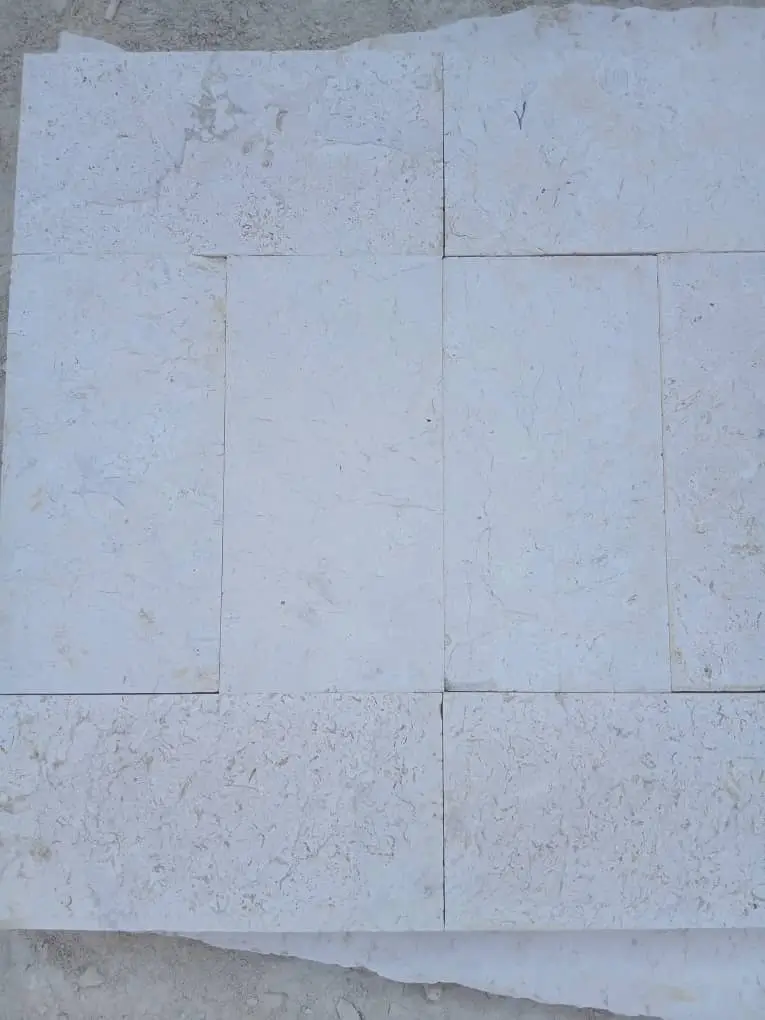
Granite Cobblestone Maintenance in Arizona Desert Conditions
Maintenance requirements for granite cobbles in Arizona are lower than most comparable hardscape materials, but they’re not zero. The primary maintenance tasks are joint replenishment, periodic deep cleaning, and sealing decisions — and the frequency of each depends largely on your site’s drainage performance and the volume of fine dust your installation is exposed to.
Joint material settles and migrates over the first 12–18 months as the installation consolidates under traffic and thermal cycling. Plan a joint inspection and top-dress after the first full monsoon season and again at 18 months. After that initial consolidation period, annual inspection before monsoon season is sufficient for most residential applications. Commercial installations with high vehicle traffic should increase to biannual joint checks.
Sealing granite cobble stones in Arizona outdoor applications is a debated topic among specifiers, and the right answer depends on your material profile. Polished and honed granite surfaces benefit from a penetrating silane-siloxane sealer applied every 3–4 years — it reduces moisture infiltration into the crystal matrix and helps resist efflorescence from subgrade mineral migration. Natural-split and flamed surfaces are generally dense enough that sealing is optional for functional performance. If the site has heavy organic debris exposure — adjacent deciduous trees, for example — a sealer reduces staining from tannin infiltration into the open surface texture.
- Joint replenishment: year 1 and year 1.5 post-installation, then annually before monsoon season
- Surface cleaning: power wash at 1,200–1,500 PSI with a fan tip — avoid high-pressure point-jet application on joint material
- Sealing frequency: every 3–4 years for polished/honed surfaces; optional for natural-split profiles
- Weed management: pre-emergent application in spring before weed seed germination, combined with full-depth joint fill, keeps maintenance minimal
- Edge restraint inspection: check restraint integrity annually — Arizona thermal cycling stresses edge connections more than cooler climates
Source Granite Cobblestones — Arizona Supply by Citadel Stone
Citadel Stone supplies granite cobblestones in Arizona in standard formats covering natural-split sett cobbles, tumbled granite cobbles, and sawn-face profiles across multiple color ranges — buff, silver-grey, charcoal, and rose-flecked options are held in regular warehouse inventory. Standard sizing covers 100×100mm, 150×150mm, and 200×100mm face formats, with 80mm and 100mm depths available for vehicular and pedestrian load classifications respectively. For projects with non-standard format requirements or volume orders requiring quarry-direct sourcing, the Citadel Stone team can advise on lead times — typically 3–4 weeks for warehouse stock and 10–14 weeks for direct quarry orders.
You can request physical samples or full specification data sheets before committing to a project order. Samples are particularly useful when you’re matching new cobblework to existing stone elements on a renovation project — Arizona light conditions affect color perception differently than indoor showroom lighting, and confirming the tone on-site before ordering saves costly material returns. Wholesale and trade enquiries are handled directly, with pricing available for contractor accounts and volume residential orders. Truck delivery coverage extends across Arizona, with logistics coordinated from regional inventory to reduce lead times compared to coast-based suppliers.
At Citadel Stone, we source from established quarry partners and run quality consistency checks on each incoming batch — surface texture uniformity, dimensional tolerance, and color grouping are verified before material ships to Arizona projects. You should confirm warehouse availability for your target installation window when scheduling larger orders, particularly ahead of the spring and fall peak installation seasons when inventory moves quickly across the region. For complementary Arizona hardscape applications, Block Paving Setts in Arizona covers another Citadel Stone product category that frequently pairs with cobblework in formal driveway and courtyard designs. Homeowners in Flagstaff, Sedona, and Yuma source Granite Cobblestones through Citadel Stone for Arizona residential and commercial installations.