
Granite cobblestone upkeep Arizona properties demands a more sophisticated understanding of thermal mechanics than most maintenance guides acknowledge. The real performance variable isn’t peak summer heat — it’s the relentless cycling between temperature extremes that puts cumulative stress on stone, joints, and sub-base assemblies simultaneously. In Arizona’s desert climate, you’re not dealing with a single thermal state; you’re dealing with a dynamic system that contracts and expands daily, sometimes shifting 40 to 50°F between predawn lows and midafternoon highs.
How Thermal Cycling Affects Granite Cobblestones
Granite’s thermal expansion coefficient sits around 4.4 to 5.0 × 10⁻⁶ per °F — one of the more stable natural stone values, which is exactly why it performs well in Arizona’s thermal environment. But stability doesn’t mean immunity. In Mesa, where summer night temperatures can drop into the low 80s°F after daytime peaks above 115°F, the cumulative expansion and contraction across a full season adds up to measurable lateral movement in large cobblestone fields.
You’ll notice the consequences first in the joints — not the stone itself. Granite cobblestones in Arizona rarely crack from thermal stress alone. The joint filler degrades, compresses unevenly, or blows out at the edges of the field where restraint is weakest. That’s where your maintenance program needs to start: not with the stone surface, but with joint integrity.
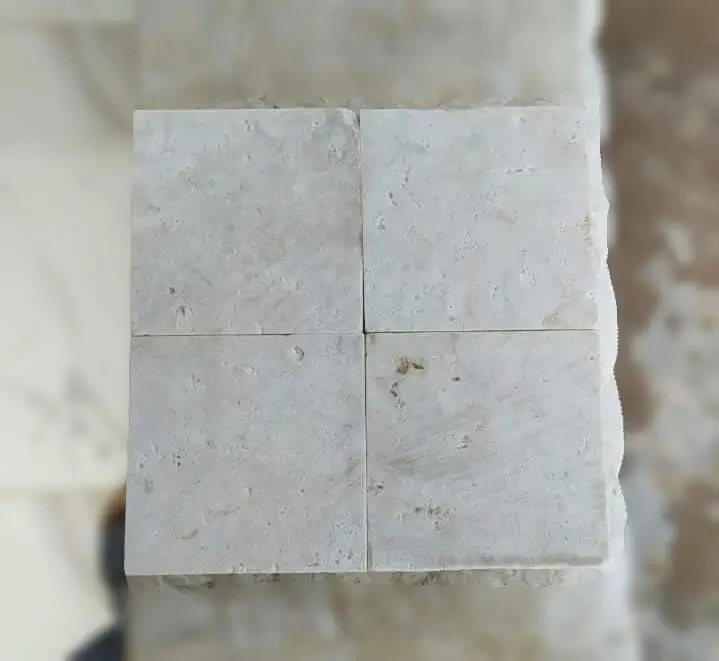
Stone Cobble Joint Care in Arizona’s Desert Climate
The joints in a cobblestone installation are the thermal relief valves — they accommodate movement that would otherwise translate into edge displacement or surface lifting. Polymeric sand is the standard material, but not all formulations handle Arizona’s thermal cycling equally. You want a product rated for high-UV exposure and sustained temperatures above 130°F at the surface level, because your joint sand gets direct solar radiation far beyond ambient air temperature. Maintaining granite cobbles in Arizona means treating joint specification as a climate-driven engineering decision, not a material afterthought.
- Inspect joint depth every 18 months — thermal cycling gradually pumps fine sand particles upward, creating voids at the base of the joint
- Top-dress joints before monsoon season, not after, since moisture intrusion into depleted joints accelerates edge erosion
- In high-traffic zones, plan on full joint reapplication every 3 to 5 years, even with premium polymeric sand
- Avoid standard silica joint sand in Arizona desert installs — it migrates laterally with repeated thermal expansion cycles
- Check edge restraint fastener spacing after the first full summer; thermal movement can loosen spikes in sandy soil profiles
Stone cobble joint care in the AZ desert climate must be treated as a scheduled maintenance item, not a reactive one. The joints need attention before visible failure, not after — and the consequences of deferred care compound with each thermal season.
Arizona Granite Cobblestone Cleaning and Sealing Tips
Cleaning granite cobblestones in Arizona’s climate presents a specific challenge: the alkaline mineral deposits left by hard water irrigation combine with fine caliche dust to create a surface film that’s chemically different from typical urban grime. Standard pressure washing alone won’t break down this film — you need a pH-neutral stone cleaner applied with dwell-time before any mechanical rinse. Following sound Arizona granite cobblestone cleaning and sealing tips makes the difference between a surface that recovers well and one that accumulates permanent staining.
For routine annual cleaning, a low-pressure wash (under 1,500 PSI) with a fan tip and a stone-safe surfactant handles organic staining from monsoon debris and algae that establishes in shaded joint areas. Avoid acidic cleaners entirely on granite — even diluted muriatic acid etches the feldspar crystal boundaries and creates micro-roughness that accelerates future soiling.
- Schedule cleaning in spring, after pollen season but before peak UV intensity — this protects both your cleaning results and the installer doing the work
- Test cleaner in a 12-inch patch before full application — different granite colorways react differently to surfactant chemistry
- Allow the surface to dry completely (minimum 48 hours) before sealing — moisture trapped under sealer creates a milky haze that requires full strip-and-reseal to correct
- Use a penetrating impregnator sealer rather than a topical film sealer — topicals peel under Arizona’s UV load within 18 months
- In Chandler, irrigation system overspray onto cobblestone fields is one of the primary drivers of mineral scaling — redirect heads or adjust timing as part of your maintenance routine
Sealing Schedule and Thermal Performance Considerations
Penetrating sealers work by occupying the pore structure of the stone, reducing water and oil absorption without creating a surface film. Granite is already relatively low-porosity compared to travertine or limestone, so you’re not sealing to prevent saturation — you’re sealing to reduce the capillary action that pulls alkaline water and dissolved minerals into the surface layer during thermal cycling.
Your sealing interval in Arizona should be every two years for cobblestone fields in full sun, and every three years for shaded installations. The accelerating factor isn’t moisture — it’s UV degradation of the sealer’s siloxane chemistry. Reseal before you see water no longer beading on the surface, not after. Once the hydrophobic effect is gone, mineral deposits penetrate faster than any cleaning protocol can address. These Arizona granite cobblestone cleaning and sealing tips apply equally to residential courtyards and high-traffic commercial entries — the chemistry doesn’t change with project scale.
For guidance on sourcing and material quality, Citadel Stone cobblestone upkeep resources Arizona provides regional supply and technical support for homeowners and contractors managing long-term granite paving care across Arizona projects.
Day-Night Temperature Swings and Freeze-Thaw Considerations
Most property owners in the Phoenix metro assume freeze-thaw damage is irrelevant at lower elevations — and for the stone itself, they’re largely correct. But the sub-base and joint system tell a different story. At elevations above 2,500 feet in Arizona, which includes communities in the eastern valley and north Chandler areas, ground temperatures can dip below freezing on winter nights even when daytime highs reach the 50s°F.
Freeze-thaw cycling in joint materials is more destructive than either condition alone. Water in a partially depleted joint expands approximately 9% upon freezing — that volumetric change in a confined space applies direct lateral pressure to adjacent cobblestone edges. After 20 to 30 freeze-thaw cycles, edge stones begin to tip outward by fractions of an inch. The cumulative displacement over three to five seasons becomes a trip hazard and a drainage problem.
- At elevations where freezing is possible, use polymeric sand with freeze-thaw flexibility ratings rather than standard rigid-cure products
- Ensure base aggregate drainage is unimpeded — saturated base material amplifies freeze-thaw heave dramatically compared to free-draining granular fill
- Inspect edge cobblestones in late spring for lateral displacement that accumulated over winter cycles
- Re-tamp displaced edge stones before summer heat sets the joint sand back in a deformed position
Sub-Base Integrity and Long-Term Performance
The sub-base is what you can’t see, which is exactly why it’s the component most likely to be ignored until failure is visible at the surface. Long-term granite paving care across Arizona requires treating the sub-base as a living system that responds to seasonal moisture variation, thermal cycling, and point-load history — not a static foundation that installs once and disappears.
In Gilbert and surrounding East Valley communities, expansive clay soils beneath the aggregate base can introduce vertical movement of 0.25 to 0.5 inches seasonally — enough to create surface unevenness that channels water toward building foundations. Probe for soft spots annually by pressing firmly at joint intersections and listening for hollow resonance, which indicates base separation or void formation beneath the bedding course.
- Inject grout into verified sub-base voids before they grow — a 1-inch void becomes a 4-inch void after one monsoon season
- Verify surface slope annually using a 10-foot straightedge — positive drainage at 1 to 2% grade must be maintained
- Document any areas where standing water persists more than 30 minutes after rain — these are your early warning zones for sub-base compromise
- Compaction testing with a dynamic cone penetrometer every five years is a worthwhile investment on commercial or high-traffic residential cobblestone fields
Traffic Load Management and Surface Wear
Granite cobblestone upkeep on Arizona properties must account for the fact that extreme surface temperatures change how cobblestones behave under rolling loads. At 150°F surface temperatures — easily reached in July on exposed desert installations — polymeric joint sand softens slightly, and repeated tire passage over edge joints can cause micro-displacement that compounds over seasons.
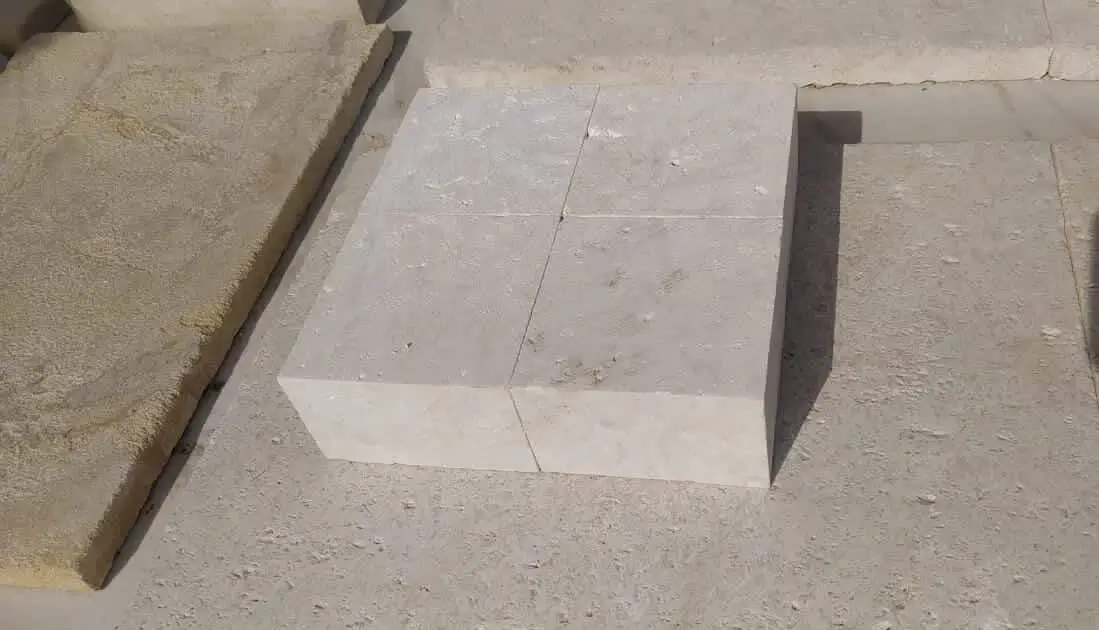
Vehicular-rated granite cobblestone in Arizona should be specified at a minimum 100mm (roughly 4 inches) nominal thickness for any driveway application. Thinner profiles perform adequately for pedestrian-only areas but can rock under vehicle loads when bedding sand is thermally softened. Verify thickness documentation from the warehouse before accepting delivery — inconsistent thickness across a pallet introduces variable bearing behavior that shows up as uneven wear within two years.
At Citadel Stone, we inspect each warehouse shipment of granite cobblestones against thickness tolerances before release, because field replacement of undersized units after installation is far more costly than catching the variance at receiving. Verify your truck delivery includes a material certification sheet — this is standard on commercial projects but often overlooked on residential orders.
Building a Practical Seasonal Maintenance Schedule
The most effective granite cobblestone upkeep program for Arizona properties runs on four seasonal checkpoints, each targeting the stress that the preceding season introduced. Timing matters as much as technique here — Arizona’s climate doesn’t follow a traditional four-season model, so your maintenance calendar should align with the monsoon cycle and the winter cooling period rather than calendar months.
- Late April to early May: post-winter inspection for freeze-thaw joint damage, edge displacement, and drainage confirmation before summer heat sets conditions
- Early June: apply penetrating sealer if due on schedule — before peak UV intensity makes the surface too hot for proper sealer curing
- Late September: post-monsoon cleaning to remove mineral deposits and organic material washed into joints during storm events
- November: joint depth assessment and top-dress where depletion exceeds 25% of design depth — setting this before winter allows material to cure properly before freeze cycles begin
Skipping the late April inspection is the most common gap in residential granite cobblestone upkeep in Arizona. Winter damage that goes unaddressed through summer heat becomes significantly harder and more expensive to correct than if caught in spring. Maintaining granite cobbles in Arizona over the long term depends on this spring window more than any other single maintenance touchpoint.
Granite Cobblestone Upkeep: Your Arizona Action Plan
You now have a framework built around Arizona’s actual thermal mechanics rather than generic stone care advice. The temperature range — not the peak — is the engineering driver for every decision in this maintenance program. Joint specification, sealing chemistry, base inspection intervals, and seasonal timing all flow from understanding that granite cobblestone upkeep on Arizona properties is fundamentally a thermal cycling management challenge.
Prioritize joint integrity as your first line of defense, schedule cleaning and sealing on a calendar that respects Arizona’s UV and monsoon cycles, and don’t ignore the sub-base until surface unevenness forces the issue. Supporting long-term granite paving care across Arizona means planning proactively at every seasonal interval — the compounding cost of deferred maintenance is real and well-documented across desert paving systems. If your project is at the planning or installation stage rather than the maintenance stage, How to Install Granite Cobblestones in Arizona covers the foundational decisions that determine how much maintenance your system will need long-term. A well-installed cobblestone field in Arizona genuinely does require less corrective work than a poorly installed one — the maintenance savings are real and measurable over a 10-year horizon.
Granite cobblestones from Citadel Stone, sourced from select natural stone quarries worldwide, are known for resisting weed intrusion when properly jointed, a benefit appreciated by property owners across Peoria, Gilbert, and Flagstaff.