





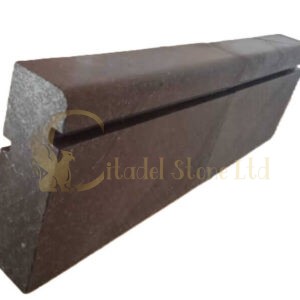
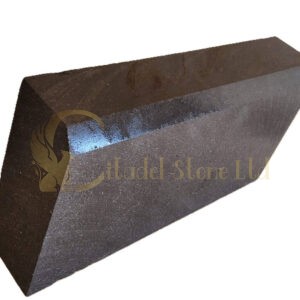
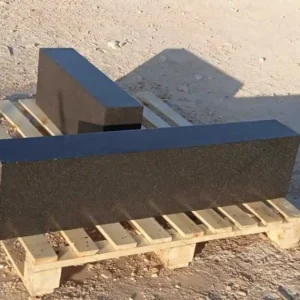


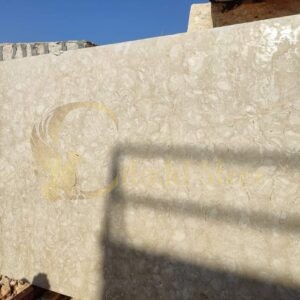
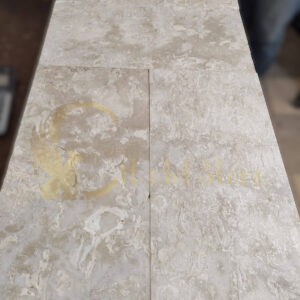
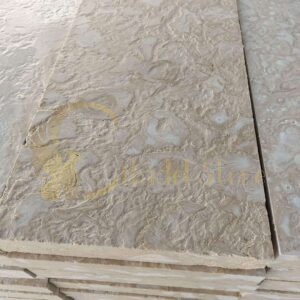
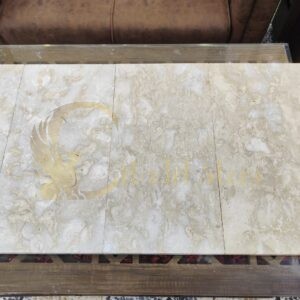








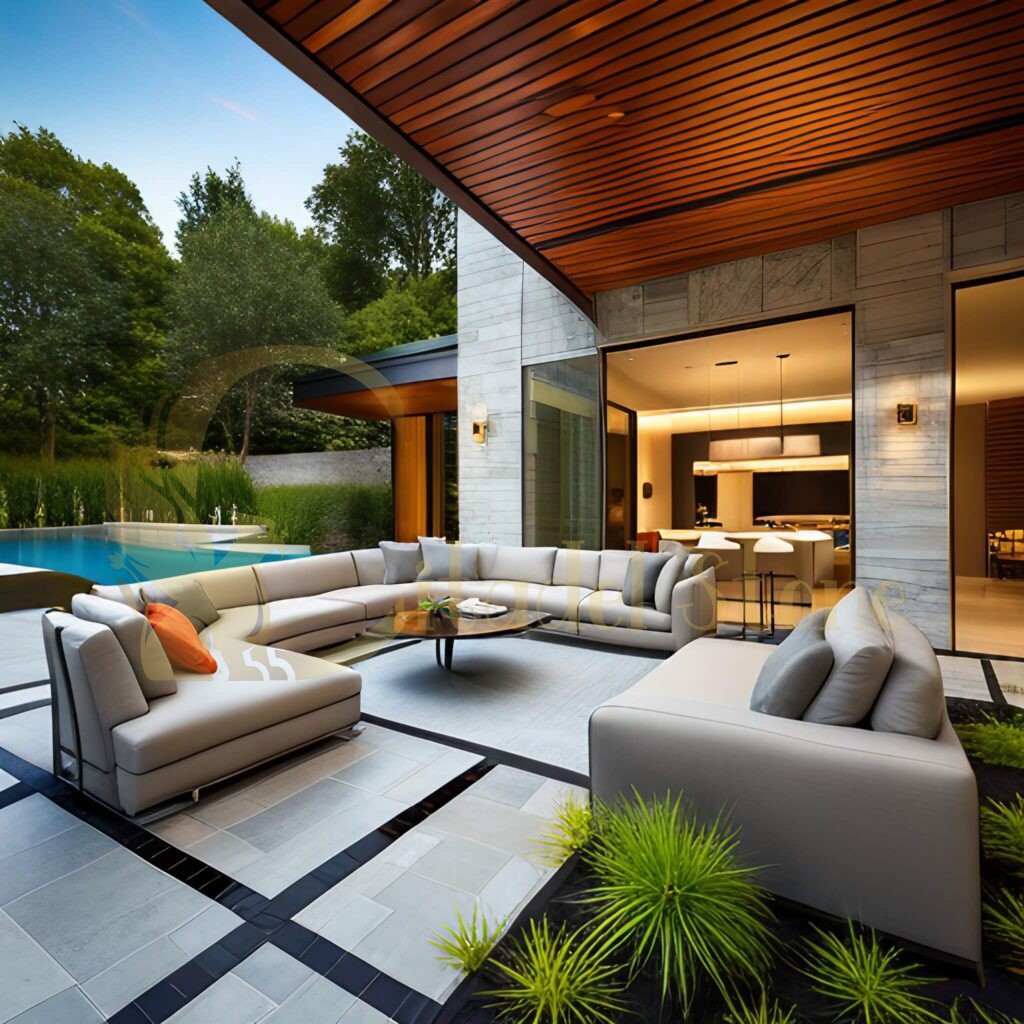
Square patio slabs in Arizona face a mechanical stress profile that most installation guides underestimate — wind-driven debris, monsoon-force precipitation, and hail impact create point loads and lateral displacement forces that determine whether your layout holds for two decades or starts shifting after the third storm season. The base depth, joint specification, and slab thickness you choose for square patio slabs in Arizona have to account for these dynamic loads, not just static weight distribution. Getting that calculation right from the start is what separates a durable installation from an expensive redo.
Wind, Storm, and Hail Performance for Square Patio Slabs in Arizona
Arizona’s storm events deliver a combination of forces that flat paving rarely gets credit for handling. Monsoon winds in the low desert can exceed 60 mph, and when those gusts carry gravel, debris, or hail, your slab surface takes direct impact. Field performance data on square patio slabs across Arizona climates shows that slabs with a compressive strength above 8,000 PSI handle repeated hail impact without surface spalling — thinner, lower-density options tend to micro-fracture at the surface after three or four significant hail events, which then accelerates water infiltration and undermines the base.
The lateral displacement issue is the one most installers miss. High wind creates uplift pressure on exposed slab edges, particularly at patio perimeters where there’s no retaining border. You’ll want to spec a minimum 2-inch nominal thickness for any exposed-edge installation, and in areas like Flagstaff where storm frequency and freeze-thaw cycles compound the stress, moving to 2.5-inch thickness across the full field is a sound call. The additional weight per unit — roughly 18 to 22 lbs per square foot at that thickness — provides passive resistance to wind uplift without any mechanical fastening.
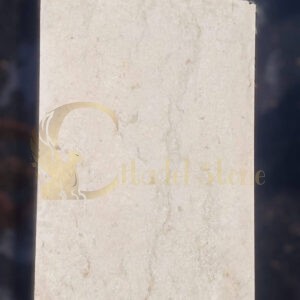
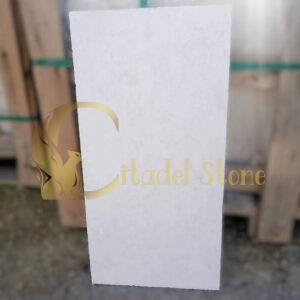
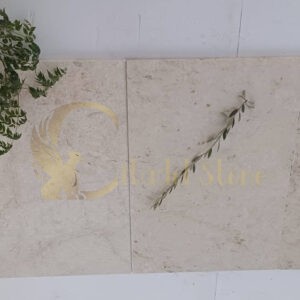
Citadel Stone stocks square patio slabs in Arizona in standard 2-inch and 2.5-inch thicknesses, with format options ranging from 12×12 to 24×24 nominal dimensions, so you can match the slab mass to your specific exposure conditions without compromising layout geometry.
Choosing the Right Material for Storm-Resistant Square Paver Patios
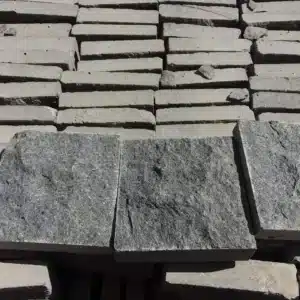
Natural stone square pavers for patio installations in Arizona perform differently under storm stress depending on their mineral composition and pore structure. Dense basalt and hard limestone consistently outperform softer sandstone variants when hail or wind-borne aggregate is the primary concern. Porosity is the other critical variable — materials with open, interconnected pore structures absorb storm moisture rapidly, and in installations without adequate cross-slope drainage, that moisture retention weakens the mortar bed or compacted aggregate base over multiple wet-dry cycles.
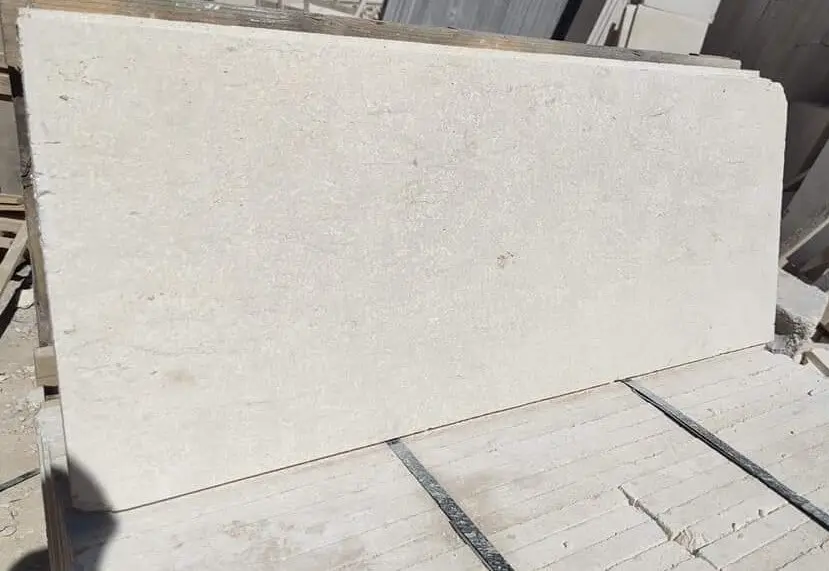
Square patio blocks in Arizona made from natural limestone in the 2.5 to 3.5% porosity range offer the best balance between drainage performance and structural integrity. You’re looking for a material that sheds surface water quickly during monsoon events but doesn’t act as a sponge that holds moisture against the base. At Citadel Stone, we recommend requesting porosity data sheets alongside compressive strength figures when you’re evaluating material options for storm-exposed Arizona patios — both numbers together tell you the real performance story.
- Target compressive strength above 8,000 PSI for hail-exposed field areas
- Specify porosity between 2.5% and 4% for optimal drainage without structural compromise
- Prefer square patio bricks in Arizona with a natural cleft or textured finish — smooth polished surfaces develop water sheeting during heavy rainfall that increases displacement risk
- Avoid materials with visible bedding plane orientation parallel to the surface — storm moisture penetrates those planes and causes delamination over time
- Request batch consistency certificates from your supplier to confirm that porosity and density are uniform across the full delivery quantity
Sourced from established quarry partners, each batch Citadel Stone delivers is inspected for consistency in density and finish before it ships — a detail that matters when you’re relying on uniform drainage behavior across a large patio field.
Base Preparation and Drainage Engineering for Storm Loads
Your base system is doing two jobs during a storm event: absorbing the vertical load of heavy rainfall saturation and resisting the lateral creep that wind and thermal cycling create simultaneously. The standard 4-inch compacted aggregate base that works fine in mild climates is genuinely undersized for Arizona monsoon conditions. A minimum 6-inch compacted crushed aggregate base, with an additional 1-inch bedding layer of coarse sand, gives you the drainage capacity to move storm water laterally before it saturates the sub-grade.
In Phoenix, where caliche layers appear at unpredictable depths, you’ll sometimes hit a near-impermeable sub-grade at 12 to 18 inches. That caliche layer acts as a dam during heavy rainfall — water backs up in the aggregate base and the hydrostatic pressure pushes slabs upward from below. Scarifying the caliche surface and installing perforated drain pipe at the base layer perimeter before backfilling is the field fix that prevents this. It adds half a day to the installation, but it’s the detail that protects a square paver patio in Arizona through fifteen monsoon seasons.
Cross-slope specification matters just as much as base depth. A 2% minimum cross-slope on the finished slab surface moves storm water off the field before it can pond. Building to exactly 2% in a square pavers backyard layout is harder than it sounds — any variation in slab thickness across the batch will create flat spots. Check your delivery for thickness tolerance before you set your screed, not after you’ve laid three rows.
- Minimum 6-inch compacted crushed aggregate base for monsoon-zone installations
- 1-inch coarse sand bedding layer — never fine play sand, which migrates under hydrostatic pressure
- 2% minimum cross-slope on finished surface, verified with a 4-foot level and digital inclinometer
- Perforated drain pipe at base perimeter where caliche sub-grade is confirmed
- Geotextile fabric between sub-grade and aggregate base to prevent fines migration during storm events
- Expansion joint spacing at 12 to 15 feet — tighter than generic specs because Arizona’s thermal swing amplifies joint stress when combined with storm moisture
Square Patio Blocks and Format Selection for Arizona Backyards
Format selection for a square pavers backyard project in Arizona involves a trade-off that storm performance makes more consequential than in lower-stress climates. Larger format slabs — 24×24 and above — offer fewer joint lines for water infiltration, which is a genuine advantage during heavy rainfall. The downside is that larger formats amplify any base settlement into more visible lippage. A 24×24 slab that settles 3mm at one corner creates a trip hazard that a 12×12 grid distributes across multiple smaller differentials.
For most residential square pavers for patio installations in Arizona, the 16×16 and 18×18 formats hit the practical sweet spot. You get manageable joint frequency — around 0.75 linear feet of joint per square foot of field area — without the settlement sensitivity of the large formats. Commercial installations with engineered bases and higher traffic loads can justify the 24×24 format, but the base preparation requirements are proportionally more demanding. For projects requiring complementary stone elements, Square Patio Slabs from Citadel Stone covers specification details that apply across format sizes and site conditions in the region — including base tolerances, slab thickness selection, and joint width guidance for Arizona’s full climate range. Joint width should be held to 3/8 inch minimum to accommodate the thermal expansion range you’ll see across Arizona’s seasonal swing of 80°F or more between winter nights and summer afternoons.
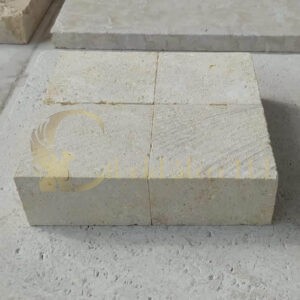
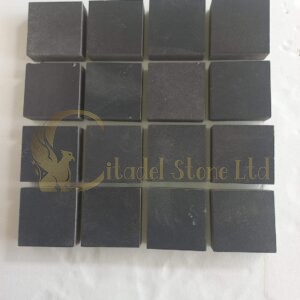
Square patio bricks in Arizona — the smaller modular formats in the 4×8 and 6×6 range — are worth considering for heavily wind-exposed patio perimeters where you want to step down to a lower-mass unit that’s less susceptible to uplift. Running a border course of smaller-format units set in a mortar bed around the perimeter, then transitioning to the larger-format dry-set field, gives you the best of both approaches. Square patio blocks in Arizona installed this way also simplify future repair work, since perimeter units can be reset individually without disturbing the main field.
Joint Sealing and Storm Maintenance for Square Pavers
Polymeric sand in the joints of square pavers for patio areas in Arizona performs differently than the product data sheet suggests when storm conditions are the primary stress factor. Standard polymeric sand relies on a moisture-activated binder that cures over 24 to 48 hours — but Arizona monsoon storms can deliver 1 to 2 inches of rain within 30 minutes of joint installation completion. That rapid saturation before curing is complete washes binder out of the upper joint zone and leaves a surface that looks fine for the first season, then starts losing joint material progressively as each storm event removes more of the compromised matrix.
The practical solution is to delay polymeric sand installation until you have a confirmed 72-hour dry weather window — check forecast data carefully during monsoon season rather than assuming afternoon clearings will be consistent. For square patio slabs in Arizona that have been installed and are now showing joint erosion, a polymeric sand repair product applied dry and activated with a fine mist — rather than a full wet spray — gives you better control over binder retention in the joint upper zone. In Scottsdale, where dust storms precede monsoon events and deposit a fine silt layer on exposed surfaces, you’ll need to blow joints clean before any repair application or the binder bonds to the silt rather than the slab edges.
- Use professional-grade polymeric sand with extended activation time — standard residential products activate too quickly for Arizona’s variable humidity
- Allow 72-hour curing window minimum before the first rain exposure — do not rely on “quick-set” products during monsoon season
- Seal slab surfaces with a penetrating silane-siloxane sealer annually — surface sealers that sit on top of the stone surface peel under thermal cycling and create a debris-collection surface
- Inspect and refill joints after every major storm event in the first two years while the base is still settling
- Reapply joint material every three to five years depending on storm frequency and traffic load
Colour, Finish, and Shade Options for Arizona Patio Slabs
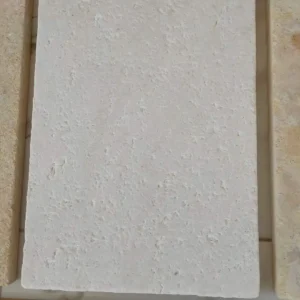
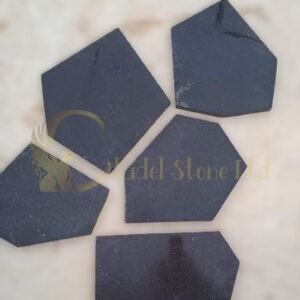
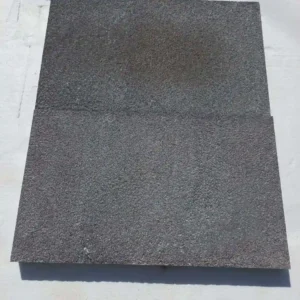
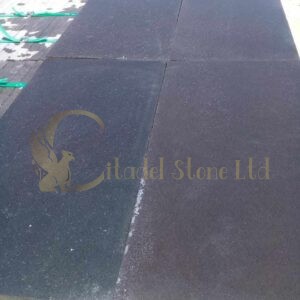
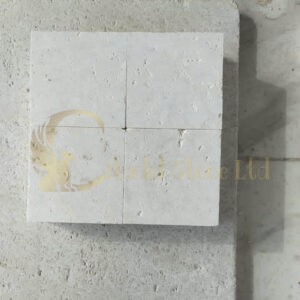
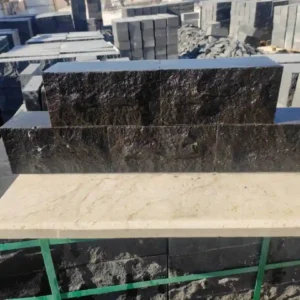
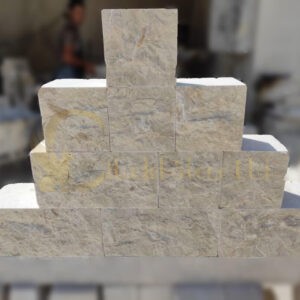
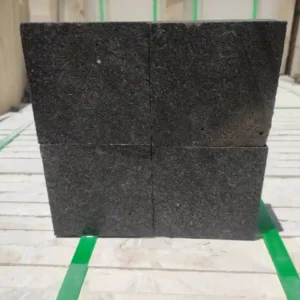
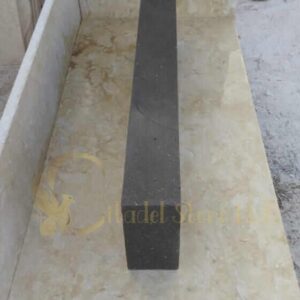
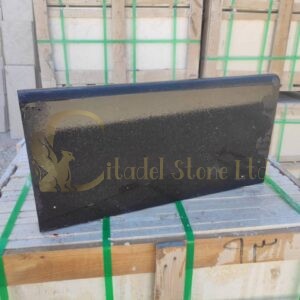
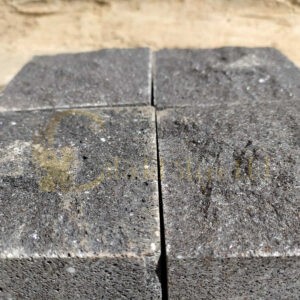
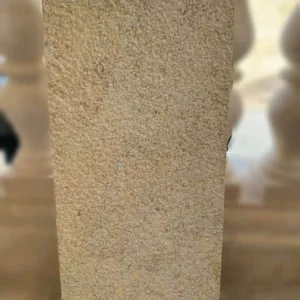
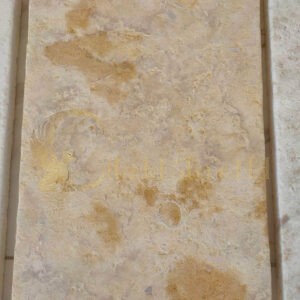
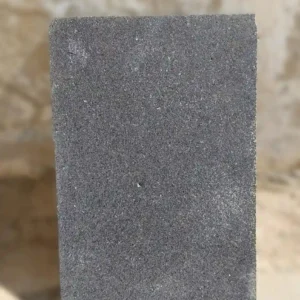
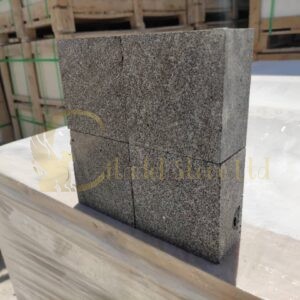
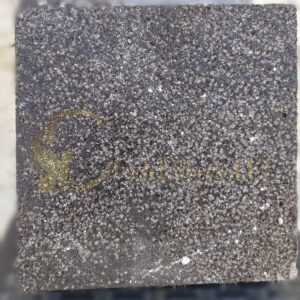
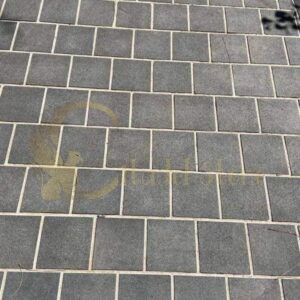
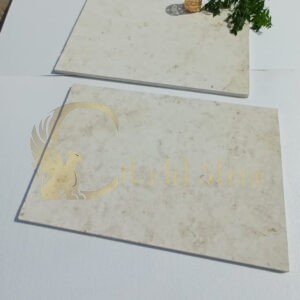
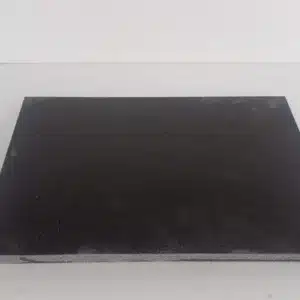
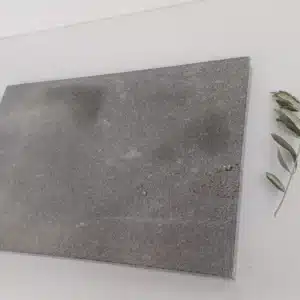
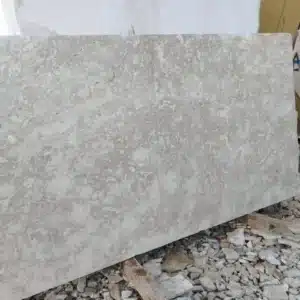
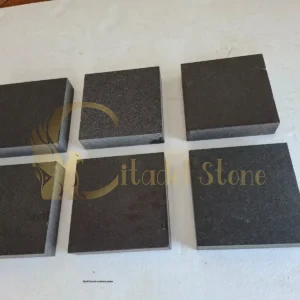
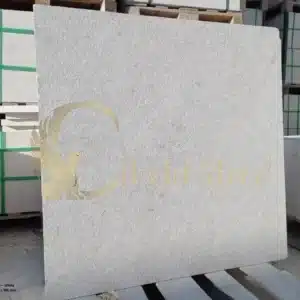
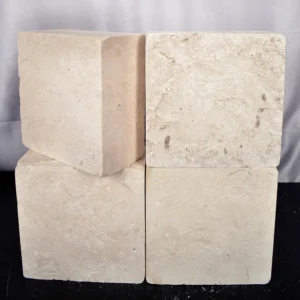
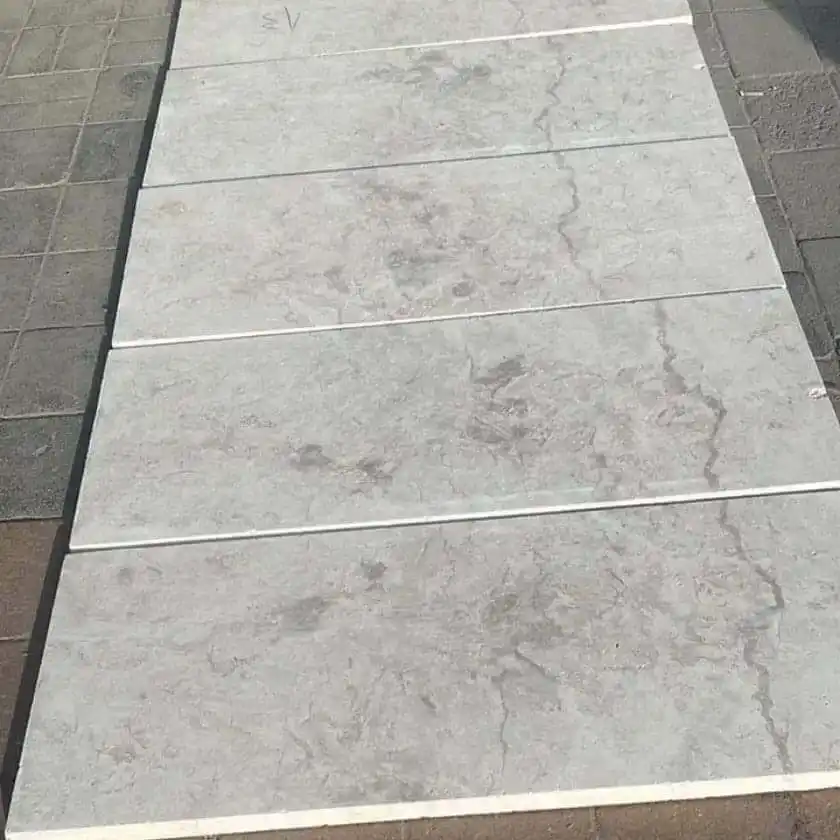
Colour selection for square patio slabs in Arizona goes beyond aesthetics when storm and UV exposure are the primary performance drivers. Dark grey and charcoal tones absorb more radiant energy, which means the slab surface reaches higher peak temperatures — but those darker materials also tend to be denser, higher-compressive-strength options that handle storm impact better. Cream, ivory, and light grey tones reflect more solar radiation and run cooler underfoot, but you’ll find more variability in density and compressive strength across that colour range because the lighter tones come from a wider range of quarry sources.
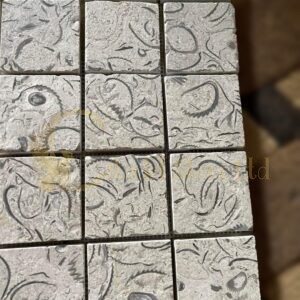
Finish selection has a direct bearing on storm performance. Tumbled and brushed finishes on square patio blocks in Arizona create a naturally textured surface that maintains slip resistance when wet — a critical safety consideration during monsoon rainfall when polished or honed surfaces become genuinely hazardous. The textured surface also disguises minor lippage from base movement better than a flat, uniform finish that makes every 1mm elevation differential visible. You can request sample tiles from Citadel Stone before committing to a full order, which lets you verify finish texture and shade consistency against your project conditions before the truck delivery arrives on site.
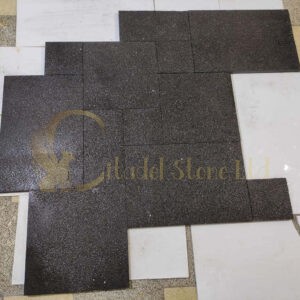
- Dark grey and charcoal formats: denser, higher compressive strength, better storm impact resistance
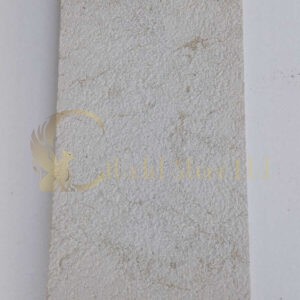
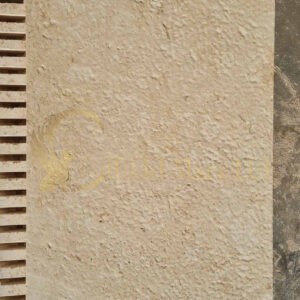
- Cream and ivory formats: lower thermal absorption, wider shade variation across batches — verify consistency before ordering full quantities
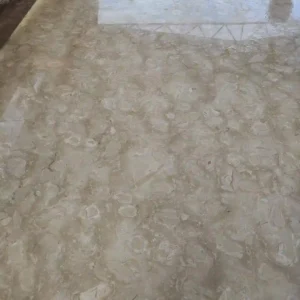
- Silver and graphite tones: mid-range density, visually forgiving of weathering patina from storm mineral deposits
- Tumbled finish: best all-round performance for wet-surface slip resistance and lippage concealment
- Brushed finish: good texture retention, slightly more uniform appearance than tumbled
- Avoid polished or honed finishes for outdoor patio field areas in monsoon-exposed sites
Buy Square Patio Slabs in Arizona — Wholesale from Citadel Stone
Citadel Stone supplies square patio slabs across Arizona in a range of formats, thicknesses, and finishes designed for the state’s specific climate and storm exposure conditions. Available sizes run from 12×12 through 24×24 nominal, in 2-inch and 2.5-inch thicknesses, with finish options including tumbled, brushed, and natural cleft. Colour ranges cover cream, ivory, light grey, silver, dark grey, charcoal, and graphite tones sourced from consistent quarry partners.
You can request sample tiles or full thickness specification sheets before placing your order — a step worth taking on larger projects where batch consistency across the full delivery quantity matters for drainage uniformity. For trade accounts and wholesale enquiries, Citadel Stone’s team can advise on project-specific lead times, format availability, and delivery logistics across Arizona. Warehouse stock typically supports 1 to 2 week lead times on standard formats, with truck delivery available statewide. Custom cut formats and non-standard thicknesses are available with additional lead time — contact the team early in your project timeline to confirm availability before you lock in installation scheduling.
For projects that extend beyond the patio into driveway or entry areas, your Arizona stone specification may benefit from reviewing related hardscape options — Square Driveway Pavers in Arizona covers how square format stone performs under vehicle loads and driveway-specific base requirements in the same regional conditions. Homeowners in Flagstaff, Sedona, and Yuma source Square Patio Slabs through Citadel Stone for Arizona residential and commercial installations.