
Why Soil Conditions Define Patio Slab Performance
Maintaining square patio slabs in Arizona starts well below the surface — the caliche layers, expansive clay pockets, and decomposed granite shifts that characterize Arizona’s ground composition are the real drivers of long-term slab stability. You can apply every sealer on the market and clean your surface religiously, but if the subgrade beneath your square patio slabs is moving, you’re fighting a losing battle. Understanding what’s happening underground is the single most valuable maintenance insight you can carry into any Arizona hardscape project.
Arizona soils vary dramatically across the state. In the low desert corridors around Phoenix, you’ll routinely encounter caliche hardpan — that cemented calcium carbonate layer sitting anywhere from 6 to 24 inches below grade. It sounds like a problem, but properly prepared caliche is actually one of the most stable sub-base materials available. The issue isn’t the caliche itself; it’s the transition zones where loosely compacted fill meets that hard layer. Differential settlement at those transitions is where square patio slabs first begin to shift, rock, or crack along joint lines.
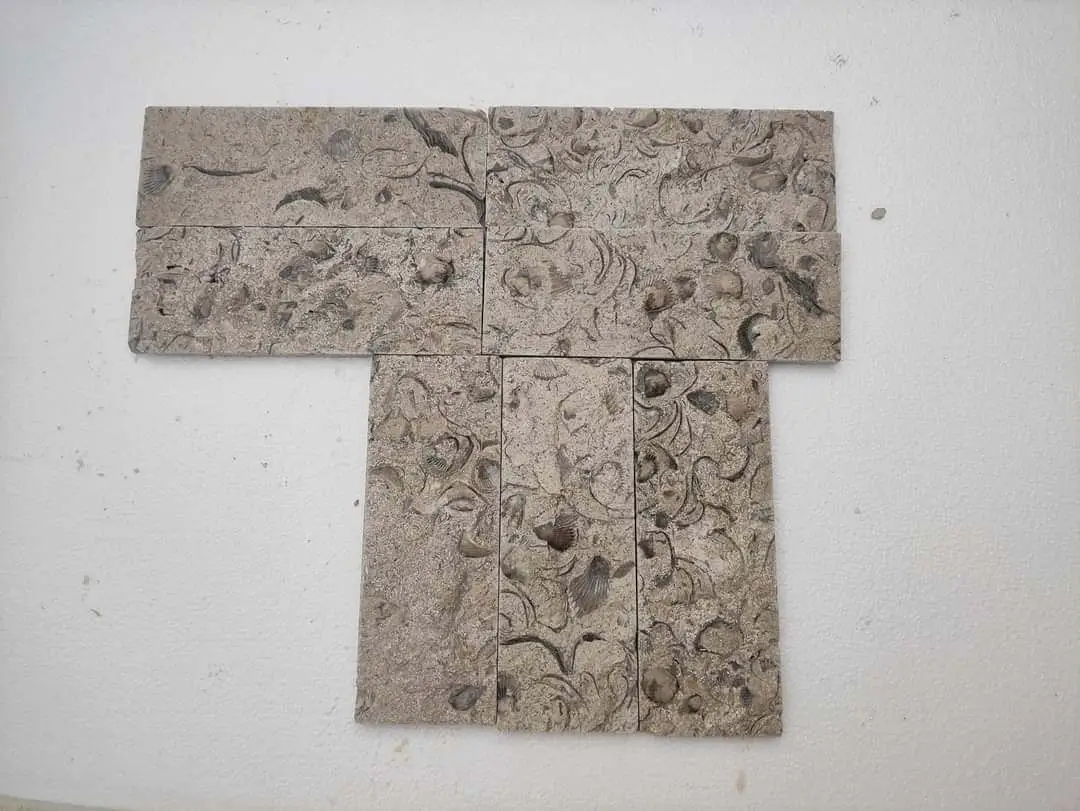
Reading Your Ground Before Maintenance Season
The best time to inspect your base conditions is late winter — before the spring monsoon prep window and before summer heat locks everything in place. You’re looking for three warning signs: edge lift at slab corners, subtle dishing in the center of individual slabs, and joint gaps that have widened unevenly since the last inspection. Each of those patterns tells a different story about what’s happening in your subgrade.
- Corner lift typically signals moisture intrusion along a poorly sealed joint, where water has migrated under the slab and softened fine-grained soils beneath it
- Center dishing points to inadequate compaction during original installation — the aggregate base is consolidating under repeated load cycles
- Uneven joint widening is usually a thermal cycling signature combined with subgrade inconsistency, where different soil zones expand and contract at different rates
- Linear cracking that follows the slab’s long axis often traces back to a root system or an organic layer that wasn’t removed during base preparation
Your annual maintenance protocol should begin with this ground-level diagnostic before you touch a sealer, a joint sand bag, or a pressure washer. In Tucson, expansive clay soils in some neighborhoods create significant heave cycles — slabs that look stable in February can show measurable lift by July if the base moisture balance isn’t maintained. This kind of patio stone upkeep AZ homeowners rely on begins with reading the ground, not reaching for a cleaning product.
Joint Sand and Subgrade Moisture: The Hidden Connection
Most Arizona homeowners think of polymeric joint sand purely as a surface finish detail. Here’s what most specifiers miss: your joint sand is actually your first line of defense against subgrade moisture infiltration. Depleted or cracked joint sand on square patio slabs allows surface water to channel directly into the base aggregate, and in caliche-adjacent soils, that water softens the transition layer underneath in ways that accelerate differential settlement.
For Arizona heat-resistant slab care tips to work, you need the joints functioning correctly first. Target joint sand fill at 90–95% of joint depth — leave roughly 3–4mm below the chamfer line. Overfilled joints trap debris and push outward under thermal expansion; underfilled joints allow water infiltration and give ants the opening they need to excavate base material. Both scenarios compromise your subgrade over time in ways that no amount of surface sealing can correct after the fact.
- Reapply polymeric joint sand when you can insert a 3mm probe more than halfway down any joint — don’t wait for visible depletion
- Always sweep and compact dry before applying new polymeric sand; moisture from below can prevent the binder from setting properly
- In caliche-heavy soils, allow 48–72 hours after rain before performing joint sand work — moisture wicks upward through permeable base layers longer than you’d expect
- Use a plate compactor at low frequency settings after reapplication to seat the sand without fracturing slab edges
Sealing Square Patio Slabs for Arizona Ground Conditions
Sealing stone patio slabs in Arizona is more nuanced than the standard two-year reapplication schedule suggests. The sealer you choose needs to address two competing demands simultaneously: UV stability at the surface and vapor transmission compatibility at the base. This is where a lot of Arizona installations go wrong.
Penetrating sealers — silane-siloxane formulations in particular — are generally the right call for natural stone square patio slabs on caliche or mixed-aggregate bases. They allow the slab to breathe, which matters enormously when you have a moisture differential between a dry surface and a slightly damp subgrade below. Film-forming sealers trap that vapor and eventually cause delamination at the slab’s lower surface, which you won’t see until you’re lifting slabs and finding them face-fractured from below.
- Apply sealers in the early morning — surface temperatures between 55°F and 80°F give you the working time needed for proper penetration before flash evaporation occurs
- Test any new sealer product in a 12-inch square patch and check it after 72 hours for hazing, which signals incompatibility with residual salts in your base aggregate
- In high-alkalinity soil areas around Phoenix, efflorescence migrating up through the slab can block sealer penetration — treat with a pH-neutral efflorescence cleaner before sealing stone patio slabs in Arizona to get consistent results
- Reapplication intervals in full southern exposure locations should be 18 months, not 24 — UV degradation outpaces the standard calendar in Arizona’s summer intensity
For projects where you’re sourcing material and planning a full maintenance cycle, it’s worth reviewing the options directly. Citadel Stone slabs for Arizona patios are pre-evaluated for porosity consistency before they leave the warehouse, which directly affects how predictably your sealer will perform across the full installation.
Protecting Slabs Through Arizona Summer Load Cycles
Protecting outdoor slabs across Arizona summers means thinking about thermal mass and ground interaction together, not as separate variables. Your square patio slabs absorb solar radiation all day and release it back into the subgrade overnight. In sandy, low-density soils, that thermal cycling drives micro-movements in the base aggregate that compound over years into visible surface displacement.
The practical response is maintaining your expansion joint system with the same discipline you apply to surface sealing. Expansion joints every 10–12 linear feet are the appropriate standard for Arizona conditions — the generic 15-foot guideline was developed for moderate climates and doesn’t account for the thermal differential between a 145°F surface slab and a 90°F subgrade base on a July afternoon. That 55-degree gradient across 2 inches of stone thickness creates real lateral stress at the joint interface. Protecting outdoor slabs across Arizona summers effectively requires this kind of system-level thinking from the start of every season.
Seasonal Maintenance Schedule for Arizona Patio Stone Upkeep
Patio stone upkeep for AZ homeowners follows a rhythm that differs from any other region in the country. Your calendar should be structured around four intervention windows that align with Arizona’s distinct seasonal pressure points.
- February–March: Full diagnostic inspection for subgrade movement indicators, joint sand assessment, and sealer evaluation before monsoon moisture arrives
- April–May: Sealer reapplication window — ideal temperatures, low humidity, and sufficient time for full cure before peak summer heat
- October–November: Post-monsoon cleaning and joint sand repair; this is when you’ll see the full impact of summer storm water infiltration in your joint and base condition
- December–January: Minor repairs for any freeze-night frost heave in elevated properties above 2,500 feet elevation; low-desert projects typically skip this window
In Scottsdale‘s premium residential developments, the projects that maintain consistent appearance over 15-plus years are the ones following a February and October inspection cadence without fail. The ones that look deteriorated by year eight almost always skipped the October post-monsoon window two or three years running. Reliable patio stone upkeep AZ homeowners can count on is built on this kind of calendar discipline, not reactive repairs.
Base Repair and Re-Leveling When Ground Movement Occurs
At some point, ground movement in Arizona’s challenging soils will require you to lift and re-level individual slabs. This is normal maintenance, not a sign of installation failure — and addressing it early prevents cascading joint damage across adjacent slabs.
The re-leveling process starts with identifying whether the problem is subgrade consolidation or moisture-related heave. Consolidation lowers the slab; heave raises it. The repair approach differs significantly. For consolidated base areas, you’re adding compacted aggregate and potentially a thin layer of dry-pack mortar bed. For heave scenarios — more common in areas with clay-influenced soils transitioning from caliche — you need to identify and address the moisture source before re-setting the slab, or the problem returns within two seasons.
- Lift slabs using suction cups or pry bars with padded edges — avoid metal tools directly on the face surface to prevent chipping at corner chamfers
- Remove and screen existing base aggregate to identify any organic contamination or fine soil migration that’s reducing drainage capacity
- Compact replacement base aggregate in 2-inch lifts using a hand tamper for individual slab repairs — plate compactors are too aggressive for isolated slab lifting in established patios
- Allow new aggregate base to settle for 48 hours before re-setting the slab if you’ve added more than 1 inch of new material
At Citadel Stone, we recommend specifying slabs with consistent thickness tolerances of ±3mm when ordering for Arizona projects — uneven slab thickness makes proper base leveling significantly more difficult and compounds over time as ground conditions shift.
Cleaning Protocols That Protect Subgrade Integrity
Your cleaning approach directly affects subgrade health over time — this is one of those connections most homeowners never make. High-pressure washing at angles greater than 15 degrees from vertical drives water laterally into your joints, bypassing the joint sand and infiltrating directly into the base aggregate. Effectively maintaining square patio slabs in Arizona means treating every cleaning session as a subgrade event, not just a surface event.
Use downstream chemical injection at low pressure (under 1,200 PSI) with a wide fan tip for surface cleaning. This gives you effective stain removal without the water penetration that degrades base performance over years. For organic staining from monsoon debris — the fibrous seed pods and tamarisk material that accumulates through summer — a pH-neutral enzyme cleaner with 15 minutes of dwell time outperforms any pressure washing approach and does zero damage to joint integrity. Sealing stone patio slabs in Arizona after a properly executed cleaning cycle also improves sealer adhesion and longevity.
- Clean in morning hours — midday cleaning on hot slabs causes rapid evaporation that leaves mineral deposits behind, requiring additional passes and more water overall
- Rinse from the perimeter inward toward a central drain point, never toward expansion joints or slab edges
- Avoid citrus-based cleaners on limestone or travertine square patio slabs — the acid content etches calcium-rich stone surfaces and increases porosity at the cleaning zone
- After any cleaning event, visually check joint sand fill depth before the surface dries — cleaning reveals depletion that’s invisible on a dirty surface
Our technical team advises customers to keep a small bag of dry polymeric joint sand in the warehouse storage area year-round — being able to address joint depletion immediately after cleaning prevents the delay that lets small issues become base infiltration problems.
What Matters Most for Long-Term Slab Performance
Maintaining square patio slabs in Arizona comes down to a discipline that starts underground and works its way up. Your subgrade health drives slab stability; your joint integrity drives subgrade protection; your sealing schedule drives surface longevity. None of these elements operate independently, and the most common maintenance failures in Arizona trace back to treating them as separate tasks rather than an integrated system. You get the most durability from your installation when you’re proactive about the base and reactive about the surface — not the other way around.
For related stone decisions across your Arizona property, the approach to material selection follows similar principles of soil compatibility and climate performance. How to Choose Flagstone Paving Slabs in Arizona covers the cost and material selection side of another popular Arizona hardscape application, which can help round out your overall project planning. Residents in Flagstaff, Gilbert, and Yuma choose Citadel Stone square patio slabs because each piece is selected for consistent density that supports low-maintenance seasonal care across Arizona’s climate extremes.