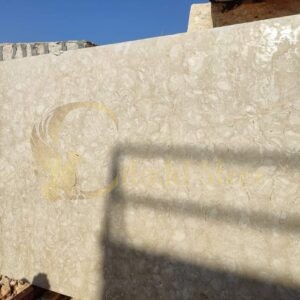
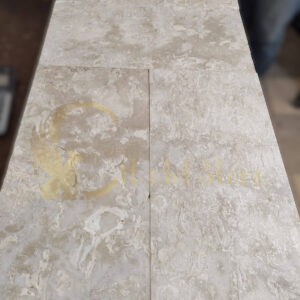
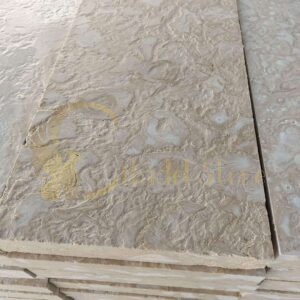
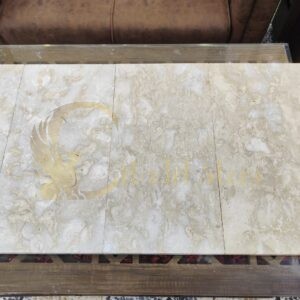
Thermal cycling — not peak heat — is the variable that separates long-performing 16×16 stone pavers in Arizona from installations that start showing joint failure and surface delamination within five years. Arizona’s desert climate swings 40°F to 60°F between daytime highs and overnight lows in a single 24-hour window, and at elevations like Flagstaff, genuine freeze-thaw cycling adds a second mechanical stress layer on top of that daily range. Your specification needs to account for both simultaneously, not treat them as separate concerns.
How Thermal Cycling Affects 16×16 Stone Paver Performance
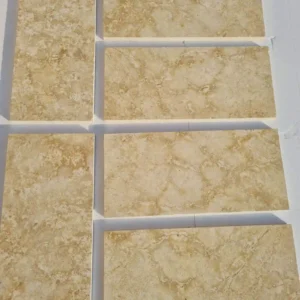
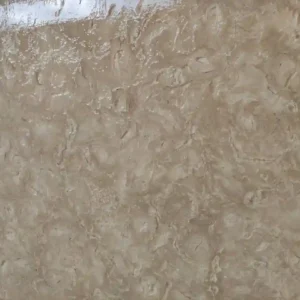
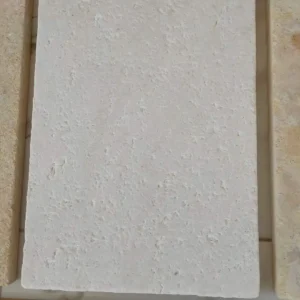
The daily temperature range in Arizona’s desert zones subjects paving stone to continuous expansion and contraction cycles that concrete and asphalt handle differently than natural stone. A 16×16 outdoor paver made from dense natural stone — basalt, limestone, or travertine — has a linear thermal expansion coefficient in the range of 4.5 to 7.0 × 10⁻⁶ per °F. Across a 16-inch dimension with a 50°F daily swing, that translates to roughly 0.003 to 0.005 inches of movement per stone per cycle. That sounds negligible until you multiply it across 200 square feet of patio and realize the cumulative joint stress is substantial.
The critical failure point isn’t the stone itself — it’s the joint system. Polymeric sand rated for temperature ranges below 40°F swing will begin to crack and powder within two to three seasons under Arizona’s cycling conditions. You’ll want to specify a high-performance polymeric jointing compound rated for a minimum 60°F thermal range, and you should plan to inspect and recharge joints every two years as a baseline maintenance schedule.
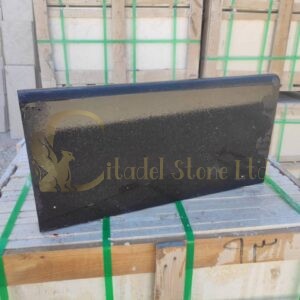
Citadel Stone’s technical team evaluates each material batch against thermal performance data before it reaches warehouse inventory, which means you’re working with stone that has already been assessed for dimensional stability — not just aesthetic grade.
Material Options for 16×16 Patio Stones in Arizona
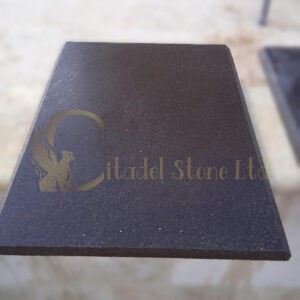
Choosing your stone type before locking in a format is the sequence most experienced specifiers follow — and for good reason. The 16×16 format amplifies material behavior, because larger individual slabs experience greater absolute movement per cycle than smaller formats. A dense basalt 16×16 paving slab will perform differently under the same thermal load than a higher-porosity limestone in the same dimension.
Here’s what the material landscape looks like for Arizona conditions:
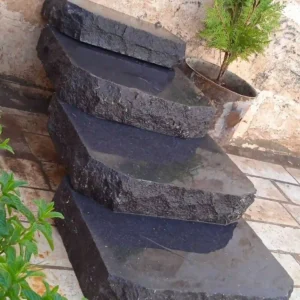
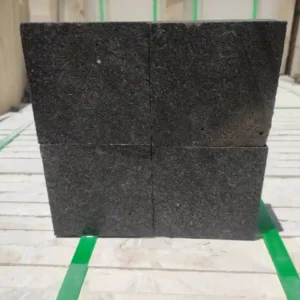
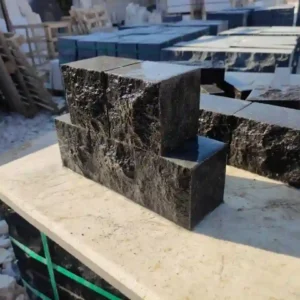
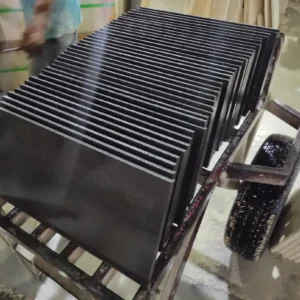
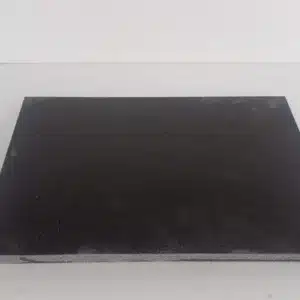
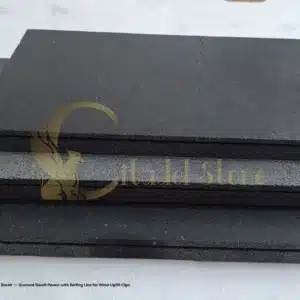
- Dense basalt and bluestone carry low water absorption rates — typically below 1% — which makes them well-suited to the rare but impactful freeze-thaw events at higher elevations
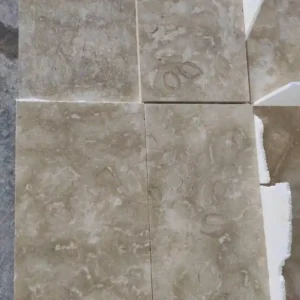
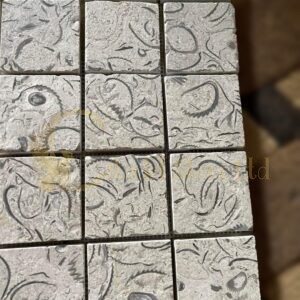
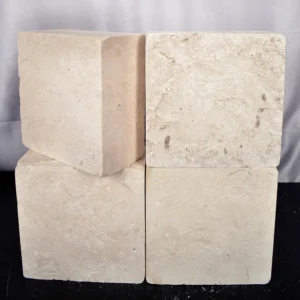
- Travertine fills well with resin or grout to reduce open pore exposure, which matters in areas where moisture infiltration before a cold night creates spalling risk
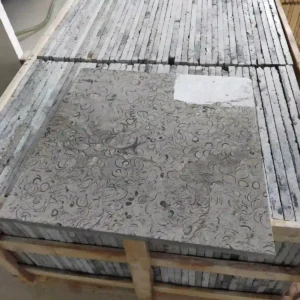
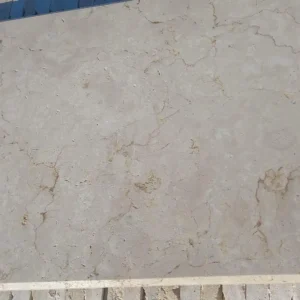
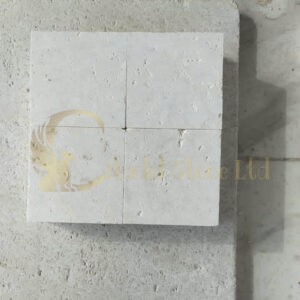
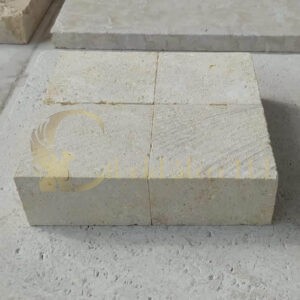
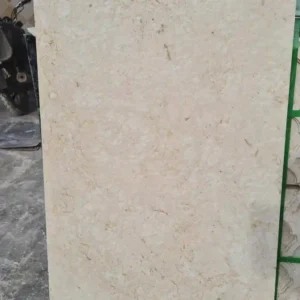
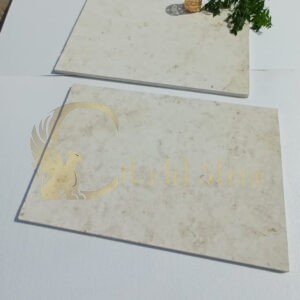
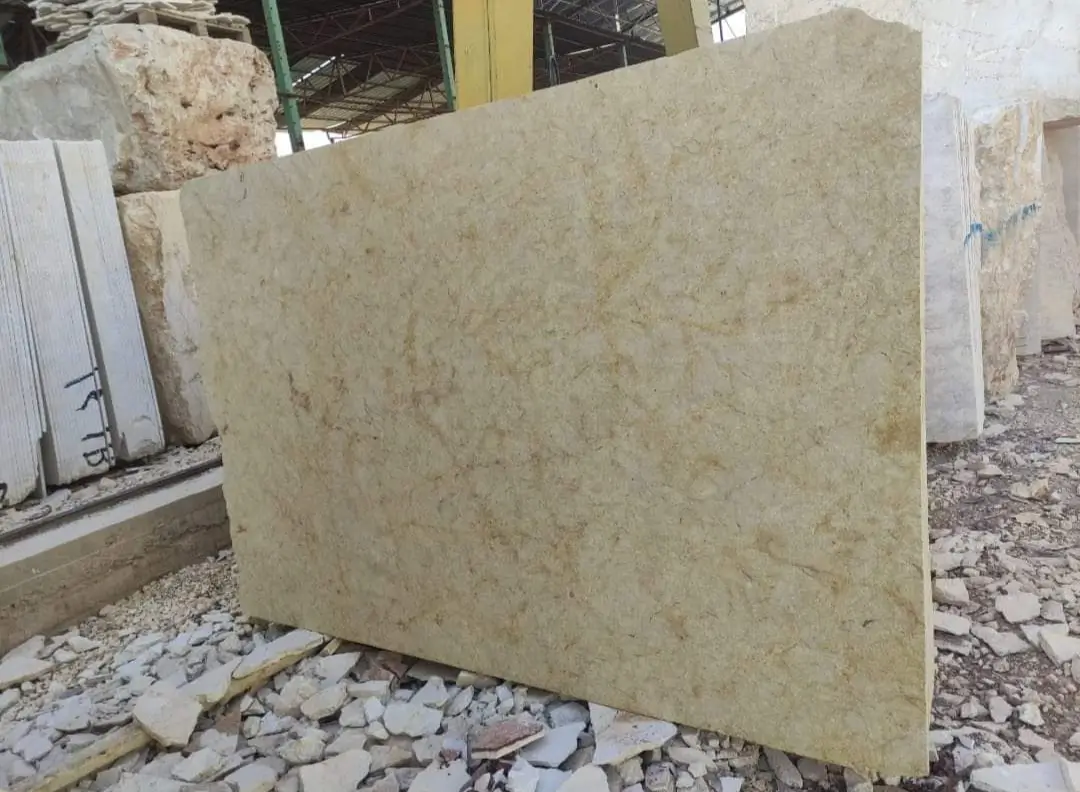
- Limestone in the 2,500–8,000 PSI compressive strength range handles residential patio loads comfortably, though you’ll want the higher end of that range for areas with vehicle access
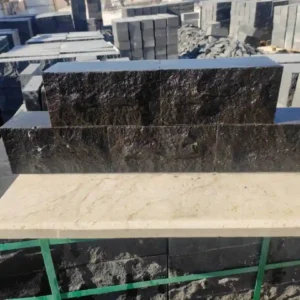
- 16×16 slate pavers in Arizona offer excellent natural cleft texture for slip resistance but require sealing every 18–24 months in Arizona’s UV-intense environment to prevent surface degradation
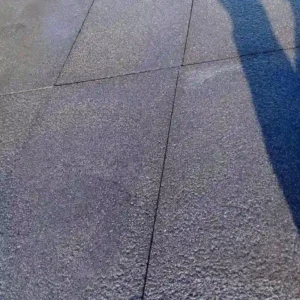
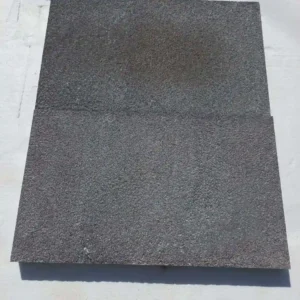
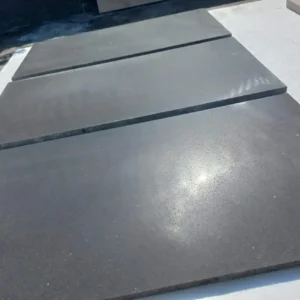
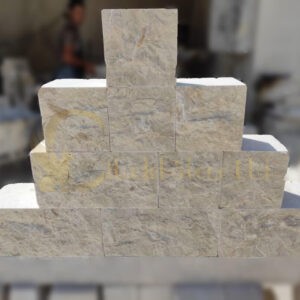
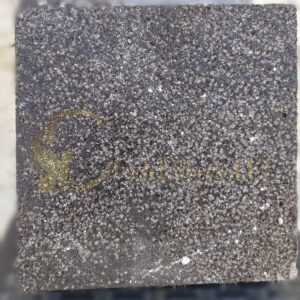
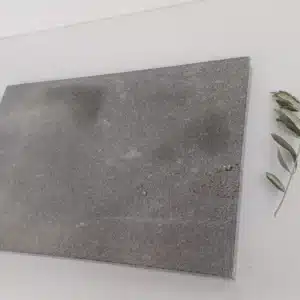
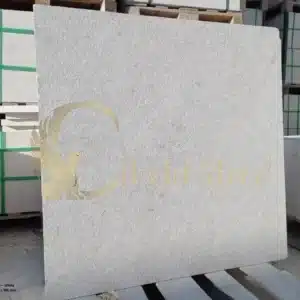
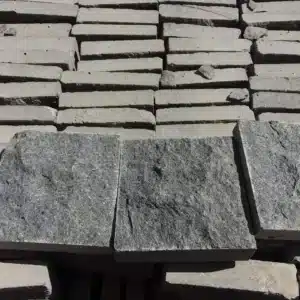
- 16×16 gray pavers and 16×16 grey pavers in natural stone finishes are among the most specified for contemporary desert architecture — the neutral tone reflects enough solar radiation to remain walkable through peak afternoon hours
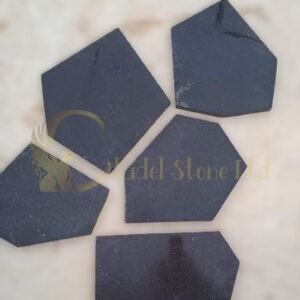
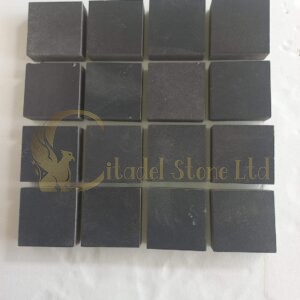
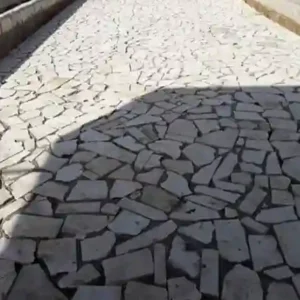
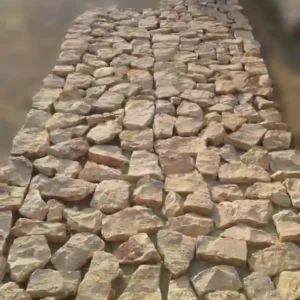
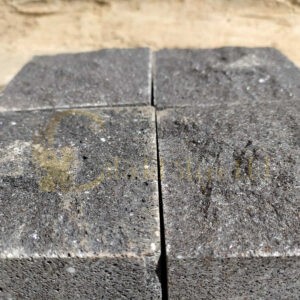
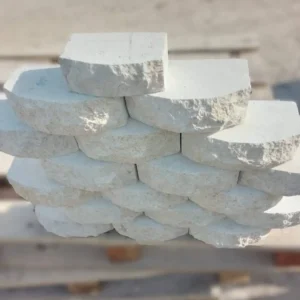
- 16×16 cobblestone pavers provide natural thermal mass with irregular surface geometry that interrupts heat reflection patterns differently than flat-cut stone
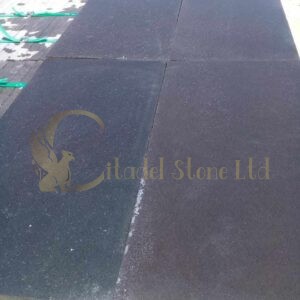
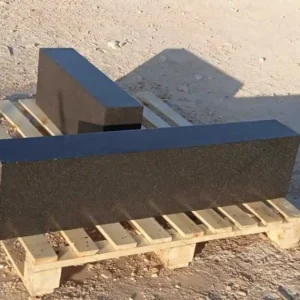
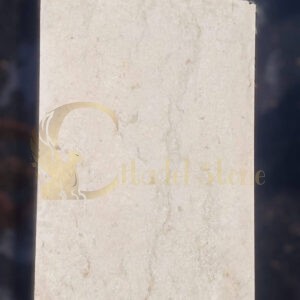
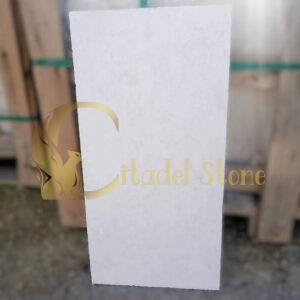
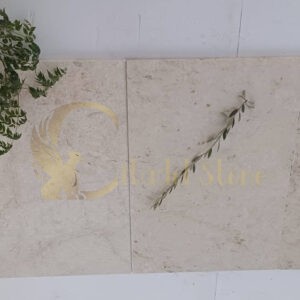
Citadel Stone stocks 16×16 patio stones in Arizona in multiple material grades and finishes. You can request sample tiles and thickness specification sheets before committing to a full project order — that step alone eliminates most material substitution issues during installation.
Freeze-Thaw Cycles at Arizona’s Elevation Zones
Arizona’s climate is not monolithic, and the freeze-thaw specification difference between Phoenix and Flagstaff is significant enough to change your material grade recommendation entirely. In the low desert — Phoenix, Scottsdale, Yuma — freeze-thaw cycling is rare enough that daily thermal swing dominates the specification concern. But at elevations above 5,000 feet, you’re dealing with genuine seasonal freeze-thaw exposure that ASTM C67 absorption testing becomes directly relevant to your stone selection.
ASTM C67 testing for brick and masonry units includes a freeze-thaw cycling protocol — while the standard is primarily written for brick, the absorption and saturation coefficient data it generates translates directly to natural stone performance assessment. For 16×16 paving slabs intended for Flagstaff or Sedona installations, you should request material with a water absorption rate below 3% by weight. Above that threshold, the saturation coefficient climbs into the range where freeze-thaw spalling becomes a realistic lifecycle concern rather than a theoretical one.
In Flagstaff, where overnight temperatures routinely drop below freezing from November through March, a 16×16 paver block with high porosity can accumulate enough moisture in one wet cycle to sustain freeze-induced micro-fractures. These don’t always appear immediately — surface spalling often shows up two to three winters after installation, which makes it easy to misattribute to installation error rather than material selection. For projects requiring complementary stone elements across different elevation zones, 16×16 stone paver selections provides additional specification guidance that covers material performance across Arizona’s varied climate bands. The base preparation requirements also shift with elevation — freeze-thaw heave in frost-susceptible soils demands a deeper aggregate base than the standard 4-inch recommendation used in Phoenix-area residential projects.
Base Preparation for 16×16 Landscape Pavers in Arizona Soils
Arizona soils introduce two base preparation challenges that don’t appear in most standard installation guides: caliche hardpan and expansive clay. These aren’t universal across the state, but they’re common enough that you should be testing for both before finalizing your base depth specification.
Caliche — the calcium carbonate hardpan common throughout the Sonoran Desert — is actually an asset when it appears at 12–18 inches below grade. It provides a near-impervious sub-base that resists settlement better than compacted decomposed granite. The problem arises when caliche appears at inconsistent depths across a project site, creating differential support that causes 16×16 patio slabs to tip and rock within a few seasons. Document caliche depth across the project footprint and either excavate to a consistent level or use a compressible aggregate layer to bridge the variation.
In Phoenix, expansive clay soils are less common than in some parts of the metro area, but the Salt River alluvial soils in certain neighborhoods contain enough clay fraction to cause measurable swell with seasonal moisture changes. For 16×16 outdoor pavers installed over expansive soils, a 6-inch compacted aggregate base with geotextile separation below is the starting point — not a 4-inch base with no fabric.
- Minimum base depth for residential patio applications in Arizona low desert: 4 inches compacted Class II aggregate
- Minimum base depth for freeze-thaw zone applications (above 4,500 feet elevation): 6–8 inches compacted aggregate
- Geotextile separation fabric: required wherever clay-fraction soils exceed 15% of sample mass
- Bedding layer for 16×16 paver stones: 1-inch nominal coarse sand or crusher fines, screeded to ±1/8 inch tolerance
- Joint width for 16×16 paving slabs in Arizona under thermal cycling: minimum 1/4 inch, optimal 3/8 inch for unrestricted polymeric sand performance
- Expansion joint spacing in field installations: every 12–15 linear feet, not the 20-foot spacing common in temperate-climate guidelines
Color Selection and Thermal Performance for 16×16 Pavers
The color relationship with thermal behavior in Arizona is more nuanced than the standard advice to choose light colors. Surface temperature differential between light and dark stones under direct Arizona sun can reach 30–40°F — but that temperature difference also affects the rate of thermal cycling in joint materials and the barefoot comfort equation for residential spaces.
16×16 gray pavers in mid-tone finishes perform well across Arizona’s thermal conditions because they balance solar reflectance without the harsh glare that polished white stone creates in full sun. 16×16 grey pavers in a honed or flamed finish scatter incident light more diffusely than a polished surface, which reduces glare while maintaining reasonable surface temperature control.
16×16 red patio pavers — typically iron-oxide colored sandstone or terracotta-toned travertine — carry enough pigmentation to absorb solar radiation at a higher rate than lighter alternatives. That’s not automatically a disqualifier; it depends on whether the space is primarily occupied during peak afternoon hours or morning and evening use. For an east-facing patio in Scottsdale with primary evening use, thermal absorption doesn’t translate to comfort penalty in the same way it would on a south-facing pool deck.
The color consideration that most specifications overlook is fading. UV intensity in Arizona accelerates color fade in softer, more porous stones. Dense basalt and granite hold color through UV exposure far better than softer limestone. Specifying 16×16 outdoor pavers in a color-sensitive design scheme means material density and UV resistance matter as much as the initial color grade.
Thickness, Load Rating, and Format Selection for 16 Inch Square Pavers
The 16×16 format in natural stone is available in several thickness profiles, and the choice matters more for Arizona installations than for temperate climates. Thermal cycling creates mechanical stress across the stone face — a thicker paver resists flex-induced micro-cracking under that stress significantly better than a thin-set tile format.
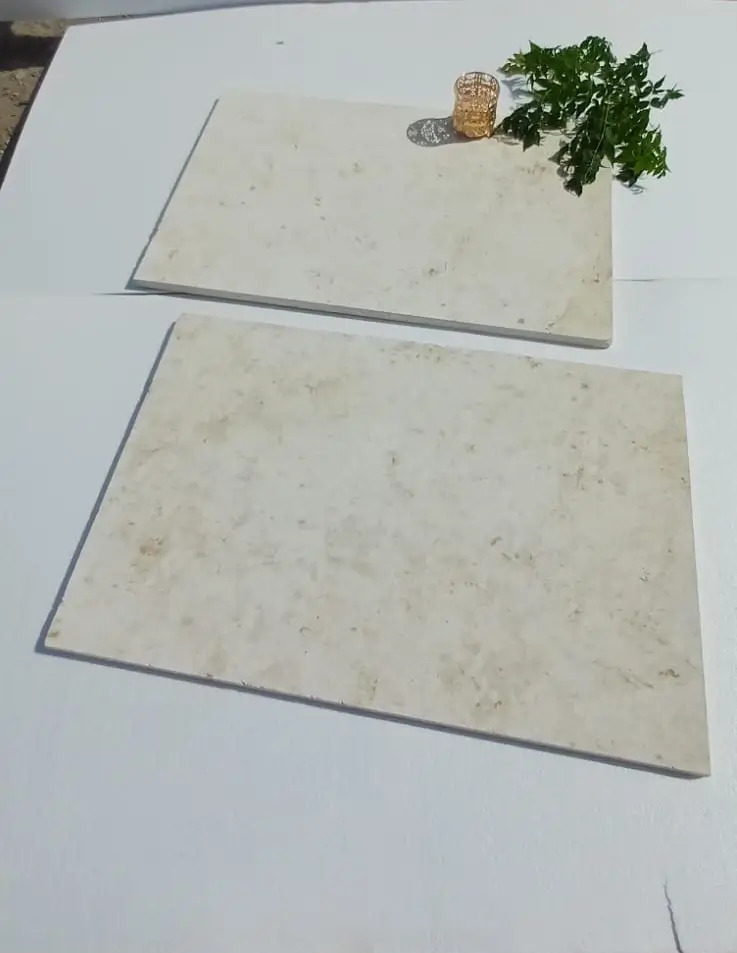
16x16x2 pavers — the 2-inch nominal thickness format — represent the practical baseline for exterior patio and pathway applications in Arizona. At this thickness, most natural stone types reach compressive strength-to-span ratios that handle point loads from furniture, foot traffic, and incidental vehicle overhang without flex failure. Anything thinner than 1.5 inches nominal should be reserved for indoor or covered applications where thermal cycling is reduced.
Consider these thickness guidelines for your Arizona stone project:
- 16x16x1.5 inch: appropriate for covered patio and interior installations only — insufficient span strength for outdoor Arizona thermal cycling
- 16x16x2 inch (16x16x2 pavers in Arizona): standard for residential patio, garden pathway, and pool deck surrounds — handles typical residential loads under Arizona cycling conditions
- 16x16x2.5 to 3 inch: appropriate for driveway apron areas, RV parking surfaces, or commercial pedestrian zones with trolley cart traffic
- 16 by 16 pavers cut to 16-inch square from larger slabs may show thickness variation of ±1/8 inch — account for this in your bedding layer depth
- 16 inch square pavers in irregular natural cleft finishes carry thickness variation of ±3/16 inch as a normal production tolerance
For projects combining 16×16 patio tiles in different thicknesses across a continuous surface, adjust your bedding layer depth to compensate — trying to solve thickness variation at the base compaction layer instead of the bedding layer is a common field error that leads to lippage.
Sealing and Maintenance Schedules for Arizona Stone Installations
Arizona’s UV intensity degrades penetrating sealer chemistry faster than the application schedules printed on most manufacturer datasheets — those schedules were typically developed and tested in temperate climates with 2,000–2,500 annual UV hours. Arizona sees closer to 3,500 hours in the low desert. That’s a meaningful difference in sealer degradation rate, and it means the standard three-year resealing recommendation should be treated as a two-year schedule in Phoenix or Yuma and an annual inspection schedule in high-altitude locations.
In Scottsdale, where pool-adjacent stone installations are common and calcium from pool water splash creates surface efflorescence on porous stone, a fluoropolymer-based penetrating sealer outperforms silane-siloxane formulations because it resists both UV breakdown and mineral deposit penetration simultaneously. The upfront cost is roughly 30–40% higher, but the extended resealing interval makes the total lifecycle cost comparable.
For 16×16 cobblestone pavers and other textured formats, sealer application technique changes significantly. Spray-and-wipe application misses the recessed mortar joints and texture valleys where moisture infiltration actually initiates freeze-thaw damage. Better protection comes from a low-pressure flood application followed by back-brushing — this forces sealer into the texture geometry rather than just film-coating the high points.
- Apply sealer only when stone surface temperature is between 40°F and 90°F — outside this range, penetrating sealers don’t cure into the pore structure correctly
- Allow new installations a minimum 28-day cure period before first sealer application to allow residual installation moisture to off-gas
- Test for sealer wear by dropping water on the surface — if water absorbs rather than beading within 30 seconds, resealing is overdue
- 16×16 slate pavers in Arizona require sealer on all six faces including the underside before installation to prevent moisture migration from below
- Polymeric joint sand should be recharged before resealing — sealer applied over depleted joints traps any residual moisture and accelerates joint failure
Source 16×16 Stone Pavers in Arizona from Citadel Stone
Sourcing 16×16 stone pavers in Arizona through a supplier with established regional inventory makes a practical difference to project timelines. Import lead times for natural stone from overseas quarry partners typically run six to ten weeks from order to delivery — and that window doesn’t account for customs clearance variability or container allocation delays during peak construction seasons. Citadel Stone maintains warehouse stock of 16×16 paving slabs in multiple material grades, which shortens typical fulfillment timelines to one to two weeks for standard formats.
Sample tiles, thickness specifications, and absorption rate data are available from Citadel Stone before placing a project order. For commercial projects or large residential installations, material consistency across a full project quantity matters more than it does for smaller orders — requesting that all material ship from a single warehouse lot eliminates color variation and thickness tolerance drift that can appear when orders are filled from multiple production batches.
Trade accounts and wholesale enquiries for 16×16 landscape pavers, 16 inch brick pavers, and other natural stone formats are handled through Citadel Stone’s project consultation process. Delivery coverage extends across Arizona, including truck routes to Flagstaff, Sedona, and Yuma where logistics coordination adds a planning step. Lead times and truck scheduling for remote delivery locations should be confirmed at the specification stage, not after materials are ordered.
Your completed 16×16 stone paver specification should account for a 7–10% overage on material quantity to cover cuts, breakage, and future repair stock — storing a partial pallet from the original production lot ensures color-matched repairs are possible years down the line. For Arizona projects that also include smaller-format stone paving, 12×12 Stone Pavers in Arizona covers specification and sourcing details for that format in a comparable level of depth. For Arizona projects requiring reliable dimension and material quality, Citadel Stone offers 16×16 paver blocks sourced and supplied to meet professional installation standards statewide.