




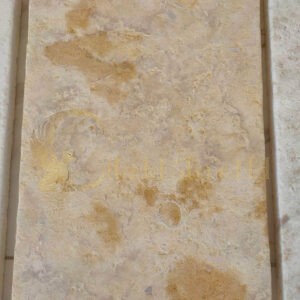
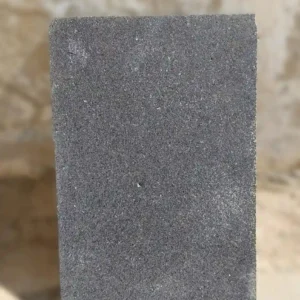
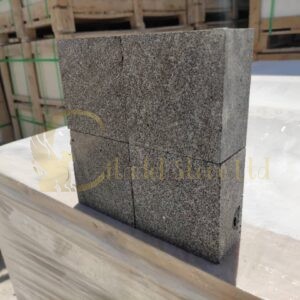








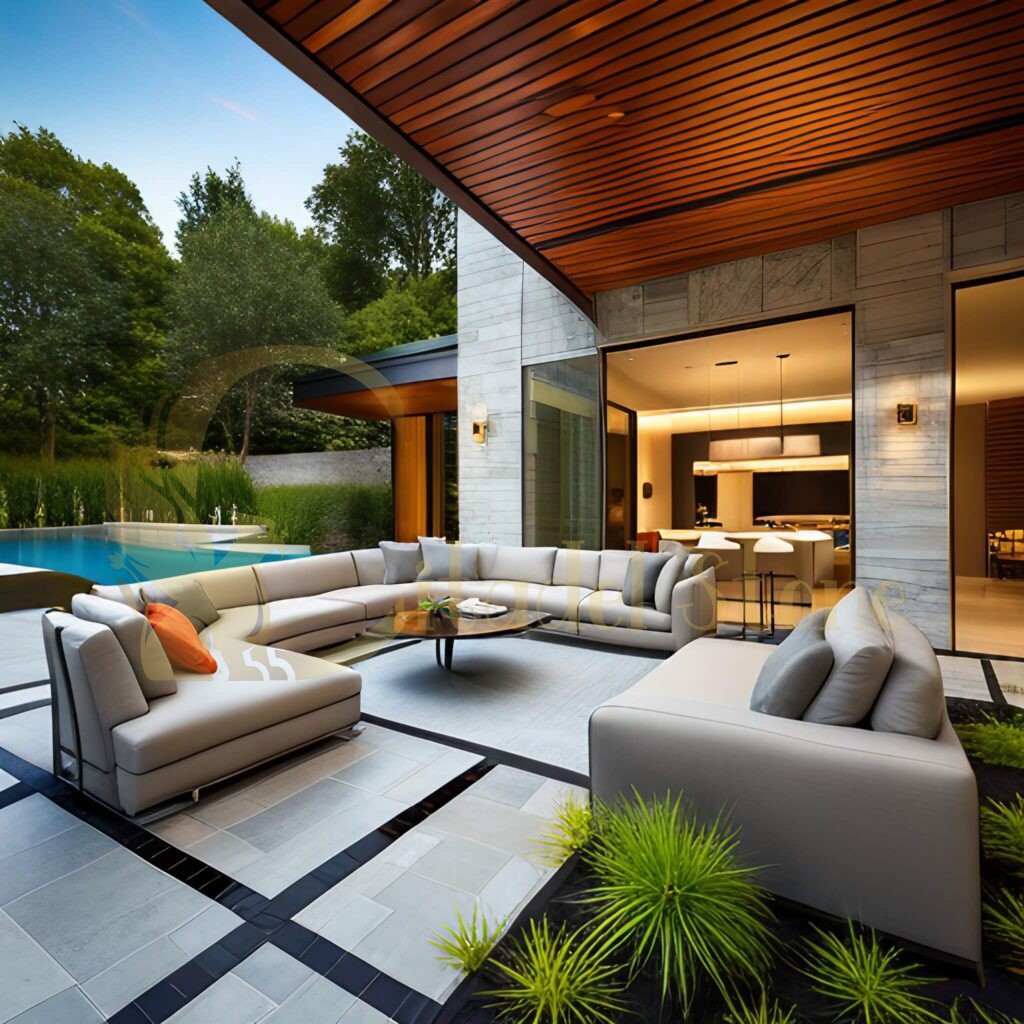
Drainage Demands That Define Bluestone Tiles in Arizona
Bluestone tiles in Arizona perform at their best when the drainage system beneath them is engineered for the region’s rainfall behavior, not just its heat. Arizona’s monsoon season delivers intense, short-duration storms that can drop two inches of rain in under an hour — a hydraulic load most residential drainage designs weren’t built to handle. Your base preparation needs to account for rapid saturation and equally rapid drying cycles, both of which stress the tile-to-base interface in ways that gradual moisture exposure doesn’t. Getting this foundation detail right is where long-term performance is won or lost.
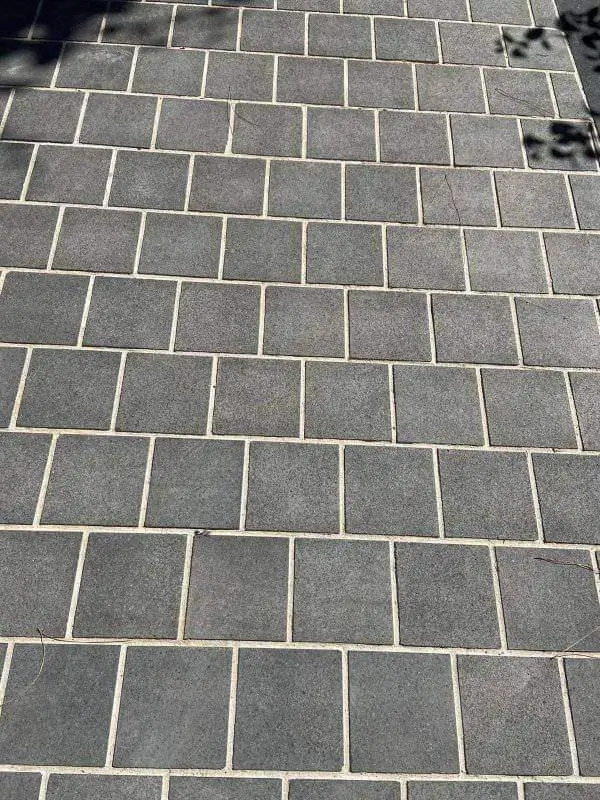
Understanding Arizona Rainfall Patterns and Their Impact on Stone Surfaces
The hydrology of Arizona is genuinely unusual — and it catches specifiers off guard who are trained on humid-climate norms. The Sonoran Desert receives roughly 7–12 inches of annual rainfall in the low desert, but nearly 60–70% of that arrives during the July–September monsoon window. That concentrated delivery creates surface runoff velocities that erode poorly compacted bases, migrate joint sand, and undercut edge restraints in ways that slow, seasonal moisture never would.
Bluestone outdoor tiles in Arizona installed without adequate cross-slope will pond water in depressions that emerge as the base settles. A minimum 1.5% surface gradient is the field standard — 2% is better when you’re working with larger format tiles like 24×24 or 24×48 slabs, where even minor deflection creates visible low spots. Your drainage plan should direct sheet flow toward permeable zones or collection points, never toward foundation walls or adjacent structures.
- Design surface slope at 1.5–2% minimum, increasing to 2.5% near structures and pool decks
- Specify edge restraints with drainage weep holes to prevent hydrostatic buildup behind borders
- Use open-graded compacted aggregate base (¾-inch clean crush) to allow vertical drainage without base migration
- Avoid closed-graded base mixes in high-runoff zones — they retain moisture and accelerate subgrade softening
Bluestone Tile Porosity and Water Absorption in Desert Climates
Bluestone carries a water absorption rate typically in the 0.5–3.5% range depending on the specific quarry source and finish. That variability matters enormously in Arizona’s wet-dry cycling environment. Tiles on the higher end of that absorption range will take on moisture during monsoon events and then experience rapid desiccation as surface temperatures climb back into the 90s and 100s within 24–48 hours. This repeated expansion-contraction at the pore level is the primary driver of surface spalling and hairline fracture development over time.
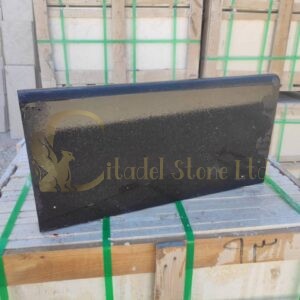
Citadel Stone sources bluestone from established quarry partners where each batch is evaluated for density and absorption consistency before it enters warehouse inventory. You can request absorption data and sample tiles before committing to a full project order — that verification step is worth the two-week window it adds to your planning timeline. For projects in Scottsdale, where exposed patio and pool deck surfaces face the most aggressive solar drying cycles, specifying bluestone outdoor tiles in Arizona with absorption rates below 1.5% provides meaningful long-term protection.
- Request ASTM C97 absorption test data for your specific tile lot before procurement
- Specify a penetrating silane-siloxane sealer applied at initial installation to reduce absorption by 60–80%
- Reapply sealer every 2–3 years in low-desert applications, annually in zones with heavy pool splash or irrigation overspray
- Avoid topical acrylic sealers in Arizona — they trap subsurface moisture during the monsoon season and blister as temperatures spike
Base Preparation Standards That Control Drainage Performance
Your aggregate base specification is where drainage design becomes tangible. For bluestone paving tiles in Arizona, a minimum 4-inch compacted base is the starting point — but projects in clay-heavy soils or areas with documented caliche layers should increase that to 6 inches and include a geotextile separation fabric between native soil and aggregate. The fabric prevents fines migration upward into your drainage layer, which is the main reason bases fail prematurely in low-desert conditions.
Projects in Phoenix commonly encounter expansive soils with plasticity indices above 20, which means your base needs to be genuinely isolated from subgrade moisture movement — not just compacted on top of native soil. A properly installed geotextile adds minimal cost but dramatically changes how your base behaves during and after heavy rainfall. For projects requiring specific format guidance or technical consultation on base depth for non-standard tile sizes, Citadel Stone’s team can advise on lead times and site-specific recommendations before your order is placed.
- Compact aggregate base in 2-inch lifts to 95% Proctor density minimum — single-lift compaction is a common field shortcut that creates uneven settlement
- Slope the compacted aggregate layer to match surface drainage design — drainage correction after tile installation is expensive and disruptive
- Allow 24-hour settlement observation after compaction in monsoon-season installs before setting tile
- Use 1-inch bedding sand for final leveling, not additional aggregate — bedding sand corrects minor surface variation, not base depth deficiencies
Joint Design and Water Infiltration Control for Bluestone Flooring
The joint between tiles is your primary drainage management tool at the surface level. For bluestone flooring in Arizona installed in outdoor applications, polymeric sand is the correct joint fill — but its performance depends entirely on correct installation moisture. The standard instruction is to wet-compact polymeric sand twice after installation, but in Arizona’s low humidity environment, that process needs to happen faster than in coastal climates. Surface moisture evaporates within minutes, which means the activation window for polymeric sand binders is shorter than the manufacturer’s printed instructions anticipate.
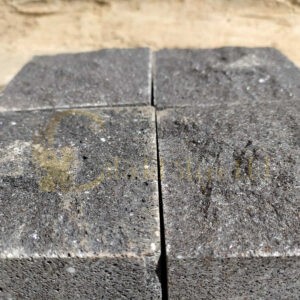
Field-confirmed practice is to work in shorter runs — no more than 40–50 linear feet of joint at a time — and to keep the surface lightly misted between compaction passes. This approach maintains adequate surface moisture for binder activation without saturating the joint. Your joint width should be a minimum of 3/8 inch for tiles with natural cleft faces, where slight dimensional variation is inherent. Tighter joints with natural cleft bluestone will produce uneven joint fills and edge chipping during sand compaction. For details on managing joint systems in adjacent stone applications, the bluestone tile outdoor solutions guide covers installation protocols that share the same drainage-first design logic applied to bluestone outdoor tiles in Arizona.
- Specify 3/8–1/2 inch joints for natural cleft finishes, 1/4 inch minimum for gauged (machine-calibrated) tiles
- Apply polymeric sand during dry, non-monsoon weather when possible — sand activated during rainfall won’t cure properly and will wash out
- Inspect joints after the first monsoon season and top-dress any areas where sand has migrated or settled
- Consider open-graded joints (no fill) for high-drainage applications like permeable patio designs — allows direct vertical water movement
Thickness Selection and Load-Bearing Capacity for Arizona Installations
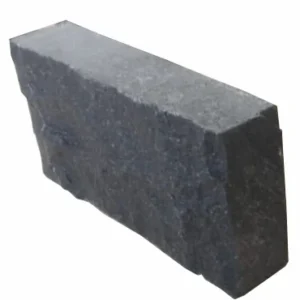
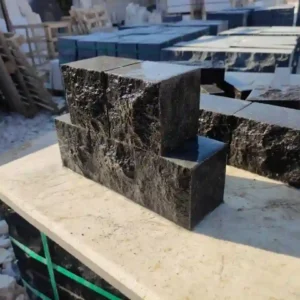
Bluestone tiles are available in 3/4-inch, 1-inch, 1.5-inch, and 2-inch nominal thicknesses. The selection depends on application, but in Arizona’s extreme heat environment, thickness also affects thermal mass behavior. Thicker tiles retain heat longer into the evening — a genuine comfort consideration for barefoot use on patios and pool decks. The 1.5-inch thickness is the most versatile option for bluestone paving tiles in Arizona, handling pedestrian traffic, occasional light vehicle access, and pool coping loads without flexure cracking.
For residential driveways or any application with vehicle loads, 2-inch thickness is non-negotiable regardless of base quality. Thinner tiles will survive occasional vehicle crossings but develop micro-fractures at edge supports over time that aren’t visible until surface delamination begins. Citadel Stone stocks bluestone tiles in standard formats across these thickness ranges, and you can confirm current warehouse availability before finalizing your project schedule — lead times from regional inventory are typically 1–2 weeks, compared to 6–8 weeks for custom-quarried orders.
Finish Selection and Slip Resistance on Wet Surfaces
Arizona may be dry most of the year, but every bluestone tile installation around pools, outdoor showers, and irrigated garden areas encounters regular wet-surface conditions. Finish selection directly controls your slip resistance performance. Natural cleft finish provides the highest inherent slip resistance — the irregular surface texture creates coefficient of friction values typically in the 0.65–0.85 range (wet), well above the 0.60 minimum recommended by the Americans with Disabilities Act guidelines for exterior applications.
Honed and polished finishes drop that wet COF to 0.40–0.55, which falls short of safe thresholds for poolside applications. In Tucson, where outdoor living spaces often extend into courtyard and garden areas with irrigation systems, the slip risk from smooth-finish bluestone flooring in Arizona on wet mornings is worth taking seriously. Natural cleft remains the standard recommendation for outdoor Arizona applications — it’s not just an aesthetic preference, it’s a performance specification with measurable safety implications.
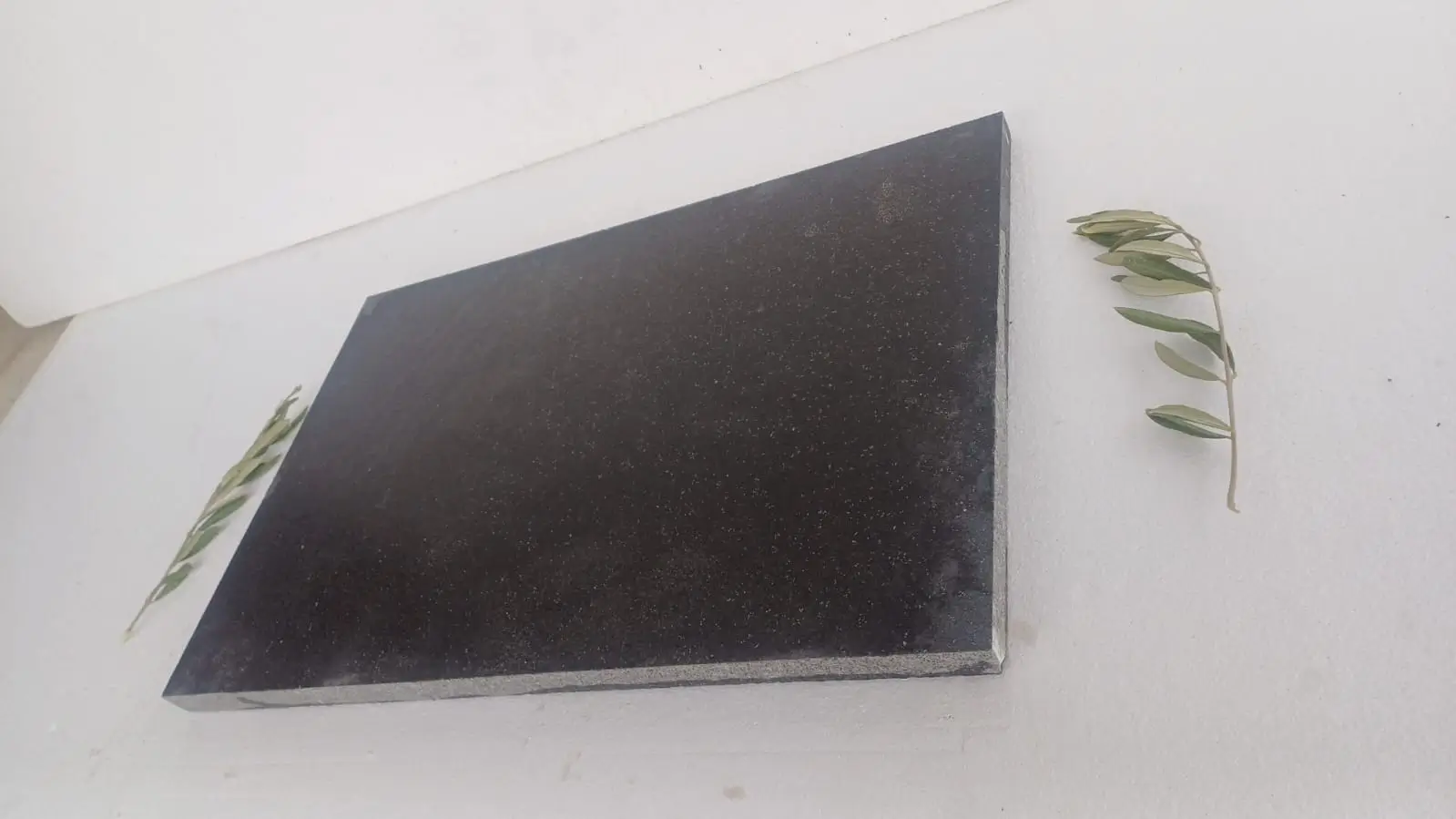
- Natural cleft: wet COF 0.65–0.85 — recommended for poolside, courtyard, and garden paths
- Honed: wet COF 0.45–0.55 — acceptable for covered outdoor areas with minimal water exposure
- Polished: wet COF 0.35–0.45 — interior use only, not appropriate for outdoor Arizona applications
- Sandblasted/bush-hammered: comparable to natural cleft — viable alternative when a more uniform appearance is required with maintained slip resistance
Sealing and Maintenance Schedules in a Monsoon Climate
The sealing schedule for bluestone flooring in Arizona needs to be adjusted from the generic 3–5 year interval you’ll find in most product literature. Arizona’s UV intensity accelerates sealer degradation faster than any other variable — penetrating sealers that last four years in the Pacific Northwest typically need reapplication at the two-year mark in low-desert applications. The indicator is simple: if water no longer beads on the surface within 30 seconds of contact, your sealer has lost its protective capacity and needs refreshing before the next monsoon season arrives.
Annual cleaning with a pH-neutral stone cleaner removes the mineral deposits left by Arizona’s hard water, which is consistently in the 250–350 ppm total dissolved solids range across the major metro areas. These deposits are cosmetic at first but become structural concerns if they penetrate the pore network and recrystallize beneath the sealer layer. Pressure washing at under 1,200 PSI is appropriate for annual maintenance — higher pressures erode the natural cleft surface texture over time and reduce the slip resistance you selected the finish for.
Making Bluestone Tiles Work for Your Arizona Project
The decisions that separate a successful bluestone installation from a maintenance problem come down to drainage geometry, absorption management, and joint execution — not material quality alone. Bluestone tiles in Arizona are a durable, proven choice when the system around them is designed for the region’s specific hydraulic and thermal conditions. Your specification should address base drainage slope before surface aesthetics, sealer chemistry before color selection, and joint width before tile size. Those sequencing priorities reflect how the material actually performs in the field, not how it looks in a catalog.
For projects that include pool areas alongside exterior paving, your stone selection can extend into adjacent features — Bluestone Pool Coping in Arizona covers the specification details that connect outdoor tile work to pool perimeter applications, where drainage and slip resistance requirements intersect with different structural demands. For bluestone tile projects across Arizona, Citadel Stone provides dependable sourcing, knowledgeable support, and a range of options suited to the region’s climate and design requirements.