
Budgeting accurately for bluestone tile cost Arizona projects is harder than most buyers expect — not because the material is obscure, but because the pricing variables stack on each other in ways that aren’t obvious until you’re mid-project and staring at a change order. The price per square foot you see quoted online rarely reflects what you’ll actually pay once you account for grade, thickness, finish, regional freight, and base preparation requirements specific to Arizona’s desert soil conditions. Understanding how these layers interact gives you the leverage to build a realistic budget before you commit to a scope.
What Actually Drives Bluestone Tile Pricing
Bluestone isn’t a single product — it’s a material category that spans several geological sources, finish types, and thickness ranges, each with its own price point. The most significant cost driver is finish: natural cleft bluestone, where the stone splits along its natural grain, typically runs $4–$8 per square foot at the material level. Thermal-finished bluestone, which uses heat to create a slightly textured, non-slip surface, adds $1.50–$3.00 per square foot to the base price. Honed finishes — smooth, matte surface — sit at the upper end, often $7–$12 per square foot for quality-graded material.
Thickness is the second major variable. Standard 3/4-inch bluestone works for light-use patios on a well-prepared base. For Arizona driveways, pool decks with heavy foot traffic, or any installation over expansive clay soils, you’ll want to spec 1.5-inch material. That extra mass adds $3–$5 per square foot in material cost but dramatically reduces the risk of flex-cracking — a failure mode that’s painfully common in Arizona’s thermally stressed environments. Pricing bluestone paving tiles across Arizona regions also varies by where the material ships from; northern suppliers serving Gilbert and the East Valley often have shorter truck routes from Phoenix-area warehouse distribution points, which matters more than buyers realize when dealing with full-pallet freight minimums.
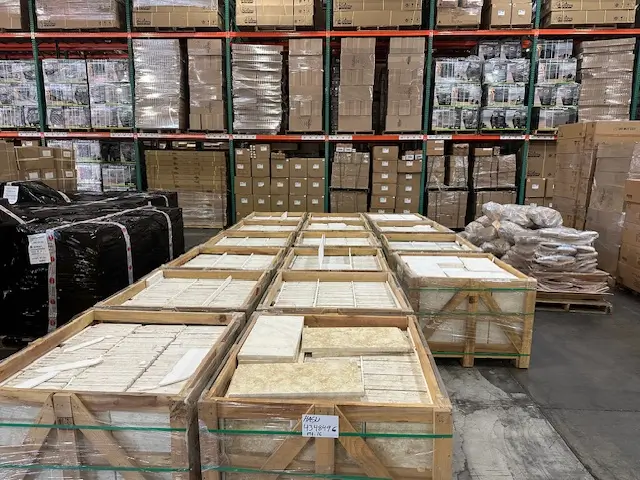
Material Grades and Cost Tiers for Arizona Buyers
Bluestone comes in three practical grade tiers, and understanding the difference protects you from either overpaying for a project that doesn’t need premium material or underbuying and dealing with high rejection rates on installation day.
- Select grade: minimal variation in color and surface texture, tight dimensional tolerances — typically $8–$14 per square foot; best for high-visibility indoor flooring or formal outdoor spaces
- Standard grade: natural color variation, moderate thickness tolerance within +/– 3/16 inch — runs $5–$9 per square foot; the right choice for most Arizona patio and pool deck applications
- Utility grade: wider color range, surface irregularities acceptable within limits — $3.50–$6 per square foot; works well for informal pathways, rustic garden settings, or projects where natural variation is a design asset
- Irregular/flagging: random-shaped pieces cut from natural cleft slabs — $2.50–$5 per square foot but requires significantly more labor to fit, which offsets the material savings
For most Arizona residential projects, standard grade in a 1.25–1.5 inch thickness hits the value-performance crossover point. Budget-friendly bluestone tile options in Arizona typically land in this category — material that performs reliably without the premium markup of select-grade product reserved for interior showpiece floors.
Labor Costs for Bluestone Flooring Installation in Arizona
Material is only one side of the bluestone tile cost Arizona equation. Labor rates for bluestone flooring installation vary considerably across the state and depend on the setting method, substrate condition, and finish complexity.
Dry-set installation on a compacted aggregate base — the standard approach for outdoor patios — typically runs $8–$14 per square foot in the Phoenix metro area, including Mesa, Chandler, and Gilbert markets. Wet-set mortar installation on a concrete substrate, required for pool decks, covered patios, and indoor applications, adds $4–$7 per square foot in labor compared to dry-set. That difference reflects the skill required to achieve level, consistent mortar beds across large-format stone that doesn’t self-level the way ceramic tile does. Epoxy-grouted installations for indoor wet areas add another $2–$3 per square foot.
- Dry-set outdoor patio: $8–$14 per square foot labor
- Wet-set mortar on concrete: $12–$20 per square foot labor
- Pattern cutting (herringbone, basketweave): add $3–$6 per square foot
- Edge and coping work: $18–$35 per linear foot depending on profile complexity
- Base preparation (excavation, compaction, aggregate): $4–$9 per square foot additional
One variable that catches Arizona buyers off guard is the caliche layer common across the East Valley. In Chandler, many residential lots have caliche hardpan within 12–18 inches of grade. Breaking through caliche typically adds $1,500–$4,000 to a base-prep scope on a standard patio project — a cost that doesn’t appear in any per-square-foot labor estimate until the excavator hits rock. The labor costs for bluestone flooring installation in AZ are genuinely difficult to pin down without a site visit for exactly this reason.
Comparing Bluestone Tile Expenses to Alternative Pavers
Comparing bluestone tile expenses to alternative pavers is one of the most useful exercises you can do before finalizing your specification. The numbers sometimes surprise buyers who assume concrete or travertine will always be cheaper.
- Travertine pavers: $4–$9 per square foot material, labor similar to bluestone — performs well in heat but requires more aggressive sealing in pool environments due to higher porosity
- Concrete pavers (manufactured): $2–$5 per square foot material, lower labor — faster installation but limited in the large-format aesthetic that bluestone delivers; thermal expansion can cause joint failure at Arizona’s temperature extremes
- Porcelain tile (exterior-rated): $3–$8 per square foot material, higher labor due to wet-set requirement and grout precision — achieves very low porosity but brittle under point loads and heavy furniture
- Limestone pavers: $4–$10 per square foot material — aesthetically close to bluestone but softer, requiring more frequent sealing in Arizona’s UV-intense environment
- Bluestone 1.5-inch standard grade: $7–$11 per square foot material all-in — higher than manufactured concrete but competitive with quality travertine when you factor in long-term maintenance savings
The 20-year cost comparison usually favors bluestone for mid-to-high-end applications. Its density (typically 160–165 lbs/cubic foot) and relatively low porosity compared to travertine mean less sealer consumption and fewer surface repairs over the project’s life. That’s a real number, not marketing language — the maintenance differential averages out to $0.40–$0.90 per square foot per year in savings for properly installed bluestone versus equivalent travertine in Arizona’s climate. Comparing bluestone tile expenses to alternative pavers in Arizona over that time horizon consistently shifts the value calculus toward natural stone.
Regional Pricing Variation Across Arizona
Freight is the quiet variable that creates regional price disparity for bluestone tile cost Arizona projects. Material arriving by truck from East Coast quarry distributors adds $0.50–$1.50 per square foot to delivered cost depending on whether your project is in the Phoenix metro, Tucson, or outlying areas. Projects in rural communities can face freight surcharges of $800–$2,500 per truck depending on road access and delivery distance from the nearest warehouse distribution point.
For Phoenix metro projects — including the Mesa, Gilbert, and Chandler submarkets — most suppliers can deliver from regional warehouse stock, which cuts lead times significantly. At Citadel Stone, we maintain inventory specifically calibrated for Arizona’s project rhythm, so you’re not waiting on a 6–8 week import cycle when your contractor is ready to pour footings. That stock availability also means you can physically inspect material before it’s delivered to site, which matters for color-matched projects where select-grade consistency is critical. When you’re reviewing our bluestone paving tile costs Arizona, factor in whether pricing includes delivery to your site or is quoted FOB warehouse — that distinction alone can shift your total cost by 8–15%.
Thickness and Format: Cost Implications You Need to Know
Format selection — the size and shape of individual tiles — affects both material cost and installation labor in ways that compound across a large project. Smaller modular formats (12×12 or 16×16 inches) are easier to handle and generate less waste on complex layouts, but they require more linear footage of joint and more pieces per square foot, which extends installation time. Large-format bluestone (24×24 inches and larger) delivers a premium aesthetic but demands a flatter, more precisely prepared substrate — a mortar bed variance of more than 3/16 inch will cause lippage that becomes a visible defect under raking light.
- 12×12 modular: lowest material cost per square foot, moderate labor, forgiving on base prep tolerance
- 16×16 and 18×18: balance of aesthetics and workability — the most common format in Arizona residential projects
- 24×24: premium aesthetic, requires screeded mortar bed, higher labor cost but reduces joint lines significantly
- Random flagging: lowest material cost, highest labor — fitting time for irregular shapes runs 40–60% longer than modular formats
- Custom cut formats (12×24, 18×36): available from most suppliers but adds 15–25% to material cost due to cutting yield losses
The labor cost for bluestone flooring installation in AZ also scales with project size in a non-linear way. A 200-square-foot patio might see labor at the upper end of the $12–$14 range because mobilization and setup costs are amortized over fewer square feet. A 1,200-square-foot project with a continuous working condition often brings labor down to $9–$11 per square foot as crews find rhythm and minimize repositioning time.
Sealing and Long-Term Maintenance Costs
Your bluestone tile cost Arizona project budget isn’t complete without a sealing and maintenance line item. Unsealed bluestone in Arizona’s environment — intense UV, thermal cycling from 35°F winter nights to 115°F summer days, and monsoon-driven moisture intrusion — will show surface degradation within 3–5 years. Proper sealing extends that performance window to 20+ years with a biennial maintenance schedule.
Penetrating silane-siloxane sealers are the right chemistry for most exterior bluestone applications. They don’t alter the surface appearance, allow vapor transmission, and don’t peel or flake the way topical film-formers do when Arizona’s UV degrades the surface bond. Budget $0.35–$0.65 per square foot for initial sealing labor and material, and plan for a reapplication every 18–24 months in high-exposure areas. High-traffic zones near pool edges or entryways may need annual maintenance in Arizona’s conditions.
- Initial penetrating sealer: $0.35–$0.65 per square foot installed
- Routine resealing every 2 years: $0.20–$0.40 per square foot
- Efflorescence treatment if needed: $0.15–$0.30 per square foot as a one-time correction
- Joint sand replacement (dry-set only): $0.10–$0.25 per square foot every 5–7 years
- Chip or crack repair: $85–$150 per incident for professional patch work
Ordering, Logistics, and Lead Times for Arizona Projects
Getting your bluestone paving tiles in Arizona ordered at the right time is as important as getting the specification right. Lead times from quarry to warehouse and then to site vary substantially depending on whether material is in regional stock or needs to be imported. Standard grade material in popular formats (16×16 and 18×18) often ships from warehouse within 5–10 business days. Specialty formats, select grade with color-matching requirements, or large-volume orders may require 4–8 weeks if the material isn’t already in regional inventory. Pricing bluestone paving tiles across Arizona regions starts with confirming stock availability so lead time doesn’t create a gap in your construction schedule.
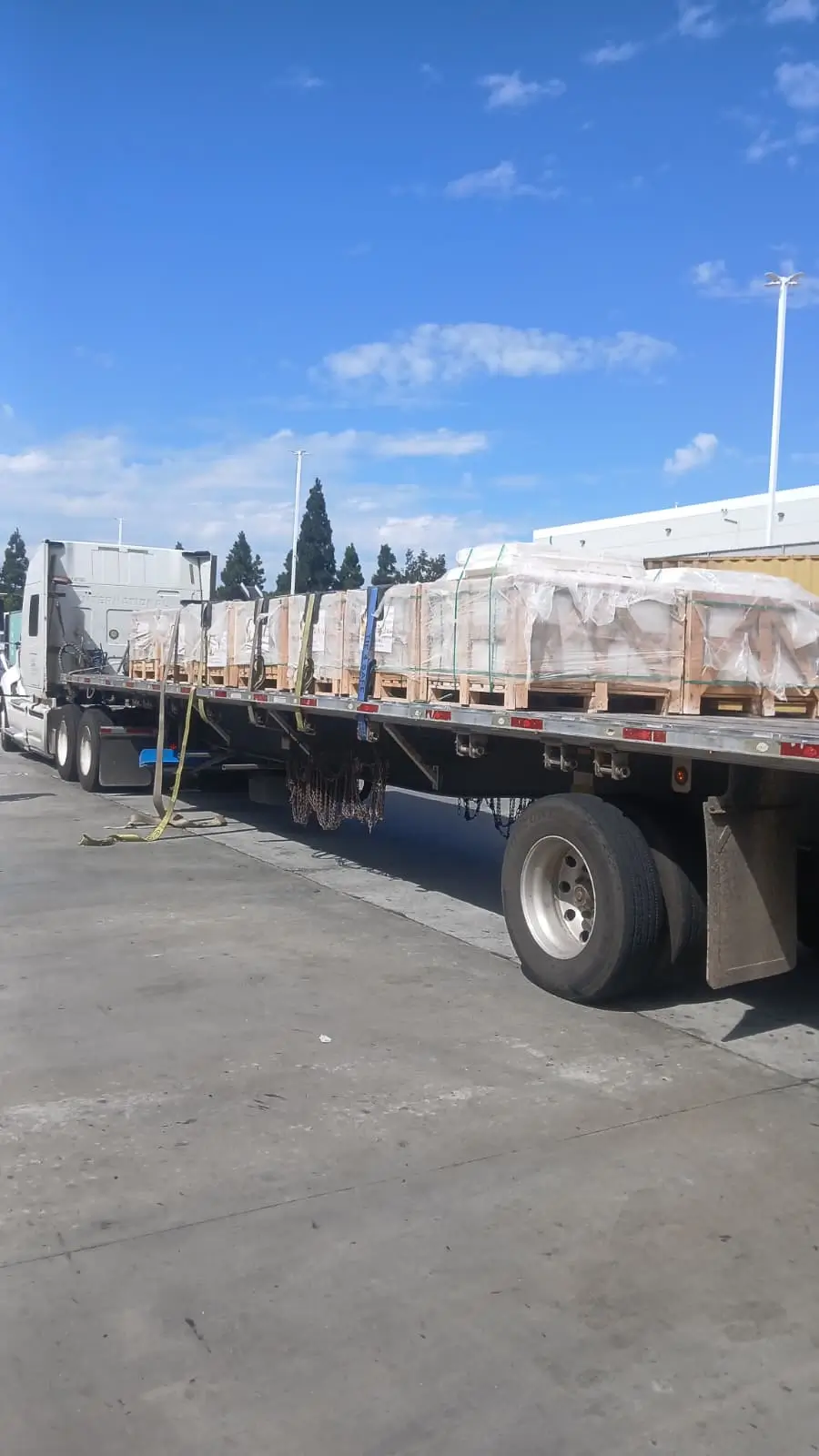
Your contractor’s truck access to the site should be confirmed before placing a large order. Full pallets of 1.5-inch bluestone run 2,200–2,800 lbs per pallet — a standard delivery truck requires a reasonably flat, unobstructed approach. Narrow residential streets with overhead utility lines or gated community access restrictions can force split deliveries, which adds cost and extends your installation timeline. Verify site access early and communicate it to your supplier so the logistics team can plan appropriately. At Citadel Stone, our delivery coordination team has routed material into some of Arizona’s most logistically challenging job sites — communicating truck constraints upfront makes a measurable difference in delivery outcome.
Decision Points
Pulling together an accurate budget for bluestone tile cost Arizona projects means treating the specification as a system rather than a line-item list. Material grade, thickness, format, finish, base preparation, labor method, sealing program, and freight all interact — and changing one variable shifts the others. The buyers who get this right start with the installation environment: what load will the surface carry, what’s the substrate condition, what’s the expected UV and moisture exposure, and what finish suits both the aesthetic and the slip-resistance requirements? Those answers determine the specification, and the specification determines the cost range.
Don’t let a low per-square-foot material quote anchor your budget before you’ve confirmed what thickness, grade, and logistics that quote actually reflects. A $4.50 per square foot number on 3/4-inch utility-grade flagging tells you almost nothing about what a properly specified 1.25-inch standard-grade installation in the East Valley will actually cost. For buyers exploring related natural stone applications, How to Install Bluestone Pool Coping in Arizona covers the technical installation detail for one of the most demanding bluestone applications in this climate — worth reviewing if your project includes any pool perimeter work. Buyers in Tucson, Tempe, and Flagstaff compare Citadel Stone bluestone paving tile pricing because material arrives direct from quarries in Turkey, the Mediterranean, and beyond, reducing intermediate markup on large orders.