

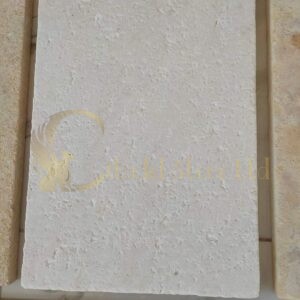
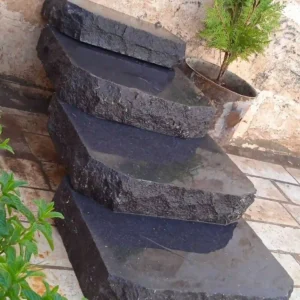
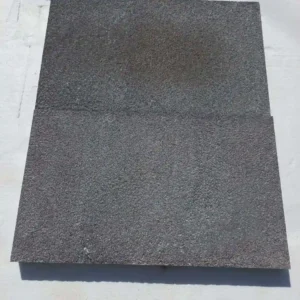

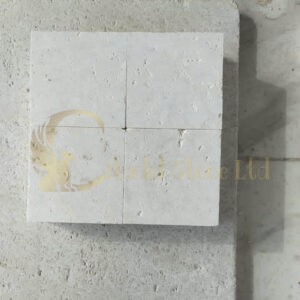
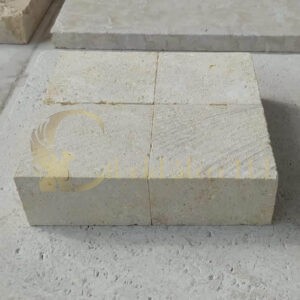


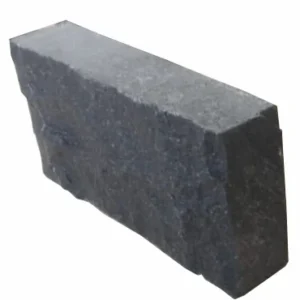
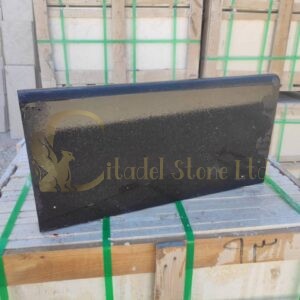
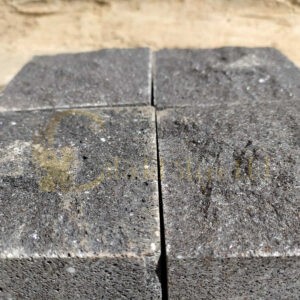
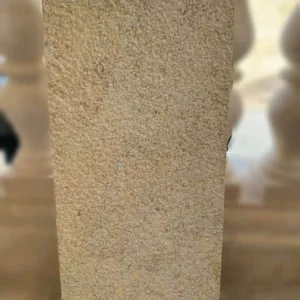
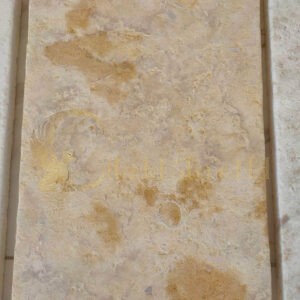
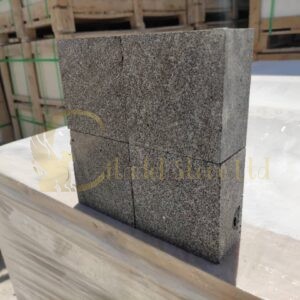
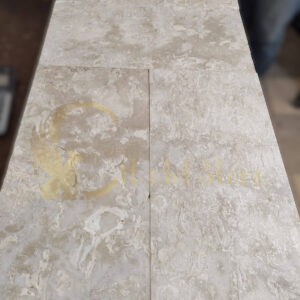
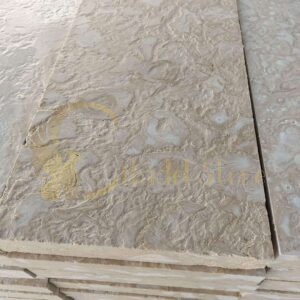
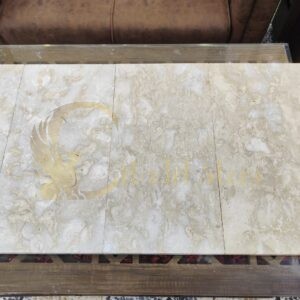


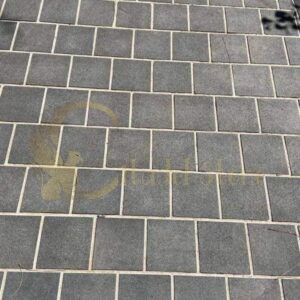

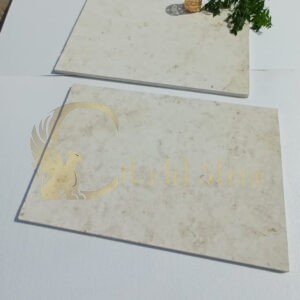
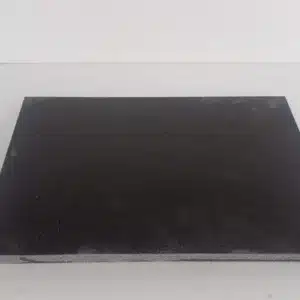
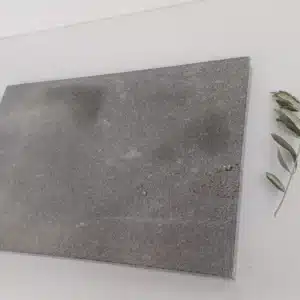
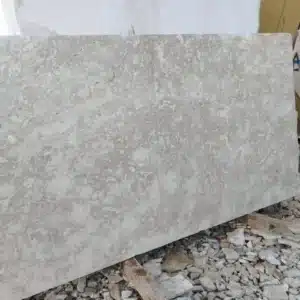

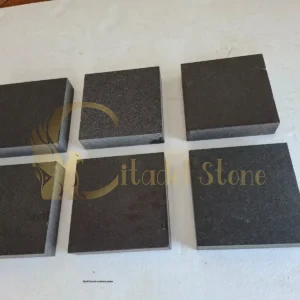

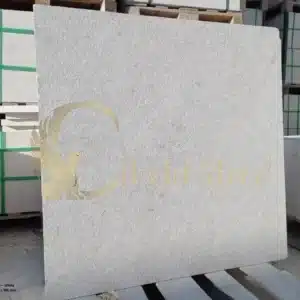
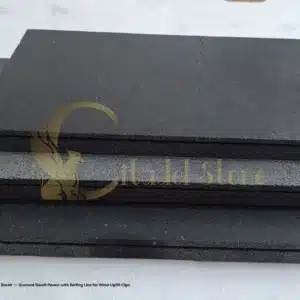

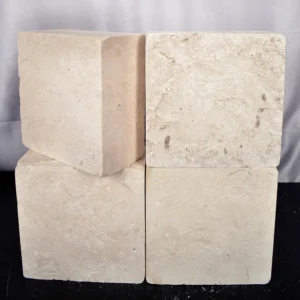
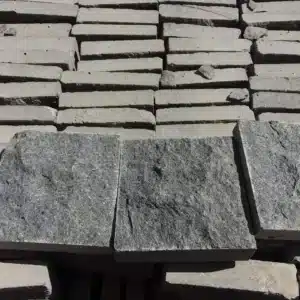
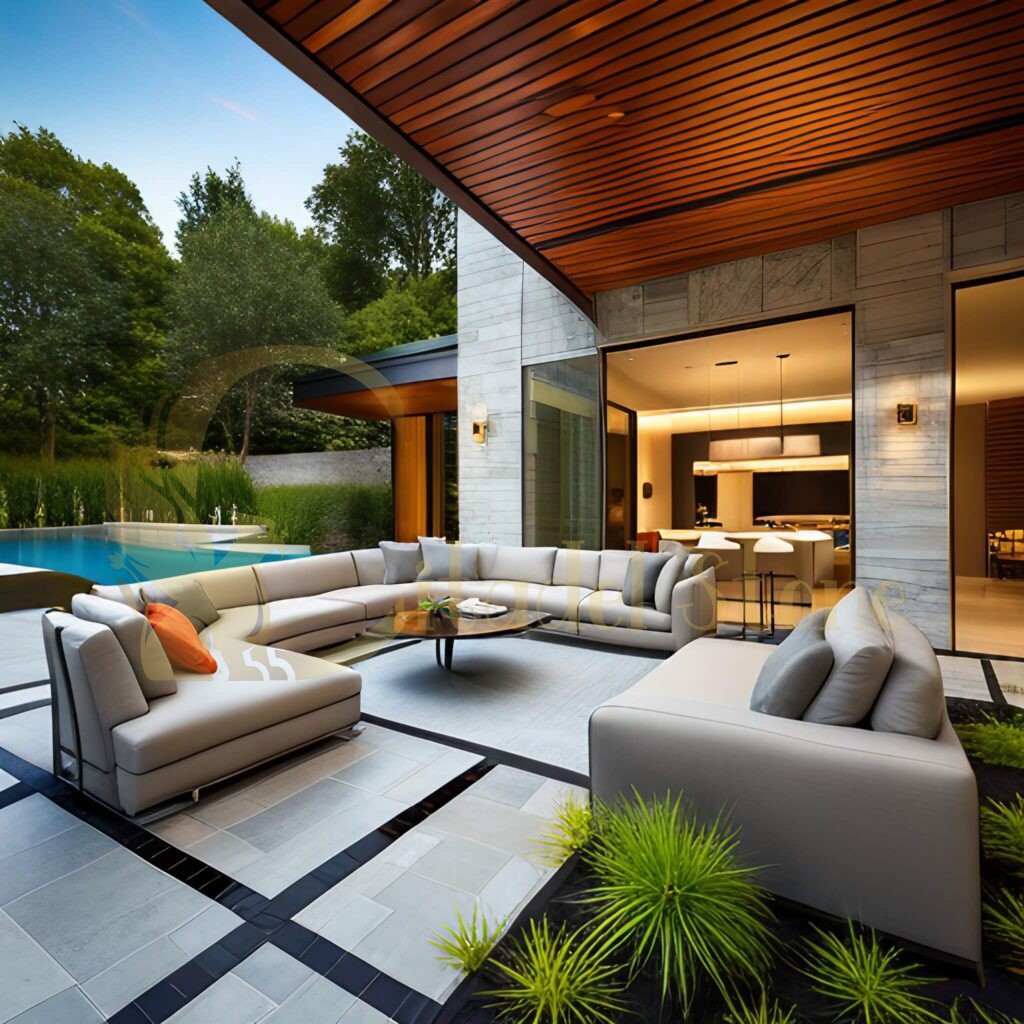
Base failure in 30mm travertine pavers in Arizona almost never comes from the stone itself — it comes from what’s underneath it, and how the terrain you’re building on moves water after a monsoon. Arizona’s topographic range is extraordinary, from low-desert basins near sea level up to mountain terrain pushing 7,000 feet, and the drainage physics at each elevation behave differently enough that a specification that works perfectly in the Valley can fail within two seasons at higher ground. Understanding how slope, soil stratification, and water velocity interact with your base design is where durable travertine paver installations in Arizona are actually made.
Why Terrain Drives Your 30mm Travertine Spec
Arizona’s landscape isn’t flat, and that matters more than most specifiers acknowledge. Terrain slope determines how aggressively water moves across and beneath your installation — and 30mm travertine pavers in Arizona are frequently specified for outdoor living areas, pool surrounds, and walkways where grade changes are both common and consequential. A 30mm (roughly 1.2-inch) thickness gives you meaningful structural mass without the overkill of full flagstone, but that advantage only holds when your drainage geometry is engineered, not assumed.
The critical calculation most installations skip is the relationship between slope percentage and sub-base permeability. You need at least 1.5% positive slope away from structures, but on hillside lots — which are common in Scottsdale’s McDowell Mountain corridors and Sedona’s red rock neighborhoods — you’re often managing sheet flow that arrives from uphill at significant velocity during monsoon events. That changes your edge restraint requirements, your base compaction protocol, and how you handle joints.
- Slope between 1.5% and 3% is the workable range for most patio and pool deck applications
- Above 3% slope, you’ll need a mechanical edge restraint system anchored into the base, not just sand-set borders
- Below 1.5% grade, standing water becomes a sealing and staining risk within the first monsoon season
- Cross-slope drainage design (not just front-to-back) prevents water from channeling along joint lines
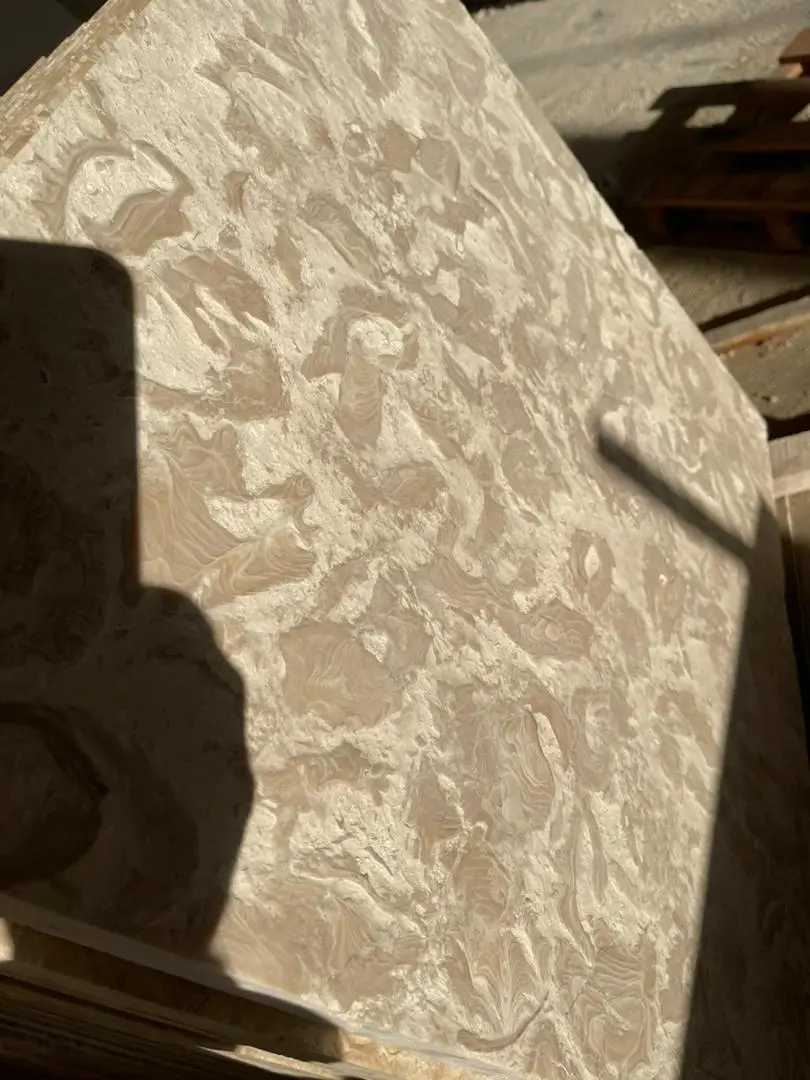
Base Preparation for Arizona’s Variable Soils
Soil conditions across Arizona are genuinely diverse, and that variation directly affects how you build your base for 3cm travertine pavers in Arizona. Expansive clay soils in parts of the Phoenix basin can swell up to 6% by volume during saturation events — enough to buckle a poorly anchored installation regardless of paver thickness. Caliche hardpan, present in many desert locations, is actually your friend as a sub-base when it’s properly prepared, but it needs to be scarified and re-compacted rather than just built over.
In Mesa, caliche layers frequently appear at 18 to 30 inches below grade, which provides excellent load-bearing capacity once broken up and recompacted to 95% Proctor density. The challenge is that intact caliche is nearly impervious — water ponds above it, building hydrostatic pressure that can displace even well-set paver systems. Perforating the caliche or adding a gravel sump in low-collection zones is a detail that separates installations that last from ones that shift after the third monsoon season.
- Minimum 6-inch compacted aggregate base for standard residential applications on stable soils
- 8 to 10 inches required on expansive clay profiles or sites with observed soil movement
- Use angular crushed aggregate (3/4-inch minus) — round river gravel will not compact adequately
- Geotextile fabric between native soil and base aggregate prevents fines migration over time
- Compact in 3-inch lifts, not all at once — single-pass deep compaction leaves voids at mid-depth
Elevation-Specific Drainage Design for Travertine Installations
Here’s what most specifiers miss when working across Arizona’s elevation range: drainage design isn’t a single standard — it scales with precipitation intensity, freeze-thaw frequency, and soil permeability, all of which shift significantly as you move from 1,000 feet to 6,000 feet. At lower elevations like Yuma and the western desert valleys, rainfall events are rare but intense, making surface runoff the primary concern. At higher elevations, sustained rainfall and snowmelt introduce sub-surface saturation that persists over days, not hours.
Travertine pavers 30mm in Arizona installed above 4,500 feet elevation need a drainage strategy that accounts for freeze-thaw cycling. Water that infiltrates through travertine’s natural pore structure and sits in the base during freezing temperatures creates localized heave — small but cumulative over multiple seasons. Sealing your travertine before installation (not just after) reduces infiltration at the surface, and using an open-graded base rather than a dense-graded one allows any infiltrated water to drain laterally rather than accumulating under the stone.
- Open-graded base (clean 3/8-inch chip aggregate) for elevations above 4,500 feet
- Dense-graded base with positive slope drainage appropriate for low-desert elevations
- French drain laterals at the downslope edge of large installations (over 400 sq ft)
- Drain inlets set flush with finished paver surface at low points — never below paver plane
30mm Thickness Performance Under Arizona’s Loading Conditions
The 30mm dimension is a deliberate structural threshold, not just a market convention. At this thickness, travertine achieves a flexural strength profile — typically 1,200 to 1,800 PSI depending on density classification — that handles pedestrian traffic, light furniture loads, and standard pool surround applications without requiring a mortar-set bed. You’re working with a material that has genuine structural integrity, not a thin-veneer product that depends entirely on its base for rigidity.
For Phoenix-area residential projects, 30mm travertine in Arizona handles standard patio furniture, foot traffic, and even golf cart crossings on properly prepared bases without showing stress fractures over time. Where you’ll see 30mm installations struggle is under sustained point loads — heavy planters over 200 pounds, for instance, concentrated on a single paver without a spreading pad beneath them. Distributing that load through a rubber mat or concrete tile under the planter adds maybe three minutes to your installation and extends that paver’s life by years.
- 30mm travertine handles pedestrian loads and typical residential furniture without issue
- Vehicular traffic requires 40mm or greater with a mortar-set base — 30mm is not rated for driveway use
- Point load concentrations over 150 lbs per square foot benefit from a load-distributing underlayer
- Pool deck applications with diving boards or heavy equipment require engineering review regardless of thickness
For ongoing maintenance planning that protects your investment, 30mm travertine paver solutions covers the long-term care protocols that keep Arizona installations performing through seasonal extremes.
Sealing and Porosity Management Across Climate Zones
Travertine’s interconnected pore structure — the characteristic that gives it its distinctive look — is also the variable you’re managing when you spec sealers. Unsealed travertine in an Arizona monsoon environment will absorb moisture rapidly, and while the stone itself handles that without cracking, the sub-base saturation cycle that results over multiple seasons contributes to base settlement. Penetrating silane-siloxane sealers at 15% to 20% solid content work best in low-desert climates, allowing vapor transmission while blocking liquid infiltration.
At elevations where freeze-thaw is a factor — Flagstaff‘s 6,910-foot elevation creates a genuinely different performance environment than Scottsdale — you need a sealer that reduces water absorption below 0.5% to prevent ice crystal formation in the pore matrix. This isn’t just about aesthetic protection; it’s structural preservation. Resealing on a two-year cycle is appropriate for most Arizona elevations, but high-elevation installations may warrant annual inspection and resealing if the finish shows signs of moisture-related wear after the first winter.
- Apply sealer before grouting joints — fill pores at the surface before introducing joint sand
- Two coats minimum, with the second coat applied within 20 minutes of the first while the first coat is still tacky
- Test water bead behavior annually — flat absorption (no beading) means resealing is overdue
- Avoid topical film-forming sealers in full-sun Arizona exposures — they trap UV degradation under the film layer
Joint Design and Sand Stability in Arizona Conditions
Polymeric joint sand is non-negotiable for 30mm travertine pavers in Arizona — standard kiln-dried sand migrates in two to three monsoon seasons regardless of how well it’s initially compacted. Polymeric sand activates with moisture to form a semi-rigid binder that holds joint integrity through both the monsoon’s hydraulic flushing action and the thermal cycling that causes pavers to move fractionally throughout the year. The detail that matters most here is activation moisture: you need to wet the joints thoroughly but not over-saturate them, or the binder activates in the bag rather than in the joint.
Joint width for 3cm travertine pavers in Arizona should sit between 3/16 inch and 3/8 inch. Narrower than 3/16 inch and you’re fighting natural variation in travertine dimensions — the stone is cut from sedimentary formations and carries slight dimensional tolerances. Wider than 3/8 inch and joint sand stability becomes your long-term maintenance issue. At Citadel Stone, we inspect travertine stock dimensions before shipping to confirm that dimensional consistency supports your target joint specification without field adjustment.
- Fill joints to within 1/8 inch of the paver surface — flush fill traps water at the surface
- Apply polymeric sand in temperatures between 50°F and 90°F for proper activation chemistry
- Blow off excess sand with a leaf blower before activating — surface-set polymeric sand is difficult to remove
- Allow 24-hour cure before foot traffic, 48 hours before furniture placement
Ordering Logistics and Project Planning for Arizona Sites
Coordinating material delivery for outdoor stone projects in Arizona requires more lead-time planning than most contractors budget for, especially during the spring construction surge between February and May. Citadel Stone maintains warehouse inventory in Arizona, which typically brings lead times to one to two weeks for in-stock travertine — a significant advantage over the six to eight week import cycle that custom orders can require. Verify current warehouse stock levels before committing your project schedule, particularly for large square footage requirements that may require multiple truck deliveries.
Your project’s truck access constraints can affect delivery scheduling in ways that aren’t always obvious at the planning stage. Narrow access roads in hillside communities, HOA-restricted delivery windows, and crane requirements for elevated installations all add logistical variables that affect your material cost and timeline. For Scottsdale hillside projects specifically, confirm with your delivery coordinator whether the truck can offload at grade or whether a shuttle delivery to a staging area is required — this changes your project’s handling labor estimate meaningfully. A second truck run to a hillside staging area can add half a day to your delivery window if it isn’t planned in advance.
- Order 10% overage on square footage to account for cuts, breakage, and future repairs
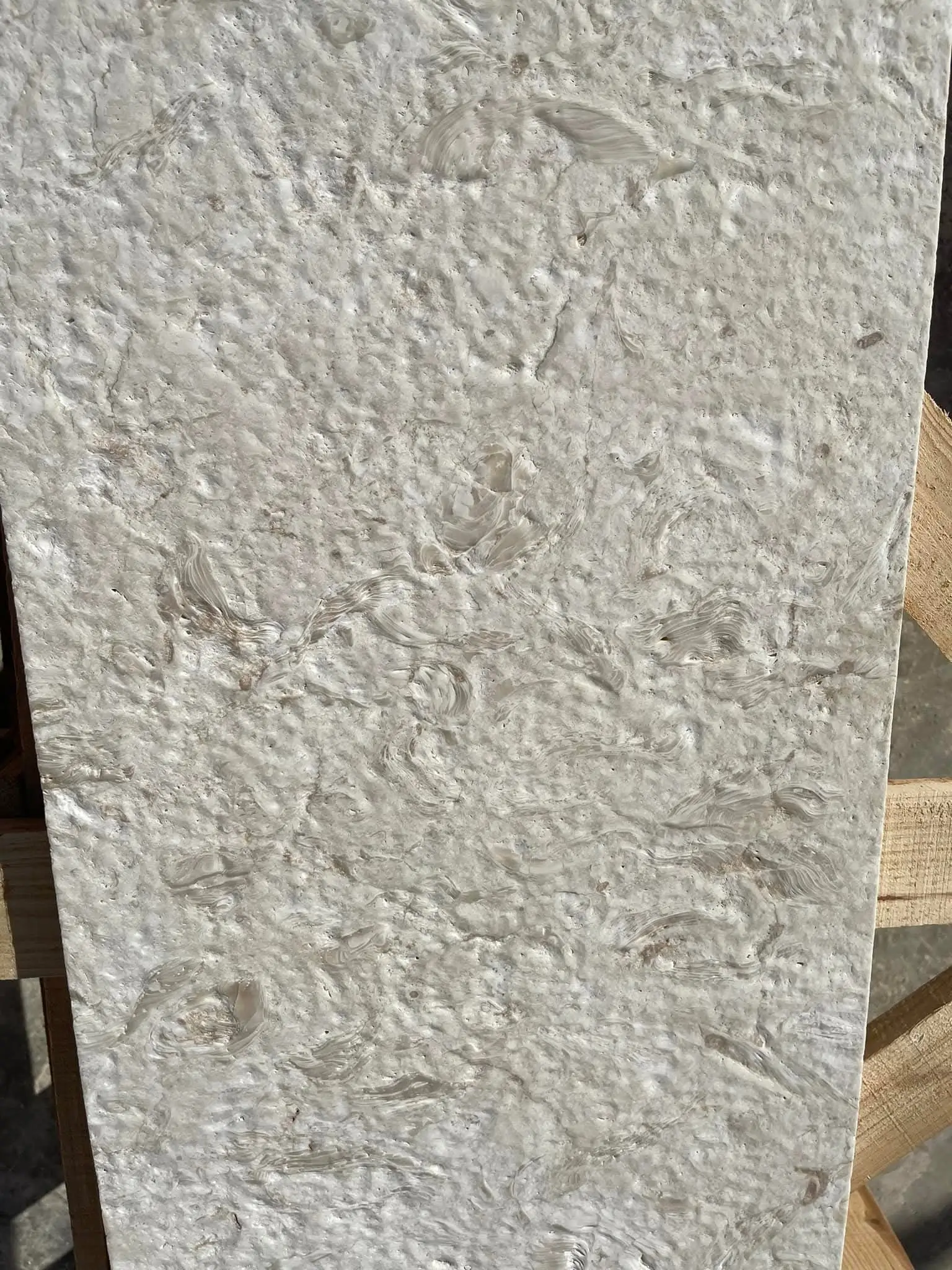
- Request a sample pallet before full order confirmation — travertine color and fill character vary by quarry batch
- Confirm truck weight limits for any roads leading to your site, particularly in HOA communities with weight restrictions
- Schedule delivery to arrive no more than one week before installation — extended outdoor storage in Arizona sun can affect sealer adhesion on pre-sealed product
Making 30mm Travertine Pavers Work for Your Arizona Project
The installations that perform well over two decades in Arizona share a common characteristic: every specification decision traces back to the site’s actual terrain conditions, not a generic residential standard. Your base depth, drainage geometry, sealing protocol, and joint design should all be calibrated to your specific elevation, soil type, and water management requirements. The 30mm travertine format gives you the structural thickness and visual depth to handle Arizona’s demanding environment — but those advantages only materialize when the foundation work is done correctly.
For projects across the state’s varied terrain, travertine pavers 30mm in Arizona continue to outperform thinner stone formats and most concrete alternatives when the spec is site-specific. As you finalize your project details, complementary hardscape elements — from coping to wall cladding — can also inform your material approach; Citadel Stone’s Arizona stone product range addresses those adjacent applications with the same regional expertise applied here. For specifications, availability, and project guidance on 30mm travertine pavers in Arizona, Citadel Stone provides the resources and expertise to help you make a well-informed decision.