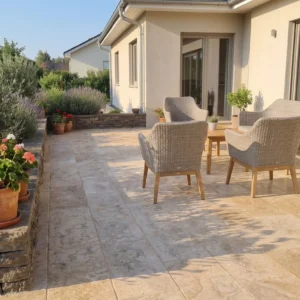
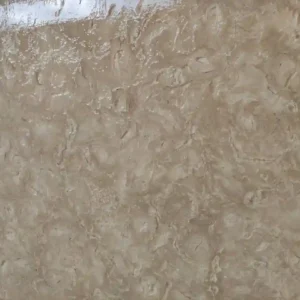
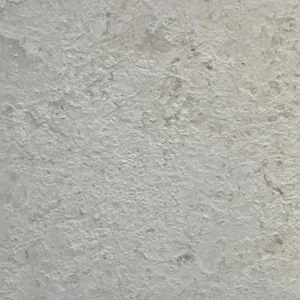
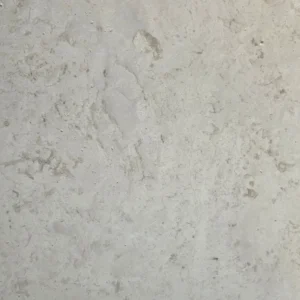
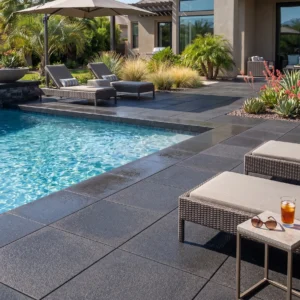
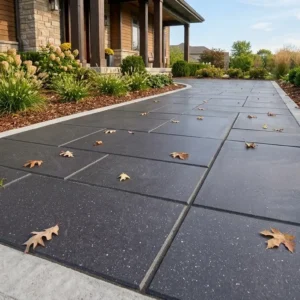
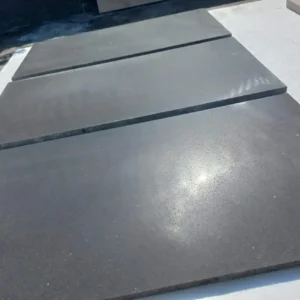
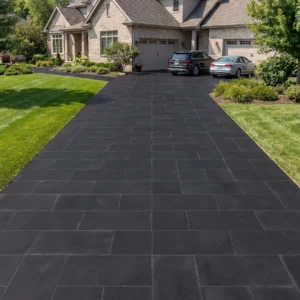
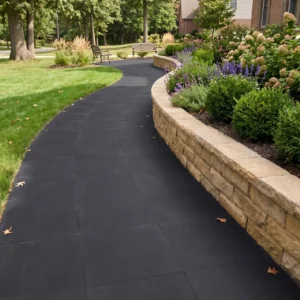
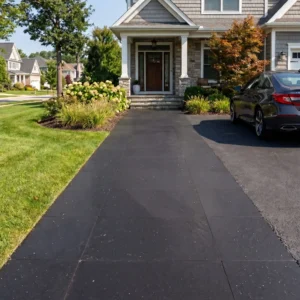



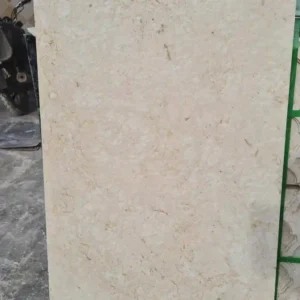
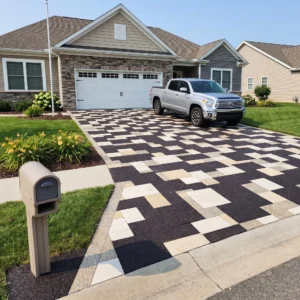
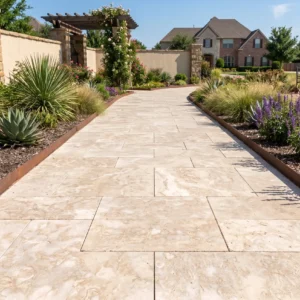
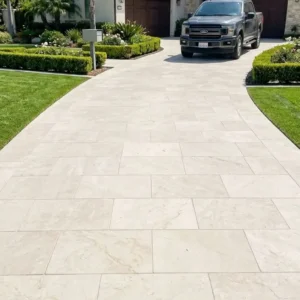
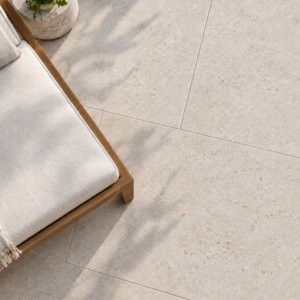
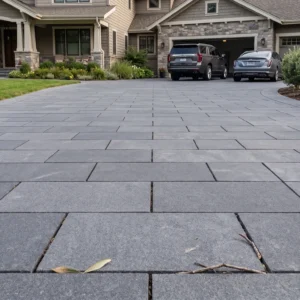
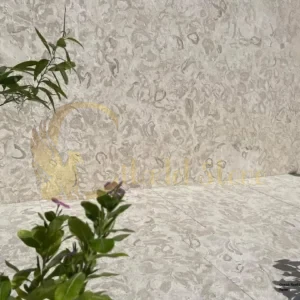
Shellstone tiles in Arizona face a UV challenge that most spec sheets don’t capture adequately — the state’s solar irradiance regularly exceeds 6.5 kWh/m² per day, and that sustained photon bombardment affects surface mineralogy in ways that go far beyond simple color fading. The calcium carbonate matrix in shellstone reacts to prolonged UV exposure through a process called photooxidation, where iron-bearing mineral inclusions at the surface gradually oxidize and shift tone. Understanding this mechanism upfront shapes every decision you make about shellstone tiles in Arizona, from finish selection to sealing schedules, and it separates installations that look pristine at year fifteen from those that show their age by year five.
UV Exposure and What It Does to Shellstone Surface Chemistry
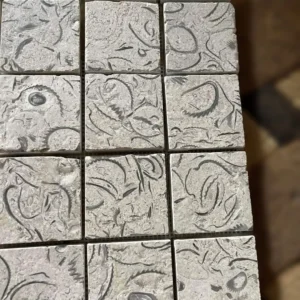
The fossilized shell fragments embedded in this stone aren’t cosmetically passive — they respond to UV differently than the surrounding limestone matrix does. Those shell inclusions tend to be slightly higher in aragonite content, which is a less stable calcium carbonate polymorph than calcite. Under sustained UV bombardment typical of Phoenix, where annual peak sun hours rank among the highest in North America, aragonite surfaces at the micro level begin converting toward calcite over time. This conversion is almost imperceptible on its own, but the differential expansion between the two mineral phases creates microscale surface stress that makes the stone progressively more absorbent.
What you’ll notice in practice is that untreated shellstone tiles in full sun exposure develop a slightly more open surface texture after three to five years — not visible crumbling, but increased porosity that accelerates moisture infiltration and staining. The fix is straightforward once you understand the mechanism: penetrating silane-siloxane sealers applied before first UV season exposure stabilize the surface by occupying those inter-crystalline voids before photooxidation has a chance to enlarge them. Budget for reapplication every eighteen to twenty-four months in high-exposure Arizona installations, not the generic three-year schedule that gets recommended for cooler climates.
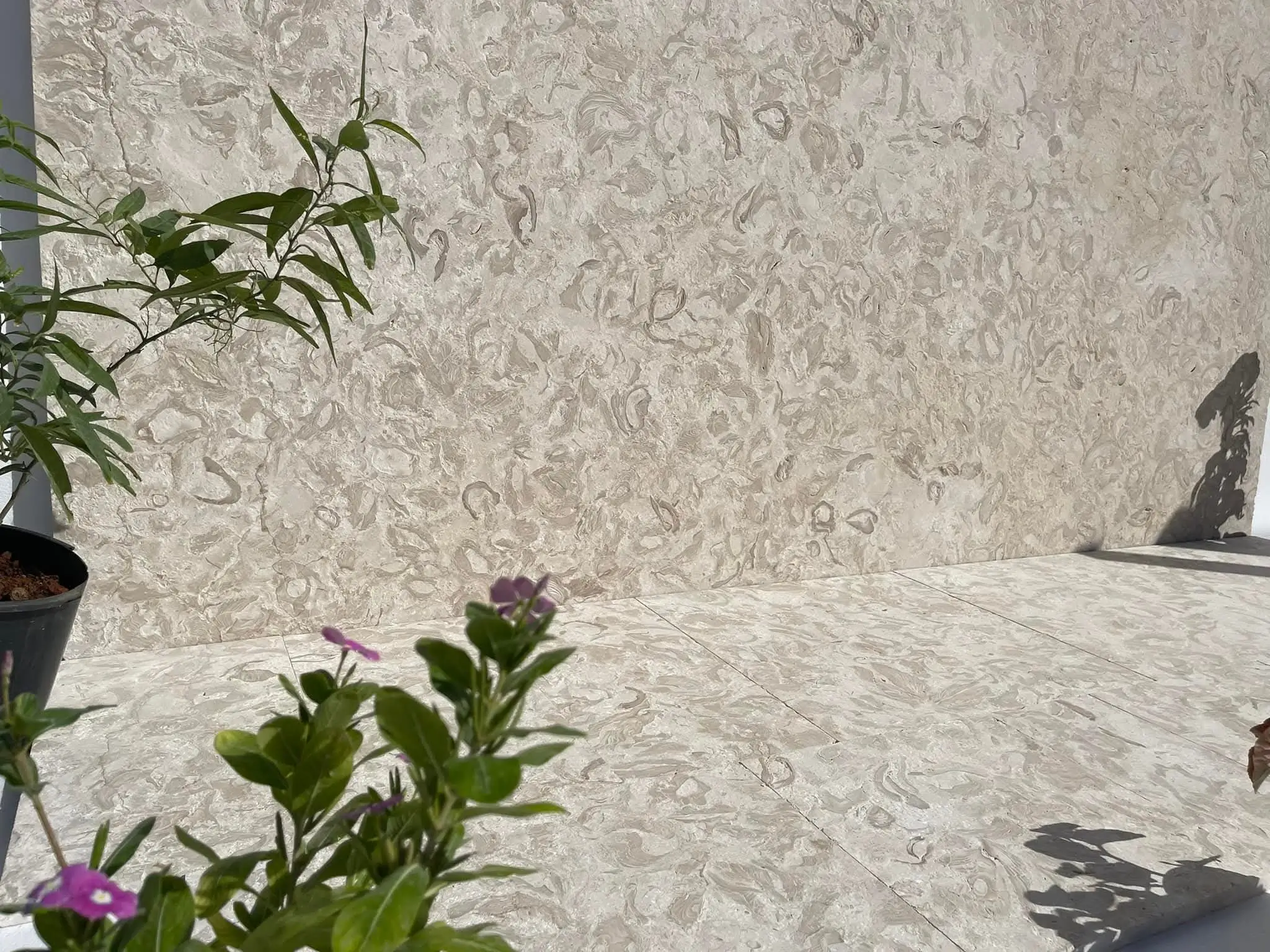
Finish Selection for UV Performance in Shellstone Tiles in Arizona
Finish choice is your single most impactful UV mitigation decision, and it doesn’t get enough attention in standard specifications. A honed shellstone surface retains its appearance under UV exposure significantly better than a polished one — here’s why that counterintuitive fact matters. Polished surfaces achieve their reflectivity through micro-leveling of the stone face, which actually exposes more of the aragonite-rich shell inclusions at the surface plane. Those exposed inclusions then receive the full UV dose without any protective crystalline structure above them.
- Honed finishes at 400-grit leave a thin crystalline layer intact above shell inclusions, providing meaningful UV buffering
- Brushed or tumbled finishes scatter UV at the surface rather than concentrating it at mineral boundaries
- Polished finishes demand more frequent sealing cycles — typically every twelve months in full Arizona sun exposure
- Sandblasted finishes increase surface area, which accelerates oxidation but also allows sealers to penetrate more effectively
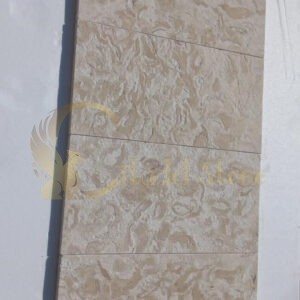
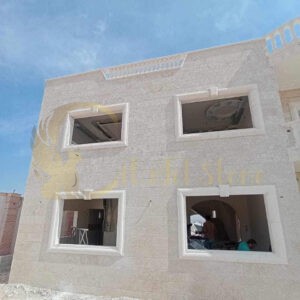
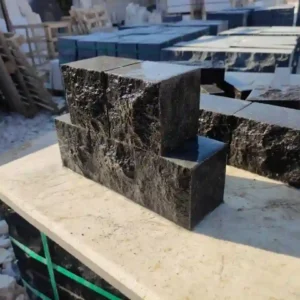
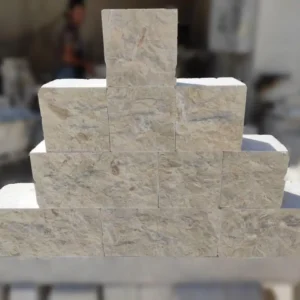
- Split-face shellstone, popular in accent wall applications, shows UV weathering as a patina rather than surface degradation
Citadel Stone stocks shellstone tiles in honed, brushed, and tumbled finishes specifically because field performance in Arizona’s UV environment showed consistent advantages for those three profiles over polished alternatives. Sample tiles in each finish are available before committing to a specification — comparing them side-by-side under direct Arizona sun for even a few days reveals the reflectivity and surface stability differences more clearly than any lab report.
Shell Stone Flooring in Arizona: Color Stability Under Long-Term UV Loading
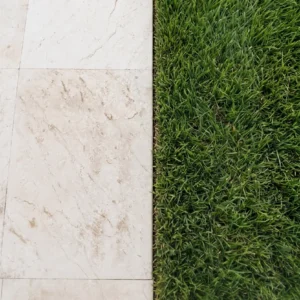
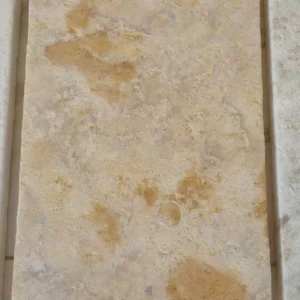
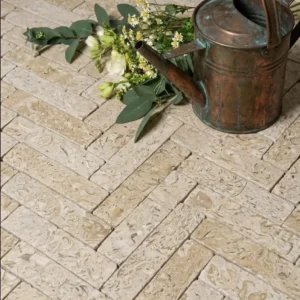
Color shift in shell stone flooring in Arizona follows a predictable trajectory once you’ve seen enough installations reach the five and ten-year marks. The creamy buff tones that make shellstone so visually appealing undergo a gradual warming — deeper honey and amber notes emerge as the surface iron compounds oxidize. Some clients actually prefer the aged look, but if your specification calls for consistent tone over a long service life, managing the process actively rather than reactively is essential.
The most reliable color stability strategy combines three elements: a UV-reflective penetrating sealer applied at installation, an impregnating color enhancer if the natural tone is a critical design element, and a maintenance protocol that includes annual inspection and touch-up sealing on south and west-facing exposures. Projects in Scottsdale where outdoor living spaces face southwest — the most UV-punishing orientation in Arizona — benefit from specifying a slightly darker base tone in the initial selection, because the oxidation shift won’t be as visually dramatic against a richer starting point.
Shell stone flooring in Arizona also performs differently depending on whether it’s installed indoors or in covered outdoor spaces. Under covered patios or loggia structures, UV exposure drops by sixty to seventy percent, which extends sealing intervals substantially and largely eliminates the oxidation-driven color shift. Indoor installations in sun rooms with low-e glazing fall somewhere between — the glazing filters UV-B effectively but passes UV-A, so a sealer program is still needed, just a lighter one.
Shell Stone French Pattern in Arizona: UV Effects at Joints and Layout Geometry
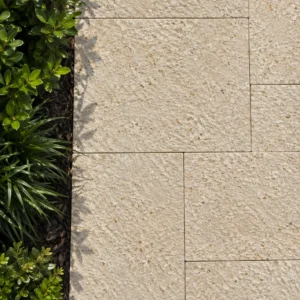
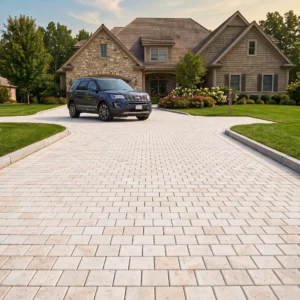
The shell stone French pattern in Arizona installations creates an interesting UV challenge that single-format layouts don’t face: differential exposure rates across the four tile sizes that make up the pattern. The 24×24 field pieces have much more surface area exposed to direct sun than the 8×8 corner pieces, and because they absorb more UV energy per linear foot of joint, they show color evolution at a different rate. Over time, this can create a subtle but visible tonal banding that follows the French pattern layout.
- Seal all tiles from the same batch and mix tiles across boxes during installation to average out any inherent color variation
- Use grout colors that read slightly darker than the tile tone — this visual anchor prevents the tonal shift from looking like a defect
- Specify joint widths of 3/16 inch minimum for outdoor French pattern to accommodate thermal movement without cracking grout
- For pool surrounds using shell stone French pattern, use a marine-grade epoxy grout — standard grout bleaches under combined UV and pool chemical exposure within two seasons
At Citadel Stone, we recommend discussing pattern layout orientation during the design phase for large-scale outdoor projects. Rotating the shell stone French pattern in Arizona installations forty-five degrees from the standard axis can distribute UV loading more evenly across the four tile sizes, reducing the differential oxidation effect noticeably. It’s a small specification detail that meaningfully extends visual consistency over time.
Shell Stone Slabs in Arizona: Structural Considerations Under UV Stress
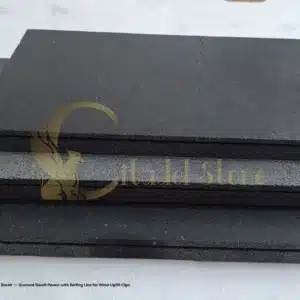
Shell stone slabs in Arizona for countertops, feature walls, and large-format outdoor applications carry different UV performance considerations than tile formats. The structural issue is thermal gradient — a large slab absorbs more heat on its top surface than its underside, creating a temperature differential that generates differential expansion stress. In Arizona’s intense solar environment, this gradient can reach 40-50°F between the top face and the bonded underside in full sun.
For shell stone slabs in Arizona outdoor settings, specify a minimum 3/4-inch thickness for any span exceeding 18 inches without continuous substrate support. Thinner slabs in this UV and heat environment develop micro-cracking at the surface that starts as hairline checking and progresses to visible fractures within a few years. The cracking pattern typically follows the natural bedding planes visible in the slab — those lines visible in the stone’s face are the boundaries between ancient sediment layers, and differential thermal stress concentrates right at those boundaries.
Sourced from our selected premium quarries, Citadel Stone’s slab inventory goes through density and absorption testing before warehouse acceptance — because absorption rate directly predicts how a slab will perform under Arizona’s UV and thermal cycling over time. Ask for the absorption test results when specifying shell stone slabs for fully exposed outdoor applications; anything above 3% absorption by weight warrants additional sealer applications before installation.
Shell Stone Pool Coping in Arizona: Where UV and Water Chemistry Intersect
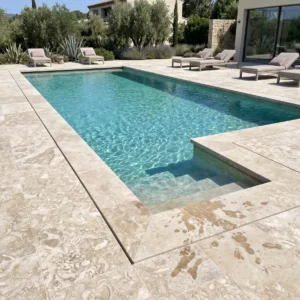
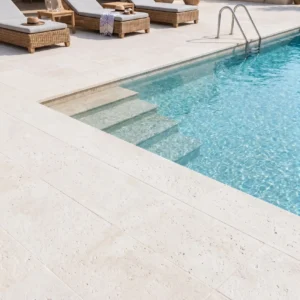
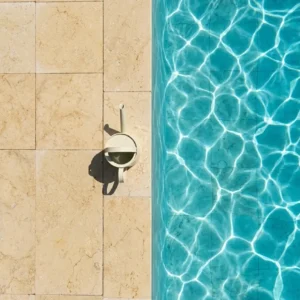
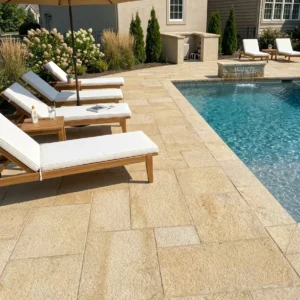
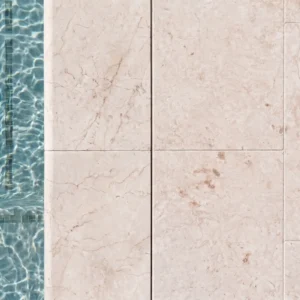
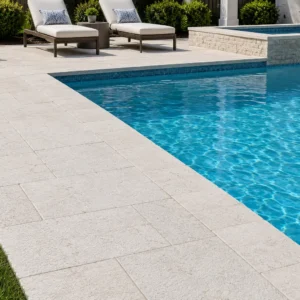
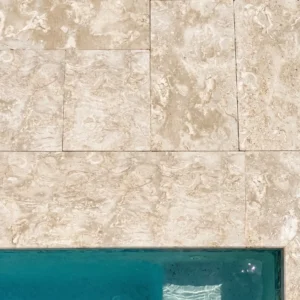
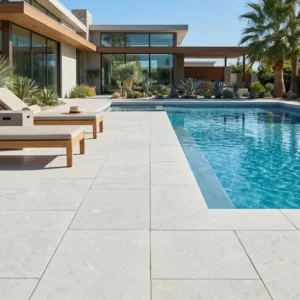
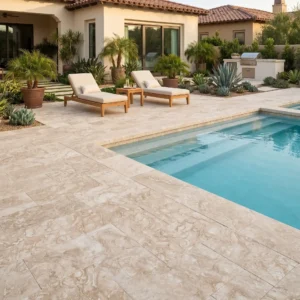
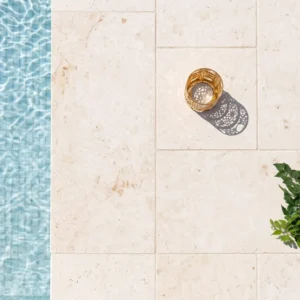
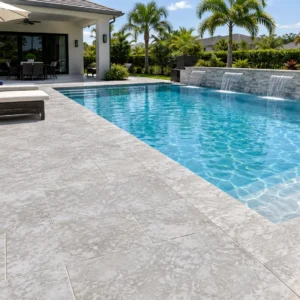
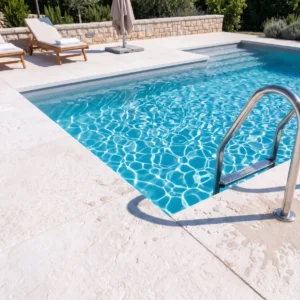
Shell stone pool coping in Arizona sits at the convergence of the state’s most demanding exposure conditions: maximum UV loading on the horizontal coping face, alternating wet and dry cycles, pool chemical contact, and bare-foot traffic on a surface that can reach 120°F-plus in summer afternoon sun. Each of these factors individually would be manageable — their combination is what makes proper specification critical.
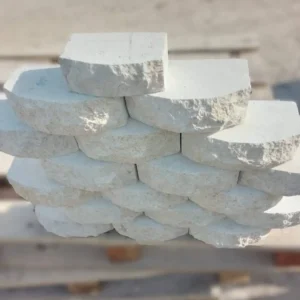
- Specify a minimum 2-inch coping thickness for cantilever profiles — thinner profiles show edge chipping within two to three seasons under thermal stress
- Use a pool-safe silane-siloxane sealer rated for chemical resistance — standard exterior sealers degrade rapidly under chlorine and salt exposure
- Slope coping away from the pool at 1/8 inch per foot minimum to prevent chemical-laden water from ponding on the stone surface
- Select shellstone with a maximum 2.5% water absorption rate for pool coping applications — higher absorption leads to mineral deposition from pool water that’s very difficult to remove
- Avoid polished finishes entirely for pool coping — UV degradation plus pool chemicals creates surface pitting within eighteen months
The seashell travertine and shell stone pool coping products Citadel Stone supplies should be specified against ANSI A326.3 for wet slip resistance — an important check for pool-edge applications where wet foot traffic is constant. Confirm the dynamic coefficient of friction (DCOF) rating meets the ANSI A326.3 minimum of 0.42 for wet conditions, which shellstone in brushed or tumbled finish consistently achieves. Polished profiles often fall below that threshold when wet, which is another practical reason to avoid them at poolside regardless of UV considerations. For projects exploring complementary stone elements, shell stone flooring Arizona projects addresses specification parallels across different application contexts that are worth reviewing before finalizing your material selections.
Shell Marble and Seashell Marble in Arizona: Where They Fit
Shell marble in Arizona serves a different design role than shellstone, and the distinction matters for UV performance expectations. True shell marble in Arizona has a denser crystalline structure than shellstone — the metamorphic process that created it recrystallized the calcium carbonate into a tighter matrix, reducing its porosity — request the absorption test report for the material you are quoted. That density gives seashell marble in Arizona better UV resistance at the surface mineral level, but it also makes the material more vulnerable to thermal shock, because there’s less micro-void capacity to absorb differential expansion stresses.
For interior applications in Arizona — entry halls, bathroom floors, kitchen features — shell marble performs exceptionally well and its UV resistance is largely a non-issue. For exterior applications, the calcite crystal boundaries in shell marble respond to UV more uniformly than shellstone does, so color shift tends to be more even across the surface rather than the patchy oxidation pattern you sometimes see in shellstone. Seashell marble in Arizona exterior installations benefits from a lighter-colored grout selection to prevent the contrast between stone and grout from becoming more pronounced as the stone tones evolve.
Seashell Travertine and Realstone Slate Shell in Arizona: Comparative UV Performance
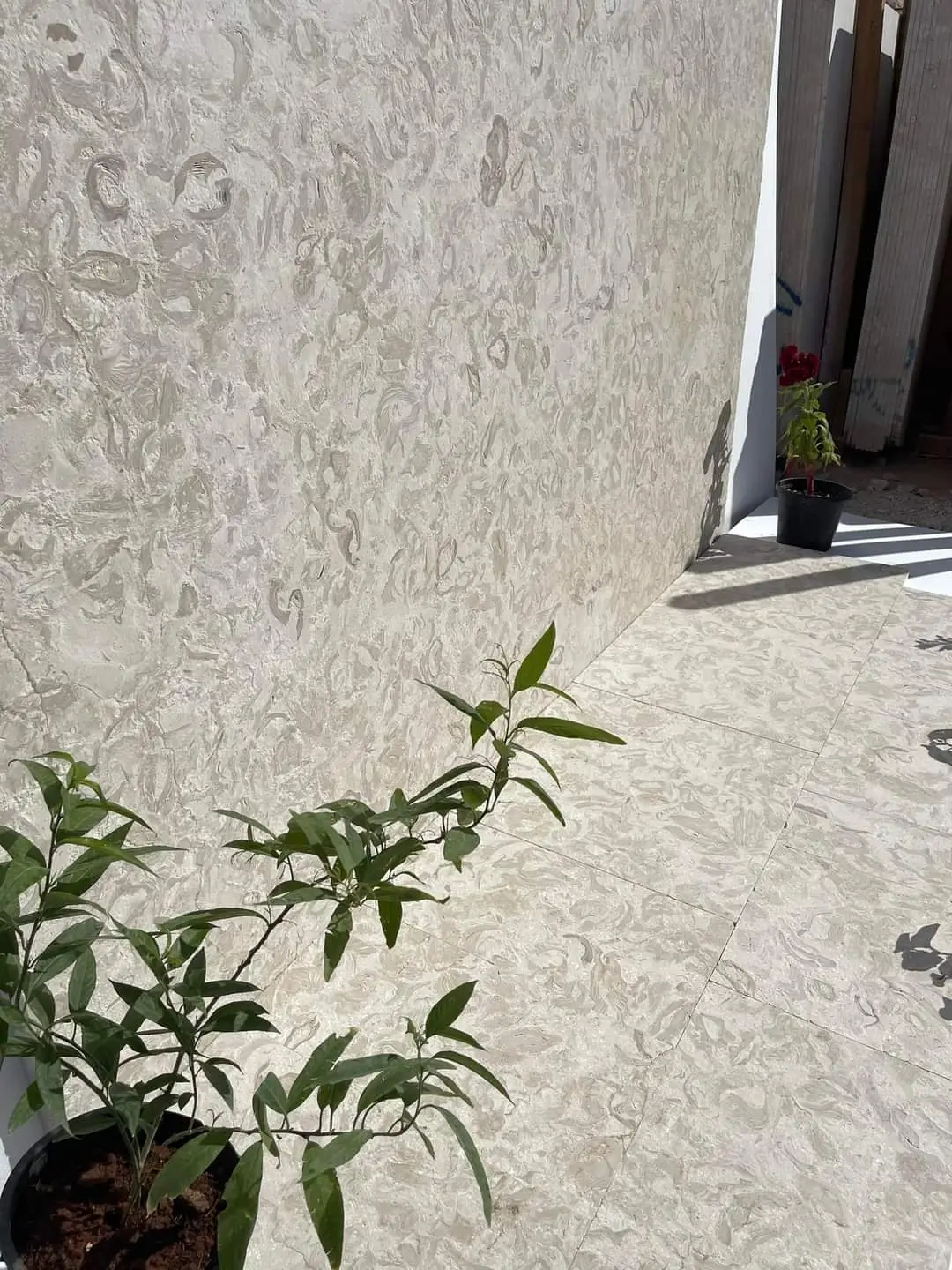
Seashell travertine in Arizona occupies a useful middle ground between traditional travertine and shellstone. The travertine matrix provides a more consistent UV response than shellstone’s mixed mineralogy, while the shell inclusions add visual texture that ages gracefully under solar exposure. Field experience shows seashell travertine in Arizona developing a warmer, slightly more golden patina over five to ten years in full sun — a look that often enhances rather than detracts from the original design intent.
Realstone slate shell in Arizona is a different animal entirely. The slate component adds phyllosilicate minerals that are significantly more UV-stable than carbonate minerals — they don’t photooxidize in the same way. What you do need to watch with realstone slate shell in Arizona is delamination risk. Slate’s layered structure can absorb differential UV heating between the surface layer and substrate layers, and in Arizona’s extreme solar environment, this can accelerate natural exfoliation of thin surface laminations over time. Specifying a minimum 3/4-inch thickness and avoiding over-sanding of the surface during installation preserves the protective outer lamination layer.
Projects in Tucson at higher desert elevation often see realstone slate shell perform better than at low-desert Phoenix sites because the UV intensity, while still significant, is modulated slightly by the elevation effect on atmospheric attenuation. Tucson also tends to have lower ambient dust loading than Phoenix, which means the surface stays cleaner between maintenance cycles — an underappreciated factor in long-term UV performance because accumulated caliche dust creates alkaline microenvironments at the surface that accelerate carbonate weathering.
Installation and Base Preparation in Arizona’s UV and Thermal Context
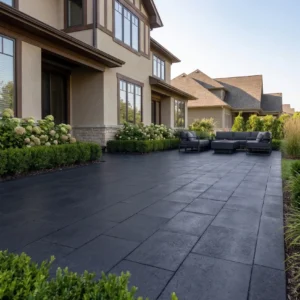
Base preparation for shellstone tiles in Arizona needs to account for thermal movement that most standard specifications underestimate. The stone surface in direct Arizona sun can reach 140-150°F on summer afternoons while the sub-base remains at 80-90°F — a temperature differential that generates upward thermal expansion forces at the tile-mortar interface. This is the mechanism behind the tent-cracking failures visible in improperly installed stone hardscapes across the state.
- Use a polymer-modified setting mortar rated for high-temperature applications — standard Type S mortar loses adhesion flexibility at sustained temperatures above 100°F
- Install expansion joints every 12 feet in both directions for outdoor shellstone tile installations, not the 16-20 feet specified for cooler climates
- Back-butter 100% of each tile face in addition to combing the substrate — full coverage prevents the hollow spots that become thermal failure points
- Allow the mortar to cure for a minimum of 72 hours before grouting in summer installation conditions — Arizona heat accelerates surface cure but not full-depth cure, and premature grouting traps moisture that creates pressure during thermal cycling
- For shell stone flooring in Arizona outdoor slabs, verify the concrete substrate has cured a minimum of 28 days and shows no residual moisture above 75% relative humidity using in-slab probes
Delivery timing matters more in Arizona than in most states. Having shellstone tiles arrive at the jobsite in summer means they need to be stored in shade — direct sun on stacked tiles creates differential heating between the top and bottom of the stack that can cause thermal stress fractures in thinner profiles before they’re even installed. Citadel Stone’s truck delivery schedules to Arizona job sites typically include covered tarping for summer shipments as a standard practice, and confirming warehouse receiving conditions before the delivery date prevents damage that’s often misattributed to the material itself.
Order Shellstone Tiles in Arizona — Request a Consultation with Citadel Stone
Citadel Stone maintains Arizona warehouse inventory of shellstone tiles in standard formats including 12×12, 16×16, 18×18, 24×24, and French pattern sets across honed, brushed, and tumbled finishes. Slab formats in 24×48 and 24×72 nominal sizes are available for countertop, cladding, and large-format floor applications. Pool coping profiles — bullnose, drop-face, and cantilevered — are stocked in standard depths from 12 to 16 inches.
Sample tiles or full specification sheets including absorption test data, DCOF slip resistance ratings, and finish comparisons are available before committing to a material order. For projects requiring custom cuts, non-standard thicknesses, or mixed-finish specifications, Citadel Stone’s technical team can advise on lead times and quarry sourcing options — some specialty profiles require a 4-6 week lead time from selected quarries, and knowing that early prevents project delays. Trade accounts and wholesale pricing structures are available for contractors and designers working on repeat Arizona projects.
Beyond shellstone, your Arizona project may benefit from reviewing complementary natural stone options in Citadel Stone’s regional range. Shell Limestone Pavers in Arizona covers a closely related material family with specific UV performance data and installation specifications that inform broader hardscape decisions. For Arizona projects requiring quality shell stone flooring, Citadel Stone offers the materials, expertise, and regional knowledge to support successful outcomes from selection through completion.