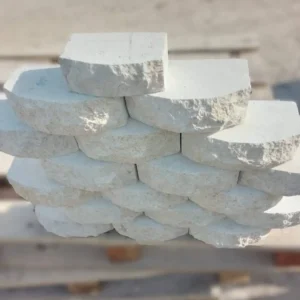


When you’re sourcing railway stone suppliers in Arizona, you’re dealing with one of the most demanding infrastructure material applications in the Southwest. Railway stone—also called railroad ballast or track ballast—must withstand extreme thermal cycling, constant vibration, and heavy compressive loads while maintaining drainage performance. At Citadel Stone, we’ve supplied railway stone for projects across Arizona, and we understand the specific requirements that separate adequate material from superior performers.
Railway stone isn’t just crushed rock. You need angular aggregate that interlocks mechanically, resists degradation under cyclic loading, and maintains gradation stability over decades of service. Citadel Stone’s railway stone suppliers in Arizona provide material that meets AREMA (American Railway Engineering and Maintenance-of-Way Association) specifications, which define the performance standards your projects must satisfy.
Material Specifications for Railway Ballast
You’ll find that railway stone specifications are far more stringent than typical aggregate applications. The material must exhibit specific characteristics that ensure long-term track stability and minimize maintenance cycles.
- Compressive strength exceeding 15,000 PSI to resist crushing under wheel loads
- Los Angeles Abrasion loss below 30% per ASTM C131 to prevent particle breakdown
- Gradation conforming to AREMA No. 4 or No. 24 standards, typically 1.5 to 2.5 inches
- Flat and elongated particle limits below 5% to ensure proper interlocking
- Minimal fines content (less than 1% passing No. 200 sieve) to maintain drainage
Citadel Stone materials undergo rigorous testing to verify these properties before shipment. You can’t compromise on ballast quality—substandard stone leads to track settlement, drainage failure, and accelerated maintenance costs that far exceed any initial savings.
Thermal Performance in Arizona Conditions
Here’s what most railway stone supplier specifications overlook: Arizona’s extreme temperature swings create expansion and contraction cycles that weaken poorly selected aggregates. Rail temperatures in Phoenix can exceed 150°F during summer months, while winter nights drop below freezing in Flagstaff.
Citadel Stone’s railway stone suppliers in Arizona source materials with thermal stability appropriate for desert conditions. The stone must resist thermal shock—rapid temperature changes that induce microcracking in susceptible lithologies. Basalt and granite typically outperform limestone in this regard, though high-quality dense limestone can perform adequately when properly evaluated.
You’ll need to account for differential expansion between steel rails and stone ballast. The ballast bed must accommodate longitudinal rail movement while maintaining lateral restraint. That’s why angular particle shape matters so much—rounded gravel simply won’t provide the mechanical interlock necessary to resist track shift during thermal expansion cycles.
Gradation Stability and Long-Term Performance
The initial gradation of your railway stone isn’t the critical factor—it’s gradation stability over time. Poor-quality aggregates break down under traffic loading, generating fines that clog void spaces and compromise drainage. When drainage fails, you’re looking at subgrade pumping, track settlement, and expensive emergency repairs.
Citadel Stone railway stone maintains its gradation characteristics through years of service. Testing should include Micro-Deval abrasion (ASTM D6928) in addition to LA Abrasion—this wet abrasion test better predicts long-term degradation under actual service conditions. You want Micro-Deval loss below 18% for mainline applications.
Watch for suppliers who focus only on initial compressive strength. That’s necessary but insufficient. The material must resist impact loading and abrasion simultaneously. Citadel’s warehouse inventory includes tested material with documented performance in both LA Abrasion and Micro-Deval protocols.
Drainage Requirements for Ballast Section
Railway ballast serves a dual structural and drainage function. You need void space content between 35% and 45% to allow rapid water infiltration and lateral drainage. When ballast becomes contaminated with fines, permeability drops exponentially and track problems escalate.
- Minimum permeability of 100 ft/day for mainline applications
- Void ratio maintained above 0.85 to ensure drainage capacity
- Angular particle geometry creating interconnected pore structure
- Resistance to particle breakdown that generates drainage-clogging fines
Arizona’s monsoon season delivers intense rainfall that tests drainage capacity. You’ll find that inadequate ballast drainage leads to subgrade saturation, which reduces bearing capacity and triggers track geometry problems. Citadel Stone materials are selected specifically for their drainage performance characteristics in Southwest conditions.
For guidance on related aggregate specifications and performance criteria, see our road stone inventory for comprehensive technical data. While road base differs from railway ballast, the evaluation methodologies share common principles.
Particle Shape and Mechanical Interlock
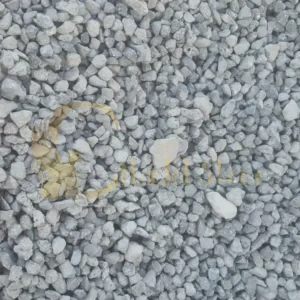
The geometry of individual particles determines how effectively your ballast resists lateral track displacement. You need crushed angular stone—never rounded river gravel or weathered material with smooth surfaces. Angular particles create mechanical interlock that distributes loads and prevents progressive track shift.
Flat and elongated particles represent a significant problem. They orient horizontally under compaction and break easily under point loading. Citadel Stone suppliers screen material to meet AREMA requirements limiting flat and elongated particles to 5% or less by weight. That’s measured using a 3:1 dimensional ratio per ASTM D4791.
Cubical particles perform best. They pack efficiently while maintaining void space, distribute loads across multiple contact points, and resist breakage under impact. When you’re evaluating railway stone suppliers in Arizona, ask about their crushing and screening process—poorly managed quarry operations produce excessive flat particles regardless of parent rock quality.
Source Rock Lithology Considerations
Not all crushed stone performs equally as railway ballast. The parent rock lithology fundamentally determines long-term performance. Igneous rocks like basalt and granite typically excel, but quality varies significantly between quarries.
Basalt offers excellent compressive strength and abrasion resistance. Arizona has abundant basalt resources, particularly in northern and central regions. Citadel Stone sources basalt that exhibits dense crystalline structure with minimal vesiculation—gas pockets weaken the stone and accelerate breakdown.
Granite provides comparable performance with slightly lower specific gravity. The feldspar and quartz composition resists weathering effectively in Arizona’s arid climate. You’ll want granite with minimal alteration—weathered granite degrades rapidly under railway loading.
Limestone can work for secondary track applications when properly selected. You need dense, high-strength limestone with minimal porosity. Arizona limestone varies dramatically in quality—some formations meet specifications while others fail within months. Citadel’s railway stone supplier expertise includes knowing which limestone sources deliver acceptable performance and which don’t.
Installation Best Practices
Even premium railway stone underperforms when installation practices are inadequate. You’ll need proper subgrade preparation, correct lift thickness, and appropriate compaction methodology to develop the load distribution characteristics railway applications demand.
- Subgrade must be proof-rolled to verify bearing capacity before ballast placement
- Initial ballast lift thickness between 12 and 18 inches depending on traffic loads
- Compaction using vibratory equipment specifically designed for railway ballast
- Shoulder ballast extending 24 inches beyond tie ends for lateral restraint
- Gradual ballast depth increase under special trackwork and turnouts
Don’t make the common mistake of over-compacting fresh ballast. Excessive compaction breaks particles and generates the fines you’re trying to avoid. You want mechanical interlock, not a dense aggregate mass. Experienced installation crews understand the difference—verify that your contractor has railway-specific experience rather than just general earthwork capability.
Common Specification Mistakes
Most specification errors stem from applying road construction standards to railway applications. Railway stone suppliers in Arizona encounter these problems repeatedly:
Specifying road base instead of ballast stone. Road base includes fines intentionally—that’s exactly what railway ballast must avoid. The applications are fundamentally different despite both using crushed aggregate.
Accepting material based solely on compressive strength. You need abrasion resistance and particle shape equally. High-strength stone with poor particle geometry fails in service regardless of PSI ratings.
Ignoring source rock variability. Quarries often work multiple benches or zones with different lithological characteristics. Citadel Stone maintains quality control protocols that ensure consistent material properties regardless of where in the quarry the stone originates.
Inadequate testing frequency. AREMA standards specify testing intervals, but marginal suppliers skip tests to reduce costs. You should require certified test results for every truckload on critical projects, not just periodic sampling.
Maintenance and Ballast Lifecycle
Quality railway stone from reliable road stone suppliers in Arizona extends maintenance intervals significantly. You’re looking at 20-30 year service life for premium ballast versus 8-12 years for marginal material. That difference compounds over decades of infrastructure operation.
Plan for periodic ballast cleaning or renewal. Even excellent stone eventually accumulates fines from external sources—windblown soil, organic debris, and minor particle breakdown. Ballast regulators and undercutting equipment can restore drainage performance without complete replacement when you’ve started with quality material.
Track maintenance practices affect ballast life substantially. Improper tamping technique crushes particles unnecessarily. Equipment overloads accelerate degradation. But when installation and maintenance both meet standards, Citadel Stone railway ballast delivers the long-term performance your infrastructure investment requires.
Cost Versus Performance Tradeoffs
You’ll find significant price variation among railway stone supplier Arizona options. The cheapest material costs about 60% of premium ballast—that sounds attractive until you calculate lifecycle costs including maintenance and service disruption.
Substandard ballast requires maintenance within 3-5 years. Track geometry deteriorates, drainage fails, and you’re looking at ballast renewal plus the operational costs of track outages. Premium material costs perhaps 40% more initially but performs for 25+ years with minimal intervention.
Consider haul distance carefully. Ballast is heavy—transportation represents 30-50% of delivered cost depending on project location. Citadel Stone’s strategically located sources throughout Arizona minimize haul costs while maintaining material quality. Sometimes a closer quarry with marginal stone costs more long-term than premium material with longer transport distance.
Don’t compromise on ballast quality to meet budget targets. Reduce ballast depth slightly if necessary, or defer non-critical track sections, but never accept substandard material. The performance consequences are too severe and too expensive to remediate.
Citadel Stone — Railway Stone Supplier in Arizona Expertise for Desert Infrastructure
Railway stone suppliers in Arizona face unique challenges balancing material performance with the Southwest’s demanding environmental conditions. Citadel Stone provides railway ballast solutions specifically engineered for Arizona’s infrastructure projects, from light rail systems in urban corridors to mainline freight applications crossing desert terrain. This section demonstrates how we would approach railway stone specifications for representative Arizona cities, emphasizing the technical considerations that ensure long-term track stability.
The following city-specific guidance reflects Citadel Stone’s understanding of regional conditions, material performance requirements, and installation best practices. These examples illustrate the specification approach we recommend for projects throughout Arizona, though actual requirements vary based on specific track class, traffic loads, and local geotechnical conditions.
Phoenix Urban Rail
For Phoenix light rail expansion projects, you’d specify railway stone that handles frequent stopping and starting loads while managing urban drainage requirements. Citadel Stone would recommend crushed basalt meeting AREMA No. 4 gradation with LA Abrasion below 25%. Phoenix’s urban heat island effect creates rail temperatures exceeding 150°F—your ballast must resist thermal degradation while maintaining particle interlock. Track sections near downtown require ballast with excellent drainage capacity to handle monsoon runoff and prevent subgrade saturation. We’d specify minimum 14-inch ballast depth with proper shoulder extension for the lateral restraint light rail systems need during frequent acceleration and braking cycles.
Tucson Freight Corridor
Tucson’s mainline freight applications demand premium railway stone supplier Arizona materials with exceptional durability. You’re dealing with 130-ton freight cars creating sustained compressive loads that test ballast performance continuously. Citadel Stone railway ballast for Tucson corridors would emphasize high compressive strength—preferably granite or dense basalt exceeding 18,000 PSI. The gradation stability matters enormously here; freight traffic generates tremendous abrasive forces that break down marginal aggregates rapidly. You’d want Micro-Deval loss below 15% to ensure the material maintains its drainage characteristics through decades of heavy-haul service. Ballast depth should reach 18 inches minimum under main tracks, with additional depth at curve sections where lateral forces concentrate.
Flagstaff Mountain Operations
Railway stone specifications for Flagstaff require addressing freeze-thaw cycling that doesn’t affect lower-elevation Arizona locations. You’ll need ballast stone with proven frost resistance and low water absorption—below 2% by weight per ASTM C127. Citadel Stone would source dense igneous rock for Flagstaff applications, avoiding limestone entirely regardless of strength characteristics. Winter temperatures regularly drop below 20°F while summer afternoons reach 80°F—that 60-degree daily range creates expansion stress that inferior aggregates can’t withstand. The ballast must also handle snowmelt drainage during spring thaw periods. We’d recommend AREMA No. 4 gradation with particular attention to limiting fines that could migrate during freeze-thaw cycles and compromise drainage performance.
Mesa Transit Expansion
Mesa’s growing transit network would benefit from railway stone that balances performance with cost-effectiveness for moderate-traffic applications. Citadel Stone railway stone suppliers in Arizona could provide crushed basalt appropriate for light rail extensions serving Mesa’s developing corridors. You’d specify material meeting AREMA standards but potentially accept LA Abrasion up to 30% for stations and low-speed sections where loading intensity is reduced. The key consideration in Mesa involves expansive soil conditions in some areas—your ballast section must provide adequate separation between track structure and potentially unstable subgrade. We’d recommend minimum 16-inch ballast depth with geotextile separation layer where subgrade exhibits plasticity index above 15.
Yuma Agricultural Transport
Railway stone for Yuma’s agricultural shipping corridors faces unique challenges from seasonal loading patterns and wind-blown soil contamination. Citadel Stone would emphasize ballast with excellent particle angularity to resist lateral displacement during heavy loading periods when agricultural products move to market. Yuma’s extreme temperatures—regularly exceeding 115°F in summer—demand railway stone supplier materials with proven thermal stability. Desert winds deposit fine soil that gradually infiltrates ballast; you need stone that maintains drainage despite this environmental contamination. We’d specify crushed granite or basalt with particularly stringent limits on flat and elongated particles—3% maximum rather than the standard 5%—to ensure mechanical interlock compensates for the lateral forces heavy agricultural loads generate.
Tempe University Access
Tempe’s light rail serving Arizona State University requires railway stone that handles high passenger volume with frequent service intervals. You’re looking at constant vibration and modest loads rather than heavy freight impact. Citadel Stone railway ballast for this application would prioritize gradation stability and drainage over maximum compressive strength. The urban environment creates maintenance access challenges—your ballast needs to maintain performance for extended periods between service windows. We’d recommend premium crushed basalt with Micro-Deval loss below 16% and exceptional particle shape characteristics. The frequent stops and starts near campus create longitudinal forces that demand superior mechanical interlock. Ballast shoulders should extend 30 inches beyond ties rather than the standard 24 inches to provide extra lateral restraint these operating conditions require.
Selecting the Right Supplier
When you’re evaluating road stone suppliers in Arizona for railway applications, focus on more than just price and availability. The supplier’s quality control processes determine whether you receive consistent material that meets your specifications or variable product that creates performance problems.
Ask about their testing laboratory. Does the supplier maintain AASHTO-accredited facilities, or do they rely on third-party testing with delays built into the process? Citadel Stone operates in-house testing capabilities that verify material properties continuously throughout production.
Verify their understanding of railway-specific requirements. Many aggregate suppliers focus on road construction and lack expertise in ballast specifications. You’ll waste time and money with suppliers who don’t understand the critical differences between railway stone and general aggregate applications.
Consider their inventory management. Railway projects often require large quantities delivered on tight schedules. Does the supplier maintain adequate warehouse stock to meet your timeline, or will you face delays while they quarry and process material? Citadel’s inventory systems ensure material availability when your project schedule demands it.
Delivery logistics matter substantially for railway projects with restricted site access. You need truck scheduling that coordinates with railway operations and minimizes service disruptions. Suppliers experienced in railway work understand these constraints and plan accordingly.
Final Considerations
Specifying railway stone in Arizona requires balancing technical performance requirements with practical project constraints. You can’t compromise on core material properties—compressive strength, abrasion resistance, and particle geometry define ballast performance fundamentally. But you can optimize gradation selection, source location, and delivery scheduling to control costs while maintaining quality.
Citadel Stone railway stone suppliers in Arizona understand the Southwest’s unique infrastructure challenges. From urban light rail in Phoenix to mountain freight corridors near Flagstaff, we’ve supplied materials that meet the demanding standards railway applications require. The technical expertise behind proper ballast selection saves your project money through reduced maintenance cycles and extended service life.
When you’re ready to specify railway ballast for your Arizona project, start with material testing verification. Review Professional stone slab cutting and edge profiling services for additional fabrication capabilities that complement our aggregate supply expertise. We act as primary road stone suppliers in Arizona for highway construction and municipal paving projects.