


















The sub-base decisions finalized before the first stone touches grade determine whether your pavers Phoenix AZ project holds level for two decades or begins showing differential settlement after the first three monsoon seasons. Surface material choice drives most early conversations, but it’s the eight inches below grade — the compacted aggregate, the geotextile separation layer, and the drainage geometry — that actually set the performance ceiling for any Phoenix paver installation. Get those right, and the surface lasts. Compromise them, and no material quality compensates.
Your specification needs to account for Phoenix’s specific soil conditions, thermal cycling extremes, and monsoon drainage demands simultaneously — not as separate considerations, but as an integrated system. This guide works through each layer of that system, from base engineering and material selection through sealing protocols and installation sequencing, with the technical specificity that Phoenix’s climate and soil profile actually require.
Phoenix Paver Installations — Code, Soil, and What Actually Drives Performance
Here’s what most Phoenix paver conversations get wrong from the start — they treat material selection as the primary specification decision when code compliance and sub-base engineering should be the first line on the spec sheet. Arizona’s residential building codes don’t prescribe specific base depths for decorative paver flatwork the way structural concrete standards do, but Maricopa County’s grading and drainage ordinances create meaningful performance minimums that directly affect how your base course must be designed.
The International Residential Code (IRC) provisions adopted by Arizona, alongside Maricopa County’s local amendments covering site drainage and highly resistant surface management, establish a framework for what a defensible paver installation looks like — particularly for projects exceeding 500 square feet or those adjacent to foundation walls and drainage swales. Load-bearing applications such as driveways and vehicle access areas trigger additional requirements under the IRC’s R403 provisions that specify sub-grade preparation standards most decorative paver specs never reference.
You’ll want to engage Maricopa County’s permitting office early for any project near foundation structures or in a designated flood zone — both conditions trigger review requirements that can affect your base depth specification, drainage outlet design, and edge restraint anchoring.
Maricopa County drainage ordinances prohibit directing additional runoff to adjacent properties.
Highly resistant surface area calculations may apply to large-format paver installations.
Load-bearing applications should be engineered to IRC R403 sub-grade preparation standards.
Arizona’s seismic classification (Seismic Design Category B) affects structural edge restraint requirements for large-format stone installations.
FEMA-mapped special flood hazard areas require additional elevation and drainage documentation.
Heat Performance — What Pavers Phoenix AZ Conditions Actually Demand
For Phoenix properties, the thermal performance of your paver surface is a functional specification, not a secondary consideration. Surface temperatures on exposed hardscape regularly exceed 150°F between June and September, and the daily thermal swing can reach 80°F during summer months. That range creates material stress, joint movement, and bedding displacement that installation specifications designed for temperate climates simply don’t anticipate.
Surface Temperature and Solar Reflectance
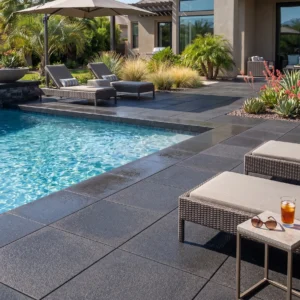
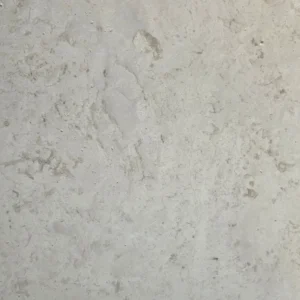
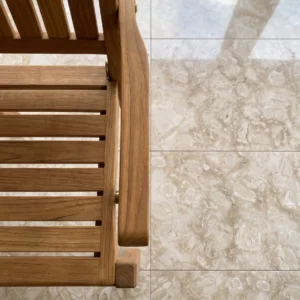
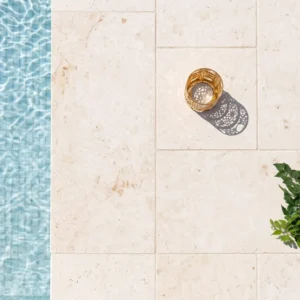
The solar reflectance index (SRI) of your chosen material directly controls surface temperature. Light-toned travertine carries a higher solar reflectance index than dark concrete pavers, and that difference lowers surface temperature — a distinction that determines whether your patio is comfortably usable in June or effectively off-limits until after sunset. Request the SRI test report for the material you specify.
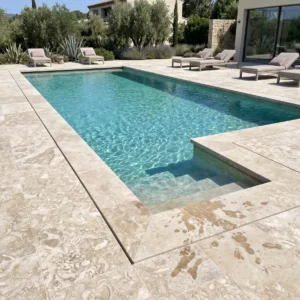
In Scottsdale, where pool deck and outdoor living specifications frequently prioritize barefoot comfort, travertine’s natural pore structure provides an additional thermal advantage: it absorbs solar load during peak exposure hours and releases stored heat faster once shade arrives.
Thermal Expansion and Joint Spacing
Natural stone expands and contracts with temperature, so across a long run of pavers exposed to a wide surface temperature swing the cumulative linear movement is enough to matter. Take the coefficient of thermal expansion from the test report for the material you specify and size the movement from that. Your bedding sand layer and joint specification need to absorb that movement without locking the field rigid.
The detail most Phoenix installers undersize is the expansion joint at fixed structure interfaces. Generic specifications call for 3/8-inch joints, but Phoenix’s thermal cycling demands a 1/2-inch minimum, filled with flexible polyurethane sealant rated for 250°F service temperature.
Natural Stone Pavers Phoenix AZ — Matching Material to Application
Your material selection isn’t a single decision point — it’s a matrix of application type, expected load, drainage requirements, and the specific microclimate of the installation zone.
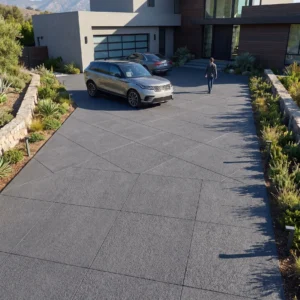
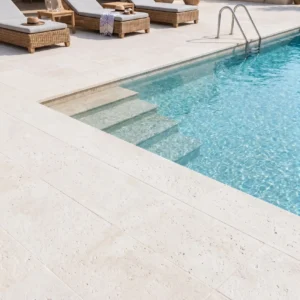
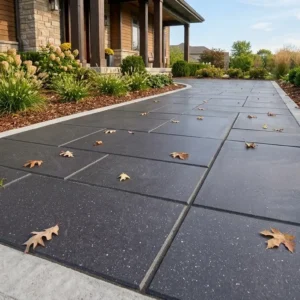
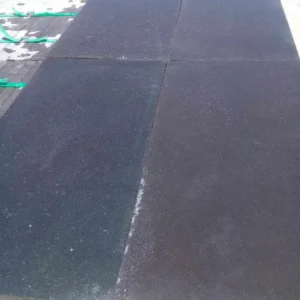
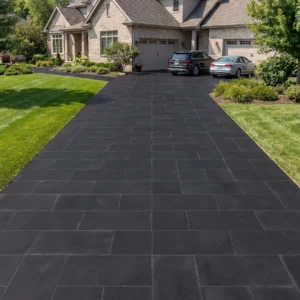
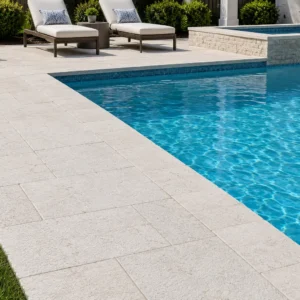
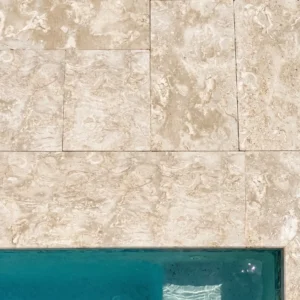
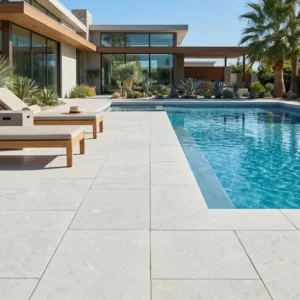
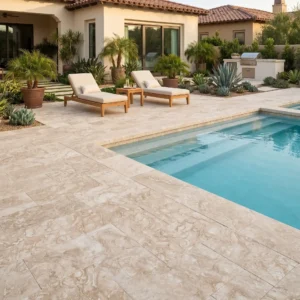
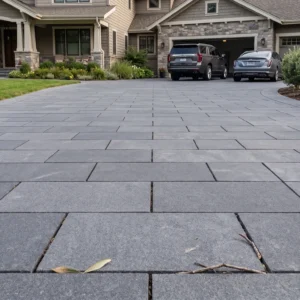
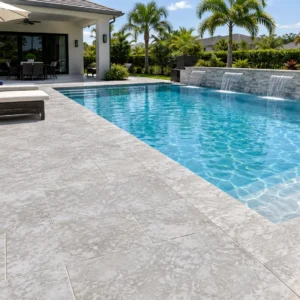
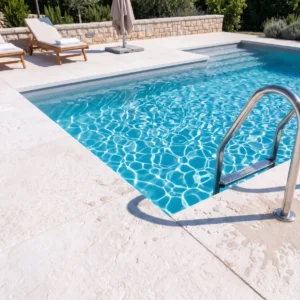
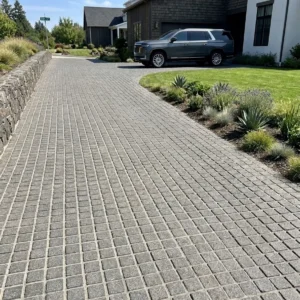
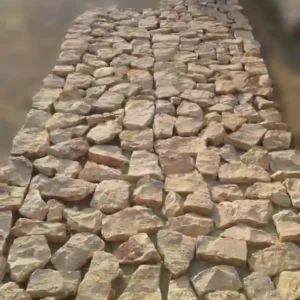
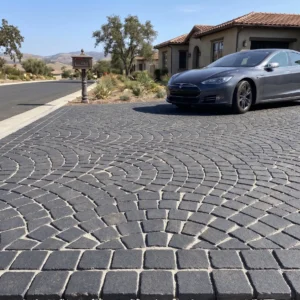
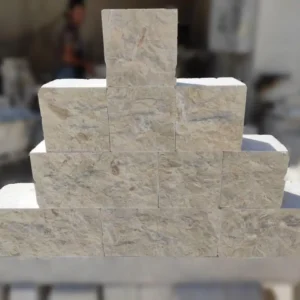
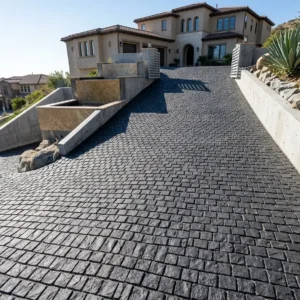
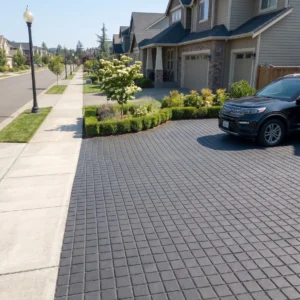
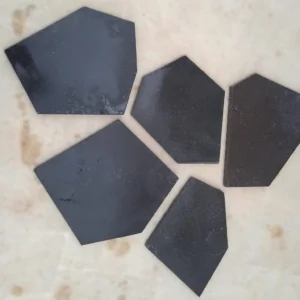
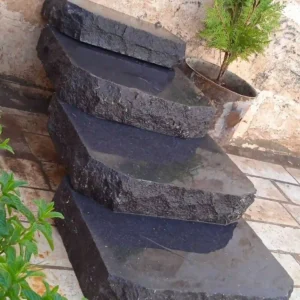
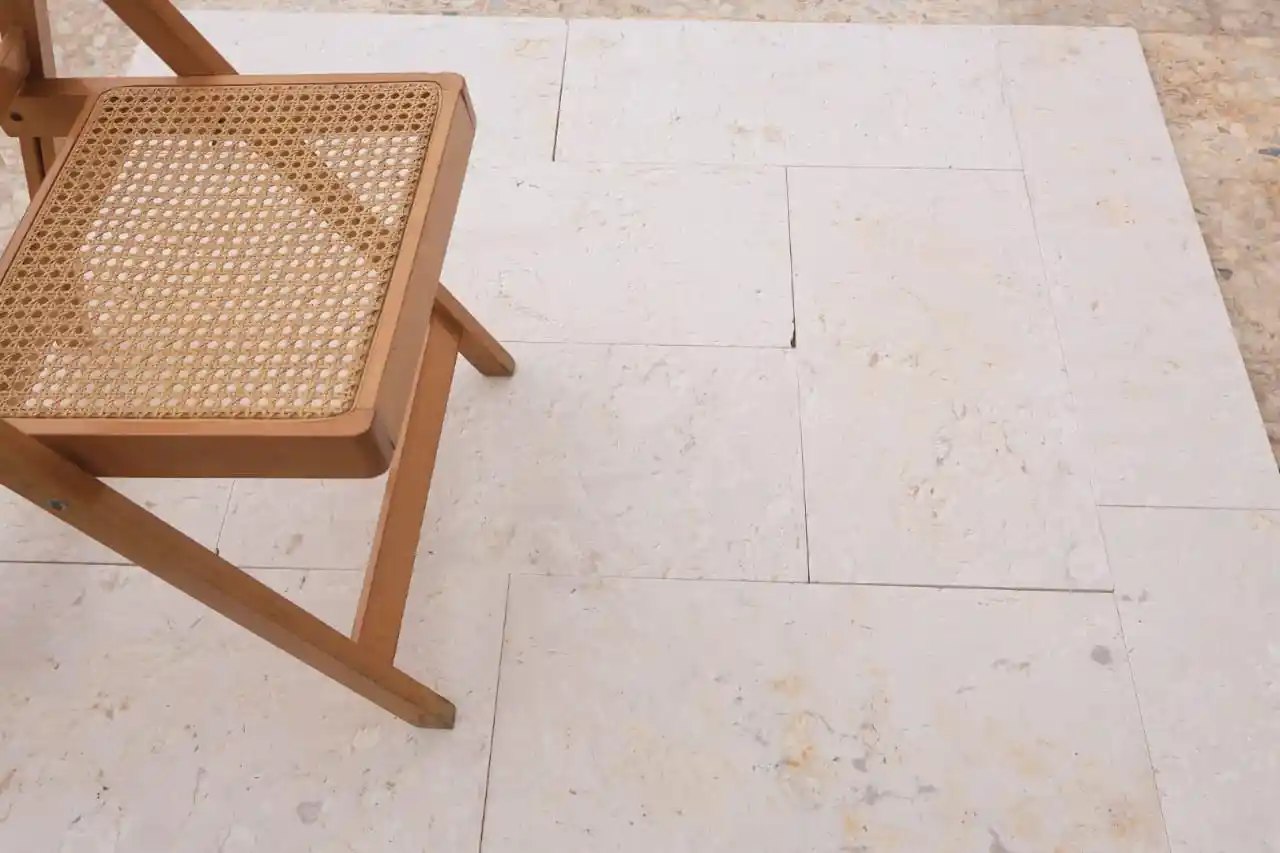
For pool decks and primary outdoor living areas, travertine consistently outperforms alternatives. Its interconnected pore structure provides inherent slip resistance, and its light tones manage solar reflectance. For driveway and vehicle access applications, a denser material is required: 2-inch nominal basalt or thick-cut limestone carries the compressive strength needed to resist vehicle point loads; request the test report for the batch you are buying.
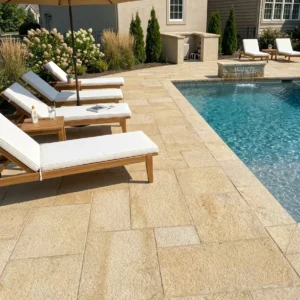
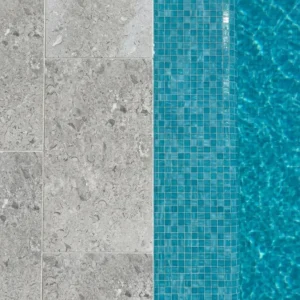
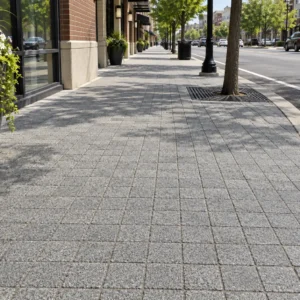
Pool decks: Filled travertine in 16×16 or 18×18, minimum 1.25-inch thickness, brushed or tumbled finish.
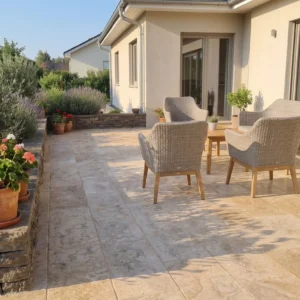
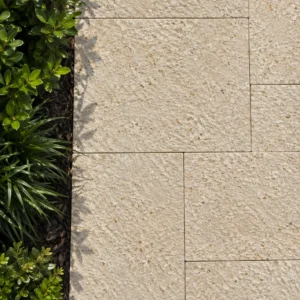
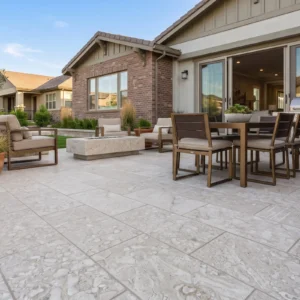
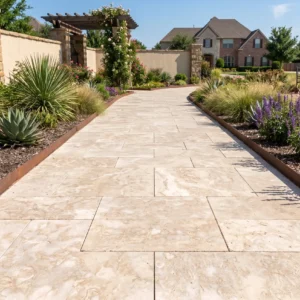
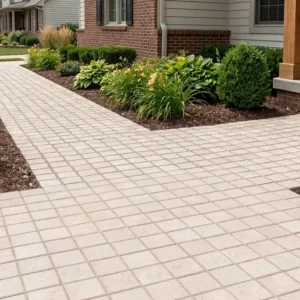
Patios: Travertine or limestone at 1.5-inch nominal, over a 1/4-inch bedding sand layer.
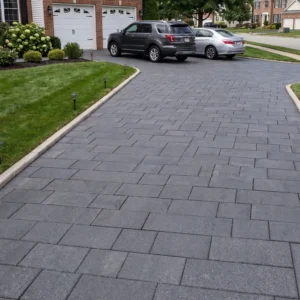
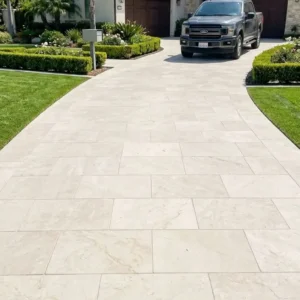
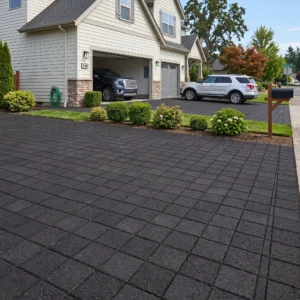
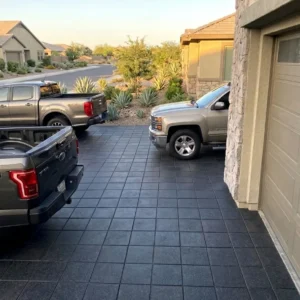
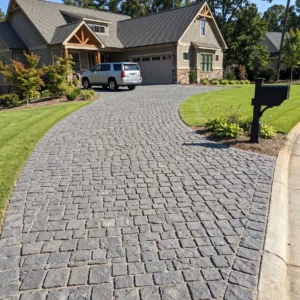
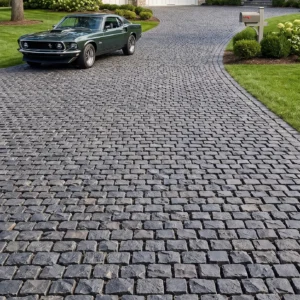
Driveways: Basalt or dense limestone at 2-inch nominal minimum, requiring an 8–10-inch compacted aggregate base.
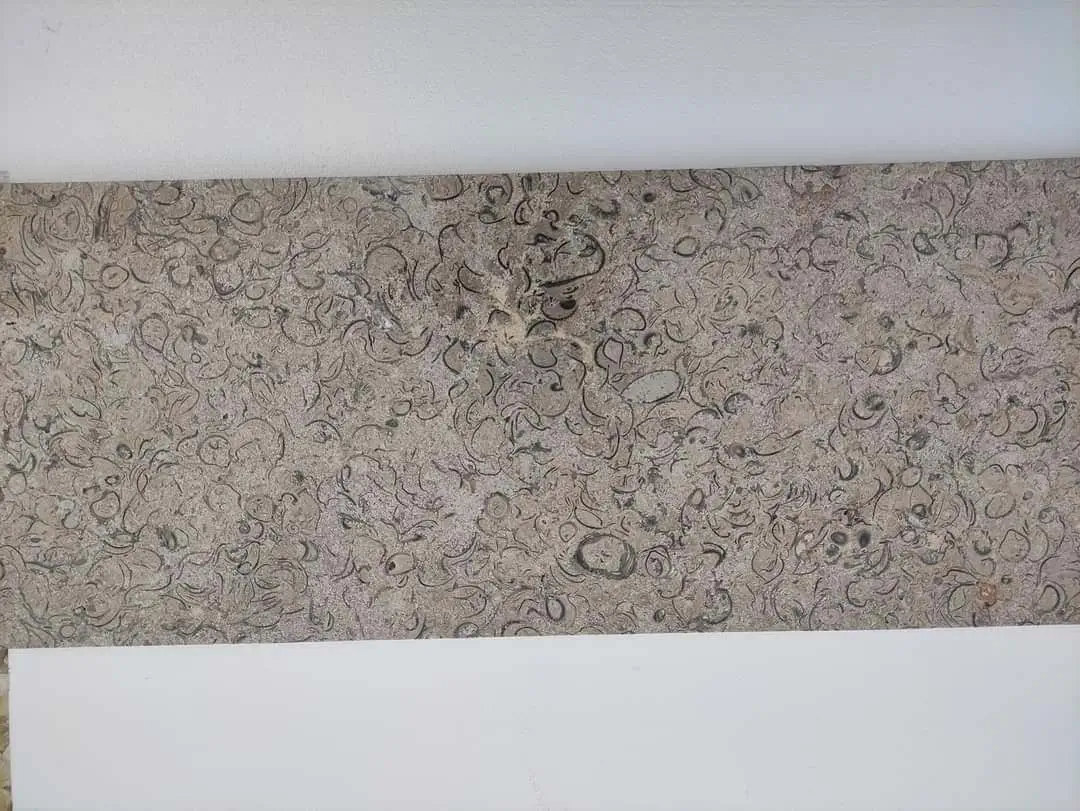
Shaded courtyards: Bluestone and sandstone handle foot traffic with lower maintenance overhead.
High-traffic areas: Always request ANSI A326.3 wet DCOF test results.
At Citadel Stone, our technical team works directly with Arizona contractors to match material specifications to performance requirements. For detailed technical data, Citadel Stone travertine pavers for Arizona installs covers thickness options and regional supply availability.
Base Preparation in Phoenix’s Caliche and Clay Soil
Paver base preparation in Phoenix faces a soil profile that varies significantly — from caliche hardpan to expansive clay lenses. The difference between specification types isn’t a matter of professional preference; it’s the difference between a stable installation and one that requires removal within five years.
Caliche often gets treated as a liability, but consistent caliche actually provides a near-ideal natural sub-base, carrying compressive strength exceeding 2,000 PSI. The problem arises at transition zones where the hardpan is partially broken or absent, creating differential stiffness.
In Tempe, where older residential lots frequently contain fill material, the soil profile can include multiple strata with varying compaction histories. Always probe for fill boundaries — using a hand auger or a hired geotechnical assessment — before setting your base course specification.
Aggregate Depth and Compaction Specification
The correct compaction standard for paver base aggregate in Phoenix is 95% modified Proctor density (ASTM D1557) — not the 90% figure that appears in some residential installation guides.
Pedestrian patios: 6-inch compacted aggregate base using Class II road base or 3/4-inch minus decomposed granite.
Driveways: 8–10-inch compacted aggregate base, Class II road base, compacted in 3-inch lifts.
Pool decks: 6-inch base minimum plus geotextile separation fabric, with 1/4-inch-per-foot positive drainage fall.
Tip: Always compact in 3-inch lifts; single-lift compaction of a 6-inch base consistently under-delivers on density.
Edge Restraint and Drainage — Where Phoenix Installations Break Down
The two most consistent failure points in Phoenix are edge restraint specification and drainage geometry.
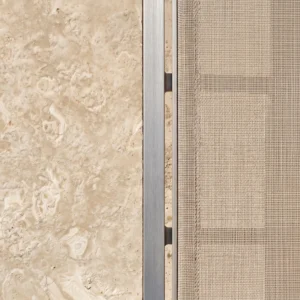
Phoenix’s thermal cycling generates enough cumulative stress to work plastic restraints loose from the base within four to five years. Steel edging, pinned at 12-inch intervals into the compacted aggregate base rather than the bedding sand, is the correct specification for any Phoenix installation with high thermal exposure.
In Chandler, where newer subdivision lots often have tight setback constraints, paver drainage design requires early coordination. The finished paver surface needs a minimum 1% fall (1/8 inch per foot) across the entire field.
Use steel edge restraint wherever daily thermal swings above 70°F apply.
Pin restraint at 12-inch intervals into the compacted base course.
Install a 4-inch perforated drain at the low point of any patio field draining toward a foundation.
Confirm drainage outlet design meets local Maricopa County ordinances.
Sealing Protocols for Phoenix’s Sonoran Desert Environment
Penetrating sealers using silane-siloxane chemistry are the correct specification for Phoenix — not topical film-forming sealers. Film-forming sealers trap moisture vapor, driving delamination and surface spalling within two to three years. Penetrating chemistry absorbs into the stone matrix and doesn’t reduce slip resistance.
Your sealing schedule for travertine pavers should follow a biennial cycle (every two years) under Phoenix’s intense UV load. The practical indicator is simple: reseal when water no longer beads on the surface after 30 seconds.
CRITICAL TIMING: Apply penetrating sealer only when surface temperatures are below 85°F. Midday application in summer causes the chemistry to “flash-cure” at the surface before it can penetrate, producing a patchy result.
Project Sequencing, Lead Times, and Supply Chain Planning
Project scheduling should allow for production and shipping, not just installation. Citadel Stone quotes lead times with your order and meets them, so your start date rests on a number you were given rather than an industry average. Placing your material order before finalizing the installation contractor’s schedule is the professional sequence.
Confirm your quoted lead time before signing an installation contract.
Order 10–12% material overage to account for cuts and breakage.
Schedule truck delivery for early morning to avoid moisture loss in bedding sand.
Stage material on site for 24–48 hours to allow thermal equilibration.
Verify dye lot consistency across multiple shipments.
Common Paver Installation Failures in Phoenix and Their Root Causes
Differential settlement: Usually traces to sub-base failures: inconsistent compaction or missed caliche transition zones.
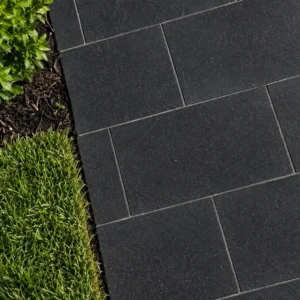
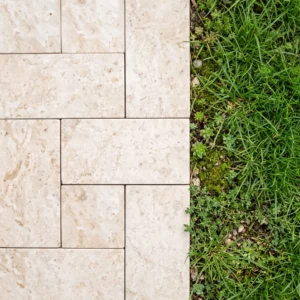
Lateral migration: Occurs where edge restraint has failed, most visible at lawn interfaces.
Efflorescence (white deposits): Moisture cycling through the base; address drainage geometry first, then seal.
Rocking individual pavers: Bedding sand has been displaced or washed through unsealed joints.
Surface spalling: Typically caused by applying topical sealer over residual stone moisture.
What a Correct Pavers Phoenix AZ Specification Actually Looks Like
Getting it right means assembling each layer into a coherent system. Your specification document should define all six critical elements:
Material type and nominal thickness.
Aggregate base depth and compaction standard.
Edge restraint type and pin spacing.
Joint sand type (polymeric vs. standard).
Sealer chemistry and application schedule.
Drainage fall across the finished surface.
For homeowners in Phoenix, Glendale, and Mesa, Citadel Stone’s natural stone pavers are selected for low water absorption and proven compressive strength. If your project includes a driveway, see How to Choose Front Driveway Pavers in Arizona: Buyer’s Guide for further regional expertise.