What Thickness and Format Actually Determine
Limestone steps perform within a surprisingly narrow specification band — get the thickness right and you’ll have a structurally sound installation for decades; drop below it and you’re looking at mid-span flexural failure within a few freeze-thaw seasons. For residential applications, 4-inch nominal thickness is the practical floor for unsupported spans up to 48 inches. Commercial entries with wider treads or cantilevered nosings over 3 inches demand 5-inch or 6-inch stock, and that’s not conservative spec — it’s the number field data consistently validates. Limestone steps cut from dense, low-absorption stock in the 3–7% water absorption range deliver the structural mass that makes these installations genuinely long-lived.
Material Grades and Density Classes
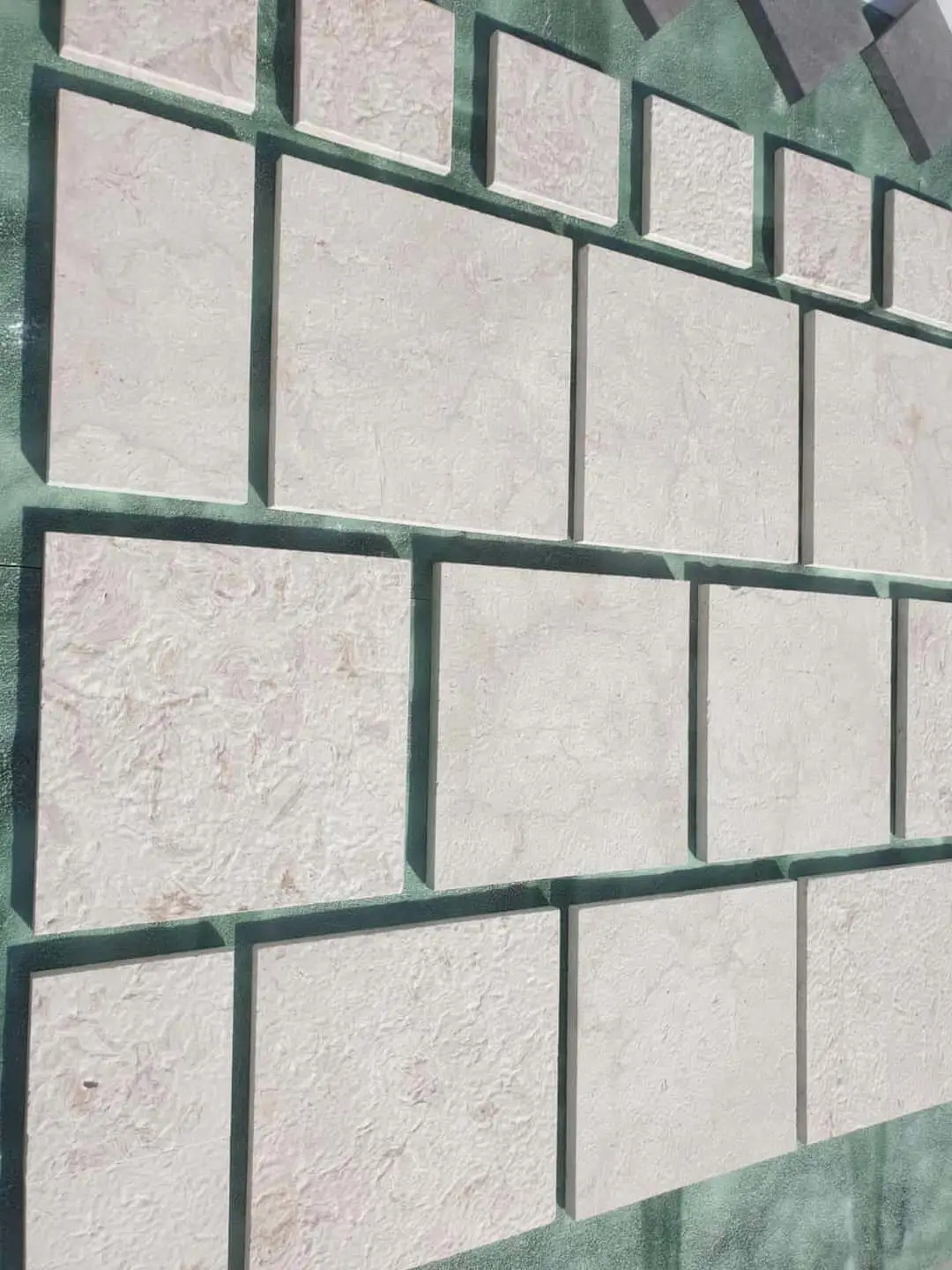
Not all limestone behaves the same on a set of exterior steps, and the density classification is the single variable that most separates 15-year installations from 30-year ones. High-density limestone — bulk density above 160 lb/ft³ — exhibits compressive strength in the 8,000–12,000 PSI range, which handles heavy foot traffic, equipment dollies, and the occasional delivery pallet without surface spalling. Medium-density stock in the 140–160 lb/ft³ range is acceptable for sheltered residential limestone steps but needs a sealing program to compensate for the higher open porosity. According to Natural Stone Institute limestone specifications, water absorption rate is one of the primary indicators of outdoor durability — you should request the absorption test data from your supplier before committing to a grade for exposed exterior conditions.
Format choice interacts directly with the density class. Sawn-face treads give you precise geometry for clean risers and consistent nosing profiles; thermal-finished surfaces add measurable slip resistance without sacrificing the refined aesthetic. For limestone front steps on formal entry sequences, a thermally finished tread with a sawn-face riser creates the visual balance most designers target — the tread reads as intentionally textured while the riser retains the crisp, dressed-stone character.
- High-density limestone: best for exposed exterior steps, freeze-thaw regions, and high-traffic entries
- Medium-density limestone: suitable for sheltered or covered step applications with a biennial sealing schedule
- Low-density stock: avoid for exterior treads — reserve for decorative riser veneers in protected applications
- Absorption below 3%: the threshold that reliably indicates freeze-thaw resistance in northern climates
- Compressive strength above 8,000 PSI: minimum defensible specification for unsupported tread spans
Limestone Steps Cost: What Drives the Numbers
The limestone steps cost conversation usually starts in the wrong place. Most buyers lead with material price per linear foot, but that figure is meaningless without knowing the thickness, the finish specification, and the nosing profile. A 4-inch sawn tread in a standard 12-inch depth runs materially different from a 6-inch thermal-finished tread with a 1.5-inch radius bullnose — both are “limestone steps” on a quote sheet, but the installed cost differential can be 60–80% before you’ve touched labor.
Here’s a realistic cost framework for planning purposes. Material costs for limestone slab steps range from roughly $18–$35 per linear foot for standard 4-inch sawn treads, moving to $40–$65 per linear foot for custom profiles, enhanced finishes, or premium dense limestone grades. Fabrication and delivery add meaningful cost — particularly for heavier 5-inch and 6-inch stock where truck freight becomes a real line item. Budget freight as a separate variable, especially for projects requiring crane placement of large monolithic treads.
- Standard 4-inch sawn tread, 12-inch depth: $18–$35 per linear foot (material only)
- 5-inch thermal-finish tread with bullnose: $38–$55 per linear foot (material only)
- Custom profile fabrication surcharge: 20–35% above standard stock pricing
- Truck delivery and crane placement: site-specific, typically $300–$900 depending on distance and access
- Installation labor: $45–$85 per linear foot depending on base preparation requirements
- Total installed cost for a 5-step residential entry: $2,800–$6,500 depending on specification
The lead time variable affects total project cost more than most clients anticipate. Warehouse stock in standard dimensions ships in 1–2 weeks; custom-profile fabrication typically requires 4–6 weeks, and that schedule gap can push a project into a costlier installation window. Citadel Stone maintains national warehouse inventory in the most common tread dimensions, which gives you real scheduling flexibility without paying the premium for rush fabrication.
Base Preparation and Substrate Requirements
The base under limestone steps is where most failures originate — not in the stone itself. A properly specified compacted aggregate base eliminates differential settlement, which is the primary cause of tread rocking, joint opening, and ultimately stone fracture at the nosing. Minimum base depth for exterior steps should be 8 inches of compacted crushed stone (¾-inch angular aggregate) on stable native soil, increasing to 12 inches on clay-heavy or expansive soils where moisture cycling drives seasonal movement. According to USGS limestone composition and construction data, limestone’s relatively low coefficient of thermal expansion (approximately 4.4 × 10⁻⁶ per °F) means the stone itself moves less than most people expect — but that advantage disappears when the substrate is moving independently beneath it.
Mortar bed thickness matters more on steps than on flat paving because the load geometry is different. Steps concentrate load at the nosing edge and at the point of foot strike, creating a lever-arm dynamic that a thin mortar bed can’t adequately distribute. A full mortar bed between 1 and 1.5 inches, screeded level and consolidated before setting, gives you the bearing area that prevents the micro-rocking that destroys joints over time. Never set limestone step treads on five-point mortar dabs — the unsupported mid-span deflects under dynamic load and eventually causes cracking at the nosing relief cut.
Freeze-Thaw Performance and Thermal Cycling in Step Applications
Limestone slab steps face a more demanding thermal environment than flat paving because of their geometry. A horizontal tread surface collects water at the riser joint, the nosing, and any low point created by slight installation variance. In regions with meaningful freeze-thaw cycling — even climates where temperatures cross the 32°F threshold just 20–30 times annually — that trapped water expands 9% on freezing and generates hydraulic pressure that tests joint integrity and stone porosity simultaneously. The stone’s absorption rate becomes critical here: limestone with water absorption above 6% will cycle moisture through its pore structure repeatedly, and that progressive saturation accelerates spalling at the nosing face where the stone is thinnest and most exposed.
Thermal cycling matters beyond the freeze-thaw mechanism. Day-to-night temperature swings of 40–50°F — common across much of the country in both spring and fall — create expansion and contraction cycles in the mortar bed, the stone, and the steel reinforcement in the supporting structure. These three materials have different coefficients of thermal expansion, and that differential movement is cumulative. Over 10–15 years, it opens joints, loosens treads, and creates the slight unevenness that becomes a trip hazard. The practical response is to specify expansion joints in the supporting wall structure at 10–12 foot intervals and to use a flexible polymer-modified mortar rather than straight Portland cement when setting treads in climates with significant temperature range. For installations where temperature swings exceed 60°F between seasons, a penetrating silane-siloxane sealer applied at installation and renewed every 3 years provides the moisture exclusion that keeps the freeze-thaw cycle from finding pore pathways to exploit.
- Specify limestone with water absorption below 3% for climates with 30+ freeze-thaw cycles annually
- Use polymer-modified mortar for all exterior step applications in regions with high day-to-night temperature variance
- Install expansion joints in the supporting substrate at 10–12 foot intervals to accommodate thermal movement differentials
- Apply penetrating silane-siloxane sealer at installation; renew every 3 years in high freeze-thaw exposure zones
- Slope treads a minimum of 1/8 inch per foot toward the nosing to prevent water pooling at the riser joint
Slip Resistance and Finish Selection for Exterior Steps
Finish selection on limestone steps carries safety implications that go beyond aesthetics. The ADA accessibility and slip resistance requirements for walking surfaces establish that outdoor step treads must maintain a stable, firm surface — and for natural stone, that translates to finish specification rather than a single numeric standard. A honed limestone surface with 400-grit finish reads beautifully in a residential entry but measures a static coefficient of friction (SCOF) around 0.45–0.55 when wet — marginal for exterior step use. A thermal (flame-finished) or bush-hammered surface typically achieves SCOF values of 0.70–0.85 on the same material, which is where you want to be for confident barefoot or wet-shoe use.
The nosing treatment is an often-overlooked component of step safety. A sawn nosing with a sharp 90° arris looks precise but creates a stress concentration point that chips under impact loading and becomes a slip surface when wet. A 1-inch radius bullnose eliminates the chip-prone arris and provides a rounded leading edge that directs water downward rather than allowing it to pool at the step face. For limestone front steps on formal entries, a honed bullnose nosing with a thermally finished tread field gives you the slip resistance where feet land while maintaining the refined stone character at the visible edge.
Joint Design and Setting Specification
Joint width on limestone steps deserves more attention than most specifications give it. The standard 3/8-inch joint specified for limestone paving doesn’t translate directly to step installations because the thermal exposure, load dynamics, and water management geometry are fundamentally different. For step treads, a 1/2-inch joint between the tread and the riser face accommodates the differential thermal movement between the horizontal and vertical stone planes while leaving enough joint width for a proper sanded mortar fill that won’t hollow out in the first winter. Avoid epoxy grout in exterior step joints — it’s dimensionally stable but adhesively brittle in freeze-thaw conditions, and when it fails, it fails in sections rather than the granular way that sanded mortar fails, which makes remediation significantly more difficult.
Reviewing the Natural Stone Institute ASTM design standards for steps and treads gives you the technical framework for specifying flexural strength requirements — particularly important when specifying cantilever overhangs or unsupported tread extensions beyond 6 inches. The modulus of rupture for your selected limestone grade should be on the data sheet; for exterior step treads, values above 1,200 PSI are required to handle the dynamic loading at the nosing over time. Specify this value explicitly in your RFQ to your stone supplier — it’s a standard test metric that any serious dimensional stone supplier should be able to provide.
- Use 1/2-inch joints for step tread-to-riser interfaces — wider than standard paving spec to accommodate differential thermal movement
- Avoid epoxy grout in exterior step joints exposed to freeze-thaw cycling
- Specify modulus of rupture above 1,200 PSI for exterior tread stock
- Full mortar bed setting — no spot-setting on exterior steps regardless of tread weight
- Back-butter each tread before setting to achieve 95%+ mortar contact coverage
- Allow mortar to cure for a minimum of 72 hours before allowing foot traffic on new step installations
Ordering, Logistics, and Project Planning
Coordinating limestone steps delivery requires more planning than standard paver orders because of the weight-per-piece involved. A single 6-foot tread in 5-inch limestone stock typically weighs 180–240 lbs depending on density — that’s a two-person minimum for manual placement, and a crane or Manitou attachment for larger monolithic pieces. Truck access constraints need to be resolved before confirming the order, not after the material arrives. A flatbed delivery to a site with a tight turning radius or a restricted-access driveway can strand an entire order and generate re-delivery costs that erode project margin quickly.
Warehouse stock in standard dimensions allows you to move fast when a project timeline tightens. Exploring Citadel Stone step materials early in the design phase lets you confirm which profiles are in inventory and which require fabrication lead time, so your schedule stays realistic. Custom nosing profiles, non-standard tread depths, or premium dense-grade stock may require 4–6 weeks from order confirmation to truck delivery — that’s a variable worth surfacing during design development, not during construction administration.
At Citadel Stone, we source limestone slab steps directly from quarries with consistent geology — the material you receive on the last pallet matches the material on the first, which matters when your installation spans multiple delivery windows. Colour consistency across a step installation is something that gets overlooked in specifications but generates significant field headaches when the second shipment reads differently than the first.
Maintenance, Sealing, and Long-Term Performance
Limestone steps in exterior applications need a sealing program that starts at installation and continues on a defined schedule — not a reactive one. A penetrating impregnator sealer applied to clean, dry stone within 24 hours of mortar cure locks the pore network before the first rain event can introduce particulate contamination that becomes permanent staining. You’ll get 3–5 years of meaningful protection from a quality silane-siloxane impregnator on dense limestone; medium-density stock in high-traffic locations warrants a 2-year renewal cycle. The test is simple: drop water on the surface. If it beads and rolls within 30 seconds, the sealer is active. If it soaks in within 10 seconds, reseal immediately.
Cleaning limestone steps correctly is as important as sealing them. Acidic cleaners — including vinegar-based products that get recommended in general stone-care literature — etch the calcite matrix of limestone and accelerate surface degradation. Use pH-neutral stone cleaners only, and address oil staining with a poultice application rather than acidic degreasers. For biological growth (moss, lichen) in shaded step installations, a diluted quaternary ammonium biocide applied with dwell time followed by mechanical brushing and a thorough rinse is the approach that clears the growth without damaging the stone surface.
- Apply penetrating silane-siloxane impregnator within 24 hours of mortar cure on all exterior limestone steps
- Renew sealer every 2–3 years depending on stone density and exposure intensity
- Use only pH-neutral cleaners — avoid all acid-based products on limestone
- Address organic growth with quaternary ammonium biocide — not bleach, which leaves calcium salt deposits
- Inspect joint integrity annually; repoint any hollow or cracked joints before the next freeze season
- Expect 25–35 year performance from properly specified, maintained exterior limestone steps
Decision Points
The specification decisions that define limestone steps performance compress into a handful of variables — and most of them need to be resolved before fabrication begins, not during installation. Density class and absorption rate determine how your steps handle moisture cycling across seasons. Thickness and modulus of rupture govern structural integrity at the nosing. Finish selection drives long-term slip resistance as the surface weathers. Joint specification and mortar type control whether the installation accommodates or fights the thermal movement it will experience over decades of temperature cycling. Get those variables right in the specification phase, and limestone delivers the kind of long-term performance that makes it worth the premium over cast alternatives.
Your project may also include complementary natural stone applications beyond the entry steps. For interior stone design, limestone mantel design and material options covers how the same material family performs in a very different architectural context — worth reviewing if you’re coordinating stone specifications across a full project scope. Matching interior and exterior limestone front steps grades takes more care than most projects allow, but the result is a material continuity that reads as intentional rather than coincidental.
Limestone steps from Citadel Stone arrive from quarries across the Mediterranean and Middle East, milled square for stable stacking.
Related reading: large limestone planter · How to Build With Limestone Retaining Wall Blocks · Large Limestone Rocks: Landscaping Ideas That Work.